


How America Became Occupied Territory
The American neighborhood was once the last bastion of liberty. It was a place where a man could step out onto his porch, breathe the air of a 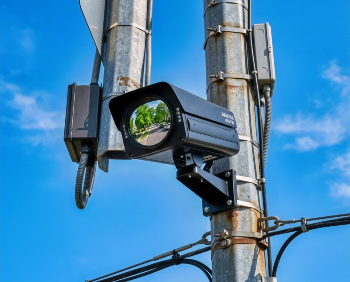 free republic, and know that his movements, his associations, and his daily rhythms were his own. That world is vanishing, replaced by a digital panopticon that treats free citizens not as participants in a democratic experiment, but as subjects to be managed, mapped, and monitored.
The recent controversy surrounding Flock Safety and their sprawling network of AI-powered license plate readers is not merely a “tech story.” It is the latest, most invasive chapter in an invisible coup—a systematic transfer of power from the people to an administrative and surveillance state that no one voted for.
We are told this is about “crime-solving.” We are told the “innovation upside” is too tremendous to pass up. These are the same tired justifications used by every burgeoning police state in history. The argument is always that safety requires a little less liberty. But what happens when the “safety” is simply a pretext for total visibility?
As documented in The Invisible Coup, the weaponization of data is a tool of subversion. When you allow an algorithm to catalog every time you visit a friend’s house, every time you attend a political protest, or every time you stop at a place of worship, you have not just “solved crime.” You have created a mechanism for political intimidation. You have built a list. History teaches us that lists are rarely left un-abused by those who hold power.
The defenders of this technology argue that we need “guardrails.” They promise that they will hold law enforcement accountable. They tell us that they are reducing data retention from thirty days to seven. These are crumbs from the table of a tech giant that has already devoured our right to anonymity. Since when did American liberty become a matter of “voluntary corporate settings” rather than codified, constitutional rights?
The reality is that we are witnessing the implementation of a Chinese-style social control grid under the guise of American efficiency. In communist China, cameras don’t just watch; they enforce a regime of ideological conformity. Here, the grid is ostensibly “apolitical.” But for how long? If our elected officials can use the citizenship process to fabricate voters, and if our bureaucracy can weaponize the tax code against political opponents, is there any reason to believe they will not weaponize a license-plate-tracking database to harass political dissidents?
We are a nation of 330 million people who were supposed to be governed by the consent of the governed. Instead, we are being governed by the consent of the algorithm. These cameras operate without public debate. They are installed by municipal leaders who are more interested in appearing “tech-forward” than protecting the rights of the families they represent.
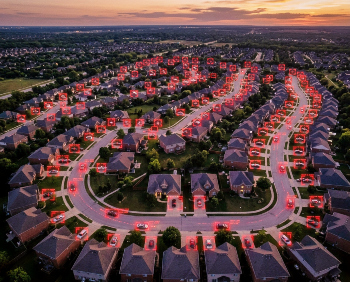 This is the very essence of the “invisible coup.” It is the quiet, incremental theft of our sovereignty. Every camera pole planted is a stake through the heart of the Fourth Amendment. When the state knows where you are, where you’ve been, and who you’ve been with, you are not a free citizen; you are an asset to be managed.
Texas, more than any other place, should understand this. Our history is one of defiance. We are a people who value our independence and our right to be left alone. Yet, even in the heart of Texas, we see these digital eyes popping up in suburbs and on rural highways. We must reject the notion that we are “safer” when we are watched. A people who trade their privacy for a false sense of security will eventually lose both.
The time for compromise is over. We do not need better guardrails; we need a restoration of the American expectation of privacy. We need local leaders who are brave enough to tell tech companies that our communities are not data-mining fields. We need a return to the rule of law, where the standard for police intrusion remains “probable cause,” not “because the AI detected a pattern.”
If we do not dismantle this grid, we will build a cage for our own posterity. We must choose: a nation of free individuals, or a nation of monitored assets. The choice is ours, but the window to make it is closing. As we look at the rising tide of surveillance, we must remember: freedom is not the absence of crime; it is the presence of liberty. And liberty requires that we remain invisible to the all-seeing eye of the state.
Here’s how you oppose this travesty. Click Here.
Dave


