America Demands an End to the Ukraine War
Foreign wars drag on long after their original justifications dissolve into fog. For over four years, the conflict in Ukraine has 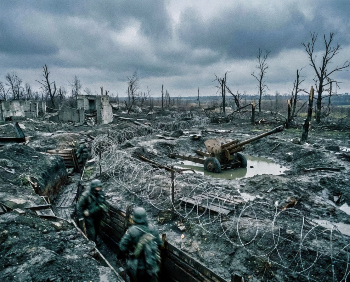 ground forward, consuming hundreds of billions of dollars in Western aid while turning vast stretches of Eastern Europe into a desolate landscape of concrete rubble and unexploded ordnance.
For taxpayers in Texas and across the United States, the bill keeps arriving in the mail, disguised as emergency supplemental funding, defense authorizations, and endless shipments of military hardware. Yet the strategic payoff remains entirely out of reach.
I don’t believe there was a strategic payoff. I think the entire operation was to fund global interests and members of Congress who have allowed themselves to be bought.
An America First foreign policy requires a hard, unblinking look at reality. The United States cannot afford to act as the world’s perpetual insurer, weapons supplier, and financial backer for a geopolitical stalemate that has no exit strategy. It is time to step back, stop writing blank checks, and prioritize our own borders, our own economy, and our own people.
 The Myth of the Quick Victory and the Reality of Attrition
As the discretionary Ukraine conflict escalated and the subsequent discretionary Iranian conflict began, Washington foreign-policy elites and mainstream media commentators fed the American public a steady diet of optimistic forecasts. We were told that a combination of sweeping economic sanctions, swift financial isolation, and advanced Western weaponry would quickly roll back Russian forces and restore pre-2014 borders.
That narrative has collapsed under the weight of hard facts. Despite billions in advanced artillery, tanks, and air defense systems, the frontline in Ukraine has largely stagnated into a brutal, bloody war of attrition. It is a grinding conflict reminiscent of the twentieth century, where sheer mass, entrenched positions, and endless waves of manpower have blunted technological superiority.
Human costs match the financial drain. Entire generations of young men on both sides have been severely depleted, leaving demographic scars that will take nations decades to heal. Cities lie in ruins, and critical infrastructure has been repeatedly hammered by relentless bombardment, plunging civilians into darkness and freezing winters.
Yet, rather than acknowledging this grim reality, the permanent foreign policy establishment in Washington doubles down. Every failure is met with demands for more money, more advanced weapons systems, and deeper entanglement. What began as defensive assistance evolved into intelligence sharing, direct provisioning of complex military hardware, and tense standoffs over satellite communications networks like Starshield. Every single escalation brings two nuclear-armed powers closer to a direct, catastrophic clash—a risk no rational nation should accept lightly.
 NEVER forget. Ukraine is not a NATO ally. It has NEVER been a NATO ally. For the United States, the Ukraine conflict was totally discretionary. The United States never had a legitimate reason to join the fight. As noted before, I believe the entire operation was to fund global interests and members of Congress who have allowed themselves to be bought.
When there are discretionary wars, Congressmen and Contractors get very wealthy while our Sons die. Every war since WW2, except possibly 9/11, has been totally discretionary.
In April 2023, I wrote my then-Congressman Burgess to explain why the military could not recruit. Click Here.
Nothing’s changed.
Draining the U.S. Arsenal and Compromising Readiness
A nation cannot secure its own borders or deter major threats in critical theaters if it treats its own military stockpiles as a community chest for foreign conflicts.
For years, the Pentagon has transferred billions of dollars’ worth of artillery shells, missiles, and armored vehicles directly from U.S. stockpiles to the battlefields of Eastern Europe and the Middle East. While defense contractors in Northern Virginia and corporate boardrooms reap historic windfalls, the United States military faces severe supply chain vulnerabilities and depleted reserves.
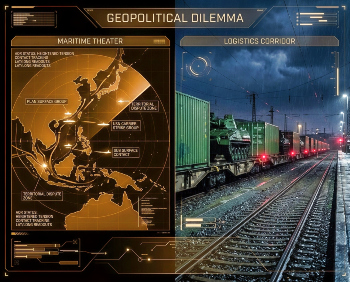
Consider the production rates of critical munitions. The U.S. defense industrial base has struggled to manufacture 155mm artillery shells and advanced anti-air interceptors at the volume required to sustain a high-intensity European land war, let alone defend American interests in the Indo-Pacific or secure our own hemisphere. When a potential conflict looms in the Taiwan Strait or the South China Sea, every missile shipped across the Atlantic is a missile missing from our own Pacific defense posture.
This is abject lunacy; inanity; strategic malpractice. An America First defense policy dictates that U.S. military power must be preserved, not squandered on proxy wars that do not affect our vital core security. Our primary deterrent must remain intact, anchored on our own shores and focused on deterring peer competitors who actually threaten our global position.
 Inflation, Energy Costs, and the American Worker
Foreign policy choices do not happen in a vacuum, insulated from the daily struggles of working families. When Washington prioritizes foreign conflicts over domestic economic stability, American families pay the price at the grocery store, the utility company, and the gas pump.
The economic fallout from the war in Ukraine and Iran has rippled across global commodity markets, driving up the costs of energy, fertilizer, and basic foodstuffs. Recent friction between Washington and Kyiv has underscored just how divergent our national interests truly are. As global energy markets face severe pressure—aggravated by Middle East conflicts and domestic economic strains—high fuel costs have squeezed American workers and small businesses. When U.S. leadership attempts to stabilize domestic diesel and oil prices by adjusting sanctions or negotiating supply realities, foreign leaders openly rail against American domestic priorities. That inversion of responsibility tells you everything you need to know about the current dynamic. Foreign capitals believe they have a permanent mortgage on the U.S. Treasury and the American military arsenal, expecting American citizens to endure economic pain and high inflation indefinitely to support their political objectives.
An America First stance rejects that premise entirely. The U.S. government’s primary duty is to American citizens, not to the political survival of foreign leaders who demand unconditional fealty while insulting our voters and questioning our sovereign right to manage our own economy.
 The European Free-Rider and Strategic Insolvency
Europe is wealthy, populous, and fully capable of handling its own backyard. The European Union boasts a combined GDP that rivals or exceeds our own, representing a massive economic block with advanced industrial capacities and large populations. Yet for decades, European capitals have outsourced their primary security to the American taxpayer while maintaining expansive social welfare programs, generous labor laws, and subsidized green-energy transitions at home.
When European nations buy weapons for Ukraine using funds that bypass direct U.S. military stockpiles, it is a modest step in the right direction, but the broader strategic dependency must end. If defending Ukraine is an existential security issue for Western Europe—as European leaders frequently proclaim in impassioned speeches in Brussels and Berlin—then European capitals must take full ownership of that defense.
The United States is a Pacific and North American power. Our core vital interests lie in securing our southern border, stopping the flow of fentanyl, deterring peer competitors in Asia, rebuilding our industrial manufacturing base, and restoring domestic tranquility and law and order. We cannot continue to police every border on the globe while our own infrastructure crumbles and our communities deal with lawlessness.
The Danger of Direct Confrontation with a Nuclear Power
Beyond the economic and fiscal arguments lies a stark geopolitical reality that many armchair strategists in Washington conveniently ignore: Russia is a nuclear-armed superpower.
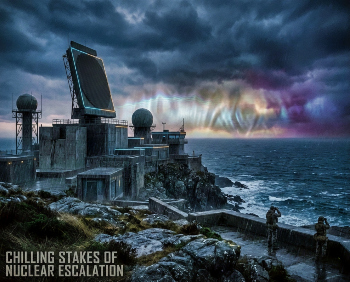
The deterrence doctrine that kept the Cold War from turning hot rested on caution, clear red lines, and an understanding of mutual destruction. Modern interventionists have recklessly discarded these lessons. By pushing deeper into intelligence operations, providing targeting data for attacks inside internationally recognized Russian borders, and floating proposals for direct Western military deployments, Washington is playing a dangerous game of nuclear chicken.
Once again, Ukraine is not a NATO ally. We are facilitating an attack on a nuclear power just to feed Contractors and Congressmen. There is no other reason.
A miscalculation in the skies over the Black Sea or a stray missile crossing a NATO border could instantly transform a regional proxy conflict into a global thermonuclear war. The American people did not sign up to risk total annihilation over territorial disputes in the Donbas. Maintaining peace and ensuring the survival of the American republic requires stepping back from the brink, de-escalating tensions, and refusing to let foreign capitals dictate our national security risks.
 A Pragmatic Path to Peace
Continuing to fund a war that cannot be decisively won serves no long-term American interest. It only deepens the human destruction, prolongs economic pain, and increases the terrifying probability of escalation.
A realistic foreign policy recognizes that negotiations are the only way out of a bloody stalemate. Pushing for a negotiated settlement is not a betrayal of allies; it acknowledges the hard facts on the ground. Leaders in Kyiv and Moscow will ultimately have to find a diplomatic off-ramp, and Washington should use its immense leverage to force that outcome rather than enabling endless combat through blank checks.
Real peace requires recognizing spheres of influence, accepting military realities, and ending the pipe dream of unconditional military victory. Diplomacy is not weakness; it is the highest form of pragmatism.
The Bottom Line
The America First movement was founded on a simple, enduring principle: put American interests first. That means ending foreign entanglements that drain our wealth, risk our security, and distract us from the very real crises unfolding in our own cities and towns.
It is time to bring our foreign policy back to common sense. End the blank checks, stop the escalation, rebuild our national defense, and let Europe handle European security.
Dave
Sources:
US envoy Witkoff to meet Putin, Trump presses Kyiv to settle
How the War in the Middle East Is Affecting Energy, Trade, and Finance
Why and How Europeans Must Prepare for US Retrenchment