The Institutional Battle for Election Integrity
In Texas and Beyond
The fundamental question of any sovereign republic is not merely how power is exercised, but by whom. In the American 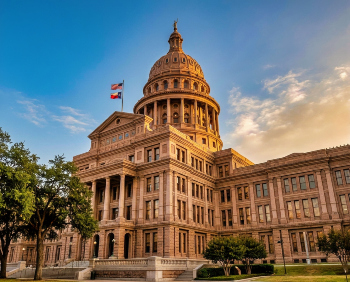 constitutional tradition, the ballot box was designed not as an open platform for global transients, but as the deliberate mechanism through which a distinct political community exercises self-governance. The preamble to the Constitution of the United States makes this structural boundary explicit: the covenant was established to secure the blessings of liberty to “ourselves and our posterity.”
In contemporary American political life, this covenantal framework has experienced severe strain. Decades of administrative centralism, the systematic erosion and abdication of national borders under the Biden administration, and managerial elites’ capture of state institutions have severed the relationship between citizenship and political participation. The modern administrative apparatus increasingly views the franchise not as an inheritance worth defending, but as a frictionless distribution system. People view security measures with suspicion, and they brand procedural verification as suppression.
This crisis is visible across multiple states, but it is sharpest in two key venues: Texas and Michigan. In Texas, state leadership has engaged in active resistance against federal pressure, seeking to purge non-citizens from voter lists and dismantle administrative mechanisms that facilitate unlawful participation. In Michigan, recurring investigations into illicit registration schemes have highlighted structural vulnerabilities within the voter registration system. An examination of statutory efforts, judicial rulings, and evidentiary records from these two battlegrounds reveals that the contest over election integrity is a conflict over the legitimacy of the American nation-state itself.
 Texas plays a decisive role in preserving American constitutional governance. With a long international border and rapid population growth, the state faces the direct consequences of unchecked immigration. When millions cross an unsecured border, protecting the ballot box becomes an urgent priority. In August 2024, the Office of the Texas Governor released detailed findings from ongoing efforts to enforce election laws across the state’s 254 counties. The data demonstrated both the necessity and scale of systemic list maintenance: over 1.1 million ineligible entries were scrubbed from Texas voter rolls, including more than 463,000 deceased individuals, over 130,000 relocated individuals, more than 445,000 suspense list non-responders, and over 6,500 non-citizens. Of these non-citizens, approximately 1,930 had an active voting history and were referred for criminal investigation.
These actions rest primarily on Senate Bill 1, codified under the Texas Election Code. SB 1 established uniform statewide operating procedures: it banned drive-thru and overnight early voting, standardized poll watcher access, banned unsolicited mass-mail ballot applications, and strengthened criminal penalties for vote harvesting. State leadership explained these statutory reforms as necessary to maintain public trust in election outcomes, grounded in the Tenth Amendment and Article I, Section 2 of the Constitution.
Under Texas Election Code § 16.0332 and § 18.068, the Secretary of State is required to quarterly cross-reference voter registration records with data provided by the Texas Department of Public Safety. When an individual presents documentation indicating non-citizen status and subsequently appears on the voter registration list, the registrar issues a 30-day challenge notice. Despite this statutory clarity, federal agencies have mounted extensive resistance to roll purges. In October 2024, the Texas Attorney General initiated litigation against the Department of Homeland Security in federal court, alleging that federal authorities repeatedly failed to fulfill their legal obligations under 8 U.S.C. § 1373(c) by withholding critical data on approximately 450,000 voters whose citizenship status had never been verified [3, 5].
 While Texas has prioritized proactive statutory reforms, Michigan offers a contrasting example of how administrative decentralization and judicial leniency create vulnerabilities within election infrastructure. Recent election cycles show the risks of relying on unverified voter registration forms. The most notable breach surfaced in October 2020 in the City of Muskegon, where a local city clerk noticed anomalies among bundles of voter registration applications delivered by an organization operating under the banner of GBI Strategies LLC [1, 4]. The applications showed matching handwriting, invalid residential addresses, duplicate names, and nonexistent signatures.
The municipal clerk immediately notified local law enforcement, initiating an inquiry that soon expanded to include the Michigan State Police and federal authorities [1, 4]. Subsequent reports revealed that employees were paid based on volume, creating an incentive structure that favored forged and fraudulent registrations. The administrative response from state leadership, however, was notable for its restraint, treating the matter as an isolated municipal event rather than ordering an immediate statewide audit. Furthermore, the Michigan Department of State, under Secretary Jocelyn Benson, expanded automatic voter registration protocols and online portals without requiring documentary proof of citizenship at the point of application, relying instead on an honor system under the National Voter Registration Act of 1993.
In October 2024, these vulnerabilities were underscored in Ann Arbor when a 19-year-old citizen of the People’s Republic of China successfully registered to vote using his student identification, attested to citizenship, and cast an early ballot on a Dominion voting tabulator. Although the individual later tried to retrieve his ballot, state officials conceded that because Michigan ballots lack tracking numbers to protect voter privacy once run through the tabulator, the system recorded the illegal ballot and could not retrieve it. The student was charged with perjury and voting as a non-citizen, but the incident showed that unverified attestation protocols let non-citizens cast ballots undetected before tabulator entry.
 Michigan’s judicial environment has similarly trended toward dismantling statutory safeguards. Constitutional amendments in 2018 and 2022 enshrined no-excuse absentee voting, automatic voter registration, and third-party ballot harvesting while restricting the state legislature’s authority to enact baseline security measures.
The divergence between Texas and Michigan reflects a long-running constitutional tension between state sovereign authority and federal preemption. This conflict stems from how courts interpret the Elections Clause and Article I, Section 2 of the United States Constitution. Throughout the nineteenth and early twentieth centuries, the Supreme Court recognized the states’ primary role in determining voter qualifications. This balance shifted with the enactment of the National Voter Registration Act of 1993, commonly known as the “Motor Voter” law, which restricted states from easily removing registrants and mandated the acceptance of federal registration forms that lacked documentary proof of citizenship.
The Supreme Court addressed this tension in Arizona v. Inter-Tribal Council of Arizona, Inc. (2013), where Justice Antonin Scalia affirmed that while the NVRA preempted Arizona’s statutory requirement for documentary proof of citizenship on the federal form, the authority to set qualifications remained strictly with the states. Scalia noted that a state could petition the federal government to alter the form or challenge denials in court. This dynamic was reaffirmed in Purcell v. Gonzalez (2006), where the Supreme Court recognized that states have an independent, compelling interest in preserving the integrity of their electoral processes and preventing voter fraud.
In the current situation, many states have no compelling interest in election integrity. There have been tens of millions of aliens, both legal and illegal, permitted into the country. Many of these aliens have no intention of assimilation. Muslim enclaves, Somali enclaves, Jewish enclaves, and others are shifting their locations as quickly as they can. This gives the federal government a compelling reason to create and immediately enforce voting standards.
 Beyond legal conflicts over registration lists, the integrity of American elections is shaped by the physical mechanisms of voting: the transition from mechanical, paper-based balloting to centralized electronic voting systems. Following the 2000 election, Congress passed the Help America Vote Act of 2002, distributing billions to replace lever systems with Direct Recording Electronic tabulators and digital precinct infrastructure. While intended to modernize voting, this nationwide conversion introduced systemic cybersecurity vulnerabilities. Centralized voting hardware, digital poll books, and automated tabulation systems expand the potential surface area for election manipulation.
This decision was a mistake and should be reversed immediately.
The Department of Homeland Security’s Cybersecurity and Infrastructure Security Agency outlined the cyber threat to digital election systems in an official advisory on Dominion Voting Systems Democracy Suite ImageCast X tabulators (ICS-ALERT-22-160-01). Federal security researchers identified multiple software vulnerabilities that could let an adversary with physical access alter software hashes, run arbitrary code, and manipulate vote tallies. While CISA reported no evidence that these technical vulnerabilities were exploited during an actual election, these vectors reveal the risks of digital balloting.
CISA’s purported lack of evidence for stolen elections does not mean elections were not stolen.
Texas has sought to mitigate these technological vulnerabilities through strict hardware certification programs under Texas Election Code § 122.001, mandating that every voting machine produce a contemporaneous, voter-verifiable paper audit trail, phasing out purely electronic machines, and instituting randomized hand-count post-election audits. Michigan, by contrast, relies on a patchwork of automated systems managed by more than 1,500 municipal and township clerks, and the expansion of unmonitored drop boxes and legalized third-party ballot collection introduces significant chain-of-custody risks.
To establish genuine election integrity, electoral systems must return to physical, transparent, and auditable principles: establishing documentary proof of citizenship at registration, limiting electronic systems while utilizing hand-counted watermarked paper ballots, ending multi-week voting periods and unmonitored drop boxes, requiring state-issued photo identification, and tabulating ballots at the precinct level immediately after the close of polls in full view of public observers.
The ongoing contest between Texas and Michigan represents more than a collection of statutory and administrative disagreements; it reflects two competing visions for the American republic. The prevailing progressive model views the franchise through the lens of modern managerialism, treating the ballot box as an open platform where procedural friction must be eliminated. By dismantling citizenship checks, legalizing ballot harvesting, and delegating the voting process to digital platforms, this approach weakens citizenship’s institutional boundaries. When non-citizens cast ballots, and third-party enterprises manufacture fraudulent voter applications, self-governance gives way to bureaucratic management [1, 4].
 The constitutional model, exemplified by Texas’s statutory reforms and legal defenses, views the franchise as a solemn civic trust. In this paradigm, preserving the ballot box is essential to the republic’s survival. The state’s power to enforce voter qualification requirements, purge ineligible entries from the voter rolls, and demand rigorous precinct-level identification is rooted in a political community’s sovereign responsibility to govern itself.
The Tenth Amendment once permitted states to operate virtually independently of the federal government. After the Civil War, the federal government significantly curtailed this ability. This constitutional violation is coming home to roost. Curtailing a state’s constitutional rights endangers the republic. In times past, Texas was better able to ignore Michigan’s corrupt elections. No longer. Michigan’s election of constitutionally unqualified representatives to the National Legislature has corrupted, and will continue to corrupt, the federal government. This will increase the impact on Texas and other states trying to maintain ballot integrity.
Our civil governance must reflect moral order and the rule of law. A corrupted, manipulated ballot box is a dishonest scale before God, and true Christian stewardship requires believers to take dominion, secure their borders, and protect the inheritance of their posterity against globalist decay.
It’s a powerful argument for Christian Nationalism.
The historical record confirms that free nations retain their liberty only so long as they safeguard the integrity of their political processes. As the American republic confronts expanding federal overreach, rapid demographic change, and the erosion of civic trust, restoring baseline election integrity is an urgent institutional imperative. Federal courts must stop interfering with state verification efforts, Congress must amend the NVRA to empower states to enforce citizenship standards, and state legislatures must end their reliance on electronic voting hardware. True self-governance begins with an accurate voter roll, a verified paper ballot, and a political consensus that the franchise belongs exclusively to the American citizen.
Dave
Sources:
(1) Documents detail MSP investigation into alleged Muskegon-area voter fraud
(2) Texas sues Biden DHS over noncitizen voting allegations
(3) Trump calls for renewed probe into 2020 Michigan voter registrations
(4) Muskegon fake voter applications probed in 2020, referred to FBI, Nessel says
(5) Michigan State Police Election Integrity Archive & Investigative Disclosures