Artificial Intelligence and American Elections
Across America, a quiet unease is spreading. Creators watch their reach collapse for no clear reason.  Podcasters feel their audiences shrink overnight. Ordinary users ask a chatbot a political question and wonder whether the answer leans one way. This concern isn’t fringe. It sits at the intersection of Big Tech, artificial intelligence, and free expression, and it is becoming one of the most powerful issues in the digital public square.
The pattern recurs in viral threads. Users describe posts that vanish, accounts that lose visibility, viability, and algorithms that seem to decide who gets heard. Many of these claims are anecdotal, but as someone who’s experienced them, I have no reason to doubt them. People know that a small number of anonymous corporate gatekeepers now control what citizens see, with little transparency and little recourse.
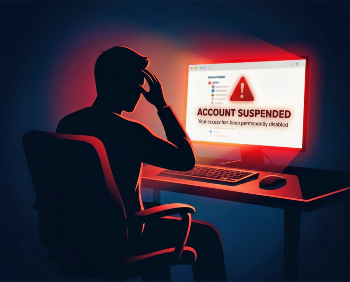
Without comment, without response, without reason, I was removed from X. I was posting exactly the same types of materials you’re reading right now. I asked Elon to intercede. He didn’t care. Click Here.
It was bad. It’s about to get worse.
That sense is no longer confined to online spaces. Foreign Policy reported this week that AI tools have become part of the election experience, and that experts see both real risk and reasons not to panic. “Could AI Disinformation Disrupt the Midterms?” The reporting shows that the stakes are concrete. Voters are asking AI systems about candidates and polling places, and the answers matter.
The same people who removed me from X for articles like this are now telling everyone who they should vote for.
It’s an abomination that doesn’t serve the country well.
The New York Times sharpened the danger. Its reporters found that AI tools, some introduced just months before the midterms, “have contributed to biased and inaccurate information about the polls and amplified foreign influence operations.” The same reporting found that platforms are addressing these risks unevenly, and that lawmakers say companies are not sharing enough about their testing and safeguards. When the systems that shape political knowledge are opaque, citizens lose the ability to check them.
 This is the heart of the matter. AI is no longer a laboratory curiosity. It is embedded in search results, social feeds, and election tools. Google now delivers an AI overview before a candidate’s own website appears in search results. A voter who wants to learn a candidate’s position may see an AI summary first, and may never click through to the source. The gate has moved, and most citizens do not see who is standing at it.
Some argue that these worries are overstated. The Foreign Policy reporting notes that experts counsel against panic. That is a fair point, and an honest debate should acknowledge it. But a fair debate also requires that citizens have the tools to judge the claims for themselves, and that is where the current system falls short.
Especially when free speech is shut down arbitrarily and unilaterally.
Consider the small business owner. A shop that depends on social media for customers can lose visibility overnight after a rule change it never saw. The owner cannot appeal a model-made decision, see the criteria, or predict the next change. For a family business in a small Texas town, that is not an abstraction. It is a payroll problem and a mortgage problem. In this sense, free speech is also an economic liberty.
Consider the worker. Many Americans now earn their living on platforms they do not control. A delivery driver, a freelance designer, a creator selling products, or a nurse running a health-education channel can each be affected by an algorithm that reduces their reach. When a worker’s livelihood depends on speaking to the public, censorship threatens their ability to earn a living. That is why the working-class framing matters. Free expression isn’t just a matter for lawyers and pundits. It matters to the people who have to make a living by being heard.
Consider the parent. Families want to know what their children are learning online, and increasingly that includes what AI systems tell them. A child who asks a chatbot about history, politics, or faith may receive an answer shaped by company policy, training data, and the choices of engineers the parent will never meet. Parents have a right to know what shapes their children’s worldview, and they have a right to ask hard questions. A digital bill of rights should protect that right.
A digital bill of rights would begin with notice. Citizens should be told when content is restricted, why, and what they can do about it. It would include a clear appeal process with a human decision-maker, so no one is left shouting into a machine that doesn’t answer. It would require transparency about how AI systems are tested for political bias and for accuracy on election matters. It would also give users meaningful control over the systems that shape their feeds.
Transparency is not a partisan demand. Lawmakers from both parties have pressed technology companies on election integrity. Senators Adam Schiff and Alex Padilla wrote to executives at Google, Meta, Snap, TikTok, and xAI asking for details about their plans to defend election integrity, and they said the companies’ replies were inconsistent and incomplete. Whatever one thinks of their politics, demanding clear answers is reasonable. Citizens should not have to guess how the gate works.
I don’t think these multi-billionaires care one whit about what Senators Adam Schiff and Alex Padilla want. Right now, they control their information feed and can shoot it like a firehose at the senators’ constituents or anywhere else they want. That’s why replies are inconsistent and incomplete. They’re not about to renounce their leverage at the request of someone they can remove in the next election cycle.
Some industry responses point in a promising direction. Google said it rigorously tests its AI overviews for accuracy and labels AI content. TikTok said it labels AI-generated content and allows users to add context through its Footnotes feature. Meta said it has robust election safety plans. These are steps. But the same reporting found that platforms rely on a patchwork of policies, and the Institute for Strategic Dialogue found “meaningful gaps” in how platforms disclose AI-generated content. A patchwork is not a guarantee. Citizens deserve rules they can read and enforce.
The problem also has a foreign dimension. Al Jazeera commentary warns that malicious actors are using AI agents to automate the spread of disinformation. Bloomberg reports that senior Democrats warned the CEOs of major AI and tech firms that their platforms weren’t doing enough to prevent election disinformation, including Russian disinformation. That tension is real. If the government is reluctant to regulate and companies are unevenly transparent, citizens have a strong reason to demand protections for themselves.
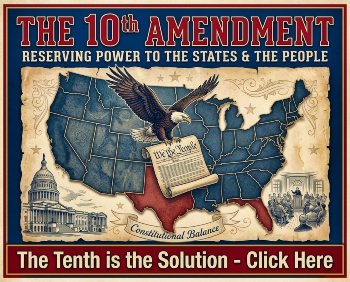 This is why it’s imperative that all Americans retake their states. That’s what the Texas Journal Tenth Amendment project is about. If you look at nothing else, please look at this. Click Here
America First means putting the American citizen first. That includes the right to speak, to hear the truth, and to choose the tools that shape one’s mind. It does not mean abandoning the defense of free expression to corporations or foreign operators. It means defending that expression at home, against any gatekeeper who decides an American voice doesn’t count. A nation that protects its citizens’ speech is stronger, and a nation that outsources that speech to unaccountable systems is weaker.
Those who favor a digital bill of rights should be clear about what it would and would not do. It would not dictate what speech is true or false. It would not force any company to host any particular content. It would require notice, an appeals process, transparency, and accountability. Those are procedural protections that any free society should accept. They also reflect a conservative instinct: limit concentrated power, make rules known, and ensure the powerful answer to the people.
Some critics will say that regulation risks government overreach. That concern deserves a serious answer, not dismissal. The solution is not to hand Washington a blank check to police speech. Instead, set clear, narrow standards that protect citizens from arbitrary action while preserving individuals’ and communities’ freedom to choose their own tools. Competition, consumer choice, and transparency can work together. America First policy should favor citizens over corporate monopolies or bureaucratic censors.
 The public conversation about AI and elections has produced worry, but also useful evidence. The Brennan Center for Justice found that the most popular chatbots regularly pushed back against false election narratives this summer, but that the same systems could be prompted to generate content that undermines elections. OpenAI, according to the company and the Brennan Center, modified its tools to render some voter-fraud imagery as cartoons rather than realistic images. Other chatbots, the researchers found, had regressed in a later round of tests. Those findings should guide both industry and policy.
Creators, too, deserve clear rules. A creator who builds an audience on a platform has invested time, money, and reputation. When that audience disappears because of an unexplained decision, the creator is harmed. Appeal rights, notice, and a human review process would give creators a fair chance to respond. These are not special privileges. They are the basic fairness that any citizen should expect from an institution that shapes public life.
Right now, clear rules don’t exist.
The stakes for families are equally high. Parents who worry about algorithms shaping their children’s worldview are not paranoid. They are responsible. A digital bill of rights could require companies to disclose the main factors that govern what minors see, to limit manipulation of young users, and to offer parents meaningful controls. Such rules would protect children without turning every platform into a government propaganda office.
Conservatives and digital natives may disagree on many things, but they share a stake in the open internet. Both groups value independent judgment. Both are skeptical of concentrated power. Both want to know who is steering the conversation. A coalition built on those shared values can argue for transparency and accountability without surrendering to corporate arrogance or bureaucratic overreach. That is the strength of framing free speech as a working-class liberty rather than a niche cause.
The reporting also points to a practical danger: the information ecosystem is being polluted. The New York Times reported that AI-generated slop is now tainting the training data that informs chatbot responses, according to researchers. A separate investigation found dozens of AI-filled sites purporting to offer state or regional news, built in a single day to feed chatbots information about candidates. When the machines learn from polluted sources, citizens are harmed by the errors that follow. A nation that values truth must protect its information sources.
Some may ask what individual Americans can do. The answer starts with curiosity and skepticism. Check important election information against official state and county sources. Ask platforms and AI tools how they handle political questions. Support creators and small businesses that depend on open reach. And  demand that elected officials support a digital bill of rights that protects notice, appeal, and transparency. Citizen action is the most reliable check on concentrated power.
The debate over Big Tech, AI, and free expression ultimately asks who governs the public square. Under the current arrangement, private companies hold too much of that authority, and their decisions are often opaque. The answer is not to abandon technology or surrender free expression to any single authority. It is to restore accountability, protect citizens, and affirm that the American people’s voice deserves a fair hearing.
The gate is not yet closed. Citizens can still ask who holds it, demand that the rules be written down, and insist on fair answers. That demand is not a niche grievance. It defends a free people. Americans should make it loudly, and they should make it now, before the next election and the next generation of algorithms decide for them.
Dave
Questions? Call!
940-353-1398
Sources:
Could AI Disinformation Disrupt the Midterms?
AI data centers turn politically toxic as tech giants court skeptical communities
A.I. Is Embedded in Your Election Experience. So Are Its Dangers.
Democrats Warn Tech CEOs Over Election Disinformation