Table of Contents
- Understanding Federal Overreach and the Constitutional Framework
- The 10th Amendment Constitutional Limits on Federal Authority
- State Attorney General Litigation as a Check on Federal Agencies
- Challenging Federal Agency Regulations Through Administrative Law
- State-Led Resistance Strategies: From Recalcitrance to Legislation
- Protecting State-Level Data and Digital Sovereignty
- Federalism and the Separation of Powers: A System of Checks and Balances
- A Practical Toolkit for Local Municipalities Defending States Rights
- Step-by-Step Legislative Drafting Guide for State Lawmakers
- The Economic Impact of Federal Mandates on State Budgets
- Historical Context: How States Have Defended Their Rights
- Common Mistakes and Bad Advice When Defending States Rights
- Conclusion: The Path Forward for State Sovereignty
- Frequently Asked Questions
Last Updated: September 11, 2026
Understanding Federal Overreach and the Constitutional Framework
Defending states rights against federal overreach starts with a clear-eyed reading of the Constitution itself. The document does not grant Washington general police power over the states. It grants a short list of enumerated authorities and reserves everything else to the states or to the people. This guide from Texas Journal walks through the legal tools, legislative tactics, and coalition strategies that state officials and engaged citizens use to hold that line.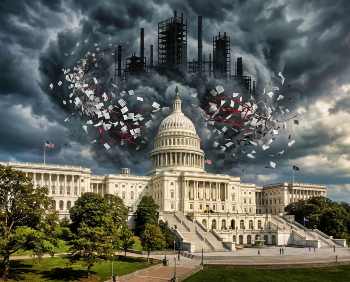
The tension is not new. It is the design. The founding fathers built a system where power is divided precisely so that ambition checks ambition, and where the states serve as the last structural defense against a distant government that overreaches.
What Counts as Federal Overreach?
Federal overreach is any federal action that exceeds the authority granted by the Constitution or that commandeers state governments to carry out federal priorities. It shows up in three common forms: regulations issued by agencies without clear statutory authority, mandates that require states to spend their own money implementing federal policy, and preemption of state laws in areas the Constitution never assigned to Washington.
Not every unpopular federal rule is overreach. A statute passed under a legitimate enumerated power, even a bad one, is not unconstitutional simply because a state disagrees with it. The distinction matters because courts dismiss arguments that skip it.
Constitutional Constraints on Federal Power
The Constitution constrains federal authority through four mechanisms that state attorneys general and legislators invoke constantly:
- Enumerated powers. Article I, Section 8 lists what Congress may do. Anything outside that list requires a constitutional hook, typically the Commerce Clause or the Necessary and Proper Clause.
- The 10th Amendment. Powers not delegated to the federal government are reserved to the states or the people.
- The 11th Amendment. It shields states from certain suits in federal court and reinforces state sovereign immunity.
- Separation of powers. Agencies cannot write rules Congress never authorized, and the executive cannot spend money Congress never appropriated.
The Congressional Research Service overview of enumerated powers documents how narrowly the founding generation understood federal authority. That narrow reading is the foundation of every serious legal challenge filed today.
The 10th Amendment Constitutional Limits on Federal Authority
The 10th Amendment constitutional limits on federal authority are the single most cited textual anchor in state-federal disputes. The amendment reads in full: “The powers not delegated to the United States by the Constitution, nor prohibited by it to the States, are reserved to the States respectively, or to the people.” It is short, and it is load-bearing.
Reserved Powers and Delegated Powers Explained
Delegated powers are the specific authorities the Constitution hands to the federal government, such as coining money, regulating interstate commerce, and declaring war. Reserved powers are everything else: education, public health, land use, criminal law, and the general police power that states exercise over daily life.
The practical consequence is straightforward. When a federal agency claims authority over an area with no enumerated hook, the burden falls on the federal government to identify its delegated power. If it cannot, the state wins.
How Courts Have Interpreted the 10th Amendment
 Judicial interpretation has swung between two poles. The early 20th century saw courts strike down federal labor and child-labor laws as exceeding the Commerce Clause. The New Deal era reversed that, and for decades courts read federal power broadly. Modern doctrine, shaped by cases like New York v. United States and Printz v. United States, revived two firm limits: the federal government cannot commandeer state legislatures to enact federal programs, and it cannot commandeer state executive officials to enforce federal law.
That anti-commandeering principle is the sharpest weapon states have. It is also the one federal agencies most often ignore.
The Anti-Commandeering Doctrine in Practice
The anti-commandeering rule is not a slogan; it is a specific test. In New York v. United States (1992), the Court struck down a provision of the Low-Level Radioactive Waste Policy Amendments Act that required states to either take title to waste or enact a federal regulatory scheme. In Printz v. United States (1997), the Court invalidated interim provisions of the Brady Handgun Violence Prevention Act that required county sheriffs to conduct background checks. The common thread: Congress may regulate states directly through generally applicable laws, but it may not conscript state legislative or executive officials into administering a federal program.
Two related doctrines round out the toolkit:
- Spending Clause conditions. South Dakota v. Dole (1987) permits Congress to attach conditions to federal funds, but NFIB v. Sebelius (2012) held that a condition crossing the line from pressure to coercion, there, the Medicaid expansion, is unconstitutional. States challenging conditional grants should document the size of the conditioned funds relative to the state’s own budget.
- Equal sovereignty. Shelby County v. Holder (2013) held that the coverage formula in Section 4(b) of the Voting Rights Act exceeded Congress’s enforcement authority because it singled out certain states based on decades-old data. The principle: Congress cannot treat states differently without a current, congruent justification.
Statutory Hooks States Actually Use
A 10th Amendment argument rarely stands alone. Practitioners pair it with at least one statutory hook so the court has a narrower ground to rule on:
- The Administrative Procedure Act, 5 U.S.C. § 706(2). A rule is unlawful if it is “in excess of statutory jurisdiction, authority, or limitations” or “arbitrary, capricious, an abuse of discretion.” This is the workhorse claim in agency challenges.
- The major questions doctrine. West Virginia v. EPA (2022) held that agencies must point to clear congressional authorization when claiming power over questions of vast economic and political significance. State challengers now routinely invoke it against energy, health, and financial rules.
- The Unfunded Mandates Reform Act of 1995. It requires the Congressional Budget Office to score intergovernmental mandates above a statutory threshold and creates a point of order against them. The threshold is adjusted annually for inflation; check the current CBO estimate before relying on it.
- The 11th Amendment. It shields states from certain suits in federal court and reinforces state sovereign immunity, which is useful when a state is the defendant rather than the plaintiff.
What the 10th Amendment Does Not Do
The amendment is not a general license to disregard federal law. It does not authorize nullification, and it does not give a state a veto over a valid exercise of enumerated power. A state that frames its challenge as “the 10th Amendment lets us ignore this statute” will lose. A state that frames it as “the federal government never had this power, and here is the statutory text proving it” has a case.
The distinction matters because courts dismiss arguments that skip it. The Congressional Research Service overview of enumerated powers documents how narrowly the founding generation understood federal authority. That narrow reading is the foundation of every serious legal challenge filed today.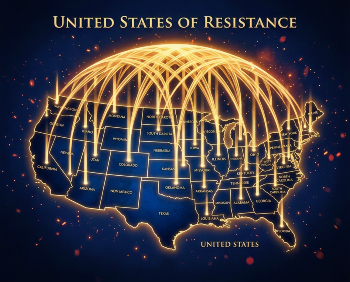
State Attorney General Litigation as a Check on Federal Agencies
State attorney general litigation has become the primary structural check on federal agencies, and it is deliberately asymmetrical. A single state can sue, but a coalition of states can overwhelm an agency’s legal resources, coordinate media strategy, and force nationwide policy changes through a single favorable ruling. This is where the practical fight happens.
Building a Case: Legal Standing and Judicial Review
Legal standing is the threshold question, and it defeats more challenges than the merits do. To sue in federal court, a state must show injury in fact, causation, and redressability. States have a structural advantage here: they can sue to protect their own sovereign interests, their tax revenue, and their regulatory authority, often without proving the kind of individualized harm a private plaintiff would need.
Judicial review then determines whether the agency stayed inside its statutory limits. Courts apply the Chevron framework and its recent refinements to ask whether Congress spoke clearly and whether the agency’s reading is reasonable. When an agency writes a rule Congress never contemplated, that is where challenges land.
Multistate Lawsuits and Coordinated Legal Strategy
Multistate lawsuits follow a recognizable pattern:
- Identify the rule and its statutory basis. Read the authorizing statute line by line.
- Establish standing through a concrete state injury. Lost revenue, compliance costs, or usurped regulatory authority all work.
- File in a favorable venue. Forum selection is strategy, not luck.
- Coordinate the messaging. One lead state argues; others file supporting briefs.
- Prepare for the stay and appeal. Agencies often pause enforcement while litigation proceeds.
A common mistake is filing too early, before the rule is final and the injury is concrete. Courts dismiss those cases, and the dismissal becomes precedent against the next challenge.
Challenging Federal Agency Regulations Through Administrative Law
Challenging federal agency regulations through administrative law is slower than litigation but often more durable. The Administrative Procedure Act sets the rules: agencies must publish proposed rules, accept public comments, and respond to substantive objections. Skip those steps and the rule is vulnerable.
The Regulatory Overreach Playbook for State Legislatures
State legislatures have four reliable tools against federal regulatory overreach:
- Statutory limits. Pass state laws that prohibit state agencies from assisting federal enforcement in areas outside enumerated authority.
- Sunset and review clauses. Require state agencies to report every federal rule they implement and its legal basis.
- Non-cooperation statutes. Withhold state resources from federal programs that commandeer state officials.
- Joint resolutions. Formally memorialize the legislature’s constitutional objection, which builds the record for later litigation.
Using Public Comments and Statutory Limits to Push Back
The public comment period is not a formality. Agencies must respond to significant comments, and a well-drafted comment that identifies a statutory gap creates the administrative record a court will review. State attorneys general routinely file comments that read like pre-litigation briefs, and those comments become exhibits when the rule is challenged.
State-Led Resistance Strategies: From Recalcitrance to Legislation
 State-led resistance runs along a spectrum, from quiet recalcitrance to formal legislation. Recalcitrance means slow-walking federal requests, declining to prioritize federal enforcement, and interpreting federal guidance narrowly. It is legal, it is common, and it rarely makes headlines.
Legislation is louder. States pass laws that directly conflict with federal rules and force the federal government to sue or back down. The National Conference of State Legislatures database of state-federal conflict legislation tracks the volume of these bills, and the trend line has climbed steadily as more states test the boundaries.
The strategic calculation is simple. A federal agency that must litigate in fifty jurisdictions has to pick its battles. States that coordinate their resistance multiply that pressure.
Protecting State-Level Data and Digital Sovereignty
Protecting state-level data and digital sovereignty is the newest front in the federalism fight, and it is the one most competitors cover only halfway. Most articles stop at data-sharing disputes. The fuller picture includes the infrastructure, algorithms, and procurement decisions that determine whether a state can actually govern its own digital domain.
Data as the First Layer
States hold enormous quantities of citizen data, from driver records to health registries, and federal agencies increasingly request access to it. A state-led database that refuses to share data with Washington is a form of resistance that requires no litigation at all.
The legal handles are concrete:
- Driver’s Privacy Protection Act, 18 U.S.C. §§ 2721-2725. It restricts disclosure of personal information from state motor vehicle records and creates a private right of action. States and individuals have used it to push back on federal and commercial requests alike.
- State public-records and privacy statutes. Most states have their own disclosure exemptions for health, education, and law-enforcement data. A state agency that waives those exemptions without a warrant or specific statutory exception is handing away leverage it cannot get back.
- Federal grant conditions. Many federal data requests arrive attached to grant funding. Read the condition before signing; a condition that requires bulk data transfer may be severable from the funding the state actually wants.
Infrastructure Sovereignty: Broadband, Cloud, and Physical Systems
Digital sovereignty is not only about records. It is about who owns and operates the pipes.
- State broadband programs. States that run their own middle-mile networks and set their own deployment conditions can avoid federal conditions that would otherwise attach to buildout. The trade-off is capital cost and long build timelines; a state that wants speed may accept federal strings it would rather refuse.
- Cloud and data-center siting. A state that hosts its own workloads on state-owned or state-contracted infrastructure reduces its exposure to federal procurement rules and to vendor terms that shift with federal policy. The trade-off is higher per-unit cost and a smaller talent pool.
- Critical infrastructure. Water, grid, and emergency-communications systems increasingly depend on software and firmware updates controlled by vendors. A state that cannot audit those updates cannot claim sovereignty over the systems.
AI Regulation as a Sovereignty Question
Artificial intelligence is the fastest-moving area where states are asserting authority. The pattern is familiar: federal agencies issue guidance or proposed rules, and states respond with their own statutes. Several states have enacted comprehensive consumer-privacy laws that include automated-decision provisions, and a growing number have passed or proposed AI-specific disclosure and impact-assessment requirements.
The sovereignty argument is not that states should regulate AI instead of the federal government. It is that the federal government has not clearly been delegated authority over intrastate AI use, and a state that regulates it is exercising its reserved police power. States that want to preserve that ground should document the intrastate nature of the activity and avoid framing their statutes as implementing federal policy.
Cybersecurity and State-Run Identity Systems
Cybersecurity is where data sovereignty and infrastructure sovereignty meet. A state that runs its own identity system, for benefits, licenses, or tax filing, controls the authentication layer that federal agencies must go through. A state that outsources that layer to a federal system gives up the chokepoint.
Practical steps states have taken:
- Requiring state agencies to use state-operated identity providers for citizen-facing services.
- Mandating incident-reporting to a state chief information security officer before, or in parallel with, federal reporting.
- Prohibiting state agencies from adopting federal cybersecurity frameworks as binding requirements without legislative review.
Procurement as a Quiet Lever
State procurement rules are one of the most underused tools. A state can require vendors to certify that they are not subject to federal mandates the state rejects, or to disclose federal data-sharing obligations in their contracts. The leverage is real because states are large customers. The risk is that aggressive terms drive up bids or reduce the vendor pool, so procurement officers should model the cost before adopting them.
A Practical Sequence for State Officials
- Inventory. List every federal data request, grant condition, and procurement term the state has accepted in the past two years.
- Classify. Separate requests that are legally required from those that are voluntary or grant-contingent.
- Close the voluntary channels first. They are the cheapest to shut and the hardest for a federal agency to challenge.
- Codify. Put the remaining limits into statute or regulation so they survive a change in administration.
- Coordinate. Share model language with other states; a multi-state procurement standard is harder for a vendor to route around than a single-state one.
Federalism and the Separation of Powers: A System of Checks and Balances
Federalism and the separation of powers are two distinct structures that reinforce each other. Separation of powers divides the federal government against itself, so that Congress, the courts, and the executive each check the others. Federalism divides power vertically, between Washington and the states.
The two systems create multiple points of resistance. A state can challenge a federal rule in court, lobby Congress to defund it, and refuse to enforce it, all at once. The founding fathers designed this redundancy on purpose. As documented in Federalist Papers No. 51 on the structure of government, the aim was to make tyranny logistically difficult, not impossible.
A Practical Toolkit for Local Municipalities Defending States Rights
A practical toolkit for local municipalities defending states rights starts with the recognition that counties, cities, and school boards are the first line of contact with federal mandates. A federal rule that arrives at a county office is a rule the county can question, delay, or decline to fund.
Model Resolutions and Local Ordinances
A model resolution is a short, formal statement that a local governing body adopts to declare its constitutional position. It costs nothing, requires no legal defense, and creates a public record. A local ordinance goes further: it encodes the position into local law, which then governs how local officials respond to federal requests.
The strongest local measures do three things: they cite the specific enumerated power the federal action relies on, they state the local government’s constitutional objection, and they direct local officials to withhold resources from enforcement.
Building Coalitions with County Sheriffs and Local Officials
County sheriffs are constitutionally independent in most states, and their discretion over enforcement is broad. A coalition of sheriffs who agree on a constitutional position is difficult for a federal agency to ignore. The same logic applies to county commissioners, school boards, and local prosecutors.
Coalitions should be organized around a single written statement that every member signs. A shared document is harder to dismiss as a fringe position and easier to cite when the issue reaches the state legislature.
Step-by-Step Legislative Drafting Guide for State Lawmakers
Drafting a state law that pushes back on federal overreach requires precision. A vague statute invites a court to read it narrowly. A precise statute forces the federal government to argue against the state’s own words.
- State the constitutional basis. Open with findings that cite the specific enumerated power the federal action relies on and explain why it does not reach the state’s area of authority.
- Define the federal action precisely. Name the rule, the agency, and the statutory section. Ambiguity here is fatal.
- Limit state cooperation. Direct state agencies to withhold personnel, funds, and facilities from enforcement.
- Protect state data. Prohibit transfer of state-held records without a warrant or a specific statutory exception.
- Create a private right of action. Allow citizens and businesses to sue if a state agency violates the limits.
- Include a severability clause. If one section falls, the rest should survive.
- Add a reporting requirement. Require annual reports on federal requests the state has received and declined.
| Step | What It Does | Who Owns It | Typical Timeline |
|---|---|---|---|
| Constitutional findings | Establishes the legal basis | Legislative counsel | 2-3 weeks |
| Cooperation limits | Withholds state resources | State agencies | 1-2 months |
| Data protections | Blocks record transfers | State CIO and AG | 2-4 months |
| Private right of action | Enables citizen enforcement | Legislature | 1-2 months |
| Reporting requirement | Creates the public record | Agency compliance office | Ongoing |
The Economic Impact of Federal Mandates on State Budgets
The economic impact of federal mandates on state budgets is the argument that wins over legislators who are not focused on constitutional theory. An unfunded mandate forces a state to either raise taxes, cut other services, or accept federal conditions that expand federal control over state policy.
The U.S. Government Accountability Office reports on unfunded federal mandates document how federal requirements shift costs onto state and local governments without corresponding funding. The cumulative effect is a slow transfer of authority: the state pays, the federal government decides, and the state’s own priorities get squeezed out of the budget.
Economic analysis also strengthens legal challenges. A documented cost to the state is concrete injury, which is exactly what standing requires.
Historical Context: How States Have Defended Their Rights
Historical context matters because it shows that today’s fights are the latest round in a long pattern. The Kentucky and Virginia Resolutions of 1798 argued that states could judge the constitutionality of federal laws. The Nullification Crisis of the 1830s tested, and ultimately failed, the claim that a single state could void federal law. The anti-commandeering cases of the 1990s revived the 10th Amendment as a judicially enforceable limit.
The lesson from that history is not that states always win. It is that states that organize, document their objections, and build legal records win far more often than states that simply complain.
Common Mistakes and Bad Advice When Defending States Rights
Common mistakes derail otherwise strong challenges, and most of them happen before a case is filed.
- Overclaiming. Arguing that a state can nullify any federal law invites a quick loss and damages the credibility of the next challenge.
- Skipping standing. Filing before the injury is concrete gets the case dismissed on procedural grounds.
- Ignoring the administrative record. Courts review the record the agency created. If the state never filed a substantive comment, it has nothing to point to.
- Fighting alone. A single state facing a well-funded federal agency usually loses. Coalitions change the math.
- Confusing policy disagreement with constitutional violation. Not every bad rule is unconstitutional, and courts punish arguments that blur the line.
Conclusion: The Path Forward for State Sovereignty
Defending states rights against federal overreach is not a single lawsuit or a single bill. It is a sustained practice: reading the authorizing statutes, documenting the injuries, coordinating with other states, and building the legal record that courts require. The states that do this consistently are the ones that hold their ground.
Texas Journal exists to make that work accessible to citizens who are not lawyers but who understand that the Constitution’s limits on federal power are the foundation of everything else. Our coverage of constitutional interpretation and state-level strategy is designed to turn concern into action, whether that means testifying at a local meeting, supporting a state bill, or joining a movement that treats the 10th Amendment as a live constraint rather than a historical footnote.
The Texas Journal Patriot Pool gives members the tools to organize at the local level and hold officials accountable to the constitutional limits they swore to uphold. If you want to go further, Control DC From Your State is built for exactly this fight, and Personal Sovereignty Is Non-Negotiable. is the principle behind every strategy in this guide.

Frequently Asked Questions
Do states have rights against the federal government?
Yes. The 10th Amendment reserves all powers not delegated to the federal government to the states or the people. This creates a sphere of state sovereignty that the federal government cannot lawfully invade. Courts have consistently recognized that states retain police powers over health, safety, and general welfare. When federal agencies exceed their statutory or constitutional authority, states can challenge those actions in court and assert their reserved powers.
Can a state overrule the federal government?
A state cannot directly overrule a valid federal law because of the Supremacy Clause. However, states can challenge federal actions that exceed constitutional limits. When the federal government acts outside its delegated powers, states can refuse compliance, file lawsuits, and pass laws that conflict with unlawful federal mandates. The key is whether the federal action is constitutional. If it is not, state resistance is legally justified.
Can states make laws against federal law enforcement?
States cannot nullify valid federal law enforcement, but they can refuse to assist federal agencies when those agencies exceed their authority. Many states have passed laws prohibiting state and local law enforcement from participating in certain federal enforcement actions. These laws rest on the anti-commandeering doctrine, which prevents the federal government from forcing states to carry out federal programs. States can also regulate how federal agents operate within their borders.
Does the 10th Amendment protect states’ rights?
The 10th Amendment is the primary constitutional shield for states’ rights. It states that powers not delegated to the federal government are reserved to the states or the people. While the Supreme Court has not used the 10th Amendment to strike down many federal laws, it remains a powerful tool for limiting federal overreach. Recent cases have revived its use to protect state sovereignty from federal mandates that commandeer state resources.
What are the legal mechanisms for states to challenge federal mandates?
States can challenge federal mandates through several legal mechanisms. State attorneys general can file lawsuits in federal court alleging that an agency exceeded its statutory authority. States can also invoke the 10th Amendment and anti-commandeering principles. Other tools include refusing federal funds with strings attached, passing state laws that conflict with federal rules, and using the Congressional Review Act to overturn regulations. Each mechanism has different legal standing requirements.
How can local municipalities defend states rights against federal overreach?
Local municipalities can pass resolutions and ordinances that assert local control over land use, policing, and public health. They can also coordinate with county sheriffs to limit cooperation with federal agencies on certain enforcement actions. Building coalitions with other local governments amplifies their voice. The Patriot Pool provides resources and a force multiplier for those looking to organize and push back against federal mandates.