Joining Mainstream Constitutional Defense Groups: 2026 Guide

Table of Contents

Last Updated: September 23, 2026

Why Constitutional Defense Groups Are Growing in 2026

Joining mainstream constitutional defense groups has become a serious priority for citizens who want their rights protected before the next legal challenge arrives. These organizations pool resources for litigation, education, and advocacy so individual voices carry more weight. This guide from Texas Journal breaks down how to evaluate them, what membership involves, and where to spend your time.

Guide to Joining a Mainstream Constitutional Defense GroupsThe growth is easy to explain. When federal agencies expand their reach, citizens look for organized ways to push back. Constitutional defense groups give them that structure. They file lawsuits, publish legal analysis, and train people to understand the document that limits government power in the first place.

Below, we’ll show you exactly how to tell a serious organization from a noisy one, and how to pick the right fit for your schedule and skills.

Evaluating Non-Profit Advocacy Groups Before You Join

Before you write a check or hand over your email address, evaluate non-profit advocacy groups the way you would any long-term commitment. The right group multiplies your impact. The wrong one wastes your money and your reputation.

Most ranking pages on this topic stay abstract; they talk about “rule of law” and “democratic institutions” without telling you how to actually inspect an organization. This section does the opposite. It walks through the public record you can pull in an afternoon, the patterns that separate serious operations from noisy ones, and the questions that make a fundraiser uncomfortable in a useful way.

Start with the basics. A legitimate organization files public tax documents, publishes its leadership, and can explain its legal strategy in plain language. If a group hides its board or can’t describe a single case it has supported, walk away.

Vetting Criteria That Separate Serious Groups From Fringe Operations

Use this checklist before joining any constitutional defense group:Guide to Joining a Mainstream Constitutional Defense Groups

  • Files IRS Form 990 annually and makes it public
  • Lists board members and legal counsel by name
  • Cites specific cases, statutes, or rulings in its materials
  • Avoids promises of guaranteed legal outcomes
  • Separates education from fundraising asks
  • Has a verifiable physical address and contact method
  • Discloses what percentage of revenue goes to program work versus overhead
  • Names the courts and jurisdictions where it actually litigates

A group that fails three or more of these is not ready for your support. The IRS Tax Exempt Organization Search lets you confirm a nonprofit’s status in minutes.

How to Read the Public Record in Under an Hour

The Form 990 is the single most useful document a donor can read, and almost nobody reads it. Three lines matter most:

  1. Part I, line 8, total revenue. A group that raises millions but reports almost no program spending is a fundraising operation with a legal hobby.
  2. Part IX, lines 1-3, grants and program service expenses. This is where litigation funding, amicus support, and educational programming show up. Compare it to total revenue.
  3. Schedule J and Part VII, officer compensation and board composition. A board stacked with the founder’s family and no independent attorneys is a governance red flag.

A common pattern among credible litigation shops is that program spending runs well above half of total revenue, with a board that includes at least one practicing attorney unaffiliated with the founder. No universal threshold exists, but a group that cannot explain its own ratio in plain language is telling you something.

Red Flags That Show Up Again and Again

  • Guaranteed outcomes. No honest litigator promises a win. Courts are unpredictable, and any group selling certainty is selling something other than law.
  • Urgency without specifics. “Donate in the next 24 hours or the right will be lost forever” is a fundraising tactic, not a legal strategy.
  • No named plaintiffs. Litigation groups that never identify who they represent may be filing press releases rather than complaints.
  • Blurred lines between the nonprofit and a for-profit vendor. If the same people run the 501(c)(3), the 501(c)(4), and the merchandise store, ask who benefits from each dollar.
  • Refusal to name opposing counsel or the court. Serious organizations know their docket. Vague references to “the fight” without a case number are a tell.

Guide to Joining a Mainstream Constitutional Defense GroupsDirect Action vs. Litigation-Focused Organizations

Litigation-focused groups file lawsuits and support cases in court. Direct action groups organize rallies, petitions, and local campaigns. Neither is automatically better, but they demand different things from members.

Litigation groups want donations and, sometimes, plaintiffs willing to put their name on a case. Direct action groups want bodies, time, and local presence. If you have two hours a month, a litigation group is easier to support. If you have weekends free and want to be visible, a direct action group fits better.

The strongest organizations do both, and they tell you clearly which work your membership funds. Ask a direct question: “If I give you $100, how much of it reaches a courtroom, and how much funds a rally?” A group with a real answer has thought about its own theory of change. A group that deflects has not.

Questions to Ask Before You Commit

Write these down and email them. The quality of the reply tells you more than any landing page:

  1. What cases are you currently a party to or supporting as amicus, and in which courts?
  2. Who is your general counsel, and are they on staff or retained?
  3. What is your program-spending ratio for the most recent fiscal year?
  4. How do members influence strategy; is there a vote, a survey, or none of the above?
  5. What happens to my donation if the group dissolves or merges?

A serious organization answers all five in writing within a week. A group that answers none is asking for trust it has not earned.

Texas Journal: A Platform Built for Constitutional Education

Texas Journal stands out because it treats constitutional education as the foundation for everything else. The platform teaches citizens how to use the abilities the Constitution already gives them, rather than waiting for permission from Washington.

What makes it different from a typical membership group:

  • Critical insight and discernment you won’t find in mainstream coverageGuide to Joining a Mainstream Constitutional Defense Groups
  • Guidance on asserting your rights under the United States Constitution
  • A focus on states’ rights as the path back to founding principles
  • The Patriot Pool, a force multiplier that connects members into an organized movement

Most groups ask for money and send a newsletter. Texas Journal gives you a framework for action, whether your priority is to Protect Our Traditions or to Defend the American Family. The National Archives’ guide to the Constitution is a useful companion for anyone who wants to read the source document alongside the analysis.

If you’re tired of echo chambers that never produce results, this platform is built for the mission that matters.

Federalist Society publications and events

Make a Difference Today →

Second Amendment Foundation: Litigation With a Single-Focus Mission

The tradeoff is obvious. A single-issue group wins deep expertise on that issue and offers nothing on the rest of the Bill of Rights. Members who care about the Fourth Amendment, free speech, or property rights will need a second organization to cover those fronts.

One honest limitation: the membership structure is built for people inside the legal field. A non-lawyer can join and learn, but the real value flows to practicing attorneys and students.

Constitutional Education Resources That Actually Teach the Rule of Law

Constitutional education resources should teach you to read the text, understand the structure of government, and spot overreach when it happens. Too many groups skip this step and jump straight to outrage.

What to look for in a serious educational program:

  • Primary source documents, not just summaries
  • Explanations of how courts have interpreted key clauses over time
  • Case studies showing how rights were defended in practice
  • Materials you can share with neighbors and family

The Library of Congress constitutional resources offers free primary documents that pair well with any group’s curriculum. A group that can’t point you to sources like this is selling emotion, not education.

How to Support Constitutional Litigation Without a Law Degree

Guide to Joining a Mainstream Constitutional Defense GroupsYou don’t need a law license to support constitutional litigation. You need money, time, or a willingness to be a plaintiff.

Here’s how non-lawyers contribute:

  1. Donate to litigation funds that underwrite case costs and attorney fees
  2. Volunteer for research on public records and legislative history
  3. Serve as a plaintiff if your own rights have been violated
  4. Amplify cases by sharing filings and rulings in your community
  5. Attend hearings to show public support for the arguments being made

The most valuable thing a non-lawyer brings is a real story. Courts respond to concrete harm, and citizens who have been directly affected make the strongest plaintiffs.

What to Expect: Time Commitment and Volunteer Expectations

Time commitment varies wildly by organization and by role. A donor who writes one check a year spends almost no time. A volunteer organizer can spend ten hours a week or more. The table below is a starting point, but the honest answer is that most people underestimate the first three months and overestimate what they can sustain after that.

Role Typical Time Skills Needed Best For
Donor 1-2 hours per year None Busy professionals
Newsletter reader 1-2 hours per month None People learning the basics
Event volunteer 4-8 hours per month Organization, people skills Local activists
Research volunteer 5-10 hours per month Attention to detail Retirees, students
Plaintiff Varies by case Willingness to be public Directly affected citizens
Local chapter organizer 8-15 hours per month Recruiting, logistics People with a network
Amicus brief researcher 10-20 hours per case Legal research, writing Law students, paralegals

The Money Side Nobody Talks About

Membership dues are only part of the cost. The real financial picture includes:

  • Annual dues. Membership pricing varies by organization, with different tiers for individual and sustaining members. Legal-professional organizations may have higher annual costs.
  • Event costs. Conferences, CLE programs, and chapter dinners often carry registration fees separate from dues, plus travel if the event is out of town.
  • Donation pressure. Once you are on a list, expect quarterly appeals. Budget a number you are comfortable giving and stick to it.
  • Plaintiff costs. If you agree to be a plaintiff, you may face depositions, document production, and public exposure. Some groups cover these costs; some do not. Get it in writing.

A practical rule: decide your annual number before you join, and treat any ask above it as a separate decision rather than an automatic yes.

The Hidden Emotional Labor

Volunteers who last are the ones who understand what they’re signing up for. Common patterns:

  • Public exposure. Plaintiffs and spokespeople get named in filings, quoted in local news, and occasionally contacted by people who disagree with them. If your job or family situation makes that risky, take a behind-the-scenes role.
  • Slow timelines. Constitutional litigation can run for years. A case filed this year may not see a ruling until well after the next election cycle. Volunteers who need quick wins burn out fast.
  • Internal disagreement. Any group large enough to matter has factions. Expect debates over strategy, messaging, and money. The question is whether the group handles disagreement like an institution or like a feud.

A Realistic First 90 Days

If you are serious about joining, here is a sequence that works for most people:

  1. Month one. Read the group’s most recent Form 990 and two of its published case summaries. Attend one public event as a guest before paying dues.
  2. Month two. Join at the lowest tier. Sign up for one volunteer shift, a phone bank, a mailer, a chapter meeting, and see how the organization treats its volunteers.
  3. Month three. Decide whether to increase your commitment. If no one at the organization has contacted you beyond an automated email, that tells you where members sit in its priorities.

Be honest with yourself before you commit. A group would rather have a reliable two-hour volunteer than an enthusiastic member who disappears after a month.

Pro TipAsk any group for a written description of volunteer expectations before you join. Serious organizations have this ready. Groups that dodge the question are usually counting on your guilt, not your contribution.
Watch OutIf a group asks you to sign a nondisclosure agreement before you can see its financials or its case list, treat that as a stop sign. Transparency is a feature of serious organizations, not a concession they grant after you pay.
Make Merit Matter in America.

Frequently Asked Questions

What are the most reputable constitutional defense groups?

Reputable groups typically publish annual reports, maintain transparent leadership and funding disclosures, and have a documented track record in courts or policy work. Texas Journal provides constitutional education resources and states’ rights analysis. Before joining any group, verify its IRS status, review its board members, and confirm that its stated mission matches its actual activities.

How do I verify the mission of a constitutional advocacy organization?

Start with the IRS Tax Exempt Organization Search to confirm 501(c)(3) or 501(c)(4) status. Then read the group’s Form 990 filings, which disclose revenue, spending, and program activities. Cross-check the organization’s public statements against its litigation filings or legislative advocacy. If a group claims to defend constitutional rights but spends most of its budget on fundraising or executive salaries, that mismatch is a red flag when evaluating non-profit advocacy groups.

How can citizens get involved in constitutional litigation and advocacy?

You do not need a law degree to support constitutional litigation. Options include donating to groups that file amicus briefs, volunteering for election protection initiatives, attending state-level hearings, and sharing verified legal analysis with your network. For grassroots involvement, consider how to support constitutional litigation by funding cases, writing to legislators, or joining coalitions that track judicial nominations in your state.

What should I look for before joining a constitutional rights group?

Check four things: the group’s legal track record, its funding transparency, its time commitment expectations, and whether its tone matches your comfort level. Some groups focus on litigation, others on education, and others on direct action. Ask how often members are asked to donate beyond dues, whether there is a free tier, and what volunteer expectations exist. A group that pressures you to upgrade constantly or cannot show concrete wins is not worth your money.

Are there non-partisan ways to support constitutional principles?

Yes. Constitutional education resources from various groups cover legal scholarship from different perspectives. You can also support judicial review by attending public hearings, commenting on proposed regulations, and voting in state judicial elections. Non-partisan engagement means focusing on process: rule of law, due process, Fourth Amendment protections, and separation of powers, rather than on any single political outcome.

Evaluating Constitutional Advocacy Group Transparency

Table of Contents

Last Updated: September 22, 2026

Why Advocacy Group Transparency Matters for Constitutional Defense

Evaluating constitutional advocacy group transparency starts with one hard truth: the groups shouting loudest about defending your rights are often the ones least willing to show you their books. This guide from Texas Journal breaks down exactly how to separate serious constitutional defenders from fundraising machines.

Advocacy group transparency is the practice of an organization openly publishing its funding sources, spending, leadership, and legal strategy so supporters can judge whether it actually does what it claims.Constitutional Advocacy Groups

That definition matters because constitutional advocacy is big business. Groups raise money in your name, file briefs in your courts, and lobby your state legislature. When their finances stay hidden, so does their real agenda. In practice, this means you can support a group for years and never learn who funds it.

Below, we’ll show you how to vet any group in about an hour using public records.

How to Vet Constitutional Advocacy Groups Before You Commit

Vetting a constitutional advocacy group means checking four things: its tax filings, its leadership, its funding sources, and its actual legal record. Skip any one of these and you’re guessing.

A common mistake is judging a group by its website alone. A polished homepage proves nothing about where the money goes.

Start with these steps:

  1. Pull the group’s IRS Form 990 from a public database
  2. Check whether it files as a 501(c)(3), 501(c)(4), or a for-profit entity
  3. Read the board list for conflicts of interest
  4. Search court records for the lawsuits it claims to fund
  5. Compare its public promises to its actual spending

That last step exposes more problems than the other four combined.

Watch OutA common pitfall is assuming every “non-profit” is tax-exempt in the same way. A 501(c)(4) social welfare group can lobby freely and does not have to disclose its donors the way a 501(c)(3) charity does. If a group hides behind that label, treat it as a warning sign, not a technicality.

Key Questions to Ask About Governance and Oversight

Constitutional Advocacy GroupsGovernance and oversight questions reveal whether a group answers to anyone besides its founder. Ask these before you donate a dollar:

  • Who sits on the board, and do they have independent roles?
  • Does the group publish board meeting minutes?
  • Is there a conflict of interest policy in writing?
  • Who signs the audited financial statements?
  • How does the group handle whistleblower complaints?

Groups that dodge these questions usually have a reason. A real constitutional advocacy organization treats oversight as proof of integrity, not an inconvenience.

Non-Profit Financial Transparency Standards You Should Expect

Non-profit financial transparency standards require three documents: an annual report, audited financial statements, and a completed IRS Form 990. Any group that won’t publish all three is asking you to trust it blindly.

The IRS guidance on exempt organization reporting explains what each filing must contain and how the public can request copies.

Reading Audited Financial Statements and Form 990 Filings

An audited financial statement is a report reviewed by an independent accountant who confirms the numbers are accurate. Form 990 is the annual tax return most tax-exempt groups must file, and it lists revenue, expenses, and executive pay.

Here’s what to scan first:

  • Program spending vs. overhead. A healthy advocacy group puts most of its budget into actual work.
  • Executive compensation. Compare salaries to the group’s size.
  • Related-party transactions. Loans to insiders are a red flag.
  • Lobbying expenses. These appear on a separate schedule.

The ProPublica Nonprofit Explorer lets you pull these filings for free.

Charity Watchdog Tools for Advocacy Groups: A Practical Comparison

Charity watchdog tools for advocacy groups give you a fast second opinion, but none of them is perfect. Each one weighs transparency differently, and each one draws on a different underlying dataset. Knowing what a score actually measures is the difference between a useful signal and a false sense of security.

Watchdog Tool What It Rates Underlying Data Best For Main Limitation
Charity Navigator Financial health, accountability, and governance practices via its Encompass rating system IRS Form 990 data plus self-reported governance questionnaires Broad charity comparisons and trend tracking Historically weak on 501(c)(4) social welfare and political advocacy groups
Candid (GuideStar) Transparency seals (Bronze, Silver, Gold, Platinum) based on disclosure of specific fields Self-reported profile data plus IRS filings Verifying basic disclosure and confirming a group files at all Does not judge mission, bias, or program effectiveness
BBB Wise Giving Alliance Governance, finances, and effectiveness against 20 Standards for Charity Accountability Self-reported documentation plus 990 review Checking oversight practices and board independence Fewer advocacy groups listed; some decline to participate
ProPublica Nonprofit Explorer Raw IRS filings, including Form 990, 990-EZ, and 990-PF IRS bulk data releases Deep financial digging and year-over-year comparison No ratings, you interpret the documents yourself

Use two tools together. One gives you the score, the other gives you the receipts. When a group scores well on one and poorly on another, the discrepancy itself is information, it usually means the group is disclosing to one database and not the other.

Why Watchdog Scores Disagree

Watchdog scores diverge for three structural reasons:

  • Different inputs. Charity Navigator leans on 990 line items; Candid leans on self-reported profile fields. A group can file a complete 990 and still leave its Candid profile blank.
  • Different timing. Each tool refreshes on its own schedule, so a group can carry a stale seal for a year or more after its finances change.
  • Different scope. BBB Wise Giving Alliance evaluates governance standards that Charity Navigator does not score, and vice versa.

A common pattern is a group that holds a Candid transparency seal while its most recent Form 990 shows a sharp drop in program spending. The seal reflects disclosure, not performance.

Pro TipWhat most guides miss is that watchdog scores lag behind reality by a year or more. A group can lose its top rating after the score is published. Always pull the most recent Form 990 yourself before trusting any seal, and check whether the group’s fiscal year end has passed since the last filing on record.

How to Reconcile Conflicting Scores

When two watchdogs disagree, work through this sequence:

  1. Pull the group’s three most recent Form 990 filings from ProPublica Nonprofit Explorer.
  2. Compare program spending as a percentage of total expenses across those three years.
  3. Check whether the group’s Candid profile lists the same leadership as its most recent 990.
  4. Confirm the group’s exemption type, 501(c)(3), 501(c)(4), or a for-profit entity, because the disclosure rules differ sharply.
  5. Note any related-party transactions or loans to insiders on Schedule L.

Constitutional Advocacy GroupsIf the filings and the seals tell different stories, trust the filings. They are the primary source.

The IRS guidance on exempt organization reporting explains what each filing must contain and how the public can request copies.

Building a Standardized Evaluation Framework for Advocacy Groups

A standardized evaluation framework turns a gut feeling into a repeatable score. Build one once, then apply it to every group you consider.

Score each group from 1 to 5 across three buckets:

  • Financial (weight 40%): audited statements, program spending ratio, disclosed donors
  • Governance (weight 35%): independent board, conflict policy, published minutes
  • Digital (weight 25%): clear sourcing, named authors, updated disclosures

Add the weighted totals. Anything below 3.0 means keep your wallet closed.

Make a Difference Today →

Scoring Transparency Across Financial, Governance, and Digital Metrics

Apply the same rubric to every group so your comparison stays fair. A group that scores high on money but hides its board is still a risk.

Score Financial Governance Digital
5 Audited, low overhead Independent board, full minutes Named authors, cited sources
3 Basic 990 filed Some outside members Occasional sourcing
1 No filings public Founder-controlled Anonymous, unsourced claims

This framework is the part most people skip. It’s also the part that saves you from a bad donation.

Digital Transparency Metrics: What Advocacy Groups Reveal Online

Digital transparency metrics measure how openly a group operates its website, social channels, and public statements. These are the fastest signals to check because they’re free and instant.

Look for these markers:

  • Named authors on every article, not just “Staff”
  • Links to primary sources like court opinions and statutes
  • A published donor policy or funding disclosure page
  • Clear separation between news and opinion
  • Regular corrections when the group gets something wrong

A group that cites nothing and names no one is telling you something. Believe it.

Detecting Bias in Constitutional Advocacy: Advocacy Impact vs Partisan Influence

Detecting bias in constitutional advocacy means separating real legal impact from partisan noise. Both can look identical on a homepage.

Ask one question: does this group win cases and change policy, or does it mostly send fundraising emails? Real advocacy impact shows up in court dockets and legislative records. Partisan influence shows up in outrage headlines.

Watch for these bias signals:

  • Every issue framed as an emergency
  • Opponents described as enemies, never as having a point
  • No acknowledgment of a group’s own losses
  • Claims that never link to a source

The Federal Election Commission guidance on political activity helps you tell issue advocacy apart from partisan campaigning, which matters for how a group must report its spending.

Key TakeawayThe test is simple: a transparent group shows you its wins and its losses. A biased one only shows you the outrage.

How the Corporate Transparency Act and Regulatory Oversight Shape Non-Profit Governance

The Corporate Transparency Act (CTA), enacted in 2021 as part of the Anti-Money Laundering Act, requires many corporations, limited liability companies, and similar entities to report their beneficial owners to the Financial Crimes Enforcement Network (FinCEN), a bureau of Constitutional Advocacy Groupsthe Treasury Department. The reporting rule took effect January 1, 2024, with a 30-day window for most new entities and a longer initial window for entities formed before that date.

The CTA does not directly cover most non-profits. Domestic non-profit entities that qualify for tax-exempt status under Section 501(c) of the Internal Revenue Code are generally exempt from the beneficial ownership reporting requirement. But the law has changed the wider conversation about who really controls an organization, and that shift matters to donors evaluating advocacy groups.

What the CTA Actually Requires

For covered entities, the CTA requires reporting of:

  • Beneficial owners, individuals who own or control at least 25 percent of the entity, or who exercise substantial control over it.
  • Company applicants, the individuals who filed the entity’s creation documents.
  • Identifying information for each: name, date of birth, address, and a unique identifying number from a passport or driver’s license.

FinCEN maintains this information in a confidential database. It is not a public registry. Access is limited to law enforcement, financial institutions with customer consent, and certain regulators. That confidentiality is a key distinction from the public disclosure that non-profits face through Form 990.

How Non-Profit Disclosure Differs

Non-profits operate under a different disclosure regime. A 501(c)(3) charity must make its Form 990 available for public inspection, and it must disclose substantial contributors on Schedule B, though Schedule B is generally not released to the public by the IRS. A 501(c)(4) social welfare organization can lobby freely and generally does not have to disclose its donors publicly at all.

That gap is the practical takeaway for anyone evaluating an advocacy group. The CTA tightened ownership disclosure for for-profit entities; it did not close the donor-disclosure gap for 501(c)(4) advocacy groups. A group can be fully compliant with every federal rule and still keep its Constitutional Advocacy Groupsfunders entirely hidden from you.

The Three Regulators You Can Actually Use

Regulatory oversight of non-profits runs through three channels, each with real limits:

  • The IRS, reviews Form 990 filings and can revoke tax-exempt status, but audit rates for small and mid-sized exempt organizations are low. The IRS Exempt Organizations Select Check tool lets you confirm a group’s status and filing history.
  • State charity regulators, typically the state attorney general’s office or a dedicated charities bureau. Registration and reporting requirements vary widely by state, and enforcement capacity varies with them. Most states maintain an online charity registration lookup.
  • The courts, step in only when someone sues, typically over breach of fiduciary duty or misuse of charitable assets. This is reactive, not proactive.

So the real oversight often comes from you. Read the filings. Check the board. Score the transparency. That’s how public accountability actually works.

The CTA made ownership disclosure a mainstream expectation for corporations. It did not extend that expectation to 501(c)(4) advocacy groups. Until it does, the burden of evaluating donor transparency falls on individual donors and journalists, which is exactly why a repeatable evaluation framework matters.

Conclusion: Holding Advocacy Groups Accountable Without Silencing Them

Demanding transparency isn’t an attack on advocacy. It’s how you protect it. Groups that defend constitutional rights should be the first to open their books, because sunlight is what keeps the movement honest.

Texas Journal exists to give citizens the tools to tell real constitutional defenders from the pretenders. Our platform provides critical insight and discernment designed to help citizens assert their rights and restore the country to its founding principles. Through a focus on states’ rights and constitutional education, Texas Journal serves as a resource for those committed to securing a free and prosperous future. The Patriot Pool acts as a force multiplier, turning individual citizens into an organized movement.

Get started with Texas Journal and learn how to hold every advocacy group accountable while defending the freedoms that matter most.

Frequently Asked Questions

What are the best ways to verify the financial transparency of a non-profit?

Start by pulling the group’s IRS Form 990, which most tax-exempt organizations must file annually and make publicly available. Check whether the filing includes audited financial statements, a breakdown of program versus administrative spending, and disclosure of major donors. Cross-reference the numbers with at least one independent charity watchdog. Look for reporting thresholds that match the group’s actual revenue. If a constitutional advocacy group refuses to publish basic financial disclosure, treat that as a red flag regardless of how compelling its messaging is.

How do I determine if an advocacy group is truly constitutional?

Look at whether the group grounds its positions in the text of the Constitution, legal precedent, and statutory interpretation rather than vague appeals to tradition. A credible constitutional advocacy group cites specific clauses, court rulings, and legislative intent. It should also welcome judicial review and engage with opposing legal briefs instead of dismissing them. If the group’s constitutional claims cannot survive basic scrutiny from legal scholars across the spectrum, its advocacy strategy is likely built on partisan influence rather than constitutional fidelity.

Are there independent watchdogs for constitutional advocacy organizations?

Yes. Charity watchdog tools for advocacy groups include organizations that rate non-profits on financial health, accountability, and transparency practices. These watchdogs publish transparency index scores, flag conflicts of interest, and track whether groups follow governance standards such as independent board oversight and whistleblower protection policies. No single watchdog covers every group, so use at least two and compare their findings. If a watchdog has no data on a group, that absence itself tells you something about the group’s disclosure practices.

How can citizens distinguish between legitimate advocacy and partisan influence?

Legitimate advocacy discloses its funding sources, publishes audited financial statements, and separates its educational mission from electoral activity. Partisan influence often hides behind non-profit governance structures, uses dark money channels, and avoids stakeholder engagement. Check whether the group’s public accountability materials match its public claims. A group that demands transparency from government but refuses to disclose its own beneficial ownership or major donors is applying a double standard that should factor heavily into your evaluation.

How to Verify Constitutional Legal Analysis: A 2026 Guide

Table of Contents

Last Updated: September 21, 2026

Step 1: Identify the Constitutional Provision at Issue

How to Verify Constitutional Legal Analysis.Learning how to verify constitutional legal analysis starts with one question: which part of the Constitution actually applies here? Every sound argument points to a specific provision, not a general feeling about fairness.

A constitutional provision is the exact clause, amendment, or article that governs the dispute. Common examples include the First Amendment, the Fourth Amendment, the Equal Protection Clause, and the Commerce Clause.

Read the original text before anything else. The full text of the U.S. Constitution is short enough to read in one sitting, and it settles most disputes about what a clause actually says.

Watch for these problems:

  • No provision named at all
  • A vague reference to “constitutional rights” with no clause
  • A provision cited that does not match the facts
  • Policy preferences dressed up as constitutional text

If the analysis cannot name the provision, stop there. Nothing downstream can be verified.

Step 2: Map the Levels of Judicial Scrutiny

The levels of judicial scrutiny decide how hard a court looks at a law. Courts apply three tiers, and the tier usually determines the outcome before the facts are even argued. Verifying an analysis means checking that the correct tier was selected and that the government’s burden was described accurately.

Scrutiny Level Trigger Government Must Show Typical Outcome
Rational basis Economic or social rules Any conceivable reasonable purpose Law upheld
Intermediate Sex-based or similar claims Important interest, close fit Mixed results
Strict Fundamental rights, suspect classes Compelling interest, narrow fit Law often struck down

Rational Basis, Intermediate, and Strict Scrutiny

Rational basis is the easiest test to pass. The challenger bears the burden, and the law needs only a conceivable reasonable connection to a legitimate government goal. Courts do not require the actual purpose the legislature had in mind, any hypothetical rational purpose will do. Under this tier, a law is upheld unless the challenger negates every conceivable basis for it. That is why rational basis review almost never strikes a statute down.How to Verify Constitutional Legal Analysis.

Intermediate scrutiny sits in the middle. The government must show an important interest and a close fit between the law and that interest, the means must be substantially related to the end. The burden shifts to the government. Sex-based classifications and certain content-neutral regulations of speech trigger this tier. Outcomes are genuinely mixed: some laws survive, some fall, and the reasoning often turns on how the court characterizes the government’s interest.

Strict scrutiny is the hardest test. The government must prove a compelling interest and show the law is narrowly tailored, the least restrictive means of achieving that interest. Fundamental rights (voting, marriage, travel, speech) and suspect classifications (race, national origin, religion) trigger it. Under the Supreme Court’s equal protection doctrine, this tier almost always kills the statute. When you see strict scrutiny in an analysis, check that the author named the compelling interest with specificity rather than gesturing at “public safety” or “order.”

The Means-Ends Fit Is Where Analyses Break

Most verification errors happen at the fit step, not the trigger step. A sound analysis asks three separate questions:

  1. What is the government’s end? It must be legitimate, important, or compelling depending on the tier.
  2. What is the means? The specific mechanism the law uses to pursue that end.
  3. How tight is the fit? Reasonable, substantially related, or narrowly tailored.

A common failure is treating the tier as a label rather than a test. An analysis that says “strict scrutiny applies, so the law is unconstitutional” has skipped the fit analysis entirely. Even under strict scrutiny, a law can survive if the government documents a compelling interest and the tailoring holds up.

Watch OutA common mistake is skipping straight to strict scrutiny because the law feels unfair. Courts rarely accept that leap. If the tier is wrong, the whole analysis collapses, and a wrong tier is the single most common error in amateur constitutional writing.

How to Verify Constitutional Legal Analysis.Fundamental Rights and Suspect Classes

Two categories drive the tier selection, and both require precision:

  • Fundamental rights include those enumerated in the Bill of Rights plus a small set the Court has recognized as implicit in ordered liberty, voting, interstate travel, marriage, and the parent-child relationship among them. Not every right in the Constitution is “fundamental” for scrutiny purposes.
  • Suspect classes are groups that have suffered a history of purposeful unequal treatment and lack the political power to protect themselves. Race, national origin, and religion are suspect; sex and illegitimacy are quasi-suspect; alienage has its own rules; sexual orientation has been treated under a heightened form of review in recent decisions.

When you verify an analysis, check that the author identified which category applies and cited the doctrine supporting that classification. A bare assertion that a right is “fundamental” without authority is a red flag.

The Presumption of Constitutionality

Laws start with a presumption of constitutionality. The challenger must overcome it. This matters for verification because it means the analysis should explain why the presumption is rebutted, not simply assert that the law is bad. If the analysis reads like a policy critique with a constitutional label attached, the presumption has not been addressed.

Step 3: Evaluate Constitutional Interpretation Methods

Constitutional interpretation methods are the tools a judge uses to read the text. The method shapes the conclusion, sometimes more than the facts do.

Constitutional Law: Standards of Review (Rational Basis, Intermediate Scrutiny, & Strict Scrutiny)

Studicata

The three main schools are originalism, textualism, and living constitutionalism. Each answers a different question.

Originalism, Textualism, and Living Constitutionalism

Originalism asks what the text meant when it was ratified. Supporters say this keeps judges from inventing rights.

Textualism focuses on the plain meaning of the words as written. It cares less about history and more about the sentence in front of the reader.

Living constitutionalism treats the document as adaptable. The meaning evolves with society.

None of these is neutral. When you check an argument, name the method being used. Then ask whether the conclusion actually follows from it.

A quick test: does the analysis switch methods mid-argument? That is a red flag. Consistency matters more than which school you prefer.

Step 4: How to Research Constitutional Law Using Primary Sources

The best way to research constitutional law is to work from primary sources first. Primary sources are the actual documents: the Constitution, statutes, regulations, and court opinions. Secondary sources summarize them, and summaries drift. When you verify an analysis, you are checking the author’s work against the primary record, not against another summary.

The Source Hierarchy

Not all sources carry the same weight. Rank them before you rely on them:

  1. The Constitution itself, the text, including amendments. Read the clause in full, not the excerpt quoted in the analysis.
  2. Controlling court opinions, decisions from the Supreme Court and the relevant circuit or state appellate court that bind the jurisdiction.
  3. Statutes and regulations, the current codified version, with effective dates.
  4. Legislative history, committee reports, floor debate, and hearing records.
  5. Secondary sources, treatises, law review articles, and practitioner guides. Useful for orientation, never authority on their own.

Start with the text. Then find the statute or ordinance at issue, the legislative history behind it, and the controlling case law. The Supreme How to Verify Constitutional Legal Analysis.Court’s opinion archive publishes full opinions free of charge, and the full text of the Constitution is short enough to read in one sitting.

Make a Difference Today →

Cross-Referencing Case Law and Legislative Intent

Legislative intent is the purpose lawmakers had when they passed the law. Committee reports, floor debate, and hearing records show that intent, and courts use it to resolve ambiguous language. But intent is a supplement to text, not a substitute for it. An analysis that leads with intent while ignoring the plain text has the hierarchy upside down.

Cross-reference carefully. A single case rarely settles a question. Look for a line of cases and note whether the rule has shifted. Three things to check on every citation:

  • Does the case exist? Pull it from an official reporter or the court’s own archive.
  • Does the holding support the proposition? Read the actual holding, not the headnote.
  • Is it still good law? Check for later cases that distinguished, limited, or overruled it.

A citation that exists but does not support the claim is more dangerous than a citation that does not exist, because it looks verified.

A Verification Workflow for Primary Sources

Run this sequence on any constitutional analysis you intend to rely on:

  1. Pull the constitutional text the analysis cites. Confirm the quoted language matches.
  2. Pull the statute at its current version. Confirm the effective date and that no later amendment changed the operative language.
  3. Pull each cited case from an official source. Confirm the citation, the year, and the holding.
  4. Check the quote against the opinion. Quoted language should appear verbatim.
  5. Trace the line of cases forward to confirm the rule has not shifted.
  6. Check legislative history only after the text and case law are confirmed.
Pro TipPull the statute’s effective date before reading any case. A holding from before the last amendment may no longer apply, and that mismatch is one of the most common errors in amateur legal writing.

Reading a Case for What It Actually Holds

A case has several parts, and only one of them is the holding:

  • Facts, what happened, which limits how far the rule reaches.
  • Issue, the question the court agreed to answer.
  • Holding, the court’s answer to that question. This is the binding part.
  • Reasoning, why the court reached that answer. Persuasive, not binding.
  • Dicta, observations the court did not need to reach the result. Never binding.

A frequent verification failure is treating dicta as holding. If the analysis quotes a sweeping sentence from a concurrence or a footnote, check whether the majority relied on it. If not, the analysis has overstated the law.

When Secondary Sources Are Acceptable

Secondary sources are fine for orientation, finding the leading cases, learning the vocabulary, and identifying the doctrinal tests. They are not authority. When an analysis cites only secondary sources for a constitutional proposition, treat the proposition as unverified until you confirm it against the text or a controlling opinion.

Step 5: Check the Analysis Against the Verification Checklist

Run every constitutional argument through the same checklist. This is the fastest way to catch errors before you rely on someone else’s work.

  • The specific constitutional provision is named
  • The correct scrutiny tier is applied and justified
  • The interpretation method is stated and used consistently
  • Every case citation exists and supports the claim
  • The statute’s current version is quoted, not an old one
  • Legislative intent is documented, not assumed
  • State action is present, since the Constitution mostly binds government
  • Due process and equal protection claims are separated, not blurred
  • Counterarguments are addressed, not ignored
  • The conclusion follows from the reasoning
Key TakeawayIf an argument fails three or more boxes, treat it as unverified. One missing citation is sloppy. Three missing pieces usually means the conclusion came first and the law was assembled around it.

How to Verify Constitutional Legal Analysis.Common Logical Fallacies in Constitutional Arguments

Most bad constitutional arguments fail for the same handful of reasons. Spotting the pattern is faster than re-reading the whole brief.

The most frequent fallacies:

  • Appeal to tradition: “It has always been this way” proves nothing about validity.
  • Cherry-picked history: citing one founder while ignoring the ratification debates.
  • Strawman precedent: misstating a holding to knock it down.
  • Slippery slope: claiming one ruling destroys all rights.
  • Conflating policy with constitutionality: a bad law is not automatically an unconstitutional one.

The last one causes the most trouble. Courts can uphold laws that are foolish, wasteful, or unpopular. Constitutional validity is a separate question from good policy.

When you check an argument, ask one question: does the conclusion rest on law or on preference? If it rests on preference, the analysis is not verifiable, no matter how many cases are cited.

AI tools can speed up legal research, but they cannot verify themselves. Treat every AI output as a draft that needs checking against the record.

The core problem is fabrication. AI models sometimes generate case names, citations, and quotes that sound real and do not exist. Several courts have sanctioned attorneys over this exact issue, so the risk is practical, not theoretical.

A safe workflow looks like this:

  1. Ask the AI tool for the rule and the leading cases.
  2. Pull each case from an official source.
  3. Confirm the citation, the holding, and the year.
  4. Check that the quoted language appears in the opinion.
  5. Discard anything you cannot confirm in the primary source.

Use AI for speed, not authority. The verification step is the part that matters, and it never goes away.

Our approach to constitutional education follows the same principle: read the primary source, test the reasoning, and refuse to accept a conclusion just because it sounds convincing. That discipline is what separates real analysis from talking points.

Conclusion

Verification takes work, and most people skip it because a confident argument is easier to share than a checked one. That shortcut is how bad constitutional claims spread.

We give citizens the tools to read the Constitution directly, test legal arguments against primary sources, and hold government to the limits the text actually sets. Our resources cover states’ rights, constitutional education, and the practical steps for asserting your rights when Washington overreaches.

The law is on your side when you know how to read it. Click Here and put that knowledge to work.

Frequently Asked Questions

What are the three standards of constitutional review?

The three levels of judicial scrutiny are rational basis, intermediate scrutiny, and strict scrutiny. Rational basis requires a law to be reasonably related to a legitimate government interest. Intermediate scrutiny demands the law serve an important government interest and be substantially related to that interest. Strict scrutiny requires a compelling government interest and narrow tailoring. Which level applies depends on whether a fundamental right or suspect classification is involved. Verifying constitutional analysis means confirming the correct tier was applied.

How can citizens verify the constitutionality of federal agency actions?

Start by identifying the statutory authority the agency claims. Then check whether the agency’s action exceeds that authority or violates a constitutional limit. Use primary sources: the U.S. Code, the Code of Federal Regulations, and relevant Supreme Court precedent. Look for whether the agency followed required procedures under the Administrative Procedure Act. Finally, apply the appropriate level of judicial scrutiny. This step-by-step approach helps separate valid constitutional arguments from speculative ones.

Where can I find reliable primary sources for constitutional legal research?

Reliable primary sources include the official U.S. Code, the Federal Register, and Supreme Court opinions available through the U.S. Courts website and the Government Publishing Office. For case law, use free databases like CourtListener or the Legal Information Institute at Cornell Law School. State constitutions and statutes are available through state legislature websites. Always cross-reference secondary summaries with these primary documents to ensure accuracy and avoid relying on biased interpretations.

What is the difference between originalism and living constitutionalism?

Originalism interprets the Constitution based on its original public meaning at the time of ratification. Living constitutionalism treats the Constitution as a evolving document whose meaning adapts to contemporary values and circumstances. Originalists emphasize textualism and historical context, while living constitutionalists focus on precedent and societal change. Both are constitutional interpretation methods. Verifying a legal analysis requires identifying which method the author uses and checking if their conclusions follow logically from that method.

Best Patriot Groups for Defense: A 2026 Guide

Table of Contents

Last Updated: September 20, 2026

What Makes a Patriot Group Effective for Defense

Finding the best patriot groups for defense starts with one hard truth: most patriot groups fail before they ever meet. They form around anger, Find the best patriot groups.not structure, and they collapse the moment the pressure hits. The groups that last share three traits: a clear legal footing, a real educational mission, and a vetting process that keeps bad actors out.

This guide from Texas Journal breaks down what separates serious organizations from noise. We cover legal boundaries, constitutional education, safe joining practices, and how to spot a group that will actually protect your rights instead of putting them at risk.

The most effective groups treat defense as a civic duty, not a costume. They study the Constitution, they train within the law, and they document everything.

Group Type Primary Focus Legal Risk Best For
Constitutional education groups Rights literacy, civic action Low Beginners, families
Community preparedness groups Disaster relief, mutual aid Low Local volunteers
Advocacy and lobbying groups Policy, state-level reform Low Politically active citizens
Armed paramilitary-style groups Tactical training, patrols High Not recommended

The line between a lawful civic group and an illegal militia is clearer than most people assume. A group that meets to study law, organize disaster relief, or petition the government is exercising protected rights. A group that trains with weapons to confront government agents, plans violence, or operates as a private army crosses into illegal territory.

Federal law and most state constitutions recognize the National Guard as an organized militia. Private groups that claim military authority on their own are not recognized under that framework. This distinction matters for anyone evaluating where to spend their time.

Watch OutJoining a group that conducts armed patrols or drills without state authorization can expose you to conspiracy charges, even if you never commit a violent act. Association plus intent is enough in many jurisdictions.

Texas Journal: A Force Multiplier for Constitutional Defense

Texas Journal is a platform for anyone serious about constitutional defense. It provides critical insight and discernment not available elsewhere, and it teaches citizens how to use the abilities the U.S. Constitution already grants them.

Where most groups stop at rhetoric, Texas Journal focuses on states’ rights and constitutional education. The Patriot Pool acts as a force Find the best patriot groups.multiplier, connecting members who want to organize and participate in a movement for the Republic. The platform is built for people who want to secure a free and prosperous future, not just talk about it.

If you have tried other patriot-focused communities and found them hollow, this is the difference. Texas Journal pairs education with action, grounding every recommendation in the actual text of the Constitution rather than one political perspective dressed up as legal analysis.

Constitutional Education Resources for Serious Patriots

Constitutional education resources are the foundation of any legitimate defense effort. Without them, a group is just a social club with strong opinions. The best resources teach the original text, the amendments, and the court cases that shaped how those words apply today.

Solid options include the founding documents themselves, state-level civics programs, and independent study guides that walk through the Bill of Rights clause by clause. Many groups run weekly reading sessions where members work through one amendment at a time.

What most guides miss is that reading alone is not enough. You need to connect each clause to a current issue, whether that is a state law, a federal mandate, or a local ordinance. That is how education turns into civic engagement.

Pro TipStart with the Tenth Amendment. It is the clearest statement of the limits on federal power, and it gives you the strongest framework for evaluating whether a group actually understands states’ rights.

How to Join Patriot Movement Organizations Safely

Joining patriot movement organizations safely means vetting the group before you attend anything. Ask for the group’s mission statement in writing. A serious organization will have one, and it will reference the Constitution rather than a personality.

Next, look at what the group actually does. If the calendar is full of meetings, study sessions, and community service, that is a good sign. If it is full of armed events with no educational component, walk away.

A common mistake is joining the first group that feels welcoming. Warmth is not the same as legitimacy. Take your time, attend as a guest, and watch how leadership handles disagreement.

  • Request the mission statement and bylaws in writing
  • Confirm the group has a named, reachable leadership structure
  • Attend one meeting as a guest before committing
  • Ask how the group handles members who break the rules
  • Check whether the group publishes its event calendar publicly

Legal defense of constitutional rights is where good intentions meet real consequences. Knowing your rights is not the same as knowing how to Find the best patriot groups.assert them without creating liability for yourself or your group. The groups that survive scrutiny are the ones whose members can explain, in plain language, which law protects a given activity and which law punishes it.

The starting point is the Militia Clause of the Constitution, which divides the militia into two parts: the organized militia, which Congress and the states have built into the National Guard and the Naval Militia, and the unorganized militia, which federal law defines as the body of able-bodied citizens who are not already part of the organized militia. That second category is where most confusion lives. Being part of the unorganized militia is a status. It is not a license to operate as a private army, and it does not authorize independent armed patrols, drills, or enforcement actions.

The Second Amendment protects an individual right to keep and bear arms, but courts have consistently upheld a wide range of regulations on how, where, and by whom firearms may be carried, stored, and transferred. A group that treats the amendment as a blanket exemption from state firearms law is setting its members up for charges that have nothing to do with ideology.

The First Amendment protects speech, assembly, petition, and association. It does not protect planning violence, threatening officials, coordinating armed confrontation, or agreeing to commit a crime. The legal doctrine that catches people here is conspiracy, which does not require the underlying crime to be completed. An agreement plus an overt act in furtherance of it is often enough. That is why a group chat can become evidence.

State law matters as much as federal law. Most states prohibit paramilitary activity in some form, whether through anti-militia statutes, unlawful assembly provisions, or laws against drilling with firearms without authorization. A handful of states have narrower language, but the practical effect is the same: private armed formations that mimic military structure and function attract scrutiny.

Government oversight of these groups runs through several channels. The Federal Bureau of Investigation tracks domestic terrorism cases under its own guidelines. State attorneys general can bring civil actions against organizations that engage in patterns of unlawful conduct. The Internal Revenue Service can revoke tax-exempt status from groups that cross from education into prohibited political or illegal activity. Local law enforcement handles the day-to-day enforcement, and county sheriffs are often the first point of contact when a group’s activity draws complaints.

Action Legal Protection Risk Level
Peaceful assembly First Amendment Low
Petitioning officials First Amendment Low
Publishing educational materials First Amendment Low
Studying the Constitution in a private group First Amendment Low
Disaster relief and mutual aid Generally protected Low
Armed patrols Not protected High
Coordinated confrontation Criminal exposure Severe
Drilling with firearms without state authorization State criminal exposure Severe

If your goal is to change policy, the legal path runs through state legislatures, courts, and ballot initiatives. That work is slower, but it is durable. It also keeps you on the right side of the law while you build real influence. The groups that last treat the Constitution as a document to be studied and used in civic channels, not as a shield for conduct the law already prohibits.

Make a Difference Today →

Cornell Law School Legal Information Institute entry on the Militia Clause

Community Preparedness and Disaster Relief Efforts

Community preparedness and disaster relief are the most underrated work a patriot group can do, and they are also the clearest way to separate lawful civil defense from paramilitary posturing. When a storm, flood, wildfire, or extended blackout hits, the groups that show up with generators, water, and organization earn real trust. That trust translates into civic influence far more reliably than protest ever does.

The strongest version of this work plugs into existing systems. The Community Emergency Response Team program, run by the Federal Find the best patriot groups.Emergency Management Agency through local emergency management agencies, trains volunteers in basic disaster response: fire safety, light search and rescue, team organization, and disaster medical operations. Completing CERT training gives a group a recognized credential, a local point of contact, and a legitimate seat at the table when a jurisdiction activates its emergency operations plan.

The American Red Cross offers parallel training in shelter operations, mass care, and first aid and CPR certification. Many county emergency management offices run their own volunteer programs and maintain a registry of ham radio operators through Amateur Radio Emergency Service, which is coordinated by the American Radio Relay League. A group that can field licensed operators on a county auxiliary communications net is doing something no protest ever accomplishes.

Effective groups build a skills roster before a crisis, not during one. Who has medical training? Who holds a commercial driver’s license? Who has a truck and a trailer? Who has a chainsaw certification? Who can operate a generator safely? Who has completed Incident Command System training through FEMA’s Independent Study Program? Mapping those skills in advance is what turns a list of names into a response capability.

A practical preparedness plan covers four phases. Mitigation means reducing risk before an event, clearing defensible space, securing supplies, and documenting property. Preparedness means training, drills, and stored resources. Response is the first 72 hours, when professional help may not arrive. Recovery is the long tail, when the news cameras leave and the work continues. Groups that only plan for response burn out. Groups that plan for recovery build lasting relationships.

Preparedness Activity Typical Partner Legal Risk
CERT training and certification Local emergency management agency Low
Shelter operations American Red Cross Low
Auxiliary communications County emergency management, ARES Low
Community food and water distribution Food bank, faith-based network Low
Neighborhood damage assessment County emergency management Low
Independent armed patrols during a crisis None High

This is also the safest form of public activity. Disaster relief is unambiguously legal, welcomed by local officials, and builds the kind of grassroots organization that lasts. Groups that focus here tend to outlast those built around confrontation because they solve problems their neighbors can see.

Pro TipStart by contacting your county emergency management office and asking what volunteer programs already exist. Most are understaffed and actively looking for trained, organized help. Showing up as a trained volunteer is a faster path to influence than showing up as a stranger with a rifle.

FEMA Community Emergency Response Team program overview

Vetting and Safety Guidelines for Evaluating Groups

Vetting and safety guidelines protect you from the two biggest risks in this space: legal exposure and reputational damage. A group that cannot answer basic questions about its structure is not worth your time.

Use a scoring approach. Rate each group on transparency, legal footing, educational content, and community service. A group that scores high on transparency and education but low on armed activity is almost always the better choice.

Key TakeawayThe strongest signal of a legitimate group is what it does when no one is watching. Look for consistent community service, published educational materials, and leadership that answers hard questions directly.

The Role of Digital Communication and Secret Networks

Digital communication has changed how these groups organize, for better and worse. Encrypted messaging apps let members coordinate without public exposure, but they also make it harder to vet who is in the room.

A serious group uses digital tools for logistics, not secrecy. Public event calendars, open forums, and documented decision-making signal health. Closed networks with no transparency are a warning sign, especially when leadership refuses to identify itself.

The trade-off is real. Privacy protects members from harassment, but secrecy protects bad actors from accountability. The groups worth joining find the balance: private contact details, public mission.

Conclusion

The hardest part of this work is not finding a group. It is finding one that will still be standing, and still legal, five years from now. That means choosing education over confrontation, community service over spectacle, and structure over personality.

Texas Journal is built for exactly that kind of citizen. It teaches you how to assert your rights under the Constitution, focuses on states’ rights to restore founding principles, and offers the Patriot Pool as a force multiplier for the movement. If you are ready to stop watching and start participating, get started with Texas Journal and put the law on your side.

Frequently Asked Questions

Are there any rebel groups in the US?

No, there are no rebel groups in the U.S. in the sense of organized armed forces seeking to overthrow the government. What exist are patriot groups and constitutional advocacy organizations that focus on education, civic engagement, and legal defense of rights. These groups operate within the law and emphasize grassroots organization, emergency preparedness, and constitutional education rather than insurrection or political violence.

What are some examples of US patriot groups?

Patriot groups range from national advocacy organizations to local grassroots organizations focused on constitutional education and community preparedness. Texas Journal is one example, offering constitutional education resources and a Patriot Pool membership for civic engagement. Other groups focus on disaster relief, legal defense of constitutional rights, or state-level policy advocacy. When evaluating any group, check its legal status, transparency, and whether it promotes lawful civic engagement.

How can citizens legally participate in the defense of founding principles?

Citizens can legally participate by joining constitutional advocacy groups, attending educational workshops, volunteering for community preparedness efforts, and supporting legal defense funds for constitutional rights. You can also engage in grassroots organization, contact elected officials, and participate in lawful protests. Always verify a group’s legal status and avoid any organization that advocates for political violence or domestic terrorism, which are illegal and counterproductive to the cause of liberty.

What distinguishes advocacy groups from other civic organizations?

Advocacy groups focus on influencing policy, educating the public, and defending constitutional rights through legal and civic channels. Unlike social clubs or service organizations, they often engage in grassroots organization, provide constitutional education resources, and may offer legal defense of constitutional rights. They typically have a clear ideological foundation centered on constitutional rights, states’ rights, and civic engagement, and they operate within the bounds of federal oversight and law enforcement.

How do I vet a patriot group before joining?

Start by researching the group’s legal status, leadership, and public statements. Look for transparency about funding and activities. Avoid groups that promote extremism, radicalization, or domestic terrorism. Check if they offer constitutional education resources and whether their activities are lawful. Talk to current members if possible, and trust your instincts. A reputable group will welcome questions and encourage civic engagement, not secrecy or pressure to donate.

d

Explaining Constitutional Rights to Neighbors: A How-To

Table of Contents

Last Updated: September 19, 2026

Why Explaining Constitutional Rights to Neighbors Matters Now

Most Americans can name the First Amendment. Far fewer can explain what it actually protects when a dispute starts next door. That gap is exactly where explaining constitutional rights to neighbors becomes a practical skill, not a civics lecture. This guide from Texas Journal walks you through how to hold that conversation without turning a fence-line disagreement into a feud.

Explaining Constitutional Rights to Neighbors: A How-ToHere’s the tension worth naming up front. The same founding documents that protect your property also protect your neighbor’s right to speak, assemble, and petition. Understanding both sides is what makes you credible. It’s also what keeps a conversation from becoming a shouting match.

Key TakeawayConstitutional rights advocacy works best when you lead with shared principles, not accusations. Neighbors respond to “here’s what the law protects for both of us,” not “here’s why you’re wrong.”

What You’ll Need Before the Conversation

Preparation decides whether the talk lands or falls flat. Before you knock on a door or stop someone in the driveway, gather three things: the specific facts, the relevant documents, and a calm tone.

Start with the facts. Write down what happened, when, and where. Dates and details beat vague frustration every time.

Then pull the paperwork. Depending on the dispute, that could be:

  • Your deed or property survey
  • The local ordinance or code section in question
  • Your community association’s CC&Rs, if you have one
  • Any written correspondence already exchanged

Finally, set your goal. Are you trying to inform, resolve, or document? Knowing which one changes everything about how you open your mouth.

Pro TipBring a printed copy of the actual text you’re citing. Handing someone the real language from a founding document or local code lands harder than paraphrasing from memory, and it keeps the conversation anchored to facts instead of feelings.

Step 1: How to Explain the Bill of Rights in Plain Language

The fastest way to lose a neighbor is to sound like a law review article. Plain language wins. When you explain the Bill of Rights, translate each amendment into a sentence a busy person can repeat at dinner, and then be ready to answer the one question that always comes next: “Does that even apply to us?”

Here’s the short version you can actually use:Explaining Constitutional Rights to Neighbors: A How-To

  • First Amendment: You can speak, worship, gather, and petition the government without it silencing you.
  • Second Amendment: The right to keep and bear arms is protected.
  • Third Amendment: The government can’t quarter soldiers in your home during peacetime without your consent.
  • Fourth Amendment: The Government can’t search you or your home without cause, and warrants must be specific.
  • Fifth Amendment: You can’t be forced to testify against yourself, and you get due process and just compensation if the government takes property.
  • Sixth Amendment: You get a speedy public trial, a lawyer, and an impartial jury in criminal cases.
  • Seventh Amendment: Civil cases over a certain dollar threshold get a jury trial.
  • Eighth Amendment: No excessive bail, excessive fines, or cruel and unusual punishment.
  • Ninth Amendment: Listing rights doesn’t mean other rights don’t exist.
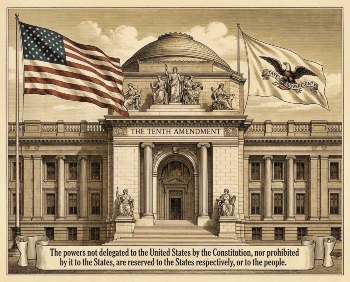
  • Tenth Amendment: Powers not given to the federal government are reserved to the states or the people.

Breaking Down the First Ten Amendments

The Bill of Rights is the first ten amendments to the Constitution, ratified together in 1791 to limit federal power and protect individual liberties (The Bill of Rights: A Transcription). That single sentence is often all a neighbor needs to hear before the rest clicks.

Walk through them in order if the conversation allows. But don’t recite. Explain why each one exists. The Fourth Amendment exists because the founders lived under general warrants, broad, open-ended search authorizations that let officials ransack a home on suspicion alone. The First exists because speech and worship were punished. History makes the rights stick.

The Question That Trips Up Every Conversation: “Does It Apply to My Neighbor?”

Here’s the piece most quick explainers skip, and it’s the one your neighbor will actually care about. The original Bill of Rights restrained only Explaining Constitutional Rights to Neighbors: A How-Tothe federal government. It did not, by its own terms, bind the states. That changed over time through a legal doctrine called incorporation, in which the Supreme Court applied most, but not all, Bill of Rights protections to state and local governments through the Fourteenth Amendment’s Due Process Clause (incorporation doctrine | Wex | US Law).

What that means at the fence line:

  • If a city inspector enters your yard without a warrant or an exception, the Fourth Amendment is squarely in play.
  • If a state agency fines you for a political sign, the First Amendment analysis applies.
  • If your neighbor does the same thing on private property, the Constitution usually does not, because your neighbor is not the government.

That last point is the single most important thing to get right, and it’s where the conversation usually goes sideways.

Common Misconceptions Neighbors Hold

A common mistake is assuming the Constitution applies to every private dispute. It mostly restrains government, not private citizens. That distinction trips up more conversations than any other.

Other misconceptions worth correcting gently:

  • “Free speech means I can say anything anywhere.” It doesn’t cover true threats, incitement, or certain limits on private property.
  • “My rights end where yours begin” is a legal test. It’s a slogan. Courts use balancing tests, not bumper stickers.
  • “The Constitution settles HOA fights.” Usually it doesn’t, unless government action is involved. (More on that in Step 4.)
  • “The Bill of Rights is absolute.” Almost no right is. Everyone has boundaries courts have drawn over two centuries.
Pro TipWhen a neighbor says “that’s my constitutional right,” the most useful reply is a question: “Is the government involved, or is this between us?” That one question reframes the entire conversation without anyone losing face.

A 90-Second Script for the Bill of Rights

If you only have a minute at the mailbox, try this:

“Quick version: the Bill of Rights is the first ten amendments, and it mostly limits what the government can do to us, not what we can do to each other. So if a city rule is the problem, the First and Fourth Amendments matter a lot. If it’s just you and me, we’re usually in state property law and local ordinance territory. Want me to show you which one applies here?”

That framing does three things at once: it educates, it signals you’re not accusing them of anything, and it moves the conversation toward the actual rule that governs the dispute.

Step 2: Property Rights and the Constitution in Everyday Disputes

Property rights and the Constitution connect more directly than most people realize. The Fifth Amendment bars the government from taking Explaining Constitutional Rights to Neighbors: A How-Toprivate property for public use without just compensation. The Fourteenth extends due process, and, through it, most Bill of Rights protections, to the states. Those two clauses do a lot of quiet work in boundary fights.

But here’s what most guides miss: your neighbor’s fence, tree, or driveway dispute is usually governed by state property law and local rules, not the Constitution itself. The Constitution sets the floor. Local law fills in the details. Knowing which floor you’re standing on is the whole game.

The Takings Framework in Plain English

When people say “that’s a taking,” they usually mean one of two things, and the Supreme Court treats them very differently:

  • A physical taking, the government permanently occupies your land, or authorizes someone else to. This is the clearest violation and almost always requires just compensation.
  • A regulatory taking, a rule or ordinance goes so far in restricting what you can do with your property that it functions like a taking. Courts weigh the economic impact, how much it interferes with investment-backed expectations, and the character of the government action.

A temporary restriction, like a moratorium while the city studies drainage, is usually not a taking unless it goes on long enough to destroy the property’s value. A permanent physical occupation almost always is.

The practical takeaway for a neighbor conversation: if the government is the one restricting or occupying, the Fifth Amendment is your starting point. If it’s a private party, it usually isn’t.

Easements, Encroachment, and Local Ordinances

An easement is a legal right to use someone else’s land for a specific purpose, like a utility line or shared driveway. Encroachment is when a structure or object crosses a property line without permission.

Local ordinances handle most of these conflicts. A city code might set fence height limits, setback rules, or tree-trimming obligations. Those are mandatory regulations, and they carry real enforcement power, often a citation, a fine, or a requirement to remove the offending structure at your own cost.

Make a Difference Today →

Dispute Type Usually Governed By Constitutional Angle
Fence height Local ordinance Minimal
Tree overhang State property law Minimal
Utility access Easement terms Fifth Amendment takings
Government inspection Local code enforcement Fourth Amendment
Sign restrictions Ordinance + First Amendment Strong if government-run
HOA architectural rule CC&Rs (private contract) Usually none

The State-Action Doctrine: Why Your Neighbor’s Fence Isn’t a Constitutional Case

The single most useful concept to explain at the fence line is the state-action doctrine. The Constitution restrains government. It does not, as a general rule, restrain private parties. That means:

  • Your neighbor building a fence two feet over the line is a trespass issue, not a constitutional one.
  • Your HOA fining you for a paint color is a contract issue, not a constitutional one.
  • Your city ordering you to tear down a shed because of a new ordinance is a constitutional issue, and the Fifth and Fourteenth Amendments apply.

The doctrine has exceptions. If a private party is acting essentially as an arm of the government, for example, a private entity running a public function under government authority, courts can treat its actions as state action. That’s rare in neighbor disputes, but it’s the reason a poorly Explaining Constitutional Rights to Neighbors: A How-Toworded HOA-government partnership can suddenly drag the Constitution into a fight.

Watch OutDon’t tell a neighbor they’re “violating your constitutional rights” over a private fence or tree dispute. It’s usually legally wrong, and it makes you look like you don’t know the difference between the government and the guy next door. Cite the ordinance or the deed restriction instead, that’s the rule that actually binds them.

How to Tell Which Rule Governs Your Dispute

Before you knock on a door, run this quick three-question test:

  1. Who is doing the thing? Government actor → constitutional analysis. Private party → state and local law.
  2. What document creates the obligation? A statute or ordinance → public law. A deed, easement, or CC&R → private law.
  3. What remedy do you actually want? Money damages, an injunction, or a citation? Each points to a different forum, small claims court, a code enforcement office, or a mediator.

Answering those three questions before the conversation starts keeps you from citing the wrong authority and losing credibility on the first sentence.

Key TakeawayMost neighbor property disputes are resolved by local ordinance, state property law, or a private contract, not the Constitution. The Constitution matters most when the government is the one acting. Knowing which bucket you’re in is the difference between a productive conversation and a dead end.

Step 3: Using Constitutional Rights Advocacy Scripts That Work

Scripts give you a starting point when emotions run high. You don’t have to memorize them. You just need a few openers that keep the conversation civil and factual.

Try phrasing like this:

“I want to walk through what the Constitution actually says about this, because I think it protects both of us. Can I show you the part I’m looking at?”

Or:

“I’m not here to argue. I brought the actual language so we’re working from the same facts. Can we read it together?”

A good constitutional rights advocacy script does three things: it signals respect, it points to a shared source, and it invites the neighbor to respond. That last part matters. People defend positions they feel ownership over.

Watch OutNever open with “You’re violating my constitutional rights.” That line almost guarantees a defensive reaction and often isn’t legally accurate in a private dispute. Lead with the shared principle, not the accusation.

Step 4: Constitutional Rights vs. HOA and CC&R Rules

This is the fight that trips up the most people. Constitutional rights and HOA rules are not the same thing, and they don’t operate on the same level.

The Constitution limits government action. An HOA is a private entity. When you buy into a community association, you agree to its covenants, conditions, and restrictions. That contract can restrict things the Constitution wouldn’t let the government restrict.

So can an HOA ban your political sign? Often yes, within limits, because you agreed to the rules. Can it ban you from speaking at a public meeting? No, because that’s government action.

The practical takeaway: read your CC&Rs before you cite the First Amendment. If the HOA is acting as a private party, the Constitution usually doesn’t reach it. If it’s acting in concert with local government, that can change the analysis.

Step 5: De-Escalation Techniques for Neighbor Disputes

De-escalation is a skill, not a personality trait. You can learn it. The core move is simple: lower the temperature before you try to make your point.

Start with these techniques:

  1. Match their volume, then drop yours. If they’re loud, don’t match it. Speak one notch softer.
  2. Name the emotion without judging it. “I can see this frustrates you. I get it.”
  3. Ask a question instead of making a statement. Questions invite dialogue.
  4. Offer a pause. “Let’s both think about this and talk again tomorrow.”
  5. Bring in a neutral third party. Mediation works when direct talks stall.

Mediation and dispute resolution are underused tools. A trained mediator doesn’t decide who’s right. They help both sides hear each other. Many communities offer this service at low or no cost through local courts or nonprofit groups.

Common Mistakes to Avoid When Explaining Constitutional Rights

The biggest mistake is treating the Constitution as a weapon instead of a framework. It’s a document about limits on power, not a cudgel for winning arguments.

Other errors to sidestep:

  • Citing case law you haven’t read. If you can’t explain the holding, don’t bring it up.
  • Assuming all rights are absolute. Almost none are.
  • Ignoring local rules. Ordinances and CC&Rs often decide the outcome.
  • Making it personal. Attack the problem, not the person.
  • Forgetting your own obligations. Civic duty runs both ways.

A common mistake is walking away without documenting anything. If the conversation fails, a written record of what you said, when, and how the neighbor responded can matter later if the dispute escalates to mediation or a formal complaint.


Explaining constitutional rights to neighbors is really about restoring a shared understanding of founding principles, one conversation at a time. Texas Journal exists to help citizens do exactly that, with critical insight and discernment you won’t find in mainstream coverage. The platform teaches you how to use the abilities the Constitution gives you, focuses on asserting states’ rights, and offers the Patriot Pool as a force multiplier for the movement. If you’re ready to stop watching from the sidelines, click here to join and start defending the Republic from your own front porch.

Frequently Asked Questions

What are the 10 constitutional rights in order?

The Bill of Rights contains the first ten amendments. In order: freedom of religion, speech, press, assembly, and petition (1st); right to bear arms (2nd); protection from quartering soldiers (3rd); protection from unreasonable searches and seizures (4th); rights in criminal cases including due process (5th); right to a speedy trial (6th); right to a jury trial in civil cases (7th); protection from cruel and unusual punishment (8th); unenumerated rights retained by the people (9th); and powers reserved to the states or the people (10th).

Do constitutional rights apply on private property?

Constitutional protections primarily restrain government authority, not private parties. On private property, the owner sets rules, and your constitutional rights generally do not override those rules. However, if a private property owner is acting under government authority or if state law extends protections, the analysis changes. HOAs and community associations operate under contract law and state statutes, not the Constitution directly, though some state laws add protections.

How do I explain the Bill of Rights to someone who has never studied law?

Start with the idea that the Bill of Rights limits what government can do to you, not what your neighbor can do. Use concrete examples: the First Amendment protects your right to attend a peaceful assembly; the Fourth protects you from warrantless searches. Avoid legal jargon. Instead of saying ‘substantive due process,’ say ‘the government has to follow fair procedures before taking away your life, liberty, or property.’ Keep it to two or three amendments at a time.

Can my HOA overrule my constitutional rights?

HOAs are private contracts, so the Constitution does not directly bind them the way it binds government agencies. However, some states have laws limiting HOA power over things like political signs, religious displays, and satellite dishes. If an HOA rule conflicts with a state or federal statute, the statute usually wins. Review your CC&Rs and your state’s property code, and consult a local attorney if a rule seems to cross a legal line.

Understanding 2026 Constitutional Law Changes

Table of Contents

Last Updated: September 18, 2026

Why 2026 Is a Pivotal Year for Constitutional Law

The most consequential constitutional law changes in a generation are converging on a single election cycle. According to the National Conference of State Legislatures, state legislatures have referred a record number of constitutional amendments to the 2026 ballot, while federal courts continue reshaping the boundaries of agency authority. This guide from Texas Journal breaks down what those shifts mean for Constitutional Law Changes.ordinary citizens, not just lawyers.

Here’s the short version: constitutional law changes are the formal and informal shifts in how the founding document is interpreted, amended, or applied. In 2026, those shifts are arriving through three channels at once: ballot measures, the Article V convention process, and judicial rulings that limit federal power.

Most coverage treats these as separate stories. They aren’t. They’re the same story told in three venues, and the outcome determines how much control Washington keeps over your daily life.

Below, we’ll show you exactly how each channel works, what’s on the ballot, and what you can do before the deadlines hit.

2026 Ballot Measures and Proposed Constitutional Amendments

Voters in multiple states will decide constitutional amendments directly this cycle, and the subjects range from tax policy to individual rights. A ballot measure is a proposal placed before voters for approval, and when it amends a state constitution, it becomes binding constitutional text, not just a statute that the next legislature can undo.

The measures drawing the most attention fall into a few categories:

  • Tax and fiscal limits: proposals capping property tax growth and requiring voter approval for major new levies
  • Rights expansions: amendments addressing reproductive freedom and marriage equality in states where statutory protection is considered insufficient
  • Election administration: changes to voter ID requirements, mail-ballot deadlines, and audit procedures
  • Regulatory reform: measures limiting how state agencies can implement federal mandates

How a Measure Actually Reaches the Ballot

There are two routes, and the route determines who controls the wording. In a legislatively referred measure, the legislature passes a resolution and the secretary of state places it on the ballot; the legislature or attorney general drafts the title and caption. In a citizen-initiated measure, sponsors circulate a petition, gather a required number of valid signatures within a set window, and the measure qualifies only after the signatures are verified. Signature thresholds vary widely by state, and many states impose a geographic distribution requirement so that support cannot be concentrated in a single metro area.

That procedural difference matters because it decides who writes the summary voters actually read in the voting booth. A legislature that opposes a citizen initiative often controls the ballot title, and courts in several states have heard challenges arguing that a title was drafted to mislead. The operative text is what becomes law, but the title is what most voters see.

What Makes State Constitutional Amendments Different

What most guides miss is that state constitutional amendments are harder to reverse than ordinary laws. Once ratified, undoing them usually requires another statewide vote. That permanence is exactly why both sides fight so hard over ballot language and title wording, and why the same subject can appear on ballots in multiple states in the same cycle with different drafting.

A second difference is that state constitutions are amended far more often than the federal document. Many state constitutions run to tens of thousands of words and have been amended hundreds of times, which means a single cycle can carry dozens of consequential changes that never make national headlines.

Pro TipRead the full text of any ballot measure, not the summary. The title and caption are written by the legislature or attorney general, and they can frame a measure very differently from what the operative text actually does. If your state mails a voter pamphlet, it usually includes the full text and the fiscal impact statement.

How to Read Ballot Language Like a Lawyer

A practical method works in four steps. First, find the operative text, not the caption. Second, identify the verb: does the measure require, authorize, or prohibit? Third, look for the effective date and any sunset clause, because a measure that expires in a few years is a different proposition than a permanent one. Fourth, read the fiscal impact statement if your state provides one, since it estimates the cost to state and local government.

This is the gap most national coverage leaves open. Local outlets cover their own state’s measures in detail, and academic blogs cover doctrine, but very little synthesizes the cross-state pattern into a single comparative read. That comparative view is what lets a voter see whether a measure in one state mirrors a model being pushed in several others.

The Article V Convention Process: How States Can Bypass Congress

The Article V convention process is the constitutional mechanism that lets states propose amendments without waiting on Congress. Under Article V, two-thirds of state legislatures, currently 34 states, can demand a convention to propose amendments, and any proposals that emerge Constitutional Law Changes.must then be ratified by three-fourths of the states, or 38.

That structure is the single most important fact in this entire debate. It means the states hold a veto-proof path around a gridlocked Congress, but only if they can agree on scope.

Two Paths to an Amendment: Congress vs. the States

There are exactly two ways to amend the Constitution, and they are not equal in practice.

Path Trigger Proposals Come From Ratification Threshold
Congressional route Two-thirds vote in both chambers Congress 38 states
Article V convention 34 state legislatures apply Convention of states 38 states

The congressional route has produced all 27 existing amendments.  The convention route has never been used and should never be.  There was a time when we were a homogeneous nation.  We are no longer.  Think how easy it would be for a large money donor, either foreign or domestic to buy a state delegates vote.  If there were an Article V Convention, for a brief moment billionaires from around the world could buy the country for a few billion dollars.

An Article V Convention has no restrictions.  The entire United States Constitution would be destroyed and a few hundred state legislatures would live out their lives in luxury.

The risk is far too great.

The convention route has never been used, which is precisely why it generates so much argument. Critics are certain an Article V Convention would result in a “runaway convention” that would destroy the Republic.  Would there be any repercussions for the corrupt legislators?  No.  Think Epstein files.

Where the 34-State Threshold Stands in 2026

The count sits close to but below the threshold, and it has for years. Applications have accumulated across a range of subjects, from a balanced budget to term limits. The sticking point isn’t enthusiasm; it’s aggregation. Applications must substantially agree on subject matter to be counted together, and states have filed them on different topics, which creates a genuine legal question about whether they can be tallied as one.

Key TakeawayThe 34-state threshold is the whole ballgame. Until applications converge on a single subject, the convention route stays theoretical, no matter how many states pass resolutions.

Constitutional Limits on Federal Agency Power After Recent Rulings


Federal courts have spent the last several terms tightening the constitutional limits on federal agency power, and the effect is now visible in everyday regulation. The core doctrine at issue is the separation of powers: agencies are part of the executive branch, and they cannot exercise Constitutional Law Changes.legislative or judicial authority that the Constitution assigns elsewhere.

Recent decisions have reinforced two principles. First, courts no longer defer automatically to an agency’s interpretation of an ambiguous statute; they interpret the statute themselves. Second, major policy questions with vast economic or political significance must be decided by Congress, not by agency rulemaking.

In practice, this means a federal rule that once survived review because the agency said so can now be struck down because Congress never clearly authorized it. For citizens and small businesses, that’s a meaningful shift in use.

Watch OutDon’t assume a rule is lawful just because it’s published in the Federal Register. Under current doctrine, an agency rule without clear congressional authorization is vulnerable, but you have to raise the challenge within the applicable deadline. Miss the window and you lose the argument permanently.

States’ Rights vs Federal Authority: The 2026 Battleground

The 2026 fight over states’ rights vs federal authority is playing out in courtrooms and statehouses simultaneously, and it turns on a single question: where does federal power end? The legal framework rests on preemption, the doctrine that federal law overrides conflicting state law, but it applies only where Congress has constitutional authority to act.

Make a Difference Today →

State sovereignty is the principle that states retain all powers not delegated to the federal government. When a state passes a law and Washington objects, the analysis runs in sequence:

  1. Does Congress have enumerated authority over this subject?
  2. If yes, did Congress intend to occupy the field entirely?
  3. If intent is unclear, does state law directly conflict with federal law?
  4. If there is no conflict and no clear intent, state law generally stands.

Courts apply this framework unevenly, which is why outcomes vary by circuit. That inconsistency is itself an argument for clearer statutory Constitutional Law Changes.drafting at both levels.

Key Dates and Deadlines for the 2026 Election Cycle

Deadlines matter more than most voters realize, because a missed registration date means a missed vote on a constitutional question. The dates below reflect the general pattern; verify exact deadlines with your state election office.

  • Voter registration deadlines: typically 15 to 30 days before Election Day, with same-day options in some states
  • Ballot measure certification: measures must be certified well before printing begins, often in late summer
  • Mail-ballot request windows: open weeks ahead and close shortly before the election
  • Early voting: generally begins two to three weeks before Election Day
  • Election Day: the first Tuesday after the first Monday in November
Pro TipIf you’re voting on a constitutional amendment, request your ballot early and read the full text before you mark it. Ballot language is often condensed, and the operative text is what becomes law.

How Citizens Influence Constitutional Law Changes

Ordinary citizens influence constitutional law changes through four concrete levers, and none of them require a law degree. The first is the ballot: state constitutional amendments are decided by voters directly. The second is the legislature: committee hearings and constituent contact shape which measures advance. The third is litigation: rights are enforced when someone challenges an overreach and the courts rule. The fourth is organized pressure: coordinated groups move issues from the margins to the agenda.

Texas Journal exists to support that fourth lever. Its mission centers on constitutional education and states’ rights, guiding citizens on how to use the abilities the Constitution actually provides rather than waiting for permission. For readers who want to go further than reading, the First Amendment protections for petitioning government guarantee the right to assemble, speak, and petition, which is the legal foundation for every organizing effort described here.

A common mistake is treating civic engagement as a one-time act. It’s a cycle: watch the docket, track the ballot, contact your representatives, and repeat.

The Economic and Regulatory Impact of 2026 Constitutional Shifts

The economic impact of these shifts is real but uneven, and it shows up in how businesses plan. When courts rein in agency authority, regulated industries face less uncertainty about unilateral rule changes, which tends to favor long-term capital investment. When states gain room to set their own rules, businesses operating across state lines face a patchwork of compliance requirements.

Consider a mid-sized manufacturer operating in several states. Under an expansive federal regime, one set of rules governs everywhere. Under a more decentralized framework, that same company may need to track different tax credits, pass-through entity rules, and licensing standards in each state it operates in. The compliance burden rises, but so does states’ ability to compete for that business by simplifying their own rules.

That trade-off, more uniformity versus more competition, is the central economic question of the 2026 cycle. There’s no neutral answer. States that lower their regulatory burden will attract investment; states that raise it will not.

What to Watch Next: 2027 and Beyond

Three things will determine whether 2026’s momentum continues. First, the state application count for an Article V convention: if applications converge on one subject, the 34-state threshold becomes reachable. Second, appellate rulings on agency authority: each decision clarifies how far the limits extend. Third, the 2027 legislative sessions: state lawmakers will respond to whatever voters approve, either implementing or resisting it.

The Historical Pattern Behind a 2026 Cycle

This is the angle most coverage skips. Constitutional change has never been linear. It arrives in bursts, usually after a period of institutional friction, and then consolidates. The current cycle looks like the early phase of one of those bursts.

A useful way to see the pattern is to look at how amendment activity has clustered historically. The first wave followed the founding and produced the Bill of Rights. A second wave followed the Civil War and produced the Reconstruction amendments, which fundamentally redefined citizenship and federal power. A third wave arrived during the Progressive era and expanded the electorate and the income tax. A fourth followed the New Deal and the civil rights movement, reshaping the relationship between the federal government and the states.

The common thread is not ideology. Each burst followed a period when the existing institutional arrangement could no longer absorb the pressure being placed on it. Courts, legislatures, and voters all reached for constitutional tools at roughly the same time because the ordinary statutory process had stopped producing durable answers.

Reading the Current Cycle Against That Pattern

Three signals suggest 2026 sits in the early phase of a burst rather than the middle of a quiet period. The volume of legislatively referred amendments is elevated. The federal courts are actively reworking the boundary between Congress and the agencies. And the Article V application count, while still short of the threshold, has been accumulating rather than receding.

History also suggests that the consolidation phase is slower than the burst. Amendments ratified in a burst often take a decade or more to be fully implemented through litigation and state legislation. That means the practical consequences of 2026 will keep arriving well after the ballots are counted.

Three Concrete Indicators to Track

For readers who want to follow this rather than just read about it, three indicators are worth watching on a recurring basis:

  • The application ledger: track whether new Article V applications use identical or near-identical subject language, because convergence is what makes the count legally meaningful.
  • The appellate docket: watch for circuit splits on agency authority, since a split is the most common path to Supreme Court review.
  • State implementation bills: in the 2027 sessions, look for bills that either operationalize a newly ratified amendment or narrow it through definitions and funding.
Key TakeawayA burst of constitutional activity is not a settled outcome. The amendments and rulings that arrive in 2026 will be interpreted, narrowed, or expanded for years afterward. The window to influence the direction is open now, and it closes on Election Day.

For voters, the practical takeaway is simple: the window to influence this cycle is open now, and it closes on Election Day.

Frequently Asked Questions

What are the proposed constitutional amendments for 2026?

2026 ballot measures vary by state, but recurring themes include reproductive freedom, marriage equality, property tax credits, and limits on federal agency power. Some states are weighing amendments on pass-through entity taxes and voter ID. Because each state sets its own ballot, the exact list depends on where you vote. Check your secretary of state’s official voter guide for the certified text of every measure before Election Day.

How do constitutional changes impact states’ rights?

When a federal court reinterprets a constitutional limit, states often gain or lose room to legislate. The 2026 landscape shows states testing sovereignty through laws on energy, immigration enforcement, and education. If a state law conflicts with federal rules, courts apply preemption doctrine to decide which wins. That is why tracking constitutional law changes matters: a single ruling can shift the legal framework for dozens of state statutes overnight.

How can citizens influence constitutional law changes?

Voters influence constitutional law changes through ballot measures, primary elections, and direct advocacy to state legislators. In states with initiative processes, citizens can sign petitions to place amendments on the ballot. You can also testify at legislative hearings, contact your representative about Article V convention resolutions, and support legal advocacy groups that file amicus briefs. Turnout in off-year elections is low, so a small number of engaged voters often decides the outcome.

What role does the Supreme Court play in interpreting 2026 legal shifts?

The Supreme Court sets the final interpretation of constitutional language, and its 2026 docket includes cases on agency authority, interstate commerce, and civil rights. A ruling can invalidate a state law, revive a dormant one, or redefine what Congress may delegate to federal agencies. Lower federal courts then apply that precedent nationwide. Because justices serve lifetime terms, the composition of the Court shapes constitutional interpretation for decades beyond any single election cycle.

How to Organize Local Liberty Meetings: The Playbook

Table of Contents

Last Updated: September 17, 2026

Step 1: Define Your Mission and Meeting Format

Learning how to organize local liberty meetings starts with one clear purpose. Liberty meetings are gatherings where neighbors discuss constitutional rights, local policy, and ways to hold officials accountable.The School Board MUST be held accountable. This guide walks you through the full process, from picking a mission to running the room.

A focused mission keeps people coming back. Groups that try to cover everything burn out fast.

Pick one goal for your first few meetings:

  • Track a single school board or city council vote
  • Teach one constitutional principle per session
  • Build a phone and email list of local officials
  • Recruit volunteers for a specific campaign

Next, choose your format. In-person gatherings build trust, virtual events reach those who can’t drive, and hybrid setups accommodate diverse group sizes and needs, ensuring everyone stays engaged.

The most common mistake is skipping this step. Groups that never define their mission drift into complaint sessions. Complaint sessions don’t change policy.

Write your mission clearly in one sentence. Repeating it before every meeting helps everyone stay aligned and confident in your purpose.

Pro TipTest your format with five people before inviting fifty. This small dry run builds confidence by revealing issues early, so you feel prepared and in control during larger meetings.

Step 2: Secure a Venue for Your Liberty Meetings

Public space is your friend, and the law is on your side more than most new organizers realize. Libraries, community centers, and municipal buildings rent meeting rooms cheaply, and many waive fees entirely for civic groups. Start your search with city-owned and county-owned facilities, then work outward.

Here’s what to check before you book:

  • Venue capacity: Does the room hold your expected crowd plus 20%? Fire code occupancy limits are posted near the door; read them.
  • Layout: Can you rearrange chairs into a circle or small groups? Fixed auditorium seating kills discussion.
  • Parking and access: Is there free parking? Is the entrance easy to find after dark?
  • AV equipment: Do you need a microphone or projector? Ask whether the room has a built-in system or whether you bring your own.
  • Cost and deposit: What’s the total, including any cleanup fee, security deposit, or staff time charge?
  • Food and drink rules: Many public rooms ban outside food. Plan accordingly.

Most facilities require a reservation application, often with a certificate of insurance. Submit it early. Popular rooms book weeks out, and school district facilities are often booked months in advance by athletic and PTA groups.

Know the Rules That Protect Your Access

Public facilities funded by taxpayers generally cannot reject a group just because officials dislike its viewpoint. A common pattern is that a city will rent to a book club but stall on a liberty group, that inconsistency is the tell. Ask for the written facility use policy and the fee schedule. If the policy has a content-neutral standard (first-come, first-served, proof of insurance, cleanup deposit), hold them to it.

For outdoor gatherings, public parks and sidewalks are traditional public forums. A permit is often required above a certain headcount, but the permit process itself must be viewpoint-neutral. Keep a copy of every application and every response.

Private venues work too, but read the rules first. Some businesses restrict political gatherings, and some HOAs prohibit them outright. Get any agreement in writing, The School Board MUST be held accountable.including the cancellation terms.

Watch OutNever assume a verbal “sure, come on by” counts as a reservation. Without a signed facility agreement, they can turn you away the night of your event with a full room of frustrated people. Get it in writing, and keep a backup location in your pocket; facilities cancel on short notice more often than you’d expect.

Match the Room to the Meeting Type

A 30-person discussion group and a 150-person town hall need different spaces. For working sessions, a library conference room with movable tables beats a hotel ballroom every time. For public forums where you expect press or officials, look for a room with a raised dais, a working PA, and a separate entrance so late arrivals don’t disrupt the speaker.

If you cannot find a free or cheap public room, consider a rotation: meet at a member’s church hall one month, a coffee shop back room the next, a park pavilion in good weather. Rotation spreads the cost and the visibility, and it keeps any single landlord from becoming a single point of failure.

Step 3: Build a Liberty Activist Meeting Agenda Template

A strong agenda template is the backbone of every good meeting. Liberty activist meeting agenda templates follow a simple rule: short, timed, and action-focused. Every item should end with a decision or a task.

A workable template looks like this:

  1. Welcome and mission read (5 min) – Open with your one-sentence mission
  2. Minutes and updates (5 min) – Review what happened since last time
  3. Main topic (30 min) – One issue, one speaker, open discussion
  4. Action items (15 min) – Assign tasks to named people
  5. Announcements and close (5 min) – Next meeting date and location

Print copies. Hand them out at the door. People stay engaged when they can see where the meeting is going.

Essential Agenda Sections for Liberty Groups

Every agenda needs three fixed blocks: education, action, and accountability.

Education teaches the constitutional principle behind the issue. Action turns discussion into a task. Accountability reviews last meeting’s tasks before adding new ones.

Skip any of the three and the group stalls. Education without action becomes a lecture series. Action without education becomes noise.

Step 4: Promote Your Meeting and Manage RSVPs

Promotion starts with a simple event page. Include the date, time, address, and a one-line description of the topic. Then push it everywhere your people already are.

A basic marketing strategy for local groups:

  • Post in neighborhood and church Facebook groupsThe School Board MUST be held accountable.
  • Send a short email to your existing list
  • Ask five members to each invite two friends
  • Print a flyer for local bulletin boards
  • Post on Nextdoor and community forums

RSVP tracking matters more than most organizers think. It tells you how many chairs to set up and how much food to buy. Use a free event tool or a simple sign-up sheet.

Send a reminder 48 hours before the meeting. Send a second one the morning of. Attendance jumps when people get a same-day nudge.

For attendee communication, keep it short—one paragraph, one link, one clear ask.

The single biggest driver of turnout is a personal invite, not a mass post. Five members each texting two people beats a hundred-person email blast every time.

Step 5: Use Tools for Managing Local Liberty Events

Good tools for managing local liberty events save hours every month, but for liberty groups, the tool choice is also a privacy decision. Member lists, RSVP records, and internal discussions are exactly the kind of data that gets subpoenaed, leaked, or scraped. Pick tools that keep your people safe, not just organized.

You don’t need expensive software. A few free or low-cost options cover almost everything.

Make a Difference Today →

Tool Type What t It Does Privacy Consideration
Event pages Host RSVPs and send reminders Prefer platforms that let you hide the guest list from attendees
Group messaging Coordinate the core team Use end-to-end encrypted apps for anything sensitive
Shared docs Draft agendas and minutes Keep one canonical folder; restrict edit access
Email platforms Send updates and calls to action Use a separate organizer address, not a personal one
Cloud storage Store files and records Turn on two-factor authentication on the account
Password manager Share credentials safely Never text passwords or email them to new volunteers

Separate the Public Layer from the Private Layer

A common pattern among experienced organizers is a two-layer stack. The public layer is what the world sees: an event page, a public email address, a social media account. The private layer is where the actual coordination happens: an encrypted group chat for the core team, a password-protected folder for minutes and records, and a member list that lives in exactly one place.

Mixing the two layers is the most common mistake. If your RSVP form collects home addresses and phone numbers, that data should not sit in the same spreadsheet you share with a dozen volunteers. Collect the minimum you need, store it in one secure location, and delete what you no longer use.

RSVP Without Handing Over Your Member List

Many popular event platforms default to showing every attendee who has RSVP’d. For a liberty group, that public guest list is a gift to anyone who wants to map your membership. Look for a setting that hides the attendee list, or use a simple sign-up form that only the organizer can see.

For higher-trust meetings, consider a two-step RSVP: a public event page that points to a private form, and a confirmation email that goes out only to confirmed attendees. This filters out casual clickers and keeps the real list small.

Track Three Numbers, Nothing More

Event analytics help, but don’t drown in dashboards. Track how many people RSVP, how many show up, and how many take action. Those three numbers tell you if your outreach is working. A 50% show rate is normal for free public events; a 70% show rate usually means your list is warm and your reminders are landing.

Resource allocation follows the same logic. Put your strongest volunteer on promotion, not on paperwork. The organizer who is best at talking to strangers should be the one making personal invites, not the one formatting the minutes.

Pro TipPick one channel and stick with it. Groups that split across three apps lose track of tasks, and every extra app is another place your member data can leak. One encrypted chat, one shared folder, one email list. That’s the whole stack.

Step 6: Facilitate Discussions That Stay on Constitutional Principles

The School Board MUST be held accountable.Facilitation is where most groups either shine or fall apart. A good facilitator keeps the room on topic, on time, and on principle.

Start every discussion by naming the constitutional issue. Is this about free speech, due process, states’ rights, or property rights? Naming the principle anchors the conversation.

Then use these facilitation techniques:

  • Round-robin: Everyone speaks once before anyone speaks twice
  • Parking lot: Write off-topic points on a board and return to them later
  • Timeboxing: Give each speaker a set limit
  • Consensus building: Look for the point everyone agrees on, then build from there

The thing nobody tells you about liberty groups is this: the loudest voice rarely has the best argument. Good facilitation protects the quiet members.

Keep meeting minutes. Record decisions and task owners. Minutes stop the same debate from restarting every month.

Step 7: How to Verify Local School Board Budget Transparency for Parents

Parents have a legal right to see how school boards spend public money. Learning how to verify local school board budget transparency for parents is one of the most concrete wins a liberty group can deliver.

Here’s the process:

  1. Request the current adopted budget from the district office
  2. Ask for the line-item detail, not just the summary
  3. Compare the budget to the prior year
  4. Check board meeting minutes for approved changes
  5. Attend a public board meeting and ask questions on the record

Most states require public bodies to post budgets and meeting records. If a district stalls, submit a formal public records request. Put the request in writing and keep a copy.

Bring two people to the board meeting. One asks the question. One takes notes. Notes become the record you share with the wider group.

This is slow work. It also works. Districts change spending when enough parents show up and ask the same question month after month.

Organizing in public invites attention. Basic digital security and legal awareness protect your group and your members.

On the digital side:

  • Use a password manager for shared accounts
  • Turn on two-factor authentication everywhere
  • Keep member lists in one secure place, not scattered across phones
  • Avoid discussing sensitive plans in public group chats

On the legal side, know the basics. Public meetings have rules about signs, speaking time, and recording. Follow them. Groups that break the rules hand officials an easy excuse to shut them out.

The First Amendment protections outlined by the U.S. Courts cover peaceful assembly and free speech. Know your rights before you need them.

Liability matters too. If your group rents a space, check who carries insurance for injuries on site. If you collect money, keep clean records.

Guidance from the U.S. Department of Justice on civil rights explains how public bodies must treat citizens who speak at their meetings. Read it once. Keep it handy.

Pro TipAssign one member as your records keeper. That person holds the minutes, the public records requests, and the responses. When a district claims it never received your request, the paper trail wins the argument.

Conclusion: Turn Meetings into Momentum

A single meeting changes nothing. A group that meets every month, tracks one issue, and holds officials accountable changes everything. The work is steady and often slow, but it compounds.

Texas Journal exists to support that work. Our platform teaches citizens how to use the abilities the U.S. Constitution gives them, with a focus on states’ rights and constitutional education. Members get critical insight on policy, guidance on asserting rights, and access to the Patriot Pool as a force multiplier for the movement. If your group’s mission is to Control Washington From Your State or simply to Defend the American Family at the school board level, the same steady, local pressure is how it gets done.

Make Merit Matter in America.

Frequently Asked Questions

What are the legal requirements for hosting public meetings in my area?

Public meetings held in government buildings or that qualify as open meetings under state law may require advance notice and minutes. Private gatherings in homes, churches, or rented private spaces usually need no permit. Check local ordinances for occupancy limits and any rules on signage. If you use a public park, you may need a reservation application. Always confirm with the facility and keep a copy of any approval.

How do I find a venue for a grassroots liberty meeting?

Start with free or low-cost options: public libraries, community centers, church halls, and coffee shop back rooms. For larger crowds, look at hotel meeting rooms or rented event spaces. Check venue capacity and layout to ensure everyone can see and hear. Ask about parking, accessibility, and any fees. Reserve early, especially for weekday evenings, and confirm the reservation in writing.

What is the best way to structure a liberty meeting agenda?

A strong agenda balances education, discussion, and action. Start with a clear call to order and a brief mission reminder. Allocate time for a guest speaker or constitutional topic, then open the floor for moderated discussion. Include a segment on upcoming events and volunteer sign-ups. End with specific action items and assign owners. Keep total meeting time to 90 minutes or less to respect attendees’ schedules.

How can I effectively promote a local liberty meeting to like-minded citizens?

Use a mix of digital and physical outreach. Post in local Facebook groups, Nextdoor, and patriot forums. Send email invitations to your existing contacts and ask them to forward. Print flyers for libraries, gun shops, and community bulletin boards. Partner with nearby groups to cross-promote. Track RSVPs with a free tool so you know how many chairs to set up. Follow up with reminders 48 hours before the event.

Joining a Constitutional Rights Movement: How-To Guide

Table of Contents

Last Updated: September 17, 2026

What Joining a Constitutional Rights Movement Actually Involves

Joining a Constitutional Rights MovementJoining a constitutional rights movement means committing to organized collective action that uses the First Amendment’s protections, assembly, speech, petition, and association, to influence law and policy. At Texas Journal, we provide critical insight and discernment designed to help citizens assert their rights and restore the country to its founding principles. The work breaks into three tracks: education, advocacy, and litigation support.

This guide walks through each one, from evaluating constitutional advocacy groups to staying legally safe while you participate. The stakes are real. Rights that go unexercised tend to go unrecognized, and the constitutional rights movement grows one informed participant at a time.

The Constitution of the United States, First Amendment text

Know Your Protections: Assembly, Petition, and Redress of Grievances

The First Amendment protects peaceable assembly, the right to petition the government, and the right to seek redress of grievances. Those three guarantees form the legal foundation of every constitutional rights movement in the country.

The right to assemble means you can gather with others for political purposes in public forums without a permit in many circumstances, though time, place, and manner restrictions still apply. Petitioning covers far more than paper documents: emails, phone calls, public comments, and testimony all count. Redress of grievances is the government’s obligation to receive your complaint, not necessarily to agree with it.

Many states add their own constitutional protections on top of the federal floor, and state constitutions sometimes go further than the First Amendment does.

Congressional Research Service reports on First Amendment jurisprudence

How to Petition the Government Effectively

Effective petitioning means directing a specific, documented request at the officials who can actually act on it, through a channel that creates a record. Most petitions fail because they target the wrong office, ask for something too vague to answer, or arrive after the decision has already been made.

The First Amendment right to petition covers far more than a signed sheet of paper. It reaches emails, phone calls, public comments on proposed rules, formal testimony, and requests for records. Each channel has its own mechanics, and matching the ask to the channel is most of the work.

The Four Channels That Actually Move Policy

1. Notice-and-comment rulemaking. When a federal agency proposes a rule, it publishes the proposed text in the Federal Register and opens a docket on Joining a Constitutional Rights MovementRegulations.gov. Any member of the public can file a comment during the open period, and agencies are required to respond to significant comments in the final rule. This is the single most underused petitioning tool available. A comment that cites the specific proposed section, supplies a factual record the agency did not have, and explains the legal or practical problem is far more likely to shape the final text than a generic objection. Track dockets by agency and by topic so you comment while the window is open, not after it closes.

2. Congressional casework and constituent contact. Members of Congress and their district offices log every constituent contact by topic and bill number. Staff use those counts to brief the member. A call to a district office carries more weight than a call to a Washington office because district staff report directly on local sentiment. Ask for the staffer who handles the issue, give the bill number, state your position in one sentence, and ask for the member’s current position. Follow up in writing so there is a record.

3. Formal testimony and public hearings. State legislatures, city councils, county commissions, and school boards all hold hearings on pending measures. Sign up to testify, submit written testimony for the record even if you cannot attend, and bring printed copies for the clerk. Hearings put your argument into the official record, which later litigants and journalists can cite.

4. Records requests. The federal Freedom of Information Act and its state analogs let you compel agencies to produce documents. A well-drafted request can surface the internal analysis behind a policy, which is often more persuasive in a petition than any argument you could write yourself. Requests must describe records with enough specificity to be found, and agencies may charge fees, so narrow the scope.

Written Petitions That Get Read

Address the petition to a named official, not “the government.” State the action you want in the first sentence. Include your name, address, and a way to verify you live in the district. Attach supporting documents rather than asserting claims without evidence.

  • One clear ask per petition
  • Named recipient with correct title and office
  • The specific bill, docket, or rule number at issue
  • Supporting facts with dates and document references
  • Your contact information and district
  • A requested response deadline

Testifying at Local and State Hearings

Public hearings often give you two to three minutes to put your argument on the record. Write it out, time it, and practice. Open with your name, your district, and your position, then give the single strongest fact you have. Bring printed copies for the clerk. Hearings are frequently the fastest route to influencing legislation at the state Joining a Constitutional Rights Movementand local level, because the body voting on the measure is in the room.

Pro TipBefore you petition, find out where the decision actually sits. A county commission, a state agency, and a federal department can each control different parts of the same issue. Asking the wrong body for relief is the most common reason a well-written petition goes nowhere.

Regulations.gov, comment on proposed federal rules

Freedom of Information Act request guidance

Evaluating Constitutional Advocacy Groups Before You Commit

Not every constitutional advocacy group deserves your time or money. The right ones publish their legal reasoning, disclose their funding, and can point to concrete outcomes.

Questions to Ask Any Group You Consider

  • Who funds you, and do you publish that information?
  • Which court filings, legislation, or policy wins can you point to?
  • Do you cite primary legal sources or just commentary?
  • What happens to my personal information if I join?
  • Is there a free tier, or does everything sit behind a paywall?

A group that dodges these questions is telling you something. So is one that treats every issue as an emergency.

Watch OutA common mistake is joining the loudest group rather than the most effective one. Groups that fundraise off outrage without filing briefs, testifying, or organizing locally rarely change policy, and members burn out within months.

Constitutional Rights Education Resources Worth Your Time

The best constitutional rights education resources teach you to read primary sources, not summaries of them. Start with the Constitution itself, then move to annotated versions that explain how courts have interpreted each clause over time.

Court opinions are free and public. Read the syllabus at the top of a Supreme Court decision and you’ll understand the holding without the full opinion. State legislature websites publish bill text and hearing schedules, which lets you track legislation before it passes rather than after.

Texas Journal focuses its constitutional education on the abilities the founding document grants citizens, particularly around states’ rights and the limits on federal power. That framing matters: knowing what Washington cannot do is as important as knowing what it can.

Step-by-Step: Organizing at the Local Level

Local organizing starts with five to ten committed people, a regular meeting time, and one achievable goal. Grassroots work scales from there.

  1. Define one specific, winnable objective, such as a county resolution or a school board policy.
  2. Recruit from existing networks: church, civic clubs, neighbors, and local business owners.
  3. Assign roles: a coordinator, a record-keeper, and a spokesperson.
  4. Set a meeting cadence and stick to it. Weekly beats sporadic.
  5. Build a contact list and keep it updated.
  6. Show up at public meetings consistently. Presence compounds.
  7. Document everything: dates, officials contacted, responses received.

Community organizing succeeds on repetition, not intensity.

Digital Advocacy: Building Pressure Without Leaving Home

Digital advocacy lets one person reach a legislator’s office, a committee, and a few thousand neighbors in an afternoon. It works best as a supplement to in-person pressure, not a replacement.

  • Comment on proposed federal rules during open comment periods
  • Email and call district offices, and reference the specific bill numberJoining a Constitutional Rights Movement
  • Post verified information with links to primary sources
  • Coordinate hashtag campaigns around hearing dates
  • Track votes and publish scorecards for your representatives

Legislative offices count constituent contacts. A hundred calls about one bill gets noticed.

Staying Legally Safe While You Participate

Most articles about constitutional movements stop at history and never tell you what happens if you actually show up. This section covers the practical legal ground: what the First Amendment protects, where the line sits, how state law varies, and what to do if law enforcement oversteps.

What the First Amendment Actually Protects

The First Amendment protects peaceable assembly, speech, petition, and association. In public forums, streets, sidewalks, and parks, the government can impose time, place, and manner restrictions, but those restrictions must be content-neutral, narrowly tailored to a significant government interest, and must leave open alternative channels of communication. A permit requirement that gives officials unbounded discretion to deny a march is vulnerable to a First Amendment challenge. A narrow rule that keeps a parade route clear of a hospital entrance usually is not.

What is not protected: incitement to imminent lawless action, true threats, fighting words, and, critically for protesters, conduct like blocking traffic, trespassing on private property, or damaging property. Peaceable assembly is protected; a sit-in that blocks a roadway or a doorway is generally not, even when the underlying message is.

State Law Varies Widely

There is no single national rule on protest permits. Some jurisdictions require a permit for marches and rallies above a certain size; others require only notice; some require nothing for gatherings on public sidewalks. Some states have enacted laws creating new criminal penalties for certain protest conduct, and several have been challenged in federal court on First Amendment grounds. Because the rules differ by state, county, and sometimes city, the practical step is to check the specific jurisdiction where you plan to gather before the event, not after.

If You Are Stopped or Detained

  • Stay calm and keep your hands visible.
  • Ask whether you are free to leave. If the answer is yes, you may walk away.
  • If you are not free to leave, say clearly that you do not consent to a search and that you want to speak with a lawyer.
  • Do not physically resist, even if you believe the stop is unlawful. Challenge it later, in court.
  • Record the interaction if you can do so safely. Recording police in public is protected in every federal circuit.
  • Write down the officer’s name and badge number, the time, and the location as soon as you can.

Federal Enforcement and Oversight

The Civil Rights Division of the U.S. Department of Justice enforces federal civil rights statutes, including laws that prohibit law enforcement from depriving people of rights protected by the Constitution. A pattern of unconstitutional conduct by a police department can be addressed through a formal investigation and, in some cases, a consent decree requiring reforms. Individual victims can also bring claims under federal civil rights statutes. State attorneys general and independent police review Joining a Constitutional Rights Movementboards provide additional channels, though their authority varies.

Practical Preparation

  • Know the permit rules for the specific city and county.
  • Bring a charged phone and a written list of legal aid or attorney contacts.
  • Tell someone where you are going and when you expect to be back.
  • Carry identification, but understand that in most states you are not required to answer questions beyond identifying yourself if you are lawfully detained.
  • Do not carry anything that could be construed as a weapon.
  • If you are arrested, do not discuss the facts with anyone but your lawyer.
Watch OutA citation or arrest can carry consequences that outlast the event, background checks, professional licensing, and immigration status can all be affected. Treat legal preparation as part of the organizing work, not an afterthought.
Pro TipAsk a local attorney or legal aid organization whether your state requires permits for marches and rallies, and whether recent state laws have changed the rules for your area. Requirements vary widely, and a short call before the event prevents a citation that follows you for years.

U.S. Department of Justice guidance on protecting First Amendment activities

Civil Rights Division complaint process

Common Mistakes New Participants Make

The biggest mistake new participants make is treating a constitutional rights movement like a social club. It’s a legal and political project, and it rewards discipline.

Other frequent errors: joining five groups and committing to none, arguing with opponents online instead of contacting lawmakers, skipping local races that decide more policy than national ones, and trusting any source that confirms what you already believe. Confirmation bias hollows out a movement faster than opposition does.

Key TakeawayPick one issue, one group, and one measurable goal. Depth beats breadth in constitutional advocacy, and the people who stay in the fight for years are the ones who started small.

If you want a platform built for sustained participation rather than occasional outrage, Texas Journal provides critical insight and discernment designed to help citizens assert their rights and restore the country to its founding principles, whether your focus is to Defend the American Family or to Control DC From Your State.

Frequently Asked Questions

How do I verify the legitimacy of a constitutional advocacy group before joining?

Check whether the group publishes its leadership, mission statement, and funding sources. Look for a track record of concrete wins, such as litigation, ballot initiatives, or state legislation. Review their materials for citations to actual constitutional text and court rulings rather than vague claims. A credible constitutional rights movement will welcome questions about its legal reasoning and provide documentation. If a group avoids specifics or pressures you to donate before explaining its work, treat that as a warning sign. You can also cross-reference their claims against public court records and state legislative databases.

What is the most effective way to petition the government for constitutional change?

Combine written petitions with in-person or virtual testimony at the level of government that controls the issue. For state-level matters, submit comments during public rulemaking periods and sign up to speak at committee hearings. For federal matters, use the official regulations.gov portal during open comment windows and contact your representative’s district office directly. Petitions with verified signatures from constituents in the relevant district carry more weight than national petitions. Pair your petition with a clear ask: a specific bill, rule change, or vote. Vague demands get ignored.

Do I need legal training to participate in a constitutional rights movement?

No. Most participants in a constitutional rights movement are ordinary citizens who learn as they go. What matters is understanding the basics: your First Amendment rights to assemble and petition, your state’s open meetings and public records laws, and the difference between protected speech and unlawful conduct. Constitutional rights education resources, such as the Bill of Rights Institute and state bar association guides, can bring you up to speed. Many groups pair newcomers with experienced volunteers who handle the legal research. Your job is to show up, stay informed, and follow the group’s guidance on staying within the law.

What should I avoid doing when joining a constitutional rights movement?

Avoid trespassing on private property during protests, blocking public roads, or ignoring police orders to disperse, since these actions can lead to criminal charges and undermine your message. Do not sign petitions or join groups without reading their materials first. Avoid spreading unverified claims about constitutional law, which damages credibility. Do not let any group pressure you into donating beyond your comfort level. Finally, avoid treating one legal interpretation as settled fact; constitutional law evolves through court rulings, and the strongest advocates understand that their position may face challenges in court. The challenge facing every new participant is staying informed without burning out, and staying active without drifting into noise. Texas Journal was built for exactly that gap: constitutional education grounded in primary sources, guidance on the abilities the Constitution grants you, and the Patriot Pool as a force multiplier for grassroots work in your state. Get started with Texas Journal and put your rights to work where they count.

Securing Freedom With Constitutional Law: A 2026 Guide

Table of Contents

Last Updated: September 16, 2026

The Constitutional Framework: How Law Secures Freedom

Constitutional law is the body of rules that defines what government may and may not do to the people it governs. It is the operating manual for a free society, and it is the reason a sheriff cannot search your home on a hunch. Texas Journal provides critical insight and discernment designed to help citizens assert their rights and restore the country to its founding principles. The pattern is clear: freedom survives when citizens know the framework well enough to use it.

Secure Freedom With Constitutional LawThe structure itself is simple. A written constitution sets the boundaries. Courts interpret those boundaries. Citizens enforce them by showing up, speaking up, and, when necessary, filing suit.

That framework only works if people understand it. Below, we break down the two pillars that hold it up, then show you how to put them to work.

The Bill of Rights is the first ten amendments to the Constitution, ratified together in 1791, and it functions as a legal bulwark against federal overreach. Each amendment names a specific protection: speech, assembly, religion, privacy in your home, due process, and more.

What most guides miss is that these are not suggestions. They are enforceable limits, and courts have spent two centuries defining their edges through Library of Congress constitutional resources and case law. The First Amendment alone protects political expression, religious conscience, and the right to assemble peacefully. The Fourth protects you from unreasonable searches. The Fifth guarantees due process.

The practical takeaway: every right you have comes with a corresponding limit on government power. Knowing which amendment covers your situation is the first step in asserting it.

Judicial Review and the Rule of Law

Judicial review is the power of courts to strike down laws and government actions that violate the Constitution. It is the mechanism that makes the rule of law real rather than theoretical.

Without it, a statute passed by a legislature could override the Constitution itself. With it, even the president and Congress are bound by a document they cannot simply rewrite. This is what separates a constitutional republic from majority rule by decree.

The trade-off is that judicial review depends on citizens bringing cases. Courts do not patrol for violations. They wait for someone to challenge an unconstitutional act, which means your willingness to assert a right is part of the system’s design.

How to Assert Constitutional Rights in Daily Life

The most important thing to understand is that asserting a constitutional right is rarely dramatic. It usually looks like a calm conversation, a written request, or a short document filed at the right time.

Here is how to assert constitutional rights without escalating a situation:

  1. Stay calm and keep your hands visible.
  2. State clearly that you do not consent to a search.
  3. Ask whether you are free to leave. If yes, leave.
  4. Ask for the officer’s name and badge number.
  5. Write down everything you remember as soon as you can.
  6. Do not argue the law on the street. Save it for a lawyer.

The goal in the moment is to preserve your rights and your safety. The goal afterward is to document what happened while it is fresh.

Documenting Government Interactions

Documentation is the single most useful habit a citizen can build. Memories fade, and a contemporaneous record is far more persuasive than a recollection written weeks later.

A common approach is a simple log kept on your phone or in a notebook. Record the date, time, location, names, badge numbers, and a plain description of what was said and done. Note any witnesses. Save any paperwork you are handed, even if it looks routine.

If you are dealing with a federal agency, the USA.gov guide to government records and FOIA requests explains how to request documents the government holds about you. That paper trail often matters more than anything you remember.

You should seek legal counsel the moment a government interaction could lead to charges, a fine, or a lasting record. Do not wait for a court date.

Look for attorneys who handle constitutional or civil rights matters specifically. Many state and national organizations maintain referral lists, and some offer free consultations. Bring your documentation log. A lawyer can tell you within minutes whether you have a viable claim or a misunderstanding.

The thing nobody tells you about rights is that they are enforced through procedure. Miss a filing deadline and a strong claim can disappear.

Protecting Individual Liberties From Government Interference

Protecting individual liberties from government interference starts with two guarantees that apply to everyone: due process and equal protection. Both come from the Fourteenth Amendment, and both are the workhorses of most constitutional claims.Secure Freedom With Constitutional Law

Due process means the government must follow fair procedures before taking your life, liberty, or property. Equal protection means it cannot treat you differently without a legitimate reason. Together they form the backbone of civil liberties litigation.

Due Process and Equal Protection

Due process has two faces. Procedural due process governs how the government acts: notice, a hearing, an impartial decision-maker. Substantive due process asks whether the government had any business acting at all in certain private matters.

Equal protection is the tool for challenging discriminatory treatment. Courts apply different levels of scrutiny depending on the group affected, and the level of scrutiny usually decides the case.

For citizens, the practical point is this: if a government action feels arbitrary or unevenly applied, those two doctrines are where a lawyer will look first.

Freedom of Speech and Assembly

Freedom of speech is the most litigated right in the Constitution, and it protects far more than words. It covers political expression, symbolic acts, and the right to gather peacefully to petition the government.

It is not unlimited. Courts have carved out narrow categories such as true threats, incitement, and obscenity. But the default rule is strong: the government generally cannot punish speech because it dislikes the message.

Make a Difference Today →

Public space matters here. Sidewalks, parks, and public squares are traditional forums for assembly, and restrictions there face the highest bar. Private property is a different story, which is why the location of a protest often determines its legal protection.

Constitutional Rights Advocacy Strategies That Work

Constitutional rights advocacy strategies work best when they combine pressure at the state level with the discipline of legal precedent. The most effective advocates do both.

Secure Freedom With Constitutional LawState legislatures pass far more laws affecting daily life than Congress does. That makes state capitols the highest-use place for most citizens to act. Showing up to a committee hearing, submitting written comment, and building relationships with local officials moves policy in ways that a national petition rarely does.

State-Level Advocacy and Sovereignty

State sovereignty is not a slogan. It is a structural feature of the constitutional framework that gives states independent authority the federal government cannot simply erase.

That authority is the reason a state can push back on federal mandates, run its own election procedures, and set policy on matters the Constitution reserves to it. Texas Journal focuses on this layer of the system because it is where individual citizens have the most direct influence.

Start local. Testify at a hearing. Submit a written comment on a bill. Ask your representative to explain a vote in writing. Those small acts accumulate.

Coalitions multiply force, and legal precedent gives coalitions a target. A single citizen can be ignored; a group with a well-drafted legal argument cannot.

The most durable advocacy pairs grassroots pressure with litigation strategy. Organizers build public support while attorneys build the record that a court will review. When a case succeeds, the precedent becomes a tool every citizen in that jurisdiction can cite.

Pro TipWhen you submit written comment on a bill, cite the specific constitutional provision at issue and one controlling case. Legislators and their staff read short, sourced comments far more carefully than long emotional ones.

Digital-Era Constitutional Challenges: Privacy and Speech

Digital technology has created constitutional questions the framers never imagined, and courts are still working out the answers. Most of the current battles involve privacy and speech.

Privacy is the harder problem. The Fourth Amendment protects against unreasonable searches, but it was written for a world of physical spaces. Courts now must decide whether government access to location data, cloud storage, and message metadata counts as a search. The Supreme Court’s Carpenter v. United States decision addressed one version of that question, and the line is still being drawn.

Speech is the other front. Online platforms host enormous volumes of political expression, and the rules about government coercion of private platforms are unsettled. What matters for citizens is that the same First Amendment principles apply online, even when the medium is new.

Digital Challenge Right at Issue What Citizens Can Do
Government data requests to platforms Fourth Amendment privacy Request your records, challenge overbroad warrants
Online political speech restrictions First Amendment expression Document removals, contact legal advocacy groups
Location and device tracking Privacy and personal autonomy Disable unnecessary tracking, know warrant requirements
Algorithmic content moderation Speech and due process Track patterns, support transparency litigation

The Role of the Judiciary in Protecting Liberty

The judiciary is the branch that decides what the Constitution means when the other branches disagree. That makes it the last line of defense for liberty, and it is why judicial appointments generate so much conflict.

Judges do not act on their own. They decide cases brought by parties with a real stake in the outcome. That design keeps courts from ruling on abstract questions, but it also means the judiciary can only protect rights that someone is willing to defend in court.

The practical consequence is uncomfortable but true: a right that no one asserts is a right that quietly erodes. Constitutional safeguards depend on citizens who are willing to be the plaintiff.

Religious Conscience and Personal Autonomy Under Law

Religious conscience and personal autonomy sit at the center of some of the most contested cases in constitutional law. The First Amendment protects the free exercise of religion, and the Fourteenth Amendment protects personal decisions about family, medical care, and private life.

Those protections are not absolute, and courts balance them against government interests. The balance shifts depending on the jurisdiction and the specific claim. What has remained consistent is that the burden falls on the government to justify a restriction, not on the citizen to justify the right.

For citizens, the takeaway is practical. If a government rule forces you to act against a sincerely held belief, that is a constitutional question worth documenting and raising with counsel. Do not assume the rule wins by default.

Watch OutDo not sign a government form or consent agreement you do not understand. A signature can be treated as consent, and consent can eliminate a constitutional claim before it ever reaches a courtroom.

Conclusion: Your Role in Securing Freedom With Constitutional Law

Securing freedom with constitutional law is not a spectator sport. The framework only holds when citizens know their rights, document violations, and act through the channels the system provides. Texas Journal exists to make that work easier, with critical insight you will not find in mainstream coverage and a community built for the fight.

Membership gives you the tools to defend the American family, protect our traditions, and exercise personal sovereignty in your own state. The Patriot Pool turns individual effort into a force multiplier, so one citizen’s testimony becomes part of a movement.  Click Here

Make Merit Matter in America.

Frequently Asked Questions

How can citizens use constitutional law to defend their rights?

Citizens can use constitutional law by knowing their rights, documenting government interactions, and seeking legal counsel when needed. The Bill of Rights and subsequent amendments provide legal protection against government interference. Constitutional rights advocacy strategies include contacting legislators, participating in public comment periods, and supporting legal challenges. Understanding legal precedent helps citizens recognize when their individual rights are being violated and take appropriate action through the courts or advocacy channels.

What is the role of the Bill of Rights in securing individual liberty?

The Bill of Rights serves as a legal bulwark by explicitly limiting government authority over individual rights. It guarantees freedom of speech, religious conscience, freedom of assembly, and due process. These constitutional safeguards ensure that government interference is subject to judicial review. The Bill of Rights remains central to constitutional law and protecting individual liberties from government overreach. Courts rely on it to interpret cases involving privacy protections, equal protection, and personal autonomy, making it a foundational element of American freedom.

How do states’ rights interact with federal constitutional protections?

States’ rights and federal constitutional protections operate within a constitutional framework where the Supremacy Clause establishes federal law as supreme, but states retain sovereignty over certain matters. This balance allows states to serve as laboratories for policies that may influence constitutional interpretation. For citizens, this means state constitutions can provide additional protections beyond federal guarantees. Advocacy strategies often target state legislatures to secure freedom and push back against federal overreach, reflecting democratic principles and the rule of law.

What are the most effective ways to assert constitutional rights in daily life?

Effective ways to assert constitutional rights include remaining calm during encounters with government officials, clearly stating your rights, and recording interactions when legal. Document everything, including dates, times, and names. If your rights are violated, file complaints with oversight agencies and consult an attorney experienced in constitutional law. Joining rights-based advocacy groups amplifies your impact. Understanding legal precedent and staying informed about constitutional interpretation helps you recognize violations and respond strategically.

Constitutional Interpretation Without Political Bias: A 2026 Guide

Table of Contents

Last Updated: September 14, 2026

Why the Question of Bias in Constitutional Interpretation Matters Now

Constitutional interpretation without political bias is the ongoing effort to read the Constitution according to its text, structure, and history rather than the policy preferences of the judge applying it. Every nomination fight, every blockbuster Supreme Court term, and every state ballot measure touching rights and agency power turns on this question. This guide from Texas Journal breaks down the major interpretive theories, the structural forces that pull judges off course, and a practical framework for spotting bias in any ruling. The stakes are not academic: the way courts read founding documents decides how much power Washington holds over your state, your property, and your rights.

The debate matters because judicial review gives unelected judges the final word on what the Constitution means. When interpretation drifts from the document’s text and structure, the legal system loses predictability, and citizens lose the ability to know their rights in advance. That is why the fight over interpretive theories is really a fight over who governs.

The core disagreement in American constitutional theory is between originalism and living constitutionalism, and it shapes nearly every major ruling. Originalism holds that the Constitution’s meaning was fixed at ratification; living constitutionalism holds that meaning evolves with the times. Both camps claim fidelity to the document, but they define fidelity in opposite ways, and the disagreement is not merely academic, because it determines which evidence a court is even willing to look at.

What Originalism Claims About Founding Documents

Originalism argues that the Constitution’s words carry the public meaning they held when ratified. Under this view, judges who substitute their own normative values for the text are legislating, not adjudicating. The modern originalist family splits into several distinct methods, and the split matters in close cases:

  • Original public meaning looks to how a reasonable person at ratification would have understood the words, using dictionaries, ratification debates, and contemporaneous usage.
  • Original intent looks to what the drafters subjectively meant to accomplish, a method critics say is unworkable because a multi-member convention has no single intent.
  • Textualism looks to the plain meaning of the words as an ordinary reader would understand them, often setting aside legislative history entirely.
  • Structural reasoning reads a clause in light of the architecture of the document, federalism, separation of powers, and the relationship between enumerated and reserved powers.

A well-known illustration is the debate over the Second Amendment. In District of Columbia v. Heller (2008), the Court’s majority relied heavily on original public meaning and historical usage to conclude the amendment protects an individual right (supreme.justia.com). Justice Scalia’s opinion is a template for how originalist method is actually applied: it works through founding-era dictionaries, state constitutions, and pre-ratification commentary before reaching a holding. Justice Stevens’s dissent used much of the same historical record to reach the opposite conclusion, a reminder that originalist materials can be contested even when both sides accept them as relevant.

What Living Constitutionalism Claims About Constitutional Text

Living constitutionalism treats the constitutional text as a framework whose meaning adapts to modern conditions. Its defenders say a document written in the eighteenth century cannot resolve questions its authors never imagined, so judges must apply its broad principles to new facts. The classic statement of this view is the idea of a “living” document whose broad clauses, due process, equal protection, cruel and unusual punishment, draw their content from evolving social standards.

Critics respond that this flexibility is exactly how personal politics enter legal reasoning. If the meaning of a clause changes with the times, then whoever decides what the times require is effectively writing new law. Defenders counter that the alternative, freezing eighteenth-century assumptions into the text, is itself a political choice, and often a regressive one.

The two theories also differ in how they treat precedent. Originalists tend to distinguish between the original meaning of the text and the accumulated gloss of case law, and some argue that wrongly decided precedents should be overruled rather than extended. Living constitutionalists tend to treat precedent as a source of meaning in its own right, because a doctrine that has been relied on for generations becomes part of the constitutional fabric.

Theory Basis of Meaning Primary Evidence Strength Weakness
Original public meaning Fixed meaning at ratification Dictionaries, ratification debates, contemporaneous usage Predictability, restraint Hard cases with new technology
Original intent Framers’ subjective purpose Convention records, private letters Historical grounding Whose intent counts?
Textualism Plain meaning of words Statutory text, ordinary usage Objective analysis Ambiguity in sparse text
Structural reasoning Architecture of the document Federalism, separation of powers Coherence across clauses Indeterminate in hard cases
Living Constitution Evolving standards Social change, precedent, moral philosophy Adaptability Invites judicial discretion
Pragmatism Practical consequences Workability, institutional effects Real-world outcomes Weak anchor to text

Where the Theories Actually Collide

The disagreement is sharpest in cases the founding generation could not have anticipated. Electronic surveillance, data privacy, and the scope of congressional power over a national economy are all areas where the text supplies a principle but not a rule. In those cases, the choice of method often determines the outcome before the facts are even argued.

A useful discipline is to ask which method the court actually used, not which method it claimed. An opinion that announces a textualist approach but then relies on policy consequences to resolve the hard question has told you something important about how the result was really reached. That gap between stated method and applied method is one of the most reliable signals of bias in constitutional interpretation.

Pro TipWhen you read a constitutional opinion, underline every sentence that cites the text, structure, or history, and every sentence that cites consequences, fairness, or social change. The ratio tells you more about the court’s method than the introduction does.

Textualism, Intentionalism, and the Limits of Judicial Discretion

Textualism and intentionalism are related but distinct tools for constraining judicial discretion. Textualism asks what the words of a statute or constitutional clause mean to an ordinary reader; intentionalism asks what the drafters meant to accomplish. The two overlap often, but they diverge in close cases, and that gap is where interpretation gets contested.

Judicial discretion is unavoidable at the margins. A common mistake is assuming that any theory eliminates it. What a disciplined method does is shrink the space where a judge’s politics can operate. Textualism constrains by anchoring to language; intentionalism constrains by anchoring to historical record. When courts abandon both, statutory construction becomes a vehicle for policy, and legal doctrine loses its moorings.

The practical test is simple: can the judge explain the ruling using the text and structure alone? If the answer requires importing outside values, discretion has taken over.

Constitutional Limits on Federal Agency Power: Where Interpretation Meets Reality

Few areas expose the stakes of constitutional interpretation like the constitutional limits on federal agency power. When agencies write rules that carry the force of law, courts must decide whether Congress actually delegated that authority and whether the structure of the Constitution permits it. This is where interpretive theories stop being abstract and start deciding what the government can do to you.

The nondelegation doctrine, the major questions doctrine, and limits rooted in Article I and the Tenth Amendment all bear on how much power agencies may wield (supreme.justia.com). A court that reads those limits broadly restrains the administrative state; a court that reads them narrowly lets agencies fill the gap. Interpretation, in other words, is the lever that moves the whole machine.

How Judicial Review Shapes Agency Authority

Judicial review is the mechanism courts use to strike down agency action that exceeds constitutional or statutory authority (5 U.S. Code § 706 – Scope of review | U.S. Code | US Law). When a court applies a text-and-structure method, agency rules face a harder test; when it defers to the agency’s own reading, federal power expands by default. The difference is not rhetorical. It determines whether a rule issued in Washington can override the choices your state and its legislature have made.

The Inevitability of Judicial Values in Constitutional Theory

Some scholars argue that judicial values are inevitable, that no interpretive method fully removes a judge’s moral reasoning from the bench. That claim deserves a fair hearing, because it is the strongest argument against the possibility of fully neutral interpretation. Judges are human, and hard cases often require judgment about purpose and consequence.

The intellectual roots of this position run back to the Enlightenment. Enlightenment political philosophy, Locke on natural rights, Montesquieu on separated powers, and the Scottish moralists on the role of sentiment in judgment, supplied the founding generation with the vocabulary of rights and limited government. But it also supplied a tension that never resolved: if rights are grounded in reason and nature, who is authorized to say what reason and nature require? That question is the seed of every modern debate about judicial values.

The Moral Reasoning Problem in Jurisprudence

Moral reasoning enters constitutional law in at least three distinct ways, and conflating them makes the debate incoherent:

Make a Difference Today →

  1. Interpretive moral reasoning, deciding what a broad clause like “due process” or “cruel and unusual punishment” requires, given that the text states a principle rather than a rule.
  2. Construction moral reasoning, resolving a case the text does not directly address, where a court must build a rule rather than find one.
  3. Remedial moral reasoning, deciding what remedy follows from a rights violation, which often requires weighing institutional consequences.

A judge who insists that moral reasoning plays no role at all is usually describing the first category only. The honest position is that values cannot be eliminated, only disciplined. A judge who admits the pull of personal preference and then anchors the ruling in text, structure, and history is doing the job. A judge who treats the Constitution as a mirror for their own politics has abandoned it. The question is never whether values exist; it is whether the legal reasoning constrains them.

How to Tell Disciplined Judgment from Raw Politics

The line between the two is not always obvious, but it leaves fingerprints. A few patterns recur:

  • Selective deference. A court that defers to the political branches when it likes the outcome and intervenes when it does not is applying a double standard, regardless of the doctrine it cites.
  • Result-driven distinctions. When a precedent is distinguished only in cases where the result requires it, the reasoning is doing less work than the outcome.
  • Asymmetric scrutiny. If the same legal test produces rigorous review for one set of litigants and deferential review for another, the test is not being applied neutrally.
  • Scope creep. A ruling that resolves more than the case requires often signals that the court is reaching for a policy outcome rather than a legal one.
  • Unstated premises. When the decisive move in an opinion appears in a footnote or a single sentence, the court may be avoiding the scrutiny that a full argument would invite.

None of these patterns proves bad faith. Each is a reason to read the reasoning more carefully, and together they form the practical core of evaluating whether a ruling reflects law or preference.

Watch OutThe most dangerous mistake in this debate is treating “values are inevitable” as proof that all interpretation is politics. That conclusion hands the Constitution to whoever holds the gavel and destroys the predictability the rule of law depends on. The inevitability of values is an argument for discipline, not an argument for surrender.

If values cannot be removed, the goal shifts from purity to constraint. Predictability and legal stability come from methods that narrow the range of defensible outcomes, clear text, settled precedent, and structural reasoning that can be checked by anyone reading the same sources. A system that admits values are present but insists they be disciplined produces more stable law than one that pretends they are absent and then applies them without acknowledgment.

That is the practical case for interpretive restraint, and it does not require anyone to believe that judges are or can be perfectly neutral. It requires only that the reasoning be transparent enough that citizens can see the method, predict the result, and hold the court accountable when the method and the outcome diverge.

Structural Bias, Political Bias, and the Myth of the Neutral Judge

The myth of the perfectly neutral judge obscures two different problems: structural bias built into institutions, and political bias carried by individuals. Structural bias lives in the design of courts, the selection process, and the incentives that reward certain outcomes. Political bias lives in the person. Conflating them makes reform impossible, because the fixes are different.

Structural bias shows up in how cases reach the docket, how precedent locks in past errors, and how agency deference tilts the field toward the federal government. Political bias shows up when a ruling’s reasoning does not match its result. A judge can be personally impartial yet still operate inside a structure that skews outcomes. Naming both is the first step toward a legal system that earns public trust.

A Practical Framework for Identifying Bias in Judicial Outcomes

Bias in a ruling is detectable if you know what to look for, and a structured set of questions beats a gut reaction. Most commentary either defends or attacks a decision without examining the reasoning. A framework forces you to separate the outcome you dislike from the method the court actually used.

Five Questions to Ask About Any Ruling

  1. Does the opinion anchor its holding in the constitutional text, or does it lean on policy preferences?
  2. Does the court follow precedent consistently, or does it distinguish cases only when the result requires it?
  3. Would the same reasoning produce the opposite outcome if the parties were swapped?
  4. Does the ruling expand federal agency authority beyond what Congress plainly authorized?
  5. Is the decision’s scope narrow and grounded, or does it reach issues the case did not require?

Use this checklist on any opinion, state or federal. If a ruling fails three or more of these tests, the reasoning, not just the result, deserves scrutiny.

Pro TipRead the dissent first. A well-argued dissent often exposes the majority’s weakest structural move faster than any commentary, because it has to engage the same text and precedent on the court’s own terms.

Artificial intelligence is now part of legal research, and it cuts both ways for objectivity. AI tools can scan thousands of pages of founding documents, historical records, and precedent in seconds, surfacing original meanings and patterns a human researcher might miss. That capacity supports more disciplined textual and historical analysis.

The risk is subtler. An AI model trained on a skewed corpus will reproduce that skew, and a judge or clerk who trusts the output without checking it imports hidden bias into the legal reasoning. Technology does not manufacture objectivity; it amplifies whatever method feeds it. The courts that use AI well will treat it as a research assistant, not an oracle, and verify every citation against the primary source.

What Other Democracies Teach About Constitutional Interpretation Without Political Bias

Other democracies offer useful comparisons, though no system has solved the problem of judicial values. Some countries route constitutional questions to specialized courts with limited jurisdiction; others build in legislative override mechanisms that let elected bodies respond to judicial rulings. Each design trades one risk for another.

The lesson for American constitutional law is not to copy a foreign model wholesale. It is that institutional design shapes how much room judges have to impose personal politics. Systems with narrower jurisdiction and clearer textual anchors tend to produce more predictable outcomes. That is a structural insight, and it applies to debates over court reform and states’ rights here at home.

Key TakeawayNo democracy has eliminated judicial values. The systems that come closest constrain them through narrow jurisdiction, clear text, and mechanisms that keep courts accountable to the document and to the people.

Legal predictability and democratic legitimacy both depend on courts that interpret the Constitution rather than rewrite it. When interpretation follows text, structure, and history, citizens can know their rights in advance and states can defend their authority against federal overreach. When it does not, the legal system becomes a political game played with other people’s freedoms.

Texas Journal exists to help citizens understand the abilities the Constitution gives them and to push back against the usurpation of those freedoms from Washington.

Frequently Asked Questions

What are the primary methods of constitutional interpretation?

The main methods include originalism (focusing on original intent or public meaning at ratification), textualism (relying on the plain meaning of constitutional text), intentionalism (seeking the framers’ specific intentions), and living constitutionalism (treating the Constitution as evolving with societal norms). Structural analysis examines how branches interact, while pragmatism weighs practical consequences. Each method carries assumptions about judicial discretion and the role of normative values, so no single approach eliminates political bias entirely.

What is the difference between originalism and living constitutionalism?

Originalism holds that constitutional interpretation should be anchored to the meaning of the text at the time it was ratified, limiting judicial discretion. Living constitutionalism argues that the Constitution’s meaning adapts to changing circumstances, allowing judges to consider contemporary values. The originalism vs living constitution debate often centers on democratic legitimacy and legal predictability. Originalists fear judicial activism; living constitutionalists fear rigid adherence to outdated norms. Both approaches can be influenced by political bias, but they offer different guardrails.

Can constitutional interpretation ever be truly free of political bias?

Complete neutrality is likely impossible because judges are human and bring normative values to the bench. However, constitutional interpretation without political bias can be approximated through transparent legal reasoning, adherence to precedent, and methods like textualism that constrain discretion. Structural biases, such as docket selection and political appointment, still influence outcomes. The goal is not purity but a system of checks that makes bias visible and contestable, preserving legal predictability and democratic legitimacy.

How do constitutional limits on federal agency power relate to judicial bias?

When courts review agency actions, they must decide whether an agency exceeded its statutory authority or violated constitutional limits on federal agency power. This involves interpretive choices: does the statute clearly authorize the action? Does the major questions doctrine apply? Judges’ philosophies on judicial restraint or deference to agencies can shape outcomes. A judge who favors expansive federal power may uphold agency rules, while one who prioritizes states’ rights may strike them down. Recognizing these patterns helps citizens spot political bias in adjudication.