Last Updated: November 21, 2026
Quick Summary
To gather evidence for a rights violation, start a dated written log right away, then collect documents, messages, and records and save the originals. Identify witnesses and record their accounts while memory is fresh, and keep everything in one organized file.
- Write a log the moment something happens, with date, time, location, and who was involved.
- Save original files such as emails and texts, not only screenshots, and keep a second copy.
- Record each witness’s name, contact details, and whether they saw the event directly.
- Keep a chain-of-custody record showing where each item came from and who has handled it.
- Ask an attorney before contacting additional witnesses if an agency or attorney is already involved.
Table of Contents
- Why Evidence Decides Whether a Rights Claim Moves Forward
- How to Document a Rights Violation as It Happens
- Step 1: Write a Detailed Timeline While Memory Is Fresh
- Step 2: Collect Documents, Messages, and Records
- Step 3: Identify and Record Witness Statements
- Evidence Needed to Prove Discrimination
- Preserving Digital Evidence and Keeping Originals Intact
- Using the U.S. Department of Justice Civil Rights Complaint Form
- What Happens When You File a Civil Rights Complaint
- Your Next Step: Organizing Your Evidence File
- Frequently Asked Questions
 Why Evidence Decides Whether a Rights Claim Moves Forward
Gathering evidence is the step that most often decides whether a rights claim gets taken seriously. This guide from Texas Journal explains how to gather evidence and keep the material that supports a complaint about a violation of your constitutional rights.
A claim without evidence is just an account of what happened. An agency or court needs something it can check: dates, records, witnesses, and messages that line up with your story. U.S. Department of Justice civil rights complaint form
We are not attorneys. Nothing here is legal advice, and the rules for filing a claim differ by agency, by court, and by state. For guidance on your specific situation, read our disclaimer and speak with a licensed attorney.
Evidence gathering is the part you control. You can start today, before you decide on any next step.
How to Document a Rights Violation as It Happens
The best evidence is written down while the event is fresh. Memory fades quickly, and details like times and exact words are often the first to go.
Start a simple log the moment something happens:
- Date, time, and location
- Who was involved and who saw it
- What was said or done, in your own words
- Any immediate effects on you or others
Keep the log in a private place, such as a notebook or a file you control. Do not rewrite old entries. If you need to add a correction later, add a dated note instead.
 Step 1: Write a Detailed Timeline While Memory Is Fresh
A timeline puts your events in order and shows how one thing led to the next. Agencies and reviewers use timelines to spot gaps and contradictions quickly.
- Write down the first event you remember, with its date.
- Add each later event in order, one line each.
- Mark the source for each entry: your memory, a document, or a witness.
- Note anything you are unsure about, rather than guessing.
Watch out: A neat timeline that is wrong hurts more than a messy one that is honest. Fill in only what you can support.
Step 2: Collect Documents, Messages, and Records
Documents show what was said and when. They are often stronger than recollection because they were created at the time.
Gather and save:
- Letters, notices, and official forms you received
- Emails and text messages, including the sender, date, and time
- Social media posts or messages related to the event
- Records from the government office or employer involved
Save the original files, not only screenshots. Make a copy and store the original somewhere safe. Keep a list of what you have and where it came from.
 Step 3: Identify and Record Witness Statements
Other people who saw or heard what happened can confirm your account. Write down their names and contact details, and ask them to describe what they witnessed in their own words.
What to capture for each witness
- Full name and a way to reach them later
- The date, time, and place of the statement
- What they saw or heard, in their own words
- Whether they saw the event directly or heard about it later
- Whether they are willing to be contacted by an agency or an attorney
Write the statement the same day, if possible. Ask the witness to sign and date it if they are willing. A signed statement carries more weight than an unsigned note, but an unsigned note is still better than nothing.
Separate firsthand accounts from secondhand ones
A neutral method helps here. For each witness, label the account as one of the following:
- Direct observation: the witness saw or heard the event themselves.
- Secondhand: the witness heard about it from someone else.
- Mixed: the witness saw part of it and heard the rest.
Witnesses who were there in person usually carry more weight than people repeating what they heard. When accounts conflict, record the conflict rather than smoothing it over. Note the gap and who said what. Reviewers notice when a file hides inconsistencies, and an honest record of a conflict is easier to defend than a tidy story that falls apart later.
Corroboration
One witness is stronger when another account or a document lines up with it. Look for independent sources that support the same detail: a message, a record, a second witness, or a timestamp. Note which details are corroborated and which rest on a single account. This is not about proving your case; it is about showing a reviewer what is solid and what is not.
Witness safety and retaliation
Some people may fear losing a job, housing, or a relationship if they speak up. Do not pressure anyone to give a statement. Ask whether they are comfortable being named, and record whether they asked to remain confidential. Keep witness contact details in a protected place, and share them only with people who need them, such as an attorney or an agency reviewer. If a witness reports being pressured or threatened after speaking with you, write down what happened, with dates and names, and keep that record with the rest of your file.
 Watch out: Contacting witnesses in a way that could be seen as interfering with an ongoing investigation can create problems for your claim. If an agency or an attorney is already involved, ask them before you contact additional witnesses.
When a witness cannot write or be reached
Not everyone can give a written statement. Alternatives include a recorded oral statement (with consent, where required), a phone statement with a dated note of the call, or a short note from a family member or advocate who helped the witness communicate. If a witness has limited technology, language barriers, or a disability, note the accommodation you used so a reviewer understands how you obtained the statement.
We are not attorneys. Nothing here is legal advice, and the rules for witness statements differ by agency and by court. For guidance on your specific situation, read our disclaimer and speak with a licensed attorney.
Evidence Needed to Prove Discrimination
Discrimination claims often depend on showing a pattern. A single unfair act can be hard to prove on its own, so gather evidence that shows how you were treated compared with others.
Useful evidence can include:
- Records showing how similar people were treated
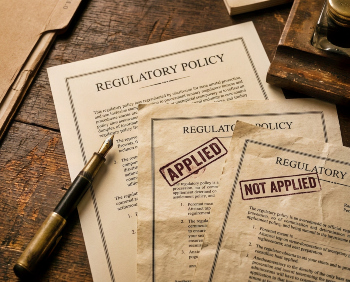
- Written policies that were applied differently to you
- Notes from meetings or decisions that affected you
- Dates showing a change in treatment after a specific event
Be careful to stick to facts you can support. Describe what happened and what was said, rather than what you assume was in someone’s mind.
Discrimination claims often depend on showing a pattern, so the following types of evidence can help show how you were treated compared with others. For a deeper look at constitutional rights in Texas schools, see the related guide.
| Evidence type | What it shows | Note |
|---|---|---|
| Records of similar people | How others were treated | Compare with your own treatment |
| Written policies | Rules applied differently to you | Note where they were applied unevenly |
| Meeting or decision notes | Reasoning behind decisions affecting you | Record dates and attendees |
| Dated treatment changes | Shift after a specific event | Tie change to the event |
 Preserving Digital Evidence and Keeping Originals Intact
Digital material can disappear quickly. Phones get replaced, accounts get deleted, and messages get edited. Act early to protect what you have, and treat preservation as a separate task from organizing.
Preserve first, organize second. Before you sort anything, make a complete copy of the material you may need. A common pattern is to lose the original while trying to clean it up.
A practical preservation workflow
- Capture the original. Export messages, emails, and posts in their native format when the platform allows it. For texts, use the phone’s built-in export or a backup that includes timestamps and sender names. For email, save the full message with headers, not just the body.
- Record the context. For each item, note the platform, the account, the date and time you saved it, and the URL or message thread it came from. A screenshot alone rarely shows who sent it or when.
- Store a second copy. Keep one copy on a device you control and one in a separate location, such as an encrypted drive or a trusted cloud account. Do not rely on a single phone or a single inbox.
- Do not alter originals. Work from copies when you annotate, crop, or organize. Keep the untouched original in a folder you do not edit.
- Log who handled what. Keep a simple written record of each item: what it is, where the original is stored, and who has accessed it. This is the beginning of a chain of custody, and it helps show the material has not been changed.
Metadata and why it matters
Metadata is the information attached to a file, such as when a photo was taken, when an email was sent, or when a document was last modified (metadata – Glossary). It can corroborate your account, but it can also be lost when you forward, screenshot, or re-save a file. When you can, keep the original file and note its metadata rather than stripping it. If you must convert a file, keep the original alongside the converted copy.
Privacy-safe collection
Collect only what you need to support your account, and avoid gathering unrelated sensitive information about other people. Do not access accounts, devices, or messages you are not authorized to use. If material belongs to someone else, ask them to preserve and share it rather than taking it yourself. Store sensitive files in a protected location and share copies only with people who need them, such as an attorney or an agency reviewer.
Watch out: Recording laws differ by state, and some states require the consent of everyone in a conversation. Check the rules before you record a call or an in-person conversation, and do not record in a place where others have a reasonable expectation of privacy.
Keeping a chain-of-custody record
A chain-of-custody record is a log that shows where each item came from and who has handled it. You do not need special software. A simple table with columns for the item, collection date, source, storage location, and handler is enough. Update it every time an item moves or is copied. If you later give a copy to an agency or an attorney, note the date and what was provided. If you want help organizing this kind of record, Protect Our Traditions is one of the services Texas Journal offers for people building out their rights-related files.
We are not attorneys. Nothing here is legal advice, and preservation rules can differ by court and by agency. For guidance on your specific situation, read our disclaimer and speak with a licensed attorney.
Using the U.S. Department of Justice Civil Rights Complaint Form
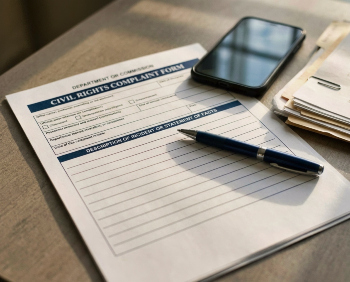
The U.S. Department of Justice accepts complaints about civil rights violations through its online complaint form. You can find it at civilrights.justice.gov.
Before you submit, have your evidence file ready. Be ready to provide:
- A clear description of what happened
- The dates, places, and people involved
- Copies of the documents you have collected
Keep a copy of everything you submit. If the violation came from a local authority, defending individual freedom against local government rules explains the additional considerations. The form is one route among several, and other agencies may handle your complaint depending on the issue.
 What Happens When You File a Civil Rights Complaint
After you file, an agency reviews the complaint to decide whether it falls within its authority. It may ask for more information, contact the other party, or decline to act. The process and timing vary widely by agency.
You can expect:
- A reference or confirmation number for your records
- Requests for additional documents or a follow-up interview
- A decision that may take months to reach
Filing a complaint does not guarantee a result. A written evidence file makes it easier for any reviewer to follow your account.
Your Next Step: Organizing Your Evidence File
Put everything in one organized file so you can find it fast. A simple system anyone can maintain works well.
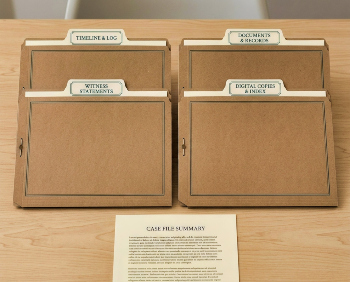
- Folder 1: Timeline and written log
- Folder 2: Documents, messages, and records
- Folder 3: Witness statements and contact details
- Folder 4: Digital copies and an index of originals
Add a one-page summary at the front that lists each item and its date. Review the file regularly, and update it as you learn more. For strategies on how to use this material, see our guide to constitutional rights defense strategies.
Texas Journal provides general education about constitutional rights, not legal advice. Every situation is different, so consult a licensed attorney before taking legal action.
Like Valuable Free Gifts? – Click Here!
Dave
Questions? Call!
Click Here!
Frequently Asked Questions
What should you do when someone violates your rights?
Start by writing down what happened while the details are fresh: dates, times, locations, the people involved, and what was said or done. Keep original documents and messages, and do not alter them. Then decide which agency or attorney fits your situation. Texas Journal is not a law firm, and nothing here is legal advice. For a decision about your specific case, consult a licensed attorney. Our legal disclaimer located here: Click Here – explains this further.
What evidence is needed to prove discrimination?
Evidence supporting a discrimination claim usually includes documents such as written policies, performance reviews, and communications showing differing treatment; witness accounts from people who observed the events; and a timeline linking the treatment to a specific decision. Corroboration from more than one source strengthens a claim. Whether any particular item is sufficient depends on the facts and the legal standard that applies, so a licensed attorney should review your materials.
How do you report a possible civil rights violation to the Department of Justice?
The U.S. Department of Justice accepts civil rights complaints through its online complaint form at: Click Here. Before submitting, gather a timeline, copies of relevant records, and the names and contact details of witnesses. Describe the facts plainly and attach copies rather than originals. Submitting a complaint does not guarantee an investigation or outcome, and Texas Journal is not affiliated with the Department of Justice.
How can you preserve video, messages, and other records as evidence?
Keep original files on the device where they were created, and make at least one backup copy stored separately. Avoid editing, cropping, or re-saving files, since that can change metadata. Take screenshots that show the sender, date, and time, and note where each item came from. Store everything in a single dated folder. These steps help show that your records have not been altered, though a licensed attorney can advise on how courts evaluate them.