Table of Contents
- The Constitutional Framework: How Law Secures Freedom
- How to Assert Constitutional Rights in Daily Life
- Protecting Individual Liberties From Government Interference
- Constitutional Rights Advocacy Strategies That Work
- Digital-Era Constitutional Challenges: Privacy and Speech
- The Role of the Judiciary in Protecting Liberty
- Religious Conscience and Personal Autonomy Under Law
- Conclusion: Your Role in Securing Freedom With Constitutional Law
- Frequently Asked Questions
Last Updated: September 16, 2026
The Constitutional Framework: How Law Secures Freedom
Constitutional law is the body of rules that defines what government may and may not do to the people it governs. It is the operating manual for a free society, and it is the reason a sheriff cannot search your home on a hunch. Texas Journal provides critical insight and discernment designed to help citizens assert their rights and restore the country to its founding principles. The pattern is clear: freedom survives when citizens know the framework well enough to use it.
 The structure itself is simple. A written constitution sets the boundaries. Courts interpret those boundaries. Citizens enforce them by showing up, speaking up, and, when necessary, filing suit.
That framework only works if people understand it. Below, we break down the two pillars that hold it up, then show you how to put them to work.
The Bill of Rights as a Legal Bulwark
The Bill of Rights is the first ten amendments to the Constitution, ratified together in 1791, and it functions as a legal bulwark against federal overreach. Each amendment names a specific protection: speech, assembly, religion, privacy in your home, due process, and more.
What most guides miss is that these are not suggestions. They are enforceable limits, and courts have spent two centuries defining their edges through Library of Congress constitutional resources and case law. The First Amendment alone protects political expression, religious conscience, and the right to assemble peacefully. The Fourth protects you from unreasonable searches. The Fifth guarantees due process.
The practical takeaway: every right you have comes with a corresponding limit on government power. Knowing which amendment covers your situation is the first step in asserting it.
Judicial Review and the Rule of Law
Judicial review is the power of courts to strike down laws and government actions that violate the Constitution. It is the mechanism that makes the rule of law real rather than theoretical.
Without it, a statute passed by a legislature could override the Constitution itself. With it, even the president and Congress are bound by a document they cannot simply rewrite. This is what separates a constitutional republic from majority rule by decree.
The trade-off is that judicial review depends on citizens bringing cases. Courts do not patrol for violations. They wait for someone to challenge an unconstitutional act, which means your willingness to assert a right is part of the system’s design.
How to Assert Constitutional Rights in Daily Life
The most important thing to understand is that asserting a constitutional right is rarely dramatic. It usually looks like a calm conversation, a written request, or a short document filed at the right time.
Here is how to assert constitutional rights without escalating a situation:
- Stay calm and keep your hands visible.
- State clearly that you do not consent to a search.
- Ask whether you are free to leave. If yes, leave.
- Ask for the officer’s name and badge number.
- Write down everything you remember as soon as you can.
- Do not argue the law on the street. Save it for a lawyer.
The goal in the moment is to preserve your rights and your safety. The goal afterward is to document what happened while it is fresh.
Documenting Government Interactions
Documentation is the single most useful habit a citizen can build. Memories fade, and a contemporaneous record is far more persuasive than a recollection written weeks later.
A common approach is a simple log kept on your phone or in a notebook. Record the date, time, location, names, badge numbers, and a plain description of what was said and done. Note any witnesses. Save any paperwork you are handed, even if it looks routine.
If you are dealing with a federal agency, the USA.gov guide to government records and FOIA requests explains how to request documents the government holds about you. That paper trail often matters more than anything you remember.
When to Seek Legal Counsel
You should seek legal counsel the moment a government interaction could lead to charges, a fine, or a lasting record. Do not wait for a court date.
Look for attorneys who handle constitutional or civil rights matters specifically. Many state and national organizations maintain referral lists, and some offer free consultations. Bring your documentation log. A lawyer can tell you within minutes whether you have a viable claim or a misunderstanding.
The thing nobody tells you about rights is that they are enforced through procedure. Miss a filing deadline and a strong claim can disappear.
Protecting Individual Liberties From Government Interference
Protecting individual liberties from government interference starts with two guarantees that apply to everyone: due process and equal protection. Both come from the Fourteenth Amendment, and both are the workhorses of most constitutional claims.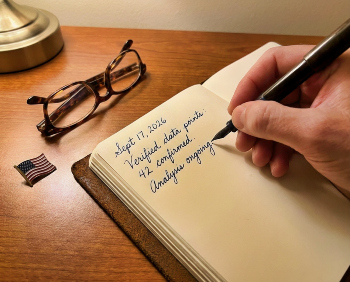
Due process means the government must follow fair procedures before taking your life, liberty, or property. Equal protection means it cannot treat you differently without a legitimate reason. Together they form the backbone of civil liberties litigation.
Due Process and Equal Protection
Due process has two faces. Procedural due process governs how the government acts: notice, a hearing, an impartial decision-maker. Substantive due process asks whether the government had any business acting at all in certain private matters.
Equal protection is the tool for challenging discriminatory treatment. Courts apply different levels of scrutiny depending on the group affected, and the level of scrutiny usually decides the case.
For citizens, the practical point is this: if a government action feels arbitrary or unevenly applied, those two doctrines are where a lawyer will look first.
Freedom of Speech and Assembly
Freedom of speech is the most litigated right in the Constitution, and it protects far more than words. It covers political expression, symbolic acts, and the right to gather peacefully to petition the government.
It is not unlimited. Courts have carved out narrow categories such as true threats, incitement, and obscenity. But the default rule is strong: the government generally cannot punish speech because it dislikes the message.
Public space matters here. Sidewalks, parks, and public squares are traditional forums for assembly, and restrictions there face the highest bar. Private property is a different story, which is why the location of a protest often determines its legal protection.
Constitutional Rights Advocacy Strategies That Work
Constitutional rights advocacy strategies work best when they combine pressure at the state level with the discipline of legal precedent. The most effective advocates do both.
 State legislatures pass far more laws affecting daily life than Congress does. That makes state capitols the highest-use place for most citizens to act. Showing up to a committee hearing, submitting written comment, and building relationships with local officials moves policy in ways that a national petition rarely does.
State-Level Advocacy and Sovereignty
State sovereignty is not a slogan. It is a structural feature of the constitutional framework that gives states independent authority the federal government cannot simply erase.
That authority is the reason a state can push back on federal mandates, run its own election procedures, and set policy on matters the Constitution reserves to it. Texas Journal focuses on this layer of the system because it is where individual citizens have the most direct influence.
Start local. Testify at a hearing. Submit a written comment on a bill. Ask your representative to explain a vote in writing. Those small acts accumulate.
Building Coalitions and Using Legal Precedent
Coalitions multiply force, and legal precedent gives coalitions a target. A single citizen can be ignored; a group with a well-drafted legal argument cannot.
The most durable advocacy pairs grassroots pressure with litigation strategy. Organizers build public support while attorneys build the record that a court will review. When a case succeeds, the precedent becomes a tool every citizen in that jurisdiction can cite.
Digital-Era Constitutional Challenges: Privacy and Speech
Digital technology has created constitutional questions the framers never imagined, and courts are still working out the answers. Most of the current battles involve privacy and speech.
Privacy is the harder problem. The Fourth Amendment protects against unreasonable searches, but it was written for a world of physical spaces. Courts now must decide whether government access to location data, cloud storage, and message metadata counts as a search. The Supreme Court’s Carpenter v. United States decision addressed one version of that question, and the line is still being drawn.
Speech is the other front. Online platforms host enormous volumes of political expression, and the rules about government coercion of private platforms are unsettled. What matters for citizens is that the same First Amendment principles apply online, even when the medium is new.
| Digital Challenge | Right at Issue | What Citizens Can Do |
|---|---|---|
| Government data requests to platforms | Fourth Amendment privacy | Request your records, challenge overbroad warrants |
| Online political speech restrictions | First Amendment expression | Document removals, contact legal advocacy groups |
| Location and device tracking | Privacy and personal autonomy | Disable unnecessary tracking, know warrant requirements |
| Algorithmic content moderation | Speech and due process | Track patterns, support transparency litigation |
The Role of the Judiciary in Protecting Liberty
The judiciary is the branch that decides what the Constitution means when the other branches disagree. That makes it the last line of defense for liberty, and it is why judicial appointments generate so much conflict.
Judges do not act on their own. They decide cases brought by parties with a real stake in the outcome. That design keeps courts from ruling on abstract questions, but it also means the judiciary can only protect rights that someone is willing to defend in court.
The practical consequence is uncomfortable but true: a right that no one asserts is a right that quietly erodes. Constitutional safeguards depend on citizens who are willing to be the plaintiff.
Religious Conscience and Personal Autonomy Under Law
Religious conscience and personal autonomy sit at the center of some of the most contested cases in constitutional law. The First Amendment protects the free exercise of religion, and the Fourteenth Amendment protects personal decisions about family, medical care, and private life.
Those protections are not absolute, and courts balance them against government interests. The balance shifts depending on the jurisdiction and the specific claim. What has remained consistent is that the burden falls on the government to justify a restriction, not on the citizen to justify the right.
For citizens, the takeaway is practical. If a government rule forces you to act against a sincerely held belief, that is a constitutional question worth documenting and raising with counsel. Do not assume the rule wins by default.
Conclusion: Your Role in Securing Freedom With Constitutional Law
Securing freedom with constitutional law is not a spectator sport. The framework only holds when citizens know their rights, document violations, and act through the channels the system provides. Texas Journal exists to make that work easier, with critical insight you will not find in mainstream coverage and a community built for the fight.
Membership gives you the tools to defend the American family, protect our traditions, and exercise personal sovereignty in your own state. The Patriot Pool turns individual effort into a force multiplier, so one citizen’s testimony becomes part of a movement. Click Here

Frequently Asked Questions
How can citizens use constitutional law to defend their rights?
Citizens can use constitutional law by knowing their rights, documenting government interactions, and seeking legal counsel when needed. The Bill of Rights and subsequent amendments provide legal protection against government interference. Constitutional rights advocacy strategies include contacting legislators, participating in public comment periods, and supporting legal challenges. Understanding legal precedent helps citizens recognize when their individual rights are being violated and take appropriate action through the courts or advocacy channels.
What is the role of the Bill of Rights in securing individual liberty?
The Bill of Rights serves as a legal bulwark by explicitly limiting government authority over individual rights. It guarantees freedom of speech, religious conscience, freedom of assembly, and due process. These constitutional safeguards ensure that government interference is subject to judicial review. The Bill of Rights remains central to constitutional law and protecting individual liberties from government overreach. Courts rely on it to interpret cases involving privacy protections, equal protection, and personal autonomy, making it a foundational element of American freedom.
How do states’ rights interact with federal constitutional protections?
States’ rights and federal constitutional protections operate within a constitutional framework where the Supremacy Clause establishes federal law as supreme, but states retain sovereignty over certain matters. This balance allows states to serve as laboratories for policies that may influence constitutional interpretation. For citizens, this means state constitutions can provide additional protections beyond federal guarantees. Advocacy strategies often target state legislatures to secure freedom and push back against federal overreach, reflecting democratic principles and the rule of law.
What are the most effective ways to assert constitutional rights in daily life?
Effective ways to assert constitutional rights include remaining calm during encounters with government officials, clearly stating your rights, and recording interactions when legal. Document everything, including dates, times, and names. If your rights are violated, file complaints with oversight agencies and consult an attorney experienced in constitutional law. Joining rights-based advocacy groups amplifies your impact. Understanding legal precedent and staying informed about constitutional interpretation helps you recognize violations and respond strategically.