Table of Contents
- What Makes a Patriot Group Effective for Defense
- Texas Journal: A Force Multiplier for Constitutional Defense
- Constitutional Education Resources for Serious Patriots
- How to Join Patriot Movement Organizations Safely
- Legal Defense of Constitutional Rights: What You Need to Know
- Community Preparedness and Disaster Relief Efforts
- Vetting and Safety Guidelines for Evaluating Groups
- The Role of Digital Communication and Secret Networks
- Conclusion
- Frequently Asked Questions
Last Updated: September 20, 2026
What Makes a Patriot Group Effective for Defense
Finding the best patriot groups for defense starts with one hard truth: most patriot groups fail before they ever meet. They form around anger, 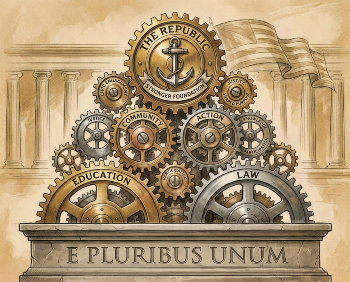 not structure, and they collapse the moment the pressure hits. The groups that last share three traits: a clear legal footing, a real educational mission, and a vetting process that keeps bad actors out.
This guide from Texas Journal breaks down what separates serious organizations from noise. We cover legal boundaries, constitutional education, safe joining practices, and how to spot a group that will actually protect your rights instead of putting them at risk.
The most effective groups treat defense as a civic duty, not a costume. They study the Constitution, they train within the law, and they document everything.
| Group Type | Primary Focus | Legal Risk | Best For |
|---|---|---|---|
| Constitutional education groups | Rights literacy, civic action | Low | Beginners, families |
| Community preparedness groups | Disaster relief, mutual aid | Low | Local volunteers |
| Advocacy and lobbying groups | Policy, state-level reform | Low | Politically active citizens |
| Armed paramilitary-style groups | Tactical training, patrols | High | Not recommended |
Legal vs. Illegal Distinctions
The line between a lawful civic group and an illegal militia is clearer than most people assume. A group that meets to study law, organize disaster relief, or petition the government is exercising protected rights. A group that trains with weapons to confront government agents, plans violence, or operates as a private army crosses into illegal territory.
Federal law and most state constitutions recognize the National Guard as an organized militia. Private groups that claim military authority on their own are not recognized under that framework. This distinction matters for anyone evaluating where to spend their time.
Texas Journal: A Force Multiplier for Constitutional Defense
Texas Journal is a platform for anyone serious about constitutional defense. It provides critical insight and discernment not available elsewhere, and it teaches citizens how to use the abilities the U.S. Constitution already grants them.
Where most groups stop at rhetoric, Texas Journal focuses on states’ rights and constitutional education. The Patriot Pool acts as a force  multiplier, connecting members who want to organize and participate in a movement for the Republic. The platform is built for people who want to secure a free and prosperous future, not just talk about it.
If you have tried other patriot-focused communities and found them hollow, this is the difference. Texas Journal pairs education with action, grounding every recommendation in the actual text of the Constitution rather than one political perspective dressed up as legal analysis.
Constitutional Education Resources for Serious Patriots
Constitutional education resources are the foundation of any legitimate defense effort. Without them, a group is just a social club with strong opinions. The best resources teach the original text, the amendments, and the court cases that shaped how those words apply today.
Solid options include the founding documents themselves, state-level civics programs, and independent study guides that walk through the Bill of Rights clause by clause. Many groups run weekly reading sessions where members work through one amendment at a time.
What most guides miss is that reading alone is not enough. You need to connect each clause to a current issue, whether that is a state law, a federal mandate, or a local ordinance. That is how education turns into civic engagement.
How to Join Patriot Movement Organizations Safely
Joining patriot movement organizations safely means vetting the group before you attend anything. Ask for the group’s mission statement in writing. A serious organization will have one, and it will reference the Constitution rather than a personality.
Next, look at what the group actually does. If the calendar is full of meetings, study sessions, and community service, that is a good sign. If it is full of armed events with no educational component, walk away.
A common mistake is joining the first group that feels welcoming. Warmth is not the same as legitimacy. Take your time, attend as a guest, and watch how leadership handles disagreement.
- Request the mission statement and bylaws in writing
- Confirm the group has a named, reachable leadership structure
- Attend one meeting as a guest before committing
- Ask how the group handles members who break the rules
- Check whether the group publishes its event calendar publicly
Legal Defense of Constitutional Rights: What You Need to Know
Legal defense of constitutional rights is where good intentions meet real consequences. Knowing your rights is not the same as knowing how to  assert them without creating liability for yourself or your group. The groups that survive scrutiny are the ones whose members can explain, in plain language, which law protects a given activity and which law punishes it.
The starting point is the Militia Clause of the Constitution, which divides the militia into two parts: the organized militia, which Congress and the states have built into the National Guard and the Naval Militia, and the unorganized militia, which federal law defines as the body of able-bodied citizens who are not already part of the organized militia. That second category is where most confusion lives. Being part of the unorganized militia is a status. It is not a license to operate as a private army, and it does not authorize independent armed patrols, drills, or enforcement actions.
The Second Amendment protects an individual right to keep and bear arms, but courts have consistently upheld a wide range of regulations on how, where, and by whom firearms may be carried, stored, and transferred. A group that treats the amendment as a blanket exemption from state firearms law is setting its members up for charges that have nothing to do with ideology.
The First Amendment protects speech, assembly, petition, and association. It does not protect planning violence, threatening officials, coordinating armed confrontation, or agreeing to commit a crime. The legal doctrine that catches people here is conspiracy, which does not require the underlying crime to be completed. An agreement plus an overt act in furtherance of it is often enough. That is why a group chat can become evidence.
State law matters as much as federal law. Most states prohibit paramilitary activity in some form, whether through anti-militia statutes, unlawful assembly provisions, or laws against drilling with firearms without authorization. A handful of states have narrower language, but the practical effect is the same: private armed formations that mimic military structure and function attract scrutiny.
Government oversight of these groups runs through several channels. The Federal Bureau of Investigation tracks domestic terrorism cases under its own guidelines. State attorneys general can bring civil actions against organizations that engage in patterns of unlawful conduct. The Internal Revenue Service can revoke tax-exempt status from groups that cross from education into prohibited political or illegal activity. Local law enforcement handles the day-to-day enforcement, and county sheriffs are often the first point of contact when a group’s activity draws complaints.
| Action | Legal Protection | Risk Level |
|---|---|---|
| Peaceful assembly | First Amendment | Low |
| Petitioning officials | First Amendment | Low |
| Publishing educational materials | First Amendment | Low |
| Studying the Constitution in a private group | First Amendment | Low |
| Disaster relief and mutual aid | Generally protected | Low |
| Armed patrols | Not protected | High |
| Coordinated confrontation | Criminal exposure | Severe |
| Drilling with firearms without state authorization | State criminal exposure | Severe |
If your goal is to change policy, the legal path runs through state legislatures, courts, and ballot initiatives. That work is slower, but it is durable. It also keeps you on the right side of the law while you build real influence. The groups that last treat the Constitution as a document to be studied and used in civic channels, not as a shield for conduct the law already prohibits.
Cornell Law School Legal Information Institute entry on the Militia Clause
Community Preparedness and Disaster Relief Efforts
Community preparedness and disaster relief are the most underrated work a patriot group can do, and they are also the clearest way to separate lawful civil defense from paramilitary posturing. When a storm, flood, wildfire, or extended blackout hits, the groups that show up with generators, water, and organization earn real trust. That trust translates into civic influence far more reliably than protest ever does.
The strongest version of this work plugs into existing systems. The Community Emergency Response Team program, run by the Federal  Emergency Management Agency through local emergency management agencies, trains volunteers in basic disaster response: fire safety, light search and rescue, team organization, and disaster medical operations. Completing CERT training gives a group a recognized credential, a local point of contact, and a legitimate seat at the table when a jurisdiction activates its emergency operations plan.
The American Red Cross offers parallel training in shelter operations, mass care, and first aid and CPR certification. Many county emergency management offices run their own volunteer programs and maintain a registry of ham radio operators through Amateur Radio Emergency Service, which is coordinated by the American Radio Relay League. A group that can field licensed operators on a county auxiliary communications net is doing something no protest ever accomplishes.
Effective groups build a skills roster before a crisis, not during one. Who has medical training? Who holds a commercial driver’s license? Who has a truck and a trailer? Who has a chainsaw certification? Who can operate a generator safely? Who has completed Incident Command System training through FEMA’s Independent Study Program? Mapping those skills in advance is what turns a list of names into a response capability.
A practical preparedness plan covers four phases. Mitigation means reducing risk before an event, clearing defensible space, securing supplies, and documenting property. Preparedness means training, drills, and stored resources. Response is the first 72 hours, when professional help may not arrive. Recovery is the long tail, when the news cameras leave and the work continues. Groups that only plan for response burn out. Groups that plan for recovery build lasting relationships.
| Preparedness Activity | Typical Partner | Legal Risk |
|---|---|---|
| CERT training and certification | Local emergency management agency | Low |
| Shelter operations | American Red Cross | Low |
| Auxiliary communications | County emergency management, ARES | Low |
| Community food and water distribution | Food bank, faith-based network | Low |
| Neighborhood damage assessment | County emergency management | Low |
| Independent armed patrols during a crisis | None | High |
This is also the safest form of public activity. Disaster relief is unambiguously legal, welcomed by local officials, and builds the kind of grassroots organization that lasts. Groups that focus here tend to outlast those built around confrontation because they solve problems their neighbors can see.
FEMA Community Emergency Response Team program overview
Vetting and Safety Guidelines for Evaluating Groups
Vetting and safety guidelines protect you from the two biggest risks in this space: legal exposure and reputational damage. A group that cannot answer basic questions about its structure is not worth your time.
Use a scoring approach. Rate each group on transparency, legal footing, educational content, and community service. A group that scores high on transparency and education but low on armed activity is almost always the better choice.
The Role of Digital Communication and Secret Networks
 Digital communication has changed how these groups organize, for better and worse. Encrypted messaging apps let members coordinate without public exposure, but they also make it harder to vet who is in the room.
A serious group uses digital tools for logistics, not secrecy. Public event calendars, open forums, and documented decision-making signal health. Closed networks with no transparency are a warning sign, especially when leadership refuses to identify itself.
The trade-off is real. Privacy protects members from harassment, but secrecy protects bad actors from accountability. The groups worth joining find the balance: private contact details, public mission.
Conclusion
The hardest part of this work is not finding a group. It is finding one that will still be standing, and still legal, five years from now. That means choosing education over confrontation, community service over spectacle, and structure over personality.
Texas Journal is built for exactly that kind of citizen. It teaches you how to assert your rights under the Constitution, focuses on states’ rights to restore founding principles, and offers the Patriot Pool as a force multiplier for the movement. If you are ready to stop watching and start participating, get started with Texas Journal and put the law on your side.

Frequently Asked Questions
Are there any rebel groups in the US?
No, there are no rebel groups in the U.S. in the sense of organized armed forces seeking to overthrow the government. What exist are patriot groups and constitutional advocacy organizations that focus on education, civic engagement, and legal defense of rights. These groups operate within the law and emphasize grassroots organization, emergency preparedness, and constitutional education rather than insurrection or political violence.
What are some examples of US patriot groups?
Patriot groups range from national advocacy organizations to local grassroots organizations focused on constitutional education and community preparedness. Texas Journal is one example, offering constitutional education resources and a Patriot Pool membership for civic engagement. Other groups focus on disaster relief, legal defense of constitutional rights, or state-level policy advocacy. When evaluating any group, check its legal status, transparency, and whether it promotes lawful civic engagement.
How can citizens legally participate in the defense of founding principles?
Citizens can legally participate by joining constitutional advocacy groups, attending educational workshops, volunteering for community preparedness efforts, and supporting legal defense funds for constitutional rights. You can also engage in grassroots organization, contact elected officials, and participate in lawful protests. Always verify a group’s legal status and avoid any organization that advocates for political violence or domestic terrorism, which are illegal and counterproductive to the cause of liberty.
What distinguishes advocacy groups from other civic organizations?
Advocacy groups focus on influencing policy, educating the public, and defending constitutional rights through legal and civic channels. Unlike social clubs or service organizations, they often engage in grassroots organization, provide constitutional education resources, and may offer legal defense of constitutional rights. They typically have a clear ideological foundation centered on constitutional rights, states’ rights, and civic engagement, and they operate within the bounds of federal oversight and law enforcement.
How do I vet a patriot group before joining?
Start by researching the group’s legal status, leadership, and public statements. Look for transparency about funding and activities. Avoid groups that promote extremism, radicalization, or domestic terrorism. Check if they offer constitutional education resources and whether their activities are lawful. Talk to current members if possible, and trust your instincts. A reputable group will welcome questions and encourage civic engagement, not secrecy or pressure to donate.
d