Table of Contents
- What Joining a Constitutional Rights Movement Actually Involves
- Know Your Protections: Assembly, Petition, and Redress of Grievances
- How to Petition the Government Effectively
- Evaluating Constitutional Advocacy Groups Before You Commit
- Constitutional Rights Education Resources Worth Your Time
- Step-by-Step: Organizing at the Local Level
- Digital Advocacy: Building Pressure Without Leaving Home
- Staying Legally Safe While You Participate
- Common Mistakes New Participants Make
- Frequently Asked Questions
Last Updated: September 17, 2026
What Joining a Constitutional Rights Movement Actually Involves
 Joining a constitutional rights movement means committing to organized collective action that uses the First Amendment’s protections, assembly, speech, petition, and association, to influence law and policy. At Texas Journal, we provide critical insight and discernment designed to help citizens assert their rights and restore the country to its founding principles. The work breaks into three tracks: education, advocacy, and litigation support.
This guide walks through each one, from evaluating constitutional advocacy groups to staying legally safe while you participate. The stakes are real. Rights that go unexercised tend to go unrecognized, and the constitutional rights movement grows one informed participant at a time.
The Constitution of the United States, First Amendment text
Know Your Protections: Assembly, Petition, and Redress of Grievances
The First Amendment protects peaceable assembly, the right to petition the government, and the right to seek redress of grievances. Those three guarantees form the legal foundation of every constitutional rights movement in the country.
The right to assemble means you can gather with others for political purposes in public forums without a permit in many circumstances, though time, place, and manner restrictions still apply. Petitioning covers far more than paper documents: emails, phone calls, public comments, and testimony all count. Redress of grievances is the government’s obligation to receive your complaint, not necessarily to agree with it.
Many states add their own constitutional protections on top of the federal floor, and state constitutions sometimes go further than the First Amendment does.
Congressional Research Service reports on First Amendment jurisprudence
How to Petition the Government Effectively
Effective petitioning means directing a specific, documented request at the officials who can actually act on it, through a channel that creates a record. Most petitions fail because they target the wrong office, ask for something too vague to answer, or arrive after the decision has already been made.
The First Amendment right to petition covers far more than a signed sheet of paper. It reaches emails, phone calls, public comments on proposed rules, formal testimony, and requests for records. Each channel has its own mechanics, and matching the ask to the channel is most of the work.
The Four Channels That Actually Move Policy
1. Notice-and-comment rulemaking. When a federal agency proposes a rule, it publishes the proposed text in the Federal Register and opens a docket on 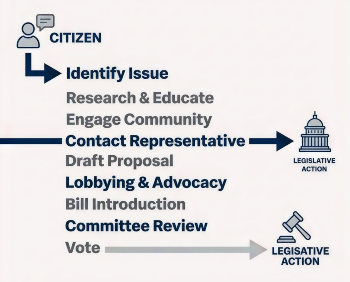 Regulations.gov. Any member of the public can file a comment during the open period, and agencies are required to respond to significant comments in the final rule. This is the single most underused petitioning tool available. A comment that cites the specific proposed section, supplies a factual record the agency did not have, and explains the legal or practical problem is far more likely to shape the final text than a generic objection. Track dockets by agency and by topic so you comment while the window is open, not after it closes.
2. Congressional casework and constituent contact. Members of Congress and their district offices log every constituent contact by topic and bill number. Staff use those counts to brief the member. A call to a district office carries more weight than a call to a Washington office because district staff report directly on local sentiment. Ask for the staffer who handles the issue, give the bill number, state your position in one sentence, and ask for the member’s current position. Follow up in writing so there is a record.
3. Formal testimony and public hearings. State legislatures, city councils, county commissions, and school boards all hold hearings on pending measures. Sign up to testify, submit written testimony for the record even if you cannot attend, and bring printed copies for the clerk. Hearings put your argument into the official record, which later litigants and journalists can cite.
4. Records requests. The federal Freedom of Information Act and its state analogs let you compel agencies to produce documents. A well-drafted request can surface the internal analysis behind a policy, which is often more persuasive in a petition than any argument you could write yourself. Requests must describe records with enough specificity to be found, and agencies may charge fees, so narrow the scope.
Written Petitions That Get Read
Address the petition to a named official, not “the government.” State the action you want in the first sentence. Include your name, address, and a way to verify you live in the district. Attach supporting documents rather than asserting claims without evidence.
- One clear ask per petition
- Named recipient with correct title and office
- The specific bill, docket, or rule number at issue
- Supporting facts with dates and document references
- Your contact information and district
- A requested response deadline
Testifying at Local and State Hearings
Public hearings often give you two to three minutes to put your argument on the record. Write it out, time it, and practice. Open with your name, your district, and your position, then give the single strongest fact you have. Bring printed copies for the clerk. Hearings are frequently the fastest route to influencing legislation at the state 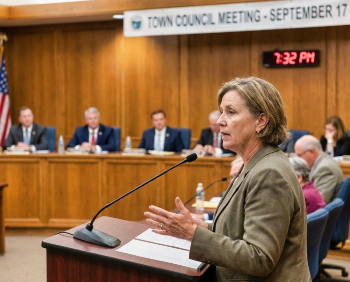 and local level, because the body voting on the measure is in the room.
Regulations.gov, comment on proposed federal rules
Freedom of Information Act request guidance
Evaluating Constitutional Advocacy Groups Before You Commit
Not every constitutional advocacy group deserves your time or money. The right ones publish their legal reasoning, disclose their funding, and can point to concrete outcomes.
Questions to Ask Any Group You Consider
- Who funds you, and do you publish that information?
- Which court filings, legislation, or policy wins can you point to?
- Do you cite primary legal sources or just commentary?
- What happens to my personal information if I join?
- Is there a free tier, or does everything sit behind a paywall?
A group that dodges these questions is telling you something. So is one that treats every issue as an emergency.
Constitutional Rights Education Resources Worth Your Time
The best constitutional rights education resources teach you to read primary sources, not summaries of them. Start with the Constitution itself, then move to annotated versions that explain how courts have interpreted each clause over time.
Court opinions are free and public. Read the syllabus at the top of a Supreme Court decision and you’ll understand the holding without the full opinion. State legislature websites publish bill text and hearing schedules, which lets you track legislation before it passes rather than after.
Texas Journal focuses its constitutional education on the abilities the founding document grants citizens, particularly around states’ rights and the limits on federal power. That framing matters: knowing what Washington cannot do is as important as knowing what it can.
Step-by-Step: Organizing at the Local Level
Local organizing starts with five to ten committed people, a regular meeting time, and one achievable goal. Grassroots work scales from there.
- Define one specific, winnable objective, such as a county resolution or a school board policy.
- Recruit from existing networks: church, civic clubs, neighbors, and local business owners.
- Assign roles: a coordinator, a record-keeper, and a spokesperson.
- Set a meeting cadence and stick to it. Weekly beats sporadic.
- Build a contact list and keep it updated.
- Show up at public meetings consistently. Presence compounds.
- Document everything: dates, officials contacted, responses received.
Community organizing succeeds on repetition, not intensity.
Digital Advocacy: Building Pressure Without Leaving Home
Digital advocacy lets one person reach a legislator’s office, a committee, and a few thousand neighbors in an afternoon. It works best as a supplement to in-person pressure, not a replacement.
- Comment on proposed federal rules during open comment periods
- Email and call district offices, and reference the specific bill number

- Post verified information with links to primary sources
- Coordinate hashtag campaigns around hearing dates
- Track votes and publish scorecards for your representatives
Legislative offices count constituent contacts. A hundred calls about one bill gets noticed.
Staying Legally Safe While You Participate
Most articles about constitutional movements stop at history and never tell you what happens if you actually show up. This section covers the practical legal ground: what the First Amendment protects, where the line sits, how state law varies, and what to do if law enforcement oversteps.
What the First Amendment Actually Protects
The First Amendment protects peaceable assembly, speech, petition, and association. In public forums, streets, sidewalks, and parks, the government can impose time, place, and manner restrictions, but those restrictions must be content-neutral, narrowly tailored to a significant government interest, and must leave open alternative channels of communication. A permit requirement that gives officials unbounded discretion to deny a march is vulnerable to a First Amendment challenge. A narrow rule that keeps a parade route clear of a hospital entrance usually is not.
What is not protected: incitement to imminent lawless action, true threats, fighting words, and, critically for protesters, conduct like blocking traffic, trespassing on private property, or damaging property. Peaceable assembly is protected; a sit-in that blocks a roadway or a doorway is generally not, even when the underlying message is.
State Law Varies Widely
There is no single national rule on protest permits. Some jurisdictions require a permit for marches and rallies above a certain size; others require only notice; some require nothing for gatherings on public sidewalks. Some states have enacted laws creating new criminal penalties for certain protest conduct, and several have been challenged in federal court on First Amendment grounds. Because the rules differ by state, county, and sometimes city, the practical step is to check the specific jurisdiction where you plan to gather before the event, not after.
If You Are Stopped or Detained
- Stay calm and keep your hands visible.
- Ask whether you are free to leave. If the answer is yes, you may walk away.
- If you are not free to leave, say clearly that you do not consent to a search and that you want to speak with a lawyer.
- Do not physically resist, even if you believe the stop is unlawful. Challenge it later, in court.
- Record the interaction if you can do so safely. Recording police in public is protected in every federal circuit.
- Write down the officer’s name and badge number, the time, and the location as soon as you can.
Federal Enforcement and Oversight
The Civil Rights Division of the U.S. Department of Justice enforces federal civil rights statutes, including laws that prohibit law enforcement from depriving people of rights protected by the Constitution. A pattern of unconstitutional conduct by a police department can be addressed through a formal investigation and, in some cases, a consent decree requiring reforms. Individual victims can also bring claims under federal civil rights statutes. State attorneys general and independent police review  boards provide additional channels, though their authority varies.
Practical Preparation
- Know the permit rules for the specific city and county.
- Bring a charged phone and a written list of legal aid or attorney contacts.
- Tell someone where you are going and when you expect to be back.
- Carry identification, but understand that in most states you are not required to answer questions beyond identifying yourself if you are lawfully detained.
- Do not carry anything that could be construed as a weapon.
- If you are arrested, do not discuss the facts with anyone but your lawyer.
U.S. Department of Justice guidance on protecting First Amendment activities
Civil Rights Division complaint process
Common Mistakes New Participants Make
The biggest mistake new participants make is treating a constitutional rights movement like a social club. It’s a legal and political project, and it rewards discipline.
Other frequent errors: joining five groups and committing to none, arguing with opponents online instead of contacting lawmakers, skipping local races that decide more policy than national ones, and trusting any source that confirms what you already believe. Confirmation bias hollows out a movement faster than opposition does.
If you want a platform built for sustained participation rather than occasional outrage, Texas Journal provides critical insight and discernment designed to help citizens assert their rights and restore the country to its founding principles, whether your focus is to Defend the American Family or to Control DC From Your State.

Frequently Asked Questions
How do I verify the legitimacy of a constitutional advocacy group before joining?
Check whether the group publishes its leadership, mission statement, and funding sources. Look for a track record of concrete wins, such as litigation, ballot initiatives, or state legislation. Review their materials for citations to actual constitutional text and court rulings rather than vague claims. A credible constitutional rights movement will welcome questions about its legal reasoning and provide documentation. If a group avoids specifics or pressures you to donate before explaining its work, treat that as a warning sign. You can also cross-reference their claims against public court records and state legislative databases.
What is the most effective way to petition the government for constitutional change?
Combine written petitions with in-person or virtual testimony at the level of government that controls the issue. For state-level matters, submit comments during public rulemaking periods and sign up to speak at committee hearings. For federal matters, use the official regulations.gov portal during open comment windows and contact your representative’s district office directly. Petitions with verified signatures from constituents in the relevant district carry more weight than national petitions. Pair your petition with a clear ask: a specific bill, rule change, or vote. Vague demands get ignored.
Do I need legal training to participate in a constitutional rights movement?
No. Most participants in a constitutional rights movement are ordinary citizens who learn as they go. What matters is understanding the basics: your First Amendment rights to assemble and petition, your state’s open meetings and public records laws, and the difference between protected speech and unlawful conduct. Constitutional rights education resources, such as the Bill of Rights Institute and state bar association guides, can bring you up to speed. Many groups pair newcomers with experienced volunteers who handle the legal research. Your job is to show up, stay informed, and follow the group’s guidance on staying within the law.
What should I avoid doing when joining a constitutional rights movement?
Avoid trespassing on private property during protests, blocking public roads, or ignoring police orders to disperse, since these actions can lead to criminal charges and undermine your message. Do not sign petitions or join groups without reading their materials first. Avoid spreading unverified claims about constitutional law, which damages credibility. Do not let any group pressure you into donating beyond your comfort level. Finally, avoid treating one legal interpretation as settled fact; constitutional law evolves through court rulings, and the strongest advocates understand that their position may face challenges in court. The challenge facing every new participant is staying informed without burning out, and staying active without drifting into noise. Texas Journal was built for exactly that gap: constitutional education grounded in primary sources, guidance on the abilities the Constitution grants you, and the Patriot Pool as a force multiplier for grassroots work in your state. Get started with Texas Journal and put your rights to work where they count.