Table of Contents
- Why Local Action Is the Front Line Against Globalist Influence
- How to Verify Local School Board Budget Transparency for Parents
- How to File a Public Records Request to Expose Overreach
- How to Attend and Participate in City Council Meetings
- Build Local Economic Resilience Against Global Market Pressure
- Common Mistakes That Weaken Local Resistance
- Conclusion: Your Next Step to Stop Globalist Influence
- Frequently Asked Questions
Last Updated: September 5, 2026
Why Local Action Is the Front Line Against Globalist Influence
The most effective way to stop globalist influence locally is to engage with the governing bodies that shape your daily life: school boards, city councils, and county commissions. Globalist influence is the erosion of national sovereignty and local autonomy through transnational agreements, cultural homogenization, and the concentration of power in distant institutions.
 The restoration of founding principles begins not in Washington, but in your own community. The liberal world order depends on citizens who feel powerless. Reclaiming authority over local institutions weakens the structure of economic dependency that sustains globalist influence. This is the mission that matters, and it starts with showing up where you live.
How to Verify Local School Board Budget Transparency for Parents
School board budgets reveal where standardization and cultural homogenization enter your community. Demand transparency on curriculum contracts, diversity initiatives, and administrative spending that bypass local control.
Request the full budget document and compare it against state-mandated reporting requirements. Look for line items funded by federal grants or private foundations, which often carry conditions that override local values. Many boards approve these in consent agendas, bundled items passed without discussion.
Check whether the board publishes meeting minutes and financial records online. If documents are missing or redacted, that is your first signal. The National School Boards Association resources on budget transparency outlines standard reporting practices you can use as a baseline for comparison.
How to File a Public Records Request to Expose Overreach
A public records request is the single most underused weapon in the localist arsenal. Every state has open records laws, often called Sunshine Laws or FOIA equivalents, that compel disclosure of contracts, emails, and policy memos. Globalist influence arrives as a grant agreement, a memorandum of understanding with a regional planning body, or a ‘technical assistance’ contract. A well-crafted request pulls those documents into the sunlight.
What to Request: The Globalist Paper Trail
Do not ask for ‘everything related to sustainability.’ That is too broad and will be denied or ignored. Instead, target the specific instruments that transnational influence uses. Request:
- All contracts and memoranda of understanding between the city and any regional council of governments, national non-profit, or international NGO (e.g., agreements referencing climate action, ‘smart city’ initiatives, or diversity, equity, and inclusion consulting).
- All grant applications and award letters from federal agencies or private foundations that include conditions on local policy (e.g., a grant that requires the city to adopt a specific housing density standard or a particular emissions target).
- All emails between city staff and officials of organizations like the U.S. Conference of Mayors or the National League of Cities that reference model ordinances or policy templates.
- All invoices and payment records for consultants who are not local residents.
The Mechanics That Actually Work
The first request is often a fishing expedition. That is fine. File a request that names the department, the date range, and the subject matter, for example, “All contracts, invoices, and email correspondence between the city manager’s office and [name of regional planning agency] regarding the regional housing assessment from January 1, 2024, to June 1, 2025.”
Submit the request in writing via certified mail or an online portal, and keep proof of delivery. Agencies typically have a statutory deadline to respond, often between 10 and 20 business days, but some states allow 30. If they deny your request, they must cite a specific statutory exemption. The Reporters Committee for Freedom of the Press open government guide provides state-by-state templates and deadlines.
The Appeal That Wins
If the agency denies your request or fails to respond by the deadline, you have a statutory right to appeal. Most states have an administrative appeals process through the state attorney general or a dedicated ombudsman. The appeal is often a simple one-page letter referencing your original request, the date of submission, and the  agency’s failure to comply. You do not need a lawyer for this first step. File within the statutory window, usually 30 days from the denial, and keep a copy of everything.
The Digital Sovereignty Angle: Request the Data, Not Just the Paper
Globalist influence increasingly operates through data, surveillance analytics, smart city sensors, and third-party apps that collect resident information and send it to cloud servers owned by transnational tech firms. Your public records request should target these data flows. Ask for:
- All data-sharing agreements between the city and any third-party technology vendor.
- All records of data collected by smart meters, traffic cameras, or Wi-Fi kiosks, and where that data is stored.
- All contracts for cloud computing services that host city data outside the state.
This is the frontier of local digital sovereignty. If your city is signing over its data to a global platform, you have a right to see that contract. When you expose it, you can then push for a local-first data policy: requiring that city data be stored on servers within the state or on community-owned infrastructure.
The Cost and the Time
Most states allow agencies to charge copying costs, often 10 to 25 cents per page, and some allow hourly search fees. A well-scoped request of 10 to 20 pages will cost under $20. The time investment is roughly two hours to draft, one hour to file an appeal if needed, and a few hours to review, a small price to expose a contract that could bind your city for a decade.
How to Attend and Participate in City Council Meetings
City council meetings are where localism meets globalist influence, and your presence changes the dynamic. Become a regular, informed voice at the dais.
Arrive early, read the agenda, and identify items related to regionalism, climate pacts, or sanctuary policies. When public comment opens, state your name and address, then speak for no more than two minutes. Focus on a single issue with specific objections and proposed alternatives.
Ask direct questions that force council members to take a position. “Will you commit to voting against this resolution?” is more powerful than a general statement of opposition. Record the meeting and review the minutes to verify that your comments were entered into the official record.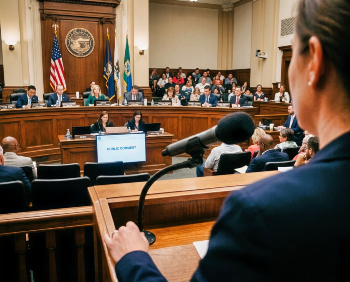
Build Local Economic Resilience Against Global Market Pressure
The real lever for stopping globalist influence locally is not in Washington, it is in your checking account, your local zoning code, and your state’s incorporation laws. The goal is not just to ‘shop small’ but to rewire your community’s economy so that capital, jobs, and decision-making power do not flow outward to distant corporate headquarters or transnational supply chains.
Step 1: Map Your Local Economic Leakage
The first move is diagnostic. Work with your local chamber of commerce or a sympathetic city council member to commission a ‘leakage study’, a public document tracking how much household spending exits the community. The common pattern: for every $100 spent at a national big-box retailer, only $15 to $25 stays local, whereas locally owned businesses recirculate $45 to $70. You can build a rough version using publicly available sales tax data, business license registrations, and a survey of local business owners.
Step 2: Use Zoning and Procurement to Favor Local Firms
Local governments control two powerful tools: zoning and procurement. Attend planning commission meetings to advocate for zoning that protects main-street retail and small-scale manufacturing. Oppose ‘formula business’ ordinances, over 70 municipalities restrict chain stores without a special permit. Push your city council to adopt a ‘local preference’ policy in public procurement; many state laws already allow a 5% to 10% price preference for in-state or in-county bidders. Ask your council to codify that preference for city purchases.
Step 3: Organize a Community Investment Circle
One of the most effective counter-measures to global capital is patient, local capital. A community investment circle is a formal or informal group of residents who pool money to fund local businesses that cannot get bank loans because they are too small for the consolidated financial system. The mechanics are straightforward: 10 to 20 members each contribute a set amount monthly, the group votes on loan applications from local farms, repair shops, or food processors, and the loans are repaid with interest back into the pool. This structure keeps capital under local control and directly resists the consolidation that defines global market integration. The U.S. Small 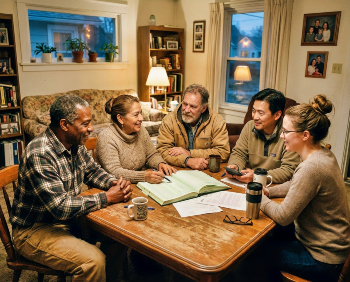 Business Administration guidance on local lending circles provides a legal baseline for how these groups can operate without running afoul of securities regulations.
Step 4: Anchor Institutions to Local Supply Chains
Hospitals, school districts, and universities are often the largest employers and purchasers in a county, and the most dependent on national group-purchasing organizations. Form a coalition to meet with their procurement officers and ask them to commit to a ‘local first’ purchasing policy for food, janitorial supplies, and maintenance services. Many hospital networks have found that sourcing produce from farms within a 100-mile radius is cost-neutral or cheaper once transportation and spoilage costs are factored in. Make the data case to the board, not an ideological one.
The Trade-Off You Must Accept
Localizing your economy will not always be cheaper in the short term. A local manufacturer may charge 10% more; a cooperative grocery store may not have the same variety. This premium is an investment in resilience, it insulates your community from supply chain shocks, currency fluctuations, and the whims of corporate headquarters. Frame the debate on sovereignty, reliability, and the compounding effect of local reinvestment, not on price.
How to Measure Success
Set a three-year target: increase the share of locally owned businesses by 10% and reduce the leakage rate by 5 percentage points. Track new business licenses, local suppliers used by the school district, and capital deployed through your investment circle. Publish these metrics in a one-page annual report and present it to the city council. Numbers shift the debate from ideology to measurable outcomes.
Common Mistakes That Weaken Local Resistance
Many grassroots efforts fail not from lack of passion, but from avoidable errors. Understanding these pitfalls helps you stop globalist influence locally without burning out or losing credibility.
Failing to document everything is the first mistake; verbal commitments mean nothing without a paper trail. Second, activists often focus on national issues they cannot influence while ignoring local battles they can win. Third, personal attacks alienate potential allies and shift the focus from policy to personality.
Another error is treating every issue as ideological rather than practical. You can oppose a specific policy without endorsing a broader program. Finally, do not operate in isolation; build coalitions with parent groups, business associations, and civic organizations that share your concern about autonomy and accountability.
| Mistake | Consequence | Better Approach |
|---|---|---|
| No paper trail | Officials deny commitments | Record and document everything |
| National focus | Local overreach ignored | Prioritize municipal battles |
| Personal attacks | Lose allies and credibility | Attack policies, not people |
| Ideological rigidity | Miss practical wins | Build issue-based coalitions |
| Working alone | Limited influence | Partner with local groups |
Conclusion: Your Next Step to Stop Globalist Influence
The fight against globalist influence is won in school board chambers, city halls, and county courthouses, not in cable news debates. Each public records request, city council appearance, and dollar kept in the local economy compounds into meaningful resistance against the standardization and control that threaten national sovereignty.
Texas Journal equips citizens with the constitutional education and strategic insight needed to assert their rights and defend founding principles. Our focus on states’ rights and civic engagement provides the force multiplier you need to understand how state-level action restrains federal overreach and hold local institutions accountable. The law’s on your side when you know how to use it, and here’s how you’ll make a difference.
Join the movement that supports the perpetuation of American freedoms. Click Here to access resources that help you control Washington from your state and secure a free and prosperous future.

Frequently Asked Questions
What are the signs of globalist influence in local government?
Signs include adoption of international sustainability frameworks without local debate, contracts awarded to transnational corporations over local businesses, and curricula that downplay national sovereignty. Watch for budget items labeled ‘global partnerships’ or ‘diversity initiatives’ that lack clear local benefit. The most direct way to identify influence is to audit every resolution against the Constitution and ask whether it serves your community or an external agenda.
How does the United States Constitution protect local sovereignty?
The Tenth Amendment reserves powers not delegated to the federal government to the states and the people. This protects local control over education, land use, and public safety. The Constitution also guarantees citizens the right to petition the government for redress of grievances, which covers public comment at meetings and public records requests. These tools are your legal shield against globalist influence.
Can local communities effectively resist globalist policies?
Yes. Local governments control zoning, procurement, and school curricula, which are frequent entry points for globalist influence. When citizens organize, they have successfully blocked international agreements from being implemented locally and redirected funds to community-based programs. The key is sustained participation. One meeting exposes a problem; attending every meeting builds the pressure needed to change policy.
What is the role of school boards in maintaining local autonomy?
School boards decide what children learn, which textbooks are approved, and how budgets are spent. When boards adopt international education frameworks or partner with global nonprofits, they transfer local authority to outside entities. Parents who track budgets and curriculum choices can identify these shifts early. Challenging them at board meetings and through public records requests keeps education accountable to the community.