Table of Contents
- Why School Board Budget Transparency Matters for Parents
- Understanding the Basics of School District Financial Accountability
- Accessing Your District’s Open Data Dashboard and Financial Reports
- How to File a Public Records Request for School Budgets
- School Board Budget Accountability Checklist for Parents
- Interpreting Budget Data and Spending Trends
- Your Rights: Legal Framework for Budget Oversight
- Taking Action: From Data to Advocacy
- Frequently Asked Questions
Last Updated: September 3, 2026
Why School Board Budget Transparency Matters for Parents
School board budget transparency is essential for understanding whether resources reach classrooms or get lost in administrative overhead.
Parents have a constitutional right to know how public funds are allocated. Your school board manages millions in public money that directly affects your child’s educational experience.
When parents understand budget priorities, they can identify gaps, advocate for changes, and hold leaders accountable. Transparent districts tend to see stronger community engagement and better outcomes.
Understanding the Basics of School District Financial Accountability
School districts must file annual financial reports, maintain audit records, and make certain budget documents available to the public. These aren’t optional disclosures.
Financial accountability rests on transparency, accuracy, and compliance. Quality of transparency varies dramatically: some districts publish interactive dashboards while others post PDFs that are technically public but practically inaccessible.
Operating Budget vs. Capital Budget
Your district maintains two distinct budgets, and conflating them creates confusion.
The operating budget covers day-to-day expenses: teacher salaries, utilities, supplies, transportation, food service, and administrative costs. It’s the largest budget and directly affects classroom operations.
The capital budget covers long-term infrastructure projects: building new schools, renovating facilities, and purchasing major equipment. Capital projects often span multiple years and involve bonding.
A district might have a healthy operating budget but underfunded capital projects, or invest heavily in construction while cutting operational spending. Understanding both budgets gives you the complete picture.
Revenue Sources and Expenditure Categories
Most districts rely on local property taxes (40-50% of revenue), state funding, and federal grants (10-15%) (peer-reviewed research). Federal funding often comes with restrictions for special education, Title I programs, and vocational education.
Personnel costs typically consume 80% or more of the operating budget (ets.org). The remaining 20% covers supplies, utilities, technology, transportation, and food service.
The critical question is whether personnel spending is distributed appropriately, whether central office administration is bloated while classroom support is underfunded.
Accessing Your District’s Open Data Dashboard and Financial Reports
Start with your district’s main website and look for links labeled “Budget,” “Financial Reports,” “Transparency,” or “Open Data.” Interactive dashboards make complex data navigable.
If your district lacks an obvious online portal, call the district office and ask for the budget transparency coordinator. Some districts maintain dedicated websites; others post documents to their main site.
You’ll typically find the annual budget, budget summaries, financial reports (actual vs. budgeted spending), audit reports, and sometimes line-item detail.
Start with the budget summary, which avoids excessive jargon. Then move to detailed reports as your comfort level increases. Focus on specific questions: How much does my school receive? Where does it go? How does this compare to other schools?
How to File a Public Records Request for School Budgets
 If information isn’t readily available online, you have a legal right to request it. Every state provides mechanisms for citizens to access government records.
Identifying What to Request
Good requests identify exactly what documents or data you need:
- “All expenditure records for [School Name] for fiscal year 2026”
- “Salary schedules for all administrative positions, fiscal year 2026”
- “Contracts with [Vendor Name] for the past three years”
- “Line-item budget for [Department Name], broken down by position”
- “Comparison of per-pupil spending by school building for fiscal year 2026”
Bad requests are too broad:
- “All budget documents”
- “Everything related to spending”
- “All financial records”
These trigger requests for clarification or result in massive data dumps that don’t actually answer your question.
Filing Your Request Effectively
Most states have specific procedures for public records requests. Your state’s attorney general office maintains guidance on your state’s process.
When you file, include your name, contact information, a clear description of what you’re requesting, the time period, your preferred format, and acknowledgment that there may be copying fees.
Keep your request professional and straightforward. You’re entitled to raw records, not interpretation or analysis.
Districts typically have 5-10 business days to respond (nga.org). If denied, ask why. Some denials are legitimate; others are overreach. If you believe a denial is improper, your state attorney general’s office can help.
| Step | Action | Timeline |
|---|---|---|
| 1 | Identify specific information needed | Before filing |
| 2 | Research your state’s public records process | 1 day |
| 3 | Draft clear, specific request | 1-2 days |
| 4 | Submit request via required method | Day of filing |
| 5 | Track deadline and follow up if needed | 5-10 business days |
| 6 | Review received documents | Upon receipt |
School Board Budget Accountability Checklist for Parents
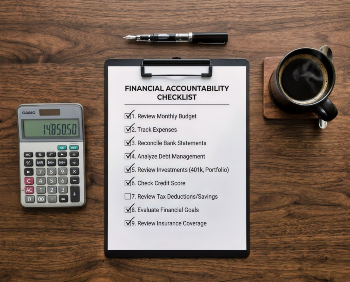
Use this checklist to systematically evaluate your district’s fiscal transparency and spending patterns.
- Locate transparency resources. Find your district’s budget documents, open data portal, or transparency website. Document the URL and ease of access.
- Review the annual budget. Read the budget summary. Identify total revenue, major revenue sources, and top spending categories.
- Check per-pupil spending. Compare your school’s per-pupil allocation to other schools in the district. Is the distribution equitable?
- Examine administrative costs. What percentage of the budget goes to central office administration vs. school-level spending? Is this reasonable for your district’s size?
- Analyze staffing ratios. How many administrators per 1,000 students? How many teachers per 1,000 students? Compare to district averages.
- Review audit reports. Has the district been audited by an independent auditor? Were there findings or recommendations? Have they been addressed?
- Check for spending trends. Compare this year’s budget to last year’s. What categories increased? What decreased? Why?
- Identify capital projects. What major construction or renovation projects are planned? How are they funded?
- Evaluate transparency quality. Is budget information easy to find and understand? Or is it buried in technical documents?
- Document concerns. If you identify potential problems, document them with specific data points and dates.
This checklist transforms abstract budget review into concrete, actionable steps. Work through it systematically rather than trying to evaluate everything at once.
Interpreting Budget Data and Spending Trends
Raw budget numbers mean nothing without context. The same spending figure might indicate wise stewardship in one district and wasteful spending in another.
Per-Pupil Spending and Resource Distribution
Per-pupil spending is the most straightforward metric for comparing resource allocation: total spending divided by total students.
Per-pupil spending alone doesn’t tell the complete story. Two districts with identical per-pupil spending might distribute resources very differently, one concentrating on advanced programs, another targeting struggling schools.
Compare per-pupil spending by school building. Is unequal distribution intentional (targeting higher-need populations) or accidental?
Examine spending by student demographic groups if available. These patterns reveal real priorities.
Resource distribution includes staffing. Schools with more experienced teachers or more support staff receive more resources, even with identical enrollment.
Analyzing Line-Item Expenditures and Capital Projects
Common line-item categories include salaries, benefits, supplies, utilities, transportation, technology, professional services, maintenance and repairs, and capital projects.
Examine which categories are growing and shrinking. If supply budgets are cut while administrative salaries increase, that reveals priorities.
Capital projects deserve special attention, they often involve significant decisions with minimal public scrutiny. Understanding these decisions is crucial to effective advocacy.
Ask: Why is this project necessary? What’s the timeline and funding? What’s the long-term cost of ownership? Are there cheaper alternatives?
Your Rights: Legal Framework for Budget Oversight
Every state provides public access to government financial records through public records laws that define what documents must be available, timelines, and penalties for non-compliance.
Education-specific statutes often require districts to publish annual financial reports, maintain audit records, and hold public budget hearings.
The Family Educational Rights and Privacy Act (FERPA) protects student privacy but does not prevent disclosure of aggregate financial data.
Understanding your legal rights shifts the dynamic, you’re asserting rights, not asking permission. Your state attorney general’s office can help enforce your rights.
Taking Action: From Data to Advocacy
Identify specific concerns by analyzing patterns. Where are gaps between stated priorities and actual spending?
 Bring concerns to decision-makers by attending school board meetings and presenting findings with data. Stick to facts, not opinions.
Connect with other parents. Collective voices are harder to dismiss than individual ones.
Request that the board address specific issues: presentations on administrative spending, comparisons of per-pupil spending, explanations of budget decisions.
If your district resists transparency or you uncover misconduct, escalate by filing complaints with your state education agency, contacting elected officials, or reaching out to local media.
The goal is to ensure public money serves public purposes. Accountability mechanisms exist to address problems when districts hide spending or make poor decisions.
Understanding school board budget transparency gives you the knowledge to participate meaningfully in educational governance and hold accountable government accountable.
Your ability to verify school board budget transparency is a direct expression of constitutional principles. When you demand accountability from public institutions, you’re exercising foundational rights. At Texas Journal, we believe informed citizens are the best defense against government overreach. Defend the American Family by mastering the financial data that reveals your district’s true priorities. Understanding where your tax dollars go is the first step toward restoring accountability at every level of government.
Frequently Asked Questions
What are the main components of a school district budget?
A school district budget typically includes two main parts: the operating budget covers day-to-day expenses like teacher salaries, utilities, and instructional materials, while the capital budget funds long-term projects such as building renovations and equipment purchases. Within operating budgets, you’ll find line-item expenditures broken down by department, program, and function. Understanding these components helps parents evaluate whether resources align with district priorities and student needs.
How can parents request access to school district financial records?
Parents can request financial records through public records requests, typically available through your state’s public information act or freedom of information law. Submit your request directly to the school district’s records custodian, specifying exactly what documents you need (audit reports, check registers, budget summaries, or expenditure data). Most districts must respond within 10-14 business days. You can also request records at school board meetings or through the district’s transparency portal if one exists. Keep documentation of your request and follow-up dates for accountability.
What legal rights do parents have to review school board expenditures?
Parents have constitutional and statutory rights to access public financial records. The First Amendment protects your right to petition government and access public information. Most states have sunshine laws and public records statutes requiring school districts to disclose budget documents, audit reports, and spending data. School boards must hold open meetings where budgets are discussed and voted on. If a district denies your records request without valid legal exemption, you can appeal or file a complaint with your state’s attorney general or education agency.
How do I interpret school district financial dashboards and reports?
Start by identifying key metrics: per-pupil spending (total budget divided by student enrollment), revenue sources (state funding, local property taxes, federal grants), and major expenditure categories. Look for year-over-year spending trends to spot increases or cuts. Check the audit report for any findings or concerns flagged by independent auditors. Compare your district’s per-pupil spending and staffing ratios to similar districts to assess resource allocation. If terms like ‘fiscal transparency’ or ‘line-item budget’ confuse you, ask the district for a glossary or attend a budget workshop they may offer.