


Table of Contents
- Step 1: Define Your Local Constitutional Advocacy Goals
- Step 2: Map Stakeholders and Identify Local Policymakers
- Step 3: Research Local Ordinances and State Law
- Step 4: How to File a Public Records Request for Government Accountability
- Step 5: Build Coalitions and Mobilize Your Community
- Step 6: Draft Constitutional Rights Advocacy Templates and Statutory Language
- Step 7: Use Digital Advocacy Tools and Social Media Mobilization
- Step 8: Navigate Local Zoning and Municipal Ordinances
- Step 9: Manage Legal Risk and Protect Your Advocacy
- Frequently Asked Questions
Last Updated: October 7, 2026
Step 1: Define Your Local Constitutional Advocacy Goals
Local constitutional advocacy is the practice of using the U.S. Constitution and state law to challenge government overreach at the city, county,  and school district level. It starts with one decision: what exactly are you trying to change?
Your goal must be specific and measurable. Clear goals help you feel confident and motivated, making your advocacy more effective. ‘Stop the school board from hiding its budget’ beats ‘defend freedom’ every time. Pick one target, one outcome, and one deadline.
Here’s how to set goals that hold up:
- Name the exact body you’re challenging (school board, city council, county commission)
- Write the outcome in one sentence a neighbor could repeat
- Set a realistic timeline tied to the next public meeting or legislative session
- Decide what success looks like before you start
How to verify local school board budget transparency for parents
School board budgets are public records in every state. The catch is that districts often publish summaries instead of line items. Parents who want real transparency should request the detailed budget document, not the newsletter version.
Start with these steps:
- Find your district’s posted budget on its website
- Compare total spending against the prior year
- Request line-item detail if only totals are posted
- Ask where federal and grant funds are allocated
- Attend the budget workshop, not just the final vote
That last point matters most. By the final vote, the numbers are locked. Budget workshops are where you can still ask questions that shape the outcome.
Step 2: Map Stakeholders and Identify Local Policymakers
Knowing who actually decides gives you a sense of control and confidence. Most citizens write letters to the wrong office and wonder why nothing changes. The top-ranking advocacy toolkits all tell you to ‘identify stakeholders’; almost none tell you how to rank them, count their votes, or move them.
Build a power map, not just a contact list. A contact list shows who exists; a power map reveals who actually decides. Use a simple grid with four columns and one row per person to identify key decision-makers and influencers, making your advocacy more strategic and effective.
A contact list tells you who exists. A power map tells you who decides. Use a simple grid with four columns and one row per person:
- Name and office: the exact title, district, and term end date
- Formal power: what this person can vote on, sign, veto, or block
- Informal influence: who they listen to, who endorsed them, what they owe
- Disposition: committed ally, persuadable, undecided, or opposed
 Sort the grid by formal power first. A city council member who chairs the budget committee outranks a colleague with the same title. Committee chairs set what reaches a floor vote. In most council-manager cities, the mayor may hold only a ceremonial vote; check your charter before you assume otherwise.
Count votes before you lobby.
Before your first public comment, answer three questions in writing:
- How many votes do you need to win (simple majority, supermajority, or quorum)?
- Which members are already with you, and have they said so on the record?
- Which two members are the realistic swing votes?
A common pattern is that advocates spend 80 percent of their time on the loudest opponent and 20 percent on the two undecided members who actually decide the outcome. Flip that ratio. Opponents rarely move; undecideds do.
The staff layer decides what elected officials ever see
City managers, district superintendents, county clerks, and planning directors shape the agenda, the staff report, and the recommended motion. A council member who has never read your issue will usually vote the staff recommendation. That means a 15-minute meeting with a planning director can be worth more than three public comments.
Request the staff report before every vote. In most jurisdictions, it is posted with the agenda packet, often 72 hours ahead. Read the recommendation line first; that is the outcome you are actually fighting.
Influencers and allies: different jobs, different asks
- Decision-makers vote. Ask them for a specific yes or no on a specific date.
- Influencers move votes. Local party chairs, pastors, small-business owners, and reporters rarely vote, but they change what decision-makers believe is safe. Ask them for a public statement, an endorsement, or a question raised at the right moment.
- Allies multiply reach. Neighbors, parent groups, civic clubs, and legal aid organizations supply bodies, documents, and credibility. Ask them for a defined task with a deadline, not a signature.
Where to find the information
- Campaign finance filings: your state or county election office publishes who funded each official’s last race. Donors are often the fastest route to a meeting.
- Meeting minutes and roll-call votes: two years of history shows you which members vote together and who breaks ranks.
- Appointment records: who appointed each board or commission member tells you who they answer to.
- Local press archives: reporters have already mapped the relationships you are trying to learn.
A stakeholder map is a living document. Revisit it after every vote. The member you marked “opposed” in March is sometimes the swing vote in October, and the only way to know is to keep the record current.
 Step 3: Research Local Ordinances and State Law
Local ordinances and state statutes define what your city or county can legally do. You cannot challenge overreach if you don’t know the rulebook. This is where most advocacy campaigns either get traction or fall apart.
Your research checklist:
- Pull the city charter and any relevant municipal code sections
- Find the state statute that grants (or limits) the local power in question
- Check whether state law preempts local rules on this issue
- Note the exact section numbers you’ll cite in public comments
State preemption is the quiet giant here. Many local overreaches only survive because residents never check whether the state even allows the local rule. When you cite a specific statute by number, officials respond differently. You stop being a complaint and become a legal argument.
Step 4: How to File a Public Records Request for Government Accountability
A public records request is a written demand for government documents that state law says belong to the public. Every state has its own version, and most agencies must respond within a set number of business days. Filing one is the fastest way to turn suspicion into evidence.
Here’s the process:
- Identify the exact agency and records custodian
- Write a request that names specific documents and date ranges
- Submit it in writing, by email or through the agency’s portal
- Keep a copy and note the submission date
- Follow up in writing if the deadline passes
Keep your request narrow. “All emails about the zoning vote from January through March” gets results. “Everything about the project” gets denied or delayed.
Step 5: Build Coalitions and Mobilize Your Community
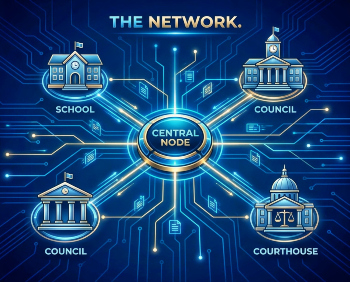
Coalitions turn a single voice into a bloc officials must answer to. One resident at a podium is easy to ignore. Twenty residents from different neighborhoods, churches, and businesses are a political problem. The legacy toolkits stop there. What they skip is the structure that keeps a coalition from collapsing after the second meeting, and the digital layer that lets a small group act like a large one between meetings.
Recruit by role, not by warm body.
A coalition of 40 people with no assignments is weaker than a coalition of 12 with clear jobs. Fill these roles before you recruit broadly:
- Convener, sets the agenda, runs the meeting, owns the calendar
- Researcher, pulls the ordinances, statutes, and records requests
- Communications lead, drafts talking points and posts
- Whip, calls members before each vote and confirms attendance
- Treasurer or record-keeper, tracks who said what, when, and to whom
Give every new member one specific task with a deadline in the next seven days. People who complete a small task show up again. People who only sign a letter disappear by the second meeting.
Structure the coalition around the issue, not a personality.
Issue-based groups survive leadership changes. Personality-based groups fold when the founder burns out or moves. Write a one-page charter that states the issue, the specific ask, and the group’s decision rule. Decide in advance whether you operate by consensus or by majority vote. Groups that never answer that question spend their third meeting arguing about process instead of the ordinance.
Handle disagreement before it splits you.
 Local coalitions attract people who agree on one issue and disagree on almost everything else. That is normal and workable if you set boundaries early:
- Agree on a single public message and stick to it in public forums
- Allow members to hold private views on unrelated issues
- Keep the coalition’s name off any position the group has not voted on
- Rotate who speaks so no single member becomes the story
Mobilize digitally between meetings.
Most traditional guides miss what happens in the 28 days between council meetings. Digital tools close it:
- Email and text alerts: fire when an agenda is posted, not when a vote is imminent. Most bodies publish agendas at least 72 hours ahead; use that window.
- A shared document folder: one place for records requests, statutes, and draft testimony so that new members can catch up in an hour instead of a month.
- Short video clips of public comments: a 90-second clip of a parent testifying travels further in local Facebook groups than a press release.
- Online petitions tied to a specific vote: “Tell the council to table Ordinance 24-117 on Tuesday” outperforms “share if you care” every time.
- A phone-bank list: the whip’s job is to convert online signatures into calls to named council members before the vote.
Social media mobilization works best when it points to a real action with a deadline. Keep every post grounded in the documents you have gathered. That is how you avoid becoming another echo chamber that officials learn to ignore.
Measure whether the coalition is actually growing
Track four numbers weekly and write them down:
- Active members who completed a task in the last 14 days
- Public comment slots filled at the last meeting
- Records requests filed, and responses received
- Swing votes moved from undecided to committed
If the first number is flat and the fourth is flat, the coalition is a mailing list, not a movement. Fix the recruitment or fix the ask, not the messaging.
 Step 6: Draft Constitutional Rights Advocacy Templates and Statutory Language
Constitutional rights advocacy templates are pre-written documents that citizens adapt for testimony, letters, and proposed amendments. They save time and keep your legal arguments consistent across every speaker and every meeting.
A working template includes:
- A one-paragraph statement of the constitutional right at issue
- The specific statute or ordinance you’re challenging
- A short factual record with dates and documents
- A clear ask (repeal, amend, or table the measure)
If you’re proposing statutory language, mirror the structure of existing state law. Legislators and city attorneys read familiar formatting as credible. Cite the constitutional provision you’re relying on by article and section.
Step 7: Use Digital Advocacy Tools and Social Media Mobilization
Digital tools let a small group act like a large one. This is the gap most traditional advocacy guides miss. They teach you to show up at meetings and stop there.
What works now:
- Email and text alerts that fire when an agenda is posted
- A shared document folder for records requests and research
- Short video clips of public comments for local social media groups
- Online petitions tied to a specific vote, not a vague cause
Social media mobilization works best when it points to a real action. “Call these three council members before Tuesday” outperforms “share if you care” every time. Keep your message grounded in the documents you’ve gathered. That’s how you avoid becoming another echo chamber.
Step 8: Navigate Local Zoning and Municipal Ordinances
Zoning fights are where constitutional advocacy meets the sidewalk. Local ordinances govern what can be built, where, and how. These rules decide property rights, assembly rights, and whether your group can even hold a meeting where people can find it.
Watch for these pressure points:
- Notice requirements: did the city follow its own published process?
- Variances and conditional use permits: who gets them, and why?
- Public hearing rules: how long do residents get to speak?
- Sign and assembly ordinances: do they treat all groups the same?
Zoning fairness is a constitutional issue when rules are applied unevenly. Document every meeting, every vote, and every exception granted. Patterns of unequal treatment are the strongest evidence you can build.
 Step 9: Manage Legal Risk and Protect Your Advocacy
Legal risk management keeps your movement alive. The First Amendment protects advocacy, but that protection has edges. Knowing them lets you act boldly without handing opponents an easy win.
Protect yourself with these habits:
- Stay on public property and public forums when demonstrating
- Keep records requests factual and narrowly written
- Never trespass, block entrances, or disrupt official proceedings
- Consult a local attorney before proposing formal legal action
- Document everything in writing, including your own conduct
The legal framework protects civic participation, but courts expect citizens to follow procedure. Following the rules is not weakness. It’s what makes your challenge stick.
Local constitutional advocacy fails most often for one reason: citizens fight alone, with no toolkit, no coalition, and no record. Texas Journal provides critical insight and discernment designed to help citizens assert their rights and restore the country to its founding principles. We provide constitutional education, strategic planning resources, and frustration into lasting policy reform. Explore Protect Our Traditions and Control Washington From Your State to see how our members organize, and join the Patriot Pool to multiply your impact. Click here to get started.

Frequently Asked Questions
How can citizens influence local government policy?
Citizens influence local policy by attending public meetings, submitting written comments during open comment periods, filing public records requests to uncover spending and decisions, and building coalitions with neighbors. Local officials respond to organized, persistent pressure from constituents. Start by identifying the specific policy or ordinance you want changed, then show up consistently at council or board meetings. When multiple residents speak on the same issue, officials take notice.
What are the legal limits of local government authority?
Local governments derive authority from state constitutions and statutes, not from the U.S. Constitution directly. They cannot pass ordinances that violate the First Amendment, the Second Amendment, or other constitutional rights. They also cannot exceed the powers their state grants. If a local ordinance conflicts with state law or the Constitution, it is unenforceable. Citizens should research their state’s home rule provisions and consult legal resources to identify overreach.
How do I research local ordinances for constitutional compliance?
Start by accessing your city or county website for the full municipal code. Search for the specific ordinance or section you are concerned about. Compare it against your state constitution and the U.S. Constitution, focusing on rights like free speech, assembly, and due process. If the ordinance appears to conflict, document the exact language and consult a constitutional attorney. Many advocacy groups provide free guides on evaluating local laws for constitutional issues.
What role does the First Amendment play in local advocacy?
The First Amendment protects your right to speak, assemble, petition, and publish without government retaliation. In local advocacy, this means you can organize protests, distribute literature, speak at public meetings, and publish criticism of officials. Local governments cannot ban peaceful assembly or require permits that are designed to suppress speech. Knowing these protections helps you act confidently when officials try to limit civic participation.
constituent pressure

