


Table of Contents
- Why Constitutional Education Is the Foundation of Self-Government
- The Principles of the U.S. Constitution Every Citizen Should Know
- How to Participate in Local Government: A Step-by-Step Framework
- Civic Education in the K-12 Curriculum and Beyond
- Designing Constitutional Education: A Practical Framework for Educators
- Step 1: Write Learning Objectives Before You Write Lessons
- Step 2: Sequence Content From Structure to Controversy
- Step 3: Choose Methods That Match the Objective
- Step 4: Build Civil Disagreement Into the Design
- Step 5: Design Assessment Around Reasoning, Not Conclusions
- Step 6: Connect Every Unit to a Real Institution
- Measuring Learning Outcomes and Civic Engagement
- Inclusive Teaching Across Political, Cultural, and Accessibility Differences
- Digital and Media Literacy in Constitutional Learning
- Constitutional Education Beyond K-12: Lifelong Civic Learning
- Civil Disagreement and Civic Dialogue: Building Civic Friendships
- Common Bad Advice About Constitutional Education to Ignore
- Conclusion: Your Role in Restoring Constitutional Self-Government
- Frequently Asked Questions
Last Updated: October 6, 2026
Why Constitutional Education Is the Foundation of Self-Government
Constitutional education for engaged citizens is the ongoing practice of learning how the U.S.
Here is the uncomfortable truth most civics programs avoid. The Constitution does not protect itself.
 That is why constitutional education sits at the base of every other civic skill. Voting, jury service, local advocacy, and public comment all depend on understanding the framework first.
The Principles of the U.S. Constitution Every Citizen Should Know
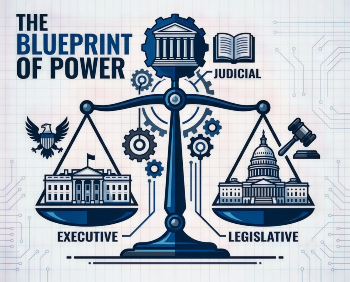
The core principles of the U.S. Constitution are limited government, separation of powers, federalism, checks and balances, and popular sovereignty. Each one exists to prevent the concentration of power in a single person or institution.
The document itself is short. The National Archives transcription of the Constitution runs to a few thousand words, which is precisely the point: it was written to be read by ordinary people, not reserved for lawyers.
Limited Government, Separation of Powers, and Federalism
Limited government means the federal government holds only the powers the Constitution grants it. Everything else stays with the states or the people under the Tenth Amendment.
Separation of powers splits authority across three branches. Congress writes laws, the executive enforces them, and the judiciary interprets them. Federalism divides power between the national government and the states, which is why state legislatures remain the most accessible levers for citizens who want to change policy.
How the Constitution Was Designed to Protect Liberty
The Framers built structural protections rather than relying on good intentions. Competing branches check each other. States check the federal government.
This design assumes ambition exists in every branch. Instead of hoping leaders behave, the Constitution sets ambition against ambition so that liberty survives even when officials fall short.
Four amendments do most of the everyday work: the First, Second, Fourth, and Fifth. Each one defines a limit on government power that citizens can invoke directly.
First Amendment, Second Amendment, and Due Process in Practice
The First Amendment protects speech, press, assembly, petition, and religious exercise from government restriction (First Amendment Activities).
The Second Amendment protects the individual right to keep and bear arms. The Supreme Court has addressed its scope repeatedly, and state laws vary widely on permitting and carry rules.
Due process, rooted in the Fifth and Fourteenth Amendments, guarantees fair procedures before the government can take life, liberty, or property.
| Right | Everyday Example | What to Do |
|---|---|---|
| First Amendment | Speaking at a public meeting | Request the floor during public comment |
| Second Amendment | Lawful firearm ownership | Check state and local rules first |
| Fourth Amendment | Traffic stop or search | Ask whether you are free to go |
| Fifth Amendment | Questioning by officials | State clearly that you are invoking your right |
| Due Process | Agency penalty notice | Demand written notice and a hearing |
 How to Participate in Local Government: A Step-by-Step Framework
Learning how to participate in local government starts with showing up. Local bodies make decisions that affect daily life more directly than most federal policy: zoning, school curriculum, taxes, policing, and public health. The barrier to entry is low, which is exactly why local participation matters.
Here is the framework we recommend to readers who want to move from spectator to participant.
- Identify your levers. Find your city council, county commission, school board, and state legislative district. These are the bodies that respond to individual constituents.
- Get the calendar. Meeting schedules, agendas, and minutes are public. Most are posted online.
- Read one agenda item. Pick a single issue and read the actual proposal, not the news summary.
- Show up and speak. Public comment periods typically allow two to three minutes. Prepare one clear point.
- Follow up in writing. Email your representative your position and ask for their vote.
- Build a small group. Three neighbors who show up repeatedly carry more weight than one person who shows up once.
- Track the outcome. Check the vote, note who voted which way, and remember it at the next election.
Civic Education in the K-12 Curriculum and Beyond
Civic education in the K-12 curriculum is where constitutional literacy either takes root or never starts.
The stronger models pair classroom instruction with practice. Students who simulate a hearing, draft a public comment, or run a mock election retain the framework far better than students who only memorize it.
Beyond K-12, the picture is thinner. Adults who finish school without solid constitutional grounding rarely encounter structured civic learning again unless they seek it out.
Designing Constitutional Education: A Practical Framework for Educators
Most civics resources describe what constitutional education should accomplish. Very few show how to build it. This section is the implementation guide the field is missing: a unit-level framework with learning objectives, lesson sequencing, time allocation, and assessment design that an educator, homeschool parent, or community workshop leader can adapt directly.
The framework rests on four elements that must connect: content, method, assessment, and application. Skip any one and the program produces familiarity without capability: students who recognize the Constitution but cannot reason with it.
 Step 1: Write Learning Objectives Before You Write Lessons
Objectives drive everything else. A workable constitutional education objective has three parts: a cognitive verb, a constitutional concept, and an observable performance. Compare these two:
- Weak: “Students will understand federalism.”
- Workable: “Students will identify which level of government holds a given power and cite the constitutional provision that assigns it.”
The second version can be taught, practiced, and scored. The first cannot.
A semester course typically needs six to ten objectives spanning three tiers: foundational knowledge (naming structures and clauses), analytical skill (interpreting text and precedent), and applied civic action (using the framework in a real civic setting). Build objectives across all three tiers, not just the first.
Step 2: Sequence Content From Structure to Controversy
Sequencing is where most programs fail. They open with a hot-button case, students lack the framework to analyze it, and the discussion collapses into an exchange of opinions. The reliable sequence runs:
- Text and structure first. The Constitution’s architecture, Article I powers, the separation of powers, federalism, the amendment process. Students cannot evaluate a Commerce Clause argument before they know what the clause says.
- Rights and limits second. The Bill of Rights, the Fourteenth Amendment, and how courts define the boundary between protected liberty and legitimate government action.
- Interpretation methods third. Originalism, living constitutionalism, textualism, and precedent. Teach these as competing tools, not as a single correct answer.
- Contested cases last. Only after students hold the framework should they apply it to live disputes.
A common pattern in strong programs is roughly a 40/30/20/10 split of instructional time across those four stages, with the contested-case work concentrated at the end of the term.
Step 3: Choose Methods That Match the Objective
Method should follow objective, not habit. A short mapping:
| Objective Type | Method That Works | Method That Fails |
|---|---|---|
| Recall of structure | Short retrieval quizzes, diagramming | Open discussion |
| Textual interpretation | Close reading of primary text in pairs | Lecture |
| Argument skill | Structured debate with assigned positions | Free-form seminar |
| Applied civic action | Public comment draft, mock hearing | Multiple-choice test |
Primary text should anchor every unit. Assign the Constitution itself plus a small set of landmark opinions rather than a textbook summary. Secondary sources are scaffolding, not substance.
Step 4: Build Civil Disagreement Into the Design
Civil disagreement is not an add-on; it is a skill that requires repetition. Build it in with three structural moves:
- Assigned-position debates. Students argue a side they did not choose. This forces engagement with the strongest version of the opposing view.
- Structured formats. Use formats with turn-taking rules, a modified Lincoln-Douglas, a Socratic seminar with a discussion map, or a written exchange, so the structure carries the civility when emotions run high.
- Text-anchored claims. Require every argument to cite a clause, a case, or a historical source. This moves disagreement off identity and onto the document.
Step 5: Design Assessment Around Reasoning, Not Conclusions
 Grade the quality of the constitutional argument, not whether the student reached a preferred outcome. A workable rubric scores four dimensions separately:
- Claim clarity: Is the position stated precisely?
- Constitutional citation: Is the relevant text or precedent identified correctly?
- Reasoning: Does the evidence actually support the claim?
Use a pre/post document analysis to measure growth: ask students to interpret the same constitutional clause at the start and end of the unit, then score both with the same rubric. The delta is your evidence of learning.
Step 6: Connect Every Unit to a Real Institution
Abstract civics fades; concrete civics sticks. Each unit should end with a touchpoint to a live institution: a local official as a guest, attendance at a public meeting, a tracked bill in the state legislature, or a pending case. The connection converts knowledge into a habit of participation.
Measuring Learning Outcomes and Civic Engagement
Measuring civic learning requires two tracks: knowledge and behavior. Knowledge is straightforward to assess through written argument, document analysis, and oral defense. Behavior is harder, but it is the outcome that actually matters.
A practical measurement approach includes:
- Pre- and post-document analysis. Ask students to interpret a constitutional clause before and after instruction. Score the reasoning.
- Structured argument rubrics. Evaluate claim, evidence, and constitutional citation separately.
- Behavioral indicators. Track voter registration, meeting attendance, public comment submissions, and jury service over time.
Many programs make the mistake of measuring only recall. A student who can name three amendments but cannot analyze a Fourth Amendment scenario has not learned constitutional reasoning.
Inclusive Teaching Across Political, Cultural, and Accessibility Differences
Constitutional education works best when it reaches every learner in the room, regardless of political affiliation, background, or ability. That is not a concession to sensitivity; it is a practical requirement.
Three practices make inclusion workable:
- Separate the text from the conclusion. Teach what the Constitution says and how courts have interpreted it. Let students draw their own policy conclusions.
- Use accessible materials. Provide plain-language glossaries, screen-reader-compatible documents, captioned video, and translated summaries where needed.
- Design for multiple viewpoints. Assign roles that require students to argue positions they personally disagree with. This builds the muscle that civic dialogue depends on.
The goal is not neutrality for its own sake. It is a classroom where the constitutional framework is the shared ground, and disagreement happens inside that framework rather than replacing it.
 Digital and Media Literacy in Constitutional Learning
Digital and media literacy is now inseparable from constitutional literacy. Citizens form most of their views about rights, court rulings, and legislation through screens, and the quality of that information varies enormously.
Three habits close most of the gap:
- Trace claims to primary sources. If a post says a court ruled a certain way, find the opinion. The Supreme Court’s official opinion archive publishes rulings directly.
- Check the date and the jurisdiction. A ruling in one circuit does not bind another. An old case may have been overturned.
- Distinguish opinion from holding. Commentary is not law. Editorials are not rulings.
AI-generated summaries add a new layer of risk. They are fast and often fluent, but they misstate holdings and invent citations. Treat any summary as a lead to verify, never as the final word on what the Constitution requires.
Constitutional Education Beyond K-12: Lifelong Civic Learning
Almost every constitutional education resource on the web is built for a classroom. The result is a field that serves students well and adults poorly. Once a person leaves school, structured civic learning largely disappears, even though the constitutional questions adults face (a zoning fight, a workplace regulation, a state ballot measure, a jury summons) are the ones where knowledge actually changes outcomes.
This section addresses the gap directly: how adults, community groups, and lifelong learners can build and sustain constitutional literacy outside a formal classroom.
Why Adult Civic Learning Is Structurally Neglected
Three forces push constitutional education toward K-12 and away from adults:
- Funding follows students. Public civic education dollars are tied to school systems, not to adult programming.
- Assessment follows funding. What gets measured in schools gets taught; adult learning has no equivalent accountability structure.
- Knowledge decays without practice. A single high school civics course produces durable knowledge only if it is reinforced. For most adults, it is not.
The practical consequence is a large population of adults who vote, serve on juries, and attend public meetings while holding only a fragmentary understanding of the framework those activities depend on.
 Four Adult Learning Paths That Actually Work
Adult learners need formats that fit around work and family, and that reward participation with visible progress. Four paths consistently produce results:
- Primary-source reading on a schedule. One constitutional clause, opinion, or statute per month, read in the original with a short written summary. The discipline matters more than the volume.
- Structured discussion groups. Small groups that meet on a fixed cadence and reason through a single question per session. Civic friendships form here, and they are the durable infrastructure of self-government.
- Applied local engagement. Pick one local issue, a zoning change, a school board policy, a state bill, and follow it from proposal to vote. Nothing teaches federalism faster than trying to change a local rule.
- State legislature tracking. Most state sessions are short, and individual testimony carries real weight. Following one bill through a session teaches the legislative process more effectively than any textbook.
Designing a Community Program
Community groups, libraries, and civic organizations can build a workable adult program with a modest structure:
- Cohort model. Recruit a fixed group of 10-20 participants for a defined term; six to twelve weeks works well.
- Single question per session. Each meeting addresses one constitutional question with a primary text assigned in advance.
- Rotating facilitation. Participants take turns leading discussion, which builds ownership and spreads the skill.
A common pattern in successful programs is a 60/40 split between reading and discussion, with the discussion anchored to the text rather than to opinion.
Accessibility and Inclusion for Adult Learners
Adult programs reach a wider range of backgrounds, abilities, and prior knowledge than classroom programs do. Three practices keep the door open:
- Plain-language glossaries. Provide a short glossary of constitutional terms alongside primary texts, so participants without legal training are not shut out.
- Multiple formats. Offer materials in print, screen-reader-compatible digital files, and captioned video. Accessibility is a design requirement, not an accommodation.
- Separate the text from the conclusion. Teach what the Constitution says and how courts have interpreted it. Let participants draw their own policy conclusions. This keeps the group focused on the framework rather than on factional alignment.
Measuring Progress Without a Gradebook
Adults do not need grades, but they do need evidence that the learning is working. Three lightweight measures are enough:
- Pre/post interpretation. Ask participants to interpret the same clause at the start and end of the term, and compare the reasoning.
- Participation log. Track public comment submissions, meeting attendance, and testimony delivered by the cohort.
- Six-month follow-up. A short survey six months after the program shows whether civic participation persisted, the outcome that actually matters.
Where This Work Fits
This is where our work at Texas Journal focuses: giving engaged citizens the constitutional grounding to act at the state level, where individual voices still move outcomes. If you want to go further, our registration page explains how members plug into that effort, including how to control Washington from your state rather than waiting on the capital to change course.
 Civil Disagreement and Civic Dialogue: Building Civic Friendships
Civil disagreement is a skill, not a personality trait. You can teach, practice, and improve it. The citizens who can argue a constitutional question without turning the argument into a personal war are the ones who actually change policy.
Civic friendships, relationships built across political differences around shared civic goals, are the durable infrastructure of self-government. They survive elections and outlast administrations.
Here is how to build them:
- Argue the text, not the person. Cite the clause or the case. Leave motives out of it.
- State your strongest version of the other side. If you cannot, you do not understand the debate yet.
- Look for the shared principle. Most disagreements are about application, not first principles.
Common Bad Advice About Constitutional Education to Ignore
A great deal of popular civic advice sounds reasonable and fails in practice. Here are the patterns we see most often, and what to do instead.
| Bad Advice | Why It Fails | What Works Instead |
|---|---|---|
| “Just vote, and you’ve done your duty” | Voting without understanding the issues transfers power to whoever shapes the ballot | Read the text, then vote |
| “Leave constitutional law to the experts” | Experts disagree, and the document was written for ordinary citizens | Learn the framework yourself |
| “Civics is a school subject” | Learning stops and knowledge decays without practice | Treat it as a lifelong habit |
| “Avoid politics to keep the peace” | Silence cedes decisions to those who show up | Disagree civilly, in public |
| “One big protest changes everything” | Sustained local pressure moves policy; one-off events rarely do | Show up repeatedly at the local level |
The thread running through all of it: passive civic behavior produces passive outcomes. Constitutional education only pays off when it changes what you do.
Conclusion: Your Role in Restoring Constitutional Self-Government
The challenge facing engaged citizens in 2026 is not a shortage of information. It is a shortage of applied constitutional knowledge: people who know the framework well enough to use it when a local board overreaches, a state agency ignores due process, or a federal rule exceeds its authority.
Texas Journal exists to close that gap. Our work focuses on constitutional education, states’ rights, and the practical levers citizens hold at the state level.
Get started with Texas Journal and turn constitutional knowledge into action where it counts most: your state.

Frequently Asked Questions
What does the 14th Amendment say about education?
The 14th Amendment does not mention education directly. The Supreme Court has used its Equal Protection Clause to strike down racially segregated public schools, and its Due Process Clause applies fundamental rights to state governments. Because education is not named in the Constitution, it remains primarily a state and local responsibility under the 10th Amendment. Understanding this distinction matters for anyone evaluating federal versus state authority over K-12 curriculum and classroom instruction.
What are the seven basic principles of the Constitution?
The seven principles commonly taught in civics education are popular sovereignty, limited government, separation of powers, checks and balances, federalism, republicanism, and individual rights. These principles appear across the Preamble, the seven Articles, and the Bill of Rights. Studying them helps citizens recognize when a federal action exceeds the enumerated powers granted in Article I, Section 8, and when states retain authority under the 10th Amendment.
How can citizens learn about their constitutional rights?
Start with primary sources: the Constitution, the Bill of Rights, and landmark Supreme Court decisions. Read the Federalist Papers to understand the Framers’ reasoning. Attend local government meetings to see how constitutional principles apply in practice. Many civic education programs, university extensions, and state bar associations offer free courses. Constitutional literacy grows fastest when you combine reading with real participation, such as commenting at a city council meeting or serving on a local board.
How does constitutional knowledge support civic participation?
Constitutional knowledge gives citizens the vocabulary and framework to challenge government overreaches effectively. Knowing the difference between a protected right and a discretionary policy helps you frame public comments, write letters to representatives, and file public records requests that get results. Engaged citizens who understand federalism can push back on unfunded mandates and identify which level of government actually holds authority over a given issue.
What are practical ways to participate in local government?
Attend school board and city council meetings and sign up for public comment. Apply for a board or commission seat, as these often have open positions. Submit public records requests to see how decisions are made. Run for a precinct chair position in your party. Testify at the state legislature during session. Each of these actions builds civic skills and creates a track record of engagement that makes your voice harder to ignore.
How can citizens evaluate claims about constitutional rights?
Check the primary text first. Read the amendment or Article cited, then see how the Supreme Court has interpreted it. Be skeptical of claims that cite no case law or that treat a single lower court ruling as settled. Cross-reference with the Congressional Research Service or state attorney general opinions. Digital and media literacy in constitutional learning means verifying the source, the jurisdiction, and whether the claim reflects current law or a proposed change.
The Supreme Court has used its Equal Protection Clause

