Last Updated: October 22, 2026Table of Contents
- American Principles Project vs America First: Key Differences at a Glance
- Understanding the American Principles Project Mission
- What the America First Movement Meaning Represents in Modern Politics
- American Principles Project Funding and Financial Reach
- Policy Focus: Family Values, Education, and Social Issues
- National Interest and Economic Policy Priorities
- How to Evaluate Political Advocacy Groups for Your Values
- Which Organization Aligns With Your Constitutional Priorities
- Frequently Asked Questions
American Principles Project vs America First: Key Differences at a Glance
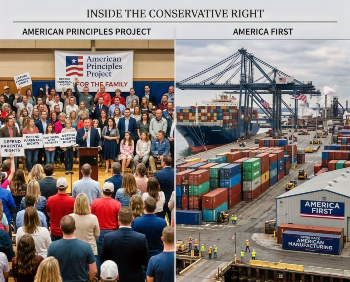 Understanding the landscape of conservative political advocacy requires clarity on two major forces shaping American politics today: the American Principles Project and the America First movement represent distinct but overlapping approaches to constitutional governance and national policy.
The American Principles Project operates as a political action committee focused on family values, parental rights, and education policy. America First, by contrast, emerged as a broader political movement emphasizing national sovereignty, economic nationalism, and a skeptical approach to international entanglements. While both organizations appeal to conservative voters concerned about government overreach, their organizational structures, funding mechanisms, and policy priorities differ significantly.
At Texas Journal, we help citizens understand these distinctions so you can align with organizations that match your constitutional values and political priorities. Whether to support one approach, the other, or both depends on which issues matter most to your family and community. For those seeking deeper guidance on these choices, resources like Defend the American Family and Restore US Sovereignty can help you evaluate where your priorities lie.
Understanding the American Principles Project Mission
The American Principles Project positions itself as a family-focused political organization dedicated to three core objectives: changing laws to protect families, defending children from what it views as ideological threats, and asserting parental rights in education and healthcare decisions.
According to Federal Election Commission campaign finance data, the American Principles Project PAC reported $6,000,274.11 in total receipts for the period January 1, 2025, through June 30, 2026. This funding reflects the organization’s capacity to influence electoral outcomes and policy debates at the state and federal levels.
The organization’s strategy centers on several key areas:
- Opposing what it characterizes as gender ideology in schools
- Challenging critical race theory curricula
- Defending parental involvement in children’s medical decisions
- Supporting candidates who prioritize family-centered policies
- Building grassroots networks to mobilize conservative voters around education and family issues
The American Principles Project’s approach is granular and legislative. It targets specific policies, curriculum standards, healthcare consent laws, parental notification requirements, rather than broad ideological positioning. This focus on concrete policy outcomes distinguishes it from more general movement organizations.
What the America First Movement Meaning Represents in Modern Politics
The America First movement emerged as a political framework emphasizing national sovereignty, economic nationalism, and skepticism toward globalist institutions and policies.
 America First is a political philosophy that prioritizes national interests over international commitments, domestic economic policy over free trade agreements, and national identity over global integration. The movement gained prominence through electoral politics but represents a broader shift in conservative thought about how America should engage with the world.
America First encompasses multiple policy domains:
- Economic nationalism and trade protectionism
- Immigration restriction and border security
- Skeptical approach to military interventions abroad
- Resistance to international organizations and agreements
- Emphasis on national sovereignty and constitutional limits on executive power
The movement’s intellectual foundation draws from both traditional American conservatism and newer critiques of establishment foreign policy. Unlike the American Principles Project’s focus on domestic social issues, America First addresses America’s role in global affairs and the relationship between national interest and international obligations.
George W. Bush Presidential Center analysis has examined how America First should be grounded in American values, including democracy, human rights, and free trade, offering a values-based perspective on how nationalist principles should function within a constitutional framework.
American Principles Project Funding and Financial Reach
Understanding funding sources reveals organizational capacity and political influence. The American Principles Project’s financial structure demonstrates its ability to sustain operations and amplify messaging across multiple states.
According to Federal Election Commission records, the American Principles Project PAC reported $5,490,539.11 in total contributions and $1,017,131.11 in individual contributions for January 1, 2025, through June 30, 2026. This breakdown matters because individual contributions represent grassroots support, while larger contributions often signal institutional backing.
The organization’s funding model allows it to:
- Support state-level candidates aligned with its priorities
- Fund issue-specific advertising campaigns
- Build infrastructure for voter mobilization
- Conduct research and messaging development
- Maintain permanent staff dedicated to policy work
Funding levels directly correlate with political reach. Organizations with strong financial resources can contest elections in multiple states simultaneously, sustain year-round advocacy, and respond quickly to emerging threats to their policy priorities.
For citizens evaluating political organizations, funding transparency matters. It shows whether an organization depends on small-dollar grassroots support or large institutional donors. Both models have trade-offs: grassroots funding suggests independence from establishment influence, while institutional backing provides stability and resources.
 Policy Focus: Family Values, Education, and Social Issues
The clearest way to separate the American Principles Project from America First is to compare what each actually advocates on the issues voters ask about. The two are not rival brands of the same product. One is a single-issue advocacy organization with a narrow legislative agenda; the other is a broad political slogan that different politicians, think tanks, and committees define differently. Treating them as equivalent produces confused support and wasted donations.
Where the American Principles Project stands
The American Principles Project’s public agenda is concentrated on family, education, and parental authority. Its stated priorities include:
- Opposing what it characterizes as gender ideology in K-12 schools and opposing gender-related medical treatments for minors
- Challenging critical race theory and related diversity curricula in public schools
- Expanding parental notification and consent requirements for school health services and counseling
- Defending religious liberty claims in public institutions
- Supporting state-level candidates and ballot measures that advance these positions
Its method is granular and state-by-state. The organization works through its political action committee, issue advertising, and state legislative campaigns rather than through a single national platform. That focus is a strength for donors who care about school policy and a limitation for donors who care about trade or foreign affairs, because the organization does not run national campaigns on those subjects.
Where America First stands
“America First” is not a single organization with a single platform. It is a political phrase with a long history and several current uses. In domestic policy, it usually means immigration restriction, border enforcement, and economic nationalism. In foreign policy, it usually means skepticism toward military intervention, opposition to binding international agreements, and a preference for bilateral deals over multilateral institutions. In trade, it usually means tariffs and reshoring incentives rather than free-trade agreements.
Because the phrase is used by candidates, committees, and think tanks with different priorities, a voter cannot assume that a group using “America First” in its name holds any particular position on school curriculum or parental consent. Some America First-aligned groups do support parental rights legislation; others say nothing about it. The label describes a mood and a set of foreign and economic priorities more than a fixed domestic social platform.
Side-by-side on the issues voters ask about
| Issue | American Principles Project | America First (as commonly used) |
|---|---|---|
| Family policy | Core focus: parental rights, child protection, religious liberty | Secondary or unaddressed; varies by group |
| Education | Core focus: curriculum, parental notification, school choice | Sometimes supportive; rarely the lead issue |
| Immigration | Not a lead issue | Core focus: restriction and enforcement |
| Trade | Not a lead issue | Core focus: tariffs, reshoring, skepticism of free-trade deals |
| Foreign affairs | Not a lead issue | Core focus: non-intervention, sovereignty, burden-sharing |
| Government scope | Concentrated on family and school authority | Concentrated on national sovereignty and economic independence |
Why the divergence matters
The two approaches rest on different theories of political change. The American Principles Project argues that changing family and education law reshapes culture, and that cultural change then reshapes politics. America First argues that restoring national sovereignty and economic independence must come first, and that other reforms follow once the country’s borders, trade, and foreign commitments are reordered.
Those theories are not mutually exclusive, but they point donors and volunteers toward different work. A parent who wants to influence a local school board will find the American Principles Project’s agenda directly relevant. A voter whose main concern is tariffs or border enforcement will find America First-aligned groups more relevant, and should check each group’s own platform rather than assuming the label settles the question.
A short timeline of how the two diverged
 The phrase “America First” dates to the early twentieth century and was used by the America First Committee, an anti-interventionist group formed in 1940. It re-entered wide use during the 2016 presidential campaign and has since been adopted by candidates, committees, and think tanks across the right. The American Principles Project was founded later, in the 2000s, and built its identity around marriage, family, and education policy rather than foreign affairs. The two tracks crossed during the 2020s as parental-rights fights became national news, but they never merged into one organization or one platform.
That history explains the practical relationship today: the American Principles Project is an independent advocacy organization that sometimes aligns with America First politicians on school and family issues, and sometimes does not, depending on the officeholder and the state. It is not a subsidiary of the America First movement, and the movement is not a program of the organization.
National Interest and Economic Policy Priorities
America First’s economic vision challenges the post-World War II consensus on free trade and international economic integration. This represents a fundamental departure from establishment Republican orthodoxy.
America First economic priorities include:
- Trade protectionism and renegotiated trade agreements
- Manufacturing revival through tariffs and domestic investment incentives
- Immigration restriction to protect American workers
- Energy independence and domestic resource development
- Skepticism toward multinational corporations and global supply chains
The American Principles Project engages with economic issues primarily through the lens of family welfare, supporting policies that strengthen family economic security, reduce government dependency, and protect parental economic decision-making. Its economic advocacy remains secondary to its social policy focus.
This distinction matters for voters prioritizing different concerns. Economic nationalism appeals to workers displaced by trade agreements and those skeptical of globalist institutions. Family-focused policies appeal to parents concerned about institutional autonomy and cultural values.
According to America First Policy Institute policy documentation, the movement claims that more than 7 million jobs were added and that small-business optimism reached record levels, though specific measurement periods and underlying data sources require independent verification for full context.
How to Evaluate Political Advocacy Groups for Your Values
Selecting between political organizations requires clear criteria. Not every conservative organization aligns with your specific priorities, and supporting the wrong organization wastes resources and dilutes your political influence.
Evaluate advocacy groups using these standards:
- Policy Focus: Does the organization concentrate on issues that matter most to you? American Principles Project emphasizes family and education. America First emphasizes national sovereignty and economic policy.
- Funding Transparency: Can you identify where the organization’s money comes from? Do they disclose donor information?
- Electoral Strategy: Does the organization support candidates you believe represent your values? Which races do they prioritize?
- Organizational Independence: Does the organization maintain independence from establishment institutions, or does it work within existing party structures?
- Measurable Outcomes: Can the organization point to specific policy victories or legislative changes it helped achieve?
- Grassroots Capacity: Does the organization mobilize volunteers and activists, or does it operate primarily through paid staff and advertising?
Texas Journal helps citizens understand these distinctions so you can make informed choices about where to invest your time, resources, and political energy. The Patriot Pool community offers guidance on evaluating organizations aligned with constitutional principles and states’ rights priorities. Understanding how to control D.C. from your state and restore U.S. sovereignty are essential skills for effective political participation.
Different organizations serve different strategic purposes. Some excel at electoral politics. Others focus on litigation and constitutional challenges. Still others build grassroots movements. Effective political participation often requires supporting multiple organizations with complementary strategies.
 Which Organization Aligns With Your Constitutional Priorities
The honest answer is that the question is slightly miscast. You can join, fund, and track the American Principles Project through public filings. Many organizations, candidates, and committees use America First as a political label, and its meaning depends on who uses it. Aligning with one is a concrete decision; aligning with the other requires choosing which version of the label you mean.
Evidence of influence, not just mission statements
Competitors tend to quote mission statements. A more useful test is documented activity.
For the American Principles Project, the public record includes:
- Campaign finance filings. Its political action committee files regular reports with the Federal Election Commission, which disclose total receipts, individual contributions, and disbursements. Those filings are the most reliable way to see how much money the organization actually moves and how much comes from small donors versus larger contributors.
- State-level campaigns. The organization has been publicly associated with state legislative and ballot fights over parental rights, school curriculum, and gender-related medical policy for minors. Check these races and measures when assessing its track record.
- Issue advertising. FEC independent expenditure reports show its spending on education and family messaging, including the amounts and the races targeted.
For America First, the evidence is different because the label is not a single entity. Influence shows up through:
- Endorsements by politicians who use the label, which can be tracked through their public statements and campaign releases
- Trade actions, such as tariff schedules and renegotiated agreements, which are published in the Federal Register and by the Office of the United States Trade Representative
- Immigration policy changes, which appear in agency rulemaking and executive actions rather than in any one group’s platform
A voter who wants to know whether America First politics has delivered results should look at those official documents, not at advocacy websites. A voter who wants to know whether the American Principles Project has delivered results should read its FEC filings and the outcomes of the state races it entered.
How the two actually relate
The relationship is best described as selective alignment, not affiliation. The American Principles Project is an independent organization with its own board, budget, and agenda. It shares some policy goals with politicians who describe themselves as America First, particularly on parental rights and school curriculum. It does not run foreign policy or trade campaigns, which are the core of the America First label. And America First politicians do not uniformly support the organization’s full agenda; support varies by state and by office.
That means a donor cannot assume that funding one advances the other. Money given to the American Principles Project goes to its family and education work. Money given to an America First-aligned committee goes to whatever that committee’s own filings and platform describe, which may have nothing to do with school policy.
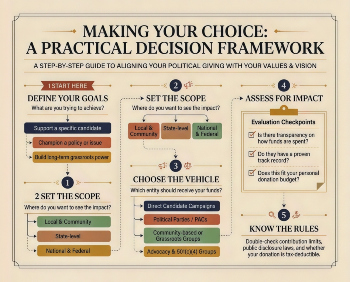
 A practical decision framework
Use these questions to decide where your time and money go:
- What is your lead issue? If it is school curriculum, parental consent, or religious liberty, the American Principles Project’s agenda is directly on point. If it is tariffs, border enforcement, or military posture, look at America First-aligned committees and the official trade and immigration record instead.
- Do you want a specialized or a broad vehicle? Specialized organizations build expertise and target specific races. Broad movements build coalitions but diffuse resources across many issues. Neither is inherently better; they serve different purposes.
- Can you verify the money? Check FEC filings for any committee you consider. Total receipts, individual contributions, and disbursements are public. If a group’s filings do not match its public claims, that is a signal.
- What has the group actually won? Look for named races, named bills, and named ballot measures. A track record of specific wins is more informative than a mission statement.
- Does the label match the platform? For any group using “America First,” read its own issue page. The label does not guarantee a position on family or education policy, and assuming otherwise is the most common mistake donors make.
The bottom line
Support the American Principles Project if your priority is family and education policy and you want a specialized organization with public campaign finance records you can audit. Support America First-aligned committees if your priorities are trade, immigration, and foreign policy, and check each committee’s own platform and filings rather than relying on the label. Many voters support both, but they should do so knowing that the two are separate vehicles with separate agendas, not two names for the same cause.

Frequently Asked Questions
What is the American Principles Project?
The American Principles Project is a political advocacy organization focused on family-related policy, parental rights, and protecting children. According to Federal Election Commission data, the American Principles Project PAC reported $6,000,274.11 in total receipts for January 1, 2025, through June 30, 2026. The organization works to change laws and advance policies it believes protect the American family and defend parental authority in education and child-rearing decisions.
What does America First mean in politics?
America First is a political movement and philosophy that emphasizes national interest, economic nationalism, and prioritizing domestic policy over international commitments. The phrase centers on the idea that policy decisions should prioritize American citizens. It encompasses positions on trade, immigration, foreign aid, and military intervention. America First is both a movement and a framing principle used by various conservative candidates and organizations, though interpretations of its specific policies vary.
How do I know which advocacy group actually represents my values?
Evaluate any political advocacy group by examining its funding sources, stated mission, legislative priorities, and track record. Look for transparency in financial disclosures, clear policy positions, and evidence of influence on actual legislation or elections. Compare the organization’s public statements against its actions. Ask whether the group focuses on issues that matter to you—family policy, economic policy, national security, or constitutional interpretation. Check if their advocacy methods (lobbying, grassroots organizing, candidate support) match how you want to participate in the political process.
What is the difference between America First as a movement and the American Principles Project as an organization?
America First is a broader political movement and philosophy about national priorities and policy direction. The American Principles Project is a specific political organization within conservative advocacy that focuses narrowly on family policy, parental rights, and education. Not all America First supporters work through the American Principles Project, and the organization does not exclusively claim the America First label. Understanding this distinction helps you identify which organization’s specific mission and methods align with your goals.