Table of Contents
- How We Evaluated the Economic Impact of America First Policies
- America First Trade Policy Pros and Cons at a Glance
- Tariffs and Trade Barriers: Section 232 and Section 301 in Practice
- The Economic Effects of Tariffs on Consumers
- The Impact of Tariffs on U.S. Jobs and Wages
- America First Policies and Inflation: Short-Term Effects, Long-Term Consequences
- Domestic Production, Manufacturing, and Business Investment
- Supply Chains, Small Businesses, and Downstream Industries
- Fiscal Effects, the Trade Deficit, and Public Debt
- Verdict: Where the Evidence Is Strong, Weak, or Still Unsettled
- Frequently Asked Questions
Last Updated: October 20, 2026
 How We Evaluated the Economic Impact of America First Policies
The economic impact of America First policies is the net change in prices, output, employment, and public finances that follows from tariffs, sourcing rules, and related trade measures. At Texas Journal, we read the claims from both sides and tested them against one question: what would have happened without the policy? That baseline question drives everything below.
Most coverage of America First policies skips that step. Supporters credit the policy for factory announcements. Critics blame it for price increases. Neither side shows its work. Below, we lay out how we score the evidence, where it holds up, and where it does not.
The Baseline Problem: Measuring Against No Policy
A tariff’s effect is the difference between the world with it and the world without it. That counterfactual never appears in the data, so analysts build one. Some compare prices before and after a tariff. Others compare tariffed goods to untariffed goods in the same period. Each method carries assumptions, and the choice of baseline can flip a verdict.
We treat any claim as provisional unless it names its baseline. That single filter removes most of the shouting from this debate.
Scoring Criteria and Data Sources
We score each policy area on four criteria: direction of effect, size of effect, who bears the cost, and how confident the evidence is. Sources include Congressional Research Service reports on tariff mechanics, Bureau of Labor Statistics data on prices and employment, and academic analysis such as Brookings work on America First tariffs. Where the record is thin, we say so rather than fill the gap.
America First Trade Policy Pros and Cons at a Glance
America First trade policy pros and cons come down to a trade-off: more protection for domestic producers, more cost and uncertainty for everyone who buys or sells across borders. Both sides of that ledger are real. The table below summarizes where the evidence stands before we examine each area.
| Policy Area | Main Argument For | Main Argument Against | Evidence Strength |
|---|---|---|---|
| Tariffs (Section 232, Section 301) | Shields strategic industries, raises revenue | Raises input costs, invites retaliation | Moderate on direction, weak on size |
| Consumer prices | Pressure on foreign exporters to absorb cost | Households pay more at the register | Moderate |
| Jobs and wages | Supports targeted manufacturing employment | Small net effects, uneven by region | Weak to moderate |
| Inflation | One-time price-level shift | Persistent uncertainty feeds volatility | Mixed |
| Domestic production | Encourages reshoring investment | Investment lags without stable rules | Weak |
| Trade deficit | Narrows bilateral gaps | Shifts sourcing, not the total | Moderate |
| Fiscal effects | Customs revenue supports the budget | Small against the deficit | Moderate |
Side-by-Side: Tariff Policy vs. No-Policy Baseline
Against a no-policy baseline, tariffs raise prices on targeted imports, shift some sourcing, and generate customs revenue. The no-policy baseline keeps prices lower but leaves supply chains exposed to single-source risk. Neither column is free. The honest comparison weighs consumer welfare against resilience and strategic capacity, and the weights are a political judgment, not an economic one.
 Tariffs and Trade Barriers: Section 232 and Section 301 in Practice
Section 232 tariffs restrict imports on national security grounds, while Section 301 tariffs respond to specific foreign trade practices. Both are statutory tools that let the executive branch act without new legislation. That speed is the appeal. It is also why tariff levels can change with little warning, which matters more for planning than the tariff rate itself.
The two authorities differ in ways that matter for anyone modeling cost. Section 232 begins with a Commerce Department investigation into whether an imported article threatens national security. The president then sets the remedy, a tariff, a quota, or both, and can adjust it. Section 232 actions have covered steel and aluminum articles and, in recent rounds, downstream derivative products such as certain fasteners, fabricated structural steel, and aluminum extrusions. Because the remedy attaches to the article rather than the country, a steel component made in one ally and a finished assembly made in another can both carry the duty.
Section 301 runs through the Office of the United States Trade Representative. It starts with an investigation into a foreign government’s acts, policies, or practices; intellectual property handling; technology transfer; and industrial subsidies; and ends with a list of covered products and a duty rate. Section 301 lists are product-specific and have been revised repeatedly, with exclusions granted and allowed to lapse on rolling timelines. That churn is the practical problem: a product that was excluded last quarter may be dutiable this quarter, and the importer bears the burden of tracking it.
A single imported component can fall under both authorities, plus anti-dumping and countervailing duties, which is how compliance costs compound. Antidumping duties apply when a foreign producer sells below fair value; countervailing duties offset foreign subsidies. Each has its own petition, investigation, and administrative review process, and each can produce a rate that dwarfs the headline tariff. Stacking is the norm, not the exception, for steel, aluminum, and many industrial inputs.
The U.S. International Trade Commission tracks the tariff schedule and the investigations behind each action, and the Federal Register publishes each modification and exclusion. For firms, the practical burden is classification and documentation, not the headline rate. A misclassified part can mean retroactive duty assessments plus penalties, which is why trade counsel and customs brokers show up in the cost line.
How the Two Authorities Compare in Practice
| Feature | Section 232 | Section 301 |
|---|---|---|
| Legal basis | National security | Unfair foreign trade practices |
| Lead agency | Commerce Department | U.S. Trade Representative |
| Scope | Articles, including derivatives | Product lists tied to a partner’s practices |
| Flexibility | President can adjust remedy | Lists and exclusions revised over time |
| Typical stacking | Often with AD/CVD | Often with AD/CVD and Section 232 |
That table is the mechanism-level view most coverage skips. It explains why two importers of similar goods can face very different landed costs, and why “the tariff” is rarely a single number.
 The Economic Effects of Tariffs on Consumers
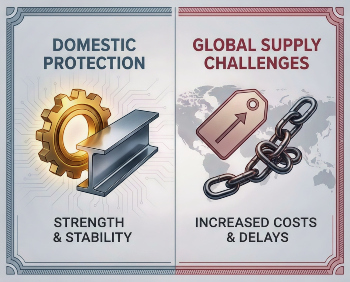
The economic effects of tariffs on consumers run mainly through prices. A tariff is a tax on imports, collected at the border and passed through the supply chain to varying degrees. How much reaches the shelf depends on the product, the competition, and the exchange rate.
Consumer Prices, Household Purchasing Power, and Income Groups
Lower-income households spend a larger share of income on goods, so the same price increase hits them harder. That distributional point is the one most policy debates skip. A tariff that adds a modest amount to a household budget is a minor annoyance at the top of the income scale and a real constraint at the bottom.
Institute on Taxation and Economic Policy analysis frames these costs as a share of income by group, which is the right way to read them. Aggregate totals hide who pays.
The Impact of Tariffs on U.S. Jobs and Wages
The impact of tariffs on U.S. jobs is smaller and more uneven than either side claims. Tariffs protect jobs in the industries they cover. They also raise costs for employers downstream, and those employers employ far more people. The net figure depends on which effect dominates in a given sector.
Manufacturing employment responds to automation, interest rates, and demand more than to tariff lines. A factory that reshored because of a tariff still automates the new line. Workers see the announcement and not always the payroll.
Our read: tariffs can slow job losses in specific industries, but they are a blunt instrument for broad employment gains. The evidence for large net job creation is weak.
America First Policies and Inflation: Short-Term Effects, Long-Term Consequences
America First policies and inflation connect through two channels. The first is a one-time shift in the price level as tariffs pass through to consumers. The second is uncertainty, which can feed volatility as firms delay investment and reprice contracts. The first channel is easier to measure. The second does more long-run damage.
A tariff raises the price level once. It does not, by itself, produce ongoing inflation unless expectations shift or the policy keeps changing. That distinction matters because critics and supporters routinely talk past each other on it.
The Federal Reserve’s inflation research treats tariff effects as a supply shock whose persistence depends on whether expectations stay anchored. So far, the record is mixed, as the theory predicts.
 Domestic Production, Manufacturing, and Business Investment
Domestic production responds to tariffs only when firms believe the rules will last. A tariff that might be reversed in a year is a reason to wait, not to build. That is why investment announcements and actual construction spending often diverge.
Business investment also depends on input costs, and tariffs raise many of them. Steel tariffs help steel mills and raise costs for every manufacturer that buys steel. The net effect on capital spending is an empirical question, and the answer varies by industry.
Where the policy has clearly mattered is in strategic sectors where national security gives firms a reason to pay a premium for domestic supply. Elsewhere, the response is muted.
Supply Chains, Small Businesses, and Downstream Industries
Supply chains adjust slowly, and small businesses adjust last. Large firms can renegotiate contracts, absorb duties, and hire trade counsel. A small importer faces the same rules without that capacity. The distributional effect by firm size is one of the clearest findings in this debate.
Downstream industries, the ones that buy tariffed inputs, carry costs that rarely make headlines. A furniture maker buying imported hardware, a contractor buying steel, a retailer buying packaged goods: each absorbs the increase or passes it on.
 Fiscal Effects, the Trade Deficit, and Public Debt
Customs revenue is real money, but it is small against the federal budget gap. That sentence is true and almost useless without numbers, so here is the accounting frame. Tariff revenue enters the federal budget as customs duties, a line item in the receipts side of the ledger. To judge whether it matters, compare it to three things: total federal receipts, the annual deficit, and the growth in debt service. On each comparison, the honest answer is that tariffs are a marginal contributor, not a budget strategy.
The Congressional Budget Office publishes the baseline projections that make this comparison possible. A useful exercise is to take the CBO’s projected customs receipts under current law and ask what happens under a higher-tariff scenario and a lower-tariff scenario. The difference between those scenarios is the fiscal swing attributable to trade policy. In most published baselines, that swing is small relative to the structural gap between spending and revenue, which is driven by entitlement programs, defense, and interest costs, not by tariff lines.
There is a second-order fiscal effect that gets less attention: tariffs raise the cost of imported inputs, which raises costs for domestic producers and consumers, which can slow output and therefore slow the tax base. That feedback is hard to size, but it runs in the opposite direction from the revenue gain. A tariff that collects more at the border while shrinking corporate and payroll tax receipts elsewhere is a smaller net fiscal positive than the headline customs number suggests.
The trade deficit works differently from the fiscal story. A bilateral deficit with one partner can narrow when tariffs shift sourcing to another partner. The overall trade balance is driven by national saving and investment, not by tariff lines. A tariff that reduces imports also tends to reduce exports through retaliation and a stronger dollar, so the total gap moves less than the bilateral gap. That is why deficit claims should always specify which deficit, bilateral or total, and over what period.
Public debt connects to both through borrowing costs. If tariff uncertainty feeds inflation volatility, the Federal Reserve may keep rates higher for longer, and higher rates raise debt service. That channel is indirect and contested, but it belongs in the fiscal assessment. A policy that raises a few billion in customs revenue while adding to interest costs is not obviously a net gain.
A Transparent Fiscal Comparison
| Measure | What It Captures | Why It Matters |
|---|---|---|
| Customs receipts | Direct tariff revenue | Small share of total receipts |
| Deficit | Annual gap between spending and revenue | Tariffs touch it at the margin |
| Debt service | Interest on accumulated debt | Sensitive to rate expectations |
| Tax-base feedback | Output and employment effects | Runs opposite to revenue gain |
That table is the fiscal gap most coverage leaves out. It does not settle the debate, but it makes the claims comparable, which is the point.
 Verdict: Where the Evidence Is Strong, Weak, or Still Unsettled
The evidence is strong that tariffs raise prices on targeted goods and shift sourcing. It is moderate that the burden falls disproportionately on lower-income households and small firms. It is weak that tariffs produce large net job gains or lasting investment without stable rules. It is unsettled how much tariff uncertainty feeds inflation expectations over time.
That pattern should shape how citizens read the next round of claims. Ask for the baseline, ask who pays, and ask whether the policy is durable enough to change behavior. Texas Journal covers these questions through a constitutional lens, because the authority to impose tariffs, the limits on that authority, and the states’ role in resisting overreach are all questions the Constitution answers. If you want to understand the tools you have as a citizen, our registration page is the place to start.

Frequently Asked Questions
Did America First tariffs work?
The answer depends on the goal you measure. Tariffs raised revenue and, in some sectors, supported domestic production and protected industrial employment. They also raised costs for importers and consumers and introduced uncertainty that constrained firm choices and access to global value chains. A fair verdict compares outcomes against a no-policy baseline rather than against zero. On that basis, the record is mixed: some targeted industries gained, while downstream users and households absorbed higher consumer prices. Analysts continue to debate the net effect on economic growth and gross domestic product.
How did tariffs affect prices for U.S. consumers?
Tariffs act as a tax on imported goods, so buyers typically bear part of the cost. The economic effects of tariffs on consumers show up in higher prices for affected categories and, in some cases, in reduced product variety. The pass-through is rarely one-for-one: currency adjustments, exchange rates, and retailer margins absorb some of the increase. Household purchasing power is hit hardest when the tariffed goods make up a larger share of the family budget, which is why distributional effects by income group matter as much as the headline rate.
Did America First policies create or protect U.S. jobs?
Both claims have partial support. Tariffs and trade barriers can shield employment in targeted manufacturing sectors, and some firms responded by expanding domestic production. Against that, higher input costs and retaliatory tariffs pressure downstream industries that employ far more people than the protected sectors do. The impact of tariffs on U.S. jobs therefore varies by industry and region. A single national number hides the reality: gains concentrate in specific plants and communities, while losses spread across importers, exporters, and small businesses in supply chains.
What are the economic risks of protectionist trade policies?
The main risks are higher consumer costs, reduced competition, and weaker business investment when rules change unpredictably. Tariff uncertainty pushes firms to delay capital spending and sourcing decisions. Retaliatory tariffs shrink market access for exporters, and supply chains that cross borders become more expensive to manage. Over time, protected industries can lose pressure to innovate. These risks do not make protectionism automatically wrong, but they belong on the ledger next to the jobs and production it supports, and they show up most clearly in comparisons against a stable-policy baseline.
How do America First policies affect global trade and economic growth?
America First trade policy shifts leverage toward bilateral deals and away from rules-based trade frameworks. That can open market access on favorable terms for specific sectors, but it also raises trade barriers broadly and adds volatility to trade flows. Global value chains adapt by rerouting sourcing, which costs money and time. The effect on economic growth depends on how long uncertainty lasts: short, credible tariff episodes do less damage than open-ended ones. Fiscal effects matter too, since tariff revenue interacts with federal spending, the budget deficit, and public debt.
The economic impact of America First policies will be decided in practice, not in press releases. The challenge is separating durable effects from temporary ones, and holding policymakers to a baseline they can defend. Texas Journal gives you the constitutional grounding to do that: how to assert your rights, how states can check Washington, and how the Patriot Pool multiplies your reach. Get started with Texas Journal and turn analysis into action.