Last Updated: November 11, 2026
Quick Summary
To find volunteer opportunities in civic advocacy, define your available time, skills, and boundaries in writing, then screen groups for a clear mission, disclosed funding, stated legal status, and volunteer training before signing up. Match yourself to a specific role such as voter education, policy research, canvassing, or remote text and phone banking.
- Adult civic advocacy volunteers typically fill six roles, including voter education, canvassing, policy research, and community organizing.
- Screen each group for a clear mission, disclosed funding, legal status, training, and references from former volunteers.
- For campaign volunteering, contact the campaign directly and save your hours for the final three weeks before the election.
- Skills-based volunteers are in highest demand for legal compliance, data analysis, writing, translation, and design.
- Use a separate email address for volunteer work and ask in writing whether your contact information will be shared or sold.
Table of Contents
- Why Civic Advocacy Volunteering Is Growing Right Now
- Volunteer Opportunities in Civic Advocacy for Adults: The Main Roles
- A Step-by-Step Process for Finding and Evaluating Opportunities
- How to Volunteer for a Political Campaign
- Civic Engagement Volunteer Resources Worth Bookmarking
- Skills-Based Volunteering in Civic Engagement: Where Expertise Pays Off
- Remote, Low-Commitment, and Accessible Options
- Volunteer Safety, Privacy, and Nonpartisan Boundaries
- Join the Patriot Pool and Put Your Civics Knowledge to Work
- Frequently Asked Questions
 Why Civic Advocacy Volunteering Is Growing Right Now
Roughly 54.2% of Americans helped or exchanged favors with neighbors in 2024, according to the U.S. Census Bureau’s civic engagement data. That number matters because it shows something the headlines miss: civic life did not collapse. It changed shape.
Formal volunteering has grown in recent years, according to Volgistics’ volunteer statistics and trends analysis.
Civic advocacy is organized volunteer work aimed at influencing public policy, educating voters, and holding elected officials accountable. It is not the same as charity. It is persuasion, education, and pressure applied through lawful channels.
So why the surge? Three forces are converging:
- Distrust of federal overreach has pushed citizens toward state-level and local action
- Digital tools make remote civic advocacy possible from any kitchen table
- Younger Americans are increasingly entering the arena
The AmeriCorps and Census Bureau civic engagement survey is the most strong ongoing measure of this activity across the country. Its trend line points one direction: more citizens, more involvement, more demand for real volunteer opportunities in civic advocacy.
Below, we break down the roles, the screening process, and the options most guides ignore.
Volunteer Opportunities in Civic Advocacy for Adults: The Main Roles
Adult volunteers in civic advocacy typically fill one of six roles. Knowing which fits you saves months of false starts.
- Voter education volunteer. Registers voters, answers voter questions, and distributes nonpartisan guides on candidates and ballot measures.
- Voter outreach canvasser. Knocks doors or makes calls to remind people about elections and deadlines.
- Policy research volunteer. Tracks bills, reads public policy documents, and briefs a group on what a proposed rule actually says.
- Event support volunteer. Staffs rallies, town halls, and community events. Sets up, checks people in, cleans up.
- Campaign volunteer. Works directly for a candidate: phone banking, text banking, data entry, literature drops.
- Community organizer. Builds a local volunteer network and keeps people showing up.
Each role carries a different time commitment. Canvassing eats weekends. Research work fits around a job. Event support is episodic.
If you want a concrete example of a civic-minded organization to plug into, see how Christians For America frames citizen duty. The point is not to sign up blind. It is to see what real involvement looks like before you commit.
Here are the six main roles adult volunteers typically fill, with what each involves and how it fits your schedule.
| Role | What you do | Time commitment |
|---|---|---|
| Voter education volunteer | Registers voters, answers questions, distributes nonpartisan guides | Not specified |
| Voter outreach canvasser | Knocks doors or calls to remind people about elections and deadlines | Eats weekends |
| Policy research volunteer | Tracks bills, reads policy documents, briefs a group | Fits around a job |
| Event support volunteer | Staffs rallies, town halls, and community events | Episodic |
| Campaign volunteer | Phone banking, text banking, data entry, literature drops | Not specified |
| Community organizer | Builds a local volunteer network and keeps people showing up | Not specified |
 A Step-by-Step Process for Finding and Evaluating Opportunities
Most guides dump a list of links and call it a day. That is not a process. Here is the one we recommend, and it starts before you search anything.
Step 1: Define Your Time, Skills, and Boundaries
Answer three questions in writing before you contact a single group.
- Time: How many hours per month can you actually give? Two? Ten? Be honest, not aspirational.
- Skills: What do you do well? Writing, phone calls, data, driving, event setup, Spanish fluency?
- Boundaries: What will you not do? Many people want voter education but not door knocking. Both are legitimate.
Write the boundaries down. Groups will ask for more than you offered, and having a written limit makes saying no easier.
If you are still building your civic knowledge base, start with this guide to constitutional literacy resources for adults before you pick a role.
Step 2: Screen Groups Before You Sign Up
Not every group that asks for your time deserves it. Run this checklist on each one:
- Does it publish a clear mission statement and the names of its leaders?
- Does it disclose how it is funded?
- Can it explain its legal status, such as 501(c)(3), 501(c)(4), or a campaign committee?
- Does it offer volunteer training or onboarding?
- Will it tell you exactly what it does with your contact information?
- Do former volunteers speak publicly about their experience?
A group that dodges any of these is a group to skip. Watch out: some organizations collect volunteer data and sell or share it with affiliated groups without saying so. Ask directly, in writing.
How to Volunteer for a Political Campaign
Campaign volunteering is the most direct form of civic advocacy available. It is also the most demanding and the most time-bound.
Here is how to get started without wasting a season:
- Pick your level. Federal, state, or local. Local races need the most help and give you the most access.
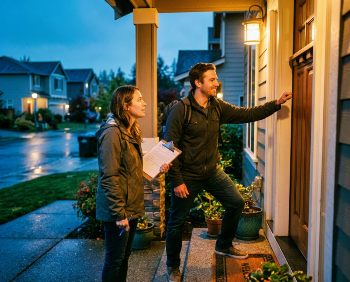
- Contact the campaign directly. Campaigns list volunteer sign-ups on their own websites. Skip third-party matching sites for this.
- Ask what they actually need. Most campaigns are short on data entry and phone bankers, not strategists.
- Complete the training. Good campaigns train phone bank and canvass volunteers before sending them out.
- Track your hours and results. You will want them for the next cycle.
One insider note: the final three weeks before an election are when campaigns need bodies most. If you can only give ten hours, save them for the end.
 Civic Engagement Volunteer Resources Worth Bookmarking
What follows is a categorized starting point you can use to compare issue areas and organization types before you commit a single hour. For a fuller walkthrough, see this guide to accessing constitutional liberty resources.
National Volunteer Matching and Data Sources
- AmeriCorps and the U.S. Census Bureau Civic Engagement and Volunteering Supplement. The most consistent national measure of formal volunteering and civic participation. Use it to understand trends, not to find a specific role.
- State service commissions. Every state has one; they fund and list AmeriCorps placements and local volunteer infrastructure. Search your state commission’s site for current openings.
- National nonprofit intermediaries. Nonprofit intermediaries such as those named by national volunteer networks maintain searchable databases that let you filter by cause, location, and remote availability. Treat these as search engines, not endorsements.
Voter Education and Election Administration
- Your secretary of state or state election office. The authoritative source for registration deadlines, ballot measure text, polling place rules, and volunteer poll worker programs. Rules differ sharply by state; do not rely on a national summary.
- The U.S. Election Assistance Commission. Publishes national voter registration and election administration data, useful for understanding how elections are run before you volunteer.
- League of Women Voters and similar nonpartisan groups. Publish candidate guides and ballot explainers. Confirm a local chapter’s 501(c)(3) status before doing voter education work with them.
Policy Research and Legislative Tracking
- Congress.gov and your state legislature’s bill-tracking site. Free, official, and the primary source for bill text, status, and sponsor information. A policy research volunteer who knows these tools is worth three who do not.
- Federal Register and state administrative bulletins. Where proposed rules and public comment periods are published. Most advocacy groups need help monitoring these.
- Nonpartisan policy research organizations. Nonpartisan policy research organizations publish comparative state policy summaries that can save considerable primary research time.
Community Organizing and Local Infrastructure
- Neighborhood associations, faith-based community organizing networks, and local civic clubs. Often the fastest route to a real role because they are chronically short on reliable volunteers.
- Your public library and community college. Many host civic education programming and can connect you with local groups that need help.
- Local news outlets and public meeting calendars. City council, school board, and county commission meetings are public and usually posted online. Attending is itself a form of civic participation and a way to identify groups doing work you care about.
How to Use This List
Pick one source from the category that matches your issue interest, one from the category that matches your skills, and one local source. Cross-reference them. A group that appears in a national database, has a verifiable local presence, and publishes its leadership and funding is a safer bet than one that appears only in a social media ad.
A literature review from AmeriCorps found that volunteers helped Service Enterprise organizations achieve their missions and key objectives. The lesson for volunteers: organized programs outperform ad hoc efforts, and the resources above are how you find the organized ones.
 Skills-Based Volunteering in Civic Engagement: Where Expertise Pays Off
Your day job is worth more to a civic advocacy group than your Saturday. Skills-based volunteering in civic engagement means lending professional expertise instead of generic labor.
The highest-demand skills right now:
- Legal and compliance: Campaign finance rules trip up small groups constantly
- Data analysis: Voter files are useless without someone who can read them
- Writing and editing: Op-eds, ballot guides, and policy summaries all need clear prose
- Translation: Reaching non-English-speaking communities is a persistent gap
- Design and video: Educational campaigns live or die on presentation
If you work in policy or economics, your analysis skills translate directly. This review of America First policy economics shows the kind of work that policy-minded volunteers actually do.
Policy analysis can be highly useful to campaigns, and door knocking reaches households directly.
Remote, Low-Commitment, and Accessible Options
Not everyone can canvass. Plenty of civic advocacy work happens from a laptop, and the pandemic proved how much can be done remotely. But remote does not mean effortless, and the SERP rarely tells you what these roles actually require. Here is the practical version.
Remote Roles and What They Really Ask of You
- Text banking. Send scripted texts to registered voters through a campaign or nonprofit’s platform. Most programs require a one-hour training and a two-hour shift. You will usually use the group’s software, not your personal phone, which protects your number.
- Phone banking. Same structure, voice instead of text. Expect a script, a call list, and a short training. Some programs ask for a commitment of two shifts per month during election season.
- Data entry and cleanup. Campaigns and advocacy groups drown in spreadsheets. This is the most reliable low-commitment remote role and often the easiest to start. Ask what database they use and whether you will receive any training on it.
- Research and monitoring. Track bills, public meetings, and proposed rules online. This suits people with an analytical bent and can be done on a flexible schedule. Expect to summarize findings in writing.
- Social media and content. Many groups need help producing educational posts, graphics, and short videos. Ask whether you will work from a content calendar and who approves posts before they go live.
 Eligibility, Training, and Onboarding
Remote roles are not automatically open to everyone. Common requirements include:
- Age minimums. Many phone and text banking programs require volunteers to be 18 or older; some allow supervised youth participation.
- Identity verification. Campaigns regulated by federal and state campaign finance rules may ask for your name and address to report volunteer activity. Ask why they need the information and how they will store it.
- Training completion. Most credible programs will not let you contact voters until you complete a training session, often one to two hours.
- Background checks. Roles involving minors or certain community programs may require one. A legitimate group will explain the process and who pays for it.
Onboarding quality is a useful screen. A group that hands you a script and a list with no training is either disorganized or using you for data. A group that trains you, pairs you with a shift lead, and checks in after your first session is worth your time.
Low-Commitment Entry Points That Still Matter
A two-hour monthly shift is a real contribution. Groups that only offer all-or-nothing commitments are losing volunteers they could have kept. Realistic low-commitment options include:
- A single text bank shift during a get-out-the-vote push
- One evening of data cleanup for a local advocacy group
- Attending one public meeting and writing a short summary for a group that tracks local issues
- Sharing one verified, nonpartisan voter education resource with your own network
Accessibility and Verification
Accessibility is the other half of remote work. Ask any group you consider whether its in-person events are wheelchair accessible, whether remote roles have captions or screen-reader-compatible materials, and whether shift times accommodate people with caregiving responsibilities or nontraditional work schedules. If the answer is vague, that tells you something.
Watch out: remote volunteer recruiting is a common cover for contact-list harvesting. Before you sign up, confirm the group’s legal status, ask in writing whether they’ll share or sell your contact information, and use a separate email address for volunteer work. A legitimate remote program will answer those questions without hesitation.
Volunteer Safety, Privacy, and Nonpartisan Boundaries
Civic advocacy carries real risks that most recruitment pitches skip. Take them seriously.
Privacy first. Use a separate email address for volunteer work. Never give a group your Social Security number, banking details, or home address unless there is a clear legal reason, such as payroll for a paid position.
Know the lines. Nonpartisan voter education is legally distinct from partisan campaign activity. Groups with 501(c)(3) status cannot endorse candidates. If a group asks you to blur that line, walk away.
Physical safety. Canvassing involves strangers and unfamiliar doors. Go in pairs, tell someone your route, and leave if a situation feels wrong. No volunteer shift is worth a risk.
Respectful dialogue. The most effective civic advocates stay calm and civil. Anger loses persuadable voters. Ask questions, listen, and make your case without insults.
Watch out: some groups use volunteer contact lists to fundraise aggressively after you sign up. Ask upfront whether your information will be shared or used for donation appeals.
Join the Patriot Pool and Put Your Civics Knowledge to Work
Finding volunteer opportunities in civic advocacy is a skill, and like any skill, it improves with practice. The people who make a difference are not the ones with the most free time. They are the ones who pick the right role, screen their group, and show up consistently.
At Texas Journal, we built the Patriot Pool as a force multiplier for exactly this work. It puts constitutional education and practical civic guidance in one place, so you are not guessing at what the law actually says before you act. Members get resources on asserting states’ rights, controlling Washington from their own state, and defending founding principles in their communities. The mission is simple: this is the mission that matters.
You do not need to be an activist type to start. You need one good role and one good group.
The gap between caring about the Republic and actually defending it is usually information, not motivation. Texas Journal closes that gap with constitutional insight you can act on, a community of citizens doing the same work, and tools that turn knowledge into pressure on the people who need it. Get started with Texas Journal and put your civics knowledge to work where it counts. Click Here!
Dave
Questions? Call!
940-353-1398

Frequently Asked Questions
What is a civic volunteer, and how is that different from a campaign volunteer?
A civic volunteer works on year-round community and public life: voter education, local issue research, event support, and outreach through nonprofit organizations and community centers. A campaign volunteer works for a specific candidate or ballot measure during an election cycle. Campaign work is time-bound and ends on Election Day, while civic advocacy volunteering continues between elections. Many people do both, but the skills differ. Civic work rewards patience and local knowledge; campaign work rewards quick, task-focused effort.
Do civic advocacy volunteers need prior experience?
Most roles need none. Phone banking, text banking, event support, and literature drops all come with training, often a single one-hour session. Skills-based volunteering in civic engagement is the exception: legal review, data analysis, accounting, and communications work usually require demonstrated background. If you have no experience, start with outreach or event support and ask about onboarding before committing. Groups that cannot describe their training process in plain terms are worth skipping.
How much time do civic advocacy volunteers typically commit?
Commitments range from a single two-hour shift to several hours a week. Remote options such as text banking and research let you work in short blocks. Campaign volunteering peaks in the final months before an election, when weekend canvassing is common. Ask for a written time estimate before you sign up, and be honest about your limit. Groups that respect a stated cap are usually better organized than ones that push for more.
What disqualifies someone from volunteering in civic advocacy?
Very little. Background checks apply to roles involving minors or handling money. Paid campaign work has stricter rules than volunteering, and some federal employees face limits on political activity under the Hatch Act. Partisan campaign volunteering is generally restricted to U.S. citizens and lawful permanent residents. For most civic roles, the real limits are schedule and follow-through, not eligibility. Confirm any requirements with the organization before you apply.