


Table of Contents
- Why Constitutional Literacy Matters for Adults in 2026
- What Constitutional Literacy Actually Means (Beyond Reciting the Preamble)
- How to Read the Constitution: A Practical Method for Adults
- Books That Explain the U.S. Constitution: What to Look For
- Free Constitution Learning Resources Worth Your Time
- Constitutional Rights for Beginners: Where to Start Without a Legal Background
- How to Evaluate a Constitutional Resource Before You Trust It
- Building a 12-Week Adult Learning Pathway
- Accessible Formats for Adult Learners: Audio, Video, and Living Books
- Applying Constitutional Knowledge to Current Issues
- Measuring Progress: How to Check Your Own Understanding
- Common Mistakes Adults Make When Studying the Constitution
- Conclusion: From Reading to Action
- Frequently Asked Questions
Last Updated: October 4, 2026
Why Constitutional Literacy Matters for Adults
Constitutional literacy resources for adults have never been more necessary, yet a quiet crisis runs through American civic life: most adults have never read the document that governs them.
 The Constitution is not a relic to admire from a distance. It is a working instrument, and it only works when citizens understand how to use it.
What most guides miss is that constitutional literacy is not about memorizing amendments or quoting the Federalist Papers at dinner parties.
What Constitutional Literacy Actually Means (Beyond Reciting the Preamble)
Constitutional literacy is the capacity to read constitutional text, understand its structure, and reason about how it applies to current events without a law degree.
The common mistake is treating constitutional education as trivia.
The National Archives’ founding documents collection is the natural starting point because it provides the primary text without editorial framing. Read it before you read anyone’s opinion about it.
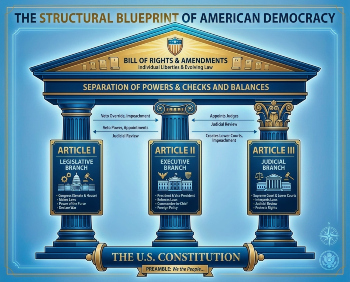 The Four Skills That Define a Constitutionally Literate Adult
- Textual reading: You can parse what a clause actually says, not what you remember being told it says.
- Structural understanding: You know how Article I, Article II, and Article III divide authority, and why that division resists consolidation.
- Historical context: You understand the founding principles and the debates that shaped ratification, including the arguments of the Anti-Federalists.
- Practical application: You can connect a current policy dispute to the specific constitutional provision that governs it.
How to Read the Constitution: A Practical Method for Adults
The most effective way to read the Constitution is sequentially through the Articles first, then the Amendments, with a notebook open and a single question in mind: what power does this grant, and to whom?
Reading the Constitution is not like reading a novel. It is a structural document, and it rewards structural reading.
Reading the Articles Before the Amendments
Start with Article I. It is the longest article for a reason: the Framers placed the legislative power first because they feared concentrated executive authority most.
Then read Article II and Article III, marking the limits on each branch. By the time you reach the Amendments, you will understand rights as limits on an already-limited government, which is the correct frame.
Using Primary Sources Alongside Commentary
Commentary is useful, but it should never replace the text. A workable method is to read a clause, write your own interpretation, then check it against a scholarly source. When your reading and the commentary diverge, that gap is where your real learning happens.
The Library of Congress research guides on the Constitution offer annotated primary materials that let you compare your reading against documented historical interpretation.
 Books That Explain the U.S. Constitution: What to Look For
The best books that explain the U.S. Constitution give you the text and the tools to interpret it, not just someone else’s conclusions. Your choice comes down to two decisions: whether you want primary-source editions or annotated commentary, and whether the writing style matches your current reading level.
Most buyers get this wrong. They buy the thickest, most scholarly volume on the shelf and never finish chapter two.
Primary Source Editions vs. Annotated Commentaries
Primary source editions reproduce the Constitution, the Federalist Papers, and often the Anti-Federalist writings with minimal editorial interference. They are ideal if you want to form your own judgments and are comfortable with eighteenth-century prose.
Annotated commentaries pair the text with explanations of landmark cases and historical context. They move faster and suit readers who want guided interpretation. Neither is superior; they serve different goals.
| Book Type | Best For | Reading Effort | Risk |
|---|---|---|---|
| Primary source edition | Forming independent interpretations | Higher | Slow going without context |
| Annotated commentary | Guided understanding of case law | Moderate | Author’s bias shapes framing |
| Narrative history | Understanding founding debates | Lower | Less textual precision |
| Thematic reader | Studying one area, such as rights | Moderate | Narrower scope |
Matching Book Style to Your Reading Level
If you haven’t read dense historical prose since college, start with a narrative history that covers the founding period, then move to a primary source edition. If you already read legal or historical material comfortably, go straight to the annotated version and keep a primary text open beside it.
 Free Constitution Learning Resources Worth Your Time
Free Constitution learning resources from government, institutional, and public-library sources are genuinely sufficient for a serious adult education, and they carry an advantage paid courses cannot match: no editorial agenda layered over the primary text. The catch is that free resources are scattered, so you have to assemble them into a path yourself. This section does that assembly for you, with the cost, format, time commitment, and accessibility details most guides leave out.
A Comparison of Free and Low-Cost Options
Use this table to pick a starting point based on how much time you have and how you prefer to learn. All entries are free unless noted.
| Resource | Format | Typical Time Commitment | Best For | Accessibility Notes |
|---|---|---|---|---|
| National Archives’ founding documents collection | Full text, downloadable images and transcripts | Self-paced; a few hours to read the Constitution | Primary text with no editorial framing | Transcripts are screen-reader friendly; high-resolution scans zoom on mobile |
| Library of Congress research guides on the Constitution | Annotated primary sources, essays, timelines | Self-paced; 30-60 minutes per guide | Comparing your reading against documented historical interpretation | Text-based pages work well with browser zoom and text-to-speech |
| National Constitution Center’s interactive resources | Clause-by-clause explanations, videos, podcasts | 10-30 minutes per clause or episode | Guided understanding without a law degree | Audio versions suit commuters; captions on video |
| Congress.gov legislative database | Bill text, summaries, status tracking | 15-45 minutes per bill | Turning study into live practice by tracking current legislation | Mobile app available; text is searchable |
| Supreme Court’s official opinions database | Full opinions and slip opinions | 1-3 hours per major opinion | Reading the actual reasoning behind landmark decisions | PDFs are text-searchable; some are long |
| Public library databases and print collections | Books, ebooks, audiobooks, DVDs | Varies; borrow periods of 1-3 weeks | Free access to annotated commentaries and narrative histories | Large-print, audiobook, and ebook formats; ask about interlibrary loan |
| University open courseware and law school lecture series | Video lectures, reading lists, syllabi | 6-15 weeks per course | Structured study at no cost | Captions and downloadable audio vary by provider |
A practical pattern is to pair one text-based source with one audio or video source. Read a clause on a government site, then listen to a lecture on the same clause during your commute.
How to Assemble a Free Path in Four Steps
- Start with the text. Read Articles I through III on the National Archives site, then the Bill of Rights. This costs nothing and takes a few evenings.
- Add one guided source. Work through the National Constitution Center’s clause-by-clause explanations for the clauses you found hardest.
- Add one live source. Pick a bill on Congress.gov and ask which enumerated power authorizes it. This is where free study becomes practical.
- Add one deep source. Read a single Supreme Court opinion on a topic you care about, then check the Library of Congress guide for historical context.
That four-step loop can be repeated indefinitely, and it never requires a subscription.
Low-Cost Options Worth Knowing
When free is not enough, the lowest-cost paid options tend to be used books, library book sales, and inexpensive paperback editions of primary sources. Civic organizations and congressional offices often offer a pocket Constitution at little or no cost. Audiobook editions of founding-era writings are frequently available through library lending apps at no charge.
Constitutional Rights for Beginners: Where to Start Without a Legal Background
Start with the Bill of Rights, read each amendment as a limit on government power rather than a grant of privilege, and connect each one to a specific Supreme Court case that defined its scope.
The most common mistake beginners make is reading rights in isolation.
Read them as a system.
For civil liberties specifically, the ACLU’s Know Your Rights materials provide plain-language explanations of how constitutional protections apply during encounters with law enforcement and government agencies.
How to Evaluate a Constitutional Resource Before You Trust It
Evaluate any constitutional resource by checking three things: whether it cites primary sources, whether it presents opposing interpretations fairly, and whether you can verify its claims against the text itself.
This is where most adult learners get burned. The internet is full of constitutional content, and much of it is confident, well-produced, and wrong.
Run every resource through this checklist before you invest time in it:
- Does it quote the constitutional text directly, or only paraphrase it?
- Does it name the landmark cases it relies on, with citations?
- Does it acknowledge that reasonable interpreters disagree on contested clauses?
A resource that scores well on all six is worth your attention. One that fails two or more is not education.
Building a 12-Week Adult Learning Pathway
A structured 12-week pathway takes an adult from reading the text to applying it, with each phase building on the last. The schedule below assumes roughly three to four hours per week, which is realistic for a working adult.
| Weeks | Focus | Core Activity | Outcome |
|---|---|---|---|
| 1-3 | Text and structure | Read Articles I-III with notes | Understand separation of powers |
| 4-5 | Rights | Read Amendments 1-10 and key cases | Understand limits on government |
| 6-7 | History | Read Federalist and Anti-Federalist selections | Understand founding debates |
| 8-9 | Case law | Study landmark decisions by topic | See interpretation in practice |
| 10-11 | Application | Map current issues to constitutional provisions | Apply knowledge to live debates |
| 12 | Assessment | Write a short analysis of one current issue | Demonstrate working literacy |
Week 12 is the one most people skip, and it matters most. Writing a short constitutional analysis of a current policy question forces you to use every skill you built.
 Accessible Formats for Adult Learners: Audio, Video, and Living Books
Accessible formats determine whether adult learners actually finish what they start. Audio instruction, video lectures, and living books, which teach through narrative and primary sources rather than dry summary, all remove barriers that cause adults to abandon constitutional study. This section goes further than most guides by naming the specific accessibility features to look for and matching each format to the adult learner it serves.
Matching Format to Your Situation
| Format | Best For | Watch For | Accessibility Features to Look For |
|---|---|---|---|
| Audiobooks and podcasts | Commuters, walkers, and anyone with limited screen time | Abridged editions that cut the text | Adjustable playback speed, chapter markers, downloadable files |
| Video lectures | Visual learners and those who want structure | Talking-head commentary with little text | Closed captions, transcripts, adjustable playback speed |
| Ebooks | Readers who want searchable text and adjustable type | DRM that blocks text-to-speech | Font resizing, high-contrast mode, built-in dictionary, screen-reader support |
| Large-print and braille editions | Readers with low vision or blindness | Limited titles and longer wait times | Available through many public libraries and national library services |
| Plain-language summaries | Readers new to legal or historical prose | Oversimplification that drops nuance | Short sentences, defined terms, clear structure |
| Living books | Adults returning to serious study after years away | Length; some run several hundred pages | Available in print, ebook, and audio |
Audio and Video: Turning Dead Time into Study Time
If you commute, audiobook editions of founding-era writings and recorded lecture series turn dead time into study time. Look for recordings that read the text itself rather than summarizing it, and prefer those with chapter markers so you can revisit a clause.
For video, clause-by-clause walkthroughs of the text are widely available at no cost. Check whether captions and transcripts are provided; if they are not, the resource is harder to use in noisy environments or for learners who are deaf or hard of hearing.
Ebooks and Digital Text
Digital text is the most flexible format for most adults. You can resize type, switch to a high-contrast theme, search for a phrase, and jump between the text and a commentary. Before committing to a platform, confirm that it supports text-to-speech and screen readers, and that you can export your notes. A resource you cannot annotate is a resource you will not retain.
Plain-Language and Multilingual Materials
Plain-language summaries help adults who have not read dense historical prose since college. They are a starting point, not a destination: use them to get oriented, then move to the primary text. Some government and institutional sites also publish translated materials, which can help adult learners who read English as a second language. When using a translation, keep an official English text open beside it, because constitutional interpretation turns on precise wording.
Living Books and Narrative Learning
Living books deserve special mention. These are works that teach constitutional principles through historical narrative and original documents, and they tend to stick with readers far longer than textbook summaries. For adults returning to serious study after years away, they are often the difference between finishing and quitting. Pair one living book with one primary source so you get both the story and the text.
Disability Access and Library Services
Public libraries are one of the most underused accessibility resources for adult learners. Many provide large-print and braille materials, audiobook lending, and access to national library services for readers with print disabilities. If you need a specific title in an accessible format, ask a reference librarian; interlibrary loan and format conversion services are more common than most people realize.
Applying Constitutional Knowledge to Current Issues
Applying constitutional knowledge means identifying the specific provision at stake in a controversy, then reasoning from the text and precedent rather than from partisan talking points.
Take any current federal policy and ask three questions: Which enumerated power authorizes it? Which branch is exercising that power? And does any amendment limit it?
This is precisely where Texas Journal operates. Our platform helps citizens assert their rights and restore the country to its founding principles, and the constitutional education we publish is exactly this kind of application.
The Supreme Court’s official opinions database lets you read the actual reasoning behind landmark decisions instead of relying on secondhand summaries.
Measuring Progress: How to Check Your Own Understanding
Measure your constitutional progress by testing application, not recall. If you can take an unfamiliar news story, identify the constitutional provision at issue, and explain both sides’ strongest arguments, you are making real progress.
Try this self-assessment every month:
- Pick a current policy dispute you have not studied.
- Write one paragraph identifying the constitutional provisions involved.
- Write a second paragraph stating the strongest argument on each side.
- Check your work against two sources with opposing viewpoints.
If your analysis holds up against both, your literacy is genuine. If it collapses when challenged, you have found your next study topic. This method also protects against the echo chamber problem, because testing your understanding against opposing interpretations is built into the process.
 Common Mistakes Adults Make When Studying the Constitution
The biggest mistake adults make is studying the Constitution through commentary instead of reading the text itself.
A common mistake is treating the document as frozen. The text has not changed much, but the interpretation has evolved through case law, and a serious learner tracks both.
Another error is studying in isolation.
Finally, many adults quit because they try to master everything at once. The document is short; the interpretation is vast.
Conclusion: From Reading to Action
Understanding the Constitution is not the finish line; using it is. The citizens who actually change policy in their states are the ones who can cite the text, explain the structure, and show up prepared.
Texas Journal was built for that work. Our platform gives you critical insight and discernment, teaches you how to assert the rights the Constitution guarantees, and connects you with a movement focused on restoring founding principles through states’ rights. The Patriot Pool acts as a force multiplier, turning individual study into organized action.
Get started with Texas Journal and turn your constitutional literacy into real influence.

Frequently Asked Questions
What are some good books that explain the U.S. Constitution?
Look for two categories: primary source editions that pair the full text with historical context, and annotated commentaries that walk through each clause. The best options for adults include editions that include the Federalist Papers, since those essays explain the reasoning behind the structure. Avoid abridged versions that skip the Articles and jump straight to the Bill of Rights; understanding the framework first makes the amendments far easier to grasp.
What are the best free resources for learning about the Constitution?
Free Constitution learning resources include the National Archives’ online collection of primary documents, the Library of Congress’s congressional records, and university-hosted lecture series. Public libraries often provide free access to legal databases and recorded courses. State bar associations sometimes publish plain-language guides to constitutional rights. These sources give you the original text plus scholarly context without a subscription.
How can adults learn the Constitution without a legal background?
Start with the text itself, read slowly, and keep a glossary handy for terms like “enumerated powers” or “due process.” Then layer in secondary sources: a lecture series, a well-reviewed book, or a structured course. Constitutional literacy for adults builds through repetition, not memorization. Reading one section per week and discussing it with others produces more durable understanding than cramming the whole document in a weekend.
What is the best way to study the Constitution and its amendments?
Read the Articles first to understand how government powers are structured and limited. Then read the amendments in chronological order, noting what problem each one addressed. Pair your reading with landmark cases that interpret those clauses. A spiral notebook with one page per clause, updated as you learn, works better than passive highlighting. Reviewing your notes monthly keeps the framework fresh.
Where can I find reliable explanations of constitutional rights?
Reliable explanations come from sources that cite the constitutional text, case law, and historical record rather than asserting conclusions without support. Government archives, law school publications, and bar association materials are strong starting points. When evaluating any resource, check whether it distinguishes between what the Constitution says, what courts have ruled, and what the author believes should happen. That separation is the clearest sign of trustworthy analysis.
What is the difference between learning about constitutional rights and getting legal advice?
Learning about constitutional rights means understanding what the text says, how courts have interpreted it, and how those principles apply in general. Legal advice is a licensed attorney applying that law to your specific situation. Educational resources can help you recognize when a rights issue may exist, but they cannot tell you what to do about your particular case. If you face a real dispute, consult a licensed attorney in your state.

