Last Updated: November 3, 2026
Quick Summary
To file a zoning appeal, first confirm you have standing by showing a specific harm to your property, then identify narrow grounds such as an arbitrary or unlawful decision. Map your local rules, file a notice of appeal with the correct office before the short deadline, pay the filing fee, and build an evidence-based record for the hearing.
- A challenger must show zoning-related harm specific to their own property or interests to have standing.
- Courts apply the rational basis test, so you must prove a decision is arbitrary or unlawful.
- Notice of appeal filings must typically be submitted within 30 days of the original decision.
- The appeal clock usually starts on the date of the written decision, not when you heard about it.
- If a fact is not in the appeal record, it does not exist for your case.
Table of Contents
- Step 1: Confirm You Have Standing to File a Zoning Appeal
- Step 2: Identify the Grounds for Zoning Appeal That Actually Hold Up
- Step 3: Map Your Local Rules Before the Filing Deadline Closes
- Step 4: Know the Statute of Limitations for Zoning Appeals in Your Jurisdiction
- Step 5: File the Notice of Appeal and Pay the Filing Fee
- Step 6: Build an Evidence-Based Appeal Record
- Step 7: Use a Zoning Appeal Letter Template Without Copying It Blindly
- Step 8: Learn How to Prepare for a Zoning Board Hearing
- Step 9: Decide Whether to Escalate to Judicial Review
- Step 10: Weigh the Risks, Costs, and Realistic Outcomes Before You Commit
- Frequently Asked Questions
 Step 1: Confirm You Have Standing to File a Zoning Appeal
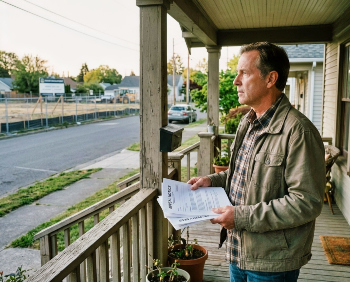
A zoning appeal is a formal request asking a higher authority to review a local land-use decision. Before anything else, you must prove you have standing. That means showing you suffer a specific harm tied to the property, not just a general dislike of the outcome.
The bar is higher than most people expect. According to Anderson & Kreiger’s analysis of zoning standing, a challenger must show “zoning-related harm” specific to their own property or interests. A neighbor who simply dislikes a new building usually lacks standing.
Ask yourself three questions:
- Do you own or occupy property near the site?
- Does the decision affect your use, value, or enjoyment of that property?
- Can you point to a concrete harm, not a vague worry?
The appeal is won or lost on the record, and standing is the first entry in that record. If you cannot answer all three questions with specifics, fix that before you file anything.
Step 2: Identify the Grounds for Zoning Appeal That Actually Hold Up
The strongest grounds for zoning appeal are narrow. You generally must show the decision was arbitrary, unlawful, or unsupported by the evidence. Courts apply the “rational basis test,” which makes it hard to overturn a local law unless you prove it is arbitrary or unlawful, per the Institute for Justice.
That is a tough standard. So what actually works?
- The board misread or misapplied its own ordinance.
- The decision ignored key evidence in the record.
- The board failed to follow required procedure.
- The ruling conflicts with a written standard in the local code.
Notice what is missing: “I don’t like it.” Disagreement is not a ground. A zoning dispute is won on procedure and evidence, not passion. Strong cases can collapse when the appellant argues fairness instead of pointing to a specific code violation.
 Step 3: Map Your Local Rules Before the Filing Deadline Closes
Local rules control almost everything about a zoning appeal. Every municipality runs its own process, and those procedures decide where you file, what you file, and how long you have. The single biggest reason appeals fail on procedural grounds is that the appellant relied on a neighboring town’s process, a blog post, or a form that was out of date.
Treat this step as a verification exercise, not a reading exercise. Your goal is a one-page jurisdiction sheet you can hand to a lawyer or read into the record if your timeliness is challenged.
Build the sheet in this order.
- Find the controlling ordinance. Search the municipal website for the zoning ordinance or land development code, then locate the article on appeals and the article on the board of adjustment or zoning board of appeals. Confirm you are reading the current version by checking the ordinance’s adoption date and any published supplement.
- Find the board’s own rules. Many boards adopt separate rules of procedure covering filing format, exhibit limits, speaking time, and whether written testimony is accepted. These rules can add requirements the ordinance does not mention.
- Find the official form. Download the notice of appeal or application form from the clerk’s or planning department’s page. If no form exists, note that in writing and confirm with the clerk what the office expects.
- Find the fee schedule. Locate the adopted fee schedule, not a news article about fees. Record the amount, the payment method, and whether the fee is refundable if the appeal is withdrawn.
- Confirm the appeal body and filing office. Determine whether the appeal goes to the zoning administrator, the board of adjustment, or a separate appeals board, and which office physically accepts the filing. Ask the clerk to confirm in writing which department stamps the filing date.
Then answer these questions in writing on your sheet:
- Which body hears the appeal, and how many members must vote to grant relief?
- Is the appeal filed with the zoning administrator or the board directly?
- What must the notice of appeal contain, and does the form require the appellant’s signature to be notarized?
- What is the exact filing deadline, and does it run from the decision date, the mailing date, or the date the written findings were filed?
- Is there a separate deadline to order a transcript or submit the record?
- What is the filing fee, and is there a fee waiver or hardship process?
Resolve conflicts deliberately. A common pattern is for the ordinance to set a 30-day deadline while the board’s rules describe a 20-day deadline for submitting exhibits. When documents conflict, follow the shorter deadline and note the conflict on your sheet. If the ordinance and the board’s rules genuinely contradict each other, ask the clerk or town attorney for a written interpretation before you rely on either.
Verify, don’t assume. Call the clerk’s office and ask three questions: which office accepts the filing, what the current fee is, and whether the form on the website is the current version. Write down the name of the person you spoke with and the date. That note is evidence of good-faith compliance if timeliness is later disputed.
A common mistake is assuming your city works like the next town over. It does not. Build a one-page cheat sheet for your jurisdiction, and keep every document you pull. That sheet becomes the backbone of your appeal procedure and the first exhibit in your record.
Watch out: a form downloaded from a third-party site or an old PDF can be missing a required certification, and filing an outdated form is treated as a defective filing even if it arrives on time.
 Step 4: Know the Statute of Limitations for Zoning Appeals in Your Jurisdiction
The statute of limitations for zoning appeals is short, and missing it ends your case before it starts. Deadlines vary widely by jurisdiction.
Procedural guidance compiled by James Howard (2025) typically requires filing a notice of appeal within 30 days of the original decision. Some jurisdictions allow more time. The New York Department of State’s guidelines for zoning board applicants note that some require filing within 60 days. Other regions give appellants up to 4 months.
Here is the part most guides get wrong: the clock usually starts on the date of the written decision, not the day you heard about it. If you are unsure, treat the earliest possible date as your deadline. Put it on a calendar with a two-week buffer.
Deadlines for filing a zoning appeal vary widely, so treat the earliest possible date as your deadline.
| Deadline | Note |
|---|---|
| 30 days | Typical window for notice of appeal filings |
| 60 days | Some jurisdictions require filing within this period |
| Up to 4 months | Other regions give appellants this much time |
| Date of written decision | When the clock usually starts |
| Two-week buffer | Recommended calendar cushion before the deadline |
Step 5: File the Notice of Appeal and Pay the Filing Fee
Your notice of appeal starts the clock for the board. File it with the correct office, on time, and with the filing fee paid.
Most notices require:
- The name and address of the appellant
- The property address and a description of the decision
- The date of the decision being appealed
- A short statement of the grounds
- Your signature and contact details
Filing fees vary by municipality, so check your local fee schedule rather than guessing. Keep a time-stamped copy of everything you submit.
Watch out: filing with the wrong office is one of the most common reasons appeals get rejected on procedural grounds. Confirm in writing which department accepts the filing before you drive over.
 Step 6: Build an Evidence-Based Appeal Record
Your appeal record is everything the reviewing body will consider. If a fact is not in the record, it does not exist for your case. That single rule should guide every document you gather, every exhibit you label, and every sentence you write.
The record has two parts: the administrative record created by the local decision-maker (the application, staff reports, hearing minutes, and written decision), and the appellant’s record you submit (your statement, exhibits, and any new evidence the board’s rules allow). Knowing which part you control is the difference between a complete record and a rejected filing.
Assemble the administrative record first.
- Request the complete property file from the planning or zoning office, including the zoning application, site plan, staff report, and any written findings.
- Obtain the meeting minutes and, if available, the audio or video recording or transcript of the public hearing. If the board’s rules require you to order a transcript by a set date, order it immediately.
- Get the written decision and confirm the date it was filed or mailed, because that date often starts your appeal clock.
Then build your appellant’s record around these items:
- The original zoning application and site plan, marked as exhibits.
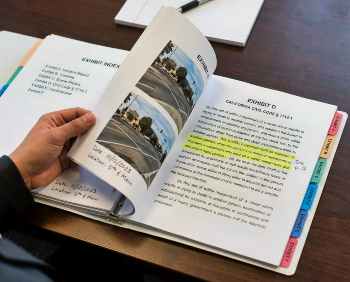
- The written decision and any findings, with the specific page and paragraph you are challenging highlighted.
- Meeting minutes and the public hearing transcript, with page and line references.
- Photos, surveys, and expert reports, each dated and tied to a specific fact.
- Comparable-property evidence, such as permits or variances granted for similar sites, used to show inconsistent treatment.
- Your written statement of the harm you face, stated in concrete terms rather than as a general objection.
Index and authenticate everything. Number each exhibit (Exhibit A, B, C) and prepare an exhibit index that lists the exhibit number, a one-line description, the date, and the record page where it appears. For photographs, note the date taken, the location, and who took them. For expert reports, confirm the author’s qualifications and whether the author will testify. An unauthenticated document is easy for the board to disregard.
Follow the board’s submission rules exactly. Many boards limit the number of exhibits, require a specific page size, or set a deadline for written submissions that is earlier than the hearing. Confirm the format and the deadline in writing. If the rules allow new evidence at the hearing, bring extra copies; if they do not, do not surprise the board with documents it has not seen.
Prepare for opposing evidence. Before the hearing, identify the two or three facts the other side will rely on and write a short response to each, citing your exhibits. At the hearing, respond to opposing evidence by pointing to a specific exhibit and a specific code section, not by repeating your general objection.
The University of North Carolina School of Government explains that appeals of administrative development decisions made by staff go to the board of adjustment. That matters because it tells you which body reviews your record and what standard it applies, and whether the board is reviewing the staff’s record or building a new one.
A common mistake is dumping emotion into the file. Keep it factual and organized. Number your exhibits and reference them in your written argument, and keep a complete copy of everything you submit with the date and office that received it.
Watch out: if the board’s rules require you to submit the record or an exhibit list by a date before the hearing, missing that date can waive your right to rely on the evidence at all, even if you appear and testify.
 Step 7: Use a Zoning Appeal Letter Template Without Copying It Blindly
A zoning appeal letter template saves time, but a copied letter loses cases. Boards see the same borrowed language every month. Yours needs to fit your facts.
Use a template as a skeleton, then fill in specifics:
Dear [Board Name],
I am appealing the decision dated [date] regarding [property address], which [describe the decision]. I have standing because [specific harm to your property]. The decision should be reversed because [cite the ordinance or procedure at issue]. Supporting documents are attached as Exhibits A through [X].
Respectfully, [Name], [Address], [Phone], [Email]
Then strengthen it:
- Replace every generic sentence with a specific fact.
- Cite the exact section of the local zoning ordinance.
- Attach your exhibits and reference each one by number.
The template gets you organized. Your facts win the case.
Step 8: Learn How to Prepare for a Zoning Board Hearing
Knowing how to prepare for a zoning board hearing separates a filed appeal from a winnable one. Preparation means three things: a clear argument, organized evidence, and people who show up.
Build your hearing plan:
- Write a five-minute opening statement and practice it aloud.
- Bring printed copies of every exhibit for each board member.
- Line up witnesses who can speak to specific facts, not opinions.
- Review the hearing notice so you know the format and time limits.
Support matters too. Neighbors who attend and speak add weight to your record. Consider d that support. Use this playbook to organize local liberty meetings and mobilize them.
Expect tough questions. Answer them directly and keep your testimony tied to the evidence you submitted.
Step 9: Decide Whether to Escalate to Judicial Review
Judicial review is the next step when the board rules against you. It means asking a court to examine the board’s decision, usually through a court petition filed within a strict deadline set by state law.
Before you escalate, weigh two things:
- Did the board act arbitrarily or unlawfully, or did it simply disagree with you?
- Is the harm worth the cost of a land-use attorney and a court fight?
Deadlines for judicial review are set by state law and vary. Confirm your deadline with a lawyer before doing anything else.
Step 10: Weigh the Risks, Costs, and Realistic Outcomes Before You Commit
Most zoning appeals do not end in a full reversal. A realistic outcome is often a remand, where the board reconsiders its decision, or a negotiated fix like a variance or exception. Plan for the middle ground, not just the win.
Weigh these before you commit:
- Time: appeals can run months, and court review runs longer.
- Cost: filing fees, expert reports, transcripts, and legal help add up.
- Relationships: you will keep living or working near the people on the other side.
- Record quality: a weak record limits every option after it.
The burden of proof sits with you. Courts give local boards wide deference, so build the strongest record you can and go in with clear eyes.
The system is designed to favor the board, and that is exactly why preparation matters. Texas Journal provides constitutional education and insight for citizens who want to understand the tools they hold to assert their rights. Visit the Texas Journal website to learn more and register.
Dave
Questions? Call!
940-353-1398

Frequently Asked Questions
How long do I have to file a zoning appeal after a decision is made?
Deadlines vary by jurisdiction and are strictly enforced. Many municipalities require a notice of appeal within 30 days of the original decision, while some jurisdictions allow up to 60 days. A few regions permit filings up to four months after the decision. Missing the deadline usually ends your right to appeal entirely, so confirm the exact window in your local zoning ordinance and file well before it closes.
What are the legal grounds for appealing a local zoning decision?
The strongest grounds for a zoning appeal are that the decision was arbitrary or unlawful, that the board misapplied its own ordinance, or that proper procedure was not followed. Courts generally apply the rational basis test, meaning they will uphold a decision if it has any reasonable justification. You must show zoning-related harm specific to your property, not just general disagreement with the outcome.
Do I need an attorney to file a zoning appeal, or can I represent myself?
You can file a zoning appeal and present your case without an attorney in most jurisdictions, and many boards routinely hear from self-represented property owners. That said, a land-use attorney can help you build a stronger appeal record, avoid procedural mistakes, and prepare for cross-examination at the hearing. For a straightforward administrative appeal, self-representation is realistic; for judicial review, legal representation is strongly advised.
What is the difference between a zoning variance and a zoning appeal?
A variance asks the zoning board for permission to deviate from a specific requirement of the local zoning ordinance, such as a setback or height limit. An appeal challenges the correctness of a decision already made, such as a permit denial or the zoning administrator’s interpretation. Variances require a showing of hardship; appeals require showing the decision was wrong or improperly applied.
the zoning administrator’s interpretation