Last Updated: October 26, 2026
Quick Summary
To challenge local zoning ordinances, read the exact ordinance text and build a dated evidence file from public records before filing anything. Then pursue the formal path: a variance application or administrative appeal to the zoning board of appeals, meeting every local deadline.
- Pull the zoning district, setbacks, overlays, and the code section granting the board its authority.
- Request prior variance decisions, permit histories, and meeting minutes through public records requests.
- Variance fees and timelines are set locally, so confirm current amounts with the clerk in writing.
- Standing depends on the applicable law, so show a concrete harm rather than a hypothetical one.
- Courts often apply the rational-basis test, meaning government needs only a conceivable rational reason.
Table of Contents
- Step 1: Pin Down the Zoning Ordinance and Its Land Use Limits
- Step 2: Build Your Case with Digital Evidence and Public Records
- Step 3: Work the Zoning Variance Application Process
- Step 4: Meet the Zoning Ordinance Hardship Requirements
- Step 5: File an Administrative Appeal to the Zoning Board of Appeals
- Step 6: Establish Legal Standing in Zoning Disputes
- Step 7: Organize Your Community Before the Vote
- Step 8: Run the Cost-Benefit Analysis Before You Escalate
- Step 9: Take the Fight to Court for Judicial Review
- Common Mistakes That Sink a Zoning Challenge
- Frequently Asked Questions
 Step 1: Pin Down the Zoning Ordinance and Its Land Use Limits
Challenging local zoning ordinances starts with reading the exact text that governs your property. Not the summary a clerk hands you. The actual ordinance, including every amendment and map note attached to it.
You cannot fight a rule you have not read line by line.
Here is what to pull first:
- The zoning district designation for your parcel
- Setback requirements, height limits, and lot coverage rules
- Any overlay districts stacked on top of the base zone
- The comprehensive plan language for your area
- The municipal code section that grants the zoning board its authority
That last item matters more than most people realize. The board’s power is often narrower than residents assume. Alabama League of Municipalities guidance on zoning boards of adjustment describes these boards as appeal bodies with limited authority over variances, interpretations, and special exceptions.
Limited authority is your opening.
Watch out: Reading only the summary page on the city website is a common mistake. The binding language usually sits in the codified ordinance, not the citizen handout.
Step 2: Build Your Case with Digital Evidence and Public Records
A challenge to zoning ordinances lives or dies on documentation. Build a digital file before you file anything.
Start with public records requests. Ask for zoning files, permit histories, and meeting minutes. Ask for:
- Prior variance decisions on nearby parcels
- Inspection reports and any notice of violation tied to your property
- Emails and staff memos about the ordinance in question
- The zoning map as adopted, plus every revision
Then gather your own evidence. Time-stamped photos of the property. Surveyor measurements. Screenshots of the ordinance as it appeared on the official site on the day you relied on it.
Keep everything in one dated folder. Label files clearly. A clean evidence trail keeps your materials organized.
A common mistake is relying on memory or verbal assurances from a clerk.
 Step 3: Work the Zoning Variance Application Process
The zoning variance application process is a formal request for relief from a specific rule. It is not a general complaint.
What to File and Where
Check with the relevant local office about where and how to file. Possible application materials include:
- A site plan drawn to scale
- A written statement of the hardship
- Proof of property ownership
- Neighbor notification information, if required
Timelines and Fees to Expect
Timelines vary widely by jurisdiction. Some boards hear variance requests monthly; others quarterly. Fees are set locally and change often, so confirm the current amount with the clerk before you pay anything. Do not budget from a number you saw on an old forum post.
Confirm the deadline and filing office in writing.
Step 4: Meet the Zoning Ordinance Hardship Requirements
Zoning ordinance hardship requirements are an important part of a variance case. The applicable standard depends on local rules.
The Two Hardship Tests You Will Encounter
The applicable standard depends on the local code. Check it before drafting an application.
Read the definitions section of your municipal code first. The wording of the hardship clause can help you identify the applicable standard.
The Four Questions Boards Actually Ask
Questions to consider include:
- Is the hardship caused by the ordinance itself, or by your own choices?
- Is it unique to your property?
- Would granting relief harm neighboring properties?
- Does the request stay close to the ordinance’s purpose?
Whether a hardship is self-created may be relevant under the applicable local standard.
The applicable local standard determines what facts matter. Potentially relevant facts may include slope, lot shape, drainage, or a nonconforming use.
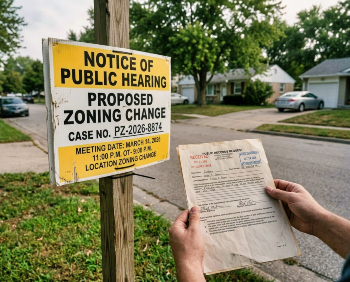 Proving Hardship with Evidence, Not Adjectives
The applicable local standard determines what evidence is relevant. Potential categories to consider include:
- A site-specific condition. A drawing showing relevant site conditions. Photographs.
- A comparison to neighbors. You may wish to review zoning maps and parcel information for nearby properties.
- An economic showing (where allowed). Check the local code to determine whether economic evidence is relevant and what forms of evidence it permits.
- A proposed condition. If appropriate under local rules, consider whether proposed conditions could address concerns.
Rebutting the Self-Created Hardship Finding
If the board or a neighbor argues you created the problem, relevant records may include:
- The deed and prior plats showing the lot was created before the current code
- Building permits and inspection records showing the condition was lawful when built
- The ordinance’s effective date compared with the date the condition arose
- Any prior board decision treating a similar condition as non-conforming rather than self-created
A lot’s history and dimensions may be relevant, depending on the applicable local standard.
What Not to Argue
Avoid these arguments; they appear in denied applications constantly:
- “The rule is unfair.” The applicable local standard determines what arguments are relevant.
- “My neighbor got a variance.” The relevance of prior decisions depends on the applicable local standard and the facts.
- “I need the extra space.” Check the applicable local standard to determine what constitutes hardship.
- “Granting this will increase my property value.” Check the applicable local standard to determine whether this argument is relevant.
The strongest cases point to the land, not the owner. Slope, lot shape, drainage, or an inherited non-conforming use carries more weight, and you can document each with a survey, a photograph, or a public record.
Step 5: File an Administrative Appeal to the Zoning Board of Appeals
An administrative appeal may challenge a decision already made, such as a permit denial or an official interpretation of the code. It is different from a variance request.
Check the local rules to identify the body that hears these cases and the information an appeal should include.
- Identify the decision and the date it was issued
- State the specific error in law or fact
- Attach the written decision and any supporting records
- Request the relief you want in plain terms
Check and follow the applicable local deadline.
The Public Hearing and Burden of Proof
At a public hearing, check the applicable rules on the burden of proof and any materials you should bring.
Texas A&M Real Estate Research Center on the zoning commission process notes that commissions must issue a preliminary report and hold at least one public hearing before a final report. Know the procedural steps so you can spot a shortcut.
 Step 6: Establish Legal Standing in Zoning Disputes
Standing requirements depend on the applicable law. Check the relevant rules to determine who may challenge a zoning decision.
Ask yourself three questions:
- Does the decision affect your property value or use?
- Are you within the affected area the ordinance covers?
- Can you point to a concrete harm, not a hypothetical one?
Standing can affect whether a court considers a case, so check the applicable law.
One more point worth knowing: courts often review zoning decisions under a deferential standard. The Institute for Justice explains that a challenge to a zoning law can be subject to the rational-basis test. That means the government only needs a conceivable rational reason for the rule.
Build your record with the applicable standard of review in mind.
Step 7: Organize Your Community Before the Vote
Individual challenges are hard. Organized ones are harder to ignore.
Neighbors who share the same burden can pool records, split research, and speak at hearings. A group can help document concerns shared by multiple owners.
Practical steps:
- Hold a short meeting and assign roles: records, research, speakers
- Build a shared folder for documents and meeting notes
- Ask each affected owner to submit written comments to the record
- Recruit people who can speak to traffic, drainage, or property value effects
Keep the group factual. Boards tune out anger and respond to specifics.
Step 8: Run the Cost-Benefit Analysis Before You Escalate
Before you appeal to court, do the math. Litigation can involve time and expense. Here is a framework you can fill in with local numbers.
The Cost Categories You Need to Price
Build a simple spreadsheet with these line items. Call the clerk, the planning department, and the court clerk to confirm current amounts; fees are set locally and change often.
- Application and appeal fees. Variance applications, administrative appeals, and judicial filings each carry separate fees. Ask for the fee schedule in writing.
- Notice and publication costs. Many codes require mailed notice to neighbors and publication in a newspaper. Those costs are usually on the applicant.
- Professional services. Surveyor, appraiser, land-use planner, and court reporter for the hearing transcript. Check whether a transcript is required and confirm any applicable costs with the relevant provider.
- Attorney fees. If you hire counsel, ask for a written estimate for the work you need.
- Expert witness fees. If your case turns on traffic, drainage, or appraisal, expect to pay for a report and for the expert’s time at the hearing.
- Your own time. Track the hours you spend on records requests, drafting, and hearings. Even self-represented applicants pay in time.
A Simple Decision Rule
Estimate the total cost of the fight, then estimate the value of the relief you are seeking. The value is not just the dollar difference in property value, it is the difference between what you can do with the property if you win and what you can do if you lose.
- If the cost of the fight is a large fraction of the value of the relief, consider whether negotiation is an option.
- If the cost is small relative to the relief, consider whether escalation is appropriate.
- If the cost exceeds the relief, consider whether another path is available.
Cheaper Alternatives to Litigation
Before you file in court, consider these lower-cost paths:
- Request a written code interpretation. Ask the relevant local office whether a written code interpretation is available and what procedures apply.
- Ask for an administrative adjustment. Check the local code for available procedures.
- Mediate with the neighbor or applicant. You may wish to discuss whether an agreement with the neighbor is possible.
- Negotiate conditions. Check the applicable rules before proposing conditions or negotiating about an application.
When Self-Representation Makes Sense, and When It Does Not
Self-representation is possible but risky. Schuster Law on challenging zoning decisions without a lawyer describes self-representation in land-use matters as possible but full of significant risks and complexities. A reasonable rule of thumb: self-representation is most viable at the administrative hearing stage, where the board is used to hearing from owners, and least viable at judicial review, where procedural rules and deadlines are unforgiving.
A simple test: if the cost of the fight exceeds the value of the relief, consider whether negotiation is an option.
 Step 9: Take the Fight to Court for Judicial Review
The scope of judicial review depends on the applicable law and procedure.
You will need:
- The complete administrative record
- The board’s written decision
- A transcript of the hearing, if one exists
- A clear statement of the legal error
Check the applicable standard of review and procedure before preparing a petition.
Confirm the applicable filing deadline with an official source before you file.
Common Mistakes That Sink a Zoning Challenge
Potential issues to consider include:
| Mistake | Why It Fails | Better Move |
|---|---|---|
| Missing the appeal deadline | The board loses jurisdiction to hear you | Calendar the deadline the day you receive the decision |
| Arguing general unfairness | Boards need a specific code error | Cite the exact ordinance section and the harm it causes |
| Skipping public records | Weak evidence loses hearings | Request records early and build a dated file |
| Claiming self-created hardship | Boards rarely grant relief for owner-made problems | Point to land conditions, not your own choices |
| Going it alone | One voice is easy to ignore | Organize affected neighbors and split the work |
| Filing in court too soon | Courts require exhaustion of local remedies | Finish the administrative appeal first |
Consider whether the comprehensive plan is relevant under the applicable local rules.
At Texas Journal, we believe the Constitution gives you tools to assert your rights. Our platform provides guidance on constitutional education and states’ rights. To take that further, explore Defend the American Family and The Law’s On Your Side, which started with Texas Journal.
Dave
Questions? Call!!
940-353-1398

Frequently Asked Questions
What is a local zoning ordinance?
A zoning ordinance sets rules for land use. The applicable local rules determine how a property owner may seek permission for a use the ordinance does not allow. Reading the ordinance itself, not just the staff summary, can help you understand the rules that apply.
What constitutes a hardship for a zoning variance?
Hardship standards vary by jurisdiction. Check your local code and the board’s past decisions to understand the rules that may apply before filing.
How do I file an appeal against a zoning decision?
Start by confirming the applicable deadline and filing procedure with an official local source. Follow the relevant rules for identifying the decision and stating the grounds for an appeal. Missing a deadline may affect your ability to challenge a decision, so confirm the requirements promptly.
What is the difference between a zoning variance and a rezoning request?
A variance and a rezoning request are different types of land-use applications. The applicable local rules determine what each process involves, which body considers it, and what standards and procedures apply.