


Table of Contents
- Quick Comparison: What Each Book Delivers
- How We Selected These Books on American Founding Principles
- 1. The Federalist Papers: Understanding the Constitutional Design
- 2. The Ideological Origins of the American Revolution: Intellectual Foundations
- 3. American Scripture: The Declaration of Independence and National Identity
- 4. The Radicalism of the American Revolution: Society and Founding Principles
- 5. 1776: Leadership and the New War Era
- 6. Patriots: The Men Who Started the American Revolution
- 7. The Annotated U.S. Constitution and Declaration of Independence
- Using These Books for Defending Individual Liberties from Government
- Which Book Should You Start With?
- Frequently Asked Questions
Last Updated: October 4, 2026
Quick Comparison: What Each Book Delivers
| Book | Focus | Best For | Reading Level |
|---|---|---|---|
| The Federalist Papers | Constitutional design and original intent | Understanding checks and balances | Dense but essential |
| The Ideological Origins of the American Revolution | Intellectual foundations of independence | Academic depth on founding thought | Advanced academic |
| American Scripture | Declaration of Independence creation | National identity and founding symbolism | Accessible narrative |
| The Radicalism of the American Revolution | Social transformation through founding | How founding principles changed society | Engaging history |
| 1776 | Military leadership and the pivotal year | Human stories of the founding | Page-turner narrative |
| Patriots | Biographical accounts of key figures | Personal motivations of founders | Comprehensive narrative |
| The Annotated U.S. Constitution and Declaration | Primary documents with expert notes | Quick reference and fact-checking | Reference guide |
Understanding the founding principles that shaped this nation requires more than surface-level knowledge. Whether you’re new to American history or a seasoned scholar, these books on American founding principles explore the reasoning, intellectual battles, and personal convictions 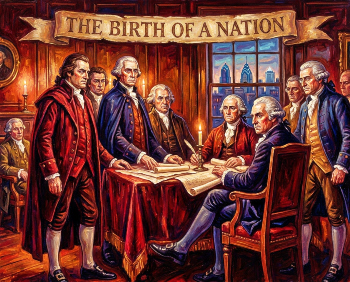 that drove the founders to risk everything for self-governance.
At Texas Journal, we recognize that citizens serious about defending their constitutional rights need to understand where those rights came from and why the founders fought to protect them. These books on American founding principles illuminate how the Constitution was designed to limit government power and protect individual liberty, providing the clarity and evidence you need. This knowledge can empower you to stand firm in defending your rights.
How We Selected These Books on American Founding Principles
We evaluated each book based on depth of analysis, accessibility, and practical utility for understanding constitutional limits on government power. We organized selections by intellectual tradition and historical perspective, because understanding the founding requires grasping multiple schools of thought that sometimes competed with each other.
The books on American founding principles we’ve selected span primary sources, scholarly analysis, and narrative history. Some focus on intellectual origins of the Revolution, Enlightenment philosophy, classical republicanism, and English constitutionalism. Others examine how founding principles transformed society. A few provide direct access to the founders’ own words. They share intellectual rigor and relevance to understanding what the Constitution actually says and why it matters.
Philosophical Frameworks in the Books:
The Ideological Origins of the American Revolution and The Radicalism of the American Revolution represent the scholarly approach to understanding where founding ideas came from and what they accomplished. These books trace intellectual lineage, Enlightenment philosophy, classical republican theory, and English constitutional tradition. If you want to understand the why behind founding principles, these are your foundation.
The Federalist Papers and The Annotated U.S. Constitution and Declaration represent the primary-source approach, with the founders explaining their reasoning in their own words. The Federalist Papers specifically address ratification objections and explain constitutional design as the founders understood it.
Patriots and 1776 represent the biographical and narrative approach, showing founding principles through the lives and decisions of actual people. These books reveal that the founding was a collection of individuals with overlapping but sometimes conflicting concerns, providing  context for why they designed government as they did.
American Scripture is both primary source analysis and historical narrative, examining how the Declaration was created, debated, and transformed into national mythology. It shows the gap between what the Declaration actually says and what Americans believe it says, crucial for defending founding principles against modern misinterpretations.
The founding era involved genuine intellectual tension. Some founders (particularly Hamilton) emphasized strong central authority and commercial development. Others (particularly Jefferson and the Anti-Federalists) feared centralized power and emphasized local control. The Constitution reflects compromises among these schools of thought.
The Federalist Papers and The Ideological Origins of the American Revolution represent the scholarly approach to understanding where founding ideas came from and what they accomplished. These books trace intellectual lineage, Enlightenment philosophy, classical republican theory, and English constitutional tradition. Appreciating these diverse perspectives helps you see the full picture of the founding debates, essential for defending principles today.
1. The Federalist Papers: Understanding the Constitutional Design
The Federalist Papers are the most authoritative explanation of how the Constitution was designed to work. Written by Hamilton, Madison, and Jay during ratification debates, these 85 essays explain separation of powers, checks and balances, and limits on federal authority.
The 18th-century language in the Federalist Papers can be dense, but these essays are indispensable for understanding what the founders actually intended. Many annotated editions and online resources help interpret the language, making these primary sources more accessible to dedicated readers.
Federalist 10 explains why a large republic with separated powers protects liberty better than direct democracy. Federalist 51 lays out checks  and balances designed to prevent tyranny. These papers provide the intellectual foundation for identifying constitutional violations.
Available free through the Library of Congress, the Federalist Papers are also published in numerous annotated editions. The reading is challenging, but the payoff is direct access to the founders’ own reasoning about constitutional limits on government power.
2. The Ideological Origins of the American Revolution: Intellectual Foundations
Bernard Bailyn’s Pulitzer Prize-winning work examines the intellectual sources that shaped the independence movement. Rather than focusing on military battles or personalities, Bailyn analyzes the political pamphlets, sermons, and writings that colonists consumed before the Revolution.
This book on American founding principles reveals that the founders drew from English constitutionalism, ancient republicanism, and Enlightenment philosophy. Understanding these sources explains why they structured government as they did and what they meant by “liberty” and “tyranny.”
Bailyn traces how colonists came to see British actions as a deliberate conspiracy to strip away their rights, a logical conclusion based on their understanding of political philosophy and history. The book shows how ideology drives political action, relevant to understanding constitutional conflicts today.
The writing is scholarly but not impenetrable. Bailyn builds his argument carefully, using primary-source excerpts to support each point. If you want to understand the intellectual DNA of American founding principles, this book reveals it.
3. American Scripture: The Declaration of Independence and National Identity
Pauline Maier’s American Scripture tells how the Declaration was created, debated, edited, and transformed into the symbolic centerpiece of 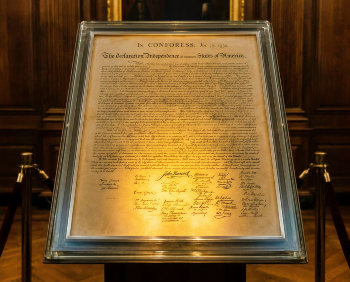 American identity. Maier shows what actually happened and why the document evolved as it did.
The book examines Jefferson’s draft, changes by Congress, and language battles over slavery and representation. It reveals the Declaration was more pragmatic and political than the timeless ideals we project onto it.
Understanding this history matters for defending founding principles today. The Declaration asserts that governments derive power from the consent of the governed and that people have the right to alter or abolish governments that become destructive (Declaration of Independence: A Transcription). These aren’t abstract sentiments; they’re the stated justification for the American Revolution and the foundation for later arguments about constitutional limits on government authority.
Maier’s research is meticulous, and her prose is clear. This book on American founding principles shows you the Declaration not as a timeless manifesto but as a political document created by real people making difficult choices under pressure.
4. The Radicalism of the American Revolution: Society and Founding Principles
Gordon S. Wood’s The Radicalism of the American Revolution argues that the Revolution fundamentally transformed American society, culture, and social relationships, not just political separation from Britain.
Wood examines how founding principles changed American thought about hierarchy, authority, and social obligation. The Revolution replaced monarchy and aristocracy with republicanism, meaning ordinary people governed themselves, genuinely new and challenging centuries of assumptions about natural hierarchy.
Wood shows that the founders created a new kind of society based on different assumptions about human nature, equality, and the relationship between people and authority, essential for understanding how founding principles shaped American character and institutions.
The book is substantial and occasionally dense, but Wood’s argument is compelling. He demonstrates that understanding the founding requires grasping not just constitutional structure but the social revolution that accompanied it. The principles embedded in the Constitution reflected a fundamentally different vision of human society.
5. 1776: Leadership and the New War Era
David McCullough’s 1776 tells the story of the year when the Revolution nearly failed. Through George Washington and the Continental Army, you experience the desperate military situation, high-pressure leadership decisions, and the human cost of pursuing independence.
This book on American founding principles shows the founders as people making life-and-death decisions with incomplete information. Washington held an army together while losing battles. Soldiers chose between abandoning the cause and enduring brutal conditions. These choices reveal what the founders actually believed about liberty.
McCullough’s research is thorough and storytelling engaging. For anyone who wants to understand the founding era emotionally and grasp what the founders sacrificed, this is the book.
The human dimension is invaluable, providing context for why the founders designed the Constitution as they did.
6. Patriots: The Men Who Started the American Revolution
 A.J. Langguth’s Patriots provides biographical accounts of key figures who initiated the independence movement, showing how specific people made specific choices that set events in motion.
The book traces the careers and motivations of figures like Samuel Adams, John Hancock, and Thomas Jefferson. Langguth explores their ideological commitments, ambitions, fears, and calculations. This approach shows that diverse people with overlapping but sometimes conflicting goals drove the founding.
Understanding the founders as individuals, not as abstract historical figures, helps explain why they designed the government as they did. Different founders had different concerns. Some feared tyranny from the executive. Others feared mob rule. Some wanted to protect property rights above all. The Constitution reflects these different concerns balanced against each other.
Langguth’s comprehensive coverage means this book is substantial, but the biographical narrative keeps it engaging. For anyone serious about defending founding principles, understanding the actual people who created them adds depth and credibility to constitutional arguments.
7. The Annotated U.S. Constitution and Declaration of Independence
Sometimes what you need is direct access to the founders’ own words rather than historians’ interpretations. The Annotated U.S. Constitution and Declaration of Independence provides the full text of both founding documents with expert annotations explaining historical context, legal terminology, the reasoning behind specific clauses, and the original meaning of contested language.
This resource fills a critical gap most book lists overlook: reading primary sources with scholarly guidance. When you encounter a constitutional argument, you can trace it back to the actual text rather than relying on modern court interpretations or political rhetoric. The annotations explain what terms meant in the 1780s, not what they mean today. For instance, the annotations clarify what “commerce” meant to the founders (primarily interstate trade, not all economic activity), what “necessary and proper” was intended to authorize (powers directly connected to enumerated powers, not unlimited federal expansion), and why specific phrases were chosen over alternatives that were debated and rejected.
The document-by-document format makes it possible to understand the Declaration and Constitution as separate but related texts with different purposes. The Declaration asserts philosophical principles about rights and consent. The Constitution operationalizes those principles through structure and limits. Reading both with annotations shows how the founders translated ideology into institutional design.
Beyond the text itself, quality annotated editions include historical notes on ratification debates, amendments, and how specific clauses have been interpreted over time. This context prevents you from reading the Constitution in a vacuum. You understand not just what it says but what questions surrounded its adoption and why certain language was chosen to address those questions.
This isn’t a book to read cover-to-cover in one sitting, but it’s one to keep accessible for reference and for deliberate study of specific sections. When constitutional arguments arise, and they will, having the actual text with expert historical notes provides a foundation for informed discussion grounded in what the founders actually wrote, not what modern courts claim they meant. For citizens serious about asserting constitutional rights, the ability to reference primary documents directly is essential. You move from “the Constitution says…” (vague) to “here is the exact text, here is what it meant in context, and here is why that matters” (grounded and persuasive).
Using These Books for Defending Individual Liberties from Government
These books on American founding principles serve a practical purpose beyond historical knowledge. They provide the intellectual foundation for understanding why the Constitution limits government power and what those limits actually mean.
When government agencies exceed their constitutional authority, citizens need to understand not just that overreach is happening but why it 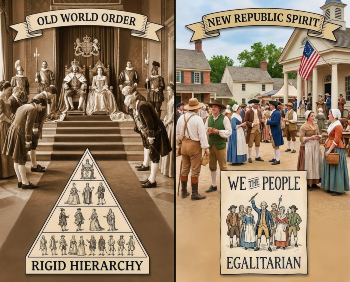 violates the founding design. The Federalist Papers explain the constitutional structure meant to prevent it. The Ideological Origins shows what the founders believed about tyranny and how to recognize it. American Scripture reveals the foundational assertion that governments derive power from the consent of the governed.
At Texas Journal, we believe that citizens equipped with genuine understanding of founding principles are far more effective at defending their rights than those relying on slogans or vague appeals to tradition. These books provide that understanding. They show you what the founders actually said, what they actually believed, and why they structured government the way they did.
Reading these works transforms constitutional arguments from abstract debate into grounded discussion rooted in historical evidence and the founders’ own reasoning. That foundation makes your arguments more persuasive and your understanding more resilient against political rhetoric that misrepresents the Constitution.
Which Book Should You Start With?
Start with The Federalist Papers if you want direct access to the founders’ reasoning about constitutional design. Start with 1776 if you want to understand the human dimension and the stakes involved. Start with American Scripture if you want to understand the Declaration and how it shaped American identity.
For most readers serious about understanding founding principles, a practical approach is to begin with The Annotated U.S. Constitution and Declaration, get familiar with the actual text, then move to 1776 for narrative engagement, and finally tackle The Federalist Papers for intellectual depth.
The Ideological Origins and The Radicalism of the American Revolution are more demanding but provide crucial context about where the founders’ ideas came from and how those ideas transformed society. Patriots works well as a middle option, more accessible than the scholarly works but more analytical than pure narrative.
None of these books is wasted reading. Each provides a different angle on American founding principles. The question is which angle serves your immediate purpose best.
As you deepen your understanding of founding principles, you’ll recognize patterns in how government power expands, how rights are eroded, and how constitutional limits are circumvented. That recognition is the first step toward effective resistance. Understanding the founding isn’t academic; it’s the foundation for defending the freedoms the founders fought to secure.
Understanding your constitutional rights and the founding principles that protect them requires more than surface-level knowledge. These seven books provide the depth, evidence, and reasoning you need to defend individual liberties against government overreach with confidence and clarity. Whether you’re building your civic knowledge or preparing to assert your rights, Texas Journal’s resources on constitutional education can help you move from understanding to action. Start with the book that matches your learning style, then explore the others as your knowledge deepens. The founders left us a Constitution designed to limit government power; these books show you why and how to make that design work for you.

Frequently Asked Questions
What are the core principles of the American founding?
The American founding rests on several core principles: individual liberty, self-governance, separation of powers, checks and balances, and federalism. These principles emerged from Enlightenment philosophy and colonial experience. The Founding Fathers believed that government power must be limited and distributed among branches to prevent tyranny. Understanding these principles through primary sources and scholarly analysis helps citizens recognize how founding documents protect their rights today.
Which books best explain the intent of the U.S. Constitution?
The Federalist Papers provide the most direct explanation of constitutional intent, written by the architects themselves. For scholarly context, The Ideological Origins of the American Revolution explores the intellectual foundations that shaped constitutional thought. The Annotated U.S. Constitution offers quick reference with expert explanations of specific clauses. Together, these resources reveal how the Constitution was designed to protect liberty while limiting government power.
How can citizens use founding principles to defend individual liberties from government?
Understanding founding principles enables citizens to recognize constitutional limits on government authority. Books on the American founding explain how separation of powers, federalism, and enumerated powers constrain federal action. By studying the Founders’ reasoning in The Federalist Papers and historical context in works like American Scripture, citizens gain grounding in constitutional arguments. This knowledge supports informed civic participation and helps identify when government actions exceed constitutional bounds.
Why is it important to study the Federalist Papers today?
The Federalist Papers explain the original intent behind constitutional design, including checks and balances and federalism. These essays address fundamental questions about limited government and individual rights that remain relevant today. By studying how Hamilton, Madison, and Jay justified specific constitutional provisions, citizens understand the principles underlying their rights. This knowledge strengthens the ability to defend constitutional protections against government overreach.
What books provide the best insight into states’ rights and federalism?
The Federalist Papers extensively discuss federalism and the division of power between state and federal governments. The Ideological Origins of the American Revolution traces how colonial experience shaped federalist thinking. The Radicalism of the American Revolution explores how founding principles transformed governance structures. These works clarify how federalism was designed to preserve state sovereignty while creating a functional national government.

