


Table of Contents
- Grassroots Activism vs Institutional Lobbying: Core Differences
- Defining Institutional vs Grassroots Activism
- The Insider-Outsider Dichotomy in Policy Influence
- Resource Mobilization and Political Power
- Grassroots Lobbying vs Direct Lobbying: Strategic Distinctions
- How to Organize a Grassroots Campaign for Constitutional Change
- Federal Lobbying Disclosure Requirements and Transparency
- Strategic Litigation and Legislative Lobbying for Policy Change
- Incremental Change vs Radical Transformation: Which Approach Wins
- Digital-Era Hybrid Activism and Modern Political Strategy
- Frequently Asked Questions
Last Updated: October 2, 2026
Grassroots Activism vs Institutional Lobbying: Core Differences
Understanding grassroots activism vs institutional lobbying defines how change happens in American politics. One builds power from the ground up through citizen mobilization. The other operates through direct access to decision-makers. Understanding which approach fits your constitutional goals separates effective advocacy from wasted effort.
Grassroots activism and institutional lobbying are fundamentally different strategies for influencing policy. One mobilizes mass public pressure; the other leverages insider relationships and institutional resources. The choice between them determines whether you’re building a movement or hiring professionals to negotiate behind closed doors.
Defining Institutional vs Grassroots Activism
 Institutional lobbying is direct advocacy conducted by professional representatives who meet with lawmakers, staff, and agency officials to influence legislative or regulatory outcomes. Grassroots activism is citizen-led mobilization that builds public pressure through constituent engagement, protests, petition drives, and coordinated action to force policy change from outside formal political structures.
The insider-outsider dichotomy shapes everything about how these strategies work. Institutional lobbyists operate within the system with access, relationships, and technical expertise in legislative language and regulatory procedure. Grassroots activists operate outside it with numbers, visibility, and the ability to create political pressure that makes inaction costly for elected officials.
How Institutional Lobbying Works
Professional lobbying firms provide direct representation before Congress and federal agencies. A registered lobbyist meets with congressional staff, provides policy analysis, drafts legislative language, and advocates for specific bills or regulatory changes.
The institutional approach assumes policymakers respond to informed expertise and relationship-building. Lobbyists track legislative calendars, identify key committee members, and provide decision-makers with research supporting their client’s position. This works when the issue is technical, when there’s bipartisan potential, or when stakes are high enough to justify professional representation.
The limitation is visibility: institutional lobbying happens in offices and conference rooms, rarely seen by the public. This creates vulnerability if a lobbying position contradicts constituent sentiment. Professional lobbying also requires capital that under-resourced organizations cannot afford.
How Grassroots Activism Operates
Grassroots campaigns mobilize citizens to contact elected officials, attend town halls, sign petitions, and create visible public pressure. Platforms provide infrastructure: email templates, legislator lookup tools, and tracking systems that connect constituents with their representatives at scale.
The grassroots model assumes elected officials respond to constituent volume and visibility. A lawmaker receiving 500 emails from constituents on an issue, attending a packed town hall, and seeing local news coverage creates pressure. Unlike lobbying, grassroots campaigns are built on democratic participation where citizens do the work themselves.
The limitation is sustainability and precision. Grassroots campaigns excel at creating awareness and pressure but often lack technical expertise to shape legislative language or navigate regulatory complexity. A successful petition drive might force a vote, but without institutional knowledge, the resulting bill may contain unintended consequences.
The Insider-Outsider Dichotomy in Policy Influence
The insider-outsider framework explains why both approaches persist. Insiders (institutional lobbyists, agency officials, congressional staff) control procedural access and technical authority.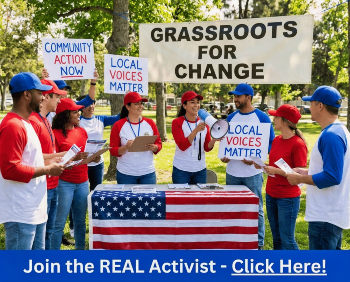 They know how bills move, where amendments get inserted, and which regulatory interpretations matter. Outsiders (grassroots activists, citizens, movements) control public attention and electoral consequences.
Real policy change requires both. A grassroots campaign without insider expertise often wins symbolic victories but loses in implementation. An insider lobbying effort without grassroots support is vulnerable to political reversal when leadership changes or public opinion shifts.
Resource Mobilization and Political Power
Institutional lobbying concentrates resources: money, expertise, access. A single lobbying firm with a $2 million budget and relationships with 50 congressional offices can move legislative text in ways a volunteer-run petition drive cannot.
Grassroots activism distributes resources: time, attention, bodies. A movement with 100,000 engaged citizens can create political pressure that no amount of lobbying alone can match. The resource difference is not just scale but type; lobbyists provide technical capital; grassroots movements provide political capital.
This explains why grassroots activism works for issues with broad public appeal like constitutional rights, government overreach, and family policy, which resonate across districts and create electoral consequences. Specialized regulatory issues favor institutional lobbying.
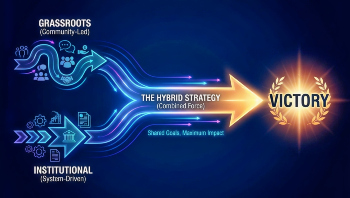
Strategic organizations recognize this and build hybrid approaches: hiring institutional lobbyists to navigate regulatory complexity while simultaneously running grassroots campaigns to create political pressure. This dual strategy is expensive but effective because it addresses both technical and political dimensions of policy change.
Grassroots Lobbying vs Direct Lobbying: Strategic Distinctions
The term “grassroots lobbying” describes citizen advocacy campaigns that attempt to influence policy through public mobilization. Direct lobbying is professional advocacy aimed at decision-makers. These are distinct activities with different legal requirements, costs, and political effects.
Direct lobbying is what registered lobbyists do. They contact elected officials or agency staff with intent to influence specific legislation. The Lobbying Disclosure Act requires registration and quarterly reporting of direct lobbying activities, clients, and spending.
 Grassroots lobbying is what citizens do. They contact elected officials, but advocacy groups, nonprofits, or movements organize the campaign. Grassroots lobbying is not registered under federal law (though some states require disclosure). It operates through constituent pressure rather than insider relationships.
The strategic distinction matters because they create different political dynamics. Direct lobbying is efficient but visible only to insiders. Grassroots lobbying is slower but creates public pressure that makes politicians vulnerable if they ignore it. Organizations running both simultaneously create a pincer effect: inside and outside pressure moving in the same direction.
How to Organize a Grassroots Campaign for Constitutional Change
Organizing a grassroots campaign requires clarity on your goal, constituency, and pressure points. Constitutional issues have natural advantages for grassroots mobilization because they appeal to broad values and affect many people. A campaign to Defend the American Family, Protect Our Traditions, or challenge federal overreach can mobilize citizens across geographic and demographic lines.
Building Coalition and Community Support
Start by identifying your core constituency, people most directly affected by the issue. For constitutional campaigns, this often includes civic organizations, faith communities, parent groups, and state legislators who share your constitutional interpretation. Build relationships with existing organizations rather than starting from zero.
Coalition-building multiplies reach. Five organizations with 5,000 members each create a coalition of 25,000. More importantly, coalition partners bring their own networks, credibility, and institutional knowledge. Texas Journal emphasizes that constitutional campaigns succeed when they connect to existing community structures like churches, civic clubs, school boards, and state legislatures where people already gather.
Messaging matters enormously. Connect the constitutional principle to immediate, tangible concerns. Don’t lead with legal theory; lead with what people care about: protecting their children, defending their property, maintaining their freedom. The constitutional argument supports the practical concern.
Mobilizing Action and Creating Political Pressure
Mobilization requires clear, specific asks. Don’t ask people to “support constitutional rights.” Ask them to attend a town hall, sign a petition, contact their state representative, or testify at a hearing. Specificity increases participation.
Digital platforms accelerate this process. Tools provide infrastructure to coordinate constituent contact at scale. A single email can reach thousands of supporters with a direct link to contact their representative, removing friction and increasing participation.
Create visible pressure through town halls, marches, and media coverage. Public visibility also recruits new supporters. Sustained pressure matters more than intensity. A single massive rally creates headlines but fades. A campaign that maintains pressure over months through regular constituent contact, ongoing media attention, and continued mobilization changes political calculations.
Federal Lobbying Disclosure Requirements and Transparency
The Lobbying Disclosure Act requires registration of direct lobbying activities targeting Congress or federal agencies. Registered lobbyists must file quarterly reports disclosing clients, issues, and estimated spending through the Senate Office of Public Records.
 However, grassroots campaigns operate almost entirely outside this transparency requirement. When citizens contact elected officials as part of an organized campaign, that activity is not registered, disclosed, or tracked in any centralized database. A nonprofit organization can mobilize 500,000 constituent emails to Congress without filing a single disclosure form. This inverts the traditional assumption about transparency: institutional lobbying, conducted by paid professionals with financial interests, is disclosed, while grassroots activism, conducted by citizens claiming to represent public interest, is invisible.
The Disclosure Gap and Its Strategic Implications
Organizations exploit this gap deliberately. A well-funded advocacy group might hire a small lobbying firm for direct legislative contact (which must be disclosed) while running a massive grassroots campaign through a separate nonprofit entity (which requires no disclosure). The grassroots activity may be professionally organized, funded by the same sources, and coordinated with the lobbying effort, but it remains invisible to public scrutiny.
This creates a transparency paradox. A citizen-led petition drive emerging organically from community concern is genuinely grassroots but often receives less public attention than a professionally managed campaign. A professionally managed campaign mimicking grassroots organization can claim democratic legitimacy while operating with institutional resources and sophistication.
The Federal Election Commission and Internal Revenue Service have attempted to address this through regulations on “grassroots lobbying” by tax-exempt organizations. However, these rules are complex, inconsistently enforced, and do not apply to all grassroots campaigns.
Ethical Legitimacy and Democratic Accountability
The core ethical question is whether institutional lobbying, despite its transparency, has greater or lesser democratic legitimacy than grassroots activism, despite its opacity. Institutional lobbying is transparent but narrow; it represents whoever can afford to hire a lobbyist. Grassroots activism claims to represent broader public sentiment but operates without transparency that would allow verification of that claim.
Grassroots campaigns claiming democratic legitimacy should consider voluntary transparency: publishing funding sources, organizational structure, and campaign strategy. This would strengthen their democratic credibility. Conversely, institutional lobbying that operates transparently should acknowledge that transparency alone does not equal democratic legitimacy; it represents those with the resources to hire representation.
The most ethically defensible approach integrates both with full transparency. Organizations running hybrid campaigns should disclose both lobbying activities and grassroots campaign spending, funding sources, and strategic coordination. This allows policymakers and the public to understand the full scope of organized pressure and distinguishes genuine grassroots movements from astroturf campaigns.
 Strategic Litigation and Legislative Lobbying for Policy Change
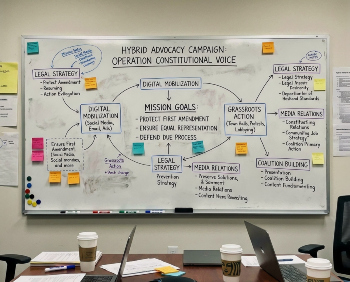
Constitutional change often requires multiple pressure points. Courts interpret constitutional meaning. Legislatures pass laws. Agencies implement regulations. Effective advocacy targets all three simultaneously.
Strategic litigation, carefully selected lawsuits designed to establish legal precedent, can establish constitutional interpretations that bind agencies and legislatures. A successful Supreme Court case on constitutional grounds creates binding law that lobbying alone cannot match. But litigation is slow, expensive, and uncertain.
Legislative lobbying paired with strategic litigation creates a comprehensive approach. Litigation establishes the constitutional principle. Legislative lobbying translates that principle into statutory language and appropriations. Most comprehensive campaigns use both.
Incremental Change vs Radical Transformation: Which Approach Wins
Institutional lobbying typically produces incremental change: amendments to existing laws, regulatory adjustments, procedural modifications. A lobbying campaign might secure a 2% funding increase, a narrower regulatory definition, or a procedural change affecting implementation.
Grassroots activism can produce radical transformation, but success is harder to measure and longer to achieve. The civil rights movement emerged from grassroots pressure that made existing arrangements politically unsustainable. But these victories required decades of sustained mobilization. The Civil Rights Act of 1964 followed nearly a century of grassroots organizing, legal challenges, and political pressure.
Measuring Effectiveness: A Practical Framework
Different advocacy goals require different success metrics.
For Institutional Lobbying:
- Direct legislative outcomes: Did the bill pass? Was the amendment included? Did the regulatory interpretation shift?
- Speed to outcome: Institutional lobbying is measured in months to a few years.
- Durability: Does the change survive subsequent legislative sessions?
- Implementation fidelity: Does the agency implement the law as intended?
For Grassroots Activism:
- Participation metrics: How many people engaged? Did participation grow over time?
- Political pressure indicators: Did elected officials change their stated position? Did media coverage increase?
- Cultural shift: Did public opinion on the issue change?
- Long-term policy change: Did the campaign produce lasting legislative or constitutional change?
Choosing Your Approach Based on Your Goal
Your choice between institutional lobbying and grassroots activism should depend on concrete answers to these questions:
- What is your specific goal? If you need a specific regulatory change within 18 months, institutional lobbying is more efficient. If you need to shift public opinion and long-term policy direction, grassroots activism is necessary.
- What is your timeline? Institutional lobbying works on legislative calendars (months to a few years). Grassroots activism works on cultural and political timescales (years to decades).
- What resources do you have? Institutional lobbying requires capital. Grassroots activism requires organizational capacity. Match your resources to the approach.
- What is your political environment? In a legislature controlled by your opponents, institutional lobbying may be ineffective. Grassroots pressure to change the political environment may be necessary first.
- What will you measure as success? Define your success metric before choosing your approach.
Most significant constitutional changes require both approaches sequenced strategically. Grassroots pressure creates political space. Institutional lobbying translates that pressure into legislative language. Sustained grassroots pressure ensures implementation and durability.
Digital-Era Hybrid Activism and Modern Political Strategy
The distinction between grassroots and institutional approaches has blurred in the digital era. Platforms provide unified tools for both grassroots mobilization and institutional tracking. Organizations can run constituent contact campaigns while simultaneously monitoring legislative activity and lobbying positions.
 Digital tools have democratized institutional intelligence. Data on congressional staff and lobbying activity is now more widely available. Grassroots organizations can now research opponents, map institutional relationships, and identify pressure points with sophistication rivaling professional lobbying.
This creates new hybrid strategies. An organization might use digital tools to mobilize 50,000 constituents for a specific ask while simultaneously hiring a lobbyist to work on relationships with key committee staff. The grassroots pressure creates urgency. Institutional contacts provide a pathway to action.
The digital era also enables rapid scaling. A viral social media campaign can mobilize hundreds of thousands of people in days, creating constituent pressure that builds faster than institutional responses can accommodate.
Texas Journal recognizes that modern constitutional advocacy requires fluency in both approaches. Citizens who understand institutional lobbying can better organize grassroots campaigns. Grassroots organizers who understand how institutions work can identify which pressure points actually matter.
| Approach | Primary Strength | Primary Limitation | Best For |
|---|---|---|---|
| Institutional Lobbying | Direct access to decision-makers | Requires capital; lacks public visibility | Technical policy changes, regulatory issues |
| Grassroots Activism | Mass mobilization and public pressure | Limited institutional expertise | Broad constitutional issues, creating political pressure |
| Hybrid Strategy | Combines insider access with outsider pressure | Expensive; requires coordination | Major policy transformation, sustained change |
Constitutional change requires understanding which tools actually move policy. Institutional lobbying provides direct access but limited use without public pressure. Grassroots activism creates political pressure but needs institutional expertise to translate that pressure into effective legislation. The most successful campaigns recognize this complementarity and build strategies that integrate both approaches. Texas Journal provides the constitutional framework and strategic guidance to help citizens assert their rights through effective advocacy. Control Washington From Your State and Here’s How You’ll Make a Difference by understanding how institutional and grassroots strategies work together to defend American freedoms.

Frequently Asked Questions
What is the difference between grassroots lobbying and direct lobbying?
Grassroots lobbying mobilizes ordinary citizens to contact their representatives and express public opinion, building bottom-up political pressure. Direct lobbying involves professional advocates meeting directly with lawmakers and decision-makers to promote specific legislation. Grassroots lobbying derives power from collective action and public mobilization, while direct lobbying relies on institutional access and specialized expertise. Both are legal under federal law but operate through fundamentally different channels of political influence.
How does grassroots activism mobilize public opinion to influence federal policy?
Grassroots activism uses social movements, coalition-building, and civic engagement to create visible public demand for policy change. Activists organize community meetings, coordinate advocacy campaigns, and mobilize constituents to contact elected officials. This bottom-up approach generates political efficacy by demonstrating that voters care about an issue, forcing formal political actors to respond. Success depends on sustained collective action, clear messaging, and the ability to reach decision-makers through constituent pressure rather than institutional relationships.
Can grassroots movements effectively counter institutional lobbying efforts?
Yes, grassroots movements can counter institutional lobbying by generating political pressure that elected officials cannot ignore. While professional lobbyists have direct access and resource mobilization advantages, grassroots campaigns create electoral consequences and public visibility that force politicians to balance insider interests against constituent demands. The most effective resistance combines grassroots mobilization with strategic litigation and media attention. However, sustained grassroots success typically requires organization, funding, and persistence over months or years to match the continuous presence of institutional lobbying.
Which strategy is more effective for long-term constitutional reform?
Long-term constitutional reform typically requires a hybrid approach combining both strategies. Grassroots movements create the political will and public demand necessary for radical transformation, while institutional lobbying and strategic litigation navigate the formal legislative and judicial processes. Grassroots activism alone may lack the technical expertise and institutional access to translate public support into binding law. Conversely, lobbying without grassroots support faces resistance from elected officials who fear electoral consequences. The most successful policy amendments blend bottom-up movements with insider advocacy.

