


Table of Contents
- 1. Teach Constitutional Literacy for Students
- 2. Create Mentorship and Role Modeling Opportunities
- 3. Engage Youth in Community Service and Volunteerism
- 4. Develop Civic Engagement Strategies for Youth
- 5. Build Safe and Supportive Environments
- 6. Integrate Values-Based Education Into Curriculum
- 7. Foster National Identity Through Cultural and Religious Tolerance
- Why Fostering National Values in Youth Matters
- Measuring Impact and Creating Accountability
- Frequently Asked Questions
Last Updated: September 29, 2026
Understanding 7 ways to foster national values in youth is no longer optional; it’s essential. Young people today face unprecedented pressure to abandon the principles that built this nation.  Without intentional guidance, they drift toward ideologies that weaken civic virtue, personal responsibility, and constitutional awareness.
The challenge is clear: how do you instill respect for founding principles, constitutional literacy, and genuine civic engagement in a generation surrounded by competing narratives? Here are 7 ways to foster national values in youth that work. This guide from Texas Journal breaks down seven concrete strategies.
1. Teach Constitutional Literacy for Students
Constitutional literacy is foundational. Young people cannot defend rights they don’t understand, and they cannot appreciate national values built on principles they’ve never studied.
Start with the basics. The Constitution isn’t abstract; it’s a practical document that defines how power flows and where it stops. Students should learn the separation of powers, the Bill of Rights, and the Tenth Amendment’s protection of state sovereignty. These aren’t dusty history lessons; they’re the framework for understanding government overreach.
Make it relevant. Connect constitutional principles to real decisions young people face. When discussing free speech, explore actual cases where individuals stood against institutional pressure. When teaching federalism, show how state-level decisions directly affect their communities. The goal is comprehension, not memorization.
Consider structured curricula that emphasize constitutional restraint on government power. Resources like those offered through the National Constitution Center’s educational programs provide frameworks for teaching constitutional principles to diverse age groups. For those seeking deeper engagement with these foundational concepts, The Law’s On Your Side offers resources to help young people understand how constitutional principles protect their rights and freedoms.
2. Create Mentorship and Role Modeling Opportunities
Mentorship is where values transfer from one generation to the next. Young people don’t adopt principles from lectures; they absorb them from people they respect.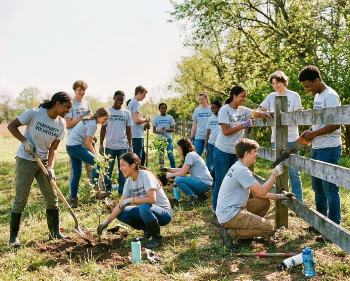
Identify adults in your community who embody the values you want to cultivate: civic engagement, constitutional awareness, personal integrity, and commitment to family and community. Pair them with youth in structured mentorship relationships. The mentor doesn’t need to be a celebrity or expert; they need to live out these values consistently.
Mentorship works because of proximity and authenticity. A mentor who shows up regularly, answers questions honestly, and demonstrates how constitutional principles apply to real decisions creates lasting impact. Youth see how values translate into action.
Structure mentorship programs around shared activities: community projects, constitutional study groups, or civic participation. The activity provides context; the relationship provides influence. Programs like Defend the American Family emphasize the role mentors and families play in transmitting values across generations.
3. Engage Youth in Community Service and Volunteerism
Community service transforms abstract values into concrete action. When young people serve their communities, they develop social responsibility and understand the interdependence that holds society together.
Service builds character. Volunteering teaches delayed gratification, teamwork, and the satisfaction of contributing to something larger than oneself. It also reveals how communities actually function, the networks, resources, and people that sustain them.
Target service opportunities that reinforce national values. Environmental stewardship, local infrastructure projects, food banks, and mentoring younger children all build civic awareness. The key is choosing activities that connect service to community cohesion and shared responsibility.
Track outcomes. Help young people reflect on what they’ve learned, how they’ve grown, and how their service strengthened community bonds. This reflection deepens the values integration.
4. Develop Civic Engagement Strategies for Youth
Civic engagement means more than voting. It includes advocacy, community organizing, attending local meetings, and participating in democratic processes at every level.
Teach young people how government actually works. Most civics classes stop at the federal level. Real civic engagement happens locally, in city council meetings, school board hearings, county commissions, and state legislatures. Youth should understand how to research issues, contact elected representatives, attend public meetings, and organize their peers around shared concerns.
Start small. A high school student might attend a city council meeting on a topic they care about, research the issue, and write a letter to their representative. A college-age youth might organize a campus discussion on constitutional limits on federal power or state sovereignty. These aren’t dramatic actions, but they’re the foundation of genuine civic participation.
Emphasize that civic engagement is how citizens check government power and restore constitutional limits. This isn’t partisan activism; it’s the exercise of rights and responsibilities embedded in the Constitution.
5. Build Safe and Supportive Environments
Values flourish in environments where young people feel secure, respected, and free to think critically. Hostile or chaotic settings suppress the reflection and dialogue that values development requires.
 Safety is foundational. Young people need physical safety, emotional safety (freedom from ridicule or shame), and intellectual safety (freedom to ask questions and disagree respectfully). Without these, they retreat into conformity or cynicism.
Create spaces where constitutional discussion is normal. This might be a school club, a family dinner tradition, a youth group, or a community organization. The setting matters less than the consistency and openness. Young people should encounter diverse perspectives, ask hard questions, and develop informed positions of their own.
Adults set the tone. If mentors and teachers model respectful disagreement, intellectual humility, and commitment to principle over popularity, young people learn that these are possible. If instead they see adults compromising values for convenience, that’s what they’ll internalize.
6. Integrate Values-Based Education Into Curriculum
Values-based education isn’t separate from academics; it’s woven through them. History, literature, civics, and even science classes offer opportunities to explore national values and constitutional principles.
In history, connect past struggles for liberty and constitutional rights to current issues. In literature, discuss characters who face moral choices or defend principles under pressure. In civics, analyze how constitutional structures protect freedom. The goal is to show that national values aren’t abstract; they’re central to understanding how society works.
Curriculum design matters. Look for or develop materials that emphasize constitutional literacy, the dangers of concentrated power, and the importance of federalism and state sovereignty. Resources from educational organizations focused on constitutional education can guide curriculum development.
Assessment should reflect values integration. Rather than multiple-choice tests, use essays, projects, and discussions that require students to apply constitutional principles to real scenarios.
7. Foster National Identity Through Cultural and Religious Tolerance
National identity doesn’t require uniformity. The United States is constitutionally and historically a nation of diverse beliefs, backgrounds, and traditions. Strong national values actually require respecting this diversity.
Teach young people that tolerance and national pride aren’t contradictory. You can deeply value constitutional principles and American traditions while respecting neighbors with different religions, ethnicities, and viewpoints. In fact, the Constitution protects these differences.
Explore how different communities and traditions have contributed to national strength. Immigrant stories, religious traditions, and regional cultures have all enriched the nation. This isn’t about minimizing American identity; it’s about understanding it fully.
 Create opportunities for youth to engage across differences. Interfaith dialogues, cultural exchange events, and community discussions that hear and respect diverse perspectives build social cohesion. The goal is to have a coherent culture with shared values.
True patriotism includes defending the rights of those you disagree with. Teaching this principle is one of the most powerful ways to foster genuine national values.
Why Fostering National Values in Youth Matters
The stakes are real. Young people who understand and embrace constitutional principles, civic responsibility, and national identity become adults who defend freedom and strengthen communities. Those who don’t drift into cynicism, dependence on government, or susceptibility to ideologies that weaken individual liberty.
National values aren’t automatically transmitted. Each generation must learn them, understand them, and choose to live by them. Without intentional effort, through education, mentorship, service, and civic participation, these values erode.
The strategies outlined above work because they combine education with experience, principle with practice, and individual growth with community contribution. They treat young people as capable of understanding complex ideas and making meaningful contributions to society.
Measuring Impact and Creating Accountability
Theoretical commitment to national values means little without evidence of change. Yet most parents and educators lack practical frameworks to measure whether their efforts are actually working. This section bridges that gap with actionable assessment tools.
Behavioral Indicators: The Observable Baseline
Start by tracking concrete behaviors that signal values integration. These are measurable and don’t require subjective judgment:
- Civic participation frequency: How many times per month does the youth attend public meetings, contact elected officials, or research policy issues? A baseline might be zero; growth to two to four instances monthly indicates genuine engagement.
- Service hours and consistency: Track not just total hours but pattern. A youth who volunteers sporadically shows a different commitment than one who commits to a weekly shift. Consistency signals internalized responsibility.
- Constitutional literacy demonstrations: Can the youth explain the separation of powers, identify which branch handles a specific government action, or apply the First Amendment to a real scenario? Create a simple rubric: Can they explain it? Can they apply it to a new situation? Can they defend it against a counterargument?
- Cross-difference engagement: Document instances where the youth engages respectfully with someone holding different political or religious views. This is harder to quantify but critical; note whether these interactions increase in frequency and depth.
Understanding Assessment: Moving Beyond Memorization
Knowledge without application is hollow. Use these assessment methods to verify that learning is deep:
- Scenario-based questions: Present a real or realistic situation (“A city council votes to restrict religious symbols on public property. What constitutional principles are at stake? Which side do you find more persuasive and why?”). Responses reveal whether the youth can apply principles, not just recite them.
- Explanation in their own words: Ask the youth to teach the concept to someone else, a younger sibling, a peer, a community member. If they can explain it accurately, understanding is solid. If they rely on memorized phrases or get confused, they need deeper study.
- Position papers or recorded reflections: Have youth write or record their thinking on a constitutional or civic question every quarter. Review for growth in nuance, evidence use, and intellectual honesty. Comparing Q1 to Q4 writing reveals development.
- Socratic dialogue: In conversation, ask follow-up questions: “Why do you think that?” “What would happen if…?” “How does that connect to…?” Their ability to think through implications shows whether values are becoming internalized reasoning, not external rules.
Mentor and Community Partner Feedback
Adults who interact with youth in real settings see what surveys and tests miss. Create a simple feedback form for mentors, service supervisors, and community partners:
- Does this youth show initiative, or do they wait to be directed?
- How does this youth treat people with different views or backgrounds?
- Have you noticed growth in their understanding of civic responsibility?
- Would you trust this youth to represent your organization or community?
Collect feedback twice yearly. Patterns across multiple observers are more reliable than single impressions.
Creating Accountability Structures
 Measurement only works if it drives action. Build accountability into the program design:
- Goal-setting conversations: At the start of each quarter or semester, have the youth set one to three specific goals (“I will attend two city council meetings and write a one-page reflection on each,” or “I will complete 20 service hours and identify one way my service strengthened community bonds”). Write them down. Review progress monthly.
- Reflection protocols: After service, civic engagement, or mentorship sessions, use a simple reflection: What did you learn? How does this connect to national values? What will you do differently next time? This embeds accountability into the experience itself.
- Progress reviews with consequences and celebration: Meet quarterly to review data. If progress is strong, celebrate it, share stories with family, recognize the youth publicly if appropriate, increase responsibility or leadership opportunities. If progress stalls, diagnose why and adjust (Is the activity misaligned with the youth’s interests? Is the mentor relationship weak? Is the youth overwhelmed?). Accountability without support breeds resentment; support without accountability breeds complacency.
Documenting Stories and Long-Term Impact
Numbers reveal patterns; stories reveal meaning. Collect narratives:
- Ask youth to write or record: “How has [mentorship/service/constitutional study] changed how you think about national values or your role in your community?”
- Capture mentor observations: “I’ve noticed this youth now asks questions about how decisions affect our community. A year ago, they didn’t care about civics at all.”
- Track life decisions: Which youth who completed your program went on to civic roles, community leadership, or careers in public service? Which maintained volunteer commitments? These long-term outcomes are the truest measure of impact.
Stories serve dual purposes: they provide qualitative evidence that your strategies work, and they inspire other youth and adults to invest in values development. A parent reading that a mentorship program transformed a cynical teenager into a civic participant is more persuaded than any statistic.
The Measurement Cycle
Don’t measure once and forget. Establish a rhythm:
- Monthly: Track behavioral indicators (service hours, civic participation, engagement frequency).
- Quarterly: Assess understanding through scenario questions or reflections; gather mentor feedback; review goals and adjust.
- Annually: Compile stories; analyze long-term patterns; celebrate successes; identify what’s working and what needs redesign.
This cycle requires minimal time but creates accountability that keeps both youth and adults focused on whether values are actually being fostered, not just discussed.

Frequently Asked Questions
What are the core national values rooted in the Constitution?
The Constitution establishes foundational values including individual liberty, equal protection under the law, democratic participation, and limited government. These principles—enshrined in the Bill of Rights and throughout the document—form the basis of American identity. Teaching youth these constitutional values helps them understand their rights and responsibilities as citizens and prepares them to defend these principles against erosion.
How can parents and mentors teach youth about individual liberties?
Start by explaining specific constitutional protections: free speech, religious freedom, due process, and the right to petition the government. Use real-world examples of how these liberties apply in daily life—from school newspaper rights to peaceful assembly. Encourage youth to identify situations where liberties are at stake, and discuss how they can advocate for their rights and others’. This hands-on approach makes abstract constitutional concepts concrete and actionable.
Why is civic engagement essential for preserving national values?
Civic engagement—voting, community service, advocacy, and informed participation—is how citizens actively defend and transmit national values across generations. When youth participate in their communities and understand the political process, they develop ownership of these principles and become stewards of constitutional governance. Without active engagement, national values drift, and institutions weaken. Youth who engage civically become adults who protect foundational principles.
How do community-based programs influence youth development?
Community-based programs provide safe spaces where youth build social capital, develop leadership skills, and learn values through peer interaction and mentorship. These programs create intergenerational connections that reinforce national identity and social responsibility. Research shows youth in structured community programs develop stronger ethical reasoning, higher civic participation rates, and a greater sense of belonging to the nation—all critical for long-term commitment to constitutional values.
What role does media literacy play in fostering national pride?
Media literacy teaches youth to critically evaluate information sources and identify bias, misinformation, and narratives that undermine national values or historical truth. When young people can distinguish reliable civic information from propaganda or distortion, they become more discerning citizens. This skill strengthens their ability to defend constitutional principles against manipulation and to participate authentically in democratic discourse—essential for preserving national identity in the digital age.
the

