


Table of Contents
- Understanding Constitutional Law Interpretation
- Originalism vs. Living Constitution: Which Framework Protects Your Rights
- State Sovereignty and Federal Precedent: Reclaiming Power from Washington
- Constitutional Limits on Federal Agency Power
- Historical Gloss and the Founders’ Intent
- Article V Convention of States: Your Tool for Constitutional Amendment
- Tenth Amendment Legal Strategies for State Resistance
- Judicial Philosophy and Restraint: Limiting Judicial Activism
- Foreign Law and Globalism: Why International Treaties Cannot Override the Constitution
- Substantive Due Process Alternatives to Judicial Overreach
- State-Level Nullification and Interposition: Constitutional Remedies Against Usurpation
- Practical Litigation Playbook: How Citizens Challenge Unconstitutional Federal Action
- The Intersection of Globalism and Administrative Law
- Conclusion: Asserting Constitutional Rights Against Federal Overreach
- Frequently Asked Questions
Last Updated: September 28, 2026
Understanding Constitutional Law Interpretation
Constitutional law interpretation is the methodology by which judges, legal scholars, and citizens determine the meaning and application of the U.S. Constitution. This practice shapes how federal power is exercised, limited, or expanded. Understanding these interpretive choices is essential. Citizens who understand how constitutional law is interpreted can challenge federal overreach, spot when courts abandon the text, and explain why certain federal actions violate constitutional limits.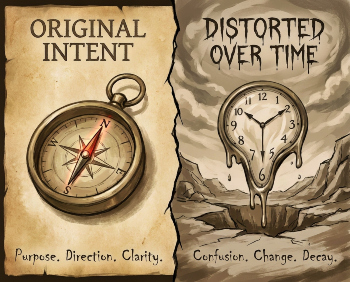
The Constitution was written to constrain government power. Yet over the past century, the document’s meaning has drifted significantly from its original text through deliberate choices about how to interpret the Constitution’s words. When constitutional law interpretation abandons the Founders’ intent, citizens lose the primary tool designed to protect their freedoms. Federal agencies expand their authority without constitutional basis. State governments capitulate to federal pressure.
This guide explains the major frameworks for constitutional law interpretation, exposes how globalist influence has corrupted legal reasoning, and provides actionable strategies for citizens and states to reclaim constitutional power.
Originalism vs. Living Constitution: Which Framework Protects Your Rights
Originalism holds that the Constitution’s meaning is fixed at the time of ratification. A living constitutionalist approach treats the Constitution as a document whose meaning evolves with contemporary values and circumstances. These frameworks produce opposite results.
Under originalism, the federal government possesses only powers explicitly granted in the text. Under living constitutionalism, courts can discover new rights and new federal powers that the Founders never mentioned. Originalism constrains judicial activism by providing a clear standard: show where the Founders intended this protection. Living constitutionalism enables judicial activism because judges can rationalize almost any outcome by invoking evolving standards or contemporary values.
Under originalist constitutional law interpretation, the Tenth Amendment actually means something: powers not delegated to the federal government are reserved to the states. Under living constitutionalism, the Tenth Amendment becomes mere decoration as courts assert that modern needs justify federal action.
Consider federal environmental regulation. The Clean Air Act claims authority under the Commerce Clause. Originalists argue the Founders intended “commerce” to mean trade between merchants, not the regulation of all economic activity. Living constitutionalists argue the clause must adapt to modern industrial complexity—the result: massive federal agencies controlling state environmental policy.
Understanding these frameworks is essential to restore U.S. sovereignty and ensure that constitutional limits actually constrain federal power.
State Sovereignty and Federal Precedent: Reclaiming Power from Washington
The Constitution creates a federal system where states retain sovereignty except where the Constitution explicitly grants power to the federal government. Yet federal courts have systematically eroded this principle through a doctrine called “federal precedent supremacy,” which treats 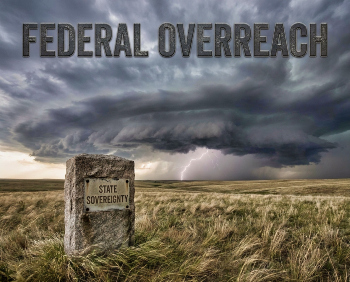 Supreme Court interpretations of the Constitution as binding on state courts interpreting state constitutions.
This doctrine is not required. State courts possess independent authority to interpret their own constitutions more protectively of individual rights than the federal Constitution requires through the “independent state ground” doctrine. Most state courts have abandoned this power, treating federal constitutional law as both a ceiling and a floor.
State constitutions are separate documents. A state court can hold that its state constitution protects a right more broadly than the federal Constitution. Many state constitutions explicitly protect property rights, religious liberty, and jury trial beyond federal guarantees.
This guide explains the major frameworks for constitutional law interpretation, exposes how globalist influence has corrupted legal reasoning, and provides actionable strategies for citizens and states to reclaim constitutional power, including passing laws that refuse to cooperate with unconstitutional federal mandates and asserting state sovereignty through independent interpretation.
The Tenth Amendment provides the constitutional basis: powers not delegated to the federal government are reserved to the states. This is a binding constitutional limit. State courts can enforce it. Citizens and state officials committed to Control Washington From Your State can leverage these constitutional tools to reassert state authority.
Federal agencies often exceed constitutional limits, but citizens and states can challenge this through litigation. Courts can enforce textual limits and uphold constitutional boundaries.
Federal agencies exercise vast power with minimal constitutional constraint. The Administrative Procedure Act provides procedural safeguards but does not limit substantive authority. Courts defer to agency interpretations of their own enabling statutes under the Chevron doctrine, inverting the constitutional structure in which legislative power vests in Congress, not administrative agencies.
The constitutional limits on federal agency power are clear in the text. Congress cannot delegate legislative authority to executive agencies. The Necessary and Proper Clause does not justify creating new agencies with independent rule-making power. The Commerce Clause does not extend to purely local activity.
Yet courts have abandoned these limits. In Wickard v. Filburn, the Supreme Court upheld federal regulation of wheat grown for personal consumption on the theory that it affects interstate commerce. In Gonzales v. Raich, the Court upheld federal prohibition of medical marijuana grown in-state for personal use. These decisions render the Commerce Clause limit meaningless.
Citizens and states can challenge federal agency power through litigation. The Administrative Procedure Act requires agencies to follow their own procedures and stay within their statutory authority. When agencies exceed their legal mandate, courts can set aside their rules. This requires litigants to develop a constitutional-law interpretation framework that enforces textual limits, requiring courts to examine whether the agency’s authority derives from a delegated federal power and whether the regulated activity genuinely affects interstate commerce.
Historical Gloss and the Founders’ Intent
Historical gloss refers to the longstanding practice of a constitutional provision. If a practice has been accepted for generations, some argue it becomes constitutional even if the original text does not support it. This doctrine is dangerous because it shifts constitutional interpretation from fidelity to the text to ratification of historical practice.
Yet courts invoke historical gloss to justify federal powers the Founders never granted. Federal assumption of state regulatory authority, federal control of interstate commerce, and federal power to regulate purely local activity are each defended as longstanding practice.
The Founders understood constitutional limits differently. They believed the federal government possessed only enumerated powers and expected states to retain authority over most matters affecting daily life. Understanding the Founders’ intent requires studying the constitutional text, the Federalist Papers, state ratifying conventions, and early constitutional practice.
Consider the Necessary and Proper Clause. The Founders understood this as allowing Congress to choose appropriate means for executing enumerated powers, not to create new powers. Yet courts have invoked it to justify federal authority over matters the Constitution does not mention.
Historical gloss should not override original meaning. If the Founders intended the Commerce Clause to regulate only trade between merchants, that intent matters more than centuries of federal expansion. Citizens committed to constitutional law interpretation must ground their arguments in original meaning, which provides the strongest foundation for challenging federal overreach.
Article V Convention of States: Your Tool for Constitutional Amendment
The Framers provided two paths for constitutional amendment. Congress can propose amendments, which requires a two-thirds supermajority in both chambers. Alternatively, two-thirds of state legislatures can call a convention to propose amendments.
 The second path has never been used, yet it remains available. If states believe Congress will not propose amendments to restore constitutional limits, they can call a convention of states to do so. A convention of states could propose amendments to limit federal authority, restore state sovereignty, or clarify constitutional language that courts have distorted. Such amendments would require ratification by three-fourths of states.
This is a path we should never take. Anyone, from anywhere, can and will buy and direct state legislatures, resulting in them destroying the Republic.
State legislatures can pass resolutions calling for a convention on specific subjects. When two-thirds of states have passed such resolutions, Congress must call the convention. Delegates from each state would meet to propose amendments.
This will inevitably result in a runaway convention. Nothing compels delegates to stay within their mandate. This also gives foreign or domestic bad actors another way to bribe delegates to vote against their constituents.
The process is not simple, requiring sustained effort to coordinate two-thirds of state legislatures and legal precision in drafting amendments. Yet the difficulty does not diminish the power. Many citizens view a convention of states as a tool to restore constitutional limits through amendments that clarify the Commerce Clause, limit federal taxation, or explicitly protect state sovereignty.
A convention of states was viable when enacted, but now offers nothing but destruction for the Republic.
Tenth Amendment Legal Strategies for State Resistance
The Tenth Amendment states: “The powers not delegated to the United States by the Constitution, nor prohibited by it to the States, are reserved to the States respectively, or to the people.” This amendment establishes a constitutional rule: the federal government possesses only delegated powers. All other powers belong to the states or the people.
The Supreme Court has never used the Tenth Amendment to invalidate a federal statute because it exceeded enumerated powers. State legislatures can change this through strategic litigation and legislation. States can pass laws refusing to cooperate with federal mandates that exceed constitutional authority. States can fund litigation challenging federal overreach.
One strategy is nullification, where a state passes a law declaring a federal statute unconstitutional and refusing to enforce it. Another is interposition, where a state asserts its sovereign authority to protect its citizens from federal overreach without explicitly declaring a federal law void. A third is litigation, where citizens and states challenge federal laws in court, arguing they exceed enumerated powers and violate the Tenth Amendment.
The Tenth Amendment is the primary tool for states to resist federal overreach. When states refuse cooperation, federal overreach becomes impractical because the federal government depends on state cooperation for enforcement. Citizens committed to constitutional law interpretation should understand how states can invoke it.
Judicial Philosophy and Restraint: Limiting Judicial Activism
Judicial restraint means judges interpret the Constitution according to its text and original meaning rather than imposing their personal policy preferences. Judicial activism means judges rewrite the Constitution to achieve outcomes they prefer.
Originalism is a form of judicial restraint that constrains judges by tying interpretation to the text and original meaning.
Foreign Law and Globalism: Why International Treaties Cannot Override the Constitution
Some judges and scholars argue the Constitution should be interpreted in light of international law and foreign legal traditions. This approach, called transnationalism or cosmopolitan constitutionalism, is profoundly dangerous to constitutional law interpretation.
Substantive Due Process Alternatives to Judicial Overreach
Substantive due process is a judicial doctrine that invalidates laws deemed to violate fundamental rights. It sounds protective, but it is a tool for judicial activism where judges invoke substantive due process to strike down laws they dislike, claiming they violate unenumerated rights.
State-Level Nullification and Interposition: Constitutional Remedies Against Usurpation
Nullification is a doctrine holding that states can refuse to enforce federal laws they deem unconstitutional. Interposition is a related doctrine holding that states can assert their sovereignty to protect citizens from federal overreach. These doctrines are controversial but constitutional.
Practical Litigation Playbook: How Citizens Challenge Unconstitutional Federal Action
Citizens can challenge federal overreach through litigation. The Administrative Procedure Act (5 U.S.C. § 706) provides grounds to challenge agency rules. Constitutional law provides grounds to challenge federal statutes.
Step 1: Identify the Constitutional Violation and Statutory Hook
Step 2: Establish Standing
Step 3: Exhaust Administrative Remedies (When Required)
Step 4: Choose the Right Court and File Suit
Step 5: Develop a Constitutional Law Interpretation Framework
Step 6: Build a Factual Record
Step 7: Brief and Argue
Step 8: Appeal and Seek Supreme Court Review
| Step | Duration | Key Action | Procedural Rule |
|---|---|---|---|
| Identify violation | Weeks | Determine which enumerated power is exceeded | 5 U.S.C. § 706 (APA); constitutional text |
| Establish standing | Weeks | Show concrete injury traceable to defendant | 42 U.S.C. § 702; Lujan v. Defenders of Wildlife |
| Exhaust remedies | Months | Request agency reconsideration and review | 5 U.S.C. § 553(e) |
| File suit | Days | Choose correct court and file complaint | 28 U.S.C. § 1331, § 1391(e) |
| Develop framework | Months | Research constitutional text and history | Originalism; Federalist Papers |
| Build record | Months | Gather evidence and expert testimony | Administrative record; discovery |
| Brief and argue | Months | Write persuasive brief and prepare oral argument | Federal Rules of Appellate Procedure |
| Appeal | Months-Years | Pursue appellate review if necessary | 28 U.S.C. § 1254 (certiorari) |
The Intersection of Globalism and Administrative Law
Federal agencies increasingly justify their authority by citing international agreements and foreign legal standards. This compounds the constitutional problem by creating a second layer of usurpation: the agency claims authority beyond its statutory mandate, then justifies that claim by invoking international obligations the American people never directly approved.
How Globalist Policy Flows Into Agency Rulemaking
The Constitutional Problem
How to Challenge Globalist-Driven Agency Expansion
Conclusion: Asserting Constitutional Rights Against Federal Overreach
The Constitution is a document of limits. It constrains federal power, protects state sovereignty, and reserves rights to the people. Yet federal courts have systematically eroded these limits through interpretive doctrines that abandon the text. Check in the Founders’ intent, originalism prevents federal agencies from claiming powers the Constitution never granted

Frequently Asked Questions
How does originalism check federal agency power?
Originalism interprets the Constitution by its text and original public meaning at ratification, not by modern reinterpretation. By anchoring judicial review in the Founders’ intent, originalism prevents federal agencies from claiming powers the Constitution never granted them. Courts applying originalist methodology reject expansive readings of the Commerce Clause, Necessary and Proper Clause, and executive authority that administrative agencies rely on to justify overreach. This approach directly limits federal agency power by requiring strict textual and historical justification.
What role do state legislatures play in resisting unconstitutional federal mandates?
State legislatures have sovereign authority under the Tenth Amendment to refuse to cooperate with federal mandates that exceed constitutional limits. They can pass nullification laws, refuse to enforce federal directives, and challenge federal action through litigation. State constitutions often provide independent protections beyond federal guarantees, allowing states to maintain higher standards of rights protection. Through interposition, state legislatures can assert that unconstitutional federal acts are void within their borders, creating legal barriers to federal overreach and forcing the federal government to justify its authority in court.
Can foreign law or international treaties override the United States Constitution?
No. Under Article VI, the Constitution is the supreme law of the land. Treaties and foreign law cannot supersede constitutional protections or grant the federal government powers the Constitution withholds. While treaties are binding international agreements, they remain subordinate to the Constitution. Courts have repeatedly rejected arguments that international human rights law, foreign precedent, or treaty obligations can override constitutional limits on federal authority. Any attempt to use globalist agreements or foreign legal frameworks to expand federal power beyond constitutional bounds violates the Constitution’s structural limits on sovereignty and federal jurisdiction.
How does Article V of the Constitution provide a mechanism for states to reclaim authority?
Article V allows states to call a Convention of States to propose constitutional amendments without federal approval. Two-thirds of state legislatures can petition Congress to convene a convention, and three-fourths of the states must ratify the amendments. This mechanism enables states to formally reclaim powers the federal government has usurped through judicial interpretation or legislative overreach. An Article V convention can propose amendments that restore constitutional limits on federal agency power, clarify the Tenth Amendment, or restrict federal spending. This path provides a constitutional remedy for federal overreach that bypasses federal approval entirely.
What are the legal limits on federal executive branch authority?
Federal executive authority is confined to powers explicitly granted in the Constitution and laws enacted within constitutional bounds. The President cannot create law, appropriate funds, or regulate matters reserved to the states or the people. The Tenth Amendment reserves all non-delegated powers to the states and people. Courts applying proper constitutional law interpretation reject executive orders that exceed statutory authority or invade legislative power. Administrative agencies derive authority only from statutes, and those statutes themselves must be constitutional. Executive overreach occurs when agencies claim powers Congress never granted or when executive action violates separation-of-powers principles.
How can citizens effectively challenge the usurpation of constitutional rights?
Citizens can challenge federal overreach through several avenues: filing lawsuits in federal or state court, joining state-led litigation strategies coordinated by state attorneys general, supporting Article V convention efforts, and engaging in the political process to elect representatives committed to constitutional limits. Understanding your Tenth Amendment legal strategies and state constitutional protections strengthens individual challenges. Citizens should document how federal action exceeds constitutional authority, gather evidence of harm, and work with legal counsel experienced in constitutional litigation. Joining organized movements like those supported by Texas Journal amplifies individual efforts into collective force for constitutional restoration.
Who can overturn an unconstitutional law?
Courts can declare laws unconstitutional through judicial review, but states can also refuse to enforce unconstitutional federal mandates. State legislatures can pass laws rejecting unconstitutional federal directives, and state courts can rule that federal law violates the Constitution. Citizens can challenge unconstitutional laws through litigation. The Supreme Court has final authority over federal constitutional questions, but state courts can provide independent protection under state constitutions. Ultimately, constitutional law interpretation requires courts to enforce constitutional limits. Still, states and citizens share responsibility for resisting usurpation through legal channels available under the Tenth Amendment and state sovereignty doctrine.
Can the government violate constitutional rights?
Yes, government actors violate constitutional rights when they exceed their constitutional authority or infringe protected liberties. However, constitutional law interpretation provides remedies: citizens can sue for damages or injunctions, seek relief in court, and challenge violations through the judicial system. The Constitution binds government action, and violations create legal liability. When courts apply originalist judicial philosophy and textualism properly, they enforce these limits. The problem arises when courts abandon constitutional law interpretation and allow federal overreach through living constitutionalism or deference to executive and administrative authority. Citizens must understand their rights and be prepared to litigate violations.
check check

