


Table of Contents
- What Local America First Groups Actually Do
- Direct Power Over Local Policy and Governance
- How to Verify Local School Board Budget Transparency for Parents
- Strategies for Challenging Local Government Overreach
- Constitutional Education Resources for Citizens
- Building a Force Multiplier for Constitutional Defense
- Avoiding Echo Chambers and Staying Grounded in Reality
- The Activist Spectrum: Participation Without Pressure
- Your Next Step: Getting Started
- Frequently Asked Questions
Last Updated: October 1, 2026
What Local America First Groups Actually Do
Local America First groups are grassroots organizations focused on restoring constitutional governance and defending founding principles at the community level through independent action.
 What distinguishes these organizations is their emphasis on LOCAL action. Members work on school board transparency, challenge municipal ordinances, attend city council meetings, and organize neighbors around issues affecting their immediate communities.
The core function is simple: mobilize citizens to participate in local governance by attending public meetings, requesting budget documents, questioning policy decisions, and using public records requests to verify government actions.
Direct Power Over Local Policy and Governance
Local America First groups deliver tangible influence through school boards, city councils, and county commissioners, bodies far more responsive to organized citizen pressure than federal agencies.
When fifty organized citizens attend a school board meeting with documented concerns, the dynamic shifts entirely. Boards that operate with minimal oversight suddenly face scrutiny.
Public records requests reveal what government is actually doing. When citizens organize around budget documents and meeting minutes, they can challenge specific spending or demand transparency before votes occur.
A coordinated group of constituents asking tough questions carries weight that distant advocacy organizations cannot. This is direct democratic power the Founders intended.
How to Verify Local School Board Budget Transparency for Parents
Budget transparency underpins accountability. Here’s how to verify what your district is actually doing with tax dollars.
Start with your district’s official website. Request the complete budget document, not the summary version, directly from your superintendent’s office or school board clerk.
Look for specific line items: administrative salaries, consultant contracts, and curriculum materials. Compare year-over-year spending and ask why significant increases occurred.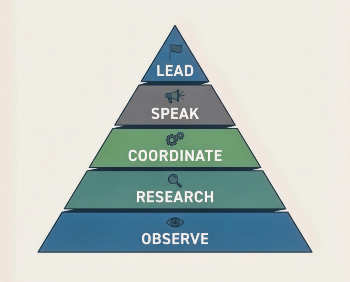
Public records requests are your legal right. Request detailed expenditure reports, consultant contracts, and grant spending. Districts that resist transparency are hiding something.
Attend school board meetings with prepared questions and budget documents. Record the meeting where allowed. When board members know citizens are watching, behavior changes.
| Step | Action | Expected Outcome |
|---|---|---|
| 1 | Find budget on district website | Complete annual budget document |
| 2 | Request detailed expenditure reports | Line-item spending by category |
| 3 | Review year-over-year changes | Identify significant spending shifts |
| 4 | Attend board meeting with questions | Documented answers on record |
| 5 | File public records requests | Additional financial documentation |
Strategies for Challenging Local Government Overreach
Government overreach starts small until citizens lose freedoms they didn’t know they were losing. Local America First groups identify overreach and organize resistance before it becomes entrenched.
The first strategy is documentation. Read the actual ordinance, regulation, or policy and understand what authority the government claims. Many challenges fail because citizens oppose something based on misunderstanding rather than the actual text.
 Build a coalition. One person objecting to a policy is easy to dismiss; twenty citizens with documented concerns are harder to ignore. Use email lists, community meetings, or social media to coordinate.
Submit formal written comments to the city council, planning commission, or school board before the meeting. Written objections become part of the official record; verbal complaints are forgotten.
Understand constitutional limits on government power. When challenging overreach, cite the constitutional authority (or lack thereof) for the government action. This shifts the debate from “I don’t like this” to “This violates our founding law.”
Request legal review from organizations specializing in constitutional law. Many provide free guidance before you invest time in a major challenge.
Constitutional Education Resources for Citizens
Understanding the Constitution is the foundation of defending it. Most Americans have never read the document they claim to defend. The barrier isn’t complexity; it’s knowing where to start.
Start with the actual text. Read the Constitution itself, roughly 4,400 words, taking about an hour. The National Archives provides the full text free at archives.gov/founding-docs/constitution-transcript (The Constitution of the United States: A Transcription). Highlight sections relevant to local governance (Articles I and X are most relevant).
Create a working document as you read. Use a spreadsheet with three columns: (1) Constitutional provision, (2) Plain language meaning, (3) Application to your local government. When your city council passes an ordinance, ask: Does the Constitution grant the federal government power over this? If not, the local government’s authority is questionable.
Study the Federalist Papers strategically. Read Federalist No. 10 (factions and representation), No. 39 (nature of the federal union), and No. 45 (federal powers). These explain why the Founders limited federal power and reserved most governance to states and localities. The Library of Congress provides free access at loc.gov/collections/federalist-papers-and-other-founding-documents.
Learn your state constitution next. State constitutions often provide stronger protections than the federal Constitution. Read sections on education, local government, and the bill of rights. Compare your state’s protections to the federal Constitution; these gaps are your leverage points in local advocacy.
Use free online courses for structured learning. Hillsdale College offers “Constitution 101” (10-12 hours, free) (Constitution 101: The Meaning and History of the Constitution). Prager University offers shorter videos (5-10 minutes each) on specific constitutional topics, free on their website.
Join a local constitutional study group. Search your county or city name plus “constitutional study group” or “civic education group.” If none exists, start one: invite neighbors to read one Federalist Paper per month and discuss it over coffee.
Track how constitutional principles apply to current local issues. When your school board debates curriculum, ask: What does the Constitution say about education? When your city council discusses zoning, ask: What constitutional authority does local government have? This applied learning is more memorable than abstract study.
Building a Force Multiplier for Constitutional Defense
Individual citizens have limited power. Organized citizens have exponential power through force multiplication: coordinated action amplifies individual effort.
Local America First groups function as force multipliers. One person researching school board spending discovers information; ten people uncover patterns; fifty people change policy.
The structure is simple but powerful. Members share information, coordinate efforts, and use collective knowledge. Together, they accomplish what individuals could not separately.
Technology amplifies this further. Shared documents, email lists, and messaging platforms enable coordination. Members contribute according to their capacity: some attend meetings, others research, still others handle communications.
The force multiplier principle explains why local groups succeed where isolated individuals fail. Government responds to organized pressure and elected officials take coordinated constituency concerns seriously.
Avoiding Echo Chambers and Staying Grounded in Reality
The greatest risk in any activist community is becoming an echo chamber where members reinforce each other’s assumptions without an external reality check. This leads to strategic errors, embarrassing public failures, and loss of credibility.
Seek out opposing viewpoints deliberately. If you’re challenging a school board policy, understand the board’s actual reasoning, not your assumption about it. Read their statements. Attend their meetings. Listen to their defense of the policy. You might still disagree, but you’ll understand the actual argument rather than a caricature.
Verify your facts before acting. Rumors spread in activist communities. A story gets repeated until members believe it as fact. Before organizing a campaign around something, confirm it independently. Check primary sources. Ask for documentation. Verify dates, amounts, and attributions.
Separate emotion from analysis. Righteous anger is motivating, but it clouds judgment. When you’re angry about something, wait 24 hours before taking action. Review your facts when calm. Ask trusted advisors if your response is proportionate. Many activist campaigns fail because they’re based on emotional reaction rather than careful analysis.
Accept that some battles aren’t winnable. Not every government action can be successfully challenged. Some policies have legal authority, even if you dislike them. Broader forces beyond local control drive some changes. Knowing which battles to fight and which to accept prevents wasted effort and preserves credibility for battles you can win.
Distinguish between what you know and what you believe. You might believe the federal government is overreaching. That belief might be correct. But beliefs aren’t facts. Base your advocacy on documented facts: specific policies, specific spending, specific actions. When you ground advocacy in facts rather than ideology, you persuade people who don’t share your ideology.
The Activist Spectrum: Participation Without Pressure
Not everyone is suited for confrontational activism. Some citizens want to understand local governance and participate in decisions without becoming activists. Local America First groups should accommodate this spectrum.
At the minimal end, citizens attend public meetings and listen. They learn how government actually works. They ask questions when they don’t understand. This is legitimate participation that requires no confrontation.
The next level involves research and documentation. Citizens study specific issues, compile information, and share findings with others. This role doesn’t require public speaking or confrontation, just careful work and clear communication.
Some citizens organize information and coordinate others. They maintain email lists, schedule meetings, and ensure people are informed. This is crucial work that happens behind the scenes.
Others specialize in public presentation. They attend meetings, speak during public comment periods, and represent the group publicly. This role suits people comfortable with visibility and public speaking.
The most intensive role is strategic leadership: identifying priorities, developing strategy, and coordinating campaigns. This requires significant time and commitment.
A healthy local group accommodates all these roles. Not everyone needs to be a confrontational activist. Some contribute through research, others through organization, others through public presence. The force multiplier works because people contribute according to their capacity and comfort level.
Your Next Step: Getting Started
Moving from interested citizen to active participant requires a clear path. Most people want to engage but don’t know the first concrete step. This section removes that friction.
Step 1: Verify you’re ready to participate. Before searching for a group, confirm you have the baseline knowledge and capacity to contribute meaningfully. Ask yourself: (1) Have I read my local government’s basic structure? (City charter, county ordinances, and school board bylaws are all public documents; spend 30 minutes reviewing yours.) (2) Do I understand what decisions affect me most? (School board decisions if you have children; city council decisions if you own property; county commission decisions on taxes and services.) (3) Can I commit to at least one meeting per month for the next three months? Sporadic participation doesn’t build momentum. Consistent presence, even if minimal, does. If you answered yes to all three, you’re ready.
 Step 2: Find existing groups in your area. Search online for “[your county name] constitutional group,” “[your city name] civic engagement,” or “[your county name] America First.” Check Facebook groups, Nextdoor, and local community bulletin boards. Call your county clerk’s office; they often know which citizen groups are active and meeting regularly. Attend one meeting as an observer. You’re not committing to anything; you’re gathering information. Listen to what members are working on. Determine if their priorities align with yours. Ask the organizer: What’s the current focus? How often do you meet? What kind of participation do you need most right now (attendance, research, public speaking, behind-the-scenes coordination)?
Step 3: Understand the participation spectrum. Not everyone needs to be a confrontational activist. Before joining, know which role fits you. At the minimal end, citizens attend public meetings and listen. They learn how government actually works. They ask questions when they don’t understand. This is legitimate participation that requires no confrontation. The next level involves research and documentation, studying specific issues, compiling information, and sharing findings. Some citizens organize information and coordinate others, maintain email lists, and ensure people are informed. Others specialize in public presentation, attending meetings and speaking during public comment periods. The most intensive role is strategic leadership. A healthy local group accommodates all these roles. Identify which one matches your capacity and comfort level before committing.
Step 4: If no group exists, start one with a narrow focus. Beginning with a specific, winnable issue is more effective than starting with a broad mission. Instead of “defend the Constitution,” focus on “school board budget transparency” or “municipal spending accountability.” A narrow focus attracts people with a concrete shared concern. Broad missions attract ideological agreement but not action. Begin by inviting three to five neighbors to an initial meeting. Define the specific issue you’re addressing. Agree on one concrete first action: attend the next school board meeting together, file a public records request, or research a specific budget line item. Keep the initial group small and focused. Growth comes naturally when people see results.
Step 5: Establish a simple communication structure. You don’t need sophisticated tools. An email list (free through Google Groups or your email provider) is sufficient. Create a shared document (Google Docs, free) where members can add questions, findings, and upcoming meeting dates. Assign one person to send a monthly email summarizing the group’s focus and upcoming meetings. This simple structure keeps people informed and coordinated without requiring technical expertise.
Step 6: Attend your first public meeting prepared. Before attending a school board, city council, or county commission meeting, do three things: (1) Request the agenda in advance (most government bodies post agendas 3-5 days before meetings on their websites). (2) Read the agenda and identify which items affect your focus area. (3) Bring a notebook and write down what you observe: Who spoke? What did they say? How did officials respond? What questions went unanswered? This preparation transforms passive attendance into active learning. You’ll understand how the meeting actually works and what questions matter.
 Step 7: Make your first public comment. Most government bodies allow public comment, usually 2-3 minutes per person. Your first comment doesn’t need to be confrontational. A simple statement works: “I’m [name], a resident of [neighborhood/district]. I’m here because [specific issue] matters to me and my family. I’d like to understand how the board is addressing [specific question].” Write this down beforehand. Read it if necessary. The goal is to be on the record as a constituent paying attention. This single action signals to officials that citizens are watching.
Step 8: Connect with resources to strengthen your foundation. Access Protect Our Traditions and Defend the American Family through Texas Journal to deepen your understanding of constitutional principles and civic engagement before engaging with local governance.
The progression from observer to participant is shorter than most people realize. One person attending a school board meeting leads to conversations with others who share concerns. Those conversations lead to coordinated action. Coordinated action leads to results. This is how local power actually works. You don’t need to be an expert or a full-time activist. You need to show up, ask questions, and connect with others who share your concerns. That foundation is sufficient to begin.

Frequently Asked Questions
How do local America First groups differ from national advocacy organizations?
Local America First groups operate at the grassroots level, focusing on immediate community challenges and state-level policy. National organizations provide broader frameworks and resources, but local groups translate constitutional principles into action on school boards, zoning commissions, and county budgets. The difference is proximity to power: local groups can attend meetings, testify, and mobilize neighbors directly, while national groups influence policy from a distance. Both serve a purpose, but local groups create a force-multiplier effect by applying pressure where elected officials actually live.
What’s included in membership, and is it worth joining if I’m not a full-time activist?
Membership typically provides access to constitutional education resources, community networks, local event information, and guidance on asserting your rights through proper channels. You don’t need to be a full-time activist to benefit. Many members attend occasional meetings, review local budgets, or simply stay informed on community issues. The value depends on your goals: if you want to understand your constitutional rights and monitor local government, membership pays off. If you’re looking for occasional insights without commitment, the educational resources and networking alone justify participation.
How can I verify that constitutional interpretations are accurate and not just one political perspective?
Legitimate local America First groups ground their constitutional analysis in primary sources: the text of the Constitution, the Federalist Papers, and Supreme Court rulings. Ask groups to cite specific constitutional clauses and court precedents when making legal claims. Cross-reference their interpretations with established constitutional law resources and multiple sources. Reputable groups welcome scrutiny and distinguish between constitutional fact and policy opinion. If a group makes constitutional claims without citing sources or dismisses opposing interpretations outright, that’s a red flag.
What concrete examples exist of local groups successfully using constitutional strategies to change policy?
Local groups have successfully challenged curriculum decisions by mobilizing parents at school board meetings and requesting budget transparency under public records laws. Others have organized to oppose zoning overreach by citing property rights protections in state constitutions. Some have successfully pressured county commissioners to restore local control over specific regulations. The pattern is consistent: organized citizens armed with constitutional knowledge and procedural understanding can delay, modify, or block local government actions that exceed constitutional authority. Success requires sustained participation, not one-time activism.
you want

