


Table of Contents
- Understanding States’ Rights: The Framework That Decides Every Policy Fight
- What States’ Rights Mean in Simple Terms
- The Tenth Amendment and the Foundation of States’ Rights
- State vs. Federal Power: Who Decides What
- State Constitutions: Rights That Go Further Than the Federal Baseline
- Federal Preemption of State Law: When Washington Overrides Your State
- Constitutional Limits on Federal Agency Power
- Elections, Voting Rights, and State Election Administration
- Governors and State Lawmakers: The Front Line of Federalism
- How the Supreme Court and Federal Courts Resolve State-Federal Disputes
- State Responses to Federal Policy: From Sanctuary Laws to Legal Challenges
- Benefits, Risks, and Trade-Offs in the States’ Rights Debate
- How to Assert Your Rights and Influence State Policy in 2026
- Frequently Asked Questions
Last Updated: October 6, 2026
Understanding States’ Rights: The Framework That Decides Every Policy Fight
 The phrase states rights gets thrown around constantly in American politics, and it’s almost always misunderstood. At its core, understanding states’ rights in 2026 means grasping a simple constitutional reality: the federal government is one of limited, enumerated powers, and everything else belongs to the states or the people.
The stakes have rarely been higher. Debates over elections, public health mandates, education, energy, and immigration all come down to the same question: who has the authority? The answer is rarely simple, but it is knowable.
Below, we’ll walk through the Tenth Amendment, federal preemption, the role of governors and state legislatures, and how the Supreme Court resolves the disputes that inevitably arise. We’ll also cover the practical side: what you can actually do when Washington overreaches.
What States’ Rights Mean in Simple Terms
States’ rights refers to the constitutional principle that state governments retain authority over all matters not specifically delegated to the federal government. This principle flows from the Tenth Amendment, which states that powers not granted to the federal government “are reserved to the States respectively, or to the people.”
That definition matters because it flips the usual assumption. The federal government has no general authority to govern; it has only the powers the Constitution gives it. Everything else defaults to the states.
A common mistake is treating states’ rights as a partisan label. In practice, both parties invoke the principle depending on the issue. When a state legalizes something Washington restricts, or refuses to enforce a federal mandate, that is states’ rights in action.
The concept also includes state jurisdiction, meaning the geographic and legal boundaries within which a state’s laws apply. A state cannot regulate conduct in another state, but within its borders, its authority is broad.
The Tenth Amendment anchors the entire states’ rights framework. To defend this principle, you can contact your state and federal representatives, support state-level legislation, or participate in local advocacy efforts that emphasize state sovereignty and constitutional 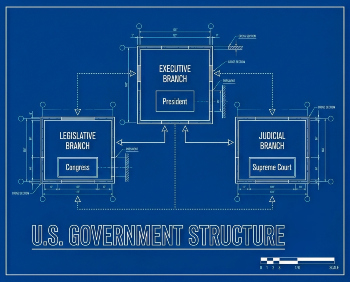 rights.
The Tenth Amendment anchors the entire states’ rights framework. Ratified in 1791, it was designed to reassure states that the new federal government would not swallow their authority.
James Madison, writing in Federalist No. 45, argued that the powers delegated to the federal government are “few and defined,” while those remaining with the states are “numerous and indefinite.” That framing has guided constitutional interpretation for more than two centuries.
The amendment does not list specific state powers, and that was deliberate. The founders understood that enumerating state authority would be impossible and self-defeating. Instead, they created a default rule: if the Constitution does not grant a power to the federal government, that power does not exist at the federal level.
In practice, this means state constitutions and state laws carry enormous weight. They govern most of what citizens experience daily, from property rules to criminal procedure to education standards.
State vs. Federal Power: Who Decides What
The division of powers between state and federal governments is not a tidy list. It is a set of overlapping authorities, and the boundaries shift through legislation and court rulings.
Broadly, the federal government handles national defense, foreign policy, interstate commerce, currency, and certain civil rights protections. States handle most criminal law, family law, property, education, and local governance.
| Policy Area | Primary Authority | Notes |
|---|---|---|
| Criminal law | State | Federal crimes are limited and specific |
| Elections | State | Congress sets some federal rules |
| Education | State and local | Federal funding comes with conditions |
| Public health | State | Federal agencies issue guidance |
| Interstate commerce | Federal | Broadly interpreted since the 1930s |
| Land use | State and local | Federal land is an exception |
The tricky part is that federal authority often expands through funding conditions. When Washington offers money for roads or schools, it can attach requirements. States can refuse the money, but few do.
That dynamic is where most modern federalism fights begin.
 State Constitutions: Rights That Go Further Than the Federal Baseline
State constitutions are the most underused tool in the states’ rights toolkit, and they are also the most concrete. Every state has its own constitution, most of them longer than the federal document, and many protect rights more expansively than the federal Bill of Rights does.
The federal Constitution sets a floor, not a ceiling. A state cannot offer less protection than the federal Bill of Rights, but it can offer more. That principle, sometimes called the independent state ground doctrine, means a state supreme court can strike down a state law under its own constitution even when the U.S. Constitution does not.
Concrete examples make the point:
- Search and seizure. Several state constitutions, including those of Alaska, Hawaii, and Montana, have been read to provide broader protection against warrantless searches than the Fourth Amendment requires.
- Free expression. Some state constitutions protect expressive activity on private property, such as shopping centers, in ways the First Amendment does not.
- Education. Nearly every state constitution contains an education clause, and state courts have used those clauses to order changes to school funding systems. The long-running Rose litigation in Kentucky and the Abbott cases in New Jersey are the best-known examples.
- Environmental rights. A handful of state constitutions, including those of Pennsylvania, Montana, and New York, include explicit environmental provisions that have been invoked in climate and land-use litigation.
- Privacy. State constitutions in California, Florida, and a few other states contain explicit privacy guarantees with no direct federal counterpart.
This matters for litigation strategy. When a federal court narrows a right, advocates often pivot to state courts, arguing that their state constitution provides independent protection.
State courts, not federal courts, are the final word on what a state constitution means. That gives state supreme court elections and appointments enormous significance, something most voters overlook.
The trade-off is unevenness. A right that is protected in one state may not be protected in a neighboring one, and the same conduct can be lawful on one side of a border and unlawful on the other. That is the price of a system that treats states as laboratories. Whether the price is worth paying is a question each generation answers for itself, but the mechanism itself is not in doubt.
Federal Preemption of State Law: When Washington Overrides Your State
Federal preemption is the legal doctrine that allows federal law to override conflicting state law.
Express preemption occurs when a federal statute explicitly states that it displaces state law. The text controls, and the fight is usually about how broadly the preemption clause reaches.
Field preemption happens when federal regulation is so comprehensive that it leaves no room for states to act, even without an explicit preemption clause. Immigration is the canonical example: the Supreme Court in *Arizona v.
Conflict preemption applies when a state law makes it impossible to comply with both federal and state requirements, or when the state law stands as an obstacle to the purposes of federal law.
A fourth, less-discussed category is preemption by condition. Congress can attach strings to federal funding, highway money, Medicaid dollars, education grants, and states that accept the money must follow the conditions.
 Two structural limits on preemption are worth knowing:
- The presumption against preemption. In areas of traditional state police power, health, safety, family law, land use, courts start from the assumption that Congress did not intend to displace state law unless it said so clearly.
- The clear statement rule. When Congress wants to alter the federal-state balance in a sensitive area, it must say so plainly. Courts will not infer that intent from silence.
For citizens, the practical implication is this: a state law you support can be struck down even if your state legislature passed it overwhelmingly.
A useful habit is to read any federal statute that touches your state’s policy area and look for the words “no state shall,” “any state law to the contrary is preempted,” or “this section shall supersede.” Those phrases are the tell. Where they are absent, the preemption argument is usually a field or conflict argument, and those turn on legislative history, agency statements, and the scope of the federal scheme, all of which are contestable.
Constitutional Limits on Federal Agency Power
One of the most significant developments in recent constitutional law concerns the limits on federal agency power. Agencies like the EPA, OSHA, and others issue rules that carry the force of law, but their authority comes from statutes, not the Constitution directly.
The nondelegation doctrine holds that Congress cannot hand off its legislative power to an agency without an intelligible principle to guide it. Courts have applied this doctrine sparingly, but recent cases have revived interest in enforcing it more strictly.
A related issue is Chevron deference, the doctrine that courts should defer to an agency’s interpretation of ambiguous statutes—the Supreme Court’s 2024 decision in Loper Bright Enterprises v.
That shift has real consequences. Federal agencies can no longer rely on ambiguous statutory language to expand their authority. States challenging federal rules now face a more favorable legal landscape.
According to the Supreme Court’s opinion in Loper Bright Enterprises v. Raimondo, courts must exercise independent judgment in determining the meaning of statutory provisions. That language reshapes how courts evaluate every federal regulation.
 Elections, Voting Rights, and State Election Administration
States administer elections, and that structure is one of the clearest examples of federalism in action. The Constitution gives states primary authority over election administration, including voter registration, polling locations, and ballot procedures.
Congress can regulate certain aspects of federal elections under the Elections Clause, but its authority is not unlimited. The Supreme Court has addressed the boundaries of that power in cases involving redistricting and federal election rules.
Voting rights occupy a contested space. The Fifteenth, Nineteenth, and Twenty-Sixth Amendments prohibit discrimination in voting, and federal statutes like the Voting Rights Act enforce those guarantees. States set eligibility rules, but those rules must comply with federal constitutional requirements.
Recent debates over proof-of-citizenship requirements, voter ID laws, and mail-in voting procedures all sit at this intersection. States argue they are protecting election integrity; critics argue some rules burden eligible voters. Courts resolve these disputes case by case.
Understanding election administration is essential because it is where states’ rights and individual voting rights most directly collide.
Governors and State Lawmakers: The Front Line of Federalism
Governors and state legislatures are the practical defenders of state authority. When the federal government overreaches, governors usually file suit, and state lawmakers pass laws pushing back.
A governor’s tools include executive orders, lawsuits against federal agencies, and coordination with other states. Attorneys general often lead these challenges, arguing that federal rules exceed statutory or constitutional authority.
State legislatures shape the legal landscape through statutes that define state policy in areas like education, energy, and health care. They also control the state’s budget, which determines how aggressively the state can litigate or resist federal mandates.
The most effective state-level resistance is often coordinated. When multiple states pass similar laws or join the same lawsuit, the legal and political pressure on Washington increases, that is intergovernmental relations in action.
For citizens, this means your governor and state representatives are not minor figures. They are the officials most likely to shape how federal policy affects your daily life.
How the Supreme Court and Federal Courts Resolve State-Federal Disputes
The Supreme Court is the final arbiter of disputes between states and the federal government. Its rulings define the boundaries of state authority and federal power, and those boundaries shift with each new decision.
Federal courts hear cases involving constitutional questions, preemption, and challenges to federal agency action. State courts handle cases arising under state law, including state constitutional claims.
A typical dispute moves from a federal district court to a circuit court of appeals and then, if the Supreme Court grants review, to the highest court. That process can take years, and the outcome often depends on how the Court interprets the scope of federal power.
Recent terms have seen the Court take a more skeptical view of expansive federal authority. Rulings on agency deference, the major questions doctrine, and state sovereign immunity have all narrowed federal reach in specific areas.
The result is a legal environment where states have more room to assert their authority, but also more responsibility to defend it in court.
 State Responses to Federal Policy: From Sanctuary Laws to Legal Challenges
States respond to federal policy in several ways, ranging from cooperation to outright resistance. The approach a state takes depends on its political leadership and the specific policy at issue.
Sanctuary laws are one example. Some states and localities limit cooperation with federal immigration enforcement, arguing they protect residents and conserve resources. The federal government has challenged these policies, and courts have issued mixed rulings.
Legal challenges are another tool. States frequently sue federal agencies over rules they believe exceed statutory authority. These lawsuits can delay or block federal rules nationwide, making state attorneys general significant national players.
Legislative responses include passing state laws that conflict with federal policy, then defending them in court. Some states also form compacts with other states to coordinate policy in areas like energy or professional licensing.
The pattern is clear: states are not passive recipients of federal policy. They are active participants in shaping what actually gets enforced.
Benefits, Risks, and Trade-Offs in the States’ Rights Debate
The states’ rights framework has real advantages, and honest analysis requires acknowledging its trade-offs.
On the benefit side, states’ rights allows policy experimentation. A state can try a new approach, and other states can learn from the results. It also keeps decision-making closer to the people affected, which improves accountability.
The risks are equally real. A patchwork of state laws can confuse businesses and individuals who move across state lines. And when states use their authority to restrict rights, the federal government’s ability to intervene is limited.
Consistency is another issue. Rights protected in one state may not be protected in another, raising difficult questions about what it means to have constitutional rights as a national citizen.
The honest answer is that federalism is a system of trade-offs, not a solution to every problem. The goal is not to maximize state power or federal power, but to maintain a balance that protects liberty and preserves the rule of law.
How to Assert Your Rights and Influence State Policy in 2026
Citizens who want to defend their rights and shape state policy have more tools than they realize. The key is to act at the state level, where individual influence is greatest.
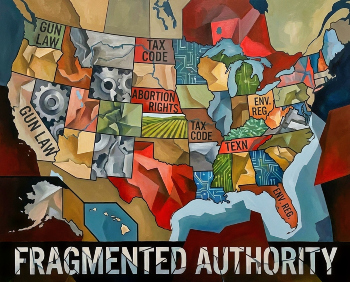 Here is a practical path forward:
- Know your state constitution. Read it. Many state constitutions protect rights more broadly than the federal document, and those protections are enforceable in state court.
- Track your state legislature. Bills move quickly, and public comment periods are short. Sign up for alerts from your state legislature’s website.
- Contact your governor and attorney general. These officials decide whether your state challenges federal overreach. They need to hear from constituents.
- Attend local meetings. School boards, city councils, and county commissions make decisions that affect your daily life more than most federal policy.
- Support litigation. State-level legal challenges are expensive. Organizations that fund them need resources.
- Vote in state elections. State supreme court races and attorney general elections have enormous consequences that most voters ignore.
Texas Journal exists to help citizens do exactly this. Our platform provides constitutional education and practical guidance on how to assert your rights, and our Patriot Pool is designed as a force multiplier for the movement. If you want to understand the framework and act on it, the National Conference of State Legislatures offers a useful starting point for tracking state-level activity.
The states’ rights framework is only as strong as the citizens who understand and use it. Washington will keep testing the boundaries of its authority, and the states that push back most effectively have informed, engaged residents. At Texas Journal, we give you the constitutional grounding and the practical tools to be one of those citizens.

Frequently Asked Questions
What are states’ rights in simple terms?
States’ rights are powers state governments keep for themselves because the Constitution never gave them to the federal government. The Tenth Amendment spells this out: any power not delegated to Washington and not forbidden to the states stays with the states or the people. That covers most of what you deal with daily, from schools and zoning to criminal law and professional licensing.
What does the Tenth Amendment say about states’ rights?
The Tenth Amendment reads: ‘The powers not delegated to the United States by the Constitution, nor prohibited by it to the States, are reserved to the States respectively, or to the people.’ Courts treat it as a structural rule, not a standalone grant of authority. It confirms that the federal government has only the powers listed in the Constitution, and everything else belongs to the states unless the people say otherwise.
When can federal law override state law?
Federal law overrides state law when the Constitution gives Congress authority over the subject, when a valid federal statute directly conflicts with a state law, or when federal regulation occupies the entire field. This is called federal preemption of state law. States can still enforce their own laws in areas where Congress has not acted, and courts often require a clear statement from Congress before finding that a state law is displaced.
How does the Constitution divide power between the federal government and the states?
The Constitution lists specific federal powers in Article I, Section 8, including coining money, regulating interstate commerce, and declaring war. The Tenth Amendment reserves everything else to the states. Some powers overlap, like taxation and law enforcement. When conflicts arise, courts apply doctrines such as preemption and the anti-commandeering rule to decide which level of government controls.
What limits does the Constitution place on federal agency power?
Federal agencies can exercise only the authority Congress has given them by statute. Courts apply the major questions doctrine to strike down agency actions on issues of vast economic or political significance unless Congress clearly authorized them. The nondelegation doctrine also limits how much legislative power Congress can hand off. These constitutional limits on federal agency power have become a central battleground in recent Supreme Court terms.
How are states’ rights issues changing in 2026?
In 2026, states are testing the boundaries of federal authority on immigration enforcement, environmental regulation, election administration, and education. Several federal court rulings have expanded state standing to challenge federal rules, while Congress continues to debate preemption in areas like data privacy and energy. The practical result is that more policy decisions are moving to state capitals, and citizens have more leverage at the state level than at any time in decades.

