Last Updated: November 23, 2026
Quick Summary
Teaching constitutional literacy to adults works best through short, practical lessons grounded in the text of the Constitution, covering the three branches, the Bill of Rights, and how a bill becomes law. Adults learn most when they see how these ideas affect their own rights and daily civic life.
- A 2026 survey found 35% of U.S. adults cannot name the three branches of government.
- Only 9% of adults could name all five First Amendment freedoms, according to the same survey.
- A six-session core sequence, run weekly for 60 to 90 minutes, provides a workable structure for adult learners.
- Pair every primary constitutional text with a plain-language summary at about an 8th-grade reading level.
- Use a pre-test and post-test with the same ten questions to measure growth without grading learners harshly.
Table of Contents
- How Do You Teach Constitutional Literacy to Adults?
- Why Adult Constitutional Knowledge Is So Thin
- Setting Learning Objectives for an Adult Civics Program
- Building a Step-by-Step Teaching Plan for Adult Learners
- Choosing a Constitutional Literacy Workbook and Worksheet
- Fun Activities for Teaching the Constitution
- Free Online Civics Courses for Adults
- Facilitating Discussions on Politically Sensitive Constitutional Questions
- Where to Start Your Constitutional Literacy Program This Week
- Frequently Asked Questions
Teaching constitutional literacy to adults starts with a simple fact: many grown adults cannot name the three branches of government. The Florida Southern College Justice Teaching Center found that 2026 survey on adult civic learning, which found 35% of U.S. adults cannot name the three branches of government. The same survey found that only 9% of adults could name all five First Amendment freedoms. At Texas Journal, we believe adults can close that gap with short, practical lessons they can actually use.
This guide explains how to plan, run, and sustain a constitutional literacy program for adults. It covers learning goals, a step-by-step lesson plan, workbooks, activities, free courses, and how to lead tough discussions. We also list a few places to start this week.
 How Do You Teach Constitutional Literacy to Adults?
Teaching constitutional literacy to adults means helping them understand the text, structure, and history of the U.S. Constitution, then applying that knowledge to daily civic life. The best approach uses short lessons, real documents, and plenty of discussion. Adults learn best when they see how the Constitution affects their own rights and responsibilities.
Start with the basics: the three branches, the Bill of Rights, and how a bill becomes law. Then move to the questions adults actually ask about their freedoms. Learners who want to see how these ideas connect to everyday questions can also explore Protect Our Traditions, which frames constitutional principles around family and community life.
Why Adult Constitutional Knowledge Is So Thin
Most adults learned civics in a rushed high school class, if at all. The gap shows up in national data. Congressional findings on adult literacy, which report that 28% of U.S. adults perform at Level 1 or below. Reading problems make it harder to work through dense constitutional text.
Schools also struggle. U.S. Department of Education press release on civic literacy reports that only 22% of eighth graders reached proficiency in civics. Adults who missed these lessons need a second chance, and they need materials written for grown readers.
Setting Learning Objectives for an Adult Civics Program
Clear goals keep a program focused. Before you choose any materials, write down what learners should be able to do by the end.
Good objectives are specific and measurable:
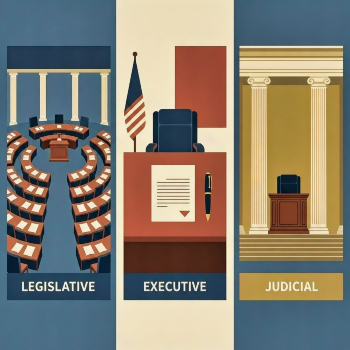
- Name the three branches of government and their main roles
- Explain what the Bill of Rights protects
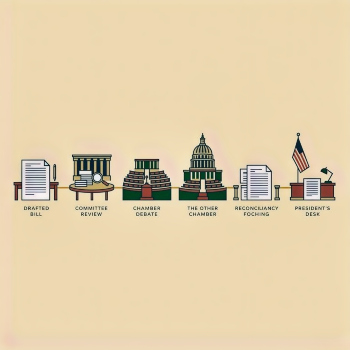
- Describe how a bill becomes federal law
- Identify a constitutional right in a real news story
- Discuss a constitutional question with people who disagree
Write one or two objectives per session. Check them at the end with a short quiz or a group discussion.
The article’s objectives are measurable and tied to specific tasks, summarized as follows.
| Objective | Action verb | What learners do |
|---|---|---|
| Branches of government | Name | Name the three branches and their main roles |
| Bill of Rights | Explain | Explain what the Bill of Rights protects |
| Lawmaking | Describe | Describe how a bill becomes federal law |
| Current events | Identify | Identify a constitutional right in a news story |
| Disagreement | Discuss | Discuss a constitutional question with people who disagree |
 Building a Step-by-Step Teaching Plan for Adult Learners
Adult civics programs often struggle when the plan ignores how adults actually learn. Adults arrive with prior knowledge (sometimes wrong), limited time, varied reading levels, and strong opinions. A workable plan accounts for all four.
A common pattern among experienced instructors is a six-session core sequence, each session 60 to 90 minutes, run once a week. Adjust the number of sessions to your group, but keep the sequence:
- Pre-assessment and ground rules (Session 1). Give a 10-question pre-test that asks learners to name the three branches, list two First Amendment freedoms, and explain what the Bill of Rights protects. Do not grade it. Use it to group learners and to show growth at the end. Spend the last 15 minutes setting discussion ground rules (see the facilitation section below).
- The structure of government (Session 2). Read Article I, Section 1 and Article II, Section 1 aloud, then a plain-English summary. Use a three-column chart for the branches and have learners fill in powers from the text, not from memory.
- The Bill of Rights (Session 3). Assign each learner one amendment from the first ten. Each person reads the text, summarizes it in one sentence, and gives one real-life example. This surfaces prior knowledge and misconceptions early.
- How a bill becomes law (Session 4). Walk through a real, recent bill using a public tracker such as Congress.gov. Have learners trace each stage and identify where a bill can die.
- Applying rights to current events (Session 5). Bring in two short news excerpts that raise a constitutional question. Learners identify the right at issue and quote the text that supports their view.
- Post-assessment and next steps (Session 6). Re-administer the same 10-question pre-test as a post-test. Discuss results as a group. Hand out a one-page worksheet for continued practice.
Adult-learning adjustments that matter:
- Prior knowledge. Assume mixed backgrounds. A short anonymous pre-test prevents you from pitching too high or too low.
- Varied literacy levels. Pair every primary text with a plain-language summary at roughly an 8th-grade reading level. Many adults read below the level needed for dense legal text, so plan for it.
- Multilingual learners. Provide translated summaries of the amendments where possible. The constitutional text stays in English; the explanation does not have to.
- Disability access. Use large-print handouts, captioned videos, and a microphone in rooms larger than about 20 people. Offer a written version of every spoken prompt.
- Time. Adults drop out when sessions run long. End on time, every time, and send a one-page recap within 24 hours.
Assessment that shows whether learning happened. Use three measures: the pre/post-test score, a short discussion rubric (did the learner cite the text? did they engage an opposing view?), and a one-paragraph reflection at the end of the program. None of these require an instructor with a law degree. If your program touches on legal advice for a specific dispute, refer learners to a licensed attorney. I am not an attorney, and this guide is educational only. The disclaimer at https://texasjournal.com/we-are-not-attorneys/ explains the limits.
Watch out: Do not let the pre-test feel like a quiz. Adults who feel tested on day one stop coming. Frame it as a baseline, keep it anonymous if the group prefers, and never read individual scores aloud.
 Choosing a Constitutional Literacy Workbook and Worksheet
A good workbook uses plain language, short reading passages, and questions that test understanding rather than memory. Look for these features:
- Clear reading level for adult learners
- The actual constitutional text, not just summaries
- Answer keys for self-checking
- Space for notes and discussion prompts
For a worksheet, keep it to one page. Include a short passage, three to five questions, and one question that asks learners to apply the idea to their own life. A worksheet like this works well as a take-home assignment for a constitutional literacy program for adults.
Fun Activities for Teaching the Constitution
Adults learn faster when they move and talk. Try these activities:
- Branch relay: Teams race to match each power to its branch.
- Amendment trial: Groups argue whether a case violates the First or Fourth Amendment.
- Constitution scavenger hunt: Learners find clauses in printed copies and read them aloud.
- Two-minute debate: Each person argues one side of a constitutional question, then switches sides.
Keep activities short and tied to a learning objective. Fun works best when it serves the lesson.
 Free Online Civics Courses for Adults
Many free and low-cost options exist. Several free courses on the Constitution are available online, and many are self-paced. Our constitutional literacy resources for adults guide lists free adult civics courses and how to choose among them. Local adult education programs often run similar classes. Check with your library or community college for listings.
Use free courses as a foundation, then add live discussion. Our guide on how to teach founding principles at home shows how to pair self-paced lessons with family or community sessions. Adults who want structured, ongoing civic education can also look at Defend the American Family, which pairs constitutional study with practical discussion.
Facilitating Discussions on Politically Sensitive Constitutional Questions
Constitutional questions divide people because they touch identity, not just policy. A facilitator’s job is not to avoid the disagreement but to keep it anchored to the text and to keep every learner in the room. The techniques below are drawn from common practice in adult education and deliberative dialogue; they are not legal advice, and the site’s disclaimer at https://texasjournal.com/we-are-not-attorneys/ applies. I am not an attorney.
Ground rules to post at the start of every session:
- Argue from the text, not from the person. Every claim should point to a clause, amendment, or case.
- One voice at a time; no interrupting.
- Disagree with the idea, not the speaker.
- It is fine to say “I don’t know” or “I want to think about that.”
- What is said in the room stays in the room.
Neutral prompts that keep the focus on the Constitution:
- “Which part of the text supports your view? Read it aloud.”
- “What would the opposing side say the text means?”
- “If the Supreme Court ruled the other way, what would change in your daily life?”
- “Where in the amendment is the line drawn, and who draws it?”
Conflict-management techniques when the room heats up:
- The pause. When voices rise, stop and ask the group to reread the clause silently for 30 seconds. It resets the tone without singling anyone out.
- The steel-man. Ask each side to state the other side’s argument in its strongest form before responding. This is the single most effective move for lowering temperature.
- The parking lot. Keep a visible sheet for questions that need more time. Promise a written follow-up within a week.
- The exit ramp. If a learner becomes personally hostile, redirect to the text: “Let’s take that point and find the clause it rests on.” If hostility continues, end the session and follow up privately.
Handling the most common flash-points. Abortion, gun rights, speech on social media, and religious exercise come up in nearly every adult cohort. Prepare a one-page text sheet for each: the relevant amendment, two or three landmark cases named only for their holdings, and two neutral discussion questions. Do not take a position. Your credibility as a nonpartisan facilitator depends on learners believing you will not steer the room.
Measuring whether the discussion worked. After each session, note three things: how many learners cited the text, how many engaged an opposing view, and whether anyone left visibly upset. A simple discussion rubric with those three items gives you a record you can improve on. If your group includes learners with hearing, vision, or cognitive access needs, build in captions, large-print text sheets, and a written version of every prompt.
Watch out: The fastest way to lose a room is to answer a contested question with your own opinion. Redirect to the text every time, even when you are certain you are right.
 Where to Start Your Constitutional Literacy Program This Week
Start small. Pick one free course, one workbook, and one session topic. Schedule the first class within seven days. Invite a few neighbors or colleagues, and run a short pre-test.
Once the first session is done, you can build from there. Our guide to explaining constitutional rights to neighbors offers simple scripts for opening the conversation. Learners who want to keep the momentum going can also look at Maximize Your Potential, which suits people who want to turn new civic knowledge into sustained action.
Teaching constitutional literacy to adults is possible with clear goals, short lessons, and honest discussion. Texas Journal offers guidance and resources for citizens who want to understand and assert their constitutional rights. Get started with Texas Journal today.
Disclaimer: We are not attorneys. Nothing in this article is legal advice. For guidance on your specific situation, consult a licensed attorney. Read our full disclaimer at https://texasjournal.com/we-are-not-attorneys/.
Ready to Win? – Click Here!
Dave
Questions? Call!
Click Here!

Frequently Asked Questions
What are some fun activities for teaching the Constitution?
Mock congressional debates, role-playing a Supreme Court argument, and sorting Bill of Rights scenarios into the applicable amendment all work well with adults. Pairing each activity with a short reading from the Constitution keeps the exercise tied to the text. Group sessions of 10 to 15 people tend to produce the most useful discussion, and a facilitator should close each activity by asking learners to state, in their own words, what the passage requires or protects.
Is there a free course on constitutional law available?
Yes. Several free and low-cost online civics courses are available, and many are self-paced, which suits adults balancing work and family. Before enrolling, check whether the course covers the text, history, structure and case law, since those four areas make up a complete foundation.
How can adults learn the U.S. Constitution?
Adults learn the Constitution most effectively by reading the text itself alongside a structured guide, then testing understanding through short comprehension questions. Starting with the three branches of government and the Bill of Rights gives a practical framework. Beginning there closes a real gap before moving to more advanced topics like judicial review.
What should an introductory Constitution lesson cover?
An introductory lesson should cover the structure of government, the separation of powers and checks and balances, the Bill of Rights, and how amendments are added. The First Amendment deserves focused time. Keep the first session to one or two concepts and leave room for learners to ask questions about how these ideas apply to everyday life.