


Table of Contents
- Understanding Your Constitutional Foundation
- The Core Rights Citizens Must Know
- Examples of Asserting Constitutional Rights in Practice
- How to File a Formal Grievance With Government Agencies
- Best Practices for Peaceful Assembly and Protest
- Digital Citizenship and Protecting Your Online Rights
- Local Action: Asserting Rights at the State and Municipal Level
- Frequently Asked Questions
Last Updated: September 27, 2026
Understanding Your Constitutional Foundation
The Constitution grants you specific protections and powers, but asserting these rights can sometimes be met with resistance or misunderstanding. Recognizing common obstacles-such as police intimidation or bureaucratic delays-helps you prepare to navigate practical challenges effectively.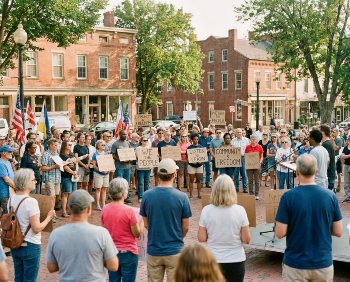
The Framers built the Constitution on a simple principle: government power flows from the people, not the other way around. This means you have the authority to challenge government actions that violate your rights.
Your constitutional rights exist in two places: the original document and the Bill of Rights (the first ten amendments). Knowing which right applies to your situation can empower you to defend yourself effectively, inspiring confidence in your ability to stand up for your rights.
The majority rely on secondhand interpretations; however, citing specific court cases or legal precedents related to rights like free speech or search and seizure can strengthen your credibility and legal standing. Learn how to locate and interpret these cases to support your assertions effectively.
The Core Rights Citizens Must Know
Your core constitutional rights include freedom of speech, religion, assembly, and petition; the right to bear arms; protection against unreasonable search and seizure; due process; and equal protection under the law. Recognizing these enforceable protections can help you feel more secure when asserting your rights.
 Freedom of Speech and Expression: The First Amendment protects your right to speak, write, and share ideas without government punishment, including unpopular and political speech. Courts recognize narrow limits: true threats, incitement to imminent lawless action, and a few other categories fall outside protection.
The Right to Assemble and Petition: The First Amendment protects your right to gather peacefully and petition the government for change. Government cannot ban assembly simply because officials disagree with your message.
Due Process and Equal Protection: The Fifth and Fourteenth Amendments guarantee due process and equal protection. Government cannot take your property, liberty, or life without following proper legal procedures and treating you the same as similarly situated people.
Second Amendment Rights: The Second Amendment protects your right to bear arms. Courts have affirmed this as an individual right, though states retain some authority to regulate firearms. Understanding current Supreme Court precedent matters if you face restrictions.
Protection Against Unreasonable Search and Seizure: The Fourth Amendment protects your home, property, and person from unreasonable government searches. Police generally need a warrant based on probable cause. Exceptions exist, but knowing when they apply helps you assert your rights during police encounters.
Examples of Asserting Constitutional Rights in Practice
Scenario 1: Police Stop and Search. When a police officer asks to search without a warrant, say: “I do not consent to a search.” Your explicit refusal can help protect your rights and build trust in the process. Document the officer’s name, badge number, time, and witness contact information to strengthen your case.
Scenario 2: Workplace Religious Accommodation. If your employer denies a religious accommodation, file a complaint with the Equal Employment Opportunity Commission (EEOC). Federal law requires reasonable accommodations unless they cause undue hardship (Fact Sheet: Religious Accommodations in the Workplace). Document your request, the denial, and similar accommodations given to others.
Scenario 3: Public Records Request. File a Freedom of Information Act (FOIA) request with federal agencies or a state public records request with state and local agencies. Keep requests specific and reasonably narrow to increase chances of quick response.
Scenario 4: Peaceful Protest. Government cannot require a permit to suppress your message, though reasonable time, place, and manner restrictions are legal. Denying a permit based on your message violates the First Amendment.
Scenario 5: Voting Rights. You encounter obstacles when trying to vote. You can contact your state election office or the Department of Justice Civil Rights Division. Federal law protects your right to vote free from racial discrimination, literacy tests, and certain other barriers. Document what happened, when, and where.
How to File a Formal Grievance With Government Agencies
Filing a formal grievance creates an official record and can lead to corrective action. To do this effectively, identify local or online resources, legal aid organizations, or advocacy groups that can assist you in navigating procedures and understanding your rights within specific agencies or jurisdictions.
Step 1: Document the Violation Thoroughly
Document everything before you file: dates, times, locations, officials’ names, and what happened. Gather evidence including photographs, emails, letters, and witness contact information. Keep copies of everything stored safely with backups.
Step 2: Identify the Correct Agency and Jurisdiction
The agency you choose depends on the type of violation. Use this decision tree:
Civil Rights Violations (race, color, religion, sex, national origin, disability, age): File with the Department of Justice Civil Rights Division if the violation involves a federal agency, federal program, or federally funded activity. For private employers or public accommodations, file with the appropriate agency: the Equal Employment Opportunity Commission (EEOC) for workplace discrimination, the Department of Housing and Urban Development (HUD) for housing discrimination, or the Department of Education Office for Civil Rights (OCR) for education-based discrimination.
Police Misconduct or Excessive Force: File a complaint with your state attorney general’s civil rights division or your local police department’s internal affairs bureau. Some jurisdictions have civilian review boards that investigate independently. If federal officers are involved (FBI, DEA, ICE), file with that agency’s Office of Inspector General. The Department of Justice Civil Rights Division also investigates pattern-and-practice police misconduct.
 Workplace Issues (discrimination, retaliation, safety violations): For discrimination based on protected characteristics, file with the EEOC. For workplace safety violations, file with the Occupational Safety and Health Administration (OSHA). For wage and hour violations, file with the Department of Labor Wage and Hour Division. For retaliation against whistleblowers, file with the appropriate whistleblower protection program (OSHA, SEC, EPA, etc., depending on the industry).
Environmental Violations: File with the Environmental Protection Agency (EPA) or your state environmental agency. The EPA has regional offices covering different geographic areas.
Voting Rights Violations: File with the Department of Justice Civil Rights Division or your state election office. Document the specific barrier you encountered.
Administrative Overreach (denial of benefits, improper procedure): File with your state attorney general or the relevant state agency that administers the program (state health department, state education agency, state welfare office, etc.).
Step 3: Understand Filing Deadlines and Procedures
Deadlines vary by agency: federal civil rights complaints typically have 180 days (300 days in states with civil rights agencies), EEOC complaints have 180 days, and police misconduct complaints may have state or local deadlines. Check the specific agency’s website for exact deadlines before filing.
Most agencies accept complaints online. The EEOC uses eeoc.gov, the DOJ Civil Rights Division uses justice.gov/crt, and state attorneys general have online forms. For written complaints, include your contact information, a clear description of the violation, dates, officials’ names, and supporting documentation.
Step 4: Submit Your Formal Complaint
Follow the agency’s specific procedures exactly. Include your documentation, explain the violation clearly, and state what remedy you seek (corrective action, policy change, compensation, etc.). Be direct and factual. Avoid emotional language, though explaining how the violation affected you is appropriate and often strengthens complaints.
Submit according to agency deadlines and keep a copy of everything you submit. Request proof of receipt, either through the online system (which usually provides a confirmation number) or by sending written complaints via certified mail with return receipt requested. This proof matters if you later need to show you filed on time.
Step 5: Follow Up and Understand the Investigation Process
After filing, you’ll receive a receipt letter with a case number. Use it for all future correspondence. Agencies investigate at different speeds; the EEOC may take 6 months to several years. Respond promptly to agency requests. If the agency finds merit, it may attempt conciliation or refer for enforcement. If the agency closes the case without action, you typically receive a right-to-sue letter allowing you to file a lawsuit in federal court.
Common Pitfalls to Avoid
Avoid these pitfalls: filing with the wrong agency delays resolution; missing deadlines bars your claim; vague allegations receive less investigation; expect 6 months to 2 years for federal investigations; ignoring agency requests may result in case closure.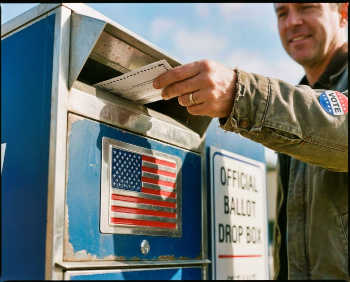
Best Practices for Peaceful Assembly and Protest
Peaceful assembly is one of the most direct ways citizens assert constitutional rights. Know your local permit requirements; they must be content-neutral and cannot target certain messages. If officials deny a permit based on your message, that denial likely violates the First Amendment.
Communicate clearly with police about your intended route and duration. Designate marshals to keep the group organized. Assign people to record video and take photographs; police have less incentive to use excessive force when actions are documented.
Know your rights during police encounters. You have the right to remain silent and the right to refuse searches. You can ask, “Am I free to leave?” If told yes, leave calmly. If told no, you are detained. Ask for a lawyer immediately if arrested. Do not resist physically, even if you believe the arrest is unlawful. Challenge it in court later.
Stay safe. Identify exit routes. Avoid confrontation with counter-protesters. Have a communication plan so people can find each other if separated. Bring water, first aid supplies, and phone chargers.
Digital Citizenship and Protecting Your Online Rights
Digital citizenship means understanding your rights in online spaces and asserting them when violated. The mechanisms for asserting digital rights differ significantly from traditional offline procedures.
Your First Amendment Rights Online
Your online speech receives First Amendment protection when the government acts. The government cannot punish you for posts based on viewpoint. Private platforms can moderate content as they choose because the First Amendment limits government action, not private company policies.
If the government removes your post or blocks your account because of your speech, you may have a First Amendment claim. Document the removal with screenshots. Contact the ACLU or a civil rights attorney.
 If a private platform removes your content, you have limited legal recourse under federal law, though some state laws are beginning to impose transparency requirements on platforms. You can appeal the platform’s decision through its internal process, but the platform has no legal obligation to restore the content.
Protecting Your Data and Privacy
Your data has legal protections under the Fourth Amendment. Government generally needs a warrant to access your emails, texts, location data, or online accounts. If law enforcement requests your data without a warrant, send a written objection to the government agency and the company holding your data, stating the request violates the Fourth Amendment. Contact the ACLU or a privacy attorney immediately.
The Gramm-Leach-Bliley Act (GLBA) protects financial information, the Health Insurance Portability and Accountability Act (HIPAA) protects health information, and the Family Educational Rights and Privacy Act (FERPA) protects student records. File complaints with the FTC (GLBA), HHS Office for Civil Rights (HIPAA), or Department of Education (FERPA).
To protect yourself proactively: enable two-factor authentication on all important accounts (email, banking, social media). Use a password manager to create and store strong, unique passwords. Review privacy settings on social media accounts and limit who can see your information. Consider using a virtual private network (VPN) for sensitive communications, but understand that VPNs protect your data in transit, not from the websites you visit. Regularly review which apps and websites have access to your location, contacts, and other data, and revoke access you no longer need.
Asserting Rights Against Online Harassment and Threats
True threats (statements expressing intent to commit violence) and harassment (repeated, unwanted contact intended to intimidate) can be illegal. These are distinct from offensive speech, which is protected.
Document threats or harassment with screenshots that include the sender, timestamp, and platform. Report to the platform. For serious threats (specific, credible, imminent), contact local law enforcement or the FBI field office.
For harassment campaigns, contact the platform’s trust and safety team with evidence of the pattern. If the platform fails to act, you have limited legal recourse under Section 230 of the Communications Decency Act, though some state laws are creating exceptions.
Government Surveillance and Your Digital Rights
The NSA and federal agencies face legal restrictions on mass surveillance under FISA and the USA PATRIOT Act. Warrantless mass surveillance is illegal. If you believe you are being unlawfully surveilled, file a complaint with the Office of the Inspector General for the relevant agency or the Privacy and Civil Liberties Oversight Board. Contact the Electronic Frontier Foundation (EFF) for resources.
Asserting Rights in Online Spaces Operated by Government
Government agencies increasingly operate online spaces: city council Facebook pages, school district Twitter accounts, police department websites with comment sections. If you are blocked from commenting or following a government official’s account, you may have a First Amendment claim. Courts have ruled that government officials cannot block constituents from official social media accounts based on viewpoint (Court Rules Public Officials Can’t Block Critics on Facebook).
If blocked, document the block (screenshot your attempt to follow or comment, showing the block message). Identify the government actor and the official account. Send a written demand to the government agency requesting that it unblock you and stating that the block violates the First Amendment. If the agency refuses, contact the ACLU or a civil rights attorney. Several successful lawsuits have resulted in unblocking and damages.
Local Action: Asserting Rights at the State and Municipal Level
Much government power affecting daily life comes from state and local officials. Attend city council and county commission meetings to speak during public comment periods. Bring documentation, speak clearly and factually, and coordinate with others speaking on the same issue.
File complaints with state attorneys general. Most states have civil rights divisions that investigate violations and respond faster than federal agencies. Organize locally by joining or starting groups focused on specific rights issues; collective action amplifies individual voices.
Run for office or support candidates who will protect rights. School boards, county commissions, and state legislatures make daily decisions that affect your freedoms. Small margins often decide these offices. Local political engagement directly shapes the laws and policies you live under.
File public records requests with local agencies. Transparency reveals how government operates. Requests to your city, county, or school district often get faster responses than federal FOIA requests. Use this information to identify problems and hold officials accountable.
| Action | Best For | Time Frame | Difficulty |
|---|---|---|---|
| Public comment at meetings | Immediate feedback and visibility | Same day | Easy |
| Formal complaint to state agency | Creating official record | 30-90 days | Moderate |
| Public records request | Gathering evidence | 10-30 days | Easy |
| Local organizing | Building sustained pressure | Ongoing | Moderate |
| Running for office | Structural change | Years | Hard |
Asserting your constitutional rights requires knowledge, documentation, and persistence. Start by understanding which right applies to your situation. Then gather evidence, identify the correct agency or forum, and file your complaint or take action. Texas Journal provides critical insight on how to use your constitutional abilities to defend your freedoms. The law is on your side when you understand it and assert it properly. Learn more about protecting your constitutional rights.

Frequently Asked Questions
What constitutional rights should citizens understand most?
The First Amendment protects freedom of speech, religion, assembly, and petition. The Second Amendment addresses the right to bear arms—the Fourth Amendment guards against unreasonable searches and seizures. The Fifth Amendment provides due process protections and protection against self-incrimination. The Sixth Amendment ensures the right to legal counsel and a fair trial. The Tenth Amendment reserves powers to the states and the people. Understanding these core rights is essential for civic engagement and knowing when government action may exceed constitutional bounds.
How do I know if a government action violates my constitutional rights?
A constitutional violation occurs when government officials act without legal authority or exceed their constitutional limits. Examples include censoring speech without justification, conducting searches without warrants, or denying due process. Document what happened, when it happened, and who was involved. Research the specific amendment or constitutional principle at issue. Consult legal resources or an attorney to evaluate whether a violation occurred. Many violations require prompt action, so act quickly once you identify a potential breach of your rights.
What’s the difference between filing a complaint and pursuing legal action?
A formal complaint to a government agency (like filing a grievance with a police department or civil rights office) is an administrative process that doesn’t require an attorney and is often free. Legal action—such as a lawsuit or criminal defense—typically involves courts and may require legal representation. Start with administrative complaints for faster, lower-cost resolution. If the agency ignores your complaint or rules against you, you may then pursue legal remedies. Many citizens successfully resolve rights violations through formal grievances alone.
Can I participate in peaceful protest without legal risk?
Yes, peaceful assembly and protest are protected First Amendment rights. However, you must follow local permit requirements, avoid blocking traffic or trespassing, and refrain from violence or threats. Know your local ordinances before assembling. Stay calm and respectful with law enforcement. Document police conduct if you believe it’s unlawful. Avoid curfew violations and follow dispersal orders from authorities. Peaceful protest is a powerful tool for civic engagement, but success depends on understanding and respecting the legal boundaries that protect your right to assemble.
Constitutional rights citizens should understand: constitutional rights citizens should understand most.

