Last Updated: November 20, 2026
Quick Summary
Protecting state digital sovereignty means using the authority states actually have: legislating above the federal privacy floor, writing cloud contracts with notice, residency, and key-custody terms, and hardening technical controls. States cannot ignore lawful federal orders, but they can map federal access routes, force transparency, and control what is reachable.
- The Brennan Center reports DHS has committed more than $2.9 billion to surveillance, data collection, and analytics tools.
- Threat modeling should cover four access routes: direct legal demand, vendor cooperation, intermediary access, and covert technical access.
- The notice-and-delay contract clause does not block a demand but converts a silent handover into a contested proceeding.
- Encryption with vendor-held keys offers limited protection because the vendor can be compelled to unlock the data.
- A five-phase roadmap runs assess, legislate, procure, secure, and account, ending in public reporting and annual review.
Table of Contents
- What Is Digital Sovereignty in a Federalist System?
- Federal Surveillance Laws and Privacy Rights Every State Official Should Know
- State Digital Sovereignty Examples That Are Already Working
- Threat Modeling Federal Access to State Data
- State Procurement and Contract Safeguards for Cloud Services
- Technical Controls Against Compelled or Covert Access
- Constitutional and Statutory Limits on State Action
- Digital Privacy Protection Best Practices for State Agencies
- Building Your State’s Implementation Roadmap and Accountability Measures
- Frequently Asked Questions
 What Is Digital Sovereignty in a Federalist System?
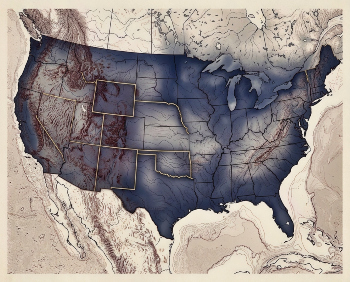
Digital sovereignty is a state’s authority to govern the data, systems, and networks inside its borders. In a federalist system, that authority is shared with Washington and limited by the Constitution. Protecting state digital sovereignty from federal surveillance starts with understanding where that line falls.
At Texas Journal, we track how states test that line. The answer is rarely simple.
Two forces collide here. States own huge troves of resident data. Federal agencies want access to it. The Constitution splits power between them, and the line isn’t always clear.
- State authority covers local governance and public records.
- Federal power covers national security and interstate commerce.
- The overlap is where surveillance fights happen.
The Difference Between Digital Sovereignty and Data Privacy
Data privacy is about individuals controlling their own information. Digital sovereignty is about the state controlling the systems that hold it.
Think of privacy as a lock on your front door. Sovereignty is the state deciding who gets a master key.
Readers who want to understand their own protections can start with how to assert privacy rights online. The two ideas reinforce each other, but they are not the same.
For the broader framework behind this, see our complete guide to states’ rights.
 Federal Surveillance Laws and Privacy Rights Every State Official Should Know
Federal surveillance rests on a patchwork of statutes that grant agencies access to data. State officials need to know which laws apply and where state law can push back.
The Brennan Center reports that the Department of Homeland Security has committed more than $2.9 billion to surveillance, data collection, and data analytics tools (Brennan Center analysis of DHS surveillance spending). That scale matters. It means federal data demands are routine, not rare.
Key federal frameworks include:
- The Stored Communications Act, which governs access to stored records.
- The Fourth Amendment, which limits unreasonable searches.
- Federal privacy guidance that sets baseline expectations.
State privacy laws can go further. According to DLA Piper’s global data protection overview, some state privacy and data-security laws apply across sectors and exceed federal requirements.
That gap is the opening. States can legislate above the federal floor, but they cannot override valid federal authority.
State Digital Sovereignty Examples That Are Already Working
States are not waiting for Washington to act. Several have built real defenses around procurement, data governance, and contract terms.
The strongest state digital sovereignty examples share a pattern:
- Contract clauses that limit federal data sharing.
- Data residency rules that keep records in state-controlled systems.
- Procurement standards that require encryption and access controls.
- Governance boards that review vendor risk.
None of these is dramatic. Each one narrows the path a federal request can take.
A common mistake is treating a single contract clause as a full defense. It is not. Sovereignty is layered. One weak layer fails.
 Threat Modeling Federal Access to State Data
Most states never map how federal access actually happens. That is the gap. Threat modeling means listing the routes a federal agency could use to reach state data, then closing the ones you control.
The main routes:
- Direct legal demand served on a state agency.
- Vendor cooperation where a cloud provider hands over data.
- Intermediary access through shared systems.
- Covert technical access through software or network weaknesses.
Each route needs a different control. A legal demand needs legal review. Vendor cooperation needs contract terms. Covert access needs technical defense.
Watch out: states often model only the first route and ignore the other three. That leaves the widest doors open.
State Procurement and Contract Safeguards for Cloud Services
Cloud contracts are where sovereignty is won or lost. Most state data now sits in systems run by outside vendors, and those vendors answer to more than one master. A procurement office that signs a standard commercial cloud agreement is effectively accepting the vendor’s default posture toward government demands, and that default usually favors the requester, not the state.
Procurement is the use point. A state can require safeguards before it signs:
- Data residency terms that name where records are stored and processed, including backups and disaster-recovery replicas
- Notice requirements before any third-party data disclosure, with a defined window for the state to seek a protective order
- Encryption standards for data at rest and in transit, with state-held keys where feasible
- Audit rights for state reviewers, including the right to inspect subcontractor controls
- Exit terms that return data in usable form and certify deletion
- Limits on vendor cooperation with outside demands, including a duty to challenge overbroad requests
- Subcontractor flow-down clauses that bind resellers, integrators, and support vendors to the same terms
- Government-access transparency reporting, so the state learns of demands even when disclosure is barred
These terms do not stop a lawful federal order. They do force transparency and give the state time to respond. The notice-and-delay clause is the workhorse: it does not block a demand, but it converts a silent handover into a contested proceeding the state can join.
A common pattern in strong state contracts is a tiered disclosure clause. The vendor must notify the state of any legal demand unless prohibited by law, must provide a copy of the demand where permitted, and must direct the requester to the state’s legal office before producing records.
Watch out: states frequently negotiate hard on the prime contract and ignore the subcontractor chain. A reseller or support vendor with administrative access can be served directly, and the prime contract’s protections may not flow down unless the state writes them in.
Data residency deserves the same scrutiny. A clause that says data is stored in the state is weaker than one that names the specific facilities, covers replicas and backups, and restricts remote administrative access from outside the state. Localization alone does not prevent a vendor employee in another region from pulling records through an admin console.
The real difference between a strong and weak cloud deal comes down to who controls the data, who can be forced to hand it over, and how quickly the state learns a demand exists. Procurement staff should route every cloud agreement through legal review with those three questions on the table.
This article is general information, not legal advice. I am not an attorney, and readers should consult licensed counsel before drafting or signing contract terms. Our full disclaimer is at our disclaimer page.
 Technical Controls Against Compelled or Covert Access
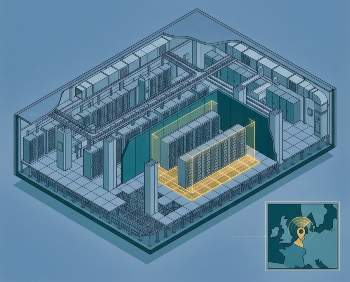
Technology cannot override a court order. It can raise the cost of covert access and limit what a compelled disclosure exposes. The goal is not to defeat lawful process, but to ensure the state knows when it happens and controls what is reachable.
Controls that matter:
- Encryption with keys the state controls, not the vendor.
- Access control that logs every query and ties it to a named identity.
- Network segmentation that isolates sensitive systems from general-purpose networks.
- Data minimization so fewer records exist to demand.
- Independent security review so the state is not relying on the vendor’s own assurances.
Key ownership is a major factor in how much encryption protects data. If the vendor holds the keys, the vendor can be compelled to unlock the data. If the state holds them, a demand becomes harder to satisfy. In practice, this means states should treat key management as a sovereignty issue, not an IT detail. A customer-managed key service, a hardware security module the state operates, or a bring-your-own-key arrangement all shift custody; a default vendor-managed key does not.
Zero-trust architecture matters for the same reason. In a perimeter model, anyone inside the network can reach the data. In a zero-trust model, every request is authenticated and authorized, which means a compromised vendor account or a covert foothold does not automatically translate into bulk access. The state should require identity-based access, least-privilege roles, and short-lived credentials for administrative accounts.
Logging is the detection layer. Every query against sensitive data should generate an audit record the state can review independently of the vendor. A common pattern is to ship logs to a state-controlled account so a vendor cannot quietly delete them. Without that separation, a covert access event may leave no trace the state can see.
Data minimization is the cheapest control. Records that were never collected cannot be demanded, leaked, or misused. Agencies should retire stale datasets, avoid collecting identifiers they do not need, and set retention schedules that actually run.
Independent security review closes the loop. A penetration test or third-party assessment paid for by the state, with results delivered to the state rather than the vendor, catches problems the vendor has an incentive to downplay.
Encryption without key custody offers limited protection, because the vendor may still hold the keys and the admin console.
This article is general information, not legal advice. I am not an attorney, and readers should consult licensed counsel and qualified security professionals before implementing controls. Our full disclaimer is at our disclaimer page.
 Constitutional and Statutory Limits on State Action
State power has limits. A state cannot simply refuse a valid federal order, and it cannot nullify federal law. Officials who promise otherwise are selling something the Constitution does not offer.
The Tenth Amendment reserves powers not given to Washington, and it is the core of the state argument. Our page on asserting the Tenth Amendment explains how that power works in practice.
What states can do:
- Legislate above the federal privacy floor.
- Write contracts that protect state data.
- Require transparency from vendors.
- Fund legal defense of state authority.
What states cannot do:
- Ignore a lawful federal court order.
- Block federal agents from valid legal process.
- Claim unlimited control over cyberspace.
The Chicago Journal of International Law argues that state authority over digital space is a limited sovereign right, constrained by the rights of others (Chicago Journal of International Law on digital sovereignty). That framing fits the American system well. Power is real, but bounded.
Digital Privacy Protection Best Practices for State Agencies
Digital privacy protection best practices give agencies a repeatable process instead of one-off fixes. The goal is simple: know what data you hold, who can reach it, and how you would respond to a demand.
A workable baseline:
- Inventory sensitive data and where it lives.
- Classify records by sensitivity and legal exposure.
- Encrypt the highest-risk systems first.
- Train staff on legal process and response steps.
- Review vendor contracts on a fixed schedule.
Agencies planning for legal challenges will want our Guide to constitutional rights defense strategies for practical next steps.
A mistake we see often: agencies buy tools before they map their data. Tools without a map protect nothing.
Building Your State’s Implementation Roadmap and Accountability Measures
A roadmap turns principles into deadlines. Without accountability measures, sovereignty plans stall after the first press release.
A practical sequence:
| Phase | Focus | Output |
|---|---|---|
| 1. Assess | Data inventory and legal review | Risk register |
| 2. Legislate | Statutory privacy floor | Enacted law |
| 3. Procure | Contract safeguards | Updated vendor terms |
| 4. Secure | Encryption and access control | Technical baseline |
| 5. Account | Public reporting and audits | Annual review |
Accountability means public reporting. A state that publishes its data-sharing numbers invites scrutiny and builds trust.
Officials and advocates ready to act can find practical steps for constitutional activism, from public records requests to public comment.
The challenge is real: federal surveillance capacity is large, and state authority is bounded. But bounded is not powerless. States that map their data, harden their contracts, and hold the line in public can protect what they control.
At Texas Journal, we help citizens and officials understand the constitutional tools they already have. Our work covers states’ rights education, constitutional guidance, and a community built to multiply your effort through the Patriot Pool. We teach you how to assert your rights, and we show you how to control Washington from your state.
Get started with Texas Journal and put the Constitution to work for your state.
Like Valuable Freebies? – Click Here!
Dave
Questions? Call!
Click Here

Frequently Asked Questions
What is digital sovereignty in simple terms?
Digital sovereignty is a government’s authority to control its own digital infrastructure, data, and technology systems. For a state, it means having the legal and technical ability to decide who can access state data, where that data is stored, and how digital services are governed. It is broader than data privacy, which focuses on protecting personal information, because digital sovereignty also covers control over networks, cloud contracts, and hardware supply chains. States assert digital sovereignty through legislation, procurement rules, and technical security controls that limit outside access to public sector systems.
Can a state restrict federal surveillance within its borders?
States cannot override federal surveillance authorities, but they can reduce the data available to federal agencies and set conditions on state-controlled systems. Practical steps include passing state privacy laws that go beyond federal requirements, requiring data localization for state records, writing procurement contracts that limit third-party data sharing, and using encryption and access controls on state networks. These measures do not block lawful federal requests, but they shrink the attack surface and create legal accountability. Any state action must stay within constitutional limits, so legal review is essential before adopting new restrictions.
What constitutional limits apply to federal surveillance?
The Fourth Amendment protects against unreasonable searches and seizures, and courts have applied it to some digital surveillance while creating exceptions for certain foreign intelligence and national security activities. The First Amendment protects associational and speech rights that surveillance can chill. Federal statutes and oversight mechanisms also constrain agency conduct, though the scope varies by program. States cannot expand or contract these federal constitutional limits, but they can pass state constitutional provisions and statutes that add protections for residents. Consult a licensed attorney in your state for how these limits apply to specific facts.
How can state laws protect residents’ digital privacy?
State laws can require government agencies to minimize data collection, publish privacy policies, conduct impact assessments, and limit sharing with outside entities. Some state privacy and data-security laws apply across sectors and go beyond federal requirements, according to DLA Piper’s overview of data protection laws. States can also create independent oversight boards, require warrants for certain state-level data access, and mandate breach notification. Enforcement matters: laws without audit authority and penalties tend to be ignored. Pair new statutes with technical controls such as encryption and access logging so compliance is verifiable.