Table of Contents
- Why Defending Individual Liberties Starts With Daily Habits
- 1. Know Your Constitutional Rights Before You Need Them
- 2. How to Protect Civil Liberties by Speaking Up in Everyday Settings
- 3. Practice Digital Privacy and Online Expression
- 4. How to Speak at a School Board Meeting
- 5. How to Document a Civil Rights Violation
- 6. Demand Local Government Transparency for Parents
- 7. Support Others When Their Liberties Are Challenged
- 8. Engage in Civic Participation and Local Advocacy
- 9. Teach the Next Generation About Individual Liberties
- What Matters Most When a Right Is Challenged
- Frequently Asked Questions
Last Updated: October 17, 2026
 Why Defending Individual Liberties Starts With Daily Habits
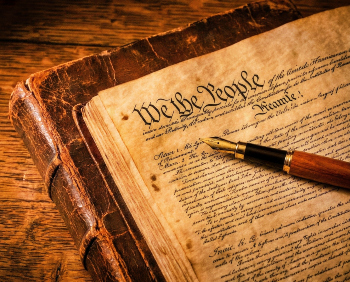
Individual liberties protect personal autonomy from undue government interference, and they survive only when citizens exercise them in everyday life. This guide from Texas Journal covers ten practical habits that turn abstract constitutional rights into daily action. Most people treat the Bill of Rights as a museum piece, something to admire rather than use. The First Amendment and the rest of the constitutional framework are tools, and tools rust when they sit unused.
Below, we’ll show you exactly how to build those habits, from knowing your rights before you need them to documenting a violation properly. The ten steps we cover are the same ones we recommend to readers who want to protect civil liberties without waiting for permission.
1. Know Your Constitutional Rights Before You Need Them
The single most effective habit is reading the Bill of Rights’ actual text rather than a summary. Ten amendments spell out protections for freedom of speech, freedom of religion, freedom of assembly, freedom of the press, and due process. Learn what each one says in its own words.
A common mistake is assuming you already know them. Most people can name the First Amendment and stop there. They miss protections against unreasonable searches, the right to remain silent, and equal protection under the law. The Bill of Rights Institute’s primary-source collection publishes the full text of all ten amendments, which is a better starting point than any commentary.
Keep a copy where you can reach it. Read one amendment a week until you have covered all ten. That small investment pays off the first time a law enforcement officer, a school administrator, or a local official tells you what you may or may not do.
2. How to Protect Civil Liberties by Speaking Up in Everyday Settings
Protecting civil liberties starts with ordinary conversations, not courtroom battles. Speak plainly when a coworker, neighbor, or friend repeats a claim about rights that does not hold up. You do not need to win an argument. You need to keep accurate information in circulation.
That means knowing the difference between lawful limits and overreach. Government power can restrict speech in narrow ways, such as direct threats or fraud, but it cannot punish you for disagreeing with an official. The same applies to freedom of expression at work, in public spaces, and online. State your view calmly and cite the specific protection you are relying on.
The habit compounds. A person who speaks accurately in small settings becomes the person others ask when a real dispute arises. That reputation protects everyone around you.
 3. Practice Digital Privacy and Online Expression
Most guides to individual liberty stop at the Constitution and never mention the browser. That is a mistake. In daily life, the government’s ability to reach your speech, your location, and your associations runs through private companies that hold your data. Treating digital privacy as a civil-liberties issue is the single most under-covered habit in this space, and it is where ordinary readers have the most leverage.
Start with the legal frame, because it explains why the settings matter. The Fourth Amendment protects you against unreasonable searches and seizures by the government, but it generally does not restrict a private company from collecting what you hand it. Under the Third-Party Doctrine, information you voluntarily give to a provider- call records, cloud storage, account metadata- is often treated as outside the warrant requirement. That is why a privacy setting is not cosmetic. It changes what exists to be requested.
A concrete example: many carriers and platforms publish transparency reports showing that they receive thousands of government demands for user data each year and comply with the large majority of them. You cannot control those requests, but you can control how much data they can hand over.
Here is a practical routine that takes about an hour the first time and fifteen minutes a quarter after that.
- Lock the accounts that matter. Turn on two-factor authentication using an app rather than SMS where the service allows it, because SMS codes can be intercepted through SIM-swap fraud. Use a password manager so every account has a unique password.
- Audit app permissions. On both major mobile operating systems, review which apps have access to location, microphone, camera, and contacts. Revoke anything that does not need it. Set location access to “while using” rather than “always” for everything except maps and rideshare.
- Separate identities. Keep a personal account under your legal name and a public or pseudonymous account for political speech and organizing. Do not cross-link them with the same recovery email or phone number.
- Check the default. Most platforms default new posts to public. Change the default to friends-only, and opt into public posting deliberately rather than by accident.
- Read the data-download tool. Every major platform offers a data export. Request it once. Seeing what is actually stored- location history, ad profiles, message metadata- is more instructive than any checklist.
Online expression deserves the same care, but the rules differ by who is doing the restricting. The First Amendment constrains government actors. It does not constrain a private employer, a social platform, or a school in the same way. A public university generally cannot punish a student for protected political speech; a private university usually can set its own rules. A government employer has more latitude than a private one in some contexts and less in others. Knowing which category you are dealing with prevents the most common mistake: assuming a constitutional protection applies to a private decision.
Before posting on a contested issue, assume the post will be screenshotted, stripped of context, and read by someone who wants to harm you. Write so that the worst-faith reading is still defensible. That is not self-censorship. It is the same discipline a good lawyer applies to a letter: say what you mean, precisely, and leave no easy opening.
The Foundation for Individual Rights and Expression’s rights resources explain how speech protections apply across government, employment, and campus settings, a distinction most readers get wrong. The Federal Trade Commission’s consumer privacy guidance is a plain-language starting point for understanding what companies may collect and what recourse you have when they mishandle it.
One caution on the other side: privacy habits are not a license to hide unlawful conduct, and no setting changes your legal obligations. The goal is to reduce unnecessary exposure of lawful speech and association, not to create a shield for wrongdoing. Readers who treat digital hygiene as a substitute for knowing the law end up worse off than those who never bothered.
 4. How to Speak at a School Board Meeting
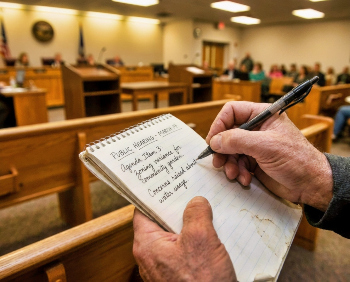
Public comment at a school board meeting is one of the most accessible forms of civic power available to parents. Most districts set aside a fixed period, often two to three minutes per speaker, and require you to sign up beforehand. Check the agenda and the public-comment policy on the district website before you go.
Prepare a short statement with three parts: the specific item you are addressing, the concern, and the action you want. Read it aloud at home and time it. Bring printed copies for the board and the press. State your name and your ward or district, so your comments enter the record.
5. How to Document a Civil Rights Violation
Documentation is where most liberty disputes are won or lost, and it is the step readers most often get wrong. The instinct is to argue on the spot. The better instinct is to create a record that a lawyer, an agency, or a court can use later. This section walks through the sequence, the lawful limits, and the channels that actually exist.
First, capture the facts the same day. Write down the date, time, and location; the names, titles, and badge or employee numbers of everyone involved; the exact words used (in quotation marks where you can); and the names and contact information of any witnesses. Note what you were doing immediately before and after. A contemporaneous note written within hours carries far more weight than a recollection reconstructed weeks later, and it is the first thing any reviewer will ask for.
Second, collect evidence lawfully. Keep copies of emails, letters, notices, and text messages. Save photographs and video you took yourself in public spaces. Do not alter or edit original files; keep the originals and work from copies. Recording rules vary sharply by state: some states require the consent of all parties to a conversation, others require only one. Before you record a phone call or an in-person conversation, confirm which rule applies where you are. Recording in violation of a state’s wiretap statute can expose you to civil and criminal liability and can taint the very evidence you were trying to preserve.
Third, put it in writing to the responsible party. A short, factual letter or email- what happened, when, who was involved, what you want, and a request for a written response- creates a paper trail and often resolves the issue before it grows. Send it to a named official or office, not a general inbox, and keep a copy with the date sent. Avoid adjectives and conclusions. State facts and the specific action you are requesting.
Fourth, identify the right channel. There is no single complaint line for civil-liberties concerns; the correct route depends on who acted and under what authority.
- Federal agencies. The U.S. Department of Justice Civil Rights Division handles complaints about discrimination and constitutional violations by government actors in specific areas, and it publishes how to file. The U.S. Equal Employment Opportunity Commission handles workplace discrimination complaints and enforces strict filing deadlines, often 180 days from the discriminatory act, extended to 300 days in states with their own fair-employment agency. Missing that window can end the claim.
- State and local oversight. Many states have an open-records statute, an attorney general’s civil rights division, or a civilian review board for law enforcement. Find the one that covers your situation and follow its published process.
- Professional and licensing boards. If the actor holds a license- a teacher, a lawyer, a contractor, an officer- the licensing body may have its own complaint process that runs parallel to any legal claim.
- Private organizations. Civil-liberties groups and legal-aid organizations can tell you whether your situation fits their intake criteria. They cannot give every reader individual legal advice, but they can point you to the right form and deadline.
Fifth, know when to stop and get counsel. You can do the documentation yourself. Legal strategy is not. If a deadline is running, if you are facing an adverse action, or if the facts involve a possible criminal exposure, consult a licensed attorney in your state before you send anything further. A well-meaning letter written without advice can waive arguments or create admissions you cannot take back.
A common pattern practitioners describe: the reader who keeps a dated file, sends one factual letter, and meets the first deadline is in a far stronger position than the reader who has a compelling story but no documents and a missed filing window. The record is the case. Build it early, build it accurately, and let the professionals handle the strategy once the file is in order.
 6. Demand Local Government Transparency for Parents
Local government transparency for parents begins with knowing what records exist and asking for them. Most states have open-records laws that require public bodies to produce documents on request, usually within a set number of days. Find your state’s statute, learn the process, and use it.
Request budgets, contracts, curriculum materials, and meeting minutes in writing. Be specific about the records you want and the date range. Keep copies of every request and response. Agencies may charge a reasonable copying fee, and they must tell you the cost before fulfilling a large request.
Attend budget hearings and ask where the money goes. Ask for line-item detail rather than totals. When a district knows parents are watching the books, spending decisions get more careful. That is not hostility to public education. It is the ordinary accountability that a free society depends on.
7. Support Others When Their Liberties Are Challenged
A right defended only for yourself is a right you will eventually lose. When a neighbor, coworker, or fellow parent faces pressure for expressing a view, show up. Attend the meeting. Sign the letter. Sit in the audience so the room is not empty.
Support does not require agreement. You can defend someone’s freedom of speech while disagreeing with every word they say. That distinction is the whole point of constitutional liberties. If protection only extends to popular opinions, it is not protection at all.
Offer practical help too. Share what you have learned about public-records requests. Point people toward accurate resources. Help them write a factual complaint. The National Center for Life and Liberty’s individual-liberties work focuses on these areas, and knowing where to refer someone saves precious time.
 8. Engage in Civic Participation and Local Advocacy
Civic participation is the muscle that keeps a democratic government responsive. Vote in local elections, which decide school boards, city councils, and county offices that affect daily life far more directly than federal races. Attend meetings. Serve on a board or commission if you can.
Local advocacy works best in groups. Find or form a small group of neighbors who share a concern, divide the research, and speak with one clear message. Ten informed residents who show up repeatedly carry more weight than one angry speech.
Federalism matters here. States and localities hold powers the federal government does not, and that structure gives citizens something close to home. The Texas Public Policy Foundation’s work on individual liberty frames liberty as freedom from undue government interference, a useful lens for evaluating any local proposal.
9. Teach the Next Generation About Individual Liberties
Children learn citizenship by watching adults, not by memorizing dates. Talk through current events at the dinner table and ask what right is at stake. Explain why the rule of law protects them even when they dislike the outcome of a particular decision.
Give them practice. Let a teenager draft a letter to a council member. Take a child to a public meeting and explain what is happening. Discuss the balance between personal autonomy and the common good using real examples from school or the neighborhood.
The next generation will inherit these constitutional liberties whether or not they understand them. A young person who can explain the First Amendment in their own words is far less likely to surrender it later. That is the long game, and it starts at home.
What Matters Most When a Right Is Challenged
When a right may have been violated, the sequence is simple: write down what happened, gather your evidence, and put your concern in writing to the responsible agency. Do it promptly and factually. Most disputes resolve at this stage. The ones that don’t are even stronger because of it.
Here is the summary we give readers who want a quick reference.
| Situation | First Move | Why It Matters |
|---|---|---|
| Told you cannot speak at a meeting | Ask for the written public-comment policy | Forces a specific rule into the open |
| Records request denied | Cite your state’s open-records statute in writing | Creates a documented paper trail |
| Rights concern with an official | Record date, time, names, and exact words | Contemporaneous notes carry weight |
| Pressure over an opinion | Note who acted and under what authority | Separates government action from private reaction |
| Unsure where to start | Read the Bill of Rights text itself | Grounds every later step in the actual law |
Defending individual liberties isn’t a spectator sport, and it doesn’t require a law degree. It takes habits: knowing the text, showing up, requesting records, and writing things down. Texas Journal exists to help citizens do exactly that, with constitutional education and state-focused analysis that treats the founding principles as living tools rather than history. Our Patriot Pool is built as a force multiplier for readers who want to organize rather than react, and our guidance on asserting your rights is designed to be used the same day you read it. If you are ready to stop watching and start defending, join the movement and put these ten habits to work.

Frequently Asked Questions
What protects individual liberties in the United States?
The Constitution and its Bill of Rights are the primary legal protections for individual liberties. The First Amendment safeguards freedom of speech, religion, press, assembly, and petition. The Fifth and Fourteenth Amendments guarantee due process and equal protection. Beyond these, state constitutions, federal and state statutes, and court decisions all reinforce protections. However, these documents only work when citizens actively exercise and defend them, which is why daily habits like knowing your rights and participating in local government matter as much as the text itself.
How can individuals protect civil liberties in everyday life?
Start by educating yourself on your constitutional rights so you can recognize when they are being tested. Speak up respectfully when you witness overreach, whether at a local government meeting or in a public forum. Document any potential violations with dates, times, and details. Support organizations that defend civil liberties and participate in local advocacy. Small actions add up: attending school board meetings, requesting public records, and having conversations with neighbors all help build a culture that values individual liberties.
What should you do if you believe your rights have been violated?
First, stay calm and avoid escalating the situation. Write down exactly what happened, including the date, time, location, and the names or badge numbers of anyone involved. Gather contact information from witnesses and save any relevant documents or messages. Then consult a qualified attorney or a civil liberties organization to understand your options. Depending on the situation, you may file a complaint with an oversight agency, submit a public records request, or pursue legal action. Documenting the violation is the critical first step in any response.
How can parents promote transparency in local school decisions?
Parents can request copies of school board meeting agendas, minutes, and budgets, which most states make public records. Attend meetings regularly and ask specific questions during the public comment period. Form a group with other parents to share information and divide research tasks. Use local government transparency laws to request contracts, spending records, and curriculum materials. When boards know parents are watching and asking informed questions, they tend to operate more openly. Persistence and a unified parent voice are the most effective tools for keeping school decisions transparent.