Last Updated: October 23, 2026
Quick Summary
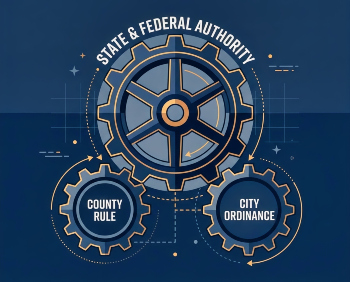
Defending individual freedom against local government regulations starts with understanding that local authority is delegated, not inherent. Hence, an ordinance stands only if it traces back to a state or federal authority that grants it. Build a documented record through public comment and open records requests, then escalate only when the facts support it.
- Local ordinances must trace back to a state or federal authority that actually grants them.
- Public comment is evidence, not therapy: cite the specific code section you oppose.
- Ask the clerk in writing for the meeting recording and agenda packet to create a paper trail.
- Filing a complaint without a documented record is the most common mistake reviewers see.
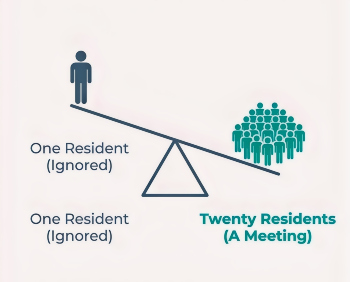
- One resident gets ignored, but twenty residents with a shared record get a meeting.
Table of Contents
- Know What Local Government Regulations Can and Cannot Do
- Challenging Local Government Ordinances: Your First Line of Defense
- Examples of Government Overreach in Local Zoning
- How to File a Civil Rights Complaint Against a Municipality
- Using Open Records Laws to Expose Local Government Regulations
- When to Escalate: State Preemption and Legal Action
- Organizing Neighbors to Push Back on Local Government Regulations
- What to Ignore: Bad Advice That Weakens Your Case
- Frequently Asked Questions
 Know What Local Government Regulations Can and Cannot Do
Local government regulations are the rules cities and counties pass to govern zoning, permits, business licensing, and property use within their borders. Those rules carry real weight, but they are not unlimited. At Texas Journal, we tell readers the same thing every week: a local ordinance only stands if it traces back to a state or federal authority that actually grants it.
Here’s the practical reality. A city council can set a noise limit. It cannot ban political speech. It can require a building permit. It cannot search your home without a warrant.
- Valid exercises of local power: zoning, building codes, licensing, noise and nuisance rules
- Limits that always apply: the U.S. Constitution, your state constitution, and state statutes that preempt local rules
- Where overreach hides: vague ordinances, arbitrary enforcement, and rules passed without proper notice
The Cato Institute’s 2026 Freedom in the 50 States index tracks how well each state protects economic and personal freedom, which gives you a starting point for comparing your own local climate.
If you want the companion guide on protecting individual liberties from government, read Protecting Individual Liberties from Government before you file anything.
 Challenging Local Government Ordinances: Your First Line of Defense
Challenging local government ordinances starts with the public record, not the courtroom. Most residents skip straight to outrage. The ones who win show up prepared, on time, and with the paperwork.
Start with the ordinance text itself. You want three things: the exact code section, the stated purpose, and the legal authority the council cited. If the authority section is thin or missing, note it.
Then check the process. Did the council give proper public notice? Was the item on the published agenda? Were required hearings held?
A reader ready to dig deeper can review constitutional tools citizens can use for a practical rundown of the options.
The Public Comment Playbook
Public comment is evidence, not therapy. Keep it to the point.
- State your name and address for the record
- Cite the specific code section you oppose
- Ask one clear question the council must answer
- Submit written comments even if you also speak
Building a Record for Appeal
An appeal lives or dies on the record you build early. Save every agenda, notice, recording, and email. Request documents in writing. Note dates and names.
When you compile citations and evidence, use a checklist for identifying reliable legal sources so your record holds up.
Examples of Government Overreach in Local Zoning
Zoning is where local overreach shows up most often. The pattern is consistent: a rule that looks neutral on paper gets applied unevenly in practice.
Common examples of government overreach in local zoning include:
- Spot zoning: rezoning one parcel for a favored use while leaving neighbors under stricter rules
- Excessive variances denials: refusing reasonable relief while granting similar requests to others
- Overbroad definitions: vague terms like “nuisance” or “character” that give officials unlimited discretion
- Retaliatory enforcement: citations that appear only after you speak up at a meeting
The test is consistency. Ask for the enforcement records for your street. If your property is the only one cited for a condition that exists on five other lots, you have a documented pattern.
The Mackinac Center’s 2026 commentary on local government power makes the case that state lawmakers can and do step in when local rules overreach.
Document everything with dates, photos, and addresses. A pattern beats a complaint.
 How to File a Civil Rights Complaint Against a Municipality
Filing a civil rights complaint against a municipality means putting your allegation in writing, under oath when required, and clearly stating the facts and legal basis. Vague complaints get closed. Specific ones get investigated.
Here is the sequence we recommend:
- Identify the right forum. Federal agencies, your state attorney general, and the municipality’s own review board each handle different claims.
- Gather the facts. Dates, names, documents, recordings, and witnesses.
- State the harm. What right was violated, and how.
- File in writing. Keep copies of everything you send.
- Track deadlines. Missing one can end your claim.
Qualified language matters here. Many complaints fail because the filer describes a policy disagreement rather than a rights violation. Be precise about which right you say was violated.
Here is the sequence the article recommends for filing a civil rights complaint against a municipality.
| Step | What to do |
|---|---|
| 1 | Identify the right forum: federal agencies, state attorney general, or review board |
| 2 | Gather the facts: dates, names, documents, recordings, and witnesses |
| 3 | State the harm: what right was violated, and how |
| 4 | File in writing and keep copies of everything you send |
| 5 | Track deadlines, since missing one can end your claim |
 Using Open Records Laws to Expose Local Government Regulations
Open records laws let you pull the paperwork behind a regulation: emails, drafts, meeting notes, and enforcement logs. Every state has one. Use it.
Submit a written request to the records custodian. Name the records you want as specifically as you can. Keep the request narrow enough to avoid delays.
- Ask for emails between officials about the ordinance
- Request enforcement logs for your street or district
- Ask for the draft versions and the legal review memo
- Log the date you sent it and the date they respond
What you find often tells the real story. A rule described as a routine update may have started as a complaint about one property. Records don’t argue. They just show what happened.
When to Escalate: State Preemption and Legal Action
Escalation makes sense when the record is complete and the local process has failed. Not before.
State preemption is the doctrine that a state law overrides a conflicting local rule. Many states have passed laws that limit what cities can regulate. The Support Democracy 2026 mid-session report on state preemption tracks how these battles are playing out across the country.
Before you escalate, ask:
- Does a state statute clearly override the ordinance?
- Have you exhausted local remedies?
- Do you have counsel, or are you prepared to proceed pro se?
- Is your record complete enough to survive review?
For a deeper look at the constitutional arguments behind these fights, read Securing Freedom with Constitutional Law. It covers the legal reasoning you will need.
 Organizing Neighbors to Push Back on Local Government Regulations
One resident gets ignored. Twenty residents with a shared record get a meeting. That’s the math.
Start small and specific. Pick one ordinance. Recruit the neighbors directly affected. Hold a first meeting with a clear agenda and one goal.
- Assign roles: records requests, meeting attendance, note-taking
- Build a shared folder for documents and dates
- Set a single talking point everyone repeats
- Show up consistently, not just once
If you’re ready to rally your block, use this playbook for organizing local liberty meetings to structure the first gathering.
The Princeton Bridging Divides Initiative’s 2026 update on hostility toward local officials notes that many local officials report elevated hostility, which is exactly why disciplined, factual organizing beats shouting.
What to Ignore: Bad Advice That Weakens Your Case
Some popular advice will sink your case before it starts. Here’s what to skip.
- Don’t refuse to comply and wait to be cited. That can create fines and a record against you.
- Don’t argue constitutional theory at a council meeting. Cite the code section and ask a question.
- Don’t rely on social media screenshots. Get the official document.
- Don’t skip the local process. Courts often require you to exhaust it first.
- Don’t go alone if you can help it. Numbers and a shared record carry more weight.
We also see people confuse anger with evidence. Anger gets attention. Evidence gets results. Keep your tone calm, your citations exact, and your timeline documented.
At Texas Journal, our focus is on the constitutional tools citizens actually have. That means precision over volume, and records over rhetoric. If you want to take that work further, Defend the American Family and Personal Sovereignty Is Non-Negotiable. are built for readers who see local overreach as part of a larger fight over self-government.
Local rules will keep expanding unless residents push back with discipline and paperwork. That’s the work: know the limits of local authority, build a clean record, and escalate only when the facts support it. Texas Journal helps citizens use the tools the Constitution provides, from constitutional education to the Patriot Pool, a force multiplier for organizing your community. If you’re ready to assert your rights and defend founding principles where you live, get started with Texas Journal and turn your documentation into real pressure on local government.
Dave
Questions? Call!
940-353-1398

Frequently Asked Questions
What are the limits of local government regulatory power?
Local governments derive authority from state constitutions and statutes, not from unlimited home rule. Regulations must serve a legitimate public purpose and cannot violate the U.S. Constitution or state law. Zoning, health codes, and business licensing are common areas, but each must survive constitutional review. The Cato Institute’s 2026 Freedom in the 50 States index tracks how well states protect economic and personal freedom, showing wide variation in local regulatory burdens. When an ordinance exceeds delegated authority or infringes on protected rights, citizens can challenge it through public comment, appeals, or legal action.
How can citizens challenge local ordinances that infringe on constitutional rights?
Start by attending public hearings and submitting written comments to create an official record. Request all relevant documents through open records laws to understand the legal basis for the ordinance. If the ordinance burdens a fundamental right, consult an attorney about filing a civil rights complaint under 42 U.S.C. § 1983 or a state equivalent. In some cases, state preemption laws override local rules. The key is to act early, document everything, and build a factual record that supports your constitutional claim.
How do I file a formal complaint against a local government agency?
File a civil rights complaint with the agency’s internal affairs or civil rights office. Include dates, names, and specific actions, and cite the constitutional amendment or statute violated. Keep copies of everything. If the agency does not respond, you can escalate to state attorneys general or private counsel. For zoning disputes, follow the local board of adjustment appeal process first.
What legal tools are available to fight government overreach?
The main tools include constitutional challenges under the First, Fourth, Fifth, and Fourteenth Amendments; state preemption statutes that limit local authority; open records requests to expose decision-making; and ballot initiatives or referenda where available. Administrative appeals to zoning boards and state agencies are often the fastest route. Document everything and act within deadlines.