Last Updated: November 12, 2026
Quick Summary
Constitutional rights for Texas community organizers rest on the First Amendment, which protects speech, peaceable assembly, and the right to petition the government, and the Fourteenth Amendment applies those limits to state and local governments. The Texas Constitution carries its own bill of rights that is worded more broadly in places, so cite both when you speak to local officials.
- On a public sidewalk, the government bears the burden of justifying any restriction on your speech.
- You do not need a permit for ordinary leafleting on public property, though blocking traffic or amplified sound may require one.
- Government bodies may set time limits and sign-up rules at public meetings but cannot silence a viewpoint.
- If an officer orders you to disperse, comply first and challenge the order later with a written record.
- File a written account of any rights violation within 24 hours while the details are fresh.
Table of Contents
- How the U.S. and Texas Constitutions Protect Community Organizers
- Texas Protester Rights: Assembly, Speech, and Petition in Practice
- First Amendment Rights at Public Meetings: Commenting, Recording, and Redress
- Permits, Location Rules, and the Limits of Local Restrictions
- Police Encounters and Enforcement: What to Do When Rights Are Tested
- Documenting Civil Rights Violations: A Practical Checklist
- Using the Texas Public Information Act Records Request to Get Answers
- Digital Organizing and Online Speech: Rights and Risks
- Equal Protection and Freedom of Religion for Faith-Based Organizers
- Organizer Liability and Safety Planning: What to Know Before You Act
- Rights and Risks for Specific Communities
- How Texas Journal Helps You Assert Your Rights
- Frequently Asked Questions
 How the U.S. and Texas Constitutions Protect Community Organizers
Constitutional rights for Texas community organizers begin with a simple principle: the First Amendment protects your ability to speak, assemble, and petition the government.
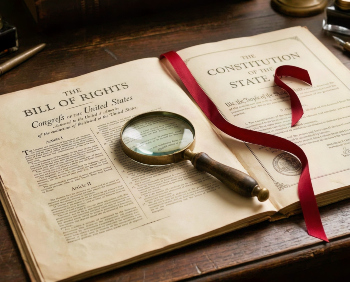
The First Amendment is the foundation. It bars Congress from making any law that abridges freedom of speech, peaceable assembly, or the right to petition for a redress of grievances (The Bill of Rights: A Transcription).
Constitutional rights are the floor, not the ceiling. State and local rules can add procedure, but they cannot erase the core protections. That distinction is the thread running through everything below.
The First Amendment and Public Forums
A public forum is government property opened for expressive activity, such as streets, sidewalks, and parks. In these places, the government can impose reasonable time, place, and manner rules but cannot silence a viewpoint.
The key takeaway for organizers: if you are on a public sidewalk, the burden sits on the government to justify any restriction. A permit requirement that gives an official unlimited discretion to say yes or no is the kind of rule courts have treated with suspicion.
The Texas Constitution Bill of Rights
The Texas Constitution carries its own bill of rights, and in several places it is worded more broadly than the federal version.
The state text is worth knowing because it is the law of this state. When you cite your rights to a local official, citing both the U.S. Constitution and the Texas Constitution makes the point harder to wave away.
Texas Protester Rights: Assembly, Speech, and Petition in Practice
Texas protester rights rest on three pillars: you may assemble peaceably, speak and distribute literature, and petition your government for change. Each pillar comes with practical boundaries you should know before you show up.
Here is how the protections translate into action:
- Assemble peaceably. Gather on public sidewalks, parks, and plazas without a permit unless the rules require one for your specific activity.
- Speak and handbill. Distribute literature and hold signs; the government cannot require a permit for ordinary leafleting on public property.
- Petition your representatives. Attend meetings, submit comments, and contact offices. The right to petition does not guarantee a response, but it guarantees the attempt.
- Record in public. You generally may record public officials performing public duties in public places.
- Refuse unlawful orders. If an officer orders you to stop lawful activity, you can ask what law authorizes the order, but comply first and challenge later. Resisting arrest is a separate offense.
The practical rule: stay peaceful, stay on public property, and document everything. If you are planning a gathering, our guide on how to organize local liberty meetings walks through the logistics.
 First Amendment Rights at Public Meetings: Commenting, Recording, and Redress
First Amendment rights at public meetings protect your ability to speak during the public comment period, record what happens, and seek redress afterward.
What most guides miss is that the meeting itself is a limited public forum.
Recording is where organizers get tripped up. Many public bodies have adopted rules on cameras and phones, and the safest approach is to know the posted policy before you arrive.
Permits, Location Rules, and the Limits of Local Restrictions
Local permit and location rules can regulate when and where you gather, but they cannot be used to suppress what you say. A permit scheme that hands an official open-ended discretion is vulnerable to challenge, and so is a rule applied unevenly. The practical problem is that most organizers do not know which rules actually apply to their event until they are already planning, so this section walks through the common Texas permit categories, how to read an ordinance, and what to do when a rule looks designed to deter.
When a Permit Is Typically Required
Permit requirements vary by activity and location, so check local rules before you gather. Permits commonly come into play for:
- Marches and parades that use a roadway or that will block vehicle traffic.
- Sound amplification; many cities require a separate sound permit or impose decibel limits and hours-of-operation rules.
- Use of parks or plazas where a reservation system exists for shelters, stages, or large groups.
- Structures such as stages, tents, or barricades placed on public property.
- Sales or fundraising on public property, which is often regulated separately from speech.
A common pattern is that a city will require a permit for the activity (blocking a street, using amplified sound) rather than for the speech. That distinction matters: a permit requirement tied to traffic control or noise is more likely to survive a challenge than one tied to the content of your message.
How to Read a Permit Ordinance
Get the ordinance and the application in writing before you fill anything out. Read for four things:
- The criteria. Are the standards objective (date, time, location, crowd size) or does the ordinance let an official decide based on vague factors like “public safety” or “community standards”? Open-ended discretion is the vulnerability.
- The timeline. How many days before the event must you apply, and how many days does the agency have to respond? A short response window with a long application lead time can function as a denial by delay.
- The fee schedule. Fees are common and often lawful when they cover actual administrative costs, but a fee that scales with crowd size or that is set high enough to deter small groups is worth scrutinizing.
- The conditions. Look for waiver language, indemnification clauses, or conditions that require you to pay for police overtime or cleanup. Signing a permit that waives your right to sue or that consents to broad conditions can undercut a later challenge. Read every line before you sign.
 How Rules Vary by City
Permit rules are local, and the variation is real. A large city may have a dedicated special-events office with a published handbook and an online application; a smaller city may route permits through the police department or the parks department with little public guidance.
The practical move is to call the city clerk or the special-events office and ask three questions: What permit, if any, applies to my activity? What is the application deadline? What are the written criteria? Ask for the answers in writing, and keep the email.
When a Rule Looks Designed to Deter
We tell organizers to separate two questions: what does the rule actually require, and is the rule itself lawful? If the criteria are vague, the fee schedule looks designed to deter, or the rule is applied unevenly, one group gets approved quickly, and another is stalled, that is a signal. Our walkthrough on the steps to challenge a state rule on constitutional grounds lays out that process in order.
Watch out: paying a fee or signing a permit application is not an admission that the rule is lawful, but signing a waiver or consenting to broad conditions can limit your options later.
We are not attorneys, and nothing here is legal advice. Before you act on anything in this guide, read our disclaimer explaining that we are not attorneys.
Here are the activities that commonly trigger a Texas permit requirement, and what each one typically involves.
| Activity | Permit commonly required | Note |
|---|---|---|
| Marches and parades using a roadway | Yes | Includes events that block vehicle traffic |
| Sound amplification | Often a separate sound permit | Cities may set decibel limits and hours |
| Parks or plazas with reservation systems | Yes, where a reservation system exists | Covers shelters, stages, large groups |
| Structures on public property | Yes | Stages, tents, barricades |
| Sales or fundraising on public property | Often regulated separately | Separate from speech rules |
Police Encounters and Enforcement: What to Do When Rights Are Tested
When an officer tests your rights, the goal is to preserve the record and your safety at the same time. You do not win a street-level argument; you win by documenting it and raising it through the proper channel. This section walks through the common enforcement moments organizers face, questioning, searches, dispersal orders, arrest, and recording, with the caveat that the law here is fact-specific and you should consult an attorney for your situation.
 Questioning and Identification
You generally are not required to answer an officer’s questions beyond identifying yourself if you are lawfully detained, and Texas has its own rules on when identification can be demanded. A practical approach: stay calm, keep your hands visible, and ask, “Am I free to go?” If the answer is yes, you may leave. If the answer is no, you are being detained, and you can state your position once, “I am on a public sidewalk exercising my First Amendment rights”, and then ask for the reason for the detention.
Searches
You can decline a request to search your person, bag, or vehicle. Say it plainly: “I do not consent to a search.” An officer may still conduct a search under a warrant, probable cause, or a recognized exception, but stating your non-consent preserves the record. Do not physically resist; compliance with a search you believe is unlawful is a separate question from whether the search was lawful, and resisting can create its own charge.
Dispersal Orders
A dispersal order is where organizers most often get into trouble. If an officer orders the crowd to disperse, the safest course is to comply first and challenge later. Resisting arrest or failing to disperse is a separate offense, and a lawful protest can turn into an unlawful assembly charge if the order is ignored. Before the event, brief attendees on what a dispersal order sounds like and where to regroup.
Arrest
If you are arrested, do not resist. Ask for the reason, state that you do not consent to any search, and ask to speak with an attorney. Write down what happened as soon as you can, and have witnesses do the same separately. A common mistake is treating a police encounter as a debate. It is not. Keep your hands visible, stay calm, state your position once, comply with lawful orders, and note the badge number.
Recording Law Enforcement
You generally may record public officials performing public duties in public places, and Texas has its own rules on recording. The practical guidance: record openly when you can, narrate the date, time, and location, and do not edit or crop the footage. If an officer orders you to stop recording, ask for the legal authority, comply if the order is lawful, and note the interaction.
After the Encounter
If you believe an officer violated your rights, write down the time, place, officer identifiers, and witnesses while the details are fresh. Keep copies of everything you write.
Before you act on anything in this guide, read our disclaimer explaining that we are not attorneys. We publish information, not legal advice, and no attorney-client relationship is created by using this site.
 Documenting Civil Rights Violations: A Practical Checklist
Documenting civil rights violations is the single most useful habit an organizer can build. Memory fades and officials dispute accounts, so a disciplined record is what turns a complaint into a case.
Use this checklist after any encounter:
- Note the date, time, and exact location, including the nearest address or landmark
- Record the agency, officer names or badge numbers, and unit
- Write down the exact words used by officials, in quotation marks where you can
- List every witness with contact information
- Preserve photos, video, and audio in their original form; do not edit or crop
- Save copies in two places, including one off your phone
- Note any property seized, damaged, or denied
- File a written account within 24 hours while details are fresh
The discipline matters more than the format. A plain notebook kept consistently beats a scattered folder of clips. If several people were present, have each write a separate account rather than one shared summary.
Using the Texas Public Information Act Records Request to Get Answers
A Texas Public Information Act records request turns a suspicion into a paper trail. The Act gives the public a right to inspect and copy records held by governmental bodies, subject to specific exceptions (Overview of the Public Information Act).
The mechanics are straightforward. Send a written request to the agency’s officer for public information, identify the records as precisely as you can, and keep a copy of what you sent and when.
What most organizers miss is how much the request itself changes behavior. Agencies know requests are public. A well-drafted request for meeting minutes, emails, or permit files often produces cooperation before any formal dispute.
If a request is stonewalled, you can seek guidance through the official Texas Attorney General’s Office.
Digital Organizing and Online Speech: Rights and Risks
Digital organizing raises a question the First Amendment answers only partly: the Constitution limits government action, not private platforms.
The risks fall into three buckets. Platform risk is the everyday one: accounts suspended, reach throttled, groups deleted. Surveillance risk is the quieter one: your communications and location data can be collected. Legal risk is the sharpest: what you post can be used against you later.
A practical posture helps. Assume anything you post publicly is permanent. If your group worries about platform dependence, our breakdown of which decentralized communication tools work for grassroots groups covers the trade-offs.
The Electronic Frontier Foundation publishes guidance on digital security for activists.
Equal Protection and Freedom of Religion for Faith-Based Organizers
Freedom of religion and equal protection give faith-based organizers two distinct shields. The Free Exercise Clause protects religious practice, and the Establishment Clause bars the government from favoring one faith over another (First Amendment and Religion). Equal protection, meanwhile, requires that the government treat similarly situated groups alike.
For faith-based groups, the practical questions cluster around public benefits and public space.
The line to watch is between a neutral rule and a disguised exclusion. A zoning code that applies to everyone is different from a code amended to keep a specific congregation out. If you suspect the latter, the record matters: minutes, emails, and the timing of the amendment.
Organizer Liability and Safety Planning: What to Know Before You Act
Organizer liability is the topic most guides skip, and it can end a movement’s momentum.
Safety planning starts before the first flyer. Pick a location with clear public access. Designate people to handle medical issues, media, and police contact.
Watch out: telling attendees to ignore lawful police orders, or arranging an event in a way that blocks emergency access, creates real legal exposure for the people who organized it.
We recommend a written plan for every gathering, even a small one.
Rights and Risks for Specific Communities
Different communities face different pressures, and the constitutional rights for Texas community organizers do not change with the zip code. What changes is the practical risk profile and the records worth keeping.
- Faith-based groups should document any denial of equal access to public facilities or programs.
- Neighborhood associations often run into permit and signage rules; keep copies of every application and response.
- Student and campus groups deal with institutional policies that may be stricter than the Constitution allows for public property.
- Small business owners organizing around local policy should separate personal and business records.
- Newly formed groups without formal structure should put decisions in writing so the record is clear.
The common thread is documentation. Whatever community you organize in, the same checklist applies: who, what, when, where, and what was said.
How Texas Journal Helps You Assert Your Rights
Texas Journal publishes information on constitutional law, states’ rights, and the practical mechanics of civic action for readers who want to understand these topics.
Our resources are built for people who want to move from concern to action. If you want a structured path forward, our guide on practical steps for constitutional activism is a good next read. You can learn more at controlling Washington from your state.
Start with the records, the rules, and the plan. Then act.
The rights are yours, but they only matter when you know how to use them. Texas Journal gives you constitutional education, practical playbooks, and a community to put them to work. Subscribe for Updates – Play for Free – Click Here
Dave
Questions? Call!
940-353-1398

Frequently Asked Questions
What constitutional rights protect community organizers?
Community organizers rely on First Amendment protections for speech, assembly, petition, press, and religion, plus due process and equal protection under the Fourteenth Amendment. The Texas Constitution’s Bill of Rights adds parallel guarantees, including free speech and assembly. These constitutional rights limit government action, not private disputes. Practical organizing also involves permit rules and local ordinances, which can regulate the time, place, and manner of demonstrations. Always confirm current rules with a licensed Texas attorney, as this guide is educational only.
Do community organizers have a First Amendment right to protest?
Yes. The First Amendment protects peaceful assembly and speech in public forums such as streets, sidewalks, and parks. The government may enforce reasonable time, place, and manner restrictions that are content-neutral and leave open alternative channels of communication. Texas protesters’ rights do not include violence, property damage, or blocking access to buildings. If law enforcement orders dispersal, organizers should comply and document the incident for later legal review rather than resist on scene.
Can local governments restrict demonstrations in public spaces?
Local governments can impose content-neutral permit requirements and reasonable time, place, and manner rules for public spaces. Restrictions cannot target the viewpoint of the speech or give officials unfettered discretion. For First Amendment rights at public meetings, many Texas bodies allow public comment but may set reasonable time and decorum rules. Organizers should request permit policies in writing and, if a rule seems viewpoint-discriminatory, consult an attorney about options.
How can organizers request local government records?
A Texas Public Information Act records request asks a governmental body for existing records. Submit a written request to the public information officer, identify the records clearly, and keep a copy. Check the official Texas guidance for the agency’s response timeline and any ruling process. Records requests can reveal budgets, meeting policies, and enforcement communications. This is general information, not legal advice; consult a licensed Texas attorney for specific situations.
What should organizers do if their rights are violated during a protest?
Stay calm and comply with lawful orders to avoid escalation. Documenting civil rights violations starts with noting officer names or badge numbers, the time, the location, and the exact words, and preserving photos, videos, and witness contact information. Seek medical attention if injured. Then contact a civil rights attorney or legal advocacy group promptly, as deadlines may apply. Do not post edited clips that could misrepresent events. This article is educational and not legal advice; Texas Journal is not a law firm.
Does the Texas Constitution provide protections beyond the U.S. Constitution?
The Texas Constitution’s Bill of Rights includes protections similar to the federal Bill of Rights, such as free speech, assembly, and religious freedom, However, federal constitutional rights set a floor, and state provisions can add safeguards. Organizers should understand both layers. For advice on how these apply to a specific action, consult a licensed Texas attorney; this guide does not create an attorney-client relationship.