Last Updated: October 27, 2026
Quick Summary
Understanding constitutional rights in Texas schools starts with two documents: the U.S. Constitution sets a federal floor, and the Texas Constitution adds its own guarantees on top. A district can satisfy the First Amendment and still violate Article I of the state constitution, or the reverse.
- Article VII of the Texas Constitution establishes the state’s duty to support and maintain a system of free public schools.
- Education is not treated as a fundamental right under either the U.S. Constitution or the Texas Constitution in the strict-scrutiny sense.
- Students keep the right to speak, distribute flyers, and circulate petitions under ACLU of Texas guidance.
- School officials need reasonable suspicion tied to specific facts, while police generally need a warrant or recognized exception.
- Federal civil rights complaints to the Office for Civil Rights generally must be filed within 180 days of the alleged discrimination.
Table of Contents
- Why Constitutional Rights in Texas Schools Rest on Two Documents
- Article VII and the State’s Duty to Support Free Public Schools
- Is Education a Fundamental Right in Texas?
- School Finance and the Constitutional Duty to Maintain a Public School System
- Student Free Speech Rights at School and Where Schools Can Draw the Line
- Student Search and Seizure Rights at School
- Religious Expression in Public Schools: Prayer, Clubs, and Curriculum
- Parental Rights and Direction in a Child’s Public Education
- Educator Rights and Responsibilities Under School Law
- How Federal and Texas Constitutional Protections Interact
- Common School Scenarios: Where Rights and Limits Collide
- How to File a School Rights Complaint
- Know Your Rights Before the Next School Board Meeting
- Frequently Asked Questions
 Why Constitutional Rights in Texas Schools Rest on Two Documents
Understanding constitutional rights in Texas schools starts with a fact most guides skip: two constitutions govern every classroom, not one. The U.S. Constitution sets a federal floor of protection, and the Texas Constitution adds its own layer of guarantees on top.
The structure is not a technicality. As G. Bigham’s framework for the legal structure of Texas public schools explains, constitutional law governing Texas public schools originates in both documents. Readers who want the broader picture can turn to securing freedom with constitutional law. A federal-only account of student rights is therefore incomplete. A district can satisfy the First Amendment and still violate Article I of the state constitution, or the reverse.
That dual structure shapes everything below: speech, searches, religion, funding, and parental authority. When a parent asks whether a school “can do that,” the honest answer usually begins with which document applies.
Article VII and the State’s Duty to Support Free Public Schools
Article VII of the Texas Constitution contains the state’s obligation to public education. The provision establishes a duty to support and maintain a system of free public schools, and it is the textual anchor for every funding lawsuit the state has faced.
What most guides miss is that Article VII is a duty on the legislature, not a promise of identical resources in every district. The wording supports a public school system; it does not guarantee equal outcomes. That distinction explains decades of litigation and why school finance remains contested.
Is Education a Fundamental Right in Texas?
The practical consequence: families cannot simply assert “education is a fundamental right” and expect a court to strike down a funding formula. The republic vs. democracy debate helps readers think about how governing structures shape which rights are fundamental. They must work through the specific constitutional provisions and the remedies those provisions allow. In practice that means framing a claim around Article VII’s efficiency and adequacy requirements, building a factual record on resources and outcomes, and understanding that the remedy is usually legislative correction rather than a court-ordered right.
 School Finance and the Constitutional Duty to Maintain a Public School System
For parents and educators, the takeaway is that funding fights are constitutional fights. When a district cuts programs or struggles to staff classrooms, whether the state met its duty becomes a legal question, not just a budget one.
Student Free Speech Rights at School and Where Schools Can Draw the Line
Student free speech rights at school are protected, but they are not unlimited. The starting point is that students retain constitutional speech rights on campus, and schools may regulate expression through reasonable time, place, and manner rules (Political and Free Speech in Schools). According to ACLU of Texas guidance on political and free speech in schools, students keep the right to speak, distribute flyers, and circulate petitions.
Off-Campus Speech and Social Media Posts
Off-campus speech, including social media posts, sits in a contested zone. Schools have less authority over what students say away from campus, but they can act when off-campus expression causes substantial disruption at school or targets students and staff in ways that carry into the school day. The analysis is fact-specific, and courts have split on where the boundary falls.
Dress Codes and Freedom of Expression
Dress codes are generally enforceable when they serve legitimate school interests and remain viewpoint-neutral. A policy banning hats or requiring uniforms is usually fine. A policy enforced selectively against a political shirt or a religious symbol is where freedom of expression claims get strong.
Student Search and Seizure Rights at School
Reasonable Suspicion Versus a Warrant
The distinction is the whole ballgame. Police generally need a warrant or a recognized exception to search. School officials need reasonable suspicion tied to specific facts. When campus police conduct the search, courts increasingly ask whose interests the search served, which can raise the standard.
Lockers, Backpacks, Phones, and Strip Searches
Lockers are school property, and districts commonly reserve the right to inspect them, though students retain privacy interests in their contents. Backpacks and phones require individualized suspicion. Strip searches are the most restricted category and are rarely justified; courts have treated intrusive searches of students as requiring far stronger justification than a locker check.
 Religious Expression in Public Schools: Prayer, Clubs, and Curriculum
Curriculum is different. Schools control classroom instruction, and parents have challenged materials they consider hostile to their beliefs, particularly around race-related training and contested historical framing. The constitutional lines here run through both the Establishment Clause and free exercise protections, and the answers are rarely tidy.
Parental Rights and Direction in a Child’s Public Education
The friction points are predictable: curriculum content, library materials, health instruction, and records access. Districts vary in how much transparency they provide and how responsive they are to objections. Parents who want to instill civic values at home alongside school instruction can use practical ways to foster national values in youth as a starting point.
Educator Rights and Responsibilities Under School Law
The responsibility side is heavier. Educators must follow school policies, report as required, and avoid conduct that violates students’ constitutional protections. A teacher who searches a student without reasonable suspicion or who enforces a dress code selectively creates liability for the district and trouble for themselves.
How Federal and Texas Constitutional Protections Interact
Practically, this is why good school law advice starts with the specific provision at issue rather than a general appeal to “constitutional rights.” For the broader picture of protecting individual liberties from government, that guide goes deeper. The documents differ, and so do the remedies.
Common School Scenarios: Where Rights and Limits Collide
| Scenario | Student Right at Stake | School’s Permitted Limit | What to Document |
|---|---|---|---|
| Political shirt or button | Freedom of expression | Viewpoint-neutral dress code | Photos, written policy, date |
| Phone taken by staff | Privacy, search limits | Reasonable suspicion | Who searched, what was cited |
| Religious club denied | Free exercise, equal access | Neutral club rules | Application, comparison clubs |
| Opt-out request refused | Parental direction | Curriculum authority | Written request, response |
| Flyers confiscated | Speech, petition | Time, place, manner rules | Copies, distribution policy |
 How to File a School Rights Complaint
Filing a school rights complaint starts at the district level, and doing it in writing is the single most important step. Readers ready to act can also explore joining mainstream constitutional defense groups. Verbal objections disappear. A dated written complaint creates a record and starts the clock on every later remedy.
District Grievance, State Agency, and Federal Routes
- State education agency review. Complaints about school district compliance with state law and agency rules go to the state education agency’s complaint process, which generally requires that you first try the district’s local grievance procedure and file within a set window after the district’s final decision.
- Federal civil rights complaints. Discrimination claims based on race, color, national origin, sex, or disability go to the U.S. Department of Education’s Office for Civil Rights. OCR generally requires filing within 180 days of the alleged discrimination, though it can extend the deadline for good cause. Disability-related claims may also go through the agency’s special education dispute resolution routes.
- Constitutional claims. Free speech, search, and religion claims are usually pursued through the district grievance process first, then in federal or state court. Civil rights claims in court carry their own exhaustion and notice requirements, and deadlines are short.
Know Your Rights Before the Next School Board Meeting
Texas Journal provides constitutional education and critical analysis, with a focus on the unique abilities the U.S. Constitution provides and the states’ rights framework. Texas Journal supports defending founding principles and offers the Patriot Pool as a force multiplier for the movement.
Dave
Questions? Call!
940-353-1398

Frequently Asked Questions
What constitutional rights do students have in public schools?
Students keep First Amendment speech and religious expression protections, Fourth Amendment protection against unreasonable searches, and Fourteenth Amendment due process guarantees, though schools can apply reasonable time, place, and manner rules. The ACLU of Texas notes students retain the right to speak, distribute flyers, and circulate petitions on campus. Texas public-school law also draws on the Texas Constitution alongside the U.S. Constitution, so protections can run on two tracks at once.
Do students have free speech rights at school?
Yes. Student free speech rights at school protect expression that does not disrupt instruction or violate the rights of others. Schools may impose reasonable time, place, and manner rules, which is why a flyer policy or a sign location rule can be lawful while a blanket ban on a viewpoint usually is not. Off-campus speech, including social media posts, gets more protection, and schools need a clear tie to campus order before disciplining it.
Can school officials search a student’s belongings?
Student search and seizure rights at school are narrower than they are outside campus. Officials generally need reasonable suspicion rather than a warrant to search a backpack, locker, or phone. A locker is school property, so expectations of privacy are lower, while strip searches require far more justification and are legally risky for districts. Ask what suspicion was documented and whether the search stayed within its stated scope.
Does the Texas Constitution guarantee a right to education?
Article VII of the Texas Constitution directs the Legislature to establish and maintain free public schools and sets a state constitutional duty to support and maintain the public school system. Courts treat that as a real obligation on the state, and school finance litigation has tested how far it reaches. Whether education is a fundamental right in the strictest legal sense is a separate question, and the answer differs between federal and Texas constitutional analysis.
What can students or parents do if they believe a school violated their rights?
Start with how to file a school rights complaint at the district level: put the facts, dates, and witnesses in writing and submit a formal grievance under board policy. If the district does not resolve it, routes include the Texas Education Agency complaint process and federal agencies such as the U.S. Department of Education’s Office for Civil Rights for discrimination claims. Keep copies of every filing and every response.
Do students have a right to pray in public schools?
Religious expression in public schools protects a student’s personal prayer and religious speech, which schools cannot ban. What schools cannot do is organize or lead prayer as part of classroom instruction or school-sponsored events. Student-led religious clubs generally get the same access as other clubs, and a school that allows secular clubs to meet cannot shut out a religious one on the same terms.

 Here’s the tension worth naming up front. The same founding documents that protect your property also protect your neighbor’s right to speak, assemble, and petition. Understanding both sides is what makes you credible. It’s also what keeps a conversation from becoming a shouting match.
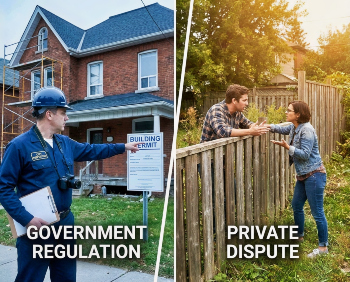
 the federal government. It did not, by its own terms, bind the states. That changed over time through a legal doctrine called incorporation, in which the Supreme Court applied most, but not all, Bill of Rights protections to state and local governments through the Fourteenth Amendment’s Due Process Clause (
 private property for public use without just compensation. The Fourteenth extends due process, and, through it, most Bill of Rights protections, to the states. Those two clauses do a lot of quiet work in boundary fights.
 worded HOA-government partnership can suddenly drag the Constitution into a fight.