Table of Contents
- What Political Echo Chambers Are and How They Form
- Understanding Confirmation Bias and Selective Exposure
- How Social Media Algorithms and Political Polarization Reinforce Isolation
- Step 1: Audit Your Current Information Diet
- Step 2: Diversify Your News Sources Across the Political Spectrum
- Step 3: Build Media Literacy and Fact-Checking Into Your Routine
- Step 4: Seek Out Opposing Viewpoints Deliberately
- Step 5: Learn How to Talk to People With Different Political Views
- Step 6: Recognize and Challenge Your Own Assumptions
- Conclusion: Building a Sustainable Practice
- Frequently Asked Questions
Last Updated: October 15, 2026
 What Political Echo Chambers Are and How They Form
A political echo chamber is an environment where you’re primarily exposed to information, opinions, and viewpoints that align with what you already believe. It forms when your news sources, social media feeds, and conversations repeatedly reinforce the same political perspective, leaving opposing viewpoints largely unseen.
This happens naturally. People tend to seek out information that confirms their existing beliefs. They follow friends who think similarly. They read publications that match their politics. Over time, this creates a bubble where one viewpoint dominates, and alternative perspectives seem distant or extreme.
The problem isn’t disagreeing with others. The problem is that you stop encountering genuine disagreement altogether. Your feed shows you only stories that validate your worldview. Your conversations happen within circles that share your assumptions. Without realizing it, you’ve lost access to how roughly half the country actually thinks.
Understanding Confirmation Bias and Selective Exposure
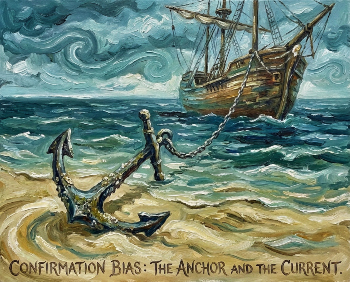
Confirmation bias is your brain’s tendency to seek out, interpret, and remember information that confirms what you already believe. When you encounter a news story, your mind filters it through your existing political views. You notice details that support your position. You dismiss or forget details that contradict it.
This isn’t a character flaw. It’s how human brains work. Your mind processes thousands of pieces of information daily. It can’t treat them all equally. So it prioritizes information that fits your existing mental framework.
Selective exposure is when you actively choose media and sources that align with your beliefs. You subscribe to certain news outlets. You follow specific commentators on social media. You avoid sources you expect will disagree with you. These choices feel natural; you’re simply choosing content you find interesting or trustworthy.
Together, confirmation bias and selective exposure create a self-reinforcing cycle:
- You choose sources that match your views
- Those sources confirm your existing beliefs
- This strengthens your confidence in those beliefs
- You become more likely to dismiss opposing information
- You seek out even more aligned sources
The cycle tightens. Over months and years, your worldview becomes more extreme, not because you changed your mind, but because you stopped encountering genuine counterarguments.
 How Social Media Algorithms and Political Polarization Reinforce Isolation
Social media platforms use algorithmic recommendations to decide what content appears in your feed. These algorithms don’t aim to show you balanced information. They aim to keep you engaged, scrolling, clicking, sharing, commenting.
Content that triggers strong emotions performs best. Outrage, fear, and tribal belonging all drive engagement. So algorithms learn to show you more of whatever makes you react strongly. If you engage with political content that aligns with your views, you’ll see more of it. If you engage with content that attacks the opposing side, you’ll see more attacks.
This creates a feedback loop that deepens political polarization. The algorithm doesn’t show you the moderate voices within the opposing party. It shows you the most extreme versions of the other side. You see the worst arguments, not the best ones. You form opinions about what “the other side” believes based on their loudest, angriest representatives.
Meanwhile, your own side’s moderate voices disappear from your feed. You see only the strongest, most emotionally resonant arguments for your position. You never encounter the legitimate criticisms or trade-offs your own side makes.
Over time, you believe:
- The other side is more extreme than it actually is
- Your side is more unified than it actually is
- Compromise is impossible
- The stakes are existential
None of this is intentional manipulation by individual people. It’s a structural problem built into how these platforms operate. The algorithms work exactly as designed; they maximize engagement. The side effect is that they maximize polarization.
 Step 1: Audit Your Current Information Diet
Before you can change anything, you need to see what you’re actually consuming.
Create an information inventory. For one week, track every news source you use. Write down:
- Which websites or apps you visit
- Which publications you read
- Which commentators or personalities you follow
- Which podcasts you listen to
- Which social media accounts you engage with most
Don’t judge yourself yet. Just observe.
After one week, review your list. Look for patterns:
- How many sources represent your political perspective?
- How many represent the opposing perspective?
- How many try to present multiple viewpoints?
- Which sources do you spend the most time with?
- Which sources trigger the strongest emotional reactions?
Most people discover their information diet is far more one-sided than they realized. You might think you read three different outlets. Your actual consumption shows you read one outlet and two commentators who cite it.
Check your social media feeds. Look at your last 50 posts from friends and accounts you follow. What percentage align with your political views? What percentage challenge them? Most people find their feeds are 80-90% aligned.
Measure your exposure to opposing viewpoints. Be honest: when was the last time you read a well-written argument for a position you disagree with? Not a strawman version. Not a caricature. A serious, intelligent argument from someone who actually holds that view.
If you can’t remember, that’s your answer. You’re in an echo chamber.
This audit takes an hour. It’s the foundation for everything else.
Step 2: Diversify Your News Sources Across the Political Spectrum
Once you see your current diet, deliberately expand it. The goal isn’t perfect balance. The goal is genuine exposure to how different Americans actually think.
Identify sources across the spectrum. You need outlets that represent:
- Conservative/right-leaning perspectives
- Liberal/left-leaning perspectives
- Centrist or independent perspectives
- Local news (which tends to be less partisan)
Don’t assume you know which outlets fit where. Do research. Look at which politicians and commentators praise or criticize each outlet. Check media bias ratings from sources like Media Bias/Fact Check, which rates outlets on both political bias and factual accuracy.
 Add sources you disagree with to your regular rotation. Not as a punishment. As a learning practice.
Start with one source from the opposing side. Pick something serious, a major publication, not a fringe blog. Read it for two weeks. Notice what stories they cover that your usual sources ignore. Notice what angles they emphasize. Notice what you find yourself disagreeing with.
The point isn’t to change your mind. The point is to understand how intelligent people who disagree with you actually think.
Use different sources for different purposes:
- Breaking news: Use wire services like AP or Reuters (less editorializing)
- Analysis and opinion: Read sources across the spectrum
- Local issues: Prioritize local outlets over national ones
- Specific topics: Find subject-matter experts, not just political commentators
Set a minimum standard. Commit to reading at least one serious source from the opposing perspective each week. Not scrolling past a headline. Actually reading the full article.
This doesn’t take hours. Fifteen minutes a week is enough.
Step 3: Build Media Literacy and Fact-Checking Into Your Routine
Not all information is equal. Learning to evaluate sources is essential to avoiding echo chambers. Distinguish between reporting, analysis, and opinion, and understand which sources do each well.
Understand source types:
| Source Type | Definition | Best For | Watch For |
|---|---|---|---|
| News reporting | Factual accounts of events | Breaking news, what happened | Bias in story selection |
| Analysis | Explaining context and implications | Understanding why something matters | Mixing facts with interpretation |
| Opinion/Commentary | Explicit argument for a viewpoint | Understanding different perspectives | Presented as fact |
| Advocacy | Content created to promote a cause | Understanding activist positions | Lack of opposing viewpoints |
Check claims against multiple sources. When you encounter a significant political claim, don’t just accept it. Look it up in at least two other sources. Do they report the same facts? Do they interpret them differently?
Use fact-checking resources. Organizations like FactCheck.org and PolitiFact examine specific claims and rate their accuracy. These aren’t perfect, but they provide a second opinion.
Notice emotional language. Sources trying to manipulate you use loaded words: “radical,” “dangerous,” “un-American.” Serious reporting uses neutral language. When you see heavy emotional language, that’s a signal to check the facts independently.
Ask who benefits. Every piece of content is created by someone with interests. A news organization wants readers. A political campaign wants votes. A commentator wants influence. Understanding the incentives helps you interpret what you’re reading.
Distinguish between correlation and causation. Just because two things happened at the same time doesn’t mean one caused the other. This is one of the most common tricks in political arguments.
Media literacy isn’t about becoming cynical. It’s about reading more carefully.
Step 4: Seek Out Opposing Viewpoints Deliberately
Avoiding echo chambers requires active effort. You can’t just passively consume whatever your feeds show you. Actively seek out perspectives that challenge you.
 Follow thoughtful people who disagree with you. Not trolls. Not the most extreme voices. Find intelligent people from the opposing side who make serious arguments.
Look for:
- Policy experts who disagree with your politics
- Journalists from outlets you usually avoid
- Academics who study topics you care about
- Local politicians and community leaders from the other side
Follow them for a month. Read their arguments. Notice where you disagree and where you find their points interesting.
Read long-form arguments, not social media hot takes. A tweet or short video clip can’t contain a real argument. Read essays, listen to podcasts, watch longer interviews where people explain their thinking in detail.
Join communities with mixed political views. Online forums, local civic groups, and community organizations often include people across the spectrum. These spaces force you to engage with real people, not caricatures.
Ask people you disagree with to explain their views. In conversation, ask genuine questions. “Why do you believe that?” “What would change your mind?” “What do you think people on my side get wrong?”
Most people are willing to explain their views if you ask seriously. You don’t have to agree. You just have to listen.
Seek out people who used to believe what you believe but changed their minds. These people can credibly explain both sides. They understand the arguments for your position and why they found them unconvincing.
Step 5: Learn How to Talk to People With Different Political Views
Conversations across political divides are uncomfortable. They’re also essential. You can’t understand how others think without talking to them.
Start with genuine curiosity, not debate. The goal isn’t to win an argument. The goal is to understand how someone else sees the world.
This changes everything. When you’re trying to win, you listen for weaknesses in their argument. When you’re trying to understand, you listen for what makes sense to them.
Ask questions like:
- “What experiences shaped your view on this?”
- “What concerns you most about the other side’s approach?”
- “What would a good solution look like to you?”
- “What do you think people on the other side get right?”
Find common ground first. You probably agree on more than you realize. You both want safe communities, economic opportunity, and good schools. You disagree on how to achieve those things.
Starting with agreement makes disagreement less threatening.
Avoid these conversation killers:
- Assuming bad motives (“You only believe that because…”)
- Dismissing their concerns (“That’s not a real problem”)
- Bringing up unrelated issues
- Attacking them personally
- Trying to “educate” them
These tactics shut down conversation. They make people defensive. They reinforce the echo chamber by proving that the other side won’t listen.
Set boundaries for yourself. You don’t have to engage with every disagreement. You don’t have to convince anyone. Just listen and explain your thinking clearly.
Expect disagreement to persist. You probably won’t change their mind. They probably won’t change yours. That’s okay. The goal is understanding, not conversion.
 Step 6: Recognize and Challenge Your Own Assumptions
Echo chambers aren’t just about external information. They’re also about how you process information. You need to develop awareness of your own blind spots.
Notice when you assume the worst about the other side. You probably do this without realizing it. Someone from the opposing party proposes a policy. Your first instinct is to assume the worst motivation.
Challenge this. Ask: “What’s the most charitable interpretation of this position? What legitimate concern might they be responding to?”
Identify your political identity. How much of your identity is tied to your political beliefs? The more your identity is wrapped up in politics, the more defensive you’ll be about information that challenges those beliefs.
If someone criticizes your political position, do you feel personally attacked? That’s a sign your political identity is too strong. It’s making you defensive instead of curious.
Seek out critiques of your own side. This is harder than reading opposing viewpoints. It requires admitting that people you agree with sometimes get things wrong.
Find critics from within your own political camp. Read their arguments. Notice what they say your side does poorly.
Test your beliefs. Ask yourself: “What would change my mind about this?” If you can’t answer that question, you’re not thinking; you’re just believing.
For major political positions, try to articulate the strongest argument against your view. Not a strawman. The actual best argument from the other side. If you can’t do that, you don’t understand the issue well enough.
Conclusion: Building a Sustainable Practice
Avoiding political echo chambers isn’t a one-time project. It’s a practice you maintain over time.
Start with the audit. See where you actually get your information. Then add one new source from the opposing side. Have one conversation with someone you disagree with. Read one serious argument against your position.
These small steps compound. Over months, your information diet becomes genuinely diverse. You encounter real disagreement regularly. You develop the skills to understand people you don’t agree with.
This matters for your own thinking. When you’re exposed to genuine counterarguments, your own views become more sophisticated. You understand trade-offs. You recognize legitimate concerns on the other side. You hold your beliefs with more intellectual humility.
It also matters for the country. Political polarization thrives in echo chambers. When people only encounter caricatures of the other side, compromise becomes impossible. Democracy requires citizens who can disagree while still recognizing each other’s humanity.
At Texas Journal, we believe citizens need access to critical analysis that challenges assumptions and exposes the thinking behind political positions across the spectrum. Our mission is to help you understand how your rights work under the Constitution and how to use them effectively, which requires understanding perspectives beyond your own echo chamber. Constitutional education resources provide frameworks for evaluating political claims against founding principles, helping you build the intellectual tools to resist polarization and think independently.
The practice of avoiding echo chambers strengthens both your individual thinking and your ability to participate meaningfully in civic life. Start today.
Ready to deepen your understanding of how political systems actually work and where your real power lies? Texas Journal equips citizens with constitutional knowledge and critical analysis to see through partisan narratives and recognize what’s actually at stake in political debates. Explore how to assert your rights and engage with politics from a position of informed independence. Click Here to join citizens building a more thoughtful approach to civic engagement.

Frequently Asked Questions
What is a political echo chamber and why should I care about avoiding one?
A political echo chamber is an environment where you’re primarily exposed to information and viewpoints that align with your existing beliefs. This happens through the people you follow, the news sources you trust, and social media algorithms that show you more of what you’ve already engaged with. Avoiding echo chambers matters because they reinforce confirmation bias, limit your understanding of complex issues, and fuel political polarization. Breaking free lets you make more informed decisions and engage with people across the political spectrum from a place of genuine understanding, not assumption.
How can I find reliable sources with different political perspectives?
Start by identifying outlets that represent different points on the political spectrum—left-leaning, center, and right-leaning sources. Read the same story across multiple outlets to see how different perspectives frame the same facts. Look for sources that cite data, acknowledge counterarguments, and distinguish between news reporting and opinion sections. Check media bias ratings from organizations like Media Bias/Fact Check to understand each outlet’s positioning. Most importantly, evaluate the quality of evidence and reasoning rather than dismissing a source solely because it leans in a different direction than your preferred outlets.
How do I stay informed without being overwhelmed by political anxiety?
Set specific times to consume news rather than checking throughout the day, which can amplify anxiety. Limit social media exposure where sensationalism is highest. Focus on substantive reporting rather than opinion and commentary. When reading political content, distinguish between verifiable facts and interpretations. Balance digital consumption with offline conversations and activities. If you find yourself in a heated online debate, step away—productive dialogue rarely happens in comment sections. Staying informed doesn’t require constant exposure; a weekly review of major stories from diverse sources is often more valuable than daily scrolling.
What should I do if someone I know strongly disagrees with me politically?
Approach the conversation with genuine curiosity rather than the goal of changing their mind. Ask questions to understand their reasoning and the values underlying their position. Listen for what they’re actually concerned about, not just what you think they’re saying. Share your perspective clearly but without attacking theirs. Acknowledge where you have common ground, even if your conclusions differ. If the conversation becomes heated, it’s acceptable to say you need to step back and return to it later. These conversations often reveal that people across the political spectrum share similar concerns but disagree on solutions—that understanding alone can reduce polarization.