Table of Contents
- Why Explaining Constitutional Rights to Neighbors Matters Now
- What You’ll Need Before the Conversation
- Step 1: How to Explain the Bill of Rights in Plain Language
- Step 2: Property Rights and the Constitution in Everyday Disputes
- Step 3: Using Constitutional Rights Advocacy Scripts That Work
- Step 4: Constitutional Rights vs. HOA and CC&R Rules
- Step 5: De-Escalation Techniques for Neighbor Disputes
- Common Mistakes to Avoid When Explaining Constitutional Rights
- Frequently Asked Questions
Last Updated: September 19, 2026
Why Explaining Constitutional Rights to Neighbors Matters Now
Most Americans can name the First Amendment. Far fewer can explain what it actually protects when a dispute starts next door. That gap is exactly where explaining constitutional rights to neighbors becomes a practical skill, not a civics lecture. This guide from Texas Journal walks you through how to hold that conversation without turning a fence-line disagreement into a feud.
 Here’s the tension worth naming up front. The same founding documents that protect your property also protect your neighbor’s right to speak, assemble, and petition. Understanding both sides is what makes you credible. It’s also what keeps a conversation from becoming a shouting match.
What You’ll Need Before the Conversation
Preparation decides whether the talk lands or falls flat. Before you knock on a door or stop someone in the driveway, gather three things: the specific facts, the relevant documents, and a calm tone.
Start with the facts. Write down what happened, when, and where. Dates and details beat vague frustration every time.
Then pull the paperwork. Depending on the dispute, that could be:
- Your deed or property survey
- The local ordinance or code section in question
- Your community association’s CC&Rs, if you have one
- Any written correspondence already exchanged
Finally, set your goal. Are you trying to inform, resolve, or document? Knowing which one changes everything about how you open your mouth.
Step 1: How to Explain the Bill of Rights in Plain Language
The fastest way to lose a neighbor is to sound like a law review article. Plain language wins. When you explain the Bill of Rights, translate each amendment into a sentence a busy person can repeat at dinner, and then be ready to answer the one question that always comes next: “Does that even apply to us?”
Here’s the short version you can actually use: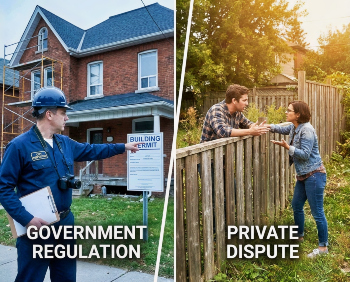
- First Amendment: You can speak, worship, gather, and petition the government without it silencing you.
- Second Amendment: The right to keep and bear arms is protected.
- Third Amendment: The government can’t quarter soldiers in your home during peacetime without your consent.
- Fourth Amendment: The Government can’t search you or your home without cause, and warrants must be specific.
- Fifth Amendment: You can’t be forced to testify against yourself, and you get due process and just compensation if the government takes property.
- Sixth Amendment: You get a speedy public trial, a lawyer, and an impartial jury in criminal cases.
- Seventh Amendment: Civil cases over a certain dollar threshold get a jury trial.
- Eighth Amendment: No excessive bail, excessive fines, or cruel and unusual punishment.
- Ninth Amendment: Listing rights doesn’t mean other rights don’t exist.
- Tenth Amendment: Powers not given to the federal government are reserved to the states or the people.
Breaking Down the First Ten Amendments
The Bill of Rights is the first ten amendments to the Constitution, ratified together in 1791 to limit federal power and protect individual liberties (The Bill of Rights: A Transcription). That single sentence is often all a neighbor needs to hear before the rest clicks.
Walk through them in order if the conversation allows. But don’t recite. Explain why each one exists. The Fourth Amendment exists because the founders lived under general warrants, broad, open-ended search authorizations that let officials ransack a home on suspicion alone. The First exists because speech and worship were punished. History makes the rights stick.
The Question That Trips Up Every Conversation: “Does It Apply to My Neighbor?”
Here’s the piece most quick explainers skip, and it’s the one your neighbor will actually care about. The original Bill of Rights restrained only  the federal government. It did not, by its own terms, bind the states. That changed over time through a legal doctrine called incorporation, in which the Supreme Court applied most, but not all, Bill of Rights protections to state and local governments through the Fourteenth Amendment’s Due Process Clause (incorporation doctrine | Wex | US Law).
What that means at the fence line:
- If a city inspector enters your yard without a warrant or an exception, the Fourth Amendment is squarely in play.
- If a state agency fines you for a political sign, the First Amendment analysis applies.
- If your neighbor does the same thing on private property, the Constitution usually does not, because your neighbor is not the government.
That last point is the single most important thing to get right, and it’s where the conversation usually goes sideways.
Common Misconceptions Neighbors Hold
A common mistake is assuming the Constitution applies to every private dispute. It mostly restrains government, not private citizens. That distinction trips up more conversations than any other.
Other misconceptions worth correcting gently:
- “Free speech means I can say anything anywhere.” It doesn’t cover true threats, incitement, or certain limits on private property.
- “My rights end where yours begin” is a legal test. It’s a slogan. Courts use balancing tests, not bumper stickers.
- “The Constitution settles HOA fights.” Usually it doesn’t, unless government action is involved. (More on that in Step 4.)
- “The Bill of Rights is absolute.” Almost no right is. Everyone has boundaries courts have drawn over two centuries.
A 90-Second Script for the Bill of Rights
If you only have a minute at the mailbox, try this:
“Quick version: the Bill of Rights is the first ten amendments, and it mostly limits what the government can do to us, not what we can do to each other. So if a city rule is the problem, the First and Fourth Amendments matter a lot. If it’s just you and me, we’re usually in state property law and local ordinance territory. Want me to show you which one applies here?”
That framing does three things at once: it educates, it signals you’re not accusing them of anything, and it moves the conversation toward the actual rule that governs the dispute.
Step 2: Property Rights and the Constitution in Everyday Disputes
Property rights and the Constitution connect more directly than most people realize. The Fifth Amendment bars the government from taking  private property for public use without just compensation. The Fourteenth extends due process, and, through it, most Bill of Rights protections, to the states. Those two clauses do a lot of quiet work in boundary fights.
But here’s what most guides miss: your neighbor’s fence, tree, or driveway dispute is usually governed by state property law and local rules, not the Constitution itself. The Constitution sets the floor. Local law fills in the details. Knowing which floor you’re standing on is the whole game.
The Takings Framework in Plain English
When people say “that’s a taking,” they usually mean one of two things, and the Supreme Court treats them very differently:
- A physical taking, the government permanently occupies your land, or authorizes someone else to. This is the clearest violation and almost always requires just compensation.
- A regulatory taking, a rule or ordinance goes so far in restricting what you can do with your property that it functions like a taking. Courts weigh the economic impact, how much it interferes with investment-backed expectations, and the character of the government action.
A temporary restriction, like a moratorium while the city studies drainage, is usually not a taking unless it goes on long enough to destroy the property’s value. A permanent physical occupation almost always is.
The practical takeaway for a neighbor conversation: if the government is the one restricting or occupying, the Fifth Amendment is your starting point. If it’s a private party, it usually isn’t.
Easements, Encroachment, and Local Ordinances
An easement is a legal right to use someone else’s land for a specific purpose, like a utility line or shared driveway. Encroachment is when a structure or object crosses a property line without permission.
Local ordinances handle most of these conflicts. A city code might set fence height limits, setback rules, or tree-trimming obligations. Those are mandatory regulations, and they carry real enforcement power, often a citation, a fine, or a requirement to remove the offending structure at your own cost.
| Dispute Type | Usually Governed By | Constitutional Angle |
|---|---|---|
| Fence height | Local ordinance | Minimal |
| Tree overhang | State property law | Minimal |
| Utility access | Easement terms | Fifth Amendment takings |
| Government inspection | Local code enforcement | Fourth Amendment |
| Sign restrictions | Ordinance + First Amendment | Strong if government-run |
| HOA architectural rule | CC&Rs (private contract) | Usually none |
The State-Action Doctrine: Why Your Neighbor’s Fence Isn’t a Constitutional Case
The single most useful concept to explain at the fence line is the state-action doctrine. The Constitution restrains government. It does not, as a general rule, restrain private parties. That means:
- Your neighbor building a fence two feet over the line is a trespass issue, not a constitutional one.
- Your HOA fining you for a paint color is a contract issue, not a constitutional one.
- Your city ordering you to tear down a shed because of a new ordinance is a constitutional issue, and the Fifth and Fourteenth Amendments apply.
The doctrine has exceptions. If a private party is acting essentially as an arm of the government, for example, a private entity running a public function under government authority, courts can treat its actions as state action. That’s rare in neighbor disputes, but it’s the reason a poorly  worded HOA-government partnership can suddenly drag the Constitution into a fight.
How to Tell Which Rule Governs Your Dispute
Before you knock on a door, run this quick three-question test:
- Who is doing the thing? Government actor → constitutional analysis. Private party → state and local law.
- What document creates the obligation? A statute or ordinance → public law. A deed, easement, or CC&R → private law.
- What remedy do you actually want? Money damages, an injunction, or a citation? Each points to a different forum, small claims court, a code enforcement office, or a mediator.
Answering those three questions before the conversation starts keeps you from citing the wrong authority and losing credibility on the first sentence.
Step 3: Using Constitutional Rights Advocacy Scripts That Work
Scripts give you a starting point when emotions run high. You don’t have to memorize them. You just need a few openers that keep the conversation civil and factual.
Try phrasing like this:
“I want to walk through what the Constitution actually says about this, because I think it protects both of us. Can I show you the part I’m looking at?”
Or:
“I’m not here to argue. I brought the actual language so we’re working from the same facts. Can we read it together?”
A good constitutional rights advocacy script does three things: it signals respect, it points to a shared source, and it invites the neighbor to respond. That last part matters. People defend positions they feel ownership over.
Step 4: Constitutional Rights vs. HOA and CC&R Rules
This is the fight that trips up the most people. Constitutional rights and HOA rules are not the same thing, and they don’t operate on the same level.
The Constitution limits government action. An HOA is a private entity. When you buy into a community association, you agree to its covenants, conditions, and restrictions. That contract can restrict things the Constitution wouldn’t let the government restrict.
So can an HOA ban your political sign? Often yes, within limits, because you agreed to the rules. Can it ban you from speaking at a public meeting? No, because that’s government action.
The practical takeaway: read your CC&Rs before you cite the First Amendment. If the HOA is acting as a private party, the Constitution usually doesn’t reach it. If it’s acting in concert with local government, that can change the analysis.
Step 5: De-Escalation Techniques for Neighbor Disputes
De-escalation is a skill, not a personality trait. You can learn it. The core move is simple: lower the temperature before you try to make your  point.
Start with these techniques:
- Match their volume, then drop yours. If they’re loud, don’t match it. Speak one notch softer.
- Name the emotion without judging it. “I can see this frustrates you. I get it.”
- Ask a question instead of making a statement. Questions invite dialogue.
- Offer a pause. “Let’s both think about this and talk again tomorrow.”
- Bring in a neutral third party. Mediation works when direct talks stall.
Mediation and dispute resolution are underused tools. A trained mediator doesn’t decide who’s right. They help both sides hear each other. Many communities offer this service at low or no cost through local courts or nonprofit groups.
Common Mistakes to Avoid When Explaining Constitutional Rights
The biggest mistake is treating the Constitution as a weapon instead of a framework. It’s a document about limits on power, not a cudgel for winning arguments.
Other errors to sidestep:
- Citing case law you haven’t read. If you can’t explain the holding, don’t bring it up.
- Assuming all rights are absolute. Almost none are.
- Ignoring local rules. Ordinances and CC&Rs often decide the outcome.
- Making it personal. Attack the problem, not the person.
- Forgetting your own obligations. Civic duty runs both ways.
A common mistake is walking away without documenting anything. If the conversation fails, a written record of what you said, when, and how the neighbor responded can matter later if the dispute escalates to mediation or a formal complaint.
Explaining constitutional rights to neighbors is really about restoring a shared understanding of founding principles, one conversation at a time. Texas Journal exists to help citizens do exactly that, with critical insight and discernment you won’t find in mainstream coverage. The platform teaches you how to use the abilities the Constitution gives you, focuses on asserting states’ rights, and offers the Patriot Pool as a force multiplier for the movement. If you’re ready to stop watching from the sidelines, click here to join and start defending the Republic from your own front porch.

Frequently Asked Questions
What are the 10 constitutional rights in order?
The Bill of Rights contains the first ten amendments. In order: freedom of religion, speech, press, assembly, and petition (1st); right to bear arms (2nd); protection from quartering soldiers (3rd); protection from unreasonable searches and seizures (4th); rights in criminal cases including due process (5th); right to a speedy trial (6th); right to a jury trial in civil cases (7th); protection from cruel and unusual punishment (8th); unenumerated rights retained by the people (9th); and powers reserved to the states or the people (10th).
Do constitutional rights apply on private property?
Constitutional protections primarily restrain government authority, not private parties. On private property, the owner sets rules, and your constitutional rights generally do not override those rules. However, if a private property owner is acting under government authority or if state law extends protections, the analysis changes. HOAs and community associations operate under contract law and state statutes, not the Constitution directly, though some state laws add protections.
How do I explain the Bill of Rights to someone who has never studied law?
Start with the idea that the Bill of Rights limits what government can do to you, not what your neighbor can do. Use concrete examples: the First Amendment protects your right to attend a peaceful assembly; the Fourth protects you from warrantless searches. Avoid legal jargon. Instead of saying ‘substantive due process,’ say ‘the government has to follow fair procedures before taking away your life, liberty, or property.’ Keep it to two or three amendments at a time.
Can my HOA overrule my constitutional rights?
HOAs are private contracts, so the Constitution does not directly bind them the way it binds government agencies. However, some states have laws limiting HOA power over things like political signs, religious displays, and satellite dishes. If an HOA rule conflicts with a state or federal statute, the statute usually wins. Review your CC&Rs and your state’s property code, and consult a local attorney if a rule seems to cross a legal line.