Last Updated: November 5, 2026
Quick Summary
Pro se litigation is litigation in which a party represents themselves without an attorney. Self-represented plaintiffs in constitutional cases face steep odds, so procedural preparation matters as much as the legal merits.
- Pro se plaintiffs win only 3% of final judgments, according to the Cornell Journal of Law and Public Policy analysis.
- Federal district courts have nearly 500 pro se-specific rules and practices, so check the local rules of your court.
- Most constitutional damages claims against state and local officials proceed under 42 U.S.C. § 1983.
- Track the limitations deadline for each claim separately, since the clock often starts at the injury.
- Do not count on appointed counsel; plan as if you will carry the case alone.
Table of Contents
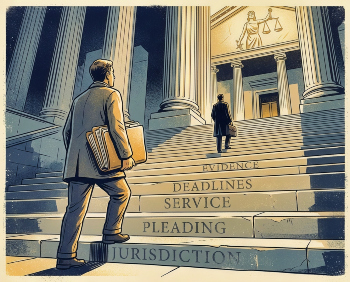 Pro se litigants bring a disproportionate share of constitutional cases, and most of them lose. According to the University of Chicago Law Review empirical study on pro se litigation patterns, self-represented plaintiffs initiate 32% of all civil rights cases in federal district courts. A pro se litigation guide for constitutional claims is worth reading because the odds are steep, and most of the reasons are procedural rather than substantive.
Pro se litigation is litigation in which a party represents themselves without an attorney. Texas Journal has built this guide for citizens who intend to assert their rights directly, and the first step is understanding what that role demands.
Self-representation is not a fringe choice. Pro se litigants lose approximately 80-90% of their cases, according to the Cornell Journal of Law and Public Policy analysis of self-represented litigants. The same analysis found that pro se plaintiffs win only 3% of final judgments, a figure that should shape how you prepare.
Constitutional claims differ from ordinary civil disputes in ways that matter. For background on how constitutional law protects individual liberties from government overreach, see Securing Freedom With Constitutional Law. You are often suing a government actor, asserting a right against state power, and facing defenses such as qualified immunity that do not appear in a contract dispute. The procedural rules are no gentler, and the pleading bar is higher.
 Here is where it gets harder. Federal courts do not operate under one uniform set of self-representation rules. Research has documented nearly 500 pro se-specific rules and practices across the 94 federal district courts, as the Fordham Law Review analysis of procedural variation for unrepresented litigants reports. A rule that applies in one district may not apply in the next, so check the local rules of the court where you file.
The Federal Judicial Center has also emphasized that courts need specific case management strategies for nonprisoner civil litigation, because pro se litigants often lack familiarity with procedural rules, as its Pro Se Case Management for Nonprisoner Civil Litigation makes clear. That gap is where most avoidable losses begin.
Our view is simple: treat self-representation as a discipline, not a shortcut. The sections that follow cover jurisdiction, the right cause of action, pleading, filing, service, deadlines, evidence and motion practice, in the order you will encounter them.
Jurisdiction and Venue: Choosing the Right Federal District Court
Choosing the wrong court is one of the fastest ways to end a case before it starts. Jurisdiction determines whether a federal court can hear your claim at all, and venue determines which district is the proper place to file.
For most constitutional claims against federal or state officials, federal question jurisdiction applies because the claim arises under federal law. Venue generally lies where the defendants reside or where the events occurred. Confirm both before you draft a single paragraph of your complaint.
Many pro se filings fail on venue alone. Read the court’s local rules, which may impose additional requirements on self-represented filers.
 Identifying Your Cause of Action: Section 1983 Versus Bivens
Most constitutional damages claims against state and local officials proceed under 42 U.S.C. § 1983. Claims against federal officers are typically analyzed under Bivens, a more limited doctrine that courts have increasingly declined to extend to new contexts. Choosing the wrong vehicle can sink an otherwise strong case.
For a broader look at the constitutional tools available to citizens, see our guide on Defend the Republic: Constitutional Tools Citizens Can Use. It covers the landscape before you narrow to a single claim. If you are weighing how much of this work you can handle alone, Protect Our Traditions is one option Texas Journal offers for citizens looking for structured support as they organize their claims.
Pleading Standards for Constitutional Claims Under Twombly and Iqbal
Under Bell Atlantic Corp. v. Twombly and Ashcroft v. Iqbal, a complaint must contain enough factual content to state a plausible claim. Labels and conclusions are not enough. For constitutional claims, you must tie each defendant to specific conduct that violated a specific right.
Write facts, not characterizations. State who did what, when and where, and why it violated the Constitution. Vague accusations of “tyranny” will not meet the standard, no matter how strongly you feel about them.
 Pro Se Complaint Example: Drafting a Federal Constitutional Complaint
A workable pro se complaint follows a predictable structure: caption, jurisdiction statement, parties, factual allegations, claims for relief, and a prayer for relief. Number your paragraphs and keep each allegation to a single fact.
A simple example: “On March 3, the defendant officer stopped the plaintiff without reasonable suspicion and ordered him out of his vehicle.” That sentence names a party, a date, an action, and an injury. It is far more useful than a paragraph of general grievance.
Filing Pro Se in Federal Court: Fees, Forms and the Clerk of Court
Filing in federal court involves a filing fee, and a party who cannot afford it may apply to proceed in forma pauperis. Check the court’s current fee schedule and forms before filing, because they change.
Visit the clerk of court’s office or the court’s website to confirm the required forms. Keep a complete copy of everything you submit, along with proof of filing.
Serving the Defendant and Serving Federal Agencies Correctly
Service of process is the formal notice that brings a defendant into the case. Improper service is a common, curable defect, but it can delay everything. Serving a federal agency or officer involves specific steps beyond ordinary personal service, so follow the Federal Rules of Civil Procedure exactly.
Deadlines, Statutes of Limitations and Procedural Traps
Every constitutional claim has a limitations period, and missing it usually ends the case regardless of merit. For a companion resource on timing and procedural pitfalls, see Constitutional Rights Defense Strategies. Track the deadline for each claim separately, and calendar the response deadlines the court imposes after filing.
Here is the trap many citizens miss: the limitations clock often starts at the injury, not when you finish researching the law. Start early.
Gathering Evidence and Managing Digital Records
Evidence wins cases. Preserve emails, text messages, video, public records responses, and any written communications with officials. Store originals in a secure location, back them up, and log the date and source of every item. Authentication matters, so be ready to explain how you obtained each exhibit.
 Qualified Immunity: How to Navigate the Defense
Qualified immunity shields government officials unless their conduct violated a clearly established constitutional right. To overcome it, you generally need a prior case with materially similar facts. Research the controlling circuit precedent before you plead, and frame your claim around the clearly established law.
Motions to Dismiss and Summary Judgment When You Represent Yourself
Expect a motion to dismiss early, and respond on time with a focused opposition that addresses each argument. Summary judgment comes later, after discovery, and requires you to show admissible evidence creating a genuine dispute of material fact. Respond to every motion, even when you believe it is weak.
Courtroom Conduct, Addressing the Judge and Oral Argument
Address the judge as “Your Honor,” stay concise, and answer the question asked. Be courteous to opposing counsel even when provoked. Judges remember composure, and a calm, organized presentation carries weight that outrage cannot.
Whether You Can Request Counsel and What Pro Se Outcomes Show
Some judges are reluctant to appoint counsel for pro se litigants, preferring to manage cases through procedural rules rather than burdening the bar with appointments, as the Fordham Law Review analysis notes. Do not count on appointment. Pro se defendants fare somewhat better, with 12% receiving final judgments in their favor, according to the Cornell Journal of Law and Public Policy analysis. Plan as if you will carry the case alone. If you want help organizing that work, Defend the American Family is another Texas Journal service you may find useful when deciding how to prepare.
Dave
Questions? Call!
940-353-1398

Frequently Asked Questions
What percentage of pro se litigants win?
Pro se litigants generally do poorly in civil litigation. These figures cover civil litigation broadly, so constitutional claims carry their own pleading and immunity hurdles. Careful preparation, precise pleading, and early attention to procedural rules are the most practical ways to improve your odds.
Do judges like pro se litigants?
Judges generally do not favor or disfavor pro se litigants as a class. Federal courts apply the same substantive and procedural law to self-represented parties, though many judges give pro se pleadings a more lenient reading under the rule that filings by unrepresented litigants are construed liberally. That leniency does not excuse missing deadlines, ignoring local rules, or failing to state a plausible claim. Respectful, concise filings that follow the court’s procedures earn more credibility than lengthy, emotional submissions.
What is the difference between a Bivens action and a Section 1983 claim?
Section 1983 of Title 42 allows lawsuits against state and local officials who violate federal constitutional or statutory rights while acting under color of law. A Bivens action, named after Bivens v. Six Unknown Named Agents (1971), is the judicially created remedy for certain constitutional violations by federal officers. The Supreme Court has significantly narrowed Bivens claims, so many federal officer cases are now dismissed at the threshold. Identify which type of defendant you face before drafting, because the wrong cause of action can end the case early.
How do you properly serve a federal agency in a constitutional lawsuit?
Under Federal Rule of Civil Procedure 4(i), serving the United States or a federal agency generally requires delivering a copy of the summons and complaint to the United States Attorney for the district where the action is brought, sending copies by registered or certified mail to the Attorney General in Washington, D.C., and serving the agency or officer as the rule specifies. Service must be completed within the time limit set by Rule 4(m). Keep proof of every mailing and delivery, since defective service is a common reason for dismissal.
How do you draft a complaint for a federal constitutional violation?
A complaint should state the facts in numbered paragraphs, identify each defendant and the government action at issue, cite the specific constitutional provision violated, and explain the causal link between the defendant’s conduct and your injury. Plead enough facts to make the claim plausible under Bell Atlantic Corp. v. Twombly and Ashcroft v. Iqbal, rather than offering labels or conclusions. Attach only key exhibits, and request specific relief such as damages or an injunction.
Can a pro se litigant request an attorney if the case involves complex constitutional issues?
Federal courts have no general obligation to appoint counsel in civil cases, and under 28 U.S.C. section 1915(e)(1) a court may request counsel for an indigent litigant only in exceptional circumstances. Courts weigh the merits of the claim, your ability to investigate and present the case, and the complexity of the legal issues. Many districts also operate pro bono or volunteer lawyer programs. Make a documented request early, showing your efforts to find counsel, rather than waiting until a dispositive motion is pending.
Your Next Step: Building a Filing Checklist Before You Sue
Before you file, confirm your jurisdiction and venue, your cause of action, your limitations deadline, your fee or fee waiver, your service plan and your evidence preservation. Build the checklist now, and check it twice. Our practical steps for constitutional activism in 2026 pair well with this list. Get started with Texas Journal’s resources to strengthen your preparation and assert your rights with confidence.