Table of Contents
- Why Identifying Reliable Legal Sources Matters
- Understanding Primary and Secondary Legal Sources
- Evaluating Authority and Author Credentials
- Assessing Accuracy and Supporting Evidence
- Checking Objectivity, Bias, and Purpose
- Verifying Currency and Jurisdiction Relevance
- How to Check If a Case Is Still Good Law
- Finding Official Legal Sources Online
- Your Legal Research Checklist
- Frequently Asked Questions
Last Updated: October 21, 2026
 Why Identifying Reliable Legal Sources Matters
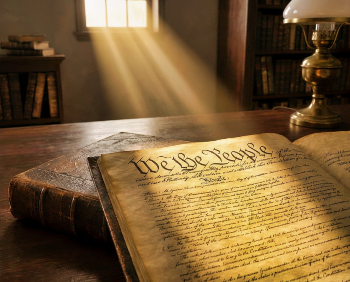
Knowing how to identify reliable legal sources is foundational to asserting your constitutional rights. Bad information wastes time and money and can undermine your legal position.
Online, citizens find conflicting advice, outdated rulings, and commentary dressed up as law. Without separating credible authority from opinion, you can’t make informed decisions about your rights.
Whether you’re researching constitutional limits on federal agency power or how to challenge government action, the ability to identify reliable legal sources determines whether your research supports your position.
This guide covers essential criteria: distinguishing primary authority from secondary commentary, verifying that cases remain good law, and finding official legal materials online.
Understanding Primary and Secondary Legal Sources
Primary legal sources are the law itself- the actual words of the Constitution, statutes, regulations, and court decisions- and carry the most authority. Secondary sources are commentary: legal analysis, textbooks, law review articles, and explanations by scholars or practitioners.
Build on primary sources. A court decision addressing your question beats a legal blog explaining it; a statute’s text beats a news summary.
 Here’s the practical difference:
- Primary sources: The U.S. Constitution, state constitutions, federal and state statutes, regulations from agencies, court decisions, executive orders
- Secondary sources: Law review articles, legal commentary, textbooks, practice guides, blog posts by lawyers, news coverage of legal issues
Secondary sources help you understand primary sources; a good analysis can explain a complex ruling, but it’s never the final word.
When a secondary source makes a claim about constitutional law or states’ rights, track back to the primary source it cites and read the case or statute yourself. This protects you from someone else’s misreading or selective interpretation.
Evaluating Authority and Author Credentials
Authority has two dimensions: the legal weight of the source itself and the credibility of the person explaining it. Confusing the two is a common reason people cite the wrong law.
American law operates on a hierarchy, and a source’s position determines whether a court must follow it or may merely consider it.
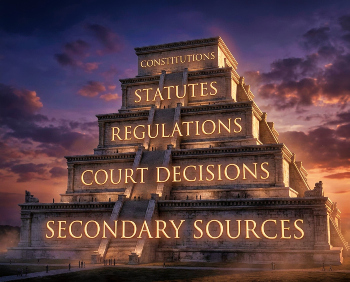
The legal-source hierarchy, from most to least authoritative:
- Constitutions. The U.S. Constitution governs federal law and, under the Supremacy Clause, overrides conflicting state law. Your state constitution governs state law and often provides stronger rights protections than the federal Constitution. A constitutional provision outranks any statute, regulation, or case that conflicts with it.
- Statutes. Acts passed by Congress or your state legislature. A federal statute is binding nationwide on the issues it covers. A state statute is binding only within that state.
- Regulations. Rules issued by executive agencies under authority delegated by a statute. Regulations carry the force of law but must stay within the statute that authorized them. A regulation that exceeds its statutory authority can be challenged and struck down.
- Court decisions. Cases interpret and apply the Constitution, statutes, and regulations. Their weight depends on which court issued them and where you are.
- Secondary sources. Treatises, law review articles, practice guides, and commentary. These explain the law but are never binding authority on their own.
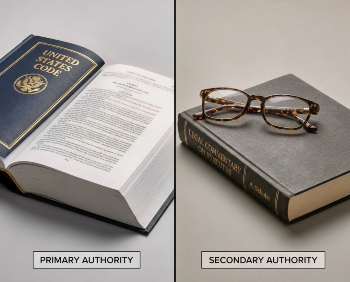 Binding versus persuasive authority. This distinction decides whether a source controls your question. A case is binding (also called mandatory) when a court with appellate authority over your jurisdiction has decided the issue. A case is persuasive when it comes from a court with no authority over your jurisdiction; reasoning may still be useful.
A few practical rules follow from this:
- U.S. Supreme Court decisions bind every federal and state court on questions of federal law.
- Your federal circuit court of appeals binds federal district courts within that circuit. A decision from another circuit is persuasive only.
- Your state’s appellate courts bind lower courts in your state on state-law questions. A state supreme court decision is the final word on that state’s constitution and statutes.
- Federal district court decisions are persuasive, not binding, even within their own district in most respects.
- Another state’s supreme court is never binding on your state’s courts, no matter how well reasoned the opinion is.
Jurisdiction is the filter that makes the hierarchy usable. Before weighing any source, ask which sovereign’s law governs your question and which court has the final say. Federal questions are controlled by federal law and ultimately the U.S. Supreme Court; questions about your state’s law are controlled by your state’s law and ultimately its highest court.
When a higher authority conflicts with a lower one, the higher authority wins: a statute cannot override the Constitution, and a regulation cannot override its authorizing statute.
Author credentials matter for secondary sources. Once you move past primary law, evaluate who is doing the explaining:
- Legal training. Is the author a licensed attorney, a law professor, or a judge? Legal training signals familiarity with doctrine and research methods, though it doesn’t guarantee accuracy on every point.
- Subject expertise. Has the author written or practiced in this specific area, or are they commenting outside their field?
- Track record. Do courts, treatises, or other scholars cite the author’s work? Citations by others are a rough proxy for reliability.
- Institutional affiliation. Law schools, bar associations, and established legal publishers apply editorial review that a personal blog does not.
- Transparency. Does the author cite the primary sources behind each claim and disclose their reasoning and any limitations?
A practicing attorney writing in their own jurisdiction usually understands local procedure and precedent better than a national commentator. Neither credential substitutes for checking the primary source.
Assessing Accuracy and Supporting Evidence
Accurate legal sources cite their authority. A claim about what the law says should point you to the supporting statute, regulation, or court decision. A legal argument with no citations is a red flag.
Check the citations. A reliable source quotes the actual text or points you to where you can read it. Follow those citations and read the original case or statute: does the source accurately represent it?
Misrepresentation happens often, sometimes accidentally, sometimes intentionally. Protect yourself by reading the primary source yourself.
Look for sources that:
- Quote directly from statutes, regulations, or court decisions
- Cite specific cases with case names and years
- Link to or reference where you can find the original source
- Acknowledge limitations or counterarguments
- Distinguish between what the law actually says and what they think it should say
Avoid sources that:
- Make bold legal claims without citing any authority
- Paraphrase or summarize without letting you see the original text
- Dismiss opposing views without explaining them
- Present opinion as established legal fact
- Use emotional language instead of legal analysis
Accuracy means the author verified claims against the actual law. When that work shows up in citations and quoted text, you can trust the source more.
 Checking Objectivity, Bias, and Purpose
Every legal source has a purpose. Understanding it helps you assess whether the analysis is objective or shaped by an agenda.
Some sources educate: law school casebooks, official government explanations, and bar association materials present the law as it is. Others persuade: political organizations, advocacy groups, and partisan media present arguments supporting their position.
Neither type is inherently unreliable; a constitutional law organization that believes in states’ rights can still explain the law accurately. But know the lens: which cases they emphasize and which arguments they highlight reflect their values.
Ask yourself these questions:
- Who created this source? What organization or individual?
- What is their stated mission or purpose?
- Do they have a financial interest in the answer?
- Are they trying to inform you or persuade you?
- Do they acknowledge legitimate counterarguments?
- Do they distinguish between what the law says and what they want it to say?
A states’ rights advocacy group might present constitutional law accurately while emphasizing state-sovereignty arguments. That makes it partisan, not unreliable. Use it, but also read sources presenting the federal government’s perspective.
Objectivity means honesty about what the law says, even when it contradicts the author’s preferred outcome. A reliable source acknowledges when the law doesn’t support its position; an unreliable one twists the law to fit its agenda.
Verifying Currency and Jurisdiction Relevance
Legal sources become outdated: decisions can be overruled, statutes amended, regulations replaced. Using old law today is a serious mistake.
Check when a source was written or decided. For court decisions, the decision date matters; for statutes, find the most recent version; for secondary sources, prefer recent analysis.
Jurisdiction matters equally. Federal law applies nationwide; state law applies only in that state. A California statute doesn’t control what’s legal in your state, and a Second Circuit decision binds only that circuit.
When you’re researching a legal question, prioritize sources from your jurisdiction:
- Your state’s constitution and statutes
- Your state’s Supreme Court decisions
- Federal courts that cover your state (your circuit court of appeals)
- The U.S. Supreme Court
- Other states’ law (for comparison or insight, but not binding authority)
A recent decision from your state’s highest court is more reliable for your purposes than an older decision from another state, however well-reasoned. Your state’s law controls your rights and obligations.
When you cite a source, make sure it’s current and applicable to your jurisdiction. Outdated law or law from another state will weaken your position, not strengthen it.
 How to Check If a Case Is Still Good Law
A court decision is not permanent authority. A higher court can reverse it, the same court can overrule it, a legislature can amend the statute it interpreted, or a constitutional amendment can undercut its reasoning. Relying on a case that is no longer good law is one of the most damaging research errors you can make, because the citation looks authoritative right up until someone checks it.
What ‘good law’ means. A case is good law when it has not been reversed, overruled, superseded by statute, or so narrowed by later decisions that its holding no longer supports the proposition you are citing it for. A case can remain technically valid while later courts distinguish it as irrelevant to your specific issue, so good-law checking is issue-specific, not just case-specific.
The two things to check:
- Subsequent history. What happened to this case after it was decided? Was it appealed? Affirmed, reversed, vacated, or remanded? Did the Supreme Court grant certiorari and decide it differently?
- Subsequent treatment. How have later courts treated it? Has it been overruled, criticized, limited, or distinguished? Has a statute changed the legal landscape it addressed?
Citators are the standard tool. A citator tracks every later document citing a case and classifies how that document treated it. The two dominant citators are Shepard’s (the origin of the verb ‘Shepardizing’) and KeyCite. Both assign visual signals: a red flag generally means the case has been overruled or severely undermined; a yellow signal means caution, such as criticism or limited treatment. Citators also flag amended statutes and repealed regulations.
Commercial citators sit behind paid subscriptions, but you can perform a meaningful good-law check with free tools:
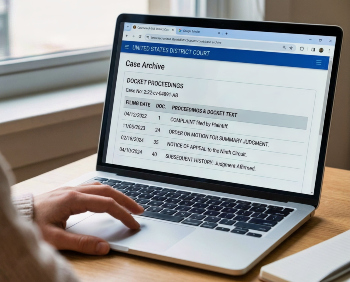
- Court websites. The court that issued the decision often posts later opinions in the same line of cases. Check the docket and the court’s opinions page.
- Google Scholar. Search the case name and read the ‘How cited’ results, which list later cases that cite it and often quote the citing passage. Look for language like ‘overruled,’ ‘abrogated,’ ‘superseded,’ or ‘no longer good law.’
- GovInfo and Congress.gov. If the case interpreted a federal statute, confirm the statute’s current text and any amendments enacted after the decision.
- Law library research guides. Many court and law-school libraries publish free guides explaining how to read citator signals and where to find subsequent history.
Read the case’s own procedural history. Opinions usually open with a procedural recitation: what the lower court did, who appealed, and why the appellate court took the case. That history tells you whether you are reading the final word or an intermediate step. If the opinion ‘reverses’ or ‘vacates’ a lower decision, the lower decision is no longer good law.
Watch for these red flags in later citing cases:
- ‘Overruled by’ or ‘abrogated by’ followed by a citation.
- ‘Superseded by statute’ when a legislature changed the governing rule.
- ‘Declined to follow’ or ‘criticized’ when courts question the reasoning without formally overruling it.
- ‘Distinguished on the facts’ when later courts limit the holding to narrow circumstances.
- A circuit split, where different courts of appeals disagree, which means the case may not control outside its circuit.
Statutes and regulations need the same check. A statute can be amended, repealed, or held unconstitutional; a regulation can be revised or struck down. Confirm you are reading the current version on an official government site, and check whether a court has enjoined or invalidated the provision.
A practical sequence: identify the case, read its procedural history, run it through a citator or Google Scholar’s citing list, check the current text of any statute it interpreted, and confirm no later decision in your jurisdiction has undercut it. Only then treat it as reliable authority.
Finding Official Legal Sources Online
The most reliable legal sources are official. Government websites publish the actual text of statutes, regulations, and court decisions, the law itself, not someone’s interpretation or summary.
Congress publishes federal statutes at Congress.gov, state legislatures publish statutes on official state websites, the Supreme Court publishes its decisions at supremecourt.gov, and federal courts publish decisions on official court websites.
Official sources are free. You don’t need a paid legal database to access the law itself. Here’s where to find official legal sources:
- Federal statutes: Congress.gov (congress.gov)
 Federal regulations: Federal Register (federalregister.gov) and Code of Federal Regulations (govinfo.gov)
- U.S. Supreme Court decisions: supremecourt.gov
- Federal Circuit Court decisions: Each circuit maintains its own website
- State statutes: Your state legislature’s website (search “[your state] legislature”)
- State court decisions: Your state Supreme Court website or your state’s judicial branch website
- State regulations: Your state’s administrative code or register
Secondary legal sources are also available online for free. Google Scholar (scholar.google.com) gives you access to court decisions, many law schools publish legal analysis, and bar associations publish guides to the law, all without paid research subscriptions.
When you’re researching a legal question, start with official sources. Read the statute or regulation itself. Read the court decision. Then consult secondary sources to help you understand what you’ve read.
Your Legal Research Checklist
Use this checklist every time you research a legal question. It will help you identify reliable legal sources and avoid relying on sources that might mislead you.
| Checklist Item | What to Look For | Why It Matters |
|---|---|---|
| Source type | Primary source (statute, case, regulation) or secondary source (analysis, commentary) | Primary sources carry more authority |
| Authority level | Federal law, your state law, or another state’s law | Your state’s law controls your rights |
| Recency | Recent decision or statute, not outdated | Law changes; old sources may be overruled |
| Court level | Supreme Court, appeals court, or trial court | Higher courts carry more authority |
| Good law status | Case not overruled; statute not amended | Overruled cases are not reliable authority |
| Author credentials | Lawyer, legal scholar, or official source | Credentials indicate expertise |
| Citations provided | Source quotes or links to the law it cites | Reliable sources show their work |
| Jurisdiction | Applies to your state or federal system | Out-of-state law doesn’t control your rights |
| Objectivity | Distinguishes law from opinion | Partisan sources can still be accurate |
| Transparency | Discloses sources and reasoning | You can verify the claims yourself |
Before you use any legal source to make an argument or understand your rights, work through this checklist. If the source fails any test, find a more reliable one. Your legal position depends on the quality of your research.
Texas Journal has created resources to help you understand your constitutional rights and how to assert them effectively. When you’re ready to go deeper into how states can defend their sovereignty and citizens can protect their freedoms, explore our constitutional education materials to learn more about your rights under the founding documents.
Identifying reliable legal sources is a skill that protects you. Bad information leads to bad decisions. When you know how to evaluate sources, check for primary authority, verify currency, confirm jurisdiction, and assess author credentials, you can research legal questions with confidence. The law is public. The Constitution and statutes are available for anyone to read. By learning to distinguish reliable sources from unreliable ones, you take control of your own legal understanding and strengthen your ability to assert your rights. Texas Journal is committed to helping citizens build this foundational knowledge. Join our community of informed citizens and access ongoing guidance on constitutional law and states’ rights.

Frequently Asked Questions
What makes a legal source reliable?
A reliable legal source comes from an official government body, court, or accredited legal institution with clear authorship and citations. It should cite primary sources directly, avoid bias or promotional language, show a recent publication date relevant to current law, and address your specific jurisdiction. Cross-check any legal information against multiple sources and verify that statutes or case law remain current before acting on them.
What is the difference between primary and secondary legal sources?
Primary legal sources are the law itself: statutes, court opinions, constitutions, and government regulations. Secondary sources interpret or explain the law, such as law review articles, legal blogs, or commentary. For reliable legal research, prioritize primary sources as your foundation. Secondary sources help you understand context but should never replace direct consultation of the actual law or official legal materials.
How do you check if a case or statute is still current?
Use free citator tools like Google Scholar (scholar.google.com) or official state legislative websites to verify whether a case has been overturned or a statute has been amended or repealed. Check the publication date and look for any notes indicating the law has changed. For federal law, consult the U.S. Code (uscode.house.gov) and federal court databases. Always confirm jurisdiction relevance—a case decided in another state may not apply to your situation.
Where can you find official legal sources online for free?
Official legal sources include the U.S. Code (uscode.house.gov), Code of Federal Regulations (ecfr.gov), and state legislative websites with statutes and session laws. Federal court opinions are available through Google Scholar, the Federal Judicial Center, and PACER (Public Access to Court Electronic Records). State court decisions are typically found on state court websites. These government sources are free, authoritative, and the foundation of any reliable legal research.