Last Updated: November 9, 2026
Quick Summary
When a government actor violates constitutional rights, the law does not automatically punish the official; instead, it gives you tools to fight back, including Section 1983 lawsuits, injunctions, and, in rare cases, criminal charges brought by prosecutors. You must act quickly to document evidence, request records, and confirm deadlines with a civil rights attorney, because the statute of limitations is short and varies by state and claim type.
- The first 48 hours matter most: write down names, badge numbers, and exact words before evidence disappears.
- Section 1983 lets you sue individual officials for damages, but states and federal agents are generally not reachable under it.
- An agency complaint can trigger an investigation or settlement but generally cannot award you money damages.
- Qualified immunity can end a case before discovery unless prior case law clearly established the violation.
- State constitutions can offer broader protections than federal courts recognize under the U.S. Constitution.
Table of Contents
- What It Means When Constitutional Rights Are Violated
- Violation of Constitutional Rights Examples You Should Recognize
- What to Do When Your Civil Rights Are Violated: A Step-by-Step Response
- How Section 1983 Lawsuits Hold State and Local Officials Accountable
- What Happens When You File a Civil Rights Complaint
- How to File a Civil Rights Lawsuit: From Notice to Filing
- Qualified Immunity and the Real Limits of Federal Remedies
- State Constitutional Protections: The Path Competitors Ignore
- Join the Movement to Defend Constitutional Rights From Your State
- Frequently Asked Questions
 What It Means When Constitutional Rights Are Violated
When your constitutional rights are violated, the government has broken a limit the Constitution places on its own power. The result is not automatic punishment. Instead, the law gives you tools to fight back: lawsuits, injunctions, and in rare cases, criminal charges. This guide from Texas Journal walks through what happens next and how to respond.
Most people assume a violation triggers immediate consequences for the official involved. It rarely works that way. The system runs on your action, not theirs.
Here is the core tension. The Constitution protects you from the government, but it does not police itself. You have to file, document, and push. That is the part most guides skip.
The Constitutional Amendments That Protect You
Four amendments carry most of the weight in everyday rights cases.
- First Amendment: free speech, religion, assembly, and press
- Fourth Amendment: protection from unreasonable search and seizure
- Fifth Amendment: due process and protection against self-incrimination
- Fourteenth Amendment: equal protection and due process applied to the states
The Fourteenth Amendment is the workhorse. It is the hook that lets you sue state and local officials in federal court.
Rights at school raise special questions, because school officials act under different rules than police. Readers dealing with that situation can find focused guidance in understanding constitutional rights in Texas schools.
 Violation of Constitutional Rights Examples You Should Recognize
Violation of constitutional rights examples show up in ordinary places: a traffic stop, a protest, a public meeting, a school hallway.
Watch for these patterns:
- Police search a home or car without a warrant or clear consent
- Officers use force that goes far beyond what the situation requires
- A government office punishes you for criticizing it, which is retaliation
- A public agency denies a permit based on race, religion, or speech
- A school strips a student of expression without a lawful reason
- A jail holds someone past a court-ordered release date
Each example involves a government actor. A private employer or a neighbor cannot violate your constitutional rights in the same way, because the Constitution restrains the government.
Local rules are a common source of overreach. If a city ordinance is the problem, our guide on defending individual freedom against local government rules covers how to push back.
What to Do When Your Civil Rights Are Violated: A Step-by-Step Response
What to do when your civil rights are violated comes down to speed and records. The first 48 hours matter more than most people realize. Evidence vanishes, memories fade, and body camera footage gets overwritten.
Work through these steps in order:
- Stay calm and safe. Do not escalate. Comply with lawful orders and state your objection clearly.
- Write down everything. Time, place, names, badge numbers, and exact words.
- Get medical care. Injuries documented by a doctor become evidence.
- Request records. Body camera footage, 911 logs, and incident reports.
- Find witnesses. Collect names and contact details before they disappear.
- Talk to a civil rights attorney. Many offer free consultations.
Document Everything Before It Disappears
Records have short lives. Body camera footage may be deleted on a set schedule. Surveillance video loops over. Phone logs get purged.
Save copies the same week. Photograph injuries. Screenshot messages. Keep a dated log.
For a deeper walkthrough on asserting your rights in the moment, see how to assert constitutional rights. And because your protections shift depending on what you are doing, legal protections every peaceful advocate should know is worth reading before your next public event.
 How Section 1983 Lawsuits Hold State and Local Officials Accountable
Section 1983 is the main federal tool for suing state and local officials who violate your rights. It lets you bring a civil action for damages against a person acting under color of law.
The statute does not create new rights. It opens a door to court for rights that already exist.
To win, you generally must show:
- The defendant acted under government authority
- Their conduct deprived you of a federal right
- That conduct caused your injury
Those three elements are where most guides stop. The harder questions are who you can actually name as a defendant and what you can recover from each one.
Who You Can Sue, and Who You Usually Cannot
Section 1983 reaches “persons.” Courts have read that word narrowly in ways that surprise first-time filers.
- Individual officers and officials are the core defendants. You sue them in their individual capacity for money damages.
- Municipalities and counties can be sued, but not on a respondeat superior theory. You must show that a policy, custom, or policymaker’s deliberate indifference caused the violation. A single rogue officer is usually not enough.
- States and state agencies are generally immune from Section 1983 damages suits under the Eleventh Amendment. You can sometimes sue state officials for prospective injunctive relief, but not for money.
- Supervisors are not liable just because they employed the officer. You need a showing that the supervisor personally participated, directed the conduct, or knew of a pattern and failed to act.
- Federal agents are not reachable under Section 1983 at all. Claims against federal officers run through a different doctrine, and Congress has repeatedly considered, but not enacted, a statutory damages remedy for constitutional violations by federal agents.
That last point matters. A common pattern is a would-be plaintiff who was harmed by a federal officer, files a Section 1983 complaint, and learns months later that the statute does not apply. Confirm the defendant’s status before you draft anything.
What You Can Recover
Damages are often the only way to meaningfully redress constitutional violations, though federal civil rights remedies have eroded over time, according to a Harvard Law Review analysis of constitutional torts.
The categories are narrower than they sound:
- Compensatory damages for medical bills, lost wages, and pain and suffering tied to the injury.
- Punitive damages against individual defendants, but not against municipalities.
- Nominal damages, often one dollar, when a right was violated but no measurable injury followed. Nominal awards still matter because they can support attorney’s fees under the fee-shifting statute.
- Injunctive relief to stop an ongoing practice, which is often the more valuable remedy in policy cases.
- Attorney’s fees for a prevailing plaintiff under 42 U.S.C. § 1988, which often makes representation possible.
Watch out: qualified immunity is raised early and often, and a dismissal on that ground can end the case before discovery. Build the record with the clearly established law in mind from day one.
 The Practical Reality
Section 1983 claims generally depend on a clean factual record, a defendant whose conduct is covered by prior case law, and a documented injury.
What Happens When You File a Civil Rights Complaint
What happens when you file a civil rights complaint depends on where you file it. An agency complaint and a lawsuit are different tracks with different timelines, decision-makers, and outcomes. Most competitors blur the two. This section separates them.
An administrative complaint goes to a government agency. It may trigger an investigation, mediation, or a referral. A lawsuit goes to court and can produce damages or an injunction.
| Track | Who Handles It | Possible Outcome | Typical Timing |
|---|---|---|---|
| Agency complaint | Federal or state agency | Investigation, settlement, referral | Months |
| Section 1983 suit | Federal court | Compensatory or punitive damages, injunction | One to several years |
| State constitutional claim | State court | Damages or injunctive relief | Varies by state |
Filing a complaint is not the same as filing suit. Many people file one and assume the other is running. It is not.
 Administrative Complaints: What They Can and Cannot Do
An agency complaint is an internal or external review by a government body. Depending on the agency and the claim, it can produce an investigation, a findings letter, a settlement, or a referral to the Justice Department. What it generally cannot do is award you money damages for a constitutional violation. That is the single most common misunderstanding.
Administrative tracks also carry their own deadlines, which differ by agency and claim type and should be confirmed for your situation.
Administrative deadlines and lawsuit deadlines run on separate clocks.
Exhaustion: When You Must File Administratively First
Some claims require you to exhaust administrative remedies before you can sue. Some claims require administrative steps first, and the requirements depend on the type of claim.
Other claims, a straightforward Section 1983 excessive force case, for instance, generally do not require an administrative filing first. Filing one anyway can be useful for building a record, but it can also tip off the defendant while the statute of limitations runs.
Confirm both deadlines before you choose a track.
Choosing a Track
The practical decision usually turns on three questions:
- What do you want? Money damages point to court. A policy change or an investigation may point to an agency.
- What does the claim require? Exhaustion rules can force the administrative route first.
- What can you prove? Agency investigations can generate records you could not obtain on your own; a lawsuit can compel discovery you could not get otherwise.
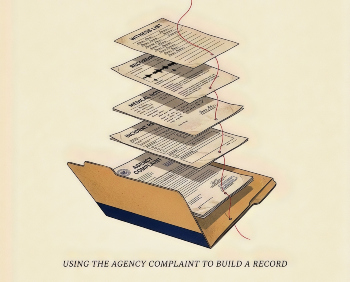
Some people run both tracks in parallel where the law allows it, using the agency complaint to build a record and the lawsuit to preserve the damages claim. That is a strategic call, not a default, and it should be made with counsel who knows the deadlines in your state.
How to File a Civil Rights Lawsuit: From Notice to Filing
How to file a civil rights lawsuit starts long before you get to the courthouse. Notice requirements and deadlines decide more cases than the facts do.
The steps look like this:
- Check the statute of limitations. Miss it, and the claim is gone.
- Send any required notice. Some governments demand pre-suit notice.
- Draft the complaint. Name the right, the conduct, and the harm.
- File in the right court. Federal or state, depending on the claim.
- Serve the defendants. Proper service is not optional.
- Prepare for motions. Qualified immunity is often raised early.
Watch out: the statute of limitations for civil rights claims is short and varies by state and claim type. Do not guess at the deadline. Confirm it with a licensed attorney in your state before you do anything else.
 Qualified Immunity and the Real Limits of Federal Remedies
Qualified immunity can stop a case before it ever reaches a jury. The doctrine shields government officials from money damages unless they violated clearly established law.
That phrase does the heavy lifting. If no prior case with nearly identical facts put the officer on notice, the suit may fail even when the conduct was wrong.
The American Civil Liberties Union’s work on qualified immunity has documented how the doctrine blocks accountability even when rights are clearly violated. The Congressional Research Service notes that a criminal civil rights charge under 18 U.S.C. § 242 carries a fine and up to one year in prison, rising to up to 10 years when bodily injury results. Prosecutors bring those charges, not you. They are rare.
This is the hard truth: federal remedies have real ceilings. Knowing them keeps you from building a case on hope.
State Constitutional Protections: The Path Competitors Ignore
State constitutions are a lever many people overlook. Every state has its own bill of rights, and state courts can interpret those protections more broadly than federal courts interpret the U.S. Constitution.
Momentum around state constitutional limits on excessive sentencing is expected to continue through 2026, according to State Court Report’s analysis of federalism trends. Advocacy groups are also backing legislation to guarantee the right to sue federal agents for damages when they violate the Constitution, per the Electronic Frontier Foundation.
State-level action is where citizens have the most direct use. Ballot measures, state legislators, and state judges are closer to you than Washington is.
To track what is moving in 2026, see our guide to 2026 constitutional law changes, including ballot measures and states’ rights shifts.
Join the Movement to Defend Constitutional Rights From Your State
The rights you hold mean little if you do not know how to use them. That is the mission we take on at Texas Journal: teaching citizens how to assert the rights the Constitution already gives them, and how to push back when Washington overreaches.
The Patriot Pool is our membership for that work, with a community organized around states’ rights and founding principles.
Here is what that looks like in practice:
- Guidance on how to use the abilities the Constitution provides
- A focus on state-level action to restore founding principles
- A network of citizens who stand up for the Republic together
The law is on your side. Learn it, use it, and organize with others who will.
The challenge is simple. Rights that go unasserted get eroded, one case at a time. Texas Journal gives you the insight and the community to stand your ground, with constitutional education, a states’ rights focus, and the Patriot Pool as your force multiplier. Get started with Texas Journal and turn your concern into action for the Republic.
Dave
Questions? Call!
940-353-1398

Frequently Asked Questions
Is it illegal to violate constitutional rights?
Yes, in specific circumstances. A government official who willfully deprives someone of a constitutional right can face criminal charges under federal law. Separately, Section 1983 allows civil suits for damages against state and local officials. Criminal prosecution is rare, so civil action is the more common route for redress.
What evidence should I collect after a possible civil rights violation?
Collect the names and badge numbers of every official involved, along with the agency they work for, and the dates, times, and locations. Photograph injuries, property damage, and the scene. Save any citations, arrest records, or written orders you received. Request body camera footage early, since retention periods vary and footage can be overwritten. Write down witness names and contact details the same day. A dated personal account created immediately after the incident carries more weight than one written weeks later.
Can I sue the government for violating my constitutional rights?
You can sue state and local officials under Section 1983 for damages and seek an injunction to stop an ongoing violation. Suing federal agents is generally harder than suing state and local officials. Qualified immunity can block damages claims even when a right was clearly violated. An attorney can tell you which defendants and claims are viable in your case.
How long do I have to file a civil rights lawsuit?
The statute of limitations for a Section 1983 claim comes from your state’s personal injury law, so deadlines vary by state. Some states require a written notice of claim to the government agency before filing. Missing either deadline usually ends the claim. Contact a civil rights attorney as soon as possible after the incident so the filing calendar is set correctly.