


Table of Contents
- Why Joining Liberty Advocacy Groups Matters
- How to Join a Civil Liberties Organization: Step-by-Step
- How to Evaluate Advocacy Organizations Before You Commit
- Comparing Types of Liberty Advocacy Groups
- How to Volunteer for a Civil Rights Organization
- Membership Costs, Benefits, and Financial Commitments
- Finding Local Chapters and Campus Groups Near You
- Ways to Participate Beyond Membership
- Safety, Privacy, and Responsible Advocacy
- Conclusion: Taking the First Step Toward Active Citizenship
- Frequently Asked Questions
Last Updated: October 9, 2026
 Why Joining Liberty Advocacy Groups Matters
The fight to defend Americans’ civil liberties has never been more urgent. Every day, decisions made in Washington chip away at the rights our Constitution guarantees. Joining liberty advocacy groups is how ordinary citizens push back against that overreach.
This guide from Texas Journal explains how to join liberty advocacy groups effectively. You will learn how to pick a group that matches your values and how to get involved beyond just paying dues.
Here is the core tension: most people want to defend their rights, but they do not know where to start. They worry about wasting money on the wrong organization. They fear being labeled extreme. So they do nothing.
That is exactly what the forces of globalist influence want. Silence is surrender.
Below, we break down the full process, from choosing a group to taking your first action. We will also show you how to tell a serious rights protection organization from a hollow one.
How to Join a Civil Liberties Organization: Step-by-Step
Joining a civil liberties organization follows a clear path: know your priorities, research the group, then complete membership and pay dues. Most people skip step one and regret it later.
Here is the full process.
Step 1: Identify Your Priorities
Start with what you actually care about. Civil liberties cover many issues.
Ask yourself:
- Do you care most about free speech and the First Amendment?
- Are you focused on states’ rights and limiting federal power?
- Do you want to protect the American family and traditional values?
- Is your main concern government overreach in your local schools or town?
Write down your top two or three issues. This list becomes your filter. A group that fights for everything usually fights well for nothing.
Step 2: Research and Contact the Group
Look at the group’s website, mission statement, and recent campaigns. Then reach out directly.
Do these things:
- Send an email with your general inquiries
- Call the phone number listed on their contact page
- Ask what a first-year member actually does
- Request their most recent annual report
A serious organization answers these questions without hesitation. If they dodge or pressure you to pay before explaining anything, walk away.
Flowchart illustrating the steps to join a liberty-focused advocacy group in a community setting.
Step 3: Complete Membership and Pay Dues
Membership usually means filling out a form and paying membership dues. Some groups offer monthly membership. Others ask for a yearly contribution.
Before you pay, confirm:
- What your dues actually fund
- Whether you get voting rights in the organization
- If there is a refund window
- What communications you will receive
Keep your receipt and a copy of the terms. This protects you and shows the group you are serious.
 How to Evaluate Advocacy Organizations Before You Commit
You evaluate an advocacy organization by checking three things: mission alignment, track record, and financial transparency. Skip any of these, and you risk funding a group that doesn’t deliver.
Check Mission Alignment and Track Record
Read the mission statement slowly. Does it match your priorities from Step 1?
Then look for evidence, not slogans:
- Recent campaigns and their outcomes
- Public statements on current issues
- Local events and meetings they have hosted
- Whether their leaders actually show up in public
A group with a strong record can point to specific wins. A weak group only offers vague promises.
Review Financial Transparency and Leadership
Ask who runs the organization and where the money goes. Reputable groups publish this information.
Red flags include:
- No named leadership
- No financial reports available
- Pressure to donate beyond your dues
- Constant urgent fundraising with no results shown
According to IRS guidance on tax-exempt organizations, nonprofit groups must make certain financial documents available to the public. Use that right. A group that hides its books is not defending your liberty; it is using it.
 Comparing Types of Liberty Advocacy Groups
Liberty advocacy groups are not interchangeable. They differ in mission, legal posture, tactics, and how they measure success. Picking the wrong type wastes your money and your time. This section breaks the landscape into five practical categories and explains what each one actually does.
1. Civil liberties litigation organizations
These groups sue the government. Their primary product is a court case, not a rally. They tend to focus on constitutional claims under the First, Fourth, Fifth, and Fourteenth Amendments.
- What they do: file lawsuits, submit amicus briefs, publish know-your-rights guides, run legal hotlines
- How they measure success: rulings, settlements, injunctions, precedent
- What members actually do: donate, sign petitions, attend legal observer trainings, sometimes volunteer as intake screeners
- Trade-off: your dues fund lawyers, not local events, so the visible payoff can take years
Well-known examples in this category include the American Civil Liberties Union and the Institute for Justice. Both publish annual reports and case dockets you can review before joining.
2. Policy and think-tank organizations
These groups try to shape legislation and regulation through research, model bills, and testimony. They usually operate at the federal or state level.
- What they do: publish studies, draft model legislation, testify at hearings, brief lawmakers
- How they measure success: bills introduced, bills passed, regulatory comments adopted
- What members actually do: donate, attend policy briefings, make calls during key votes
- Trade-off: influence is real but indirect, and you rarely see a single dramatic win
Examples include the Cato Institute, the Heritage Foundation, and the Competitive Enterprise Institute. Their 990 filings are public, so you can see how much goes to research versus fundraising.
3. Grassroots membership organizations
These groups hold monthly meetings, run phone banks, and knock on doors. They trade scale for intensity.
- What they do: canvass, host chapter meetings, run candidate scorecards, organize rallies
- How they measure success: member counts, turnout, votes moved, chapters chartered
- What members actually do: everything, calls, doors, events, leadership roles
- Trade-off: high time commitment, and chapter quality varies widely by city
Examples include Americans for Prosperity, the John Birch Society, and various state-level taxpayer associations. Always visit a meeting before paying dues.
 4. Single-issue advocacy groups
These groups focus on one right or policy area, such as gun rights, parental rights in education, medical freedom, digital privacy, or property rights. They tend to be smaller and more focused than the broad organizations above.
- What they do: lobby on one issue, run targeted campaigns, endorse or oppose specific bills
- How they measure success: specific legislative outcomes on their issue
- What members actually do: testify, call legislators, attend hearings, fundraise
- Trade-off: deep expertise on one issue, little help on anything else
Examples include the National Rifle Association (Second Amendment), the Foundation for Individual Rights and Expression (campus speech), and the Electronic Frontier Foundation (digital civil liberties).
5. Campus and youth organizations
These operate inside colleges and universities, often as recognized student clubs.
- What they do: host speakers, run debates, defend student speech, train young organizers
- How they measure success: chapters formed, events held, policy wins on campus
- What members actually do: run the club, book speakers, manage social media
- Trade-off: high turnover every semester, and school recognition rules can limit what you do
Examples include Young Americans for Liberty, Turning Point USA, and Federalist Society student chapters.
How to choose between them
Ask three questions before you commit:
- Do you want to win court cases, pass laws, change campus culture, or build a local network? Each answer points to a different category.
- How much time can you give each month? Litigation and think-tank groups need money more than hours. Grassroots and campus groups need hours more than money.
- Do you want a broad coalition or a focused fight? Broad groups dilute your voice across many issues; single-issue groups concentrate it.
A common pattern is to join one national group for information and one local or single-issue group for action. That pairing gives you both reach and impact without spreading yourself thin.
How to Volunteer for a Civil Rights Organization
Volunteering for a civil rights organization is the fastest way to see whether a group deserves your long-term support. You give time before you give money.
Common volunteer roles include:
- Making phone calls to members and voters
- Staffing events and meetings
- Writing letters to elected officials
- Helping with social media and outreach
- Driving turnout for local campaigns
Start small. Offer four hours a month. Watch how the group treats its volunteers. If they value your time and train you properly, increase your commitment. If they treat you as free labor with no direction, move on.
Many groups list open positions and volunteer needs right on their website. Others assign you a team lead who guides your first tasks.
Corporation for National and Community Service offers general guidance on finding volunteer opportunities that match your skills and schedule.
 Membership Costs, Benefits, and Financial Commitments
Most liberty advocacy groups do not publish a single price because membership is tiered. What you pay depends on your needs. This section gives you a realistic range, a benefits checklist, and the questions that keep you from overpaying.
Typical cost ranges
Across the major national organizations, dues and suggested gifts generally fall into these bands:
- Entry-level membership: roughly $10 to $50 per year, or about $5 to $15 per month. This usually buys a card, a newsletter, and voting rights at the annual meeting.
- Mid-tier membership: roughly $50 to $250 per year. Adds briefings, training materials, event discounts, and sometimes a lapel pin or sticker pack.
- Sustaining or leadership tier: $250 to $1,000+ per year. Adds invitations to private calls, donor briefings, and named recognition.
- Free membership with volunteer requirement: some grassroots groups waive dues entirely if you commit a set number of volunteer hours per month.
These are ranges, not quotes. Always confirm the current figure on the group’s own membership page before you pay.
What your dues actually buy
Ask the group to break down program spending versus fundraising and overhead. A healthy advocacy group typically spends the majority of its budget on programs, litigation, lobbying, research, or organizing, with the rest going to administration and fundraising. If the ratio is inverted, your dues are mostly paying for more fundraising.
Typical member benefits you should expect:
- Voting rights in the organization (not all groups offer this; ask)
- Access to member-only briefings, webinars, or publications
- Discounts on conferences, training, or merchandise
- A defined process for contacting leadership
- A clear cancellation and refund policy in writing
 Financial commitments beyond dues
Dues are rarely the only ask. Plan for these additional pressures:
- Annual fund appeals, often in the fourth quarter
- Emergency or “matching gift” campaigns tied to a specific bill or lawsuit
- Conference and travel costs if you attend in person
- Merchandise, books, and training materials sold separately
- Recurring monthly giving that is easy to start and harder to stop
A practical rule: set a yearly cap before you join anything. A common figure is one to two percent of discretionary income. Once you hit the cap, say no to everything else until the next year.
Questions to ask before you pay
- Is this a 501(c)(3), a 501(c)(4), or a PAC? Each has different rules on lobbying and political activity, and only some donations are tax-deductible.
- Can I cancel at any time, and how?
- Will my contact information be shared, sold, or rented to other organizations?
- What is the refund window, if any?
- Will I be auto-enrolled in recurring giving, and how do I stop it?
- What percentage of my dues goes to programs versus overhead?
Get the answers in writing; an email reply is enough. Keep the receipt and the terms.
Tax treatment matters
Donations to 501(c)(3) organizations are generally tax-deductible. Donations to 501(c)(4) social welfare organizations and to political action committees are generally not. If the deduction matters to you, confirm the group’s tax status before you give. The IRS publishes a searchable Exempt Organizations database you can check in a minute.
Finding Local Chapters and Campus Groups Near You
Finding a local chapter or campus group starts with the national organization’s website. Most groups have a chapter locator or a contact form for regional inquiries.
Try these steps:
- Search the national site for a chapter directory
- Email general inquiries and ask for the nearest group
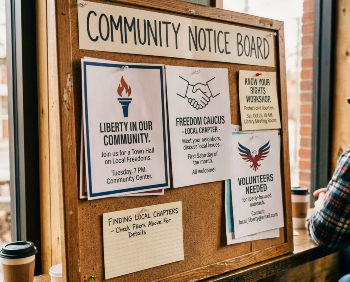
- Check community centers, libraries, and campus bulletin boards
- Ask at local events focused on rights and civic duty
If no chapter exists nearby, you may be able to start a group yourself. National organizations often provide starter kits, branding, and guidance for new chapters.
Campus groups work the same way. Students can usually form a recognized club through the school’s student activities office. That recognition often comes with meeting space and a small budget.
Connecting with a chapter gives you real people, real meetings, and real campaigns. That beats scrolling alone on your phone every night.
Ways to Participate Beyond Membership
You do not have to be a card-carrying member to make a difference. There are many ways to participate and support the cause.
Consider these options:
- Attend upcoming events as a guest
- Volunteer for a single campaign
- Share resources and articles with your network
- Write to your state representatives about pending bills
- Join a campaign as a remote supporter
- Donate to a specific project instead of general funds
Remote participation matters more than ever. Many groups now hold online meetings and virtual training sessions. You can join a campaign from your kitchen table.
The key is to find the level of involvement that matches your life. Some people give ten hours a week. Others give one hour a month. Both matter.
Safety, Privacy, and Responsible Advocacy
Protecting your privacy is part of responsible advocacy. You can defend your rights without exposing yourself to unnecessary risk.
Follow these basic rules:
- Use a separate email address for advocacy work
- Never share your home address in public forums
- Keep records of any threats or harassment
- Know your rights before you attend a protest
- Follow the law, even when you disagree with it
The American Civil Liberties Union publishes know-your-rights guides for common situations like protests and interactions with police. Read them before you need them.
Responsible advocacy also means checking your facts. Sharing false claims hurts the movement and gives your opponents ammunition. Verify before you amplify.
 Conclusion: Taking the First Step Toward Active Citizenship
The hardest part of joining liberty advocacy groups is the first step. Pick one issue, find one group, and make contact this week. That single action separates citizens who talk from citizens who act.
At Texas Journal, we built a platform for people who are done waiting. Our members get critical insight on constitutional rights, guidance on how to use the abilities the Constitution gives you, and a community focused on restoring founding principles. Whether your focus is to Defend the American Family or to Restore US Sovereignty, Texas Journal provides critical insight and discernment designed to help citizens assert their rights and restore the country to its founding principles. By explaining the unique powers granted by the U.S. Constitution, the platform empowers individuals to defend national values against globalist influence. Through a focus on states’ rights and constitutional education, Texas Journal serves as a resource for those committed to securing a free and prosperous future. Join a powerful movement that supports the perpetuation of American freedoms and rewards those who stand up for the Republic.
When you are ready to do more than watch, join the movement at Texas Journal and put your convictions to work.

Frequently Asked Questions
What should you look for before joining a liberty advocacy group?
Before joining, verify the group’s mission aligns with your values, check its IRS Form 990 for financial transparency, and confirm it has a clear track record of advocacy wins. Look for organizations that publish their leadership, disclose funding sources, and offer multiple participation levels. Request their annual report, attend a public meeting, and speak with current members before committing financially.
How can you volunteer with a constitutional advocacy organization?
Most constitutional advocacy organizations list volunteer opportunities on their website, including event staffing, phone banking, research, and legal outreach. Contact the volunteer coordinator directly through the group’s general inquiries email or phone line. Some groups require training before deployment, while others offer remote volunteer roles you can do from home. Start with a one-time event to test fit before committing to recurring hours.
Can students join liberty advocacy groups on campus?
Yes, many liberty advocacy groups have campus chapters or affiliated student organizations. Check your university’s student organization directory or contact the national organization’s chapter coordinator for a campus near you. Student membership often comes at a reduced rate or is free. Campus groups typically focus on educational events, speaker series, and voter registration drives rather than lobbying.
How can you check whether an advocacy group is reputable?
Check the group’s registration with the IRS Tax Exempt Organization Search, review its Form 990 filings for revenue and spending breakdowns, and look for third-party ratings from charity watchdogs. Search for news coverage and verify claims about legislative victories against public records. Contact the organization directly with specific questions about how it uses membership dues and what percentage goes to programs versus overhead.

