Table of Contents
- Why Advocacy Group Transparency Matters for Constitutional Defense
- How to Vet Constitutional Advocacy Groups Before You Commit
- Non-Profit Financial Transparency Standards You Should Expect
- Charity Watchdog Tools for Advocacy Groups: A Practical Comparison
- Building a Standardized Evaluation Framework for Advocacy Groups
- Digital Transparency Metrics: What Advocacy Groups Reveal Online
- Detecting Bias in Constitutional Advocacy: Advocacy Impact vs Partisan Influence
- How the Corporate Transparency Act and Regulatory Oversight Shape Non-Profit Governance
- Conclusion: Holding Advocacy Groups Accountable Without Silencing Them
- Frequently Asked Questions
Last Updated: September 22, 2026
Why Advocacy Group Transparency Matters for Constitutional Defense
Evaluating constitutional advocacy group transparency starts with one hard truth: the groups shouting loudest about defending your rights are often the ones least willing to show you their books. This guide from Texas Journal breaks down exactly how to separate serious constitutional defenders from fundraising machines.
Advocacy group transparency is the practice of an organization openly publishing its funding sources, spending, leadership, and legal strategy so supporters can judge whether it actually does what it claims.
That definition matters because constitutional advocacy is big business. Groups raise money in your name, file briefs in your courts, and lobby your state legislature. When their finances stay hidden, so does their real agenda. In practice, this means you can support a group for years and never learn who funds it.
Below, we’ll show you how to vet any group in about an hour using public records.
How to Vet Constitutional Advocacy Groups Before You Commit
Vetting a constitutional advocacy group means checking four things: its tax filings, its leadership, its funding sources, and its actual legal record. Skip any one of these and you’re guessing.
A common mistake is judging a group by its website alone. A polished homepage proves nothing about where the money goes.
Start with these steps:
- Pull the group’s IRS Form 990 from a public database
- Check whether it files as a 501(c)(3), 501(c)(4), or a for-profit entity
- Read the board list for conflicts of interest
- Search court records for the lawsuits it claims to fund
- Compare its public promises to its actual spending
That last step exposes more problems than the other four combined.
Key Questions to Ask About Governance and Oversight
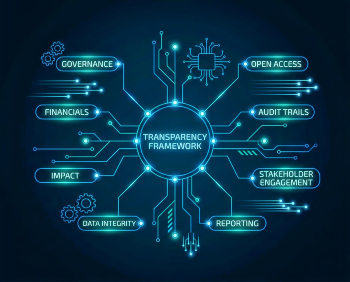 Governance and oversight questions reveal whether a group answers to anyone besides its founder. Ask these before you donate a dollar:
- Who sits on the board, and do they have independent roles?
- Does the group publish board meeting minutes?
- Is there a conflict of interest policy in writing?
- Who signs the audited financial statements?
- How does the group handle whistleblower complaints?
Groups that dodge these questions usually have a reason. A real constitutional advocacy organization treats oversight as proof of integrity, not an inconvenience.
Non-Profit Financial Transparency Standards You Should Expect
Non-profit financial transparency standards require three documents: an annual report, audited financial statements, and a completed IRS Form 990. Any group that won’t publish all three is asking you to trust it blindly.
The IRS guidance on exempt organization reporting explains what each filing must contain and how the public can request copies.
Reading Audited Financial Statements and Form 990 Filings
An audited financial statement is a report reviewed by an independent accountant who confirms the numbers are accurate. Form 990 is the annual tax return most tax-exempt groups must file, and it lists revenue, expenses, and executive pay.
Here’s what to scan first:
- Program spending vs. overhead. A healthy advocacy group puts most of its budget into actual work.
- Executive compensation. Compare salaries to the group’s size.
- Related-party transactions. Loans to insiders are a red flag.

- Lobbying expenses. These appear on a separate schedule.
The ProPublica Nonprofit Explorer lets you pull these filings for free.
Charity Watchdog Tools for Advocacy Groups: A Practical Comparison
Charity watchdog tools for advocacy groups give you a fast second opinion, but none of them is perfect. Each one weighs transparency differently, and each one draws on a different underlying dataset. Knowing what a score actually measures is the difference between a useful signal and a false sense of security.
| Watchdog Tool | What It Rates | Underlying Data | Best For | Main Limitation |
|---|---|---|---|---|
| Charity Navigator | Financial health, accountability, and governance practices via its Encompass rating system | IRS Form 990 data plus self-reported governance questionnaires | Broad charity comparisons and trend tracking | Historically weak on 501(c)(4) social welfare and political advocacy groups |
| Candid (GuideStar) | Transparency seals (Bronze, Silver, Gold, Platinum) based on disclosure of specific fields | Self-reported profile data plus IRS filings | Verifying basic disclosure and confirming a group files at all | Does not judge mission, bias, or program effectiveness |
| BBB Wise Giving Alliance | Governance, finances, and effectiveness against 20 Standards for Charity Accountability | Self-reported documentation plus 990 review | Checking oversight practices and board independence | Fewer advocacy groups listed; some decline to participate |
| ProPublica Nonprofit Explorer | Raw IRS filings, including Form 990, 990-EZ, and 990-PF | IRS bulk data releases | Deep financial digging and year-over-year comparison | No ratings, you interpret the documents yourself |
Use two tools together. One gives you the score, the other gives you the receipts. When a group scores well on one and poorly on another, the discrepancy itself is information, it usually means the group is disclosing to one database and not the other.
Why Watchdog Scores Disagree
Watchdog scores diverge for three structural reasons:
- Different inputs. Charity Navigator leans on 990 line items; Candid leans on self-reported profile fields. A group can file a complete 990 and still leave its Candid profile blank.
- Different timing. Each tool refreshes on its own schedule, so a group can carry a stale seal for a year or more after its finances change.
- Different scope. BBB Wise Giving Alliance evaluates governance standards that Charity Navigator does not score, and vice versa.
A common pattern is a group that holds a Candid transparency seal while its most recent Form 990 shows a sharp drop in program spending. The seal reflects disclosure, not performance.
How to Reconcile Conflicting Scores
When two watchdogs disagree, work through this sequence:
- Pull the group’s three most recent Form 990 filings from ProPublica Nonprofit Explorer.
- Compare program spending as a percentage of total expenses across those three years.
- Check whether the group’s Candid profile lists the same leadership as its most recent 990.
- Confirm the group’s exemption type, 501(c)(3), 501(c)(4), or a for-profit entity, because the disclosure rules differ sharply.
- Note any related-party transactions or loans to insiders on Schedule L.
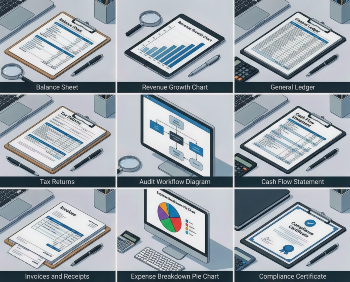 If the filings and the seals tell different stories, trust the filings. They are the primary source.
The IRS guidance on exempt organization reporting explains what each filing must contain and how the public can request copies.
Building a Standardized Evaluation Framework for Advocacy Groups
A standardized evaluation framework turns a gut feeling into a repeatable score. Build one once, then apply it to every group you consider.
Score each group from 1 to 5 across three buckets:
- Financial (weight 40%): audited statements, program spending ratio, disclosed donors
- Governance (weight 35%): independent board, conflict policy, published minutes
- Digital (weight 25%): clear sourcing, named authors, updated disclosures
Add the weighted totals. Anything below 3.0 means keep your wallet closed.
Scoring Transparency Across Financial, Governance, and Digital Metrics
Apply the same rubric to every group so your comparison stays fair. A group that scores high on money but hides its board is still a risk.
| Score | Financial | Governance | Digital |
|---|---|---|---|
| 5 | Audited, low overhead | Independent board, full minutes | Named authors, cited sources |
| 3 | Basic 990 filed | Some outside members | Occasional sourcing |
| 1 | No filings public | Founder-controlled | Anonymous, unsourced claims |
This framework is the part most people skip. It’s also the part that saves you from a bad donation.
Digital Transparency Metrics: What Advocacy Groups Reveal Online
Digital transparency metrics measure how openly a group operates its website, social channels, and public statements. These are the fastest signals to check because they’re free and instant.
Look for these markers:
- Named authors on every article, not just “Staff”
- Links to primary sources like court opinions and statutes
- A published donor policy or funding disclosure page
- Clear separation between news and opinion
- Regular corrections when the group gets something wrong
A group that cites nothing and names no one is telling you something. Believe it.
Detecting Bias in Constitutional Advocacy: Advocacy Impact vs Partisan Influence
Detecting bias in constitutional advocacy means separating real legal impact from partisan noise. Both can look identical on a homepage.
Ask one question: does this group win cases and change policy, or does it mostly send fundraising emails? Real advocacy impact shows up in court dockets and legislative records. Partisan influence shows up in outrage headlines.
Watch for these bias signals:
- Every issue framed as an emergency
- Opponents described as enemies, never as having a point
- No acknowledgment of a group’s own losses
- Claims that never link to a source
The Federal Election Commission guidance on political activity helps you tell issue advocacy apart from partisan campaigning, which matters for how a group must report its spending.
How the Corporate Transparency Act and Regulatory Oversight Shape Non-Profit Governance
The Corporate Transparency Act (CTA), enacted in 2021 as part of the Anti-Money Laundering Act, requires many corporations, limited liability companies, and similar entities to report their beneficial owners to the Financial Crimes Enforcement Network (FinCEN), a bureau of  the Treasury Department. The reporting rule took effect January 1, 2024, with a 30-day window for most new entities and a longer initial window for entities formed before that date.
The CTA does not directly cover most non-profits. Domestic non-profit entities that qualify for tax-exempt status under Section 501(c) of the Internal Revenue Code are generally exempt from the beneficial ownership reporting requirement. But the law has changed the wider conversation about who really controls an organization, and that shift matters to donors evaluating advocacy groups.
What the CTA Actually Requires
For covered entities, the CTA requires reporting of:
- Beneficial owners, individuals who own or control at least 25 percent of the entity, or who exercise substantial control over it.
- Company applicants, the individuals who filed the entity’s creation documents.
- Identifying information for each: name, date of birth, address, and a unique identifying number from a passport or driver’s license.
FinCEN maintains this information in a confidential database. It is not a public registry. Access is limited to law enforcement, financial institutions with customer consent, and certain regulators. That confidentiality is a key distinction from the public disclosure that non-profits face through Form 990.
How Non-Profit Disclosure Differs
Non-profits operate under a different disclosure regime. A 501(c)(3) charity must make its Form 990 available for public inspection, and it must disclose substantial contributors on Schedule B, though Schedule B is generally not released to the public by the IRS. A 501(c)(4) social welfare organization can lobby freely and generally does not have to disclose its donors publicly at all.
That gap is the practical takeaway for anyone evaluating an advocacy group. The CTA tightened ownership disclosure for for-profit entities; it did not close the donor-disclosure gap for 501(c)(4) advocacy groups. A group can be fully compliant with every federal rule and still keep its  funders entirely hidden from you.
The Three Regulators You Can Actually Use
Regulatory oversight of non-profits runs through three channels, each with real limits:
- The IRS, reviews Form 990 filings and can revoke tax-exempt status, but audit rates for small and mid-sized exempt organizations are low. The IRS Exempt Organizations Select Check tool lets you confirm a group’s status and filing history.
- State charity regulators, typically the state attorney general’s office or a dedicated charities bureau. Registration and reporting requirements vary widely by state, and enforcement capacity varies with them. Most states maintain an online charity registration lookup.
- The courts, step in only when someone sues, typically over breach of fiduciary duty or misuse of charitable assets. This is reactive, not proactive.
So the real oversight often comes from you. Read the filings. Check the board. Score the transparency. That’s how public accountability actually works.
The CTA made ownership disclosure a mainstream expectation for corporations. It did not extend that expectation to 501(c)(4) advocacy groups. Until it does, the burden of evaluating donor transparency falls on individual donors and journalists, which is exactly why a repeatable evaluation framework matters.
Conclusion: Holding Advocacy Groups Accountable Without Silencing Them
Demanding transparency isn’t an attack on advocacy. It’s how you protect it. Groups that defend constitutional rights should be the first to open their books, because sunlight is what keeps the movement honest.
Texas Journal exists to give citizens the tools to tell real constitutional defenders from the pretenders. Our platform provides critical insight and discernment designed to help citizens assert their rights and restore the country to its founding principles. Through a focus on states’ rights and constitutional education, Texas Journal serves as a resource for those committed to securing a free and prosperous future. The Patriot Pool acts as a force multiplier, turning individual citizens into an organized movement.
Get started with Texas Journal and learn how to hold every advocacy group accountable while defending the freedoms that matter most.

Frequently Asked Questions
What are the best ways to verify the financial transparency of a non-profit?
Start by pulling the group’s IRS Form 990, which most tax-exempt organizations must file annually and make publicly available. Check whether the filing includes audited financial statements, a breakdown of program versus administrative spending, and disclosure of major donors. Cross-reference the numbers with at least one independent charity watchdog. Look for reporting thresholds that match the group’s actual revenue. If a constitutional advocacy group refuses to publish basic financial disclosure, treat that as a red flag regardless of how compelling its messaging is.
How do I determine if an advocacy group is truly constitutional?
Look at whether the group grounds its positions in the text of the Constitution, legal precedent, and statutory interpretation rather than vague appeals to tradition. A credible constitutional advocacy group cites specific clauses, court rulings, and legislative intent. It should also welcome judicial review and engage with opposing legal briefs instead of dismissing them. If the group’s constitutional claims cannot survive basic scrutiny from legal scholars across the spectrum, its advocacy strategy is likely built on partisan influence rather than constitutional fidelity.
Are there independent watchdogs for constitutional advocacy organizations?
Yes. Charity watchdog tools for advocacy groups include organizations that rate non-profits on financial health, accountability, and transparency practices. These watchdogs publish transparency index scores, flag conflicts of interest, and track whether groups follow governance standards such as independent board oversight and whistleblower protection policies. No single watchdog covers every group, so use at least two and compare their findings. If a watchdog has no data on a group, that absence itself tells you something about the group’s disclosure practices.
How can citizens distinguish between legitimate advocacy and partisan influence?
Legitimate advocacy discloses its funding sources, publishes audited financial statements, and separates its educational mission from electoral activity. Partisan influence often hides behind non-profit governance structures, uses dark money channels, and avoids stakeholder engagement. Check whether the group’s public accountability materials match its public claims. A group that demands transparency from government but refuses to disclose its own beneficial ownership or major donors is applying a double standard that should factor heavily into your evaluation.