Table of Contents
- What Constitutional Liberty Means and Why Access Matters
- Understanding Your Constitutional Rights and Freedoms
- The Bill of Rights: Your Foundation for Individual Liberty
- First Amendment Rights Explained: Speech, Religion, and Assembly
- Fourth Amendment Protections Against Unreasonable Search and Seizure
- Due Process and Equal Protection: Your Rights in the Criminal Justice System
- Know Your Constitutional Rights Guide: Practical Application
- U.S. Constitution Text and Amendments: Where to Find Authoritative Sources
- Constitutional Law Legal Aid Resources and Free Assistance
- Educational Resources for Rights and Civic Understanding
- How Constitutional Protections Apply in Practice: Real Scenarios
- Advocating for Your Rights: Resources for Community Action
- Verifying and Evaluating Constitutional Liberty Resources
- Taking Action: Your Next Steps to Secure Constitutional Liberty
- Frequently Asked Questions
Last Updated: October 18, 2026
 What Constitutional Liberty Means and Why Access Matters
Constitutional liberty is the principle that individuals possess inherent freedoms protected by the U.S. Constitution and its amendments, including speech, religion, assembly, and protection from unreasonable searches.
The challenge is fragmentation: constitutional information is scattered across government websites, legal aid organizations, educational platforms, and advocacy groups. Finding authoritative, current resources for your specific situation requires knowing where to look.
At Texas Journal, we believe that access to constitutional liberty resources shouldn’t require a law degree or connections. Through initiatives like Restore US Sovereignty and Personal Sovereignty Is Non-Negotiable, we help you reclaim your constitutional protections and exercise the freedoms that define American liberty.
Understanding Your Constitutional Rights and Freedoms
Your constitutional rights and freedoms are legal boundaries that protect your individual liberty from government overreach.
Individual liberty includes your right to make decisions about your own life, property, beliefs, and associations.
That distinction changes how you approach your rights: you’re asserting protections that already exist, not asking permission.
Practical application begins with knowing which amendment or clause protects your situation.
The Bill of Rights: Your Foundation for Individual Liberty
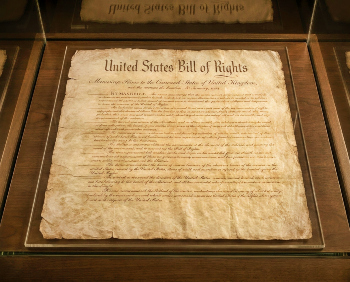
The Bill of Rights, the first ten amendments, ratified in 1791, is the most direct statement of individual liberties in American law, added specifically to protect individual freedoms from federal intrusion.
The First Amendment protects freedom of speech, religion, press, assembly, and petition. The Second Amendment addresses the right to bear arms.
Each amendment has generated extensive interpretation over two centuries, with thousands of Supreme Court decisions clarifying what these protections mean in practice.
The Bill of Rights applies directly to federal action, but through “incorporation,” most of its protections now extend to state and local governments too. Your constitutional rights apply across all levels of government.
 First Amendment Rights Explained: Speech, Religion, and Assembly
Freedom of religion means you cannot be compelled to follow any particular practice, nor can the government establish an official religion.
Freedom of assembly protects your right to gather peacefully for political or any lawful purpose, including protests, demonstrations, and marches.
Freedom of the press, closely related to freedom of speech, protects journalists and publishers from government interference in gathering and disseminating information.
Accessing First Amendment rights resources means finding authoritative guidance on how these protections apply in your specific situation. The American Civil Liberties Union’s rights resources provide detailed explanations of First Amendment protections with practical guidance.
Fourth Amendment Protections Against Unreasonable Search and Seizure
The Fourth Amendment protects your right to be secure in your person, house, papers, and effects against unreasonable searches and seizures.
An unreasonable search occurs when government agents search you, your property, or your possessions without proper legal authority.
Common exceptions to the warrant requirement include searches incident to a lawful arrest, consent searches, vehicle searches based on probable cause, and searches of containers in vehicles.
Due Process and Equal Protection: Your Rights in the Criminal Justice System
Due process and equal protection represent two of the most fundamental constitutional protections in the criminal justice system.
Due process requires fair procedures before the government deprives you of life, liberty, or property.
Equal protection means the government cannot classify people based on protected characteristics, race, color, national origin, religion, or sex, and apply different legal standards to different groups.
In the criminal justice system, equal protection ensures charging decisions, bail determinations, sentencing, and appeals are applied consistently regardless of race or other protected characteristics.
Accessing due process and equal protection resources means understanding your rights at each stage of the criminal process. The Department of Justice’s criminal justice resources provide official information on rights and procedures.
Know Your Constitutional Rights Guide: Practical Application
Knowing your constitutional rights in theory differs from applying them in practice. A practical constitutional rights guide translates abstract principles into specific actions you can take when facing real situations, and into the specific places you can go to get help. Most people who search for constitutional liberty resources are looking for a next step. This section gives you one.
Step 1: Identify the constitutional hook
Start by naming the government action and the amendment or clause it implicates. The table below maps common situations to the constitutional basis, the first practical move, and the type of resource that actually helps. Treat it as a triage tool, not legal advice.
| Situation | Constitutional basis | First practical move | Where to get help |
|---|---|---|---|
| Police stop, search, or seizure | Fourth Amendment | Do not consent to a search; ask whether you are free to leave; write down names, badge numbers, time, and place | Public defender if charged; legal aid; ACLU affiliate intake |
| Arrest or criminal charge | Fifth, Sixth, and Fourteenth Amendments | Request appointed counsel at your first appearance if you cannot afford a lawyer | Public defender office; law school criminal clinics |
| Government retaliation for speech or protest | First Amendment | Preserve posts, emails, permits, and recordings; note the official and the adverse action | ACLU; Institute for Justice; law school First Amendment clinics |
| Religious accommodation denied by employer or school | First Amendment; federal civil rights statutes | Submit a written accommodation request and keep the denial | EEOC (employment); Department of Education Office for Civil Rights (schools) |
| Discrimination in housing, employment, or public accommodation | Fourteenth Amendment; federal civil rights statutes | File an administrative charge promptly; deadlines are short | EEOC; HUD Fair Housing; state civil rights agency |
| Denial of voting access or registration | Fourteenth, Fifteenth, Nineteenth, Twenty-Fourth, and Twenty-Sixth Amendments | Check registration status; request a provisional ballot; document the denial | Election Protection hotline; state election office; DOJ Voting Section |
| FOIA or public records denial | First Amendment; federal and state public records laws | File a written request and appeal the denial in writing | Agency FOIA office; Reporters Committee hotline; state press association |
Step 2: Match the situation to the right access channel
Constitutional resources come through five main channels, and each has a different intake process and cost structure:
- Public defenders. If you are charged with a crime and cannot afford counsel, you have a Sixth Amendment right to appointed counsel. Ask for the public defender at your first appearance; do not wait for trial. Eligibility is based on income and is set by each jurisdiction.
- Legal aid and the Legal Services Corporation network. LSC-funded organizations provide free civil legal help to eligible low-income residents. Use the LSC directory at Legal Services Corporation directory to find the organization serving your county. Note that LSC grantees generally cannot handle criminal cases; that is the public defender’s role.
- Law school clinics. Many law schools run clinics in constitutional law, civil rights, immigration, and criminal defense. Services are typically free and supervised by faculty. Clinic intake windows open and close on an academic calendar, so check in late summer and early January.
 Step 3: Document before you do anything else
Contemporaneous written records are the single most useful thing you can create. For every incident, capture: date, time, location, the agency and official involved (name and badge or ID number if visible), exactly what was said and done, witness names and contact information, and copies of any paperwork you were given. Store photos and recordings in more than one place.
Step 4: Watch the deadlines
Constitutional and civil rights claims are subject to strict filing deadlines, and missing one can end your case regardless of merit. Two common traps:
- Administrative exhaustion. Employment discrimination claims generally require you to file a charge with the EEOC or a state fair employment agency before you can sue; the window is short and varies by state.
- Statutes of limitations. Civil rights claims under federal law are governed by the forum state’s personal-injury limitations period, which varies widely. Do not assume you have years.
If you are unsure of the deadline, call a legal aid office or a lawyer the same week you learn of the issue. A short call is cheaper than a missed deadline.
Step 5: Decide whether you need a lawyer
Not every constitutional problem requires litigation. An informal assertion, an administrative complaint, or a public records request can resolve many issues. But three signals mean you should get professional help quickly: a criminal charge, a running deadline, or a government action that has already caused concrete harm (loss of a job, a benefit, custody, or liberty). Legal aid, public defenders, and law school clinics provide free or low-cost help; private attorneys are usually necessary for complex federal litigation.
U.S. Constitution Text and Amendments: Where to Find Authoritative Sources
Accessing the actual text of the U.S.
The National Archives maintains the original Constitution and provides the official text online.
Distinguish the original document from annotated versions: the original provides the constitutional language itself, while annotated versions summarize the Supreme Court decisions interpreting it.
The National Archives Constitution resources provide the authoritative text with historical context. The Congress.gov Constitution annotations offer the text with legal interpretations.
Beyond the text itself, you’ll find constitutional commentary, historical background, and interpretation guides.
 Constitutional Law Legal Aid Resources and Free Assistance
Accessing constitutional liberty resources often means accessing legal assistance.
Legal aid organizations operate in every state and provide free or low-cost legal assistance to people who cannot afford private attorneys. The Legal Services Corporation directory helps you locate legal aid organizations in your area.
Public defender offices provide free legal representation in criminal cases for people who cannot afford attorneys.
Law school clinics provide free legal assistance through supervised law students.
Non-profit organizations focused on specific constitutional rights offer free resources and sometimes free legal representation.
Government resources provide free information about your rights.
Online resources provide free access to constitutional information, legal databases, and self-help guides.
Educational Resources for Rights and Civic Understanding
Most guides to constitutional education stop at describing categories: ‘civics materials,’ ‘academic sources,’ ‘multimedia.’ That is not useful when you are trying to learn your rights this week. This section instead gives you a short, vetted directory of free, authoritative sources, organized by what you are trying to do, with notes on what each is best for and its limits.
If you want the primary text
- National Archives, Constitution of the United States. The official home of the original document and the Bill of Rights, with transcription and historical background. Best for: reading the actual text and understanding its history. Limit: it does not summarize court interpretation.
- Congress.gov, Constitution Annotated. The Library of Congress’s annotated Constitution, organized article by article and amendment by amendment, with summaries of Supreme Court interpretation and citations. Best for: seeing how courts have read a specific clause. Limit: summaries are dense; expect to follow citations.
- Federal courts’ official website. Provides the Constitution, landmark case summaries, and plain-language explanations of court structure and procedure. Best for: understanding how a case moves through the system.
If you want plain-language explanations
- The Department of Justice’s civil rights and criminal justice pages. Official explanations of federal protections and how to file complaints with the relevant division. Best for: knowing which federal agency handles which issue and how to start a complaint. Limit: informational only; the agency does not represent you.
- USA.gov. A government-wide portal that routes you to federal, state, and local services, including legal aid locators and consumer protection resources. Best for: finding the right agency fast.
- State court self-help centers. Most state court systems publish self-help pages with forms, instructions, and glossaries for people proceeding without a lawyer. Best for: procedural questions in your own state. Limit: quality and depth vary widely by state.
If you are a student, teacher, or parent
- iCivics. Free, nonpartisan lesson plans and games on the Constitution, the branches of government, and civic participation, founded by former Justice Sandra Day O’Connor. Best for: middle- and high-school civics.
- National Constitution Center. Educational materials, a searchable amendment-by-amendment resource, and the Interactive Constitution, which pairs scholarly essays presenting competing views on contested clauses. Best for: understanding that reasonable people disagree about constitutional meaning.
- Center for Civic Education. Curriculum materials and the We the People program used in schools nationwide. Best for: structured classroom civics.
If you want to track current cases and debates
- Supreme Court of the United States website. Opinions, oral argument audio, and the Court’s calendar. Best for: primary-source tracking of what the Court has actually decided.
- PACER (Public Access to Court Electronic Records). Federal court filings, including complaints and briefs in constitutional cases. Best for: reading the actual pleadings in a case you are following. Limit: per-page fees apply, though fee waivers exist for some users and low-usage thresholds.
- Law school and university constitutional law repositories. Many law schools publish faculty commentary, casebooks, and open course materials. Best for: deeper doctrinal analysis. Limit: written for law students; expect technical language.
If you prefer audio and video
- The National Constitution Center’s podcast and video library. Accessible discussions of constitutional history and current controversies.
- C-SPAN’s American History TV and court coverage. Archived hearings, oral arguments, and lectures.
- Federal judiciary’s educational videos. Short explanations of jury service, court structure, and constitutional principles.
How to use this directory well
 Three habits separate people who learn their rights from people who collect bookmarks:
- Start with the primary text, then the annotation, then the explainer. Read the clause, then the annotated summary of how courts have interpreted it, then a plain-language explanation. This order prevents you from absorbing a summary’s spin before you know what the text says.
- Check the date and the edition. Constitutional law changes when the Supreme Court issues a ruling. A page not updated since a major decision may be wrong. Look for a ‘last reviewed’ or ‘last updated’ line.
- Distinguish federal from state. The federal Constitution sets a floor; state constitutions often provide broader protections. A resource about federal rights may not describe your state’s stronger guarantees. Check your state supreme court’s website and your state constitution’s text.
How Constitutional Protections Apply in Practice: Real Scenarios
Constitutional protections exist in the abstract until you face a situation where they matter.
Scenario One: Police Stop and Search
You’re stopped by police while driving, and the officer asks to search your vehicle.
Scenario Two: Workplace Religious Accommodation
Your employer denies your request for religious accommodation, claiming undue hardship.
Scenario Three: Political Speech and Retaliation
You speak at a public meeting criticizing government policy, and an official threatens retaliation.
Scenario Four: Criminal Charges and Due Process
You’re arrested and charged with a crime.
Scenario Five: Discrimination in Public Accommodation
Advocating for Your Rights: Resources for Community Action
Constitutional liberty isn’t passive; you actively assert and defend it.
Individual advocacy begins with knowing your rights and using them.
Community organizing resources help you work with others to address systemic constitutional issues.
Voter participation resources help you exercise your constitutional right to vote and encourage others to do the same.
Litigation resources help you understand when and how to pursue legal claims.
Texas Journal helps citizens to understand and assert their constitutional rights individually and collectively. Through programs like Defend the American Family and Control Washington From Your State, we empower you to take action at every level.
 Verifying and Evaluating Constitutional Liberty Resources
Not all constitutional liberty resources are equally reliable.
Source Authority and Credentials
Government sources, the National Archives, Congress.gov, the Department of Justice, and federal courts, represent the highest authority for constitutional information.
Advocacy organization resources provide valuable information but reflect the organization’s perspective.
Currency and Updates
Constitutional law evolves as courts issue new decisions.
Accuracy and Completeness
Accessibility and Clarity
The best constitutional liberty resources explain complex legal concepts in language you can understand.
Verification Process
When evaluating a resource, ask: Does it cite the Constitution itself? Does it cite court decisions?
| Resource Type | Highest Authority | Strengths | Limitations |
|---|---|---|---|
| Government sources (National Archives, Congress.gov, DOJ) | Official text and interpretation | Authoritative, current, comprehensive | May lack practical guidance |
| Court decisions | Binding legal authority | Shows how courts actually apply Constitution | Requires legal knowledge to interpret |
| Legal aid organizations | Practical expertise | Free or low-cost, jurisdiction-specific | May reflect organizational perspective |
| Academic sources | Scholarly analysis | Deep expertise, comprehensive | May be technical or dated |
| Advocacy organizations | Specialized knowledge | Focused expertise on specific rights | Reflects organizational perspective |
Taking Action: Your Next Steps to Secure Constitutional Liberty
Understanding constitutional liberty resources is the foundation.
Step One: Identify Your Specific Situation
Determine which constitutional liberty protection applies to your situation.
Step Two: Access Authoritative Resources
Step Three: Document Everything
If you’re facing a constitutional issue, document it thoroughly.
Step Four: Understand Your Options
Determine what options you have for addressing the constitutional issue.
Step Five: Seek Professional Help When Necessary
Some constitutional issues require an attorney.
Step Six: Assert Your Rights
Whether through informal assertion, administrative action, or legal action, assert your constitutional rights.
Step Seven: Share Your Knowledge
Help others understand and assert their constitutional rights.

Frequently Asked Questions
Where can I find the official U.S. Constitution text and all amendments?
The official U.S. Constitution and amendments are available for free through Congress.gov, the National Archives website, and the Library of Congress. These government sources provide the full text, historical documents, and scholarly analysis. Many constitutional liberty resources also provide plain-language versions alongside the official text to help you understand each amendment’s application to your rights.
What are the most important constitutional rights I should know about?
The Bill of Rights—the first ten amendments—protects fundamental freedoms: speech and religion (First Amendment), the right to bear arms (Second Amendment), protection against unreasonable searches (Fourth Amendment), due process and equal protection (Fifth and Fourteenth Amendments), the right to counsel in criminal cases (Sixth Amendment), and trial by jury (Seventh Amendment). Understanding these core constitutional rights is essential for asserting your liberties against government overreach and protecting your individual freedoms.
How can I find free or low-cost legal assistance for constitutional rights issues?
Several organizations offer free constitutional law legal aid resources. Law school clinics and public defender offices also provide guidance.
How do I know if a constitutional rights resource is trustworthy and accurate?
Verify that resources cite the Constitution or Bill of Rights, come from established legal organizations, government agencies, or accredited law schools, and are regularly updated to reflect current case law. Avoid sources that make extreme claims without legal grounding. Cross-reference information across multiple reputable sources. Government websites like Congress.gov and official state bar associations are reliable starting points for accurate constitutional information.
What should I do if I believe my constitutional rights have been violated?
Document the incident with dates, times, witnesses, and details. Contact a civil rights attorney or legal aid organization immediately. If you cannot afford an attorney, request a public defender. File a complaint with relevant government agencies if applicable. Educational resources that explain your constitutional rights help you recognize violations early and take appropriate action.
Where can I learn about First Amendment rights and how they apply to me?
The First Amendment protects freedom of speech, religion, assembly, petition, and press. Resources explaining First Amendment rights are available through academic constitutional law websites. These sources clarify what speech is protected, when the government can restrict it, and your rights during protests or religious practice. Understanding these protections helps you exercise your fundamental liberties confidently.
text of the U.S. Constitution