Quick Summary
We are not attorneys. Please see disclaimer: Click Here
To challenge state administrative rules on constitutional grounds, first confirm the rule is final and binding, establish standing, and exhaust the agency’s internal appeals. Then identify a specific constitutional provision and build the record. Choose the right court and file within the strict statutory deadline.
- Confirm the rule is final, published, and binding before filing, since drafts are generally not ripe for challenge.
- Standing requires a concrete injury, a direct causal link to the rule, and a remedy a court can provide.
- Most states require exhausting the agency’s internal appeal process before going to court.
- Tie every constitutional claim to specific rulemaking record evidence, not general policy disagreement.
- State constitutional claims are usually filed in state court, and missing the review deadline can be fatal.
Table of Contents
- Why State Administrative Rules Face Constitutional Challenges
- Step 1: Confirm the Rule Is Final and Binding
- Step 2: Establish Standing to Sue Administrative Agencies
- Step 3: Complete the Exhaustion of Administrative Remedies
- Step 4: Identify the Constitutional Grounds
- Step 5: Apply the Arbitrary and Capricious Standard
- Federal Versus State Court: Where to File
- A Checklist for Spotting Constitutional Violations
- Filing Your Challenge and Next Steps
- Step 1: Assemble the administrative record
- Step 2: Confirm the deadline and the review statute
- Step 3: Choose the remedy you are asking for
- Step 4: Draft the petition or complaint
- Step 5: Consider the alternatives to litigation
- Step 6: Decide whether you need counsel
- Step 7: Preserve the record for appeal
- Frequently Asked Questions
 Why State Administrative Rules Face Constitutional Challenges
State administrative rules are the detailed regulations that agencies write to carry out state laws. They govern everything from licensing and zoning to professional conduct. When a rule oversteps, it can violate the state constitution or the U.S. Constitution. Constitutional challenges are the legal tool for pushing back.
Courts have been revisiting how far agencies can go. According to Seattle University Law Review analysis of oversight of the administrative state, scholars have written extensively about reducing regulatory power, and that body of work reflects how much this question matters.
Here’s what makes this moment different. Legislatures in several states have begun passing laws aimed at the administrative state itself. Goldwater Institute research notes that regulators often assume their decisions will never be challenged. That assumption is worth testing.
This guide walks through seven steps. You’ll learn how to confirm a rule is final, establish standing, exhaust remedies, identify constitutional grounds, and choose a court. Each step builds on the last. Texas Journal is built around this kind of practical constitutional education, so the steps below stick to what a citizen can actually do. Citizens who want to take on these questions can Protect Our Traditions by learning how these safeguards work in practice.
Step 1: Confirm the Rule Is Final and Binding
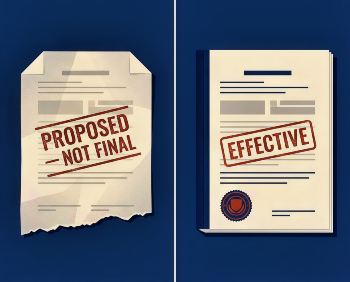
A court will usually not hear a challenge to a rule that is still a proposal. The rule must be final and actually bind you or your business.
Check these points first:
- Publication: Confirm the rule was adopted and published in your state’s administrative register or code.
- Effective date: Note the date the rule took effect. Challenges must be filed within the deadlines your state sets.
- Binding effect: Ask whether the rule creates obligations, penalties, or denials you face now.
Watch out: a draft or pending rule is generally not ripe for challenge. Wait for final adoption, unless your state allows an earlier procedure.
 Step 2: Establish Standing to Sue Administrative Agencies
Standing means you have a real stake in the outcome. Courts ask whether you suffered a concrete injury, whether the rule caused it, and whether a ruling in your favor would fix it.
- Injury: A denied license, a fine, a lost contract, or a restricted activity all count.
- Causation: Tie the injury directly to the rule, not to the agency’s general conduct.
- Redressability: Show that striking the rule would help you.
A citizen reviewing official state paperwork at a wooden desk is often the first step. Gather the notice, the denial letter, and any correspondence so you can prove the injury on paper.
Step 3: Complete the Exhaustion of Administrative Remedies
Most states require you to use the agency’s own appeal process before going to court. This is the exhaustion of administrative remedies. Skipping it can get your case dismissed.
Follow the agency’s internal steps in order. Typical steps include requesting reconsideration, a hearing before an administrative law judge, and a final agency decision. Keep every filing and deadline in a single file.
There are narrow exceptions. Courts sometimes allow a direct challenge when a rule is facially unconstitutional or when the agency lacks authority to grant relief. Do not rely on an exception without legal advice.
Step 4: Identify the Constitutional Grounds
A rule is not unconstitutional just because you dislike it. You need a specific constitutional provision, a recognized doctrinal test, and facts in the rulemaking record that satisfy that test. The sections below map the grounds most likely to succeed against state administrative rules, the test a court will apply, and the evidence you need to assemble.
Due process claims
 Due process challenges come in two forms, and courts treat them differently.
- Procedural due process asks whether the agency deprived you of a protected property or liberty interest without adequate notice and an opportunity to be heard. The familiar framework comes from Mathews v. Eldridge, 424 U.S. 319 (1976), which balances the private interest at stake, the risk of an erroneous deprivation under the procedures used, and the government’s interest in avoiding added burdens. A licensing revocation, a benefit termination, or a permit denial typically triggers this analysis. The practical question is whether the agency gave you the notice, hearing, and access to the evidence the balance requires.
- Substantive due process asks whether the rule is arbitrary or shocks the conscience. In the regulatory context, courts generally apply rational-basis review: the rule must be rationally related to a legitimate government interest. That is a low bar, so substantive due process claims succeed mainly when the rule has no rational basis at all or when a fundamental right is implicated.
A related and often stronger theory is the void-for-vagueness doctrine. A rule that uses terms like “good moral character,” “adverse impact,” or “as the agency deems appropriate” without objective standards can be challenged because it fails to give a person of ordinary intelligence fair notice of what is prohibited and invites arbitrary enforcement. Frame the claim around the rule’s specific words and show how they left you guessing.
Equal protection claims
Equal protection challenges argue that the rule treats similarly situated people differently without a sufficient justification. Because most administrative classifications are economic or social, courts apply rational-basis review, and the challenger must show that the classification is not rationally related to a legitimate purpose. The claim is strongest when the rule draws a distinction that has no connection to the agency’s stated goal, or when the record shows the line was drawn for an improper reason. If a suspect class or a fundamental right is involved, strict scrutiny applies and the analysis changes substantially.
Separation of powers and non-delegation
Separation of powers claims argue that an agency has exercised legislative or judicial power that belongs to another branch. A non-delegation claim argues that the legislature handed off a policy choice without an intelligible principle to guide the agency. The federal intelligible-principle standard traces to J.W. Hampton, Jr. & Co. v. United States, 276 U.S. 394 (1928), and the Supreme Court has rarely struck down a statute on this ground. State constitutions, however, often impose stricter non-delegation limits, and state courts have been more willing to enforce them. That is one reason a state-constitutional non-delegation claim can outperform the federal version.
A related theory is the major questions doctrine, which the Supreme Court applied in West Virginia v. EPA, 597 U.S. 697 (2022), to require clear congressional authorization before an agency decides a question of major economic or political significance. The doctrine is federal, but state courts increasingly cite the reasoning when an agency claims broad authority over a politically significant issue.
Take-care and ultra vires claims
 A rule that exceeds the authority the legislature actually granted is ultra vires and can be challenged on that ground even without a constitutional theory. Pair an ultra vires argument with a constitutional claim when the statute is ambiguous: the court may resolve the case on statutory grounds and avoid the constitutional question under the doctrine of constitutional avoidance. That is often the most efficient path.
State constitutional grounds competitors overlook
State constitutions can provide stronger and more specific protections than federal law. Common state-constitutional hooks include:
- A stricter non-delegation clause than the federal intelligible-principle standard.
- A separation-of-powers provision that state courts enforce more rigorously against agency adjudication.
- A due process clause that state courts interpret independently of federal doctrine.
- A right to a jury trial in civil cases, which can be implicated when an agency adjudicates a claim that would otherwise be a common-law action.
- A single-subject or title rule for legislation, which can invalidate a statute that delegates authority through an unrelated enactment.
Because state courts are the final arbiters of their own constitutions, a state-constitutional claim keeps the case in state court and avoids the federal standing and finality hurdles discussed earlier. Research the specific text and case law of your state’s constitution before you frame the claim.
Building the record for each ground
Whichever ground you choose, the record matters as much as the theory. Pull the rulemaking file and look for:
- The agency’s stated reasons and the evidence it relied on.
- Public comments the agency ignored or dismissed without explanation.
- Any statutory standards the agency failed to apply.
- The specific words of the rule that are vague or overbroad.
Watch out: a constitutional claim that is not tied to specific record evidence is easy for a court to dismiss as a policy disagreement. Cite the page of the rulemaking file, the comment number, and the exact rule language in your filing.
Step 5: Apply the Arbitrary and Capricious Standard
Even when a rule is constitutional on its face, an agency may have applied it or adopted it improperly. Courts review these decisions under the arbitrary and capricious standard.
Under this standard, a court asks whether the agency: (capricious | Wex | US Law)
- Considered the relevant factors
- Explained its reasoning
- Relied on evidence in the record
- Stayed within its legal authority
A rule that ignores public comments or lacks any stated reason is a strong target. Pull the rulemaking file and look for gaps. If the agency never explained why it chose this approach over alternatives, say so clearly in your filing.
Federal Versus State Court: Where to File
Your choice of court depends on the claim. State constitutional claims are usually filed in state court. Federal constitutional claims can go to state court or federal court, and sometimes only federal court has jurisdiction.
| Claim Type | Usual Starting Court | Key Consideration |
|---|---|---|
| State constitutional violation | State trial court | State law governs the outcome |
| Federal constitutional violation | State or federal court | Federal court offers a federal forum |
| Challenge to agency authority | Depends on statute | Check the review provision |
State courts often hear most election and state-rights cases. According to State Court Report on federalism and state constitutional rights litigation, state courts play a major role in these disputes, so state venues deserve serious consideration.
Consult a licensed attorney before choosing a forum. Filing in the wrong court can cost months. Advocates looking to Control Washington From Your State often find that choosing the right state venue is the first strategic decision.
 A Checklist for Spotting Constitutional Violations
Use this checklist to test a rule before you act:
- The rule is final and published
- You can name a concrete injury caused by the rule
- You have completed or documented the agency’s internal appeal steps
- You can point to a specific constitutional provision
- The rule uses vague or unlimited terms
- The rulemaking record shows no reasoning or ignored evidence
- You know the deadline for filing
If you can check most of these boxes, you likely have a viable claim worth reviewing with counsel.
Filing Your Challenge and Next Steps
Filing a constitutional challenge to a state administrative rule is a sequence of concrete steps, not a single act. The section below walks through the mechanics a non-lawyer can manage, the remedies to ask for, and the deadlines that most often sink otherwise strong claims. It also flags where a licensed attorney is genuinely necessary, not merely advisable.
Step 1: Assemble the administrative record
Before you draft anything, build a single indexed file containing:
- The final rule as published, with the citation to the administrative register or code and the effective date.
- The agency’s notice of proposed rulemaking and the statement of basis and purpose, if your state requires one.
- Every public comment you or others submitted, and the agency’s response.
- Your injury evidence: the denial letter, the fine, the license revocation, the contract loss, or the enforcement notice.
- The agency’s internal appeal decision, if you exhausted remedies.
Most state administrative procedure acts require the agency to compile the record on judicial review, but you should have your own copy. The record is what the court will review, and gaps in it are hard to fill later.
Step 2: Confirm the deadline and the review statute
Every state has a specific statute or rule that governs judicial review of agency action, and it sets a short deadline. Common patterns are 30 days from the final agency decision or from the effective date of the rule, but the period varies by state and by whether the challenge is to a rule on its face or as applied. Missing the deadline is jurisdictional in most states and cannot be excused. Check the review provision in your state’s administrative procedure act and the agency’s own rules before you do anything else.
Watch out: the deadline for a facial challenge to a rule can run from the rule’s effective date, not from the date the agency enforces it against you. If the rule has been on the books for years, a facial challenge may be time-barred even though an as-applied challenge is still available.
Step 3: Choose the remedy you are asking for
The remedy shapes the pleading. The most common remedies in a state administrative challenge are:
- Declaratory judgment that the rule is unconstitutional or exceeds statutory authority. This is the workhorse remedy for a facial challenge and is often available before enforcement.
- Injunctive relief barring enforcement of the rule while the case proceeds. A preliminary injunction requires a showing of likelihood of success on the merits, irreparable harm, a balance of equities in your favor, and the public interest.
- Vacatur of the rule, which sets it aside. Some state statutes authorize vacatur; others leave the rule in place and remand to the agency.
- Mandamus to compel the agency to act on a duty it owes you, such as issuing a decision or a license.
- Attorney’s fees under a state fee-shifting statute, if one applies. Many states have a prevailing-party fee provision in their administrative procedure act or civil rights statute.
Ask for the remedy the statute authorizes. A court cannot grant relief the legislature has not given it power to grant.
Step 4: Draft the petition or complaint
A state administrative challenge is usually filed as a petition for judicial review rather than a standard civil complaint, and the caption, the named respondent, and the service rules follow the review statute. The petition should:
- Identify the final agency action and the date it became final.
- State each constitutional ground separately, citing the specific constitutional provision.
- Tie each ground to specific record evidence.
- State the remedy requested.
- Include the exhaustion statement required by your state’s statute.
If your state requires a pre-suit demand letter or a notice of claim to the agency, send it and document delivery. Some states require a request for reconsideration before judicial review.
 Step 5: Consider the alternatives to litigation
Litigation is not the only path, and it is rarely the fastest. Before filing, consider:
- A petition for rulemaking asking the agency to amend or repeal the rule. This creates a new final agency action you can challenge if the agency refuses.
- A request for a declaratory order from the agency, if your state’s administrative procedure act authorizes one. The order is reviewable.
- Legislative review, since many states have a legislative committee that reviews rules for statutory authority and constitutional concerns. A committee objection can prompt the agency to withdraw or amend the rule without litigation.
- A pre-suit demand letter to the agency’s general counsel, which sometimes leads to a settlement or withdrawal.
These alternatives also preserve the record and can strengthen a later challenge by showing the agency had notice of the constitutional defect.
Step 6: Decide whether you need counsel
You can file and manage parts of a state administrative challenge yourself, but the following situations almost always warrant a licensed attorney in your state:
- The case will require discovery or an evidentiary hearing.
- The remedy you need is an injunction with a tight timeline.
- The constitutional question is a first-impression issue in your state.
- The agency is represented by the state attorney general’s office, which it usually is.
Ask about fee waivers, limited-scope representation, and whether a legal aid or public-interest organization handles administrative challenges in your state. Many state bar associations run a lawyer referral service that can connect you with an administrative-law practitioner for a short consultation. Those who want to Defend the American Family through this process can start by documenting their injury and identifying the right attorney early.
Step 7: Preserve the record for appeal
If the trial court rules against you, the appeal goes to the intermediate appellate court or the state supreme court under the review statute. Preserve every issue by raising it in the petition and, if there is a hearing, by making a timely objection. An issue not raised below is generally waived on appeal. Keep the record citations consistent from the petition through the appellate brief.
If you’ve identified a constitutional violation, don’t wait. Deadlines are strict and they run quickly. For broader background on how state and federal authority interact, you can read more on Understanding States’ Rights – A Complete Guide. If you’re deciding where to bring a claim, see alternatives to federal judicial activism.
Once you’re ready to file, How to Challenge Local Zoning Ordinances walks through the practical process of contesting local rules. And if you’ve already spotted a violation, constitutional rights violated: what happens next and how to respond covers what to expect.
Texas Journal publishes practical constitutional education for citizens who want to assert their rights. Whether you’re just starting out or preparing a filing, our guidance is built to help you act with confidence. Get started with Personal Sovereignty Is Non-Negotiable and turn constitutional knowledge into action.
Dave
Questions? Call!
940-353-1398

Frequently Asked Questions
What is the legal basis for challenging state administrative rules?
Most challenges rest on state administrative procedure acts, which let parties seek judicial review of agency rules that exceed statutory authority, violate constitutional provisions, or were adopted arbitrarily. Under these statutes and state constitutions, a party generally must show the rule is final, that it affects them directly, and that they raised the issue through the agency first. Because the framework varies by state, check your state’s administrative procedure act and constitution before filing. The U.S. Constitution’s due process and equal protection clauses also supply federal grounds when a rule infringes protected rights.
Can you challenge an agency rule for being unconstitutional?
Yes. A rule can be challenged on the ground that it violates the U.S. Constitution or your state’s constitution, such as due process, equal protection, or separation of powers. Courts will often ask whether the rule was properly authorized by the legislature and whether the constitutional claim could be resolved by the agency first. Clearly raising the constitutional issue during the agency process preserves it for later court review.
What is the ‘arbitrary and capricious’ standard in administrative law?
The arbitrary and capricious standard asks whether an agency acted without a rational basis, failed to consider important factors, ignored relevant evidence, or offered an explanation that contradicts the record. Courts applying it do not substitute their own policy judgment for the agency’s. To succeed, a challenger typically must point to specific gaps in the agency’s reasoning in the rulemaking record, rather than arguing the rule is simply unwise.
What are the common constitutional grounds for challenging agency actions?
Common grounds include violations of due process, equal protection, the separation of powers, and the non-delegation doctrine, which limits a legislature’s ability to hand off lawmaking power without clear standards. Challengers also raise claims that an agency lacked statutory authority or that enforcement was applied in a discriminatory way. Each claim requires specific facts showing how the rule harms you.