Constitutional Interpretation Without Political Bias: A 2026 Guide

Table of Contents

Last Updated: September 14, 2026

Why the Question of Bias in Constitutional Interpretation Matters Now

Constitutional interpretation without political bias is the ongoing effort to read the Constitution according to its text, structure, and history rather than the policy preferences of the judge applying it. Every nomination fight, every blockbuster Supreme Court term, and every state ballot measure touching rights and agency power turns on this question. This guide from Texas Journal breaks down the major interpretive theories, the structural forces that pull judges off course, and a practical framework for spotting bias in any ruling. The stakes are not academic: the way courts read founding documents decides how much power Washington holds over your state, your property, and your rights.

The debate matters because judicial review gives unelected judges the final word on what the Constitution means. When interpretation drifts from the document’s text and structure, the legal system loses predictability, and citizens lose the ability to know their rights in advance. That is why the fight over interpretive theories is really a fight over who governs.

The core disagreement in American constitutional theory is between originalism and living constitutionalism, and it shapes nearly every major ruling. Originalism holds that the Constitution’s meaning was fixed at ratification; living constitutionalism holds that meaning evolves with the times. Both camps claim fidelity to the document, but they define fidelity in opposite ways, and the disagreement is not merely academic, because it determines which evidence a court is even willing to look at.

What Originalism Claims About Founding Documents

Originalism argues that the Constitution’s words carry the public meaning they held when ratified. Under this view, judges who substitute their own normative values for the text are legislating, not adjudicating. The modern originalist family splits into several distinct methods, and the split matters in close cases:

  • Original public meaning looks to how a reasonable person at ratification would have understood the words, using dictionaries, ratification debates, and contemporaneous usage.
  • Original intent looks to what the drafters subjectively meant to accomplish, a method critics say is unworkable because a multi-member convention has no single intent.
  • Textualism looks to the plain meaning of the words as an ordinary reader would understand them, often setting aside legislative history entirely.
  • Structural reasoning reads a clause in light of the architecture of the document, federalism, separation of powers, and the relationship between enumerated and reserved powers.

A well-known illustration is the debate over the Second Amendment. In District of Columbia v. Heller (2008), the Court’s majority relied heavily on original public meaning and historical usage to conclude the amendment protects an individual right (supreme.justia.com). Justice Scalia’s opinion is a template for how originalist method is actually applied: it works through founding-era dictionaries, state constitutions, and pre-ratification commentary before reaching a holding. Justice Stevens’s dissent used much of the same historical record to reach the opposite conclusion, a reminder that originalist materials can be contested even when both sides accept them as relevant.

What Living Constitutionalism Claims About Constitutional Text

Living constitutionalism treats the constitutional text as a framework whose meaning adapts to modern conditions. Its defenders say a document written in the eighteenth century cannot resolve questions its authors never imagined, so judges must apply its broad principles to new facts. The classic statement of this view is the idea of a “living” document whose broad clauses, due process, equal protection, cruel and unusual punishment, draw their content from evolving social standards.

Critics respond that this flexibility is exactly how personal politics enter legal reasoning. If the meaning of a clause changes with the times, then whoever decides what the times require is effectively writing new law. Defenders counter that the alternative, freezing eighteenth-century assumptions into the text, is itself a political choice, and often a regressive one.

The two theories also differ in how they treat precedent. Originalists tend to distinguish between the original meaning of the text and the accumulated gloss of case law, and some argue that wrongly decided precedents should be overruled rather than extended. Living constitutionalists tend to treat precedent as a source of meaning in its own right, because a doctrine that has been relied on for generations becomes part of the constitutional fabric.

Theory Basis of Meaning Primary Evidence Strength Weakness
Original public meaning Fixed meaning at ratification Dictionaries, ratification debates, contemporaneous usage Predictability, restraint Hard cases with new technology
Original intent Framers’ subjective purpose Convention records, private letters Historical grounding Whose intent counts?
Textualism Plain meaning of words Statutory text, ordinary usage Objective analysis Ambiguity in sparse text
Structural reasoning Architecture of the document Federalism, separation of powers Coherence across clauses Indeterminate in hard cases
Living Constitution Evolving standards Social change, precedent, moral philosophy Adaptability Invites judicial discretion
Pragmatism Practical consequences Workability, institutional effects Real-world outcomes Weak anchor to text

Where the Theories Actually Collide

The disagreement is sharpest in cases the founding generation could not have anticipated. Electronic surveillance, data privacy, and the scope of congressional power over a national economy are all areas where the text supplies a principle but not a rule. In those cases, the choice of method often determines the outcome before the facts are even argued.

A useful discipline is to ask which method the court actually used, not which method it claimed. An opinion that announces a textualist approach but then relies on policy consequences to resolve the hard question has told you something important about how the result was really reached. That gap between stated method and applied method is one of the most reliable signals of bias in constitutional interpretation.

Pro TipWhen you read a constitutional opinion, underline every sentence that cites the text, structure, or history, and every sentence that cites consequences, fairness, or social change. The ratio tells you more about the court’s method than the introduction does.

Textualism, Intentionalism, and the Limits of Judicial Discretion

Textualism and intentionalism are related but distinct tools for constraining judicial discretion. Textualism asks what the words of a statute or constitutional clause mean to an ordinary reader; intentionalism asks what the drafters meant to accomplish. The two overlap often, but they diverge in close cases, and that gap is where interpretation gets contested.

Judicial discretion is unavoidable at the margins. A common mistake is assuming that any theory eliminates it. What a disciplined method does is shrink the space where a judge’s politics can operate. Textualism constrains by anchoring to language; intentionalism constrains by anchoring to historical record. When courts abandon both, statutory construction becomes a vehicle for policy, and legal doctrine loses its moorings.

The practical test is simple: can the judge explain the ruling using the text and structure alone? If the answer requires importing outside values, discretion has taken over.

Constitutional Limits on Federal Agency Power: Where Interpretation Meets Reality

Few areas expose the stakes of constitutional interpretation like the constitutional limits on federal agency power. When agencies write rules that carry the force of law, courts must decide whether Congress actually delegated that authority and whether the structure of the Constitution permits it. This is where interpretive theories stop being abstract and start deciding what the government can do to you.

The nondelegation doctrine, the major questions doctrine, and limits rooted in Article I and the Tenth Amendment all bear on how much power agencies may wield (supreme.justia.com). A court that reads those limits broadly restrains the administrative state; a court that reads them narrowly lets agencies fill the gap. Interpretation, in other words, is the lever that moves the whole machine.

How Judicial Review Shapes Agency Authority

Judicial review is the mechanism courts use to strike down agency action that exceeds constitutional or statutory authority (5 U.S. Code § 706 – Scope of review | U.S. Code | US Law). When a court applies a text-and-structure method, agency rules face a harder test; when it defers to the agency’s own reading, federal power expands by default. The difference is not rhetorical. It determines whether a rule issued in Washington can override the choices your state and its legislature have made.

The Inevitability of Judicial Values in Constitutional Theory

Some scholars argue that judicial values are inevitable, that no interpretive method fully removes a judge’s moral reasoning from the bench. That claim deserves a fair hearing, because it is the strongest argument against the possibility of fully neutral interpretation. Judges are human, and hard cases often require judgment about purpose and consequence.

The intellectual roots of this position run back to the Enlightenment. Enlightenment political philosophy, Locke on natural rights, Montesquieu on separated powers, and the Scottish moralists on the role of sentiment in judgment, supplied the founding generation with the vocabulary of rights and limited government. But it also supplied a tension that never resolved: if rights are grounded in reason and nature, who is authorized to say what reason and nature require? That question is the seed of every modern debate about judicial values.

The Moral Reasoning Problem in Jurisprudence

Moral reasoning enters constitutional law in at least three distinct ways, and conflating them makes the debate incoherent:

Make a Difference Today →

  1. Interpretive moral reasoning, deciding what a broad clause like “due process” or “cruel and unusual punishment” requires, given that the text states a principle rather than a rule.
  2. Construction moral reasoning, resolving a case the text does not directly address, where a court must build a rule rather than find one.
  3. Remedial moral reasoning, deciding what remedy follows from a rights violation, which often requires weighing institutional consequences.

A judge who insists that moral reasoning plays no role at all is usually describing the first category only. The honest position is that values cannot be eliminated, only disciplined. A judge who admits the pull of personal preference and then anchors the ruling in text, structure, and history is doing the job. A judge who treats the Constitution as a mirror for their own politics has abandoned it. The question is never whether values exist; it is whether the legal reasoning constrains them.

How to Tell Disciplined Judgment from Raw Politics

The line between the two is not always obvious, but it leaves fingerprints. A few patterns recur:

  • Selective deference. A court that defers to the political branches when it likes the outcome and intervenes when it does not is applying a double standard, regardless of the doctrine it cites.
  • Result-driven distinctions. When a precedent is distinguished only in cases where the result requires it, the reasoning is doing less work than the outcome.
  • Asymmetric scrutiny. If the same legal test produces rigorous review for one set of litigants and deferential review for another, the test is not being applied neutrally.
  • Scope creep. A ruling that resolves more than the case requires often signals that the court is reaching for a policy outcome rather than a legal one.
  • Unstated premises. When the decisive move in an opinion appears in a footnote or a single sentence, the court may be avoiding the scrutiny that a full argument would invite.

None of these patterns proves bad faith. Each is a reason to read the reasoning more carefully, and together they form the practical core of evaluating whether a ruling reflects law or preference.

Watch OutThe most dangerous mistake in this debate is treating “values are inevitable” as proof that all interpretation is politics. That conclusion hands the Constitution to whoever holds the gavel and destroys the predictability the rule of law depends on. The inevitability of values is an argument for discipline, not an argument for surrender.

If values cannot be removed, the goal shifts from purity to constraint. Predictability and legal stability come from methods that narrow the range of defensible outcomes, clear text, settled precedent, and structural reasoning that can be checked by anyone reading the same sources. A system that admits values are present but insists they be disciplined produces more stable law than one that pretends they are absent and then applies them without acknowledgment.

That is the practical case for interpretive restraint, and it does not require anyone to believe that judges are or can be perfectly neutral. It requires only that the reasoning be transparent enough that citizens can see the method, predict the result, and hold the court accountable when the method and the outcome diverge.

Structural Bias, Political Bias, and the Myth of the Neutral Judge

The myth of the perfectly neutral judge obscures two different problems: structural bias built into institutions, and political bias carried by individuals. Structural bias lives in the design of courts, the selection process, and the incentives that reward certain outcomes. Political bias lives in the person. Conflating them makes reform impossible, because the fixes are different.

Structural bias shows up in how cases reach the docket, how precedent locks in past errors, and how agency deference tilts the field toward the federal government. Political bias shows up when a ruling’s reasoning does not match its result. A judge can be personally impartial yet still operate inside a structure that skews outcomes. Naming both is the first step toward a legal system that earns public trust.

A Practical Framework for Identifying Bias in Judicial Outcomes

Bias in a ruling is detectable if you know what to look for, and a structured set of questions beats a gut reaction. Most commentary either defends or attacks a decision without examining the reasoning. A framework forces you to separate the outcome you dislike from the method the court actually used.

Five Questions to Ask About Any Ruling

  1. Does the opinion anchor its holding in the constitutional text, or does it lean on policy preferences?
  2. Does the court follow precedent consistently, or does it distinguish cases only when the result requires it?
  3. Would the same reasoning produce the opposite outcome if the parties were swapped?
  4. Does the ruling expand federal agency authority beyond what Congress plainly authorized?
  5. Is the decision’s scope narrow and grounded, or does it reach issues the case did not require?

Use this checklist on any opinion, state or federal. If a ruling fails three or more of these tests, the reasoning, not just the result, deserves scrutiny.

Pro TipRead the dissent first. A well-argued dissent often exposes the majority’s weakest structural move faster than any commentary, because it has to engage the same text and precedent on the court’s own terms.

Artificial intelligence is now part of legal research, and it cuts both ways for objectivity. AI tools can scan thousands of pages of founding documents, historical records, and precedent in seconds, surfacing original meanings and patterns a human researcher might miss. That capacity supports more disciplined textual and historical analysis.

The risk is subtler. An AI model trained on a skewed corpus will reproduce that skew, and a judge or clerk who trusts the output without checking it imports hidden bias into the legal reasoning. Technology does not manufacture objectivity; it amplifies whatever method feeds it. The courts that use AI well will treat it as a research assistant, not an oracle, and verify every citation against the primary source.

What Other Democracies Teach About Constitutional Interpretation Without Political Bias

Other democracies offer useful comparisons, though no system has solved the problem of judicial values. Some countries route constitutional questions to specialized courts with limited jurisdiction; others build in legislative override mechanisms that let elected bodies respond to judicial rulings. Each design trades one risk for another.

The lesson for American constitutional law is not to copy a foreign model wholesale. It is that institutional design shapes how much room judges have to impose personal politics. Systems with narrower jurisdiction and clearer textual anchors tend to produce more predictable outcomes. That is a structural insight, and it applies to debates over court reform and states’ rights here at home.

Key TakeawayNo democracy has eliminated judicial values. The systems that come closest constrain them through narrow jurisdiction, clear text, and mechanisms that keep courts accountable to the document and to the people.

Legal predictability and democratic legitimacy both depend on courts that interpret the Constitution rather than rewrite it. When interpretation follows text, structure, and history, citizens can know their rights in advance and states can defend their authority against federal overreach. When it does not, the legal system becomes a political game played with other people’s freedoms.

Texas Journal exists to help citizens understand the abilities the Constitution gives them and to push back against the usurpation of those freedoms from Washington.

Frequently Asked Questions

What are the primary methods of constitutional interpretation?

The main methods include originalism (focusing on original intent or public meaning at ratification), textualism (relying on the plain meaning of constitutional text), intentionalism (seeking the framers’ specific intentions), and living constitutionalism (treating the Constitution as evolving with societal norms). Structural analysis examines how branches interact, while pragmatism weighs practical consequences. Each method carries assumptions about judicial discretion and the role of normative values, so no single approach eliminates political bias entirely.

What is the difference between originalism and living constitutionalism?

Originalism holds that constitutional interpretation should be anchored to the meaning of the text at the time it was ratified, limiting judicial discretion. Living constitutionalism argues that the Constitution’s meaning adapts to changing circumstances, allowing judges to consider contemporary values. The originalism vs living constitution debate often centers on democratic legitimacy and legal predictability. Originalists fear judicial activism; living constitutionalists fear rigid adherence to outdated norms. Both approaches can be influenced by political bias, but they offer different guardrails.

Can constitutional interpretation ever be truly free of political bias?

Complete neutrality is likely impossible because judges are human and bring normative values to the bench. However, constitutional interpretation without political bias can be approximated through transparent legal reasoning, adherence to precedent, and methods like textualism that constrain discretion. Structural biases, such as docket selection and political appointment, still influence outcomes. The goal is not purity but a system of checks that makes bias visible and contestable, preserving legal predictability and democratic legitimacy.

How do constitutional limits on federal agency power relate to judicial bias?

When courts review agency actions, they must decide whether an agency exceeded its statutory authority or violated constitutional limits on federal agency power. This involves interpretive choices: does the statute clearly authorize the action? Does the major questions doctrine apply? Judges’ philosophies on judicial restraint or deference to agencies can shape outcomes. A judge who favors expansive federal power may uphold agency rules, while one who prioritizes states’ rights may strike them down. Recognizing these patterns helps citizens spot political bias in adjudication.

Practical Steps for Constitutional Activism in 2026

Table of Contents

Last Updated: September 14, 2026

Step 1: Understand the Constitutional Tools You Already Have

Constitutional activism is the practice of using the rights, procedures, and institutions built into the United States Constitution to influence public policy and hold government accountable. This guide from Texas Journal breaks down the practical steps any citizen can take, starting with the tools you already possess.

The Constitution gives you more use than most people realize. You do not need a law degree to use it effectively. You need to understand where the pressure points are.

Here is what matters most:

  • The First Amendment protects your right to speak at public meetings, assemble peacefully, petition officials, and publish your views without government retaliation.
  • State open meetings laws require school boards, city councils, and county commissions to deliberate in public and publish their agendas in advance.
  • Public records statutes give you the right to inspect government documents, budgets, contracts, and correspondence.
  • The Tenth Amendment reserves powers not delegated to the federal government to the states and the people, which is the constitutional basis for state-level resistance to federal overreach.

The National Archives’ guide to the Constitution outlines the full text and amendment history. Read it directly rather than relying on summaries.

Key TakeawayMost citizens never use these tools because they assume the process is rigged. In practice, local boards and agencies respond to organized, informed pressure far more than they admit publicly.

Step 2: How to Verify Local School Board Budget Transparency for Parents

Verifying local school board budget transparency for parents starts with one document: the adopted budget, which most districts are required by state law to publish. If you cannot find it online, that absence is your first data point.

Follow this sequence:

  1. Visit the district’s website and search for “budget,” “finance,” or “board documents.” Look for the current fiscal year’s adopted budget, not a summary.
  2. Request the board meeting minutes where the budget was approved. Compare the line items against the published summary.
  3. Check whether the district posts expenditures in a searchable format or only as scanned PDFs. Scanned-only posting is a common transparency gap.
  4. Cross-reference state education agency reporting requirements to see what the district is legally obligated to disclose.

When a district claims transparency but buries documents three clicks deep or posts them months late, that pattern is worth documenting. Bring it to a board meeting.

Step 3: Constitutional Activism Scripts for Public Comment

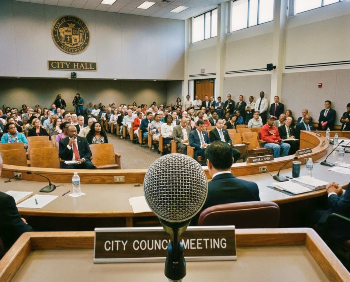
Constitutional activism scripts for public comment give you a structured way to make your two or three minutes count. Most boards limit speakers to a fixed time, so preparation is everything.

A common mistake is treating public comment like a speech. It is not. It is a record-building exercise.

Sample Script for School Board Meetings

“My name is [Name], and I live in [District]. I am here regarding [specific agenda item or budget line]. I am requesting that the board [specific action: publish X document / explain Y expenditure / add Z to the next agenda]. Under [state open meetings law citation], this body is required to [relevant requirement]. I am asking for a written response within [timeframe]. Thank you.”

Sample Script for City Council Hearings

“My name is [Name], resident of [Ward/District]. I am speaking on [ordinance/resolution number]. My concern is [specific constitutional or legal issue]. I am requesting that the council [table the measure / request a legal review / publish the supporting documents]. I would like my comments entered into the official record.”

Keep a copy of every script you deliver. Date it. Note who was present. That paper trail matters later.

Step 4: How to File a Public Records Request

Filing a public records request is straightforward, but doing it correctly the first time saves weeks. Every state has its own public records statute, and most specify a response deadline, commonly 5 to 10 business days, though some allow 20 or more for large requests. Knowing your state’s clock is the first lever you have.

Your request should include:

  • Your name and contact information
  • A clear description of the records sought, with date ranges
  • The format you want (electronic preferred)
  • A statement that you will pay reasonable copying fees up to a stated limit

Send it by email so you have a timestamp. If the agency has a dedicated records custodian, address it to that person by title. Keep the original email in a folder you never delete, that timestamp is evidence.

What to Do When Your Request Is Denied

Denials usually cite one of a few exemptions: personnel records, ongoing litigation, deliberative process, or “not a public record.” Do not accept a verbal denial. Request the denial in writing with the specific statutory exemption cited. If the agency will not put it in writing, that refusal is itself a fact worth documenting.

The Escalation Ladder for Non-Lawyers

This is where most citizens stop, and where constitutional activism actually begins. A denial is not the end of the process; it is the first step in a defined escalation path that you can walk without a law degree.

  1. Administrative appeal. Most state public records statutes give you a statutory right to appeal the denial to the agency head or a designated reviewing official within a set window (often 30 days). File it in writing, cite the statute, and quote the exemption the agency relied on. Explain in one paragraph why it does not apply.
  2. Public access counselor or ombudsman. Many states maintain a free review office, sometimes called a public access counselor, open government ombudsman, or freedom of information commission, that issues advisory opinions on denials at no cost to you. A written opinion from that office is powerful leverage; agencies frequently release records rather than absorb the publicity of an adverse finding.
  3. Attorney general opinion. In some states you can request a formal opinion from the attorney general on whether the denial violated the statute. These opinions are public and citable.
  4. Civil action in state court. If the above fail, most statutes allow you to file a petition in state court to compel disclosure. This is where fee-shifting matters: many states award attorney’s fees and sometimes statutory penalties to a requester who substantially prevails. That fee-shifting provision is what makes it economically possible for a private attorney to take your case on contingency.
  5. Federal requests. If the records are held by a federal agency, the process runs through the Freedom of Information Act (FOIA), which has its own administrative appeal track and a right to sue in federal district court after exhausting it. FOIA also has fee-shifting for prevailing requesters.

How to Find a Lawyer for a Records Case

You do not need to hire a firm on retainer. Practical routes:

  • Legal aid and law school clinics. Many law schools run open government or First Amendment clinics that take records cases for free.
  • Nonprofit legal organizations. Groups focused on press freedom, government transparency, and civil liberties maintain referral networks and sometimes litigate directly.
  • Contingency representation. Because of fee-shifting, a private attorney may take a strong denial case on contingency, meaning you pay nothing unless you prevail.
  • Pro se filing. Small-claims-style records petitions in some states are designed for self-represented requesters. Court clerks can explain filing fees and forms, though they cannot give legal advice.

The Reporters Committee for Freedom of the Press open government guide tracks each state’s appeal process, deadlines, and fee-shifting rules, use it to find your state’s specific path before you escalate.

Watch OutNever file a records request that reads like a fishing expedition. Vague requests get denied or delayed. Specific requests with date ranges and document types get answered, and if they are denied, a specific request is far easier to defend on appeal.
Key TakeawayThe request is the easy part. The leverage comes from the paper trail you build when the agency says no: the written denial, the statutory citation, the appeal, and the fee-shifting statute that makes a lawyer willing to take the case.

Step 5: Organize Your Community with Coalition Building

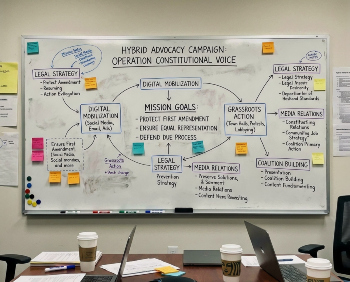
Coalition building turns one voice into twenty. A single resident at a board meeting is a comment. Twenty residents with the same documented concern is a political problem for the board.

Make a Difference Today →

Start small and specific. A group of five parents focused on one budget line is more effective than a Facebook group of 500 with no shared ask.

What works in practice:

  • Assign roles. One person files records requests, one tracks meeting agendas, one speaks at meetings, one handles outreach.
  • Keep a shared document of every request, response, and public comment. This becomes your institutional memory.
  • Recruit from the affected group, not from general ideology. Parents concerned about a curriculum item will show up. People recruited on abstract principle often will not.
  • Coordinate testimony. Three speakers making three different points in three minutes beats one speaker trying to cover everything.

This is where Texas Journal’s approach to grassroots organizing differs from passive news consumption. The platform is built to help citizens move from reading about constitutional issues to acting on them locally, whether that means working to Defend the American Family on a school board or pushing to Control DC From Your State through legislative pressure.

Step 6: Engage Elected Officials Through Legislative Advocacy

Legislative advocacy at the state and local level is where individual citizens still have real influence. State legislators represent smaller districts than members of Congress, and they hear from far fewer constituents. A single well-timed call can move a bill in a way that a thousand calls to a congressional office cannot.

Effective advocacy follows a rhythm tied to the legislative calendar. Learn your state’s calendar first, most legislatures publish a session schedule, a bill-tracking system, and committee hearing notices online.

Before Session: Shape the Bill

  • Read the prefiled bills. Most states post bills online weeks before session begins. Search by subject, not just by bill number.
  • Submit written comments during the public comment period. Many legislatures publish a portal for this; comments become part of the bill’s public record.
  • Meet your legislator in the district. Pre-session is when they are most accessible and least distracted. Bring one specific ask, not a list.

During Session: Work the Committee

This is the single most underused lever. A bill lives or dies in committee. Your own representative may not sit on the committee that decides your bill’s fate.

  • Identify the committee of jurisdiction. The bill’s status page lists which committee it was referred to. That committee’s members, not your own legislator, are the votes that matter.
  • Contact every committee member, not just your own. A short, specific call or email to each committee member is more effective than a long one to your representative.
  • Sign up to testify. Most committees allow public testimony, often in person or in writing. Testimony is entered into the official record and can be cited later.
  • Watch the committee calendar. Bills are often heard on short notice. Set alerts on the legislature’s bill-tracking system so you do not miss a hearing.

A short, specific call beats a long, general one. “I am a constituent in your district and I want you to vote no on HB [number] because of [specific provision]” is more effective than a five-minute explanation of your political philosophy.

After Session: Hold the Vote Accountable

  • Pull the roll-call vote. Every bill that reaches a floor vote produces a public record of who voted yes and who voted no. That record is the most underused accountability tool citizens have.
  • Publish it locally. A simple post, “Here is how our representative voted on HB [number]”, reaches voters who never read a bill.
  • Track interim study committees. Many legislatures assign bills that failed to interim committees that meet between sessions. Those meetings are often open to the public and are where the next session’s bills are drafted.

When the Governor’s Desk Is the Last Stop

If a bill passes both chambers, it goes to the governor. Most states give the governor a set number of days to sign, veto, or let the bill become law without signature. If a veto happens, most states allow the legislature to override it with a supermajority, commonly two-thirds of each chamber. That override vote is a second chance, and it is often decided by a handful of legislators who are suddenly hearing from constituents for the first time.

Pro TipSet a calendar reminder for the day after a committee hearing and the day after a floor vote. The follow-up, thanking a yes vote or asking why a no vote, is what turns a one-time comment into a relationship.
Key TakeawayLegislative advocacy is not about volume. It is about timing, committee targeting, and the paper trail of votes you can publish afterward. One constituent who knows the committee calendar beats a hundred who only know their own representative’s name.

Step 7: Know Your Rights During Protests and Civil Disobedience

Knowing your rights during protests is the difference between a lawful exercise of the First Amendment and a charge you did not expect. The rules vary by state, and the difference between protected assembly and unlawful assembly often comes down to permits, timing, and location.

What you should know before you go:

  • Permits: Many jurisdictions require permits for marches or large gatherings on public streets. Permit requirements for gatherings in traditional public forums like sidewalks and parks are more limited, but not absent.
  • Recording police: In every federal circuit that has ruled on the question, the First Amendment protects the right to record police performing public duties. Keep recording, but do not interfere physically.
  • Civil disobedience: Deliberately breaking a law as protest is a recognized tactic with a long American history. It also carries legal consequences. If you choose it, arrange legal support in advance and understand the specific charge you are risking.
  • Arrest procedures: If detained, state your name and ask for counsel. Do not resist. Do not consent to a search.

The ACLU’s guide to protest rights covers state-by-state variations on permits and recording.

Pro TipFilm the entire encounter, not just the moment of conflict. Footage of the lead-up is what wins in court. Upload to a cloud account immediately in case your phone is seized.

Common Mistakes That Weaken Constitutional Activism

The biggest mistake is treating constitutional activism as a one-time event. A single public comment or records request rarely changes anything. Sustained, documented, specific pressure does.

Other patterns that undercut results:

Mistake Why It Fails Better Approach
Speaking off-topic at public comment Chair rules you out of order; comment not entered Tie every comment to a specific agenda item
Filing vague records requests Agency denies or stalls indefinitely Specify document types and date ranges
Recruiting on broad ideology Group fragments without a shared ask Recruit around one specific local issue
Skipping committee members Bill dies or passes without your input Contact the committee, not just your rep
Verbal-only follow-up No paper trail if the agency denies Put everything in writing with timestamps

The throughline here is documentation. Constitutional activism works when it produces a record that officials cannot ignore and cannot quietly bury.

Conclusion

The gap between knowing your rights and using them is where most civic energy dies. The steps above close that gap: verify the documents, script the comment, file the request, build the coalition, track the votes.

Texas Journal is built for citizens who want to move past passive frustration and into organized, effective action. The platform’s constitutional education resources teach you to assert your rights, its focus on states’ rights gives you a framework for resisting federal overreach, and the Patriot Pool membership functions as a force multiplier for the movement. If you are ready to stop watching and start acting, Click Here to join.

Frequently Asked Questions

What are the foundational steps for effective constitutional activism?

Start by understanding your constitutional rights, then focus on one local issue you care about. Attend public meetings, file public records requests to gather facts, and build a small coalition of neighbors. Use legislative advocacy by contacting elected officials with specific, documented concerns. Constitutional activism works best when it combines legal knowledge with grassroots organizing, and when you show up consistently rather than just once.

How can I organize a local group to support constitutional values?

Begin by identifying 5-10 people who share your concerns about a specific local issue, such as school board spending or city ordinances. Hold a first meeting to define one clear goal. Assign roles for research, public comment, and outreach. Use community organizing tactics like door-knocking, letter writing campaigns, and social media activism to grow your group. Keep meetings focused on actionable steps rather than general discussion.

What is the difference between judicial activism and constitutional advocacy?

Judicial activism refers to judges making rulings that expand beyond constitutional text, often overriding legislative decisions. Constitutional advocacy is what citizens do outside the courtroom: organizing, speaking at public meetings, filing records requests, and pressuring elected officials to follow the Constitution. Your role as a citizen is constitutional advocacy, which uses civic engagement and grassroots organizing to influence policy without needing to be a lawyer.

How do I file a public records request to check local government spending?

Find your state’s open records law and identify the correct agency custodian. Submit a written request by email or through an online portal, describing the specific documents you want, such as budget line items, contracts, or emails. Include your name and contact information. Most states require a response within 5-10 business days. If denied, cite the specific exemption claimed and appeal in writing. Keep copies of everything you send and receive.

American Principles Project vs Alternatives: 2026 Guide

Table of Contents

Last Updated: September 13, 2026

How American Principles Project and Its Alternatives Compare

The American Principles Project occupies a specific lane in the conservative advocacy ecosystem: it is a public-policy organization built around family-focused cultural arguments, and it measures success differently than the think tanks and legal funds it is often grouped with. This guide from Texas Journal breaks down how the American Principles Project compares to alternatives across mission, lobbying strategy, and grassroots reach, so you can decide which model actually matches your priorities. Below, we will show you exactly how to evaluate any advocacy organization before you commit time or money, and the comparison table further down scores the major models side by side.

Most voters never examine this distinction. They see “conservative group” on a donor form and assume every organization fights the same way. It doesn’t work like that. Some groups write amicus briefs. Some run ballot initiatives. Some knock on doors. The American Principles Project sits closer to the cultural-argument wing of the movement, and that choice shapes everything about how it operates.

Key TakeawayThe core question is not which organization is “most conservative.” It is which model of influence actually produces results on the issues you care about: litigation, legislation, cultural persuasion, or grassroots mobilization.

What American Principles Project Does

The American Principles Project is a right-of-center advocacy organization that focuses on family values, parental rights, and opposition to gender ideology in law and public discourse. Its work centers on shaping how cultural issues are framed in state legislatures and federal policy debates.

That framing matters more than most people realize. The organization built its reputation by pushing back on policies it characterizes as anti-family extremism, particularly in school curriculum fights and youth-focused legislation. It operates as a 501(c)(4) social welfare organization, which means it can engage in lobbying and some political activity but cannot coordinate directly with candidates the way a political action committee can.

A common mistake is assuming all conservative advocacy groups do the same work at different scales. They don’t. Some are litigation shops. Some are donor networks. Some are media operations. The American Principles Project is primarily a messaging and policy-pressure organization, and that shapes what it can and cannot accomplish.

How Alternatives Differ

Alternatives to the American Principles Project split into four distinct models, and each wins in different arenas. Understanding the model matters more than comparing individual organizations, because the model determines what kind of influence you are actually funding.

  • Think tanks produce research and policy proposals. They influence legislation indirectly by supplying ideas and credentialed experts to hearings.
  • Legal advocacy groups file lawsuits and amicus briefs. Their wins are court decisions, which can be durable but slow.
  • Grassroots mobilization networks organize voters, run door-knocking operations, and pressure legislators from the district level up.
  • State-focused constitutional education platforms teach citizens how to assert their rights directly, which multiplies influence without requiring a Beltway presence.

The last category is where Texas Journal operates. Rather than lobbying on your behalf, it teaches citizens how to use the abilities provided by the United States Constitution themselves. That is a different theory of change: instead of one organization fighting for you in Washington, thousands of informed citizens apply pressure from their own states. The Federal Election Commission guidance on 501(c)(4) activity explains the legal boundaries these different organization types operate within.

Mission and Core Objectives

Mission statements reveal strategy faster than any promotional material. The American Principles Project’s stated objective is defending the family as the foundational unit of society, and every campaign it runs ties back to that frame.

Compare that to a litigation-focused group, whose mission is usually written around constitutional text and court precedent. Or a grassroots network, whose mission is written around voter turnout and legislative accountability. The mission tells you what the organization will say no to, which is often more revealing than what it says yes to.

When you evaluate any advocacy group, read the mission statement and ask one question: does this describe activity I can verify, or does it describe outcomes nobody controls? “Defending the family” is a mission. “Ending a specific federal program” is a measurable objective. Both are legitimate, but they demand different kinds of donations and different expectations from supporters.

Policy Advocacy and Lobbying Strategy

Lobbying strategy is where the American Principles Project and its alternatives diverge most sharply, and the divergence is measurable if you know where to look. The organization leans on cultural framing and state-level legislative pressure on social issues rather than the traditional think-tank pipeline of white papers feeding into committee staff. That is a deliberate choice with concrete operational consequences.

Start with the legal machinery. A 501(c)(4) social welfare organization may lobby as its primary activity, but under IRS rules its political intervention cannot become its primary activity, and it cannot coordinate with candidates or parties. That ceiling shapes everything downstream: the organization can run issue ads, draft model legislation, and pressure legislators, but it cannot hand a candidate a check or a script. Compare that to a 501(c)(3) think tank, which faces an absolute prohibition on candidate intervention and a lobbying ceiling measured against its exempt-purpose spending, or to a PAC, which can contribute directly but must disclose donors above the Federal Election Commission’s itemization threshold.

The Lobbying Disclosure Act adds a second layer. Organizations that spend above the quarterly threshold on lobbying activities, or that employ a lobbyist whose contacts exceed the registration trigger, must register and file quarterly reports naming the lobbyists, the issues, and the agencies or chambers contacted. Those filings are public and searchable. That is the single most useful tool a donor has: if an organization claims sustained legislative influence, its LDA filings should show sustained engagement across multiple quarters, not a one-off registration.

Watch OutDo not judge an advocacy organization solely by whether a bill passed. Cultural and constitutional battles often take multiple election cycles. Groups that promise immediate legislative victories on deeply contested social issues are usually overpromising.

Now the strategy itself. The American Principles Project model treats state legislatures as the primary battleground because that is where family and education policy is actually decided. The federal footprint is narrower by design. Where the model shows up in practice is in state-level fights over parental notification, school sports eligibility, curriculum transparency, and medical-transition rules for minors, issues that move through state committees rather than through a single federal vehicle. Alternatives that focus on tax policy or deregulation operate through a different channel entirely: they feed language into budget reconciliation, agency rulemaking comments, and the committee staff pipeline, where a well-timed white paper can shape statutory text years before a vote.

The trade-offs are real. Cultural framing moves public opinion and can shift what legislators are willing to vote for, but it also attracts intense, well-funded opposition and rarely produces a clean single-session win. Beltway think tanks produce durable statutory language but rarely generate the grassroots heat that forces a vote. Legal funds win in court, but a single adverse appellate ruling can erase a decade of legislative work. The honest read is that no single model dominates, and the most effective movements run several in parallel.

For a donor trying to verify claims, the workflow is straightforward. Pull the organization’s LDA filings and check whether the issues listed match the issues it advertises. Pull its Form 990 and compare program spending to fundraising spending. Then cross-reference any claimed legislative win against the state legislature’s own bill-tracking database or the federal Congress.gov record. An organization with a real track record will not mind you checking. The Lobbying Disclosure Act database maintained by the U.S. Senate and the Federal Election Commission guidance on 501(c)(4) activity are the two primary sources that settle most disputes about what an organization can legally do and what it actually did.

Stance on Social Issues and Cultural Priorities

Cultural priorities define the modern conservative advocacy landscape, and the American Principles Project is explicit about where it stands. Its focus areas include opposition to gender ideology in schools and youth institutions, defense of religious liberty, and pushback against critical race theory in curriculum. What separates a serious analysis from a press release is naming the specific policy vehicles where those priorities actually land.

On gender ideology, the operative fights are over school sports eligibility, parental notification for medical decisions involving minors, and curriculum content in K-12 health instruction. These are state-level questions because education law is state law. That means the action is in state legislatures, state boards of education, and, increasingly, in preemption battles where a state tries to override local district policy. A group that frames the issue culturally can move public opinion fast, but the actual legal change happens through bill text, committee amendments, and gubernatorial signatures. That is why the same organization can look influential in one state and stalled in another: the model depends on the composition of the legislature, not on the strength of the argument.

On religious liberty, the relevant vehicles are state Religious Freedom Restoration Acts, exemptions in nondiscrimination statutes, and federal cases applying the First Amendment’s Free Exercise Clause. The Supreme Court’s recent decisions have shifted the baseline, which means organizations that invested in litigation years ago are now seeing returns that legislative-only groups cannot match. That is a concrete example of why the model matters more than the message.

On critical race theory, the practical fight is over curriculum standards, teacher training requirements, and the language of state social studies frameworks. These are technical documents that most voters never read, which is exactly why organized advocacy can move them. A group with state-level relationships can influence a standards revision that a national media operation would never touch.

Alternatives split along the same lines. Some organizations avoid cultural issues entirely and focus on tax policy, deregulation, or foreign affairs. Others treat cultural fights as the whole point. Which approach is more effective depends on your theory of political change. If you believe policy follows culture, cultural organizations are the highest-use donation. If you believe institutions shape culture, litigation and think tanks matter more. Neither camp is obviously right, and honest observers admit the evidence is mixed.

There is also a practical funding dimension. Cultural advocacy generates more media attention and more small-dollar donations than tax policy work, which lets cultural organizations move faster but also exposes them to more scrutiny and more organized opposition. That asymmetry is not a flaw in the model; it is a structural feature of how American political money flows. A donor comparing organizations should weigh whether they want their dollars going to a fast-moving cultural operation or a slower, more technical policy shop, because the two produce very different kinds of wins.

The right question is not which issue portfolio is most conservative. It is which portfolio has a realistic path to a durable legal or policy change in the next two to five years, given the current composition of state legislatures and the federal courts.

How to Evaluate Political Advocacy Organizations

Evaluating political advocacy organizations comes down to four verifiable questions: what is the legal structure, what is the actual track record, where does the money go, and what does the organization ask of you? Everything else is marketing.

Make a Difference Today →

Start with legal structure. A 501(c)(3) cannot endorse candidates. A 501(c)(4) can lobby but faces coordination limits. A political action committee can donate directly to candidates but faces contribution limits and disclosure requirements. The structure tells you what the organization can legally do before you read a single promotional claim.

Then examine the track record. Look for named legislative campaigns, court filings, or ballot initiatives with documented outcomes. Vague claims of “fighting for your values” are not a track record.

Questions to Ask Before Committing

  • What is the organization’s legal structure, and what activities does that structure permit?
  • Can I find at least three named campaigns with documented outcomes from the past two years?
  • Does the organization publish an annual report or audited financials?
  • What percentage of donations goes to programs versus overhead and fundraising?
  • Does the organization push me toward one specific action, or does it pressure me to keep donating?
  • Are the constitutional or legal claims it makes verifiable against primary sources?
Pro TipAsk for the organization’s most recent Form 990. Nonprofits must file it, and it shows revenue, executive compensation, and program spending in plain numbers. An organization that resists pointing you to its 990 is telling you something.

If an organization cannot answer these questions clearly, that is your answer. Serious advocacy groups publish this information because it builds donor trust.

Constitutional Advocacy Groups List: A Comparison Table

Here is how the major models compare across the criteria that matter most to donors and participants.

Model Primary Tactic Typical Legal Structure Best For Main Limitation
Cultural policy organization (American Principles Project model) Messaging, state lobbying 501(c)(4) Shifting public opinion on family issues Slow legislative results
Beltway think tank Research, expert testimony 501(c)(3) Long-term policy design Indirect influence only
Legal advocacy fund Litigation, amicus briefs 501(c)(3) Durable court wins Cases take years
Grassroots mobilization network Door-knocking, voter turnout PAC or 501(c)(4) Electoral pressure Depends on election cycles
Constitutional education platform (Texas Journal model) Teaching citizens to assert rights Media and membership platform Individual empowerment and state-level action Requires personal initiative

The table makes one thing clear: no single model dominates. The most effective movements run several in parallel, and individual supporters should pick the model that matches their own temperament and available time.

Best Ways to Participate in the Patriot Movement

The best ways to participate in the patriot movement depend on how much time you have and whether you prefer local or national work. Most people overestimate what national organizations can do for them and underestimate what they can do in their own state.

Start local. State legislators respond to constituents in a way federal officials rarely do, and state-level policy is where most cultural and constitutional fights are actually decided right now. Attending a school board meeting or a state committee hearing puts you in the room where decisions happen.

Then get informed before you get loud. Understanding your rights under the Constitution is the force multiplier here. Texas Journal built its platform around exactly this idea: citizens who understand the constitutional limits on government power argue more effectively than citizens who only know they are angry. The National Archives collection of founding documents is a free starting point for primary-source reading.

Best ForCitizens who want to influence policy without moving to Washington or working for a campaign. State-level engagement plus constitutional literacy covers more ground than most people expect.

Finally, choose one organization and go deep rather than spreading small donations across ten. Depth builds relationships, and relationships produce influence.

Legislative Success Metrics: Measuring Real Influence

Legislative success metrics separate serious organizations from fundraising operations. The honest measurement is not how many bills an organization “supported” but how many moved, and how many of those were directly attributable to its pressure.

Three metrics matter most:

  1. Bill progression rate. Of the bills an organization actively lobbied, what percentage advanced past committee? This filters out organizations that claim credit for legislation they barely touched.
  2. Amendment adoption. Did the organization’s specific language end up in the final text? This is harder to fake than general support.
  3. Reversal resistance. When a win was challenged in court or the next session, did it hold? Durable wins count more than symbolic ones.

Most advocacy organizations publish their wins but not their losses, which makes independent verification necessary. Cross-check claims against official legislative databases and court records. An organization with a real track record will not mind you checking.

Grassroots vs. Beltway Strategy: Where Each Approach Wins

Grassroots versus Beltway strategy is not a moral question. It is a question of which lever moves the specific policy you care about.

Beltway strategy wins on technical policy design, federal agency pressure, and judicial appointments. It requires relationships with committee staff, access to legal expertise, and patience over decades. Think tanks and legal funds excel here, and their wins tend to be durable because they are embedded in statute or precedent.

Grassroots strategy wins on electoral accountability and state-level fights. A legislator who faces organized constituents at home behaves differently than one who only hears from lobbyists. Grassroots pressure is also faster: a well-organized district campaign can change a vote in weeks, while a court case takes years.

The strongest movements run both. Grassroots energy creates the political cost that makes Beltway negotiation possible. Without pressure from home, even the best-crafted policy proposal sits in a drawer.

Where does a constitutional education platform fit? It feeds the grassroots side by raising the baseline knowledge of the people doing the pressuring. That is the gap Texas Journal targets, and it is why the platform frames its work as teaching citizens to control Washington from their state rather than waiting for Washington to fix itself.


The hardest part of advocacy is not finding an organization to support. It is finding one whose model of change actually matches your own time, skills, and convictions. Texas Journal exists for citizens who want to understand the constitutional tools available to them and use those tools at the state level, with guidance on asserting states’ rights and organizing alongside neighbors who take the same work seriously. If you are ready to move past passive support and start applying real pressure where it counts, join the movement and put the Constitution to work in your own state.

Frequently Asked Questions

Who funds the American Principles Project?

The American Principles Project is funded through a combination of individual donations, foundation grants, and support from its affiliated political action committee. As a 501(c)(4) social welfare organization, it is not required to publicly disclose its donors, though some funding information is available through FEC filings for its PAC. This structure allows it to engage in lobbying and political messaging while maintaining non-profit status. For complete transparency, you can review its public tax filings and campaign finance reports.

What is the primary focus of the American Principles Project?

American Principles Project focuses on defending family values, opposing gender ideology, and advocating for religious liberty and parental rights in school curriculum. It lobbies at the federal and state levels, supports conservative candidates, and runs grassroots mobilization campaigns. Its work often centers on cultural issues and legislative strategy to influence public discourse and policy outcomes. The organization also produces research and messaging to counter anti-family extremism and critical race theory perspectives.

How do constitutional advocacy groups differ in their approach to policy?

Constitutional advocacy groups vary widely in strategy. Some prioritize lobbying and institutional influence within Washington, D.C., while others focus on grassroots mobilization and voter engagement at the state level. Groups like American Principles Project blend both, but differ in their emphasis on social issues versus broader constitutional principles. Evaluating their legislative success metrics, such as bills passed or court cases won, helps determine effectiveness. The best approach depends on whether you want to influence federal policy or drive change locally.

What are the best ways to participate in the patriot movement?

The best ways to participate include joining a constitutional advocacy group, attending local meetings, contacting elected officials, and volunteering for voter turnout efforts. You can also support organizations that align with your values through donations or by using platforms like Texas Journal that offer actionable guidance on asserting your rights. Start by evaluating groups based on their transparency and track record, then choose the level of involvement that fits your comfort, from occasional insights to active grassroots mobilization.

How can citizens evaluate the effectiveness of advocacy organizations?

Citizens should assess an advocacy group’s legislative success metrics, such as the number of bills supported or opposed that became law, and its ability to mobilize voters. Look for transparency in funding and clear statements of mission. Compare their strategy: do they focus on Beltway lobbying or grassroots mobilization? Also check if they provide educational resources and avoid echo chambers. A balanced evaluation includes reading independent analyses and verifying claims against public records.

Protecting Individual Liberty From Overreach: A 2026 Guide

Table of Contents

Last Updated: September 12, 2026

How the Constitution Limits Government Power

The Constitution limits government power through enumerated authority, separated branches, and explicit rights that government cannot violate. This structure exists to keep protecting individual liberty from overreach a live principle rather than a historical footnote. Texas Journal provides critical insight and discernment designed to help citizens assert their rights and restore the country to its founding principles.

The framers built a government of delegated powers. Anything not granted is retained by the people or the states under the Tenth Amendment, a point the Supreme Court has treated as structural rather than decorative. That framework produces what legal scholars call negative rights: freedom from government interference rather than a benefit government must provide.

Understanding this distinction changes how you read every policy debate. A mandate that forces action differs fundamentally from a law that forbids it.

Key TakeawayLimited government is not a slogan. It is a design feature written into the constitutional framework, and courts enforce it when citizens raise the issue.

Bill of Rights Protections That Shield Your Freedoms

The Bill of Rights protections in the first ten amendments form the primary legal safeguards against federal overreach, and most of them now bind state and local governments too through the Fourteenth Amendment’s Due Process Clause, a process called incorporation. These guarantees are enforceable, not aspirational, and knowing which test a court applies tells you how strong your position is before you ever file.

Speech, Assembly, and Religious Liberty

Freedom of speech, press, assembly, and religious exercise sit in the First Amendment. Courts apply strict scrutiny when government restricts these fundamental freedoms, meaning the state must show a compelling interest and narrow tailoring. In practice, that is a hard bar, which is exactly the point.

A few concrete mechanisms matter here:

  • Prior restraint. Government generally cannot stop speech before it happens; it must punish it afterward through a narrowly drawn law. A permit scheme that gives an official open-ended discretion to deny a rally is the classic unconstitutional prior restraint.
  • Time, place, and manner rules. A city can regulate when, where, and how you speak, noise limits, sidewalk widths, parade routes, but the rule must be content-neutral, narrowly tailored, and leave open alternative channels.
  • Public forum doctrine. Sidewalks, parks, and public plazas are traditional public forums where speech gets the most protection. A government-owned social media page or a designated comment period is a limited forum, and the rules differ.
  • Free exercise. Under the Supreme Court’s decision in Fulton v. City of Philadelphia (2021), a law that burdens religious exercise must be generally applicable and neutral; if it lets officials grant individualized exemptions, strict scrutiny applies.

Due Process and Equal Protection Guarantees

Due process and equal protection under the law appear in the Fifth and Fourteenth Amendments. Due process requires fair procedures before government deprives you of life, liberty, or property. Equal protection forbids arbitrary classification.

A common mistake is assuming these clauses only matter in criminal cases. They govern licensing, permits, fines, and agency decisions too. Two practical distinctions drive most outcomes:

  • Procedural vs. substantive due process. Procedural due process is about how the government acts, notice, a hearing, an impartial decision-maker. Substantive due process is about whether it can act at all, regardless of procedure. A license revocation without a hearing is a procedural problem; a ban on an entire category of lawful business may be a substantive one.
  • Levels of scrutiny for equal protection. Classifications based on race, national origin, or religion get strict scrutiny. Sex-based classifications get intermediate scrutiny. Most economic and licensing classifications get rational-basis review, which is deferential, but even rational-basis review requires an actual legitimate purpose, not a post-hoc rationalization invented during litigation.

The Second, Fourth, and Fifth Amendment Safeguards

Three more amendments do heavy lifting in overreach disputes:

  • Second Amendment. Following District of Columbia v. Heller (2008) and New York State Rifle & Pistol Association v. Bruen (2022), courts ask whether a firearms regulation is consistent with the historical tradition of firearm regulation in this country. That is a text-and-history test, not a balancing test.
  • Fourth Amendment. Protects against unreasonable searches and seizures. The exclusionary rule, suppressing evidence obtained illegally, is the main enforcement mechanism in criminal cases, and a civil rights claim under 42 U.S.C. § 1983 is the main one outside them.
  • Fifth Amendment. Beyond self-incrimination, the Takings Clause requires just compensation when government physically takes property or imposes a regulation so severe it destroys nearly all economic use. The Penn Central balancing test governs most regulatory-takings claims.
Key TakeawayThe Bill of Rights is not a list of slogans. Each amendment carries a specific doctrinal test, strict scrutiny, intermediate scrutiny, rational basis, text-and-history, or a balancing test, and identifying the right test is the first step in any challenge.

How to Challenge Government Overreach in Practice

The most effective way to challenge government overreach is to build a documented record early, then use the formal channels that exist for citizen input. Most people lose not because they lack a legal argument, but because they never preserved the facts.

Documenting the Action and Preserving Evidence

Write down what happened, when, and who was involved. Save every letter, email, and notice. Note the name and title of each official you speak with. If a citation or order exists, photograph it. This record becomes the backbone of any appeal, complaint, or lawsuit.

Filing Complaints, Comments, and Petitions

Agencies must accept public comments on proposed rules, and those comments enter the administrative record. File them in writing. Request public records through your state’s open records law. If an agency exceeded its statutory authority, a petition for review or a civil rights claim under 42 U.S.C. § 1983 may apply.

Watch OutMissing a filing deadline can end your challenge before it starts. Administrative appeals often carry short windows, sometimes as few as 30 days, so calendar the date the moment you receive notice.

Legal resources for civil liberties fall into four practical categories: nonprofit legal organizations, law school clinics, state attorneys general complaint processes, and self-help court resources.

  • Nonprofit litigation groups that take civil liberties cases without charge
  • Law school clinics that handle constitutional claims locally
  • State open records and open meetings offices for transparency requests
  • Court self-help centers for procedural guidance on filings

What most guides miss is that these resources work best in combination. A clinic can draft, an advocacy group can amplify, and a records request can surface the internal documents that change the entire posture of a case. The Administrative Conference of the United States publishes guidance on how citizens can participate in agency rulemaking, which is a useful starting point.

Federal vs. State Jurisdiction: Where the Fight Happens

Jurisdiction determines which government you are actually fighting, and that choice shapes your entire strategy. Federal agencies act under federal statutes; state agencies act under state law, and the remedies differ.

Level Primary Authority Typical Remedy Where to File
Federal U.S. Constitution, federal statutes Federal court, agency appeal U.S. district court
State State constitution, state statutes State court, administrative review State trial court
Local Municipal code, zoning ordinances City council appeal, state court Local board, then court

State constitutions sometimes protect rights more broadly than the federal document, and state courts can interpret them independently. That is where a great deal of use sits right now.

Make a Difference Today →

Digital Privacy and Surveillance: The New Frontier for Individual Liberty

Digital privacy is the newest battleground for protecting individual liberty from overreach, and the legal framework has not caught up. Warrant requirements, data retention rules, and device searches raise questions the founding documents never anticipated.

The Fourth Amendment governs searches and seizures, and courts have applied it to digital data in cases like Riley v. California, which required a warrant for cell phone searches incident to arrest. Many businesses find that data requests arrive with little notice and no clear avenue for challenge.

A common mistake is assuming that deleting an app removes your data. It usually does not. Requests for your own records, and scrutiny of how agencies store what they collect, are the practical tools available today.

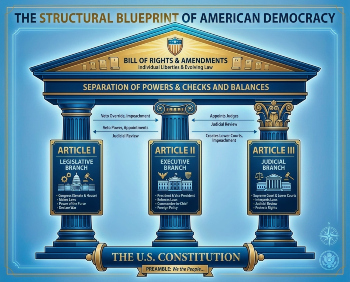
Checks and Balances: How Courts and Legislatures Push Back

Checks and balances operate through judicial review, legislative oversight, and the separation of powers, and each branch can restrain the others. Judicial review lets courts strike down actions that exceed constitutional or statutory limits. But the abstract version of this idea hides the mechanisms that actually move the needle, and the modern front where they are being tested hardest.

Judicial Review and the Major Questions Doctrine

Judicial review is not a single tool. Courts use several doctrines to rein in agencies that exceed their authority:

  • Chevron deference is gone. In Loper Bright Enterprises v. Raimondo (2024), the Supreme Court overruled Chevron and held that courts must exercise independent judgment on statutory interpretation rather than defer to an agency’s reading of an ambiguous statute. That shift makes challenges to agency rulemaking more viable than they have been in forty years.
  • The major questions doctrine. Under West Virginia v. EPA (2022), an agency cannot claim sweeping authority over a matter of vast economic or political significance unless Congress clearly said so. This is the doctrine most often invoked against novel federal regulatory programs.
  • Nondelegation and ultra vires claims. A rule that exceeds the statute Congress passed, or that rests on a delegation so open-ended it amounts to lawmaking, can be challenged as ultra vires even without a constitutional claim.
  • Arbitrary-and-capricious review. The Administrative Procedure Act requires agencies to articulate a reasoned basis for rules. A rule that ignores contrary evidence or flips positions without explanation can be vacated on that ground alone.

Legislative Oversight Tools

Legislatures push back through oversight hearings, subpoenas, budget riders, and statutory limitations that narrow agency discretion. The concrete tools include:

  • Congressional Review Act resolutions. Congress can disapprove a major rule within a set window and, if the President signs, the rule has no force.
  • Appropriations riders. A single sentence in an appropriations bill can prohibit an agency from spending money to enforce a specific rule, often the fastest way to stop a program.
  • Oversight subpoenas and contempt. Committees can compel documents and testimony, and a refusal can lead to a contempt referral.
  • State refusal laws. State legislatures can pass laws directing state and local agencies not to assist federal enforcement that exceeds constitutional bounds, a modern echo of the anti-commandeering principle in Printz v. United States (1997) and New York v. United States (1992).

The Digital Surveillance Front

This is where checks and balances are being tested most aggressively right now, and where most guides stop short. The Fourth Amendment governs searches and seizures, and courts have applied it to digital data, Riley v. California (2014) required a warrant for cell phone searches incident to arrest, and Carpenter v. United States (2018) held that accessing historical cell-site location records is a search requiring a warrant.

But the doctrine has not caught up to the modern toolkit:

  • Third-party doctrine. Under Smith v. Maryland (1979) and United States v. Miller (1976), information you voluntarily share with a third party, bank records, phone metadata, historically received no Fourth Amendment protection. Carpenter narrowed this for location data, but the boundaries for cloud storage, email, and app data remain contested.
  • Section 702 and FISA. Foreign Intelligence Surveillance Act authorities permit certain surveillance of non-U.S. persons, but queries of incidentally collected U.S. person data have drawn sustained congressional and judicial scrutiny.
  • Border and device searches. Courts have generally allowed warrantless forensic searches of devices at the border under the border-search exception, though some circuits now require reasonable suspicion for forensic (as opposed to manual) searches.
  • Data retention and broker purchases. Agencies buying commercially available location and personal data from brokers can sidestep warrant requirements entirely, a gap that state legislatures and some federal proposals are trying to close.
Watch OutA common mistake is assuming that deleting an app removes your data. It usually does not. The data often lives with the broker, the platform, or the agency that already acquired it, and the legal tools to reach it are different from the tools to stop a future collection.

Where to Push

When these mechanisms work together, arbitrary power meets resistance from multiple directions at once. The practical sequence is: identify the branch that acted, find the doctrine that constrains it, and route your challenge through the forum that can actually grant relief, a federal district court for an APA claim, a state court for a state constitutional claim, or a legislative committee for a statutory fix.

Practical Steps for Civic Engagement at the State Level

Civic engagement at the state level is where individual action produces the fastest visible results. State legislators respond to constituents far more directly than federal officials do.

  1. Track bills in your state legislature using the official legislative website
  2. Testify at committee hearings, in person or in writing
  3. Build a small coalition with neighbors who share the concern
  4. Request records when agencies act without explanation
  5. Vote in primaries, where turnout is lowest and influence is highest

This is the mission that matters at the local level: not a single dramatic fight, but steady pressure applied where the rules are actually written.

Conclusion: Defending Individual Liberty Is a Daily Practice

Defending individual liberty is not a one-time event. It is a habit of documenting, filing, showing up, and refusing to let a bad rule stand unchallenged. Our team at Texas Journal built a platform for citizens who want to understand the constitutional tools available to them and use them. Members get guidance on asserting states’ rights, constitutional education, and access to the Patriot Pool, a force multiplier for organizing with others who take the Republic seriously. Click Here to join and start protecting individual liberty from overreach in your own state.

Frequently Asked Questions

How does the Bill of Rights protect individuals from government overreach?

The Bill of Rights places explicit limits on federal power. The First Amendment bars Congress from restricting speech, press, assembly, and religion. The Fourth Amendment requires warrants for most searches. The Fifth protects against self-incrimination and takings without just compensation. Courts enforce these limits through judicial review, and states apply most of them through the Fourteenth Amendment. When an agency acts beyond its statutory authority, these protections give you grounds to challenge the action in court.

What are the primary legal resources for civil liberties defense?

Start with nonprofit legal organizations that take civil liberties cases, state bar association referral services, and law school clinics focused on constitutional law. Public interest litigation groups often publish free guides on filing FOIA requests, challenging agency rules, and documenting rights violations. Your state attorney general’s office handles some complaints about state agencies. For federal matters, the agency’s own administrative review process usually comes first before you can file in federal court.

How do states’ rights serve as a check on federal authority?

States act as laboratories and barriers. They can refuse to enforce federal directives that exceed constitutional authority, pass laws that expand protections beyond federal minimums, and sue federal agencies over regulatory overreach. State attorneys general have filed multistate lawsuits challenging federal mandates on everything from environmental rules to vaccine requirements. The Tenth Amendment reserves powers not delegated to the federal government to the states or the people, giving state legislators and governors concrete tools to push back.

How can citizens identify and challenge government overreach?

Watch for three signals: agencies acting without clear statutory authority, rules imposed without public comment periods, and enforcement that treats ordinary activity as suspicious. Document everything with dates, names, and written correspondence. File public records requests to see the agency’s internal reasoning. Submit formal comments during rulemaking. If you face enforcement, contact a civil liberties attorney before responding. Coordinating with neighbors or local advocacy groups often produces faster results than acting alone, and it creates a record that supports broader legal challenges.

Defending States Rights Against Federal Overreach: A Guide

Table of Contents

Last Updated: September 11, 2026

Understanding Federal Overreach and the Constitutional Framework

Defending states rights against federal overreach starts with a clear-eyed reading of the Constitution itself. The document does not grant Washington general police power over the states. It grants a short list of enumerated authorities and reserves everything else to the states or to the people. This guide from Texas Journal walks through the legal tools, legislative tactics, and coalition strategies that state officials and engaged citizens use to hold that line.

The tension is not new. It is the design. The founding fathers built a system where power is divided precisely so that ambition checks ambition, and where the states serve as the last structural defense against a distant government that overreaches.

What Counts as Federal Overreach?

Federal overreach is any federal action that exceeds the authority granted by the Constitution or that commandeers state governments to carry out federal priorities. It shows up in three common forms: regulations issued by agencies without clear statutory authority, mandates that require states to spend their own money implementing federal policy, and preemption of state laws in areas the Constitution never assigned to Washington.

Not every unpopular federal rule is overreach. A statute passed under a legitimate enumerated power, even a bad one, is not unconstitutional simply because a state disagrees with it. The distinction matters because courts dismiss arguments that skip it.

Constitutional Constraints on Federal Power

The Constitution constrains federal authority through four mechanisms that state attorneys general and legislators invoke constantly:

  • Enumerated powers. Article I, Section 8 lists what Congress may do. Anything outside that list requires a constitutional hook, typically the Commerce Clause or the Necessary and Proper Clause.
  • The 10th Amendment. Powers not delegated to the federal government are reserved to the states or the people.
  • The 11th Amendment. It shields states from certain suits in federal court and reinforces state sovereign immunity.
  • Separation of powers. Agencies cannot write rules Congress never authorized, and the executive cannot spend money Congress never appropriated.

The Congressional Research Service overview of enumerated powers documents how narrowly the founding generation understood federal authority. That narrow reading is the foundation of every serious legal challenge filed today.

The 10th Amendment Constitutional Limits on Federal Authority

The 10th Amendment constitutional limits on federal authority are the single most cited textual anchor in state-federal disputes. The amendment reads in full: “The powers not delegated to the United States by the Constitution, nor prohibited by it to the States, are reserved to the States respectively, or to the people.” It is short, and it is load-bearing.

Reserved Powers and Delegated Powers Explained

Delegated powers are the specific authorities the Constitution hands to the federal government, such as coining money, regulating interstate commerce, and declaring war. Reserved powers are everything else: education, public health, land use, criminal law, and the general police power that states exercise over daily life.

The practical consequence is straightforward. When a federal agency claims authority over an area with no enumerated hook, the burden falls on the federal government to identify its delegated power. If it cannot, the state wins.

How Courts Have Interpreted the 10th Amendment

Judicial interpretation has swung between two poles. The early 20th century saw courts strike down federal labor and child-labor laws as exceeding the Commerce Clause. The New Deal era reversed that, and for decades courts read federal power broadly. Modern doctrine, shaped by cases like New York v. United States and Printz v. United States, revived two firm limits: the federal government cannot commandeer state legislatures to enact federal programs, and it cannot commandeer state executive officials to enforce federal law.

That anti-commandeering principle is the sharpest weapon states have. It is also the one federal agencies most often ignore.

The Anti-Commandeering Doctrine in Practice

The anti-commandeering rule is not a slogan; it is a specific test. In New York v. United States (1992), the Court struck down a provision of the Low-Level Radioactive Waste Policy Amendments Act that required states to either take title to waste or enact a federal regulatory scheme. In Printz v. United States (1997), the Court invalidated interim provisions of the Brady Handgun Violence Prevention Act that required county sheriffs to conduct background checks. The common thread: Congress may regulate states directly through generally applicable laws, but it may not conscript state legislative or executive officials into administering a federal program.

Two related doctrines round out the toolkit:

  • Spending Clause conditions. South Dakota v. Dole (1987) permits Congress to attach conditions to federal funds, but NFIB v. Sebelius (2012) held that a condition crossing the line from pressure to coercion, there, the Medicaid expansion, is unconstitutional. States challenging conditional grants should document the size of the conditioned funds relative to the state’s own budget.
  • Equal sovereignty. Shelby County v. Holder (2013) held that the coverage formula in Section 4(b) of the Voting Rights Act exceeded Congress’s enforcement authority because it singled out certain states based on decades-old data. The principle: Congress cannot treat states differently without a current, congruent justification.

Statutory Hooks States Actually Use

A 10th Amendment argument rarely stands alone. Practitioners pair it with at least one statutory hook so the court has a narrower ground to rule on:

  • The Administrative Procedure Act, 5 U.S.C. § 706(2). A rule is unlawful if it is “in excess of statutory jurisdiction, authority, or limitations” or “arbitrary, capricious, an abuse of discretion.” This is the workhorse claim in agency challenges.
  • The major questions doctrine. West Virginia v. EPA (2022) held that agencies must point to clear congressional authorization when claiming power over questions of vast economic and political significance. State challengers now routinely invoke it against energy, health, and financial rules.
  • The Unfunded Mandates Reform Act of 1995. It requires the Congressional Budget Office to score intergovernmental mandates above a statutory threshold and creates a point of order against them. The threshold is adjusted annually for inflation; check the current CBO estimate before relying on it.
  • The 11th Amendment. It shields states from certain suits in federal court and reinforces state sovereign immunity, which is useful when a state is the defendant rather than the plaintiff.

What the 10th Amendment Does Not Do

The amendment is not a general license to disregard federal law. It does not authorize nullification, and it does not give a state a veto over a valid exercise of enumerated power. A state that frames its challenge as “the 10th Amendment lets us ignore this statute” will lose. A state that frames it as “the federal government never had this power, and here is the statutory text proving it” has a case.

The distinction matters because courts dismiss arguments that skip it. The Congressional Research Service overview of enumerated powers documents how narrowly the founding generation understood federal authority. That narrow reading is the foundation of every serious legal challenge filed today.

Key TakeawayThe 10th Amendment is a rule about who holds the power, not a rule about whether a policy is wise. Pair it with an APA or major-questions claim so the court can rule on the narrowest available ground.

State Attorney General Litigation as a Check on Federal Agencies

State attorney general litigation has become the primary structural check on federal agencies, and it is deliberately asymmetrical. A single state can sue, but a coalition of states can overwhelm an agency’s legal resources, coordinate media strategy, and force nationwide policy changes through a single favorable ruling. This is where the practical fight happens.

Legal standing is the threshold question, and it defeats more challenges than the merits do. To sue in federal court, a state must show injury in fact, causation, and redressability. States have a structural advantage here: they can sue to protect their own sovereign interests, their tax revenue, and their regulatory authority, often without proving the kind of individualized harm a private plaintiff would need.

Judicial review then determines whether the agency stayed inside its statutory limits. Courts apply the Chevron framework and its recent refinements to ask whether Congress spoke clearly and whether the agency’s reading is reasonable. When an agency writes a rule Congress never contemplated, that is where challenges land.

Multistate lawsuits follow a recognizable pattern:

  1. Identify the rule and its statutory basis. Read the authorizing statute line by line.
  2. Establish standing through a concrete state injury. Lost revenue, compliance costs, or usurped regulatory authority all work.
  3. File in a favorable venue. Forum selection is strategy, not luck.
  4. Coordinate the messaging. One lead state argues; others file supporting briefs.
  5. Prepare for the stay and appeal. Agencies often pause enforcement while litigation proceeds.

A common mistake is filing too early, before the rule is final and the injury is concrete. Courts dismiss those cases, and the dismissal becomes precedent against the next challenge.

Challenging Federal Agency Regulations Through Administrative Law

Challenging federal agency regulations through administrative law is slower than litigation but often more durable. The Administrative Procedure Act sets the rules: agencies must publish proposed rules, accept public comments, and respond to substantive objections. Skip those steps and the rule is vulnerable.

The Regulatory Overreach Playbook for State Legislatures

State legislatures have four reliable tools against federal regulatory overreach:

  • Statutory limits. Pass state laws that prohibit state agencies from assisting federal enforcement in areas outside enumerated authority.
  • Sunset and review clauses. Require state agencies to report every federal rule they implement and its legal basis.
  • Non-cooperation statutes. Withhold state resources from federal programs that commandeer state officials.
  • Joint resolutions. Formally memorialize the legislature’s constitutional objection, which builds the record for later litigation.

Using Public Comments and Statutory Limits to Push Back

The public comment period is not a formality. Agencies must respond to significant comments, and a well-drafted comment that identifies a statutory gap creates the administrative record a court will review. State attorneys general routinely file comments that read like pre-litigation briefs, and those comments become exhibits when the rule is challenged.

Pro TipThe most effective comment is not a protest. It is a legal argument that quotes the authorizing statute and shows the agency exceeded it. Agencies must respond on the record, and a failure to respond is itself grounds for remand.

State-Led Resistance Strategies: From Recalcitrance to Legislation

State-led resistance runs along a spectrum, from quiet recalcitrance to formal legislation. Recalcitrance means slow-walking federal requests, declining to prioritize federal enforcement, and interpreting federal guidance narrowly. It is legal, it is common, and it rarely makes headlines.

Legislation is louder. States pass laws that directly conflict with federal rules and force the federal government to sue or back down. The National Conference of State Legislatures database of state-federal conflict legislation tracks the volume of these bills, and the trend line has climbed steadily as more states test the boundaries.

The strategic calculation is simple. A federal agency that must litigate in fifty jurisdictions has to pick its battles. States that coordinate their resistance multiply that pressure.

Protecting State-Level Data and Digital Sovereignty

Protecting state-level data and digital sovereignty is the newest front in the federalism fight, and it is the one most competitors cover only halfway. Most articles stop at data-sharing disputes. The fuller picture includes the infrastructure, algorithms, and procurement decisions that determine whether a state can actually govern its own digital domain.

Data as the First Layer

States hold enormous quantities of citizen data, from driver records to health registries, and federal agencies increasingly request access to it. A state-led database that refuses to share data with Washington is a form of resistance that requires no litigation at all.

The legal handles are concrete:

  • Driver’s Privacy Protection Act, 18 U.S.C. §§ 2721-2725. It restricts disclosure of personal information from state motor vehicle records and creates a private right of action. States and individuals have used it to push back on federal and commercial requests alike.
  • State public-records and privacy statutes. Most states have their own disclosure exemptions for health, education, and law-enforcement data. A state agency that waives those exemptions without a warrant or specific statutory exception is handing away leverage it cannot get back.
  • Federal grant conditions. Many federal data requests arrive attached to grant funding. Read the condition before signing; a condition that requires bulk data transfer may be severable from the funding the state actually wants.
Watch OutSharing data with a federal agency “voluntarily” can waive the state’s later objection. Once the data is transferred, no court order brings it back. Review every data-sharing arrangement as if it were a permanent transfer, because functionally it is.

Infrastructure Sovereignty: Broadband, Cloud, and Physical Systems

Digital sovereignty is not only about records. It is about who owns and operates the pipes.

  • State broadband programs. States that run their own middle-mile networks and set their own deployment conditions can avoid federal conditions that would otherwise attach to buildout. The trade-off is capital cost and long build timelines; a state that wants speed may accept federal strings it would rather refuse.
  • Cloud and data-center siting. A state that hosts its own workloads on state-owned or state-contracted infrastructure reduces its exposure to federal procurement rules and to vendor terms that shift with federal policy. The trade-off is higher per-unit cost and a smaller talent pool.
  • Critical infrastructure. Water, grid, and emergency-communications systems increasingly depend on software and firmware updates controlled by vendors. A state that cannot audit those updates cannot claim sovereignty over the systems.

AI Regulation as a Sovereignty Question

Artificial intelligence is the fastest-moving area where states are asserting authority. The pattern is familiar: federal agencies issue guidance or proposed rules, and states respond with their own statutes. Several states have enacted comprehensive consumer-privacy laws that include automated-decision provisions, and a growing number have passed or proposed AI-specific disclosure and impact-assessment requirements.

The sovereignty argument is not that states should regulate AI instead of the federal government. It is that the federal government has not clearly been delegated authority over intrastate AI use, and a state that regulates it is exercising its reserved police power. States that want to preserve that ground should document the intrastate nature of the activity and avoid framing their statutes as implementing federal policy.

Cybersecurity and State-Run Identity Systems

Cybersecurity is where data sovereignty and infrastructure sovereignty meet. A state that runs its own identity system, for benefits, licenses, or tax filing, controls the authentication layer that federal agencies must go through. A state that outsources that layer to a federal system gives up the chokepoint.

Practical steps states have taken:

  • Requiring state agencies to use state-operated identity providers for citizen-facing services.
  • Mandating incident-reporting to a state chief information security officer before, or in parallel with, federal reporting.
  • Prohibiting state agencies from adopting federal cybersecurity frameworks as binding requirements without legislative review.

Procurement as a Quiet Lever

State procurement rules are one of the most underused tools. A state can require vendors to certify that they are not subject to federal mandates the state rejects, or to disclose federal data-sharing obligations in their contracts. The leverage is real because states are large customers. The risk is that aggressive terms drive up bids or reduce the vendor pool, so procurement officers should model the cost before adopting them.

A Practical Sequence for State Officials

  1. Inventory. List every federal data request, grant condition, and procurement term the state has accepted in the past two years.
  2. Classify. Separate requests that are legally required from those that are voluntary or grant-contingent.
  3. Close the voluntary channels first. They are the cheapest to shut and the hardest for a federal agency to challenge.
  4. Codify. Put the remaining limits into statute or regulation so they survive a change in administration.
  5. Coordinate. Share model language with other states; a multi-state procurement standard is harder for a vendor to route around than a single-state one.
Pro TipThe most durable digital-sovereignty measures are the ones that do not require a lawsuit. A state that simply declines to sign a voluntary data-sharing agreement has already won that round.

Federalism and the Separation of Powers: A System of Checks and Balances

Federalism and the separation of powers are two distinct structures that reinforce each other. Separation of powers divides the federal government against itself, so that Congress, the courts, and the executive each check the others. Federalism divides power vertically, between Washington and the states.

The two systems create multiple points of resistance. A state can challenge a federal rule in court, lobby Congress to defund it, and refuse to enforce it, all at once. The founding fathers designed this redundancy on purpose. As documented in Federalist Papers No. 51 on the structure of government, the aim was to make tyranny logistically difficult, not impossible.

A Practical Toolkit for Local Municipalities Defending States Rights

A practical toolkit for local municipalities defending states rights starts with the recognition that counties, cities, and school boards are the first line of contact with federal mandates. A federal rule that arrives at a county office is a rule the county can question, delay, or decline to fund.

Model Resolutions and Local Ordinances

A model resolution is a short, formal statement that a local governing body adopts to declare its constitutional position. It costs nothing, requires no legal defense, and creates a public record. A local ordinance goes further: it encodes the position into local law, which then governs how local officials respond to federal requests.

The strongest local measures do three things: they cite the specific enumerated power the federal action relies on, they state the local government’s constitutional objection, and they direct local officials to withhold resources from enforcement.

Building Coalitions with County Sheriffs and Local Officials

County sheriffs are constitutionally independent in most states, and their discretion over enforcement is broad. A coalition of sheriffs who agree on a constitutional position is difficult for a federal agency to ignore. The same logic applies to county commissioners, school boards, and local prosecutors.

Coalitions should be organized around a single written statement that every member signs. A shared document is harder to dismiss as a fringe position and easier to cite when the issue reaches the state legislature.

Step-by-Step Legislative Drafting Guide for State Lawmakers

Drafting a state law that pushes back on federal overreach requires precision. A vague statute invites a court to read it narrowly. A precise statute forces the federal government to argue against the state’s own words.

  1. State the constitutional basis. Open with findings that cite the specific enumerated power the federal action relies on and explain why it does not reach the state’s area of authority.
  2. Define the federal action precisely. Name the rule, the agency, and the statutory section. Ambiguity here is fatal.
  3. Limit state cooperation. Direct state agencies to withhold personnel, funds, and facilities from enforcement.
  4. Protect state data. Prohibit transfer of state-held records without a warrant or a specific statutory exception.
  5. Create a private right of action. Allow citizens and businesses to sue if a state agency violates the limits.
  6. Include a severability clause. If one section falls, the rest should survive.
  7. Add a reporting requirement. Require annual reports on federal requests the state has received and declined.
Step What It Does Who Owns It Typical Timeline
Constitutional findings Establishes the legal basis Legislative counsel 2-3 weeks
Cooperation limits Withholds state resources State agencies 1-2 months
Data protections Blocks record transfers State CIO and AG 2-4 months
Private right of action Enables citizen enforcement Legislature 1-2 months
Reporting requirement Creates the public record Agency compliance office Ongoing
Key TakeawayThe findings section is the part most lawmakers rush. It is also the part courts read first. A findings section that quotes the authorizing statute and shows the gap does more work than the operative language.

The Economic Impact of Federal Mandates on State Budgets

The economic impact of federal mandates on state budgets is the argument that wins over legislators who are not focused on constitutional theory. An unfunded mandate forces a state to either raise taxes, cut other services, or accept federal conditions that expand federal control over state policy.

The U.S. Government Accountability Office reports on unfunded federal mandates document how federal requirements shift costs onto state and local governments without corresponding funding. The cumulative effect is a slow transfer of authority: the state pays, the federal government decides, and the state’s own priorities get squeezed out of the budget.

Economic analysis also strengthens legal challenges. A documented cost to the state is concrete injury, which is exactly what standing requires.

Historical Context: How States Have Defended Their Rights

Historical context matters because it shows that today’s fights are the latest round in a long pattern. The Kentucky and Virginia Resolutions of 1798 argued that states could judge the constitutionality of federal laws. The Nullification Crisis of the 1830s tested, and ultimately failed, the claim that a single state could void federal law. The anti-commandeering cases of the 1990s revived the 10th Amendment as a judicially enforceable limit.

The lesson from that history is not that states always win. It is that states that organize, document their objections, and build legal records win far more often than states that simply complain.

Common Mistakes and Bad Advice When Defending States Rights

Common mistakes derail otherwise strong challenges, and most of them happen before a case is filed.

  • Overclaiming. Arguing that a state can nullify any federal law invites a quick loss and damages the credibility of the next challenge.
  • Skipping standing. Filing before the injury is concrete gets the case dismissed on procedural grounds.
  • Ignoring the administrative record. Courts review the record the agency created. If the state never filed a substantive comment, it has nothing to point to.
  • Fighting alone. A single state facing a well-funded federal agency usually loses. Coalitions change the math.
  • Confusing policy disagreement with constitutional violation. Not every bad rule is unconstitutional, and courts punish arguments that blur the line.

Conclusion: The Path Forward for State Sovereignty

Defending states rights against federal overreach is not a single lawsuit or a single bill. It is a sustained practice: reading the authorizing statutes, documenting the injuries, coordinating with other states, and building the legal record that courts require. The states that do this consistently are the ones that hold their ground.

Texas Journal exists to make that work accessible to citizens who are not lawyers but who understand that the Constitution’s limits on federal power are the foundation of everything else. Our coverage of constitutional interpretation and state-level strategy is designed to turn concern into action, whether that means testifying at a local meeting, supporting a state bill, or joining a movement that treats the 10th Amendment as a live constraint rather than a historical footnote.

The Texas Journal Patriot Pool gives members the tools to organize at the local level and hold officials accountable to the constitutional limits they swore to uphold. If you want to go further, Control DC From Your State is built for exactly this fight, and Personal Sovereignty Is Non-Negotiable. is the principle behind every strategy in this guide.

Frequently Asked Questions

Do states have rights against the federal government?

Yes. The 10th Amendment reserves all powers not delegated to the federal government to the states or the people. This creates a sphere of state sovereignty that the federal government cannot lawfully invade. Courts have consistently recognized that states retain police powers over health, safety, and general welfare. When federal agencies exceed their statutory or constitutional authority, states can challenge those actions in court and assert their reserved powers.

Can a state overrule the federal government?

A state cannot directly overrule a valid federal law because of the Supremacy Clause. However, states can challenge federal actions that exceed constitutional limits. When the federal government acts outside its delegated powers, states can refuse compliance, file lawsuits, and pass laws that conflict with unlawful federal mandates. The key is whether the federal action is constitutional. If it is not, state resistance is legally justified.

Can states make laws against federal law enforcement?

States cannot nullify valid federal law enforcement, but they can refuse to assist federal agencies when those agencies exceed their authority. Many states have passed laws prohibiting state and local law enforcement from participating in certain federal enforcement actions. These laws rest on the anti-commandeering doctrine, which prevents the federal government from forcing states to carry out federal programs. States can also regulate how federal agents operate within their borders.

Does the 10th Amendment protect states’ rights?

The 10th Amendment is the primary constitutional shield for states’ rights. It states that powers not delegated to the federal government are reserved to the states or the people. While the Supreme Court has not used the 10th Amendment to strike down many federal laws, it remains a powerful tool for limiting federal overreach. Recent cases have revived its use to protect state sovereignty from federal mandates that commandeer state resources.

What are the legal mechanisms for states to challenge federal mandates?

States can challenge federal mandates through several legal mechanisms. State attorneys general can file lawsuits in federal court alleging that an agency exceeded its statutory authority. States can also invoke the 10th Amendment and anti-commandeering principles. Other tools include refusing federal funds with strings attached, passing state laws that conflict with federal rules, and using the Congressional Review Act to overturn regulations. Each mechanism has different legal standing requirements.

How can local municipalities defend states rights against federal overreach?

Local municipalities can pass resolutions and ordinances that assert local control over land use, policing, and public health. They can also coordinate with county sheriffs to limit cooperation with federal agencies on certain enforcement actions. Building coalitions with other local governments amplifies their voice. The Patriot Pool provides resources and a force multiplier for those looking to organize and push back against federal mandates.

Stop Globalist Policy in States: A 2026 How-To Guide

Table of Contents

Last Updated: September 10, 2026

Why State Legislatures Are the Front Line Against Globalist Policy

The most effective way to stop globalist policy in states is to understand where it actually gets implemented: not in Washington, but in your statehouse. Federal gridlock gets the headlines, yet state legislatures pass the laws that reshape your schools, energy grid, and local economy. The real battle for sovereignty has moved to capitals closer to home.

Globalist policy is the push to hand domestic decisions to international institutions, trade bodies, and unaccountable regulatory networks rather than elected state officials. The practical effect is a slow centralization of power, where decisions that once belonged to your community get made elsewhere. That’s why the statehouse, not the Capitol, is where citizens can still win.

The five strategies below show you exactly how to push back, from lobbying your representative to monitoring the rules that quietly rewrite your state’s economy.

How Centralization of Power Moves From Washington to Your Statehouse

Centralization rarely arrives as one dramatic law. It comes through a thousand small alignments: model legislation drafted by outside groups, grant conditions that tie state funding to federal priorities, and agency rules that adopt international standards by reference. Each step looks minor. Together, they transfer authority away from the sovereign state.

The mechanism is predictable. A trade agreement or global governance framework sets a target, then federal agencies condition funding on state compliance. Your legislature ratifies it without realizing the trade-off.

Watch OutA common mistake is watching only federal votes. By the time a policy reaches Washington, the state-level groundwork is already finished, and your use is nearly gone.

What You’ll Need Before You Start Pushing Back

Before you lobby anyone, gather the basic tools that make your effort credible. Preparation separates a citizen who gets a meeting from one who gets ignored.

You will need:

  • Your state representative’s and senator’s district office contact information
  • The current legislative session calendar and bill filing deadlines
  • An account on your state legislature’s official bill-tracking website
  • A folder of two or three local examples showing how a policy affects your district
  • A one-page summary you can leave behind after any meeting

Build a simple tracking sheet so your effort stays organized. The table below maps each tool to its purpose.

Tool Purpose Where to Get It
Bill tracker account Follow legislation in real time State legislature website
District contact list Reach the right staffer fast Legislator’s official page
One-page summary Leave a clear ask behind You write it
Local impact examples Make the issue concrete Your own district

How to Lobby State Representatives Effectively

Learning how to lobby state representatives effectively comes down to preparation, brevity, and a specific ask. Legislators and their staff are overwhelmed during session, so the citizen who arrives with a clear, local, one-sentence request wins the room.

Follow these steps:

  1. Request a meeting with the district office, not the capitol office, whenever possible
  2. State your district and the bill number within the first thirty seconds
  3. Explain the local impact in plain terms, using one concrete example
  4. Make a single, specific ask, such as a vote or a committee referral
  5. Leave your one-page summary and follow up within one week

Scripting Your First Meeting With a Legislator

A short script keeps you on message when nerves hit. Adapt this template to your issue.

“Representative [Name], I’m [Your Name] from District [Number]. I’m here about [Bill Number], which would [one-line impact]. In our district, this means [specific local effect]. I’m asking you to [specific action]. May I leave this one-page summary and follow up next week?”

Keep the whole meeting under fifteen minutes. The follow-up matters more than the meeting itself.

Tracking Bills and Committee Votes in Real Time

A bill can die or advance in a single committee vote, often with little notice. Set alerts on your state’s bill-tracking system for any measure touching trade, energy, education, or agency authority. When a bill reaches committee, that is your window to act. Call committee members, not just your own representative.

Pro TipCommittee members who are not from your district still vote on your bill. Most citizens only contact their own legislator and miss the votes that actually decide the outcome.

Monitoring State Agency Rulemaking: The Overlooked Lever

Monitoring state agency rulemaking is where most citizens lose without ever noticing. Agencies write the detailed rules that turn a broad statute into binding requirements, and those rules often adopt international or federal standards wholesale.

The public comment period is your use. Every proposed rule must be published, and citizens can submit formal comments that become part of the record. A well-argued comment can force an agency to justify its authority or revise a rule. Track the register where your state publishes proposed rules, and comment on anything that expands agency power without clear legislative authorization.

Key TakeawayStatutes get the attention, but rules do the governing. A single comment period can stop a regulation that no legislator ever voted on directly.

The Tenth Amendment is the constitutional backstop for state sovereignty: “The powers not delegated to the United States by the Constitution, nor prohibited by it to the States, are reserved to the States respectively, or to the people.” That single sentence is the legal foundation for resisting federal mandates that reach beyond enumerated authority, and it is the argument state legislators and attorneys general actually use.

The amendment does not give states a veto over federal law. The Supremacy Clause still controls where federal power is validly exercised. What the Tenth Amendment does is force the federal government to show its authority. When it cannot, states have real room to push back. The text of the Tenth Amendment is short; the case law interpreting it is not.

Four doctrines do most of the work in state-versus-federal disputes:

  • Anti-commandeering. Under New York v. United States (1992) and Printz v. United States (1997), the federal government cannot force state legislatures or state executive officers to carry out federal programs (supreme.justia.com). States can refuse to administer a federal mandate, though they may lose the accompanying funding.
  • Spending Clause limits. Under South Dakota v. Dole (1987) and NFIB v. Sebelius (2012), Congress may attach conditions to federal funds, but the conditions must be related to the spending’s purpose and cannot cross the line from pressure into coercion (supreme.justia.com). The 2012 Medicaid expansion holding is the leading example of a condition that went too far.
  • Commerce Clause limits. Under United States v. Lopez (1995) and United States v. Morrison (2000), Congress’s commerce power is broad but not unlimited. States have used these cases to challenge federal statutes that regulate non-economic activity.
  • Non-delegation and major questions. Courts increasingly require Congress to speak clearly before agencies claim authority over major economic or political questions. West Virginia v. EPA (2022) is the modern anchor.

These are not abstract. They are the arguments your attorney general files and your legislature cites in resolutions.

Make a Difference Today →

Constitutional Mechanisms States Can Actually Use

  • Anti-commandeering legislation. A state can pass a law barring state agencies and employees from enforcing a specified federal program. This is the mechanism behind state-level resistance to various federal gun, health, and environmental mandates.
  • Attorney general litigation. The state AG can sue the federal government directly. Multi-state coalitions filed under this authority have repeatedly reached the Supreme Court.
  • Interstate compacts. With congressional consent where required under the Compact Clause, states can coordinate policy across borders, on professional licensing, water, energy, and emergency response.
  • Refusal to fund. State legislatures can decline to appropriate state dollars to implement a federal program, forcing the federal government to fund and run it directly.
  • Constitutional resolutions and memorials. Non-binding, but they build the record that supports later litigation and legislation.
  • State constitutional amendments. Some states have added provisions explicitly reserving rights or barring certain federal mandates from being enforced with state resources.
Watch OutAnti-commandeering protects state officials, not private parties. A state cannot use the Tenth Amendment to shield private businesses or individuals from valid federal law. Overclaiming here weakens an otherwise strong argument.

How to Put This to Work in Your Statehouse

When a bill or rule implicates federal authority, ask three questions in writing to your legislator and attorney general:

  1. What enumerated power authorizes the federal action?
  2. Does the action commandeer state officers or coerce state spending?
  3. Has Congress spoken clearly enough to satisfy the major questions doctrine?

A one-page memo answering those three questions is more persuasive to a committee than a general speech about sovereignty. Most practitioners find that attaching a short legal memo to testimony dramatically raises the odds that a bill gets a hearing rather than a polite dismissal.

Key TakeawayThe Tenth Amendment is not a slogan, it is a set of justiciable doctrines. The state that cites Printz, Dole, and West Virginia v. EPA by name wins more arguments than the state that only quotes the amendment.

Building Local Supply Chain Resilience Against Economic Globalization

Local supply chain resilience is the practical answer to economic globalization, and it is where state legislatures have the most unilateral power. States cannot rewrite trade agreements, but they can reshape what their own economies depend on. That is the angle most national coverage misses: the tools are already in the statehouse.

The core problem is concentration. When a critical input, a pharmaceutical precursor, a semiconductor component, a transformer, a fertilizer, comes from one region or one supplier, a single disruption empties shelves and idles factories. States that map and diversify those dependencies insulate themselves from decisions made abroad.

Step 1: Map Critical Goods and Their Origins

Before incentives, do the inventory. A state can direct its economic development office, university system, or a public-private council to produce a critical-goods assessment covering:

  • Essential medicines and precursors consumed by state hospitals and pharmacies
  • Grid and utility components, transformers, switchgear, specialty steel
  • Agricultural inputs, fertilizer, seed stock, feed additives
  • Defense-adjacent manufacturing tied to in-state employers
  • Semiconductor and electronics inputs used by in-state manufacturers

The assessment should record, for each item, the top source countries, the number of qualified domestic suppliers, and the lead time to replace a lost source. That document becomes the factual basis for every incentive bill that follows.

Step 2: Use State Procurement as a Demand Signal

State purchasing power is the fastest lever. States spend billions annually on goods and services, and procurement rules can be rewritten without waiting on Washington.

  • Domestic content preferences. Many states already apply in-state or domestic preferences to certain contracts. Extending them to critical goods creates guaranteed demand that justifies new domestic capacity.
  • Supplier diversification requirements. Require state contractors to disclose single-source dependencies and, where feasible, qualify a second supplier.
  • Long-term offtake agreements. A multi-year state purchase commitment is often what a manufacturer needs to finance a new line.
  • Buy American-style state statutes. These exist at the state level and can be tightened without federal action.

Step 3: Target Incentives at Bottlenecks, Not Headlines

The mistake is chasing a marquee plant. The better play is filling the specific gap the mapping exercise identified.

  • Equipment and workforce credits tied to producing a named critical good
  • Site readiness grants so a qualified manufacturer can break ground in months, not years
  • Apprenticeship and community college pipelines aligned to the specific processes involved
  • Utility and permitting fast lanes for facilities that close an identified gap
Best ForStates with existing industrial land, a community college manufacturing pipeline, and at least one anchor employer in the target sector. Without those, incentives tend to produce announcements rather than production.

Step 4: Measure Resilience, Not Just Jobs

Job counts alone do not tell you whether a supply chain is resilient. Track the same indicators every year:

Metric What It Shows Direction of Travel
Number of qualified domestic suppliers per critical good Concentration risk Rising
Average lead time for top 20 critical inputs Vulnerability to disruption Falling
Share of state procurement sourced domestically for critical goods Demand signal strength Rising
In-state manufacturing employment in target sectors Capacity build-out Rising
Number of single-source dependencies disclosed by major contractors Transparency Falling

Step 5: Coordinate Regionally Where It Helps

Some critical goods, grid equipment, water infrastructure, agricultural inputs, are better addressed through interstate compacts or multi-state purchasing cooperatives. Pooled demand across three or four states can justify a domestic supplier that no single state could support alone. This is the same compact mechanism discussed above, applied to economic resilience rather than regulation.

Pro TipStart with one critical good, not ten. A single successful reshoring project, with a named supplier, a signed offtake, and a measurable lead-time reduction, builds the political capital to expand the program. Diffuse efforts produce diffuse results.
Key TakeawaySupply chain resilience is not a federal waiting game. States that map their dependencies, redirect procurement, and target incentives at identified bottlenecks can rebuild domestic capacity on their own timeline, and the legislation to do it is already within reach of any statehouse.

Common Mistakes That Kill State-Level Efforts

The biggest mistake is showing up alone. One angry call is easy to ignore; a coordinated district is not. Build a small group before you build a movement, and assign clear roles.

Other mistakes that stall progress:

  • Focusing only on federal politics while state bills pass unnoticed
  • Contacting legislators without a specific ask
  • Ignoring agency rulemaking entirely
  • Using emotional arguments with no local data
  • Giving up after a single lost vote

A common mistake is treating a loss as final. Bills return, agencies reopen comment periods, and new sessions bring new chances.

How to Measure Whether Your Pushback Is Working

Measure progress with concrete indicators, not feelings. Track the same metrics every month so you can see momentum.

Metric What It Shows Target Signal
Bills stopped or amended Direct legislative impact Any blocked overreach
Public comments filed Agency-level pressure Consistent submissions
Meetings held Access and relationships Growing count
Coalition size Force multiplier Steady growth

When a bill you opposed dies in committee, or an agency revises a rule after your comment, that is a win. Document it. Wins build the credibility that makes the next fight easier.


Stopping globalist policy in states is a long campaign, not a single vote, and it demands the kind of constitutional knowledge and coordination that most citizens never receive. Texas Journal exists to close that gap, teaching citizens how to assert their rights and use the mechanisms the Constitution provides. With resources like the Patriot Pool to multiply your effort, our guides on Control Washington From Your State, and a focus on Restore US Sovereignty, the platform gives you what you need to act. Get started with Texas Journal and turn your state into a firewall for founding principles.

Frequently Asked Questions

What are the primary concerns regarding globalist policy in state government?

The main concerns center on how international frameworks and trade agreements filter into state law through agency rulemaking, procurement rules, and grant conditions. Citizens often point to centralization of power, loss of economic autonomy, and regulatory frameworks adopted without direct voter input. Because most of this happens at the agency level rather than through visible votes, monitoring state agency rulemaking is the fastest way to catch it early, before rules become final and harder to reverse.

How does the Tenth Amendment protect states from federal or international overreach?

The Tenth Amendment reserves powers not delegated to the federal government to the states or the people. In practice, Tenth Amendment state rights arguments are used to challenge federal mandates that lack a clear constitutional basis and to push back on state agencies that adopt international standards as if they were binding law. Courts weigh these claims case by case, so the amendment is a starting point for litigation and legislation, not an automatic block.

How can citizens effectively communicate with state representatives about policy concerns?

Learning how to lobby state representatives starts with specificity. Reference the exact bill number, the committee it sits in, and the specific clause you oppose. Request a short meeting, bring one page of talking points, and follow up in writing within 48 hours. Legislators respond to constituents who show they have read the text. Repeat contact across a session matters more than a single email, and coordinated neighbors carry more weight than isolated calls.

What is the difference between international trade and globalist policy influence?

International trade covers the exchange of goods and services across borders, usually governed by tariffs, market access rules, and trade agreements. Globalist policy influence goes further: it is the push to align domestic law, regulation, and governance with transnational institutions and corporate globalization priorities. A state can support trade while rejecting rules that transfer decision-making authority away from elected officials. Separating the two keeps the argument focused on sovereignty and self-governance rather than on commerce itself.

Current Federalism Policies Review: 2026 Balance of Power

Table of Contents

Last Updated: September 9, 2026

The balance of power between Washington and the states has shifted more dramatically in the last five years than in any comparable period since the New Deal. This review of current federalism policies examines how the Supreme Court, Congress, and the executive branch have redrawn the lines of authority, and what that means for your state. Texas Journal provides critical insight and discernment designed to help citizens assert their rights and restore the country to its founding principles. The outcome of these constitutional battles determines whether your rights are protected by your state legislature or preempted by federal agencies.

The central tension running through every policy dispute today is straightforward: federalism policies are no longer abstract legal theory. They are the battleground where questions of vaccine mandates, environmental regulation, and even data privacy are decided. Understanding who holds the power to regulate your daily life is the first step to asserting your sovereignty.

How Federalism Shifted in the Last Five Years

The most significant shift in recent federalism policies is the judiciary’s willingness to restrain federal agency power. The Supreme Court has systematically dismantled the deference that executive agencies once enjoyed, returning interpretive authority to the courts and, by extension, to the states.

A common mistake is to view this shift as purely partisan. In practice, the Court’s federalism revival has drawn support across ideological lines when the question is structural rather than political. The practical effect has been to slow the flow of new federal regulations and to give state attorneys general more use in challenging rules they view as overreach.

This judicial shift did not happen in isolation. It responded to a decade of aggressive executive action that left states feeling sidelined. The political science literature on intergovernmental relations and administrative presidency documents how the modern executive branch consolidated power in ways that the Founders did not anticipate.

The 2026 Policy Landscape: Key Areas of Tension

Federalism policies in 2026 are defined by several high-stakes conflicts. The most visible battlegrounds involve environmental governance, where states have pushed back against federal emissions standards, and social policy, where state autonomy clashes with national uniformity.

The pattern across these disputes is consistent: states are experimenting with policies that diverge from federal preferences, and the courts are increasingly willing to let those experiments stand. This represents a revival of the “laboratories of democracy” ideal, though it has produced a fragmented regulatory framework that businesses must navigate carefully.

For citizens, the stakes are concrete. Whether your state can enforce its own data privacy rules, set its own energy standards, or regulate firearms differently from its neighbors depends on the outcome of these federalism battles. The Congressional Research Service reports on federalism and preemption provide a useful map of where these jurisdictional disputes currently stand.

Constitutional Limits on Federal Agency Power: Where the Lines Are Drawn

The constitutional limits on federal agency power have become the defining legal question of this era. The Constitution grants Congress enumerated powers, and the 10th Amendment reserves everything else to the states. But the administrative state grew by stretching the commerce clause and the necessary and proper clause beyond their original meanings.

The current Court has responded by reviving structural limits on federal authority. This is not a return to pre-1937 jurisprudence, but it does represent a meaningful check on legislative authority delegated to unelected bureaucrats. The doctrine of nondelegation, long dormant, has re-entered the legal conversation.

The Major Questions Doctrine and Its Effect on Agency Action

The major questions doctrine requires Congress to speak clearly when it intends to delegate authority over issues of vast economic and political significance. This doctrine has become the primary judicial tool for limiting federal agency power in recent years.

For state governments, the doctrine is a shield. When federal agencies attempt to impose sweeping rules without clear congressional authorization, states can challenge them in court with a strong chance of success. This has already reshaped policy implementation in areas ranging from pandemic response to student loan forgiveness.

State Sovereignty vs Federal Authority: Recent Court Decisions

Recent Supreme Court decisions have consistently favored state sovereignty vs federal authority in cases involving the administrative state. The Court has struck down or limited federal actions on the grounds that they exceeded statutory authority, without necessarily reaching the harder constitutional questions.

State sovereignty vs federal authority is not a binary choice in practice. The reality of intergovernmental relations involves constant negotiation, with states implementing federal programs while asserting their own policy preferences where permitted. The doctrine of preemption, however, remains a powerful federal tool that can override state choices.

The practical result is a legal environment where outcomes depend heavily on the specific statutory text at issue. This is why constitutional interpretation matters: the same federal statute can be read narrowly or broadly, and the courts’ choice determines whether states retain autonomy.

10th Amendment Rights in Practice: From Mandates to Block Grants

The 10th Amendment rights in practice are most visible in the fiscal relationship between Washington and the states. Congress cannot commandeer state legislatures to implement federal programs, but it can attach conditions to federal funding. This is where the battle over unfunded mandates and block grants plays out.

Make a Difference Today →

The Supreme Court has held that Congress may not use the spending power to coerce states into adopting federal policies, but the line between encouragement and coercion remains contested. States have won important victories challenging conditions that amount to a gun to the head, but many federal mandates remain in place.

Watch OutThe most common mistake citizens make is assuming their state is powerless against federal funding conditions. In fact, states have successfully rejected federal money to maintain policy autonomy, and the courts have backed them when the coercion is clear.

10th Amendment rights in practice also extend to the refusal to enforce federal immigration law and the legalization of substances still prohibited federally. These areas demonstrate that state autonomy is not merely defensive but can be a positive assertion of different policy priorities.

The Impact on Your State: Fiscal Policy and Unfunded Mandates

The fiscal impact of federalism policies on your state is substantial, but the scale is often misunderstood. When Congress imposes requirements without providing funding, states must either raise revenue or cut other programs. These unfunded mandates shift costs to state taxpayers while federal policymakers claim credit for the policy.

The most cited example remains the Real ID Act of 2005, which the National Governors Association estimated would cost states over $11 billion to implement over a decade, costs that fell directly on state DMV budgets. More recently, the 2021 American Rescue Plan’s Medicaid continuous enrollment requirement forced states to keep individuals enrolled in exchange for enhanced matching funds, creating a fiscal trap: states that complied bore administrative costs, while states that terminated enrollment early (as 14 states did by mid-2023) faced clawbacks of enhanced funding. The Congressional Budget Office has documented that federal mandates imposed between 2010 and 2020 shifted an estimated $28 billion in cumulative costs to state and local governments, with education and environmental compliance representing the largest categories.

Block grants offer an alternative model, but the trade-offs are sharper than the theory suggests. Instead of dictating how funds must be spent, the federal government provides a fixed sum and allows states to set priorities. The Temporary Assistance for Needy Families (TANF) program, created in 1996, replaced the open-ended Aid to Families with Dependent Children entitlement with a fixed $16.5 billion annual block grant. That amount has not been adjusted for inflation in nearly three decades, meaning its real value has declined by roughly 40 percent. States gained flexibility but lost a reliable safety-net funding stream, a trade-off that plays out differently in every statehouse.

The tension between these models reflects a deeper disagreement about the proper role of the federal government. Those who favor national uniformity prefer mandates; those who value state autonomy prefer block grants and revenue sharing. The Government Accountability Office reports on federal grants and state fiscal effects document how these choices play out across states, but the pattern is consistent: states that accept federal dollars with conditions often discover that the conditions outlive the political moment that produced them.

Watch OutA common mistake is assuming that rejecting federal funds is always a viable option. In practice, states that refuse funds for programs like Medicaid expansion or highway infrastructure must find alternative revenue sources or forgo services entirely. The Supreme Court’s 2012 ruling in NFIB v. Sebelius made Medicaid expansion optional, but the 90/10 federal match rate created an economic incentive that 40 states ultimately accepted, a reminder that fiscal federalism is as much about incentives as it is about coercion.

For state legislators, the practical question is not whether to accept federal money but how to structure state budgets to survive federal funding volatility. States that built rainy-day funds during the 2021-2022 surplus years are better positioned to absorb federal funding cliffs, while states that expanded recurring obligations against one-time federal dollars now face structural deficits. The National Association of State Budget Officers fiscal survey tracks these dynamics annually, and the 2025 edition shows that federal funds still account for roughly 36 percent of total state spending, a figure that has remained stubbornly high despite decades of rhetoric about devolution.

Where Federalism Goes From Here

The next frontier of federalism is not fiscal or environmental, it is digital. As the federal government has failed to pass comprehensive privacy legislation, states have enacted their own regimes, creating a patchwork that mirrors the early days of environmental regulation. The administrative state’s retreat has created a vacuum that states are filling with unprecedented speed.

The numbers tell the story. California’s Consumer Privacy Act (CCPA), effective 2020, was followed by Virginia’s Consumer Data Protection Act (2023), Colorado’s Privacy Act (2023), and Connecticut’s Data Privacy Act (2023). By early 2026, 19 states had enacted comprehensive data privacy laws, covering roughly 45 percent of the U.S. population. None of these laws are identical. California grants consumers a private right of action; Virginia and Colorado do not. California defines “sale” of data broadly; Texas and Florida have carved out exceptions for specific industries. A company operating nationally must now comply with 19 different definitions of “sensitive data,” 19 different consent standards, and 19 different enforcement mechanisms.

The AI regulatory landscape is even more fragmented. Colorado’s 2024 AI Act imposes obligations on developers and deployers of high-risk AI systems, while California’s 2025 AI transparency law requires disclosure when AI generates certain content. Texas created its own AI advisory council in 2023, and at least 12 other states have introduced AI bills that remain in committee. Meanwhile, the federal government has issued executive orders and agency guidance, but no comprehensive statute. The result is that a startup building an AI product must navigate a maze of state-level obligations that did not exist three years ago.

Key TakeawayThe trajectory is clear: states are reclaiming authority in domains where Congress has failed to act, and the courts are largely letting them. For businesses, this means compliance is no longer a federal question, it is a state-by-state question. For citizens, it means your data privacy rights depend on your ZIP code.

This digital federalism creates a new set of legal questions that the Supreme Court has only begun to address. The dormant commerce clause, long used to strike down state laws that burden interstate commerce, could become the battleground. When California requires national companies to comply with its privacy standards, does that impose an undue burden on commerce in states with weaker protections? The Court has not squarely answered this question, and the lower courts are split. In 2025, the Ninth Circuit upheld California’s right to enforce its privacy law against a national data broker, while the Fifth Circuit signaled skepticism about Texas’s approach to regulating out-of-state AI developers.

For citizens seeking to understand and assert their rights, the practical implication is that state-level engagement matters more than ever. Whether the issue is data privacy, AI regulation, or the next technological frontier, the levers of power are increasingly located in your state government, and the federal government shows no sign of reclaiming that ground. The question for the next decade is not whether decentralization continues, but whether states can build the administrative capacity to regulate complex digital markets effectively, or whether the patchwork becomes so burdensome that Congress is finally forced to act.

Frequently Asked Questions

What is a current issue of federalism?

A central issue is the expanding scope of federal agency power versus state legislative authority. Recent Supreme Court rulings, such as those invoking the Major Questions Doctrine, have started to curb this expansion. This creates uncertainty about the regulatory framework for environmental governance and social policy. States are testing their 10th Amendment rights by passing laws that directly conflict with federal mandates, leading to jurisdictional disputes that often require judicial review to resolve.

How has the balance of power between states and the federal government shifted recently?

The balance has shifted toward state autonomy in several key areas. The Supreme Court has used the Major Questions Doctrine to limit executive power, requiring Congress to provide clear legislative authority for major regulations. This has strengthened the position of subnational governments in policy implementation. However, the federal government still holds significant power through preemption and the spending clause, often using block grants and financial incentives to influence state policy, creating ongoing tension over democratic accountability.

What role does the Supreme Court play in defining modern federalism?

The Supreme Court acts as the primary arbiter of constitutional law regarding federalism. Through judicial review, it defines the boundaries of the commerce clause, the 10th Amendment, and the doctrine of state sovereignty. Recent decisions have rolled back the administrative presidency’s reach, reinforcing the need for explicit congressional approval for major agency actions. This has a direct impact on intergovernmental relations, as states gain more room to legislate without the threat of immediate federal preemption.

What is the difference between cooperative and coercive federalism?

Cooperative federalism involves shared responsibility and collaboration between the national and state governments, often using grants-in-aid to achieve common goals. Coercive federalism, in contrast, relies on direct orders or preemption to force states to comply with national standards. Current federalism policies show a trend away from coercive models, with states challenging unfunded mandates and fighting for more control over policy areas like environmental governance and public health, citing constitutional limits on federal agency power.

How to Defend Your Rights Without Going to Extremes

Table of Contents

Last Updated: September 8, 2026

The Difference Between Assertive Advocacy and Extremism

The line between knowing how to defend your rights and drifting into counterproductive extremism comes down to whether your actions strengthen or erode public support. Assertive advocacy is grounded in the Constitution, uses lawful channels, and keeps the moral high ground. Extremism alienates the moderates whose support is essential for lasting change.

This distinction matters because the goal is durable protections, not fleeting attention. A citizen who presents a well-documented legal argument and requests a formal response creates a paper trail that holds government accountable for years.

A calm, respectful conversation between a citizen and a local government official at a public meeting, both listening attentively with notebooks on a table, warm natural light through a window

Know Your Constitutional Rights: The Foundation of Defending Rights Without Being Extreme

The foundation of defending rights without being extreme is knowing precisely what the Constitution protects.

The First Amendment in Practice

The First Amendment protects freedom of expression, religious liberty, and the right to peaceably assemble. These are enforceable limits on government power. The right to petition the government for redress of grievances is a direct invitation to engage through documented, formal channels.

Due Process and Fair Procedures

Due process guarantees fair procedures before the government deprives you of life, liberty, or property. This protection applies in countless daily interactions, from zoning disputes to licensing denials. The official guidance on due process protections explains that fair notice and an opportunity to be heard are the core requirements. When you invoke due process, you are not being difficult; you are holding the state to its own standards.

Asserting Constitutional Rights in Daily Life

Asserting constitutional rights in daily life does not require dramatic confrontations. Most effective advocacy happens through routine, documented requests that force officials to respond on the record.

When a permit application is delayed without explanation, the assertive response is a written request citing the applicable timeline and asking for a formal status update. This creates accountability without hostility.

Legal empowerment strategies center on preparation and documentation. A citizen who arrives with relevant statutes, prior correspondence, and a clear written summary is far more likely to succeed than one who relies on emotional appeals. For those seeking structured guidance, Protect Our Traditions offers resources to help citizens engage effectively through established legal channels.

Documenting Interactions with Officials

Every interaction with a government official should be documented. Send follow-up emails summarizing what was discussed, who agreed to do what, and by what date. For in-person meetings, send a written summary afterward and ask the official to correct any inaccuracies.

Legal representation transforms your position from a citizen’s complaint into a formal legal matter. An attorney who understands constitutional law can frame your grievance in terms the courts recognize, identify procedural violations you might miss, and negotiate from a position of established authority. The American Bar Association’s resources on finding legal help provides guidance on locating qualified counsel. Many citizens find that a single letter from an attorney resolves issues that months of personal correspondence could not.

How to Document Government Overreach Without Escalating Conflict

Documenting government overreach requires a methodical approach that preserves evidence while keeping conflict contained.

The process follows a clear sequence:

  1. Record the date, time, location, and names of all parties involved
  2. Capture physical evidence through photographs or copies of documents
  3. Send a written summary to the relevant official within 48 hours
  4. Request a formal written response to your concerns
  5. Maintain a chronological file of all correspondence
  6. Consult legal counsel before escalating any matter formally

How to document government overreach effectively means staying factual. Describe what occurred, cite the specific regulation or procedure you believe was violated, and avoid inflammatory language. A factual, well-organized record is far more persuasive to a court, a supervisor, or the media than an emotional narrative. The Congressional Research Service reports on administrative procedure offers detailed analysis of how agencies are required to operate, which helps citizens identify genuine violations.

Pro TipWhen you send a written request to a government agency, always mark it “Request for Formal Response” and reference the applicable statute or regulation in the first paragraph. This triggers different handling than a routine inquiry and creates a stronger paper trail.

De-escalation Techniques for Standing Your Ground

Standing your ground does not require raising your voice. De-escalation techniques let you maintain your position while reducing the emotional temperature. A calm advocate is far more credible than an agitated one.

The Verbal Toolkit: Phrases That Lower Tension

The words you choose can escalate a conflict or create a pathway to resolution. These verbal techniques signal respect while maintaining firmness:

  • Acknowledge before you assert. Begin with a statement that validates the other person’s position without conceding your own. For example: “I understand that your office has a policy on this, and I am asking for the specific regulation that supports it.”
  • Use the ‘broken record’ technique sparingly. When an official deflects, calmly restate your core question without adding new emotional content. For instance: “I appreciate that, but my question remains: what is the timeline for a formal response?”
  • Ask for clarification instead of making accusations. If an official says something that seems wrong, ask: “Can you point me to the statute or policy that supports that statement?” This shifts the burden of proof onto the official.
  • Name the dynamic without blaming. If the conversation becomes adversarial, say: “I feel like we are talking past each other. Can we step back and review the facts I have documented?”

The Non-Verbal Toolkit: Managing Your Body and Space

Physical presence communicates as much as words. These non-verbal cues help you project calm confidence:

  • Maintain a relaxed but upright posture. Slouching signals defeat; a rigid stance signals aggression. Aim for a neutral, open stance with your shoulders back and hands visible.
  • Manage your eye contact. Steady, but not unbroken, eye contact conveys sincerity. Hold eye contact for about 60-70% of the conversation, breaking it naturally when thinking or referencing notes.
  • Control your breathing. When your heart rate rises, take a slow, deliberate breath before responding. This pause prevents a reactive outburst and signals emotional control.
  • Respect personal space. The typical professional personal space zone is about four feet. If an official steps closer, take a small step to the side to re-establish distance without appearing confrontational.

The Written Follow-Up as a De-Escalation Tool

The most powerful de-escalation tool is the written follow-up. After any tense interaction, send a calm, factual summary of what occurred and what you expect next. A well-crafted follow-up email should include:

Make a Difference Today →

  1. A neutral subject line, such as “Summary of Meeting on [Date] Regarding [Issue].”
  2. A brief recap of the key points discussed, using neutral language.
  3. A clear statement of any agreements or commitments made by either party.
  4. A specific request for confirmation or correction within a set timeframe (e.g., “Please reply by Friday to confirm this summary is accurate.”).
  5. A closing that leaves the door open for further dialogue, such as “I look forward to resolving this matter through our continued correspondence.”
Watch OutRaising your voice, using profanity, or making threatening statements can transform a civil rights matter into a disorderly conduct charge. Once law enforcement is involved, the focus shifts from your grievance to your behavior. Never sacrifice your legal position for emotional release. In many jurisdictions, a simple argument can escalate to a charge if an official perceives a threat, so the stakes of emotional control are legal, not just social.

When De-Escalation Fails: The Exit Strategy

Despite your best efforts, some interactions will remain hostile. The most assertive response is to end the conversation gracefully and move to a formal channel: “I do not think we are making progress here. I will submit my request in writing to your office, and I expect a formal response.” Then follow through immediately.

Practice Makes Permanent

De-escalation is a skill, not a personality trait. Rehearsing these techniques in low-stakes situations builds the muscle memory needed for high-stakes encounters.

Digital Rights: Protecting Your Freedoms Online

Digital rights are an extension of your constitutional protections online. Freedom of expression applies to social media posts, emails, and websites just as it does to street corners. However, the digital landscape introduces unique challenges, platform moderation, algorithmic censorship, and data retention, that require distinct strategies.

The First Amendment restricts government action, not private platform conduct. This is the single most important distinction for digital advocacy. When you post on a platform like X (formerly Twitter), Facebook, or YouTube, you are subject to the platform’s terms of service, which are private contracts. The government cannot censor your speech on these platforms, but the platform itself can remove content, suspend accounts, or shadowban you, provided it is not acting at the government’s behest. The Electronic Frontier Foundation’s digital rights guidance provides comprehensive resources on how constitutional protections apply online, including the critical distinction between state action and private moderation.

Practical Security: Protecting Your Content and Identity

Before engaging in digital advocacy, protect your content from removal and your identity from doxxing:

  • Maintain offline copies. Every post, comment, or video you create should be backed up locally. If a platform removes your content, you retain the original for republication or legal challenges.
  • Use end-to-end encrypted communication. For sensitive organizing, use encrypted messaging apps that offer end-to-end encryption by default, such as Signal. This prevents third parties, including the platform itself, from reading your communications.
  • Enable two-factor authentication (2FA). Account hijacking is a real threat to advocates. Use an authenticator app rather than SMS-based 2FA, as SIM-swapping attacks can bypass text message verification.
  • Understand platform data retention. When you post, the platform stores metadata, your IP address, device information, and location, that can be subpoenaed by government agencies. If you are engaging in sensitive advocacy, consider using a reputable VPN and avoid posting from your personal device.

Platforms have appeal processes that can often restore your content:

  1. Read the platform’s community guidelines. Before appealing, identify the specific rule the platform claims you violated. Most removal notices include a citation to the relevant policy.
  2. Draft a factual appeal. Do not argue that the platform is violating your First Amendment rights, private platforms are not bound by it. Instead, explain how your content does not actually violate the cited policy. If your post was removed for ‘harassment,’ point out that you were criticizing a public official’s policy, not attacking an individual.
  3. Escalate through formal channels. If the automated appeal fails, look for a human review process. Many platforms have a ‘Trust and Safety’ team that can be contacted directly. Persistence and professionalism are more effective than outrage.
  4. Use the ‘strike’ system to your advantage. Most platforms operate on a three-strike system before permanent suspension. If you receive a strike, treat it as a warning and adjust your language to stay within the rules while still making your point.

The Distinction Between Protected Speech and Unlawful Conduct Online

Digital advocacy also requires understanding the distinction between protected speech and unlawful conduct. Threats, harassment, and incitement to violence are not protected, regardless of platform. The Supreme Court has held that true threats are outside First Amendment protection, as is speech ‘directed to inciting or producing imminent lawless action.’ Staying within these boundaries protects your rights and preserves your credibility.

A practical test: “Would I say this in a public town hall meeting with a police officer present?” If not, do not post it. The medium is permanent and searchable.

Key TakeawayYour digital footprint is part of your advocacy record. Treat every post, email, and comment as a document that could be reviewed by a court, an employer, or a journalist. Professionalism online protects your legal position offline. A single inflammatory post can undo years of careful advocacy, while a well-documented, respectful digital presence can amplify your message to audiences you could never reach in person.

Building a Resilient Digital Advocacy Strategy

The most effective digital advocates do not rely on a single platform. They build a presence across multiple channels, a blog, a newsletter, and several social media accounts, so no single ban can silence them. Use a blog as the ‘source of record’ for your arguments and social media as a distribution channel pointing back to it.

Finally, consider the long-term record. The Internet Archive’s guide to preserving web content allows you to save snapshots of your own posts and pages, creating a permanent, timestamped record that cannot be altered or deleted by a platform. This is a powerful tool for documenting both your advocacy and any censorship you experience. By combining legal knowledge, practical security, and strategic communication, you can defend your digital rights without resorting to extreme or toxic behavior, and build a record that strengthens your cause over time.

Conclusion: The Path of Principled Advocacy

The path of principled advocacy is neither passive acceptance nor aggressive confrontation. Defending rights without being extreme requires knowledge, preparation, and discipline. Defend the American Family exists to help citizens take that disciplined, principled approach in their own communities.

At Texas Journal, we provide the constitutional education and strategic guidance that help citizens defend your rights effectively.

The choice is not between submission and extremism. There is a third path: principled, prepared, and persistent advocacy that holds government accountable to its constitutional limits. That path is open to every citizen willing to learn the law, document their interactions, and engage with confidence and calm. Click Here to join the movement that supports the perpetuation of American freedoms and rewards those who stand up for the Republic.

Frequently Asked Questions

How can citizens effectively assert their rights during interactions with government officials?

Start by stating your intent to remain cooperative while noting that you wish to exercise your rights. Verbally identify when you are answering voluntarily and when you decline to answer. Ask if you are free to leave. This approach maintains respect while creating a clear record. For encounters involving your home or property, state that you do not consent to a search. Calm, repeated requests to speak with a supervisor or legal counsel are also effective.

What is the difference between assertive advocacy and extreme behavior?

Assertive advocacy relies on the rule of law, due process, and civic engagement. It uses documented facts, legal procedures, and public forums to make a point. Extreme behavior often bypasses legal channels, uses intimidation, or disrupts public order. The former seeks to persuade through legal empowerment; the latter seeks to force through confrontation. You can protect liberty most effectively by demonstrating that your methods are as principled as your cause.

What are the legal limits of individual rights in daily life?

Your rights are not absolute. The First Amendment protects you from government censorship, but it does not permit incitement to violence or true threats. The Second Amendment is subject to reasonable regulation. Due process guarantees fair procedures, not immunity from all government action. Understanding the boundary of your rights is part of legal empowerment. It prevents you from making claims that undermine your credibility and helps you focus on genuine overreach.

How does documenting government overreach help defend against it?

A clear record changes the dynamic. Write down the date, time, location, and names or badge numbers of officials. Record audio or video where legal. Save all written notices and requests. This documentation supports a complaint to a supervisor, a public records request, or a legal challenge. It also deters future overreach, because officials know their actions are being tracked. Your documentation is the evidence that turns an allegation into a case.

How to Stop Globalist Influence Locally

Table of Contents

Last Updated: September 5, 2026

Why Local Action Is the Front Line Against Globalist Influence

The most effective way to stop globalist influence locally is to engage with the governing bodies that shape your daily life: school boards, city councils, and county commissions. Globalist influence is the erosion of national sovereignty and local autonomy through transnational agreements, cultural homogenization, and the concentration of power in distant institutions.

The restoration of founding principles begins not in Washington, but in your own community. The liberal world order depends on citizens who feel powerless. Reclaiming authority over local institutions weakens the structure of economic dependency that sustains globalist influence. This is the mission that matters, and it starts with showing up where you live.

How to Verify Local School Board Budget Transparency for Parents

School board budgets reveal where standardization and cultural homogenization enter your community. Demand transparency on curriculum contracts, diversity initiatives, and administrative spending that bypass local control.

Request the full budget document and compare it against state-mandated reporting requirements. Look for line items funded by federal grants or private foundations, which often carry conditions that override local values. Many boards approve these in consent agendas, bundled items passed without discussion.

Check whether the board publishes meeting minutes and financial records online. If documents are missing or redacted, that is your first signal. The National School Boards Association resources on budget transparency outlines standard reporting practices you can use as a baseline for comparison.

Watch OutA common mistake is accepting the superintendent’s summary without reviewing the raw data. Budget narratives can obscure how funds are actually allocated. Always request the line-item detail, not the executive summary.

How to File a Public Records Request to Expose Overreach

A public records request is the single most underused weapon in the localist arsenal. Every state has open records laws, often called Sunshine Laws or FOIA equivalents, that compel disclosure of contracts, emails, and policy memos. Globalist influence arrives as a grant agreement, a memorandum of understanding with a regional planning body, or a ‘technical assistance’ contract. A well-crafted request pulls those documents into the sunlight.

What to Request: The Globalist Paper Trail

Do not ask for ‘everything related to sustainability.’ That is too broad and will be denied or ignored. Instead, target the specific instruments that transnational influence uses. Request:

  • All contracts and memoranda of understanding between the city and any regional council of governments, national non-profit, or international NGO (e.g., agreements referencing climate action, ‘smart city’ initiatives, or diversity, equity, and inclusion consulting).
  • All grant applications and award letters from federal agencies or private foundations that include conditions on local policy (e.g., a grant that requires the city to adopt a specific housing density standard or a particular emissions target).
  • All emails between city staff and officials of organizations like the U.S. Conference of Mayors or the National League of Cities that reference model ordinances or policy templates.
  • All invoices and payment records for consultants who are not local residents.

The Mechanics That Actually Work

The first request is often a fishing expedition. That is fine. File a request that names the department, the date range, and the subject matter, for example, “All contracts, invoices, and email correspondence between the city manager’s office and [name of regional planning agency] regarding the regional housing assessment from January 1, 2024, to June 1, 2025.”

Submit the request in writing via certified mail or an online portal, and keep proof of delivery. Agencies typically have a statutory deadline to respond, often between 10 and 20 business days, but some states allow 30. If they deny your request, they must cite a specific statutory exemption. The Reporters Committee for Freedom of the Press open government guide provides state-by-state templates and deadlines.

Watch OutDo not accept a verbal denial. If the agency says ‘we don’t have those records,’ ask for a written certification of that fact. If they say the records are exempt, ask them to cite the specific exemption code. If they say the request is too burdensome, ask them to identify which portions are burdensome and offer to narrow the scope. Every refusal must be on paper.

The Appeal That Wins

If the agency denies your request or fails to respond by the deadline, you have a statutory right to appeal. Most states have an administrative appeals process through the state attorney general or a dedicated ombudsman. The appeal is often a simple one-page letter referencing your original request, the date of submission, and the agency’s failure to comply. You do not need a lawyer for this first step. File within the statutory window, usually 30 days from the denial, and keep a copy of everything.

The Digital Sovereignty Angle: Request the Data, Not Just the Paper

Globalist influence increasingly operates through data, surveillance analytics, smart city sensors, and third-party apps that collect resident information and send it to cloud servers owned by transnational tech firms. Your public records request should target these data flows. Ask for:

  • All data-sharing agreements between the city and any third-party technology vendor.
  • All records of data collected by smart meters, traffic cameras, or Wi-Fi kiosks, and where that data is stored.
  • All contracts for cloud computing services that host city data outside the state.

This is the frontier of local digital sovereignty. If your city is signing over its data to a global platform, you have a right to see that contract. When you expose it, you can then push for a local-first data policy: requiring that city data be stored on servers within the state or on community-owned infrastructure.

Key TakeawayA public records request is not a one-time act; it is a habit. File one request per quarter. Over a year, you will build a public archive of exactly how transnational influence operates in your town. That archive is the foundation for every city council question, every budget objection, and every ordinance you will propose next.

The Cost and the Time

Most states allow agencies to charge copying costs, often 10 to 25 cents per page, and some allow hourly search fees. A well-scoped request of 10 to 20 pages will cost under $20. The time investment is roughly two hours to draft, one hour to file an appeal if needed, and a few hours to review, a small price to expose a contract that could bind your city for a decade.

How to Attend and Participate in City Council Meetings

City council meetings are where localism meets globalist influence, and your presence changes the dynamic. Become a regular, informed voice at the dais.

Arrive early, read the agenda, and identify items related to regionalism, climate pacts, or sanctuary policies. When public comment opens, state your name and address, then speak for no more than two minutes. Focus on a single issue with specific objections and proposed alternatives.

Ask direct questions that force council members to take a position. “Will you commit to voting against this resolution?” is more powerful than a general statement of opposition. Record the meeting and review the minutes to verify that your comments were entered into the official record.

Key TakeawayCouncil members respond to consistent pressure. A single appearance is forgotten; a familiar face at every meeting becomes a political reality they cannot ignore.

Build Local Economic Resilience Against Global Market Pressure

The real lever for stopping globalist influence locally is not in Washington, it is in your checking account, your local zoning code, and your state’s incorporation laws. The goal is not just to ‘shop small’ but to rewire your community’s economy so that capital, jobs, and decision-making power do not flow outward to distant corporate headquarters or transnational supply chains.

Make a Difference Today →

Step 1: Map Your Local Economic Leakage

The first move is diagnostic. Work with your local chamber of commerce or a sympathetic city council member to commission a ‘leakage study’, a public document tracking how much household spending exits the community. The common pattern: for every $100 spent at a national big-box retailer, only $15 to $25 stays local, whereas locally owned businesses recirculate $45 to $70. You can build a rough version using publicly available sales tax data, business license registrations, and a survey of local business owners.

Step 2: Use Zoning and Procurement to Favor Local Firms

Local governments control two powerful tools: zoning and procurement. Attend planning commission meetings to advocate for zoning that protects main-street retail and small-scale manufacturing. Oppose ‘formula business’ ordinances, over 70 municipalities restrict chain stores without a special permit. Push your city council to adopt a ‘local preference’ policy in public procurement; many state laws already allow a 5% to 10% price preference for in-state or in-county bidders. Ask your council to codify that preference for city purchases.

Step 3: Organize a Community Investment Circle

One of the most effective counter-measures to global capital is patient, local capital. A community investment circle is a formal or informal group of residents who pool money to fund local businesses that cannot get bank loans because they are too small for the consolidated financial system. The mechanics are straightforward: 10 to 20 members each contribute a set amount monthly, the group votes on loan applications from local farms, repair shops, or food processors, and the loans are repaid with interest back into the pool. This structure keeps capital under local control and directly resists the consolidation that defines global market integration. The U.S. Small Business Administration guidance on local lending circles provides a legal baseline for how these groups can operate without running afoul of securities regulations.

Step 4: Anchor Institutions to Local Supply Chains

Hospitals, school districts, and universities are often the largest employers and purchasers in a county, and the most dependent on national group-purchasing organizations. Form a coalition to meet with their procurement officers and ask them to commit to a ‘local first’ purchasing policy for food, janitorial supplies, and maintenance services. Many hospital networks have found that sourcing produce from farms within a 100-mile radius is cost-neutral or cheaper once transportation and spoilage costs are factored in. Make the data case to the board, not an ideological one.

Key TakeawayEconomic resilience is not a slogan; it is a portfolio of ownership structures, procurement rules, and capital flows. Every dollar that stays local is a dollar that does not fund a distant corporate boardroom. The most effective activists treat this as an engineering problem, not a culture war.

The Trade-Off You Must Accept

Localizing your economy will not always be cheaper in the short term. A local manufacturer may charge 10% more; a cooperative grocery store may not have the same variety. This premium is an investment in resilience, it insulates your community from supply chain shocks, currency fluctuations, and the whims of corporate headquarters. Frame the debate on sovereignty, reliability, and the compounding effect of local reinvestment, not on price.

How to Measure Success

Set a three-year target: increase the share of locally owned businesses by 10% and reduce the leakage rate by 5 percentage points. Track new business licenses, local suppliers used by the school district, and capital deployed through your investment circle. Publish these metrics in a one-page annual report and present it to the city council. Numbers shift the debate from ideology to measurable outcomes.

Common Mistakes That Weaken Local Resistance

Many grassroots efforts fail not from lack of passion, but from avoidable errors. Understanding these pitfalls helps you stop globalist influence locally without burning out or losing credibility.

Failing to document everything is the first mistake; verbal commitments mean nothing without a paper trail. Second, activists often focus on national issues they cannot influence while ignoring local battles they can win. Third, personal attacks alienate potential allies and shift the focus from policy to personality.

Another error is treating every issue as ideological rather than practical. You can oppose a specific policy without endorsing a broader program. Finally, do not operate in isolation; build coalitions with parent groups, business associations, and civic organizations that share your concern about autonomy and accountability.

Mistake Consequence Better Approach
No paper trail Officials deny commitments Record and document everything
National focus Local overreach ignored Prioritize municipal battles
Personal attacks Lose allies and credibility Attack policies, not people
Ideological rigidity Miss practical wins Build issue-based coalitions
Working alone Limited influence Partner with local groups

Conclusion: Your Next Step to Stop Globalist Influence

The fight against globalist influence is won in school board chambers, city halls, and county courthouses, not in cable news debates. Each public records request, city council appearance, and dollar kept in the local economy compounds into meaningful resistance against the standardization and control that threaten national sovereignty.

Texas Journal equips citizens with the constitutional education and strategic insight needed to assert their rights and defend founding principles. Our focus on states’ rights and civic engagement provides the force multiplier you need to understand how state-level action restrains federal overreach and hold local institutions accountable. The law’s on your side when you know how to use it, and here’s how you’ll make a difference.

Join the movement that supports the perpetuation of American freedoms. Click Here to access resources that help you control Washington from your state and secure a free and prosperous future.

Frequently Asked Questions

What are the signs of globalist influence in local government?

Signs include adoption of international sustainability frameworks without local debate, contracts awarded to transnational corporations over local businesses, and curricula that downplay national sovereignty. Watch for budget items labeled ‘global partnerships’ or ‘diversity initiatives’ that lack clear local benefit. The most direct way to identify influence is to audit every resolution against the Constitution and ask whether it serves your community or an external agenda.

How does the United States Constitution protect local sovereignty?

The Tenth Amendment reserves powers not delegated to the federal government to the states and the people. This protects local control over education, land use, and public safety. The Constitution also guarantees citizens the right to petition the government for redress of grievances, which covers public comment at meetings and public records requests. These tools are your legal shield against globalist influence.

Can local communities effectively resist globalist policies?

Yes. Local governments control zoning, procurement, and school curricula, which are frequent entry points for globalist influence. When citizens organize, they have successfully blocked international agreements from being implemented locally and redirected funds to community-based programs. The key is sustained participation. One meeting exposes a problem; attending every meeting builds the pressure needed to change policy.

What is the role of school boards in maintaining local autonomy?

School boards decide what children learn, which textbooks are approved, and how budgets are spent. When boards adopt international education frameworks or partner with global nonprofits, they transfer local authority to outside entities. Parents who track budgets and curriculum choices can identify these shifts early. Challenging them at board meetings and through public records requests keeps education accountable to the community.

Constitutional Rights for Everyday Citizens: Know Your Power

Table of Contents

Last Updated: September 4, 2026

Your Constitutional Rights Are Under Daily Attack

The notion that constitutional rights are static relics of the founding era is a dangerous misconception. These protections require active, informed engagement to remain effective. At Texas Journal, we track how the Bill of Rights faces constant pressure from federal agencies, corporate policies, and technological change.

A traffic stop, a workplace dispute, or a data breach all implicate specific legal protections. The gap between having a right and asserting it comes down to knowing the precise language of the amendment and how courts have interpreted it.

Below, we walk through the amendments that govern daily life, what to do when authority figures overstep, and practical steps to exercise your rights without hesitation.

The Bill of Rights: Your Shield in Daily Life

Constitutional rights are the enumerated and implied protections in the U.S. Constitution that limit government power over individuals. The Bill of Rights, ratified in 1791, comprises the first ten amendments and forms the bedrock of American civil liberties.

The First Amendment protects freedom of expression, religious practice, and assembly. The Fourth Amendment guards against unreasonable search and seizure. The Fifth Amendment secures due process and protects against self-incrimination.

The Fourth Amendment in the Age of the Smartphone

The most pressing constitutional questions of daily life now involve the device in your pocket. In Riley v. California (2014), the Supreme Court unanimously held that police generally need a warrant to search a cell phone seized during an arrest, reasoning that modern phones hold a “quantum of information” that bears little resemblance to physical records (supremecourt.gov).

That ruling created a concrete protection: if an officer takes your phone during a stop, you are not required to provide your passcode, and the officer cannot scroll through your messages, photos, or call logs without a warrant. The exception is narrow, an immediate threat to public safety or imminent danger of evidence destruction.

Location Data and the Third-Party Doctrine

Under the “third-party doctrine,” the Supreme Court long held that information voluntarily turned over to a third party, like a phone company, receives no Fourth Amendment protection. That doctrine was narrowed in Carpenter v. United States (2018), where the Court ruled that the government must obtain a warrant to access weeks’ or months’ worth of cell-site location records, reasoning that a person maintains a “reasonable expectation of privacy” in the whole of their physical movements (supremecourt.gov).

If a federal agency or local police department requests your location history from a service provider, they generally need a warrant supported by probable cause. You have standing to challenge a warrantless request in court.

The First Amendment and Government Pressure on Platforms

Your freedom of expression extends to digital platforms, but the rules differ from public spaces. When you post on a private company’s platform, that company enforces its own terms of service, which are private contracts rather than government action. The government cannot retaliate against you for lawful speech online, nor can it compel platforms to remove content without due process.

A distinct concern involves indirect government pressure. If a federal agency pressures a social media company to delete your post through informal requests or threats of regulatory action, that may constitute government action violating your First Amendment rights. In Moody v. NetChoice, LLC (2024), the Supreme Court affirmed that platforms’ content-moderation decisions are themselves protected speech, limiting government efforts to dictate what platforms must carry or remove (supremecourt.gov). If you can document government involvement in a removal decision, you may have a viable constitutional claim.

Watch OutPrivate employers and private platforms are not bound by the First Amendment. Only government actors, federal, state, and local, are constrained by the Bill of Rights. If a private company removes your content, your remedy lies in contract law and platform policy, not constitutional litigation.

Constitutional Rights in Police Encounters

The most common place Americans confront their constitutional rights is during a police encounter. The Fourth Amendment requires that any search or seizure be reasonable, and the Fifth Amendment protects your right to remain silent.

During any stop, you have the right to remain silent and the right to legal counsel. You are not required to consent to a search of your vehicle, home, or person. The phrase “I do not consent to a search” is a powerful assertion of your Fourth Amendment protections, even if the officer proceeds anyway.

What to Say and Do During a Stop

Remain calm and composed. Keep your hands visible and avoid sudden movements. State clearly, “I am exercising my right to remain silent and I would like to speak with my attorney.” Do not argue, resist, or flee, even if you believe the stop is unjustified. Your legal remedy comes later, in court.

How to Assert Constitutional Rights at Work

Many Americans assume the Constitution stops at the workplace door. That assumption is only partially correct. The First Amendment restricts government employers, not private companies. If you work for a private business, your employer can limit your speech, search your desk, and terminate you for political activity in most states.

The Public-Private Divide: Who Is the Government?

The threshold question in any workplace rights dispute is whether the actor restricting you is the government or a private entity. A private corporation is not a state actor, so its employment policies are generally outside constitutional scrutiny. But if you work for a government contractor, a charter school, or a company performing a traditional public function, courts may find state action under the test from Jackson v. Metropolitan Edison Co. (1974).

For most private-sector employees, the relevant protections come from statutory law rather than the Constitution. Section 7 of the National Labor Relations Act (NLRA) protects your right to talk about pay with coworkers, even if your employer has a policy prohibiting it. The National Labor Relations Board has consistently held that employers violate the Act when they discipline employees for such discussions, regardless of union membership.

Political Speech and Off-Duty Conduct

Your off-duty political activity is protected by statute in roughly half the states, not by the First Amendment. States like California, Colorado, and New York prohibit employers from disciplining employees for lawful off-duty conduct. In states without such statutes, an employer may legally terminate you for your political posts, campaign donations, or protest participation, provided the termination does not violate anti-discrimination laws or an employment contract.

For public employees, the analysis is different. The First Amendment protects government workers from retaliation for speech on matters of public concern, but the Supreme Court’s balancing test in Pickering v. Board of Education (1968) and Garcetti v. Ceballos (2006) limits that protection. Speech made pursuant to official job duties receives no First Amendment protection. Speech on matters of public concern, made as a private citizen, receives protection unless it disrupts operations. A public school teacher who criticizes the school board on Facebook is likely protected; a public affairs officer who leaks internal memos is not.

Make a Difference Today →

Searches and Surveillance in the Workplace

The Fourth Amendment restricts government searches, not private employer surveillance. A private employer may monitor your email, record your keystrokes, install cameras in common areas, and review your browsing history without a warrant. The Electronic Communications Privacy Act (ECPA) and state wiretap laws impose some limits, employers generally cannot intercept the content of personal communications without consent. But the default rule is that your employer owns the devices and the network, and you have no reasonable expectation of privacy in data transmitted through them.

For public employees, the Fourth Amendment applies. In O’Connor v. Ortega (1987), the Supreme Court held that public employers may conduct work-related searches of employees’ offices and desks without a warrant if the search is reasonable in scope and purpose. In City of Ontario v. Quon (2010), the Court extended that reasoning to text messages on government-issued pagers.

Practical Steps to Protect Yourself

  1. Know your employer’s classification. Government employee, private employee, or contractor, the applicable legal framework changes entirely.
  2. Review your state’s off-duty conduct statute. If you live in a state that protects lawful off-duty activity, document your political participation and cite the statute if challenged.
  3. Keep personal communications on personal devices. Using a personal phone for personal messages, even during work hours, strengthens your privacy claim under both statutory and constitutional law.
  4. Request written policies. Employers must often provide written notice of monitoring policies under state law. If you have not received such notice, ask for it in writing.
  5. Document retaliation. If you believe you were disciplined for protected concerted activity under the NLRA, file a charge with the National Labor Relations Board within six months of the adverse action. The NLRB’s regional offices accept charges online, and the process does not require an attorney.
Key TakeawayThe Constitution’s protections are strongest when the government is your employer. For private-sector workers, statutory law, not the Bill of Rights, is your primary shield. Knowing which framework applies to your situation is the first step to asserting any right at work.

Protecting Individual Liberties from Government Overreach

Protecting individual liberties from government requires vigilance at every level of governance. Federal agencies issue regulations, state legislatures pass statutes, and local ordinances govern daily conduct. Each layer must operate within its constitutional boundaries, and citizens have the right to challenge overreach through the courts.

The Fourteenth Amendment and Equal Protection

The Fourteenth Amendment’s due process clause and equal protection clause are the primary tools for challenging state and local government action. Ratified after the Civil War, this amendment applies most of the Bill of Rights to the states and guarantees that no person shall be denied equal protection under the law.

The due process clause appears twice in the Constitution, in the Fifth and Fourteenth Amendments. It ensures that the government cannot deprive you of life, liberty, or property without fair procedures, notice, an opportunity to be heard, and a neutral decision-maker.

The Sixth Amendment guarantees the right to an attorney in criminal prosecutions, and the Supreme Court has held that the government must provide counsel for indigent defendants facing potential incarceration. For civil matters involving government action, legal representation remains essential even when not government-funded.

Practical Steps to Exercise Your Rights

Knowing your constitutional rights is necessary, but asserting them requires preparation:

  1. Memorize the core phrases. “I am asserting my right to remain silent.” “I do not consent to a search.” “I am requesting my attorney.” These statements create legal records that protect you.
  2. Document everything. Record encounters when legally permitted. In most states, you have the right to record police officers performing their duties in public spaces. Write down dates, times, badge numbers, and agency names immediately after any interaction.
  3. Know your jurisdiction. Constitutional rights are enforced differently across federal, state, and local levels. State constitutions often contain provisions that exceed federal guarantees.
  4. Vote in every election. The most direct way to protect your constitutional rights is to elect officials who respect them. From sheriffs to state judges to federal legislators, the officials who enforce and interpret the law are chosen by eligible citizens.
  5. Engage with constitutional education. Understanding landmark Supreme Court decisions and the founding documents gives you the discernment to recognize when government action crosses constitutional lines.
Pro TipCarry a small card in your wallet with key constitutional phrases. When adrenaline spikes during a police encounter, having written language to reference can steady your voice and protect your rights. The Supreme Court has repeatedly held that invocation of rights must be unambiguous, so precise phrasing matters.

Conclusion: Your Role in Defending the Republic

The Constitution does not defend itself. It requires citizens who understand its provisions, assert their protections, and hold government accountable to its limits.

Texas Journal exists to provide the critical insight and discernment needed to fulfill that role. Through constitutional education and a focus on states’ rights, we equip citizens to restore the country to its founding principles and stop the usurpation of freedoms by Washington.

Your constitutional rights are non-negotiable. Asserting them is not extremism; it is the duty of every citizen who values liberty. Get started with Texas Journal and learn how to Control Washington From Your State.

Frequently Asked Questions

What is the most important constitutional right for everyday citizens?

The First Amendment’s protections for speech, religion, press, and assembly are foundational because they enable all other rights. Without the ability to speak freely or petition the government, challenging violations of other rights becomes far more difficult. These protections apply to most interactions, including expressing political views, practicing your faith, and participating in public demonstrations.

What should I say to assert my constitutional rights during a police stop?

Remain calm and state clearly: ‘I am asserting my right to remain silent and my right to an attorney.’ You do not have to answer questions beyond providing your name and identification. Ask ‘Am I free to go?’ If the answer is yes, leave calmly. If you are detained, say ‘I am invoking my right to remain silent’ and request legal counsel.

How does the Fourteenth Amendment protect individual liberties from government?

The Fourteenth Amendment’s due process and equal protection clauses prevent states from depriving any person of life, liberty, or property without fair legal proceedings. This extends many Bill of Rights protections to actions by state and local governments, not just the federal government, ensuring consistent protection of fundamental rights across all levels of government.

Can my employer restrict my constitutional rights?

The Constitution limits government action, not private employers. Your free speech and privacy rights at work are therefore limited. However, you are protected from employer retaliation for discussing wages, joining a union, or reporting safety violations under federal labor and employment laws. Review your employment contract and handbook to understand company policies regarding speech and conduct.