Defend the Republic: Constitutional Tools Citizens Can Use

Table of Contents

Last Updated: September 3, 2026

What It Means to Defend the Republic with Constitutional Tools

Defending the republic means using the legal tools embedded in the constitutional framework to challenge government overreach. Citizens hold real power through specific mechanisms to reassert constitutional rights and hold elected officials accountable.

Defending the republic uses legal tools, not confrontation. When federal agencies exceed authority, elected officials ignore constitutional limits, or centralized power threatens state sovereignty, citizens have concrete, actionable remedies built into the constitutional framework.

Pro TipThe most effective citizens understand that constitutional defense operates at multiple levels simultaneously: federal checks, state authority, electoral accountability, and direct civic participation. Most people focus on only one.

Understanding the Constitutional Framework for Civic Action

The constitutional framework channels power upward from citizens, not downward from government. Citizens exercise enumerated authority the Constitution grants them rather than asking permission from Washington.

Separation of powers intentionally creates friction: Congress controls funding, courts interpret law, the executive implements policy. Citizens can pressure different branches depending on which one is overreaching.

Federalism reserves powers not delegated to the federal government to the states or the people (Tenth Amendment). This creates fifty laboratories of democracy where citizens can challenge federal mandates and demonstrate alternatives.

Constitutional Limits on Federal Agency Power

Federal agencies operate under delegated authority from Congress, which creates, funds, and can defund or restructure them. This fundamental truth is often forgotten when agencies act independently.

Agencies cannot exceed statutory authority Congress granted them. Each EPA rule, IRS policy, or federal program must trace to specific congressional authorization. Actions beyond that scope violate the Administrative Procedure Act and exceed constitutional limits.

Citizens can challenge agency overreach through formal administrative appeals, judicial review, and legislative pressure. The Administrative Procedure Act requires agencies to follow specific procedures before issuing binding rules. Violations of those procedures create grounds for legal challenge. Administrative Procedure Act requirements establish that agencies must provide notice, opportunity for comment, and reasoned explanation for major rules.

States can refuse to cooperate with federal agency mandates that exceed constitutional authority. As sovereign entities retaining independent authority, states can decline unconstitutional mandates and force the federal government to litigate the constitutional question.

Watch OutA common mistake is assuming federal agencies have unlimited power because they seem to act without opposition. In reality, many agency actions survive only because no one has challenged them formally. Successful challenges often come from citizens and states willing to invest in legal action.

How to Petition the Government Effectively

Petitioning is a First Amendment right, but effectiveness requires understanding channels, timing, and documentation practices. Structured, coordinated petitions from constituents create measurable pressure that influences voting behavior and legislative priorities.

Identifying Your Representatives and Their Offices

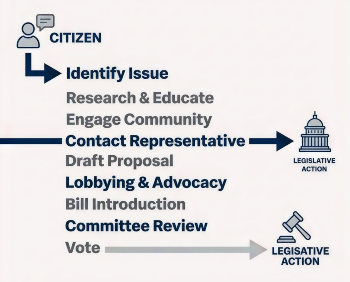
Effective petitioning requires knowing whom to contact: state representative (state-level issues), U.S. representative (federal legislation and agency oversight), and U.S. senators (federal legislation, judicial confirmations, and executive accountability).

Find representatives through official government websites. District offices track constituent contacts by issue; organized petitioning here creates measurable impact as staff compile contact summaries that influence legislative priorities.

Structuring Effective Petitions

Effective petitions require: Specificity (exact policy, harm, and remedy, not vague complaints); Constituent Origin (50 constituents from a district outweigh 5,000 from outside); Organized Coordination (200 constituents over two weeks creates documented pressure); Documentation and Tracking (sustained contact on one issue signals constituent priority).

Multi-Level Coordination Strategy

The petition process works best when coordinated across multiple pressure points simultaneously:

  • State Level: Contact your state representative and state senator about state-level resistance to federal overreach. State legislatures can pass resolutions opposing federal mandates, direct state attorneys general to challenge federal authority, and coordinate with other states on constitutional defenses.
  • Federal Legislative Level: Contact your U.S. representative about legislation to defund unconstitutional agency programs or restrict agency authority. Contact your U.S. senators about the same issues and about judicial nominees who will interpret the Constitution according to its text rather than expand federal power.
  • Executive Accountability: Contact relevant federal agencies directly. The Administrative Procedure Act requires agencies to accept public comments on proposed rules. Organized public comment campaigns create a record that courts can review if the agency action is later challenged. Agencies must respond to significant comments in their final rule explanations.
  • Electoral Accountability: Track how elected officials respond to your petitions. If they ignore constituent pressure on constitutional issues, support primary challengers or general election opponents who respect constitutional limits. Electoral consequences matter more than any other form of pressure.

Timing and Persistence

Timing matters: contact officials before votes, not after. Persistence outweighs volume, five petitions over three months on the same issue creates a pattern that staff briefings highlight more than one large petition.

Documentation for Legal Action

Petition campaigns create documentation supporting legal challenges. If an agency ignores public comment opposing a rule as unconstitutional, that record strengthens judicial review. If officials vote to fund unconstitutional programs despite constituent opposition, that record demonstrates violation of their constitutional oath.

First Amendment petition rights and procedures protect your ability to organize these efforts without government retaliation. The constitutional right to petition exists specifically to enable citizens to challenge government action through legal channels. How to contact elected representatives provide official directories and contact information for all federal representatives.

Pro TipThe most effective petitioners treat their contacts as a long-term campaign, not a one-time complaint. Track which officials respond to constituent pressure and which ones ignore it. Use that information when voting and when deciding which candidates to support in primary elections.

Article V Convention of States: A Path to Constitutional Reform

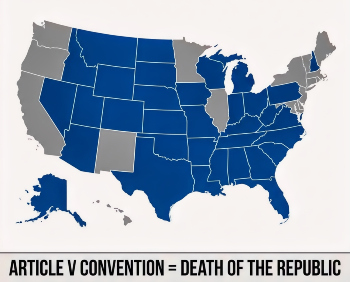
Article V allows two-thirds of state legislatures to call a convention for proposing amendments, bypassing Congress. This tool exists when the federal government strays from constitutional limits and Congress won’t act. Citizens can petition state representatives to support Convention of States resolutions. Once two-thirds of states call for a convention, Congress must convene it. Serious movements to invoke Article V exist today.

Key TakeawayArticle V Convention of States represents the constitutional remedy when federal overreach becomes systematic and Congress refuses to act. It’s the Founders’ escape hatch for situations where normal constitutional checks have failed.

Checks and Balances in Action: Your Role in Democratic Institutions

Checks and balances only function when citizens understand their role in making them work. The system isn’t automatic, it requires active participation from voters, activists, and engaged citizens.

Elections are the primary check on executive power. Presidents serve fixed terms. If an administration violates constitutional limits, citizens can vote them out. This requires informed voting, understanding which candidates respect constitutional boundaries and which ones promise to expand executive authority.

State governments provide another check. When federal overreach occurs, state attorneys general can file lawsuits challenging federal authority. State legislatures can pass resolutions opposing federal mandates. State governors can refuse to enforce unconstitutional federal requirements. Citizens can organize state-level pressure campaigns demanding that state officials use these tools.

Make a Difference Today →

Congress provides a check through oversight, appropriations, and impeachment. Citizens can petition representatives to investigate agency overreach, defund unconstitutional programs, or impeach officials who violate their constitutional oaths. Organized constituent pressure influences congressional behavior.

Courts provide a check through judicial review. Citizens can fund litigation challenging unconstitutional government action. Class action lawsuits, test cases, and organized legal strategies have successfully challenged federal overreach repeatedly. Judicial review and constitutional challenges explains how courts evaluate whether government action exceeds constitutional authority.

The key insight: checks and balances require citizen participation. Without organized citizens demanding that elected officials and courts enforce constitutional limits, the system defaults to unchecked centralized power.

Building a Civic Movement to Restore Founding Principles

Defending the republic requires sustained civic engagement that moves beyond individual petitions to organized, coordinated movements. Individual constitutional defense efforts matter. Organized movements that coordinate citizens across multiple states and multiple pressure points matter significantly more. Building a civic movement means establishing structures that enable citizens to act together on shared constitutional principles.

Movement Architecture and Coordination Structures

Successful movements operate through nested layers: local chapters (community education and petitions), state coordination (connecting chapters and directing pressure), and national coordination (multi-state action). This structure matters because constitutional defense operates at multiple levels simultaneously, federal, state, and local, creating compounding pressure when coordinated.

Specific Coordination Mechanisms

Effective movements establish concrete coordination mechanisms:

Effective movements establish: Issue Identification (select specific violations, not all grievances); Communication Infrastructure (email, messaging, calls); Legal Action Coordination (identify test cases and coordinate litigation funding); Legislative Strategy (track voting records for electoral use); State-Level Mechanisms (petition for resolutions, encourage lawsuits, support ballot initiatives).

Recruitment and Engagement Levels

Successful movements recruit citizens at multiple levels of engagement. Not everyone can become a full-time activist. Movements that accommodate different commitment levels grow larger and sustain longer.

Passive Supporters: Citizens who receive movement communications, understand the constitutional issues, and vote based on candidates’ constitutional positions. These supporters require minimal time commitment but create electoral pressure when coordinated.

Active Participants: Citizens who attend meetings, sign petitions, contact elected officials, and donate to movement activities. These participants require moderate time commitment and create the visible pressure that influences elected officials.

Core Organizers: Citizens who coordinate movement activities, recruit other participants, manage communication infrastructure, and develop strategy. These organizers require significant time commitment but create the organizational capacity that sustains movements over years.

Movements that recruit across all three levels grow faster and sustain longer than movements that demand high commitment from everyone.

Real-World Movement Examples and Patterns

Successful movements focus on constitutional principles (not personalities), coordinate across state lines, and combine legal action, legislative pressure, and electoral accountability. Movements that document activities create institutional memory; those that don’t restart from scratch when leadership changes.

Sustaining Momentum Over Time

Constitutional change happens slowly. Movements sustaining multiple election cycles create measurable change; those collapsing after one or two years leave no lasting impact. Sustainment requires realistic expectations, intermediate milestones (legislative victories, court decisions, electoral successes), and sustainable funding through membership dues, small-donor fundraising, or foundation grants.

Connecting Movement Action to Electoral Outcomes

The most effective constitutional defense movements connect their advocacy work directly to electoral outcomes. They track which elected officials support constitutional defense and which ones vote for federal expansion. They publicize that voting record. They support primary challengers to officials who ignore constituent pressure on constitutional issues. They support general election opponents to officials who vote against constitutional defense.

This electoral connection transforms movements from advocacy organizations into political forces. Elected officials who ignore movement pressure face electoral consequences. Elected officials who respond to movement pressure receive movement support in their reelection campaigns. This creates incentive structures that make elected officials responsive to constitutional defense movements.

Identify existing movements aligned with your constitutional principles and join them. If none exists, start one: begin with committed citizens, establish clear principles, identify specific targets, and recruit others. Movements grow from small groups coordinating action across multiple pressure points.

Key TakeawayThe most powerful constitutional defense movements combine legal action, legislative pressure, electoral accountability, and sustained civic participation. They operate at multiple levels simultaneously, local, state, and national, and coordinate action across those levels. Citizens who join or build such movements multiply their individual impact and create the conditions where constitutional limits are restored and defended.

Frequently Asked Questions

What did Benjamin Franklin mean by ‘a republic, if you can keep it’?

Franklin’s famous phrase underscores that a republic requires active civic participation and vigilance. The republic’s survival depends not on government alone but on citizens understanding and defending constitutional limits on power. This statement reflects the founders’ belief that representative government demands engaged citizens who hold elected officials accountable to the Constitution rather than passively accepting government decisions.

What are the primary constitutional tools available to citizens to defend the republic?

Citizens can defend the republic through several constitutional mechanisms: voting and holding elected officials accountable, petitioning Congress and state legislatures, participating in the amendment process, supporting judicial challenges to unconstitutional actions, and engaging in state-level resistance to federal overreach. The Constitution also grants states sovereign powers to check federal authority. These tools form the backbone of institutional stability and allow ordinary citizens to participate in preserving constitutional governance.

How do constitutional limits on federal agency power protect the republic?

The Constitution restricts federal agencies through separation of powers, requiring Congress to authorize agency actions and courts to review them for constitutionality. Agencies derive all power from statutes Congress passes; they cannot exceed those boundaries. Citizens can challenge agency overreach through administrative appeals, lawsuits, and by demanding that elected representatives rein in regulatory excess. These limits prevent centralized power and preserve federalism by keeping agencies accountable to elected branches and the rule of law.

What is the difference between a democracy and a republic in the American context?

A republic is a system where power resides with elected representatives bound by constitutional law, not with the majority directly. Democracy emphasizes majority rule, while the American republic protects minority rights and limits majority power through constitutional constraints. The founders designed the republic specifically to prevent tyranny of the majority. Citizens in a republic participate through voting and civic engagement, but their power is filtered through representative institutions and constitutional limitations that protect individual liberty and state sovereignty.

How can citizens legally challenge federal agency overreach?

Citizens can challenge federal agency actions by filing administrative appeals within agency processes, submitting public comments during rulemaking, filing lawsuits claiming constitutional or statutory violations, and requesting congressional oversight. State attorneys general can also challenge federal agency actions that exceed constitutional limits. These mechanisms ensure agencies remain accountable to law and citizen input rather than acting unilaterally.

What role does the Article V convention of states play in defending the republic?

Article V allows two-thirds of state legislatures to call a convention to propose constitutional amendments without Congress’s approval. This mechanism gives states a direct tool to check federal power and reform the Constitution when the federal government becomes unresponsive to constitutional limits. A convention of states can propose amendments restricting federal agency power, protecting election integrity, or restoring federalism. This process embodies the principle that ultimate sovereignty rests with the states and the people, not Washington.

How do I know if constitutional interpretations I’m reading are accurate and not just one political perspective?

Evaluate constitutional analysis by checking if it cites the actual text of the Constitution, historical founding documents, and established Supreme Court precedent. Look for sources that acknowledge competing interpretations fairly rather than dismissing opposing views. Cross-reference claims against multiple sources, and be skeptical of interpretations that conveniently align with one political agenda while ignoring constitutional text or precedent.

Verify School Board Budget Transparency: A Parent’s Guide

Table of Contents

Last Updated: September 3, 2026

Why School Board Budget Transparency Matters for Parents

School board budget transparency is essential for understanding whether resources reach classrooms or get lost in administrative overhead.

Parents have a constitutional right to know how public funds are allocated. Your school board manages millions in public money that directly affects your child’s educational experience.

When parents understand budget priorities, they can identify gaps, advocate for changes, and hold leaders accountable. Transparent districts tend to see stronger community engagement and better outcomes.

Understanding the Basics of School District Financial Accountability

School districts must file annual financial reports, maintain audit records, and make certain budget documents available to the public. These aren’t optional disclosures.

Financial accountability rests on transparency, accuracy, and compliance. Quality of transparency varies dramatically: some districts publish interactive dashboards while others post PDFs that are technically public but practically inaccessible.

Operating Budget vs. Capital Budget

Your district maintains two distinct budgets, and conflating them creates confusion.

The operating budget covers day-to-day expenses: teacher salaries, utilities, supplies, transportation, food service, and administrative costs. It’s the largest budget and directly affects classroom operations.

The capital budget covers long-term infrastructure projects: building new schools, renovating facilities, and purchasing major equipment. Capital projects often span multiple years and involve bonding.

A district might have a healthy operating budget but underfunded capital projects, or invest heavily in construction while cutting operational spending. Understanding both budgets gives you the complete picture.

Revenue Sources and Expenditure Categories

Most districts rely on local property taxes (40-50% of revenue), state funding, and federal grants (10-15%) (peer-reviewed research). Federal funding often comes with restrictions for special education, Title I programs, and vocational education.

Personnel costs typically consume 80% or more of the operating budget (ets.org). The remaining 20% covers supplies, utilities, technology, transportation, and food service.

The critical question is whether personnel spending is distributed appropriately, whether central office administration is bloated while classroom support is underfunded.

Accessing Your District’s Open Data Dashboard and Financial Reports

Start with your district’s main website and look for links labeled “Budget,” “Financial Reports,” “Transparency,” or “Open Data.” Interactive dashboards make complex data navigable.

If your district lacks an obvious online portal, call the district office and ask for the budget transparency coordinator. Some districts maintain dedicated websites; others post documents to their main site.

You’ll typically find the annual budget, budget summaries, financial reports (actual vs. budgeted spending), audit reports, and sometimes line-item detail.

Start with the budget summary, which avoids excessive jargon. Then move to detailed reports as your comfort level increases. Focus on specific questions: How much does my school receive? Where does it go? How does this compare to other schools?

Pro TipMany districts publish their budget documents in PDF format, which can be frustrating to search. If you’re looking for specific spending categories, try copying text into a search tool or asking the district for data in a more accessible format. Most public agencies will accommodate reasonable requests for reformatted data.

How to File a Public Records Request for School Budgets

If information isn’t readily available online, you have a legal right to request it. Every state provides mechanisms for citizens to access government records.

Identifying What to Request

Good requests identify exactly what documents or data you need:

  • “All expenditure records for [School Name] for fiscal year 2026”
  • “Salary schedules for all administrative positions, fiscal year 2026”
  • “Contracts with [Vendor Name] for the past three years”
  • “Line-item budget for [Department Name], broken down by position”
  • “Comparison of per-pupil spending by school building for fiscal year 2026”

Bad requests are too broad:

  • “All budget documents”
  • “Everything related to spending”
  • “All financial records”

These trigger requests for clarification or result in massive data dumps that don’t actually answer your question.

Filing Your Request Effectively

Most states have specific procedures for public records requests. Your state’s attorney general office maintains guidance on your state’s process.

When you file, include your name, contact information, a clear description of what you’re requesting, the time period, your preferred format, and acknowledgment that there may be copying fees.

Keep your request professional and straightforward. You’re entitled to raw records, not interpretation or analysis.

Districts typically have 5-10 business days to respond (nga.org). If denied, ask why. Some denials are legitimate; others are overreach. If you believe a denial is improper, your state attorney general’s office can help.

Step Action Timeline
1 Identify specific information needed Before filing
2 Research your state’s public records process 1 day
3 Draft clear, specific request 1-2 days
4 Submit request via required method Day of filing
5 Track deadline and follow up if needed 5-10 business days
6 Review received documents Upon receipt
Watch OutSome districts cite “personnel records” as exempt from disclosure. This is sometimes valid, individual teacher salaries might be protected. But aggregate salary data (total administrative salaries, salary ranges, staffing levels) is typically public. If a district denies your request citing personnel protection, ask them to clarify which specific information is exempt and why.

School Board Budget Accountability Checklist for Parents

Use this checklist to systematically evaluate your district’s fiscal transparency and spending patterns.

  • Locate transparency resources. Find your district’s budget documents, open data portal, or transparency website. Document the URL and ease of access.
  • Review the annual budget. Read the budget summary. Identify total revenue, major revenue sources, and top spending categories.
  • Check per-pupil spending. Compare your school’s per-pupil allocation to other schools in the district. Is the distribution equitable?
  • Examine administrative costs. What percentage of the budget goes to central office administration vs. school-level spending? Is this reasonable for your district’s size?
  • Analyze staffing ratios. How many administrators per 1,000 students? How many teachers per 1,000 students? Compare to district averages.
  • Review audit reports. Has the district been audited by an independent auditor? Were there findings or recommendations? Have they been addressed?
  • Check for spending trends. Compare this year’s budget to last year’s. What categories increased? What decreased? Why?
  • Identify capital projects. What major construction or renovation projects are planned? How are they funded?
  • Evaluate transparency quality. Is budget information easy to find and understand? Or is it buried in technical documents?
  • Document concerns. If you identify potential problems, document them with specific data points and dates.

This checklist transforms abstract budget review into concrete, actionable steps. Work through it systematically rather than trying to evaluate everything at once.

Make a Difference Today →

Raw budget numbers mean nothing without context. The same spending figure might indicate wise stewardship in one district and wasteful spending in another.

Per-Pupil Spending and Resource Distribution

Per-pupil spending is the most straightforward metric for comparing resource allocation: total spending divided by total students.

Per-pupil spending alone doesn’t tell the complete story. Two districts with identical per-pupil spending might distribute resources very differently, one concentrating on advanced programs, another targeting struggling schools.

Compare per-pupil spending by school building. Is unequal distribution intentional (targeting higher-need populations) or accidental?

Examine spending by student demographic groups if available. These patterns reveal real priorities.

Resource distribution includes staffing. Schools with more experienced teachers or more support staff receive more resources, even with identical enrollment.

Analyzing Line-Item Expenditures and Capital Projects

Common line-item categories include salaries, benefits, supplies, utilities, transportation, technology, professional services, maintenance and repairs, and capital projects.

Examine which categories are growing and shrinking. If supply budgets are cut while administrative salaries increase, that reveals priorities.

Capital projects deserve special attention, they often involve significant decisions with minimal public scrutiny. Understanding these decisions is crucial to effective advocacy.

Ask: Why is this project necessary? What’s the timeline and funding? What’s the long-term cost of ownership? Are there cheaper alternatives?

Every state provides public access to government financial records through public records laws that define what documents must be available, timelines, and penalties for non-compliance.

Education-specific statutes often require districts to publish annual financial reports, maintain audit records, and hold public budget hearings.

The Family Educational Rights and Privacy Act (FERPA) protects student privacy but does not prevent disclosure of aggregate financial data.

Understanding your legal rights shifts the dynamic, you’re asserting rights, not asking permission. Your state attorney general’s office can help enforce your rights.

Key TakeawaySchool board budget transparency isn’t a courtesy. It’s a legal requirement. Districts that resist transparency are often violating state law. Know your rights, and don’t accept vague refusals to provide public information.

Taking Action: From Data to Advocacy

Identify specific concerns by analyzing patterns. Where are gaps between stated priorities and actual spending?

Bring concerns to decision-makers by attending school board meetings and presenting findings with data. Stick to facts, not opinions.

Connect with other parents. Collective voices are harder to dismiss than individual ones.

Request that the board address specific issues: presentations on administrative spending, comparisons of per-pupil spending, explanations of budget decisions.

If your district resists transparency or you uncover misconduct, escalate by filing complaints with your state education agency, contacting elected officials, or reaching out to local media.

The goal is to ensure public money serves public purposes. Accountability mechanisms exist to address problems when districts hide spending or make poor decisions.

Understanding school board budget transparency gives you the knowledge to participate meaningfully in educational governance and hold accountable government accountable.


Your ability to verify school board budget transparency is a direct expression of constitutional principles. When you demand accountability from public institutions, you’re exercising foundational rights. At Texas Journal, we believe informed citizens are the best defense against government overreach. Defend the American Family by mastering the financial data that reveals your district’s true priorities. Understanding where your tax dollars go is the first step toward restoring accountability at every level of government.

Frequently Asked Questions

What are the main components of a school district budget?

A school district budget typically includes two main parts: the operating budget covers day-to-day expenses like teacher salaries, utilities, and instructional materials, while the capital budget funds long-term projects such as building renovations and equipment purchases. Within operating budgets, you’ll find line-item expenditures broken down by department, program, and function. Understanding these components helps parents evaluate whether resources align with district priorities and student needs.

How can parents request access to school district financial records?

Parents can request financial records through public records requests, typically available through your state’s public information act or freedom of information law. Submit your request directly to the school district’s records custodian, specifying exactly what documents you need (audit reports, check registers, budget summaries, or expenditure data). Most districts must respond within 10-14 business days. You can also request records at school board meetings or through the district’s transparency portal if one exists. Keep documentation of your request and follow-up dates for accountability.

What legal rights do parents have to review school board expenditures?

Parents have constitutional and statutory rights to access public financial records. The First Amendment protects your right to petition government and access public information. Most states have sunshine laws and public records statutes requiring school districts to disclose budget documents, audit reports, and spending data. School boards must hold open meetings where budgets are discussed and voted on. If a district denies your records request without valid legal exemption, you can appeal or file a complaint with your state’s attorney general or education agency.

How do I interpret school district financial dashboards and reports?

Start by identifying key metrics: per-pupil spending (total budget divided by student enrollment), revenue sources (state funding, local property taxes, federal grants), and major expenditure categories. Look for year-over-year spending trends to spot increases or cuts. Check the audit report for any findings or concerns flagged by independent auditors. Compare your district’s per-pupil spending and staffing ratios to similar districts to assess resource allocation. If terms like ‘fiscal transparency’ or ‘line-item budget’ confuse you, ask the district for a glossary or attend a budget workshop they may offer.

Constitutional Rights Defense Strategies: A 2026 Guide

Table of Contents

Last Updated: August 31, 2026

Understanding Constitutional Rights Defense in 2026

Constitutional rights defense has become increasingly critical as citizens navigate complex federal and state legal landscapes. Understanding your constitutional protections is the foundation for asserting your rights effectively. The Constitution provides multiple layers of defense against government overreach, but only if you know how to invoke them strategically.

The challenge most people face isn’t ignorance of their rights, but knowing which legal tools to deploy in which situations. Federal courts, state courts, constitutional amendments, and litigation strategies each serve different purposes. This guide covers practical strategies citizens can use to defend their constitutional rights in 2026, examining how federalism protects individual liberty, how to file complaints that survive legal scrutiny, and how strategic collaboration amplifies your defensive power.

Constitutional Limits on Federal Agency Power

Federal agencies operate within strict constitutional boundaries. The Constitution constrains agency action through multiple mechanisms designed to prevent the concentration of executive power.

How the Fifth Amendment Constrains Agency Action

The Fifth Amendment’s due process clause creates a fundamental limitation on federal agency power. No agency can deprive you of life, liberty, or property without following established legal procedures. Agencies cannot act arbitrarily; their decisions must follow rules they’ve established, apply consistently, and provide notice and opportunity to be heard.

When an agency violates these procedural requirements, the violation itself becomes grounds for legal challenge. Many successful constitutional challenges focus on this procedural angle because it’s often easier to establish than proving the underlying policy decision was unconstitutional.

The Fifth Amendment also protects against self-incrimination in agency proceedings. If a federal agency demands testimony or documents that could be used against you criminally, you can invoke the privilege against self-incrimination.

Judicial Review as a Check on Executive Authority

The courts exist partly to check executive overreach. The Administrative Procedure Act (APA) provides the primary mechanism for challenging agency action in federal court. Courts review whether agencies acted within their legal authority, followed proper procedures, and based decisions on substantial evidence.

You must exhaust administrative remedies first in most cases, meaning you must challenge the agency action through its internal appeal process before going to court. Federal courts apply different levels of scrutiny depending on what the agency did (the NIH). If the agency is interpreting a statute, courts defer to reasonable agency interpretations. If the agency is violating constitutional rights directly, courts apply strict scrutiny and give no deference to the agency’s judgment.

State-Level Constitutional Litigation Strategies

State constitutions often provide stronger protections for individual rights than the federal Constitution. This federalism advantage is one of the most underutilized tools in constitutional defense.

Why State Courts Matter in Rights Defense

State courts are frequently more receptive to constitutional rights claims than federal courts. State judges often interpret state constitutional protections more expansively than federal judges interpret parallel federal protections. Many state constitutions include explicit protections for privacy, free speech, and due process that exceed federal minimums.

When federal courts reject a constitutional rights claim, state courts may accept the same claim under state constitutional law. This is federalism working as designed. State litigation also avoids procedural hurdles that plague federal court. You don’t need to exhaust administrative remedies before suing in state court, can often proceed pro se more effectively, and state courts typically move faster than federal courts.

Start by researching your state’s constitutional protections. Every state constitution contains a bill of rights with explicit protections that the federal Constitution doesn’t provide. Next, identify which state agency violated your rights and which state court has jurisdiction. Most constitutional rights violations by state agencies belong in state trial courts.

Document the violation thoroughly. Keep copies of all communications with the agency, preserve any order or decision taken against you, and document any agency refusal to act. Consider whether you need an attorney, simple procedural violations might be handled solo, while complex constitutional interpretations probably require counsel.

How to File a Constitutional Rights Complaint

Filing a constitutional rights complaint requires precision. The wrong forum, improper documentation, or missed deadlines can destroy an otherwise valid claim.

Step 1: Document the Constitutional Violation

Documentation is your foundation. Create a detailed chronology of events with dates, times, names of officials involved, and exactly what action was taken or refused.

Gather all evidence: emails, letters, photographs, recordings (where legal), official documents, and any other materials showing the violation. Identify the specific constitutional provision violated. Write a factual narrative describing what happened in plain language, sticking to facts you can prove.

Person sitting at a desk with legal documents, constitutional rights complaint forms, a laptop displaying research, and a pen, carefully reviewing and organizing paperwork in a well-lit home office

Step 2: Identify the Proper Forum

Choosing the wrong forum wastes time and money. If a federal agency violated your rights, you must file in federal court under the Administrative Procedure Act or under 42 U.S.C. § 1983. If a state or local agency violated your rights, you can file in state court under state constitutional law, state statute, or federal constitutional law under § 1983. State court is usually preferable because it’s faster and more accessible.

Some violations require exhausting administrative remedies first. Check your agency’s regulations for appeal procedures and deadlines. Determine which specific court has jurisdiction, most constitutional rights cases belong in trial courts. Check filing deadlines carefully; federal cases typically have a two-year deadline under § 1983. Missing a deadline is fatal to your claim.

Make a Difference Today →

Step 3: File Your Complaint and Preserve Evidence

Your complaint must contain specific elements to survive a motion to dismiss. State the facts clearly with enough detail that a judge can understand the violation. Identify the defendant precisely using official name and title. State the legal claim clearly, identifying which constitutional provision was violated and how. Request specific relief, declare the agency action unconstitutional, enjoin future violations, or award damages.

File in the correct court with the correct filing fee, following all procedures exactly. Once you file, preserve evidence immediately. Stop deleting emails, don’t alter documents, and don’t record conversations unless legal in your jurisdiction.

Individual constitutional rights cases often fail because the plaintiff lacks resources or visibility. Strategic collaboration multiplies your power.

Diverse group of citizens gathered in a community center, seated in a circle discussing legal strategies and constitutional rights, with documents and laptops visible, natural afternoon light streaming through windows

Find organizations aligned with your constitutional defense goals. Many organizations exist specifically to litigate constitutional rights cases, providing attorneys, resources, and strategic guidance. Consider amicus curiae (friend of the court) briefs to participate in related cases without being a party.

Coordinate with other affected citizens. If multiple people suffered the same violation, filing coordinated cases creates pressure on the defendant to settle or change practices. Document systemic patterns, if an agency violates rights repeatedly, that pattern becomes evidence of unconstitutional policy. Build public awareness; constitutional rights violations often depend on obscurity. Media coverage and community organizing create accountability mechanisms that supplement legal proceedings.

Protecting Your Rights Against Digital Information Manipulation

Digital information manipulation poses a modern threat to constitutional rights. Information manipulation, the deliberate distortion of facts through selective presentation, false context, or outright fabrication, undermines informed consent and democratic decision-making.

Defend against manipulation by verifying information sources. When an agency claims something, check the original documents. Document manipulation when you encounter it; screenshots, archived web pages, and official records become evidence. Recognize that information control is a tool of overreach. Citizens who understand information dynamics are better equipped to recognize and resist manipulation.

Practical Resources for Pro-Se Constitutional Defense

Many citizens cannot afford attorneys but can represent themselves effectively in constitutional rights cases. Start with free legal resources. The American Civil Liberties Union (ACLU) provides constitutional rights information and litigation support. The Institute for Justice publishes guides on constitutional litigation strategies.

Use court self-help centers. Most federal and state courts maintain self-help centers specifically for pro-se litigants. Study the rules of civil procedure available free online. Research case law relevant to your situation using Google Scholar. Consider limited-scope representation where attorneys help with specific tasks at lower cost. Join pro-se support groups where citizens litigating constitutional cases share resources, strategies, and knowledge.

Conclusion

Constitutional rights defense in 2026 requires understanding federal and state law, identifying the proper forum for your claim, documenting violations carefully, and building strategic collaboration. The Constitution provides multiple layers of protection, but only if you know how to invoke them.

Texas Journal’s mission is to help citizens assert their rights and restore the country to its founding principles. Through understanding constitutional limits on federal agency power, using state constitutional protections, and building collective legal action, you transform from a passive subject of government power into an active defender of constitutional liberty. Click Here to join the movement for constitutional defense.

Frequently Asked Questions

What are the primary constitutional limits on federal agency power?

Federal agencies are constrained by the Fifth Amendment’s due process and takings clauses, the First Amendment’s protections on speech and assembly, and the Tenth Amendment’s reservation of powers to the states. Courts apply judicial review to strike down agency actions that exceed statutory authority or violate constitutional rights. The Administrative Procedure Act also requires agencies to follow proper notice-and-comment procedures. Citizens can challenge unconstitutional orders through federal court litigation or state constitutional claims, making judicial review a critical tool for defending civil liberties against executive overreach.

How do state courts protect constitutional rights differently than federal courts?

State courts apply both federal constitutional law and their own state constitutions, which often provide broader protections than the federal Constitution. State-level constitutional litigation strategies allow citizens to assert rights through state supreme courts without federal court delays. Many state constitutions include explicit protections for privacy, due process, and individual liberty that exceed federal minimums. Filing complaints in state courts can be faster and more accessible than federal litigation, making state constitutional claims a practical path for defending rights against federal or state agency action.

What is the first step in filing a constitutional rights complaint?

Document the constitutional violation thoroughly by collecting all evidence: dates, times, communications, actions taken by government officials, and how your rights were harmed. Preserve evidence in digital and physical form, including emails, photos, videos, and witness statements. Identify which specific constitutional protections were violated (First Amendment, Fifth Amendment due process, etc.). Once documented, consult with an attorney or use pro-se legal resources to determine whether to file in state or federal court. Proper evidence preservation is critical because courts require clear proof that a constitutional right was actually violated.

Can I challenge federal agency action if I cannot afford an attorney?

Yes. Pro-se legal resources include law school clinics, public interest law organizations, and self-help guides that explain how to file constitutional rights complaints without legal counsel. Many organizations provide free templates and guidance for challenging unconstitutional orders. State bar associations often maintain lists of low-cost legal aid services. The federal courts and state courts both accept pro-se filings, though self-representation requires careful attention to procedural rules. Starting with state court may be more accessible because state constitutional claims sometimes proceed faster and require less complex federal procedure navigation.

What role does federalism play in defending constitutional rights?

Federalism—the division of power between state and federal governments—creates multiple venues for asserting constitutional protections. When federal agencies overreach, citizens can assert rights through state courts, state attorneys general, or state legislatures. The Tenth Amendment reserves powers to the states, allowing states to challenge federal actions that exceed constitutional limits. This system of checks provides citizens with a strategic advantage: if federal courts are unavailable or hostile to a claim, state constitutional protections and state-level litigation offer alternative paths. Understanding federalism means recognizing that states themselves are tools for defending individual civil liberties.

How can I organize collective legal action with others facing similar constitutional violations?

Strategic collaboration in legal action multiplies individual efforts into a force for systemic accountability. Identify others facing identical or related constitutional violations, document their cases, and work with civil rights organizations or attorneys to file coordinated litigation. Class action lawsuits allow multiple plaintiffs to challenge the same unconstitutional government policy. Coalition building with patriotic organizations amplifies public advocacy and creates political pressure alongside legal action. Collective action also reduces individual legal costs and increases the likelihood that courts will recognize a pattern of constitutional violation, making damages recovery more substantial and policy change more achievable.

How to Challenge Local Government Overreach

Table of Contents

Recognize Local Government Overreach

Local government overreach occurs when municipal or county authority exceeds constitutional limits, statutory grants of power, or due process protections, such as when a city council passes an ordinance conflicting with state law, a licensing board imposes arbitrary conditions without statutory basis, or code enforcement selectively targets one property owner while ignoring identical violations elsewhere.

Not every frustrating government decision is unconstitutional. Cities can legitimately raise property taxes, change zoning, and regulate noise. The line is crossed when officials act without legal basis, violate civil liberties, or circumvent checks and balances. Knowing which side of that line you’re on determines your entire strategy.

Texas Journal provides critical insight and discernment designed to help citizens assert their rights.

Constitutional Limits on Municipal Authority

Municipalities possess only the powers their state legislature grants them, a principle courts call Dillon’s Rule in most states, while others follow a broader “home rule” doctrine. Either way, local governments cannot exceed state-granted authority or override federal constitutional protections.

Key constitutional provisions constraining local governments include:

  • First Amendment: Protects speech, assembly, and petitioning government; permit schemes restricting protest are frequently challenged here.
  • Fourth Amendment: Guards against unreasonable searches; warrantless code enforcement inspections are a recurring flashpoint.
  • Fifth and Fourteenth Amendments: Guarantee due process and equal protection; selective enforcement targeting one group while ignoring another is a textbook equal protection violation.
  • Takings Clause: Prohibits taking private property without just compensation, including regulatory takings that destroy land’s economic value.

Understanding which amendment applies to your situation is the first step toward effective legal advocacy.

Common Examples: Arbitrary Enforcement and Licensing Abuse

The most common forms of local government overreach share a pattern: rules applied selectively, licensing boards functioning as gatekeepers for established interests, and compliance demands with no clear statutory authority.

Occupational licensing abuse is particularly widespread. Licensing boards frequently add continuing education requirements, fee increases, or vague “character and fitness” standards unconnected to public safety. Courts have increasingly scrutinized these practices under due process and right-to-earn-a-living principles.

Arbitrary enforcement, where inspectors cite some residents for violations while ignoring identical situations elsewhere, is a civil rights issue. Document everything from the first contact.


Public Records Request for Government Transparency

Government transparency is a legal right and one of the most underused tools available to citizens challenging local government overreach. Public records expose internal decision-making, communications, and financial arrangements officials prefer to keep quiet.

Every state has its own open records law, and the federal Freedom of Information Act covers federal agencies. For local governments, state law is almost always operative. According to the Reporters Committee for Freedom of the Press open government guide, every state now has some form of public records law, though scope, exemptions, and response timelines vary significantly.

Step-by-Step: Filing a FOIA or State Open Records Request

Filing a public records request is straightforward when you follow a clear process:

  1. Identify the correct agency. Determine which department holds the records you need: city clerk, planning department, police department, or relevant licensing board.
  2. Locate the agency’s official records request portal or contact. Most municipalities have online submission systems; some require written letters.
  3. Write a specific, narrow request. Broad requests get delayed. Ask for specific date ranges, named officials, and document types (emails, contracts, meeting minutes, invoices).
  4. Cite the applicable law. Reference your state’s open records statute by name. This signals you know your rights and discourages stonewalling.
  5. Request a fee waiver if applicable. Many states allow waivers for requests made in the public interest.
  6. Submit and timestamp your submission. Keep copies of everything you send, including the date.
  7. Track the statutory deadline. Most state laws require a response within five to ten business days. Calendar the deadline immediately.

What to Do When an Agency Stonewalls or Delays

Agencies commonly claim exemptions, lose documents, or ignore requests past their statutory deadline. When that happens:

  • Send a written follow-up citing the specific deadline missed and applicable statute.
  • File a complaint with your state’s attorney general or relevant oversight body.
  • Contact your state legislator. A single call from a legislator’s office often produces records that months of requests did not.
  • Pursue judicial review. Many state open records laws allow citizens to file suit to compel disclosure, often with fee-shifting provisions making agencies pay your attorney’s fees if you win.

Filing a Formal Complaint Against Local Government

Most people jump straight to litigation. That is usually a mistake. Administrative remedies are faster, cheaper, and often more effective, and courts frequently require exhausting them before hearing your case.

Administrative Complaints: Boards, Commissions, and State Agencies

The administrative complaint process is the formal mechanism for challenging local government decisions before reaching a courtroom. Depending on your issue, the right venue might be:

  • City or county appeals board: For zoning, permitting, and code enforcement decisions.
  • State licensing board: For occupational licensing decisions.
  • State civil rights commission: For equal protection and discrimination claims.
  • State attorney general’s office: For open records violations and certain constitutional violations.

When filing, document everything: dates, names of officials, specific ordinance or regulation numbers, and a clear statement of how the action violated your rights or exceeded statutory authority. Vague complaints get dismissed; specific, documented complaints with legal citations get taken seriously.

Research your state’s administrative law procedures before filing anything, as missing the statutory deadline for the correct venue can be fatal to your claim.

Escalating to Judicial Review and Litigation

When administrative remedies fail, judicial review is the next step. Citizens can challenge local ordinances and government actions in both state and federal court, depending on whether the claim arises under state law or federal constitutional provisions.

The primary federal vehicle for constitutional violations is 42 U.S.C. § 1983, which allows individuals to sue state and local government officials for civil rights violations. According to the Legal Information Institute’s overview of Section 1983, this statute is the primary tool for holding local officials personally accountable for constitutional violations.

An injunction, a court order stopping the government from enforcing an unlawful ordinance, is often the most immediate relief available. Courts can issue temporary restraining orders within days when constitutional rights are at stake.

Watch OutNever sign a consent agreement or settlement with a local agency without consulting an attorney. Agencies sometimes offer to “resolve” complaints through agreements that waive your right to sue or appeal.

How to Organize a Grassroots Campaign Against Local Ordinances

Political pressure and legal pressure work best together. A lawsuit without community support is easy for officials to ignore. A community campaign without legal grounding is easy to dismiss. The combination moves local governments.

Engaging City Councils, Public Hearings, and Local Boards

Public hearings provide formal, on-the-record access to the decision-making process. Most local ordinances must go through a public comment period before adoption. Here is how to use that window effectively:

Action When to Use Impact Level
Submit written public comment Before any vote Creates official record
Speak at public hearing During comment period Direct on-record pressure
Petition drive Before or after vote Demonstrates constituent opposition
Attend board meetings Ongoing Shows sustained citizen oversight
Request agenda items Any time Forces official discussion

Organize your neighbors to attend public hearings in numbers. A packed room sends an unmistakable signal. Coordinate speakers so each covers a different angle, constitutional concerns, economic impact, procedural irregularities, rather than repeating the same point.

City council members are elected officials who respond to constituent pressure, especially when an election approaches.

Digital Activism and Social Media as Force Multipliers

Social media has fundamentally changed local government accountability dynamics. A city council vote that would have passed quietly a decade ago now faces real-time public scrutiny.

Effective digital activism includes:

  • Document and publish. Record public meetings (check your state’s recording laws first), post clips of officials making questionable statements, and share public records you’ve obtained.
  • Build a local coalition online. Create a dedicated page for your specific issue. Hyper-local organizing outperforms generic political content for driving turnout.
  • Tag local media. Local journalists cover city hall. A well-documented public records find or clear constitutional violation is a story.
  • Use consistent messaging. Frame the issue around concrete harm to real constituents. “This ordinance will shut down 40 small businesses on Main Street” lands harder than abstract legal theory.
  • Connect to state-level networks. Many states have citizen advocacy organizations that can amplify local fights and provide resources.
Pro TipFile your public records requests before going public on social media. Once officials know you’re organizing, document production slows down. Get the records first, then make noise.

Whistleblower Protections and Retaliation Mitigation

A whistleblower is an employee, contractor, or citizen who reports government misconduct, waste, fraud, or abuse. Federal law and most state laws provide protections against retaliation for good-faith disclosures of government wrongdoing.

The Government Accountability Project’s whistleblower resource center maintains detailed guidance on protections available under various federal and state statutes.

If you are a government employee challenging your agency’s conduct, retaliation risk is real. Protect yourself by:

  1. Documenting everything before you report. Keep copies of relevant records in a personal location, not on government systems.
  2. Reporting through official protected channels first. Many whistleblower protection statutes require internal reporting before external disclosure to trigger legal protection.
  3. Consulting an employment attorney before acting. Whistleblower law is complex, and protections vary significantly by statute and employment type.
  4. Reporting to the appropriate oversight body. Inspector general offices exist at the federal level and in many states specifically to receive whistleblower complaints.

For citizens who are not government employees, retaliation can still occur through permit denials, increased inspections, or selective enforcement. Document every government contact with dates, names, and outcomes from the moment you begin challenging local government overreach. This documentation becomes evidence if retaliation occurs.

Watch OutRetaliation by government officials against citizens exercising First Amendment rights can itself be a federal civil rights violation under Section 1983. If you face sudden adverse government action after going public, consult an attorney immediately.

Budgetary Oversight: Following the Money in Local Government

Budget documents are public records that reveal a government’s real priorities more clearly than any official statement. Citizens challenging regulatory overreach should always follow the money.

Local government budgets are typically adopted through public processes including hearings and council votes. Documents themselves, line-item budgets, audit reports, grant agreements, and vendor contracts, are subject to public records laws in every state.

What to look for:

  • Unfunded mandates: State or federal requirements that local governments must implement without corresponding funding, often creating pressure to generate revenue through fines and fees.
  • Grant conditions: Federal or state grants often come with conditions shaping local policy, explaining why agencies pursue seemingly disconnected priorities.
  • Vendor and contractor relationships: Contracts with private companies for code enforcement or licensing administration create financial incentives that can drive overreach.
  • Fine and fee revenue: When a city’s budget depends on citation revenue, enforcement becomes a revenue tool rather than a public safety function, a pattern courts have scrutinized under due process grounds.

Citizen budget oversight groups have successfully identified and challenged overreach by presenting documented financial conflicts at public hearings. The combination of public records, budget analysis, and public comment is among the most effective non-litigation tools available.


Challenge Local Government Overreach Through Sustained Pressure

The biggest mistake citizens make when challenging local government overreach is treating it as a single event rather than a sustained campaign. Officials wait out short-term opposition. Sustained, organized, documented pressure produces results.

The framework that works:

  1. Identify and document the specific violation. Know your constitutional and statutory argument before you act.
  2. Obtain the records. File public records requests before anything else.
  3. Exhaust administrative remedies. File formal complaints with appropriate boards and commissions.
  4. Build community support. Organize neighbors, attend public hearings, and use digital platforms to broaden your coalition.
  5. Escalate legally when necessary. Judicial review and Section 1983 litigation are available when administrative processes fail.
  6. Maintain pressure. Show up at every relevant public meeting. Keep filing records requests. Keep documenting.

Constitutional rights do not enforce themselves. Every successful challenge to a local ordinance, every licensing board reform, every code enforcement policy change protecting citizen rights happened because organized citizens refused to accept arbitrary government action as final.

Texas Journal exists to support exactly that kind of citizen action, providing the constitutional education, critical analysis, and community infrastructure that turns individual frustration into collective accountability. The Patriot Pool is designed as a force multiplier for citizens serious about defending their rights and restoring the founding principles that constrain government power.

Frequently Asked Questions

What are common examples of local government overreach?

Common examples include local ordinances that restrict property use without clear statutory authority, licensing boards imposing fees or requirements that exceed state law, arbitrary enforcement of zoning rules that target specific residents, and unfunded mandates that shift costs onto citizens without due process. Any regulation that lacks a clear constitutional or legislative basis, or that violates civil liberties without compelling government interest, may qualify as overreach worth challenging through administrative or legal channels.

How do you file a formal complaint against a local government agency?

Start by documenting every incident with dates, names, and written records. Then identify the correct oversight body: a city ombudsman, state agency, or licensing board. Submit a written complaint that cites the specific local ordinance or statutory authority you believe was violated. If the agency fails to act, escalate to your state attorney general’s office or file for judicial review in your local court. Keeping copies of all correspondence is essential for any future litigation.

What legal remedies exist for challenging a municipal ordinance?

Citizens can challenge a local ordinance through several channels. First, attend public hearings and formally object on the record. Second, petition the city council to repeal or amend the ordinance. Third, file an administrative appeal if the ordinance was applied against you specifically. Finally, pursue litigation: courts can issue an injunction blocking enforcement if the ordinance violates constitutional rights, exceeds the municipality’s statutory authority, or conflicts with state law. An attorney specializing in administrative law or civil liberties can assess which path fits your situation.

How can grassroots organizing influence local policy decisions?

Grassroots campaigns succeed by building numbers and staying visible. Recruit neighbors, circulate petitions, and show up consistently at city council meetings and public hearings. Use social media to document government misconduct and share public records findings widely. Coordinate with local advocacy groups and consider running a candidate who shares your position. Sustained, organized citizen oversight has overturned local ordinances and removed officials from office — the key is maintaining pressure across multiple election cycles, not just a single meeting.

America First Policy Institute Alternative: Top Platforms Compared

Table of Contents

Last Updated: September 1, 2026

What to Look for in an America First Policy Institute Alternative

When searching for an America First Policy Institute alternative, citizens often seek platforms combining rigorous policy analysis with grassroots activism. The right organization should align with your values while offering concrete tools to defend constitutional principles and assert your rights against perceived government overreach.

Key criteria matter: Does the platform provide original research? Does it focus on litigation, legislation, grassroots organizing, or education? Is membership accessible? Does it reach your demographic, students, working professionals, legal advocates, or general citizens?

The organizations covered here represent different approaches to constitutional advocacy. Some emphasize legal action and transparency. Others focus on youth mobilization. Still others provide comprehensive policy research across multiple domains. Understanding these distinctions helps you choose the platform matching your advocacy goals and available time.

Texas Journal serves this audience by providing critical insight on constitutional rights and states’ rights restoration, guiding citizens on how to use the United States Constitution to defend against federal overreach.

Best Patriot Movement Platforms 2026

The landscape of patriotic advocacy organizations has expanded significantly, with each operating under a distinct mission and methodology reflecting different philosophies about how constitutional principles are best defended and restored.

These platforms range from litigation-focused organizations to youth-oriented networks to comprehensive think tanks. Some operate as 501(c)(3) nonprofits funded by donations. Others maintain sister organizations for direct political activism. The variation reflects a broader truth: defending constitutional principles requires multiple approaches working in parallel.

When evaluating platforms, consider whether you prefer working within existing legal and political structures or pushing for systemic change. Some organizations file lawsuits and FOIA requests. Others organize student chapters and conferences. Still others produce white papers aimed at influencing elected officials.

Your choice depends on your skills, available time, and preferred mode of advocacy. A lawyer might gravitate toward litigation-based organizations. A college student might find value in campus-focused networks. A policy professional might prefer research-driven think tanks.

The Heritage Foundation: Comprehensive Conservative Policy Research

The Heritage Foundation, founded in 1973, operates as a comprehensive research institution producing analysis across free enterprise, limited government, individual freedom, traditional values, and national defense (heritage.org).

The organization’s influence extends beyond publications. Heritage Action serves as its sister organization focused on conservative and Republican activism, allowing the Foundation to conduct research while translating findings into legislative and electoral strategies. The Foundation has notably influenced administrations across decades, with particular prominence during the Reagan and Trump presidencies.

Heritage’s strength lies in its breadth. The organization maintains research capacity across dozens of policy domains simultaneously, appealing to professionals seeking authoritative conservative analysis on topics ranging from healthcare to national security to education reform. The Foundation publishes detailed policy recommendations, position papers, and legislative analyses that inform conservative policymakers and activists.

However, this institutional approach carries tradeoffs. The Foundation’s research operates within established conservative frameworks, focusing on influencing existing political structures rather than challenging fundamental assumptions about federalism or constitutional interpretation. For activists seeking more radical constitutional reexamination, Heritage’s institutional incrementalism may feel insufficiently transformative.

Judicial Watch pursues a fundamentally different strategy: using litigation and transparency mechanisms to expose government misconduct and enforce accountability. The organization employs Freedom of Information Act requests, lawsuits, and public investigations to investigate government actions and promote adherence to constitutional law.

This litigation-focused approach appeals to citizens who believe government transparency represents the most direct path to accountability. Judicial Watch has filed hundreds of lawsuits targeting perceived government overreach, misuse of funds, and constitutional violations, publishing findings from its investigations to create a public record of government actions (judicialwatch.org).

The organization’s strength emerges from its legal methodology. FOIA requests and litigation create discoverable evidence. Unlike opinion-based advocacy, Judicial Watch’s approach generates documentary proof of government actions, providing credibility that resonates with legally-minded activists.

Judicial Watch’s model requires patience. Litigation proceeds slowly, with results unfolding over months and years rather than weeks. For those committed to building an enduring legal record of government conduct, this methodical pace represents the right approach.

Constitutional Advocacy Groups Focused on States’ Rights

Beyond major national organizations, numerous smaller groups emphasize states’ rights and constitutional federalism, operating on the principle that state governments represent the primary check on federal power. These organizations often focus on state-level organizing, state legislative strategy, and education about constitutional federalism.

This approach reflects a specific constitutional interpretation: that the Tenth Amendment reserves most governmental powers to the states, and that federal overreach stems partly from states’ failure to assert their reserved powers. These organizations typically operate with smaller budgets and more targeted geographic focus than national think tanks.

The states’ rights framework appeals to activists who believe federal reform has failed and that genuine change must originate from state capitals. Many of these groups operate as educational nonprofits, hosting seminars and conferences focused on constitutional law and states’ rights principles.

Turning Point USA and Grassroots Constitutional Education Resources

Turning Point USA represents a distinct model: youth-focused grassroots organizing combined with constitutional and civic education. The organization operates student chapters on high school, college, and university campuses, organizing students around principles of fiscal responsibility, free markets, limited government, and constitutional rights.

This youth-centered approach recognizes that long-term cultural and political change requires engaging younger generations before establishment institutions capture their allegiance. Turning Point USA hosts annual conferences including the Student Action Summit and Young Women’s Leadership Summit, creating spaces where young conservatives encounter peer networks and leadership training.

The organization’s strength emerges from its ability to mobilize and organize young people. Campus chapters provide structure for student activism. Educational materials introduce constitutional principles and conservative policy analysis to audiences who might not encounter them through traditional channels.

The National Center for Public Policy Research: Free-Market Solutions and Diverse Outreach

The National Center for Public Policy Research, founded in 1982, operates as an independent conservative think tank emphasizing free-market principles, limited government, and individual freedom (nationalcenter.org). The organization distinguishes itself through explicit focus on reaching diverse constituencies often underrepresented in conservative movement spaces.

Make a Difference Today →

The Center maintains specialized programs including Project 21, a black leadership network; the Free Enterprise Project; and Able Americans, focusing on disability policy and free-market solutions. This programmatic diversity reflects the organization’s strategic commitment to broadening conservative intellectual influence beyond traditional constituencies.

The organization produces research and policy analysis across multiple domains while maintaining particular emphasis on reaching new audiences. This dual focus creates opportunities for engagement at multiple levels, from research consumption to participation in constituency-specific programs and networks.

How to Choose the Right Alternative for Your Advocacy Goals

Selecting an America First Policy Institute alternative requires clarity about your specific objectives and available resources. Different organizations serve different needs, and the right choice depends on matching your circumstances to organizational strengths.

Begin by identifying your primary advocacy mode. Do you prefer legal action? Judicial Watch’s litigation-based approach provides a structured pathway. Do you seek comprehensive policy analysis? The Heritage Foundation and National Center for Public Policy Research offer research-driven engagement. Do you want to mobilize peers and build community? Turning Point USA provides organizational structure and networking. Do you emphasize states’ rights and constitutional federalism? Numerous state-focused organizations specialize in this approach.

Consider your available time commitment. Some organizations require minimal engagement; you might consume published research or attend occasional conferences. Others expect active participation in chapters, events, or advocacy campaigns.

Evaluate ideological alignment carefully. While all these organizations operate within conservative or patriotic frameworks, their specific emphases vary. Heritage Foundation’s institutional conservatism differs from more radical constitutional reexamination. Turning Point USA’s youth focus differs from Judicial Watch’s legal methodology.

Assess geographic relevance. National organizations like Heritage Foundation and Judicial Watch operate everywhere. Turning Point USA focuses on campuses. States’ rights organizations concentrate in specific regions.

For those seeking to accelerate their impact and connect immediately with organized networks of constitutional advocates, joining the Patriot Pool community at Texas Journal provides immediate rewards for those who join the fight.

Organization Primary Focus Best For Engagement Model
The Heritage Foundation Comprehensive conservative policy research Policy professionals and decision-makers Research consumption, conferences
Judicial Watch Government accountability through litigation Legally-minded citizens seeking transparency FOIA requests, lawsuit support
Turning Point USA Youth grassroots organizing and education College and high school students Campus chapters, events, activism
National Center for Public Policy Research Free-market solutions with diverse outreach Citizens seeking policy analysis with inclusive messaging Research, specialized programs
State-focused Constitutional Groups States’ rights and constitutional federalism State-level advocates and organizers State legislative strategy, education

Choosing an America First Policy Institute alternative ultimately reflects your vision for how constitutional principles are best defended and restored. Each organization represented here pursues this mission through distinct methodologies. The Heritage Foundation influences policy through research and institutional relationships. Judicial Watch exposes government misconduct through legal action. Turning Point USA mobilizes young people through grassroots organizing. The National Center reaches diverse constituencies with free-market principles. State-focused groups reassert constitutional federalism from state capitals.

Your decision should align with your strengths, available resources, and preferred mode of advocacy. Many citizens find value in supporting multiple organizations simultaneously, recognizing that comprehensive constitutional defense requires diverse approaches.

Texas Journal exists to serve citizens committed to asserting constitutional rights and restoring founding principles, providing critical insight on constitutional law, states’ rights, and federal overreach. Whether you choose one of the organizations discussed here or pursue advocacy independently, Texas Journal remains available as a resource for understanding how constitutional governance serves your interests and protects your freedoms.

=== FAQ ANSWERS (audit these too, same rules) ===

[1] Q: What makes an America First Policy Institute alternative effective? A: An effective alternative should combine rigorous policy research with actionable constitutional guidance. Look for organizations that publish detailed analyses on energy independence, regulatory reform, and fiscal responsibility while maintaining clear ideological alignment with constitutional originalism. The best platforms provide both research depth and practical tools for citizens to assert their rights at the state level.

[2] Q: How do constitutional advocacy groups differ in their approach to policy development? A: Constitutional advocacy groups vary significantly in their methods. Some, like Judicial Watch, prioritize litigation and Freedom of Information Act requests to expose government misconduct. Others focus on research and legislative recommendations. Still others emphasize grassroots engagement and education. Your choice depends on whether you prefer legal action, policy influence, or community organizing as your primary vehicle for change.

[3] Q: What should I consider when evaluating grassroots constitutional education resources? A: Evaluate based on content quality, accessibility, and alignment with your goals. Does the platform offer comprehensive constitutional education without requiring extensive activism? Are materials grounded in originalist interpretation? Consider whether you want occasional insights or deeper involvement. The Texas Journal Patriot Pool provides immediate rewards for those who join the fight.

[4] Q: Which platform is best for someone focused on states’ rights? A: Organizations emphasizing federalism and states’ rights typically center on Tenth Amendment principles and limiting federal overreach. Look for platforms that specifically address state sovereignty, regulatory reform at the state level, and how citizens can organize within their states. The National Center for Public Policy Research and organizations focused on grassroots constitutional education often emphasize this angle more than national think tanks.

[5] Q: How can I verify that constitutional interpretations are accurate and not just political perspective? A: Seek organizations with transparent methodologies, citations to primary constitutional sources, and engagement with multiple perspectives on constitutional law. Look for platforms that distinguish between originalist interpretation and policy advocacy. Check whether the organization’s leadership includes legal scholars with academic credentials. Compare their constitutional analysis across multiple issues to ensure consistency rather than selective interpretation based on partisan goals.

Frequently Asked Questions

What makes an America First Policy Institute alternative effective?

An effective alternative should combine rigorous policy research with actionable constitutional guidance. Look for organizations that publish detailed analyses on energy independence, regulatory reform, and fiscal responsibility while maintaining clear ideological alignment with constitutional originalism. The best platforms provide both research depth and practical tools for citizens to assert their rights at the state level.

How do constitutional advocacy groups differ in their approach to policy development?

Constitutional advocacy groups vary significantly in their methods. Some, like Judicial Watch, prioritize litigation and Freedom of Information Act requests to expose government misconduct. Others focus on research and legislative recommendations. Still others emphasize grassroots engagement and education. Your choice depends on whether you prefer legal action, policy influence, or community organizing as your primary vehicle for change.

What should I consider when evaluating grassroots constitutional education resources?

Evaluate based on content quality, accessibility, and alignment with your goals. Does the platform offer comprehensive constitutional education without requiring extensive activism? Are materials grounded in originalist interpretation? Consider whether you want occasional insights or deeper involvement. The Texas Journal Patriot Pool provides immediate rewards for those who join the fight.

Which platform is best for someone focused on states’ rights?

Organizations emphasizing federalism and states’ rights typically center on Tenth Amendment principles and limiting federal overreach. Look for platforms that specifically address state sovereignty, regulatory reform at the state level, and how citizens can organize within their states. The National Center for Public Policy Research and organizations focused on grassroots constitutional education often emphasize this angle more than national think tanks.

How can I verify that constitutional interpretations are accurate and not just political perspective?

Seek organizations with transparent methodologies, citations to primary constitutional sources, and engagement with multiple perspectives on constitutional law. Look for platforms that distinguish between originalist interpretation and policy advocacy. Check whether the organization’s leadership includes legal scholars with academic credentials. Compare their constitutional analysis across multiple issues to ensure consistency rather than selective interpretation based on partisan goals.

How to Assert Constitutional Rights: A Practical Guide

Table of Contents

Last Updated: September 1, 2026

Understanding Your Constitutional Foundation

Your constitutional rights are practical legal tools you can invoke when government action threatens your liberty. At Texas Journal, we help citizens understand and assert these foundational protections in real-world situations.

The Bill of Rights and subsequent amendments establish specific protections against government overreach. The Fourth Amendment protects against unreasonable searches and seizures. The Fifth Amendment shields you from self-incrimination and protects due process. The Sixth Amendment guarantees legal counsel and speedy trial rights. The Fourteenth Amendment extends these protections against state action.

When officials violate your constitutional rights, remedies are available. The exclusionary rule prevents illegally obtained evidence from being used in criminal proceedings. Section 1983 civil rights lawsuits allow you to sue government officials for constitutional violations. Habeas corpus petitions challenge unlawful detention.

Pro TipDocument everything when you believe your rights are violated. Dates, times, names, badge numbers, and witness contact information become critical evidence if you later file a constitutional claim.

How to Invoke the Fifth Amendment in Criminal Proceedings

The Fifth Amendment protects you from compelled testimony that could incriminate you during police interrogation, in court proceedings, and in custodial questioning (justice.gov).

To invoke this protection during police questioning, state clearly: “I invoke my Fifth Amendment right against self-incrimination” or “I refuse to answer questions without an attorney present.” Use explicit language, silence alone doesn’t always protect you. Once you invoke it, stop talking.

If you’re a criminal defendant, you can refuse to testify at trial. The prosecution cannot compel your testimony or use your silence as evidence of guilt. The burden of proof rests on the prosecution; they must prove guilt beyond a reasonable doubt.

In court, if you’re called as a witness in someone else’s trial, you can invoke the Fifth Amendment to avoid answering specific questions that would incriminate you. The judge will determine whether your answer would genuinely expose you to criminal liability.

Watch OutOnce you start answering questions, you may lose your Fifth Amendment protection for that topic. Invoke it from the start if you believe any answer could incriminate you.

Asserting Rights During Police Encounters

Police encounters create immediate pressure to comply. Understanding your rights and how to assert them calmly is critical to protecting yourself.

You have the right to refuse consent to searches. When a police officer asks to search your vehicle, home, or person, say: “I do not consent to a search.” This invokes your Fourth Amendment protection against unreasonable searches. Without consent or a warrant, most searches are unconstitutional.

You have the right to remain silent and refuse to answer questions about your activities, whereabouts, or associations. You can say: “I wish to exercise my right to remain silent” or “I want to speak to an attorney.” Once you invoke this right, the officer should stop questioning you.

You have the right to refuse to sign documents. Police may ask you to sign consent forms, statements, or waivers. Signing is voluntary, and you can refuse without penalty.

Stop and Identify Scenarios

If you’re driving, you must provide your driver’s license, vehicle registration, and proof of insurance when requested. These are statutory requirements.

If you’re on foot and police ask for identification, the answer varies by jurisdiction. Many states don’t require you to carry identification or provide it to police during a consensual encounter. If police have reasonable suspicion that you’ve committed a crime, they can demand identification in some jurisdictions.

The key distinction is whether the encounter is consensual or based on reasonable suspicion. During a consensual encounter, you can often refuse to identify yourself and walk away. During a stop based on reasonable suspicion, you typically must provide your name and address.

If you’re uncertain whether the stop is lawful, ask: “Am I free to leave?” If the officer says yes, leave calmly. If the officer says no, you’re being detained and can ask: “What is the basis for this detention?”

Documenting the Encounter

Write down everything immediately after the encounter: the date, time, location, officer names and badge numbers, agency, what was said, what you were asked, what you refused, and how the officer responded.

If witnesses were present, get their names and contact information. If you were injured, photograph the injuries immediately. If you recorded the encounter on your phone, save the file securely and back it up to cloud storage.

If you believe your Fourth Amendment rights were violated through an unreasonable search or seizure, preserve all evidence. Your attorney will use this documentation to file a suppression motion to exclude illegally obtained evidence from trial.

Filing Section 1983 Civil Rights Lawsuits

When government officials violate your constitutional rights, Section 1983 provides a federal civil remedy. This statute allows you to sue state and local officials for damages.

Section 1983 applies when a person acting under color of state law violates your constitutional rights (justice.gov). Police officers, corrections officers, school administrators, and other government employees act under color of state law. Your constitutional claim must be based on a clearly established right, courts in your jurisdiction must have previously recognized that the specific conduct violates the Constitution.

You must prove that the official’s conduct violated your constitutional right and caused you injury. You can recover compensatory damages for your losses and, in some cases, punitive damages to punish egregious conduct.

Make a Difference Today →

Qualified immunity is the primary defense officials raise. This doctrine shields officials from liability unless they violated a clearly established constitutional right at the time of the violation.

To navigate Section 1983 litigation, work with an attorney experienced in civil rights law. You must file in federal court, follow federal rules of civil procedure, and meet strict deadlines. The statute of limitations typically ranges from three to six years, beginning when you discover the injury.

Key TakeawaySection 1983 provides a direct pathway to sue government officials for constitutional violations, but you must prove the right was clearly established and that the official’s conduct violated it.

Protecting Digital Privacy and Fourth Amendment Rights

Your Fourth Amendment protection extends to digital devices and data. Police cannot search your phone, computer, or tablet without a warrant supported by probable cause.

Cell phone location data receives heightened protection. The Supreme Court has recognized that prolonged tracking of your location through cell phone records requires a warrant (supremecourt.gov). Police cannot obtain your location history from your phone company without judicial authorization.

Email and cloud storage receive Fourth Amendment protection. Government cannot compel your email provider to disclose your messages or access your cloud files without a warrant.

Password-protected devices receive stronger protection than unencrypted ones. If you encrypt your phone or computer, police cannot force you to decrypt it by compelling you to provide the password.

Best ForCitizens concerned about government surveillance should use strong encryption, enable two-factor authentication, and understand that location data from your phone creates a digital trail of your movements and associations.

An attorney experienced in constitutional law becomes essential when you need to formally assert your rights through litigation or formal legal process.

Your attorney will evaluate whether your situation involves a constitutional claim and identify which specific constitutional right applies. They will advise you on the appropriate legal remedy: a habeas corpus petition for unlawful detention, a suppression motion for unconstitutionally seized evidence, or a Section 1983 civil rights lawsuit for damages.

Your attorney advises you on what to say to police, how to preserve evidence, and what documents to request. They file motions, negotiate settlements, and represent you in judicial review proceedings.

Look for attorneys with specific experience in constitutional law and civil rights litigation. Ask about their track record with similar cases and understand their fee structure. Some work on contingency for Section 1983 cases; others charge hourly.

Communication with your attorney is protected by attorney-client privilege. You can speak candidly about your situation without fear that your statements will be disclosed.

Documentation and Pro Se Litigation Basics

If you cannot afford an attorney, you can represent yourself, called pro se litigation, in some constitutional cases. This requires careful attention to procedure and deadlines.

Pro se litigants must follow the same rules of civil procedure as attorneys. Federal courts apply Federal Rules of Civil Procedure; state courts apply their state’s rules. These rules govern how you file documents, serve the other party, meet deadlines, and present evidence.

Documentation becomes your foundation. Keep organized records of everything: the original incident, your attempts to resolve it, any correspondence with government officials, medical records if injured, photographs, and witness statements.

Filing a pro se lawsuit requires completing the correct forms and filing them in the correct court with specific formatting requirements. Deadlines are strict, missing a deadline can result in default judgment or dismissal.

Many courts have pro se assistance centers that provide information about procedures. Some law schools operate legal clinics that help pro se litigants. Consider consulting with an attorney for limited scope representation, perhaps just reviewing your complaint or advising on a specific motion.


Asserting constitutional rights is your responsibility as a citizen. Understanding which rights apply to your situation, knowing how to invoke them in the moment, and documenting violations creates the foundation for protecting yourself against government overreach. Texas Journal provides the critical insight and guidance you need to assert your rights effectively. Whether you’re facing a police encounter, challenging a search, or filing a constitutional claim, knowing your rights and how to exercise them transforms you from a passive subject of government power into an active defender of your constitutional protections.

Scenario Right to Assert Key Action Documentation
Police questioning Fifth Amendment State: “I invoke my right against self-incrimination” Record date, time, officer names, questions asked
Vehicle search Fourth Amendment Say: “I do not consent to a search” Note if search occurred, what was taken
Police demand for ID State law varies Ask: “Am I free to leave?” Record officer badge number and agency
Illegal arrest Fourth Amendment/habeas corpus Request release through habeas petition Preserve all evidence of unlawful detention
Constitutional violation by official Section 1983 Consult civil rights attorney Gather witness statements, photos, medical records

Frequently Asked Questions

Is it illegal for government officials to violate constitutional rights?

Yes. Government officials are bound by the Bill of Rights and the Fourteenth Amendment, which applies procedural safeguards and due process protections to state action. When officials violate these rights, individuals can pursue remedies through suppression motions in criminal cases, habeas corpus petitions, or Section 1983 civil rights lawsuits in federal court. The exclusionary rule prevents illegally obtained evidence from being used against defendants. However, some officials have qualified immunity, which limits liability in certain circumstances.

How do you formally assert your rights during a law enforcement encounter?

Clearly state your intentions: ‘I do not consent to a search,’ ‘I want to speak to a lawyer,’ or ‘I invoke my Fifth Amendment right against self-incrimination.’ Keep your hands visible, remain calm, and do not physically resist. You have no obligation to answer questions beyond providing identification in most states. Document the encounter by recording audio or video if legal in your state, note officer names and badge numbers, and collect witness information. Do not sign anything without legal counsel present.

What should I do if I believe my Fourth Amendment rights were violated?

File a suppression motion if evidence was obtained illegally and you face criminal charges. In civil cases, you can file a Section 1983 lawsuit against the government entity or officials responsible. Gather evidence: body camera footage, witness statements, and documentation of the search or seizure. Consult an attorney immediately to assess whether the government had probable cause or a valid warrant. Digital privacy violations, such as unlawful phone searches or location tracking, also fall under Fourth Amendment protections and can be challenged through judicial review.

Can I file a lawsuit if a government official violates my constitutional rights?

Yes, through a Section 1983 civil rights lawsuit, which allows you to sue government officials and agencies for damages when they violate your rights under the Constitution or federal law while acting under color of state law. You must establish that the official violated a clearly established constitutional right and acted with deliberate indifference or intent. Some officials have qualified immunity defenses. Consult a civil rights attorney to evaluate your case, determine burden of proof standards, and navigate judicial review procedures in federal court.

Protecting Individual Liberties from Government: 2026 Guide

Table of Contents

Last Updated: August 26, 2026

What Civil Liberties Are and Why They Matter

Civil liberties are fundamental rights and freedoms that protect individuals from arbitrary government action. They are inherent protections codified in the Constitution, not privileges granted by the state. Civil liberties concern individual autonomy against government interference: your right to speak freely, worship as you choose, refuse unreasonable searches, and receive a fair trial.

At Texas Journal, we provide critical insight and discernment designed to help citizens assert their rights and restore the country to its founding principles. The pattern is consistent: liberty contracts when citizens disengage, and it expands when they understand their rights and act on them.

The constitutional framework rests on three pillars: limited government, checks and balances, and judicial review. The Founders built redundancy into the system because they understood that stripping away any one pillar weakens the others. The question for every generation is whether citizens know how to use it.

Below, we’ll cover what those protections actually say, how to assert them in daily life, and what legal strategies exist when government actors cross the line.

Overview of civil liberties and constitutional protections

Bill of Rights Protections: Your Constitutional Foundation

The Bill of Rights, the first ten amendments to the Constitution, is the primary legal architecture for protecting individual liberties from government action. Ratified in 1791, it was added specifically because the Founders feared that a powerful federal government, left unchecked, would swallow the freedoms the Revolution was fought to secure.

These amendments don’t grant rights, they recognize rights that already exist and prohibit the government from infringing on them. This means no legislature can vote your fundamental freedoms away. Any statute that conflicts with a constitutional mandate is void.

Amendment Core Protection Common Application
First Speech, religion, press, assembly, petition Protest rights, religious liberty, free expression
Fourth Unreasonable searches and seizures Police stops, warrants, digital surveillance
Fifth Self-incrimination, due process, double jeopardy Criminal interrogations, property rights
Sixth Speedy trial, legal counsel, confrontation of witnesses Criminal proceedings
Tenth Powers reserved to states and the people States’ rights, federal overreach limits

First Amendment: Speech, Religion, and Assembly

The First Amendment prohibits Congress from making any law that abridges freedom of speech, freedom of the press, the right to peacefully assemble, or the right to petition the government for redress of grievances. Religious liberty gets a double shield: the Establishment Clause prevents government from imposing religion, and the Free Exercise Clause prevents it from suppressing yours.

The First Amendment protects unpopular speech. The government cannot punish you for expressing a political view it dislikes, criticizing federal policy, or organizing opposition. Protection of dissent is the point. A free press and open political debate are the immune system of a constitutional republic.

The limits are narrow: incitement to imminent lawless action, true threats, and fraud. Everything else falls under protected expression.

Due Process and the Fourth, Fifth, and Sixth Amendments

The Fourth Amendment guards against unreasonable searches and seizures. Federal agents cannot enter your home, search your vehicle, or seize your property without a valid warrant supported by probable cause or a recognized exception. Knowing this distinction can mean the difference between a lawful stop and an unconstitutional one.

The Fifth Amendment protects you from being compelled to testify against yourself, from being tried twice for the same crime, and from having property taken without just compensation. The Sixth Amendment guarantees a speedy and public trial, the right to confront witnesses, and the right to legal counsel.

These are the procedural firewall between government accusation and conviction. Due process means the state must follow its own rules, and when it doesn’t, courts can throw cases out.

Pro TipIf a law enforcement officer asks to search your vehicle or home without a warrant, you have the right to clearly and calmly say, “I do not consent to a search.” This preserves your legal options if the encounter goes to court.

Constitutional Limits on Government Power

The Constitution is a structural blueprint for limited government. The federal government has only the powers the Constitution explicitly grants it. Everything else, per the Tenth Amendment, belongs to the states or the people.

Checks and Balances and Judicial Review

The three branches of government, legislative, executive, and judicial, each have defined powers and serve as a check on the others. Congress writes law. The executive enforces it. The judiciary interprets it and can strike down any law that violates constitutional limits.

Judicial review, established in Marbury v. Madison (1803), gives federal courts the authority to nullify legislation that conflicts with the Constitution. This mechanism makes constitutional protections enforceable rather than aspirational. When a statute overreaches, citizens can challenge it in court and win.

The system works when citizens engage it. It fails when they don’t.

States’ Rights as a Bulwark Against Federal Overreach

The Tenth Amendment reserves to the states all powers not delegated to the federal government. This is a structural check on federal power that the Founders considered essential. States can refuse to enforce federal laws that exceed constitutional authority, pass their own protective legislation, and serve as laboratories for constitutional governance.

Many consequential battles over individual autonomy have been fought at the state level. When Washington overreaches, states that understand their constitutional role can push back, and often succeed. Citizens who engage their state legislatures and governors have a lever that bypasses federal gridlock entirely.

Key TakeawayStates are not subordinate administrative units of the federal government. They are sovereign entities with their own constitutional standing. Using state-level advocacy is one of the most underused strategies for defending individual rights.

How to Assert Constitutional Rights in Daily Life

Knowing your rights and asserting them in practice are two different skills. Most people understand the theory. Far fewer know what to actually say and do when those rights are tested in real time.

The first principle: stay calm and be explicit. Rights that go unasserted are often treated as waived. If stopped by police, state clearly: “I am invoking my right to remain silent” and “I do not consent to a search.” These phrases create a legal record and preserve your ability to challenge the search in court.

The second principle: know the difference between compliance and consent. You can comply with a lawful order without consenting to additional intrusions. Complying with a traffic stop does not mean consenting to a vehicle search.

Documenting and Reporting Rights Violations

Documentation is your most practical tool. If you believe a government actor has violated your constitutional rights, follow these steps:

  1. Write it down immediately. Record every detail: the officer’s name and badge number, the agency, the time and location, exactly what was said and done.
  2. Gather witness information. Names and contact details of anyone who observed the incident.
  3. Preserve physical evidence. Photographs, video recordings, and any written notices or citations.
  4. File a formal complaint. Submit to the relevant agency’s internal affairs or civilian oversight body. Keep copies of everything.
  5. Contact a civil liberties organization. Many provide free intake consultations and can assess whether your situation warrants legal action.
  6. Consult an attorney. Particularly one specializing in constitutional or civil rights law. Statutes of limitations on civil rights claims are strict.

Memory degrades fast, and courts require specificity. Treat every potential rights violation like a legal proceeding from the moment it happens.

Legal strategies for defending liberty range from administrative complaints to federal litigation. The right approach depends on the nature of the violation, the government entity involved, and the remedy you’re seeking.

Click Here →

You don’t have to wait for criminal charges to assert your rights. Civil rights law allows individuals to sue government actors for constitutional violations, often under 42 U.S.C. § 1983, which creates a cause of action against state officials who deprive citizens of federally protected rights under color of law.

Filing Complaints and Seeking Injunctive Relief

Administrative complaints are the starting point for most rights disputes. They create an official record, trigger internal investigations, and sometimes resolve violations without litigation. File with the relevant agency’s inspector general, the Department of Justice Civil Rights Division, or your state’s equivalent oversight body.

When administrative remedies fail or the violation is ongoing, injunctive relief stops government action in its tracks. A court injunction can halt an unconstitutional policy, prevent a search, or block enforcement of an invalid law while litigation proceeds. Courts have granted injunctions against government surveillance programs, permit restrictions on assembly, and enforcement of laws later found unconstitutional.

Department of Justice Civil Rights Division complaint resources

The Role of Non-Governmental Oversight Organizations

Non-governmental organizations serve a function courts cannot: sustained public pressure, legal monitoring, and rapid-response advocacy. Organizations focused on constitutional law and civil liberties litigate test cases, publish legal guides, train citizens in rights assertion, and lobby legislatures.

These organizations operate across the political spectrum, focusing on First Amendment and press freedom, Fourth Amendment digital privacy, Second Amendment rights, religious liberty, or property rights. The common thread is accountability: holding government actors to the constitutional limits they swore to uphold.

For citizens who want to defend individual autonomy but aren’t ready for litigation, these organizations offer a practical entry point. Many publish free legal guides, operate legal referral networks, and accept civil rights complaints that they investigate and potentially litigate at no cost.

Watch OutNot all organizations claiming to defend constitutional rights are equally credible or effective. Before relying on any organization’s legal guidance, verify that their interpretations are grounded in actual case law and statutory law, not just political advocacy.

Digital Privacy: The Frontier of Protecting Individual Liberties

Digital privacy is the most contested frontier in protecting individual liberties today. The Fourth Amendment was written for physical searches. Courts and legislatures are still working out how it applies to email metadata, location data, smart device recordings, and government access to cloud-stored information.

The core tension: law enforcement argues that third-party data doesn’t carry the same Fourth Amendment protection as your home or papers. Courts have pushed back in recent years, particularly regarding cell phone location data, but the legal landscape remains unsettled.

What citizens can do now:

  • Understand what data you generate. Every device, app, and online service creates records that can be subpoenaed or obtained through national security letters without a warrant in some circumstances.
  • Use encryption. End-to-end encrypted communications significantly raise the legal and technical barrier to surveillance.
  • Know your rights at the border. Border agents operate under different legal standards than searches inside the country.
  • Monitor surveillance legislation. Congress regularly debates and amends surveillance authorities. Staying informed is the first step to effective advocacy.

As documented in Electronic Frontier Foundation’s surveillance self-defense guide, the legal protections around digital communications have significant gaps that citizens should understand before assuming their private data is protected.

The Balance Between Security and Liberty

The liberty-versus-security debate is as old as the republic. Every generation faces a version of it, and every generation that sacrifices too much liberty in the name of security eventually discovers that the security it bought was temporary and the liberty it lost was not.

This is not an argument against national security. It’s an argument for proportionality and accountability. The constitutional framework does not require the government to be powerless against threats, it requires the government to operate within legal limits even when pursuing legitimate security objectives.

The historical pattern is worth noting: emergency powers granted in crisis tend to outlast the crisis. Surveillance authorities, detention powers, and speech restrictions justified as temporary have a consistent track record of becoming permanent. Citizens who understand this pattern are better equipped to evaluate security arguments that come at the cost of fundamental freedoms.

The question to ask of any proposed security measure is not “does this make us safer?” but “does this comply with constitutional limits, and is there meaningful oversight to ensure it’s not abused?” Both questions matter.

The rule of law is not a constraint on effective government, it is what makes government legitimate. A government that operates outside constitutional limits in the name of security has already conceded the argument to those who say the rules don’t apply in emergencies.

Constitutional Accountability Center resources on constitutional limits


Protecting individual liberties from government is not a passive activity. The Constitution provides the framework, but citizens have to use it. Texas Journal exists to help you do exactly that: understand the constitutional architecture, know how to assert constitutional rights in real situations, and connect with a community of civically engaged Americans who take the founding principles seriously. Whether you’re navigating a rights dispute, tracking legislation that threatens individual autonomy, or looking for grounded constitutional analysis that isn’t filtered through a political agenda, the platform offers critical insight designed for citizens who are ready to act. Click Here to join the movement and put your constitutional knowledge to work.

Frequently Asked Questions

Q: How are individual liberties protected under the Constitution?

A: The Constitution protects individual liberties through several mechanisms: the Bill of Rights enumerates specific freedoms the government cannot infringe, the separation of powers prevents any one branch from accumulating unchecked authority, and judicial review allows courts to strike down laws that violate constitutional mandates. The Fourteenth Amendment extends these protections against state governments. Citizens can also invoke due process rights to challenge unlawful government action in federal or state court.

Q: What is the role of the Bill of Rights in limiting government power?

A: The Bill of Rights functions as a hard legal boundary on government interference with individual autonomy. Its ten amendments prohibit Congress and, through the Fourteenth Amendment, state governments from restricting free speech, religious liberty, freedom of assembly, and the right to bear arms, among others. It also guarantees due process, protection against unreasonable searches, and the right to a fair trial. Every protected freedom in the Bill of Rights is a direct constitutional limit on what federal agents and state officials can legally do.

Q: What is the difference between civil rights and civil liberties?

A: Civil liberties are constitutional protections that shield individuals from government overreach, such as freedom of expression, privacy rights, and due process. Civil rights, by contrast, protect individuals from discrimination by both government and private actors, guaranteeing equal treatment under the law regardless of race, sex, religion, or national origin. The First Amendment is a civil liberty; the right to equal employment opportunity under the Civil Rights Act of 1964 is a civil right. Both are essential to a free society, but they operate through different legal frameworks.

Q: How can citizens effectively challenge government overreach?

A: Citizens have several practical options. Filing a complaint with the relevant federal agency’s Office of Inspector General creates an official record. If rights are violated by law enforcement or government officials, a Section 1983 lawsuit under federal civil rights statutes allows individuals to sue in federal court. Organizations focused on constitutional law provide free legal resources and sometimes direct representation. At the state level, contacting state legislators and supporting ballot initiatives are direct tools for pushing back against unconstitutional statutory law.

Q: How does limited government protect individual freedom?

A: The principle of limited government holds that state authority is legitimate only within the boundaries the people have defined through the Constitution. When government power is constrained, individuals retain the space to make their own decisions about speech, religion, property, and association. Checks and balances, federalism, and an independent judiciary all enforce this constraint. Without these structural limits, elected majorities or unelected agencies could expand their authority at the direct expense of fundamental rights and individual autonomy.

Q: What protections exist for digital privacy against government surveillance?

A: The Fourth Amendment prohibits unreasonable searches and seizures, and courts have increasingly applied this to digital data. In Carpenter v. United States (2018), the Supreme Court ruled that the government generally needs a warrant to access cell phone location records. The Electronic Communications Privacy Act provides additional statutory protections for stored digital communications. Citizens can also take practical steps such as using encrypted messaging apps and understanding their rights if served with a subpoena for digital records.

How to Assert States’ Rights Effectively: A 2026 Guide

Table of Contents

Last Updated: August 26, 2026

The Constitutional Basis for States’ Rights

The foundation for asserting states’ rights effectively begins with the Constitution itself. States that win constitutional battles understand the legal architecture before they act.

The Tenth Amendment is the constitutional cornerstone of state sovereignty. It reserves to the states, or to the people, all powers not delegated to the federal government. This is not a procedural clause but a structural guarantee of dual sovereignty, the principle that state governments are independent sovereign entities with their own sphere of authority.

The Founders built this deliberately. As documented in the Federalist Papers collection at the Library of Congress, James Madison argued in Federalist No. 45 that the powers delegated to the federal government are “few and defined,” while those left to the states are “numerous and indefinite.” That framing still governs constitutional interpretation today.

The Tenth Amendment and Reserved Powers

Reserved powers include police powers, education, family law, intrastate commerce, and public health regulation. When the federal government attempts to regulate in these areas without explicit constitutional authorization, it operates outside its delegated powers.

The Supreme Court has reinforced this principle repeatedly. In New York v. United States (1992) and Printz v. United States (1997), the Court held that the federal government cannot commandeer state legislatures or state executive officers to implement federal programs (supremecourt.gov). These anti-commandeering doctrines are among the most actionable constitutional tools states have.

Dual Sovereignty and the Limits of Federal Authority

Dual sovereignty establishes that both state and federal governments operate as sovereign within their respective domains. Federal preemption, which allows federal law to supersede state law in areas of concurrent jurisdiction, is not unlimited. Courts examine whether Congress clearly expressed preemptive intent, and states that challenge preemption claims in well-drafted litigation often succeed.


State Interposition Strategies That Work Today

Interposition is the doctrine that a state may interpose its authority between its citizens and unconstitutional federal action. Modern interposition does not look like John C. Calhoun’s nullification theory, which courts have rejected. It looks like targeted state legislation, aggressive attorney general litigation, and administrative non-cooperation.

Passing State Legislation to Block Federal Overreach

The most direct form of interposition is legislative. A state legislature can pass laws that:

  1. Explicitly decline to enforce federal mandates that exceed delegated powers
  2. Create state-level protections that operate independently of federal frameworks
  3. Establish sanctuary-style policies in areas from firearms to cryptocurrency to immigration enforcement
  4. Invoke the anti-commandeering doctrine by prohibiting state officers from assisting federal enforcement

This approach works because the anti-commandeering doctrine is settled law. States are not required to use their resources to enforce federal programs. A state that declines to participate forces the federal government to act entirely through its own agents, which is expensive and often politically untenable.

The key to effective legislation is specificity. Vague “sovereignty resolutions” are symbolic gestures. Legislation that identifies a specific federal mandate, cites the constitutional provision it violates, and establishes a concrete state-law alternative has legal traction.

Pro Tip
Model legislation should cite specific constitutional provisions, not just the Tenth Amendment in the abstract. A bill that invokes the anti-commandeering doctrine under Printz v. United States is far harder to challenge than one that simply asserts state sovereignty.

Attorney General Litigation as a Constitutional Defense

State attorneys general have become the most effective constitutional litigators in the country. Multi-state lawsuits challenging federal executive actions have succeeded in blocking immigration enforcement changes, environmental regulations, and vaccine mandates.

The litigation strategy that works follows a clear structure: identify the constitutional infirmity, file for preliminary injunctive relief, choose the right venue, and build a multi-state coalition. Courts treat challenges from 20+ states differently than challenges from one.


Examples of Successful State Sovereignty Actions

The anti-commandeering doctrine’s most consequential modern victory came in Murphy v. NCAA (2018), where the Supreme Court struck down a federal law prohibiting states from authorizing sports betting. The Court held that the federal government cannot dictate what state legislatures may or may not do. That ruling opened the door for dozens of states to regulate sports gambling on their own terms.

On immigration enforcement, multiple states passed laws prohibiting local law enforcement from cooperating with federal detainer requests. Courts upheld these laws precisely because the anti-commandeering doctrine protects state refusal to assist federal enforcement.

The pattern across all successful actions is the same: states that ground their assertions in specific constitutional doctrine, back them with state legislation or litigation, and coordinate with other states achieve durable results.

Key Takeaway
The most successful state sovereignty actions combine three elements: a clear constitutional basis, state legislation or formal litigation, and multi-state coordination. Any single element alone is far less effective.

How to Assert States’ Rights Through Inter-State Cooperation

The single biggest force multiplier available to states is cooperation with other states. A federal directive challenged by 25 states is a constitutional crisis the federal government cannot easily ignore.

Interstate Compacts as a Force Multiplier

Interstate compacts are formal agreements between two or more states, authorized under Article I, Section 10 of the Constitution. Modern compacts can create shared regulatory frameworks that operate independently of federal oversight, pool state resources for litigation, establish mutual recognition agreements, and coordinate non-enforcement of federal mandates across state lines.

The Council of State Governments’ compact resource center maintains a comprehensive database of existing interstate compacts and model language.

Click Here →

Coordinated Multi-State Litigation Strategy

Effective coordination means agreeing on the lead state and primary counsel before filing, dividing research and brief-writing responsibilities, coordinating timing so injunction requests hit courts simultaneously, and sharing discovery and expert witnesses. States that treat litigation as a long-term strategic investment achieve better outcomes than those reacting to individual federal actions.


How to Lobby State Representatives for Sovereignty

State legislators represent far fewer constituents than federal representatives, have smaller staffs, and are far more responsive to organized constituent pressure.

Building Constituent Pressure That Legislators Notice

Legislators respond to organized, persistent constituent contact. The tactics that move legislators are personal meetings at district offices, constituent testimony at committee hearings, organized constituent groups representing identifiable voter blocs, and local media coverage framing the issue in terms the legislator’s district understands.

The most effective constituent pressure connects the constitutional principle to concrete local impact. “This mandate will cost our county $4 million and eliminate 200 jobs” is a political problem the legislator must solve.

Drafting and Presenting Model Legislation

Citizens who arrive with model legislation already drafted are far more likely to see action. Effective model legislation includes a clear statement of the constitutional problem, specific citation to the constitutional provision violated, the operative state-law remedy, and a findings section that builds the legislative record for future litigation.


How Citizens Can Assert States’ Rights at the Ground Level

State sovereignty depends on citizens as the foundation. Concrete actions that matter include attending public comment periods on federal agency rules, engaging county government through sheriffs and commissioners, supporting state-level constitutional litigation, and knowing your state constitution.

Most state constitutions contain stronger individual rights protections than the federal Constitution. State constitutional claims are litigated in state courts, where federal preemption arguments do not apply. This is an underused tool.

Watch Out
Symbolic activism, signing online petitions, sharing social media posts, attending rallies without follow-up, creates the feeling of action without substance. Legislators and courts respond to organized, sustained, legally grounded pressure.

Common Mistakes That Undermine States’ Rights Efforts

The most common mistake is conflating nullification with interposition. Nullification is the discredited doctrine that a single state can declare a federal law void. Courts have rejected this since McCulloch v. Maryland (1819). Invoking nullification hands the federal government an easy win.

The second mistake is pursuing symbolic resolutions instead of operative legislation. A legislative resolution has no legal force. A state statute that prohibits state officers from enforcing a federal law, citing the anti-commandeering doctrine, has real legal force.

The third mistake is acting in isolation. Courts weigh the breadth of state opposition to federal action when evaluating constitutional challenges. A challenge from one state is easier to dismiss than a challenge from twenty.

The fourth mistake is poor legal drafting. Vague legislation that asserts sovereignty without identifying the specific constitutional violation gives courts nothing to work with. Every piece of state sovereignty legislation should be drafted with litigation in mind.

Common Mistake Why It Fails What to Do Instead
Invoking nullification Courts have rejected it since 1819 Use anti-commandeering doctrine instead
Symbolic resolutions No legal operative force Pass statutes with specific prohibitions
Acting alone Courts weigh breadth of state opposition Build multi-state coalitions before filing
Vague legal drafting Courts need specific constitutional hooks Cite exact doctrine and case precedent
Online-only activism No legislative or judicial impact Combine with direct lobbying and litigation support

The fifth mistake is impatience. Constitutional litigation takes years. Citizens and organizations that abandon efforts after early setbacks leave the field to those who will not.


The fight to assert states rights is a long-term constitutional project, not a single-election campaign. The legal tools are real, the precedents are favorable, and the stakes are high. Texas Journal exists to equip citizens with the analysis, strategy, and community to engage this fight effectively. Through constitutional education, strategic guidance, and the Patriot Pool’s force-multiplier network, the platform turns civic concern into durable action. Click Here to join the movement and start defending the constitutional order that secures American freedom.

Frequently Asked Questions

What are the constitutional foundations of states’ rights?

States’ rights rest primarily on the Tenth Amendment, which reserves to the states all powers not delegated to the federal government by the Constitution. The principle of dual sovereignty, recognized in cases like Printz v. United States (1997), reinforces that states are not mere administrative arms of Washington. The Privileges and Immunities Clause and the structure of federalism itself further define the boundary between state legislative authority and federal directive.

Can a state legally nullify federal mandates?

Full nullification, a state simply refusing to recognize a federal law, has been consistently rejected by federal courts under the Supremacy Clause. However, states can assert states’ rights through partial non-cooperation: refusing to enforce federal directives, passing state legislation that limits state resources for federal programs, or filing constitutional challenges through their attorneys general. These interposition strategies are legally grounded and have succeeded in limiting federal overreach in practice.

How can citizens influence state representatives to assert sovereignty?

The most effective approach combines direct constituent contact with organized pressure. Attend town halls, submit written testimony during committee hearings, and coordinate with civic groups to deliver a consistent message. Presenting model legislation drafted by constitutional law organizations gives legislators a ready-made tool. State representatives respond to constituent volume and specificity, vague complaints move no one, but a clear constitutional argument backed by organized local voices routinely shapes the legislative agenda.

What are real examples of states successfully asserting their rights?

Several states have passed Second Amendment Preservation Acts to limit state cooperation with federal firearm regulations. Marijuana legalization in multiple states directly challenged federal Controlled Substances Act classifications, forcing a de facto federal retreat. During the COVID-19 era, states that refused federal mask and vaccine mandates for state employees successfully defended those positions in court. These examples of successful state sovereignty actions show that strategic use of reserved powers, litigation, and legislative authority produces measurable results.