Best Encrypted Messaging Apps

Last Updated: November 4, 2026

Quick Summary

The most commonly recommended encrypted messaging apps for patriot groups are Signal, Session, Threema, Element, SimpleX Chat, Wire and WhatsApp, with Signal often the practical starting point for mixed-skill groups. Encryption protects message content, but metadata about who talks to whom can still expose group membership, so groups should choose an app based on that gap.

  • Signal encrypts all chats by default and is free, making it a common starting point.
  • Session and Element need no phone number to register, offering stronger anonymity from the platform.
  • Telegram standard chats are not end-to-end encrypted; only Secret Chats are, limited to two participants.
  • Verify each member’s safety number or QR code, since skipping this lets an impostor join undetected.
  • Metadata can reveal group membership even when message content stays encrypted end to end.

Table of Contents

Encrypted messaging applications have become a growing frontier for groups that want to coordinate outside mainstream social media. For civic groups, the question is no longer whether to use encrypted messaging apps, but which ones best protect their members.

Best Encrypted Messaging ApplicationsEncrypted messaging apps scramble messages so only the sender and recipient can read them. For a patriot group, that means planning, member communication, and organizing stay private from outside observers. George Washington University Program on Extremism, Encrypted Extremism report

Many members assume any app with a lock icon is secure. That assumption causes trouble. Some widely used apps encrypt only certain chat types, and others collect a lot of metadata even when message content stays private. Knowing the difference before you pick an app matters more than the app’s popularity.

The options below cover the most commonly recommended apps, with the trade-offs for each.

How End-to-End Encryption Protects Group Communications

End-to-end encryption means messages are encrypted on the sender’s device and decrypted only on the recipient’s device. The service provider cannot read the content in transit.

This protection covers the message itself. It does not automatically hide who talks to whom, when, or how often. Those details, called metadata, are where apps differ most.

Group chats add complexity. Each member’s device must hold the right keys, and new members must be verified before they can read past messages. Apps handle this differently, which affects how safely a group can grow. Atlant Security, top secure messaging apps 2026

Side-by-Side Comparison of the Leading Apps

The table below summarizes the apps most often recommended for privacy-focused groups. Pricing is listed only where the research provides it; for business plans, check each vendor for a current quote.

App Encryption by Default Pricing Best For Main Drawback
Signal Yes, all chats Free Maximum privacy Requires a phone number
Threema Yes, all data $4.99 one-time Anonymous use Paid model limits group adoption
Element Yes $5.00/user/month Self-hosted groups Steeper learning curve
Session Yes Free Anonymous groups Smaller user base
SimpleX Chat Yes Free Metadata resistance Smaller user base
Wire Yes Contact for pricing Admin controls More complex setup
Telegram Secret Chats only Free Large broadcasts Standard chats not encrypted
WhatsApp Yes Free Non-technical members Owned by Meta, collects metadata

Signal is a common starting point for many groups. Atlant Security names it the top secure messaging app for 2026, citing its open-source code and resistance to future quantum computing threats. CloudSek, best secure messaging apps analysis

Signal vs Session for Group Privacy

Signal and Session are both reasonable choices, but they optimize for different things.

Signal requires a phone number to register. That makes it easy to use, and its open-source code is publicly available. Its large user base makes it a practical default for groups with mixed technical skill.

Session removes the phone number requirement entirely. Accounts are anonymous by design, which suits members who want to avoid linking their identity to a group. The trade-off is a smaller user base and a less familiar interface for newcomers.

For many civic groups, Signal offers a practical balance of usability and security. Session makes more sense when anonymity from the platform itself is the priority.

Metadata Protection, Anonymity and Jurisdiction

Metadata records who communicates with whom, when, from where, and for how long. Even when message content is encrypted end to end, metadata can reconstruct a group’s membership and activity pattern without ever reading a word. Metadata can be a significant exposure for organized groups, because it can persist even when content is encrypted.

Apps differ sharply in how much metadata they generate and retain. Apps differ in how much metadata they generate and retain, and groups should check each provider’s data practices against its current published policies before relying on them.

Jurisdiction is the second half of the metadata question. Where a provider is incorporated and where its servers sit determine which government can compel it and under what standard. Where a provider is based and where its servers sit determine which legal processes can apply to it. Groups should review how each provider handles legal requests and which legal process their own threat model actually faces.

A common pattern is for groups to assume that a privacy-friendly jurisdiction means data cannot be obtained. Jurisdiction changes the process and the timeline, and a provider that holds no data has none to produce. Data minimization is generally a more reliable protection than relying on jurisdiction.

Anonymity and pseudonymity are not the same, and the distinction drives registration choices. Anonymity means no identifying information is linked to an account. Pseudonymity means using a consistent alias, which may still be traceable when combined with other data such as a phone number, payment record, or device fingerprint. Most mainstream apps require a phone number, which is a pseudonymous identifier tied to a carrier record and therefore subpoena-reachable. Groups that need stronger separation can consider apps that don’t require a phone number, such as Session or SimpleX Chat, or run a self-hosted server so the group, not a vendor, holds the account records. Each path adds operational burden, and each should be tested with a small pilot group before the whole membership migrates.

For a group’s written policy, the practical takeaway is to decide three things in advance: which identifier members may register with, which provider jurisdiction the group is willing to accept, and what the group will do if a provider receives a legal request. Documenting those answers is what turns an app choice into an operational security posture.

Make a Difference Today →

Best Encrypted Messaging ApplicationsHow to Set Up Encrypted Group Chats Step by Step

  1. Install the app on every member’s device from the official app store.
  2. Create accounts and verify each member’s identity through a safety number or QR code check in person or over a separate trusted channel.
  3. Create the group and set it to disappearing messages if the app supports timers.
  4. Turn on two-factor authentication where available.
  5. Share the group invitation only with verified members.
  6. Test the group with two or three members before adding everyone.
  7. Review the group’s member list and remove anyone who is no longer active.

Verifying safety numbers is the step most groups skip. Without it, a malicious account could join the group undetected. Atlant Security, secure messaging guidance

Members who prefer a simpler route can start with Signal and add a self-hosted option like Element later, once the group has the technical capacity to run it. Members interested in joining established organizations can also review our guide on joining mainstream constitutional defense groups: joining mainstream constitutional defense groups.

Operational Security and Digital Security Practices for Advocacy

Operational security, or OPSEC, means limiting what your group reveals about its activity. A secure app is one part of the picture. Members also need habits that protect the group.

Use separate devices or accounts for group communication when possible. Avoid sharing sensitive plans in screenshots that can be forwarded. Keep the group small enough that each member knows everyone else.

Best practices for digital security in advocacy start with a written policy. Define who may invite members, what can be shared, and how to report a compromised account. A written policy keeps the group consistent as membership changes.

For a practical approach to defending your rights without escalating conflicts, see how to defend your rights without going to extremes. It covers legal empowerment and due process steps that complement secure communication. If your group is weighing how to protect its legal standing as well as its messages, you can also register with Defend the American Family to explore resources built around that goal.

Best Encrypted Messaging ApplicationsMainstream Apps, Open-Source Options and Their Trade-offs

Mainstream apps like WhatsApp and Telegram are easy for every member to install, which makes them practical for broad coordination. That convenience comes with structural trade-offs a group should understand before it relies on them.

WhatsApp uses the Signal Protocol for message content, and it enables end-to-end encryption by default for one-to-one and group chats. Groups should weigh that its parent company is a separate business and that its client is closed source. Telegram is a different case. Standard chats and groups are encrypted in transit between client and server but are not end-to-end encrypted, so Telegram itself can read them. Only Secret Chats are end-to-end encrypted; they are limited to two participants and aren’t the default experience. A group that coordinates in a standard Telegram group should assume the provider can read the content.

Open-source options let you independently review the code that handles keys and messages. Signal’s client and protocol are open source, which allows independent review of the code. Element is built on the Matrix protocol, an open standard for decentralized, federated messaging; anyone can run a homeserver, and rooms can be end-to-end encrypted. SimpleX Chat is open source and designed around the absence of user identifiers. The open-source trade-off is maintenance: a self-hosted Element homeserver needs an administrator who can patch it, manage backups, and handle key verification for new members.

Decentralized and self-hosted tools give a group full control over its data and remove the vendor as a central point of failure. They also move every operational burden onto the group: server uptime, certificate renewal, backup encryption, and member onboarding. That is a reasonable trade for a group with a technical administrator and a poor one for a group without.

A practical decision rule is to match the tool to the group’s technical capacity rather than to its aspirations. Groups with mixed skill levels should standardize on a mainstream app with encryption on by default and pair it with a written policy on what they may share. Groups with an administrator who can run infrastructure should consider a self-hosted Element deployment, which keeps membership records and message history under the group’s control. Groups whose priority is separating identity from communication should evaluate Session or SimpleX Chat, accepting smaller user bases in exchange for stronger identifier minimization.

Mixing apps across a group can cause sensitive planning to migrate to whichever app is most convenient. Choosing one primary app and documenting it helps keep communications consistent.

Best Encrypted Messaging ApplicationsChoosing the Right App for Your Group and Taking the Next Step

Start with your group’s most important need. If maximum privacy with simple use matters most, choose Signal. If anonymity from the platform is essential, look at Session or SimpleX Chat. If you have technical resources and want full data control, consider Element or TrueConf.

Think about your members too. An app that few members will use will not protect your communications. Adoption matters as much as the security model.

Texas Journal publishes ongoing guidance on constitutional education and the tools that support it. Read our 2026 guide to which decentralized communication tools work for grassroots groups to compare options for your group’s size and structure.

Pick one app, verify your members, and run a short trial before you move sensitive planning into it.

Dave
Questions? Call!
940-353-1398

The Patriot Pool Helps to Preserve the Republic.

Frequently Asked Questions

What is the most secure encrypted messaging app?

Signal is a commonly considered option. It provides end-to-end encryption for text, voice and video by default and has open-source code. The app is free to download. For groups that want to avoid linking an account to a phone number, SimpleX Chat and Threema are alternatives worth comparing against your group’s specific threat model.

Do encrypted messaging apps protect against metadata collection?

Not equally. Metadata refers to who communicates with whom, when, and how often, and it can reveal patterns even when message content is encrypted. Metadata protection varies by app, and each provider’s current data practices should be checked against its published policies.

Can I use an encrypted messaging app without a phone number?

Yes, but options vary. Some apps do not require a phone number or email address to create an account, while others do. Check each app’s current registration requirements before choosing. Check each app’s current registration requirements before choosing, since policies can change with updates.

How do the best encrypted messaging apps for patriot groups handle group size?

Group size varies widely. Group size limits and administrative features vary by app. Check each app’s current group limits and admin controls before choosing. Pricing for business tiers depends on the number of users and deployment needs, so contact each vendor for a current quote.


How to Appeal an Unfair Zoning Decision.

Last Updated: November 3, 2026

Quick Summary

To file a zoning appeal, first confirm you have standing by showing a specific harm to your property, then identify narrow grounds such as an arbitrary or unlawful decision. Map your local rules, file a notice of appeal with the correct office before the short deadline, pay the filing fee, and build an evidence-based record for the hearing.

  • A challenger must show zoning-related harm specific to their own property or interests to have standing.
  • Courts apply the rational basis test, so you must prove a decision is arbitrary or unlawful.
  • Notice of appeal filings must typically be submitted within 30 days of the original decision.
  • The appeal clock usually starts on the date of the written decision, not when you heard about it.
  • If a fact is not in the appeal record, it does not exist for your case.

Table of Contents

How to Appeal an Unfair Zoning DecisonStep 1: Confirm You Have Standing to File a Zoning Appeal

A zoning appeal is a formal request asking a higher authority to review a local land-use decision. Before anything else, you must prove you have standing. That means showing you suffer a specific harm tied to the property, not just a general dislike of the outcome.

The bar is higher than most people expect. According to Anderson & Kreiger’s analysis of zoning standing, a challenger must show “zoning-related harm” specific to their own property or interests. A neighbor who simply dislikes a new building usually lacks standing.

Ask yourself three questions:

  • Do you own or occupy property near the site?
  • Does the decision affect your use, value, or enjoyment of that property?
  • Can you point to a concrete harm, not a vague worry?

The appeal is won or lost on the record, and standing is the first entry in that record. If you cannot answer all three questions with specifics, fix that before you file anything.

Step 2: Identify the Grounds for Zoning Appeal That Actually Hold Up

The strongest grounds for zoning appeal are narrow. You generally must show the decision was arbitrary, unlawful, or unsupported by the evidence. Courts apply the “rational basis test,” which makes it hard to overturn a local law unless you prove it is arbitrary or unlawful, per the Institute for Justice.

That is a tough standard. So what actually works?

  • The board misread or misapplied its own ordinance.
  • The decision ignored key evidence in the record.
  • The board failed to follow required procedure.
  • The ruling conflicts with a written standard in the local code.

Notice what is missing: “I don’t like it.” Disagreement is not a ground. A zoning dispute is won on procedure and evidence, not passion. Strong cases can collapse when the appellant argues fairness instead of pointing to a specific code violation.

Step 3: Map Your Local Rules Before the Filing Deadline Closes

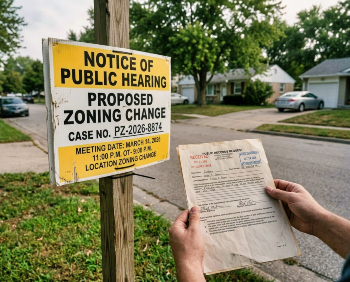
Local rules control almost everything about a zoning appeal. Every municipality runs its own process, and those procedures decide where you file, what you file, and how long you have. The single biggest reason appeals fail on procedural grounds is that the appellant relied on a neighboring town’s process, a blog post, or a form that was out of date.

Treat this step as a verification exercise, not a reading exercise. Your goal is a one-page jurisdiction sheet you can hand to a lawyer or read into the record if your timeliness is challenged.

Build the sheet in this order.

  1. Find the controlling ordinance. Search the municipal website for the zoning ordinance or land development code, then locate the article on appeals and the article on the board of adjustment or zoning board of appeals. Confirm you are reading the current version by checking the ordinance’s adoption date and any published supplement.
  2. Find the board’s own rules. Many boards adopt separate rules of procedure covering filing format, exhibit limits, speaking time, and whether written testimony is accepted. These rules can add requirements the ordinance does not mention.
  3. Find the official form. Download the notice of appeal or application form from the clerk’s or planning department’s page. If no form exists, note that in writing and confirm with the clerk what the office expects.
  4. Find the fee schedule. Locate the adopted fee schedule, not a news article about fees. Record the amount, the payment method, and whether the fee is refundable if the appeal is withdrawn.
  5. Confirm the appeal body and filing office. Determine whether the appeal goes to the zoning administrator, the board of adjustment, or a separate appeals board, and which office physically accepts the filing. Ask the clerk to confirm in writing which department stamps the filing date.

Then answer these questions in writing on your sheet:

  • Which body hears the appeal, and how many members must vote to grant relief?
  • Is the appeal filed with the zoning administrator or the board directly?
  • What must the notice of appeal contain, and does the form require the appellant’s signature to be notarized?
  • What is the exact filing deadline, and does it run from the decision date, the mailing date, or the date the written findings were filed?
  • Is there a separate deadline to order a transcript or submit the record?
  • What is the filing fee, and is there a fee waiver or hardship process?

Resolve conflicts deliberately. A common pattern is for the ordinance to set a 30-day deadline while the board’s rules describe a 20-day deadline for submitting exhibits. When documents conflict, follow the shorter deadline and note the conflict on your sheet. If the ordinance and the board’s rules genuinely contradict each other, ask the clerk or town attorney for a written interpretation before you rely on either.

Verify, don’t assume. Call the clerk’s office and ask three questions: which office accepts the filing, what the current fee is, and whether the form on the website is the current version. Write down the name of the person you spoke with and the date. That note is evidence of good-faith compliance if timeliness is later disputed.

A common mistake is assuming your city works like the next town over. It does not. Build a one-page cheat sheet for your jurisdiction, and keep every document you pull. That sheet becomes the backbone of your appeal procedure and the first exhibit in your record.

Watch out: a form downloaded from a third-party site or an old PDF can be missing a required certification, and filing an outdated form is treated as a defective filing even if it arrives on time.

How to Appeal an Unfair Zoning DecisonStep 4: Know the Statute of Limitations for Zoning Appeals in Your Jurisdiction

The statute of limitations for zoning appeals is short, and missing it ends your case before it starts. Deadlines vary widely by jurisdiction.

Procedural guidance compiled by James Howard (2025) typically requires filing a notice of appeal within 30 days of the original decision. Some jurisdictions allow more time. The New York Department of State’s guidelines for zoning board applicants note that some require filing within 60 days. Other regions give appellants up to 4 months.

Here is the part most guides get wrong: the clock usually starts on the date of the written decision, not the day you heard about it. If you are unsure, treat the earliest possible date as your deadline. Put it on a calendar with a two-week buffer.

Deadlines for filing a zoning appeal vary widely, so treat the earliest possible date as your deadline.

Deadline Note
30 days Typical window for notice of appeal filings
60 days Some jurisdictions require filing within this period
Up to 4 months Other regions give appellants this much time
Date of written decision When the clock usually starts
Two-week buffer Recommended calendar cushion before the deadline

Step 5: File the Notice of Appeal and Pay the Filing Fee

Your notice of appeal starts the clock for the board. File it with the correct office, on time, and with the filing fee paid.

Most notices require:

  • The name and address of the appellant
  • The property address and a description of the decision
  • The date of the decision being appealed
  • A short statement of the grounds
  • Your signature and contact details

Filing fees vary by municipality, so check your local fee schedule rather than guessing. Keep a time-stamped copy of everything you submit.

Watch out: filing with the wrong office is one of the most common reasons appeals get rejected on procedural grounds. Confirm in writing which department accepts the filing before you drive over.

Keep The Main Thing The Main Thing, The US ConstitutionStep 6: Build an Evidence-Based Appeal Record

Your appeal record is everything the reviewing body will consider. If a fact is not in the record, it does not exist for your case. That single rule should guide every document you gather, every exhibit you label, and every sentence you write.

The record has two parts: the administrative record created by the local decision-maker (the application, staff reports, hearing minutes, and written decision), and the appellant’s record you submit (your statement, exhibits, and any new evidence the board’s rules allow). Knowing which part you control is the difference between a complete record and a rejected filing.

Assemble the administrative record first.

  • Request the complete property file from the planning or zoning office, including the zoning application, site plan, staff report, and any written findings.
  • Obtain the meeting minutes and, if available, the audio or video recording or transcript of the public hearing. If the board’s rules require you to order a transcript by a set date, order it immediately.
  • Get the written decision and confirm the date it was filed or mailed, because that date often starts your appeal clock.

Then build your appellant’s record around these items:

Make a Difference Today →

  • The original zoning application and site plan, marked as exhibits.
  • The written decision and any findings, with the specific page and paragraph you are challenging highlighted.
  • Meeting minutes and the public hearing transcript, with page and line references.
  • Photos, surveys, and expert reports, each dated and tied to a specific fact.
  • Comparable-property evidence, such as permits or variances granted for similar sites, used to show inconsistent treatment.
  • Your written statement of the harm you face, stated in concrete terms rather than as a general objection.

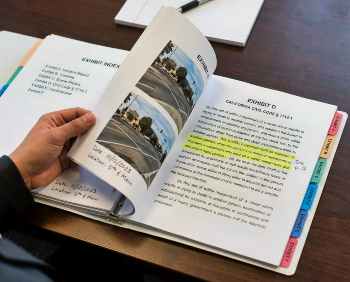
Index and authenticate everything. Number each exhibit (Exhibit A, B, C) and prepare an exhibit index that lists the exhibit number, a one-line description, the date, and the record page where it appears. For photographs, note the date taken, the location, and who took them. For expert reports, confirm the author’s qualifications and whether the author will testify. An unauthenticated document is easy for the board to disregard.

Follow the board’s submission rules exactly. Many boards limit the number of exhibits, require a specific page size, or set a deadline for written submissions that is earlier than the hearing. Confirm the format and the deadline in writing. If the rules allow new evidence at the hearing, bring extra copies; if they do not, do not surprise the board with documents it has not seen.

Prepare for opposing evidence. Before the hearing, identify the two or three facts the other side will rely on and write a short response to each, citing your exhibits. At the hearing, respond to opposing evidence by pointing to a specific exhibit and a specific code section, not by repeating your general objection.

The University of North Carolina School of Government explains that appeals of administrative development decisions made by staff go to the board of adjustment. That matters because it tells you which body reviews your record and what standard it applies, and whether the board is reviewing the staff’s record or building a new one.

A common mistake is dumping emotion into the file. Keep it factual and organized. Number your exhibits and reference them in your written argument, and keep a complete copy of everything you submit with the date and office that received it.

Watch out: if the board’s rules require you to submit the record or an exhibit list by a date before the hearing, missing that date can waive your right to rely on the evidence at all, even if you appear and testify.

How to Appeal an Unfair Zoning DecisonStep 7: Use a Zoning Appeal Letter Template Without Copying It Blindly

A zoning appeal letter template saves time, but a copied letter loses cases. Boards see the same borrowed language every month. Yours needs to fit your facts.

Use a template as a skeleton, then fill in specifics:

Dear [Board Name],

I am appealing the decision dated [date] regarding [property address], which [describe the decision]. I have standing because [specific harm to your property]. The decision should be reversed because [cite the ordinance or procedure at issue]. Supporting documents are attached as Exhibits A through [X].

Respectfully, [Name], [Address], [Phone], [Email]

Then strengthen it:

  • Replace every generic sentence with a specific fact.
  • Cite the exact section of the local zoning ordinance.
  • Attach your exhibits and reference each one by number.

The template gets you organized. Your facts win the case.

Step 8: Learn How to Prepare for a Zoning Board Hearing

Knowing how to prepare for a zoning board hearing separates a filed appeal from a winnable one. Preparation means three things: a clear argument, organized evidence, and people who show up.

Build your hearing plan:

  • Write a five-minute opening statement and practice it aloud.
  • Bring printed copies of every exhibit for each board member.
  • Line up witnesses who can speak to specific facts, not opinions.
  • Review the hearing notice so you know the format and time limits.

Support matters too. Neighbors who attend and speak add weight to your record. Consider d that support. Use this playbook to organize local liberty meetings and mobilize them.

Expect tough questions. Answer them directly and keep your testimony tied to the evidence you submitted.

Step 9: Decide Whether to Escalate to Judicial Review

Judicial review is the next step when the board rules against you. It means asking a court to examine the board’s decision, usually through a court petition filed within a strict deadline set by state law.

Before you escalate, weigh two things:

  • Did the board act arbitrarily or unlawfully, or did it simply disagree with you?
  • Is the harm worth the cost of a land-use attorney and a court fight?

Deadlines for judicial review are set by state law and vary. Confirm your deadline with a lawyer before doing anything else.

Step 10: Weigh the Risks, Costs, and Realistic Outcomes Before You Commit

Most zoning appeals do not end in a full reversal. A realistic outcome is often a remand, where the board reconsiders its decision, or a negotiated fix like a variance or exception. Plan for the middle ground, not just the win.

Weigh these before you commit:

  • Time: appeals can run months, and court review runs longer.
  • Cost: filing fees, expert reports, transcripts, and legal help add up.
  • Relationships: you will keep living or working near the people on the other side.
  • Record quality: a weak record limits every option after it.

The burden of proof sits with you. Courts give local boards wide deference, so build the strongest record you can and go in with clear eyes.


The system is designed to favor the board, and that is exactly why preparation matters. Texas Journal provides constitutional education and insight for citizens who want to understand the tools they hold to assert their rights. Visit the Texas Journal website to learn more and register.

Dave
Questions? Call!
940-353-1398

Frequently Asked Questions

How long do I have to file a zoning appeal after a decision is made?

Deadlines vary by jurisdiction and are strictly enforced. Many municipalities require a notice of appeal within 30 days of the original decision, while some jurisdictions allow up to 60 days. A few regions permit filings up to four months after the decision. Missing the deadline usually ends your right to appeal entirely, so confirm the exact window in your local zoning ordinance and file well before it closes.

What are the legal grounds for appealing a local zoning decision?

The strongest grounds for a zoning appeal are that the decision was arbitrary or unlawful, that the board misapplied its own ordinance, or that proper procedure was not followed. Courts generally apply the rational basis test, meaning they will uphold a decision if it has any reasonable justification. You must show zoning-related harm specific to your property, not just general disagreement with the outcome.

Do I need an attorney to file a zoning appeal, or can I represent myself?

You can file a zoning appeal and present your case without an attorney in most jurisdictions, and many boards routinely hear from self-represented property owners. That said, a land-use attorney can help you build a stronger appeal record, avoid procedural mistakes, and prepare for cross-examination at the hearing. For a straightforward administrative appeal, self-representation is realistic; for judicial review, legal representation is strongly advised.

What is the difference between a zoning variance and a zoning appeal?

A variance asks the zoning board for permission to deviate from a specific requirement of the local zoning ordinance, such as a setback or height limit. An appeal challenges the correctness of a decision already made, such as a permit denial or the zoning administrator’s interpretation. Variances require a showing of hardship; appeals require showing the decision was wrong or improperly applied.

the zoning administrator’s interpretation

Is Constitutional Education Worth It? A Practical Review

Last Updated: November 2, 2026

Quick Summary

Constitutional education is worth it for most citizens, as long as it is practical rather than ceremonial. It delivers rights awareness and confident action, though it is not legal advice and does not guarantee outcomes. Knowledge is a tool, not a result.

  • A study found no evidence that constitutional protection alone improves educational outcomes.
  • Self-directed reading costs $0 to $150 and takes 20 to 40 hours to reach a working level.
  • Law school takes three years plus bar preparation and is the wrong path for simple civic literacy.
  • A $40 book and 30 hours can get you most of the way to understanding your rights.
  • The useful skill is question-asking, learnable in weeks rather than years.

Table of Contents

Is a Constitutional Education Worth It?Constitutional Education, Weighed Honestly

Is constitutional education worth it? For most citizens, yes, with one clear condition: it has to be practical, not ceremonial. Readers who study the founding document often move from vague frustration about government overreach to specific, confident action. That shift is the real return on the investment.

Here is the honest version most guides skip. Knowing the Constitution will not, by itself, change a policy or win a case. A study of constitutional protections and education found no evidence that constitutional protection alone improves educational outcomes, a result the authors described as holding across estimation techniques and specifications (study on constitutional rights and education). Knowledge is a tool, not a result. What you do with it determines its value.

Below, we break down what constitutional education actually delivers, where it falls short, how the options compare, and how to choose a path without wasting months. The stakes are concrete: rights you cannot name are rights you cannot assert.

What Constitutional Education Actually Delivers

Constitutional education is the structured study of the founding document, its history, and the principles that limit government power. The practical payoff is rights awareness: the ability to recognize when due process, free speech, or state authority is being tested, and to respond with the right words at the right moment.

Knowledge That Holds Up Outside the Classroom

The most important benefit is transfer. A citizen who understands separation of powers reads a news story differently than one who does not. They spot the difference between a federal agency acting within its authority and one reaching past it. They know the rule of law is a structure, not a slogan.

That knowledge compounds. Start with the text itself, then the historical context, then how courts have interpreted it. Readers who want to go further can use our guide on how to assert constitutional rights once the basics are in place.

Where the Benefits Stop

Education is not legal advice, and it is not a substitute for a lawyer. It also does not guarantee outcomes. A well-informed citizen can still lose a fight with a local board or an agency. What education changes is your position: you argue from the text instead of from frustration.

Watch out: treating a weekend seminar as expertise is the fastest way to damage your own credibility in a public meeting. Know what you know, and say so.

Invoke the Tenth Amendment to Restrict Federal OverreachThe Importance of Teaching the Constitution in Schools

Teaching the Constitution in schools matters because civic literacy is learned, not inherited. Students who study the founding document, its debates, and its amendments leave with a working vocabulary for citizenship. That vocabulary is what public participation runs on later in life.

The evidence here is suggestive rather than definitive. CivXNow reports that respondents who said they took a high-school civics class focused on the Constitution were more likely to answer survey questions correctly (CivXNow survey findings on civic learning). The publication date is not stated, so treat it as directional. A case study of high school students in the Marshall-Brennan Constitutional Literacy program examined civic literacy in a specific chapter but did not report a measurable outcome (Marshall-Brennan case study).

What schools get wrong is sequencing. Too many curricula start with court cases and never ground students in the text. Start with the document, then the debates, then the cases. Students who read Article I before Marbury understand both better.

Constitutional Rights Education for Citizens: What It Covers

Constitutional rights education for citizens covers four working areas: the text of the Constitution and Bill of Rights, the structure of government, the historical debates behind each clause, and the practical skills for asserting rights in real encounters. It is designed for adults who want to use the document, not just admire it.

A typical program of study includes:

  • Individual rights: speech, assembly, religion, bearing arms, and the limits on each
  • Due process: procedural and substantive, and how they differ in practice
  • Federalism: what the federal government can do and what states retain
  • Checks and balances: how each branch constrains the others, and where that breaks down
  • Practical assertion: what to say, what to document, and when to call a lawyer

The practical piece is where most courses stop short. Knowing the Fourth Amendment exists is not the same as knowing how to handle a police encounter without escalating it. Our guide on knowing your rights during police encounters covers that ground in detail.

The other limit: education cannot replace counsel. If a dispute is live and the stakes are real, a licensed attorney in your jurisdiction is not optional.

Comparing Your Constitutional Education Options

The right option depends on your goal, your time, and how much structure you need. Most guides list the options and stop. This one compares them on the three things that decide whether the study pays off: what it costs, how long it takes, and what you can actually do when you finish.

Option Typical cost Time to a working level Best for What it will not do
Self-directed reading $0-$150 in books and primary sources 20-40 hours Independent learners No feedback, no structure; most people quit without a syllabus
K-12 civics Covered by public school; $0 to families One semester to one year Students and parents Varies widely by district and state standards
Free institutional resources $0 10-30 hours per course Teachers and students General civic literacy, not action-focused
Community and movement platforms $0-$50 per month Weeks to months Citizens ready to act Requires commitment and local follow-through
Law school Tens of thousands per year in tuition, plus living costs Three years plus bar preparation Aspiring attorneys Not a shortcut to civic literacy

Is a Constitutional Education Worth It?Self-directed reading is the cheapest and most flexible path. Primary sources such as the Constitution and the Federalist Papers are widely available, many at no cost. The trade-off is that you have to build your own syllabus, and most people quit before they do. A curated reading list helps; our roundup of books on American founding principles is a reasonable starting point. A realistic goal is a sustained, focused study period to reach a working level: the text itself, the amendments, and the major interpretive debates.

School and K-12 civics is the path most citizens already took. Cost to families is zero in public schools, but the depth varies enormously by district and state. A student in one state may get a full year of civics; a student in another may get a few weeks folded into history. Parents who want to check what their district actually requires should read the state social studies standards, not the course catalog.

Free institutional resources serve schools well. Free institutional resources such as those from the National Constitution Center can serve teachers well. It is less suited to an adult who wants to assert rights next month, because the material is built for classroom pacing rather than immediate application.

Community platforms fill the gap between reading and action. Texas Journal publishes guides on asserting rights, organizing at the state level, and pressing back on federal overreach. The Patriot Pool offers readers a way to act alongside others.

Law school is the deepest option and the most expensive in time and money. We cover it next.

Make a Difference Today →

Watch out: comparing options by price alone hides the real cost. A free course you never finish is worth less than a $40 book you read twice and use at a school board meeting.

Stop Asking Permission.What You Should Be Able to Do After Each Path

A fair test of any option is what a learner can do afterward. After a solid self-directed or community program, you should be able to name the clause that governs a dispute, explain the difference between federal and state authority, and locate the authoritative text and case law yourself. After a K-12 civics sequence, a student should be able to describe the structure of government and the Bill of Rights in plain language. After law school, a graduate should be able to read a case, brief it, and argue both sides of an interpretive question. If a program cannot tell you what its graduates can do, that is a signal about its depth.

Constitutional Law Degree Career Options and What They Cost

A constitutional law degree leads to careers in litigation, public interest law, government service, academia, and policy work. It is also the longest and most expensive path on this list, and it is the wrong choice for someone who simply wants to understand their rights.

Constitutional law programs are often compared in published rankings. U.S. News constitutional law program rankings describe the field as the interpretation and implementation of the Constitution. Prospective students should treat rankings as a starting filter, not a decision. Tuition, location, and career placement matter more.

The honest cost assessment:

  • Time: three years of full-time study, plus bar preparation, which most graduates treat as a full-time job for two to three months after graduation
  • Money: tuition varies enormously by school and residency; public in-state programs commonly cost far less than private ones, and living costs add substantially on top. Check each program’s published cost of attendance directly rather than relying on a single national figure.
  • Opportunity cost: three years of forgone income and career progression, which for many students exceeds the tuition itself

The career payoff is real for people who want to practice law. Constitutional law is not a standalone practice area for most lawyers; it shows up in litigation, appellate work, civil rights and civil liberties organizations, state attorneys general offices, and policy shops. A graduate who wants to argue constitutional cases should expect to build litigation experience first, often through clerkships or public-interest fellowships, before handling appellate work.

For citizens who want civic literacy, a law degree is a sledgehammer for a nail. Most readers get further, faster, with structured self-study and a community. The test is simple: if your goal is to understand and assert your rights, a $40 book and 30 hours will get you most of the way. If your goal is to represent others in court, you need the degree and the license.

Watch out: the most common mistake is enrolling in law school to learn the Constitution. You can learn the document without the degree; the degree is for practicing law, and the debt is real.

How Constitutional Education Varies by Age, School, and State

Constitutional education varies far more than most people expect. A student in one state may graduate with a full year of civics; a student in another may get a few weeks folded into history. State standards, district curriculum, and teacher preparation all shape what lands in the classroom.

Age changes the method, not the substance. Younger students learn the structure of government through stories and simple debates. High school students can handle primary sources and landmark cases. Adults need the practical layer: how to use the document in a meeting, a school board hearing, or an encounter with an agency.

School type matters too. Public, private, charter, and homeschool settings each sequence the material differently, and homeschool families often have the most flexibility to go deep on founding principles.

The jurisdictional piece is the one most guides ignore. What your state government can do, and what your local board can do, depends on state constitutions as well as the federal one. Readers who want to act locally should study their own state’s text alongside the federal document. Education that stops at the federal level leaves half the field unexamined.

Is a Constitutional Education Worth It?Common Bad Advice About Constitutional Study

The worst advice about constitutional study is that you need a law degree to understand the document. You do not. The text is short, the debates are published, and the case law is accessible. What you need is a method.

Other advice worth discarding:

  • “Just read the Federalist Papers, and you’re done.” Useful, but incomplete without the amendments and the interpretive debates.
  • “Only originalism counts.” Interpretive methodology is contested. Learn the major approaches and why each argues the way it does.
  • “One course and you’re an expert.” Constitutional interpretation is a discipline, not a certificate.
  • “Education is the same as legal advice.” It is not, and acting as if it is can cost you.

What most guides miss is that the useful skill is question-asking. A citizen who can ask “under what authority?” and “which clause?” is already ahead of most public comment. That habit is learnable in weeks, not years.

Join the Movement Defending Founding Principles

The gap between knowing your rights and using them is where most citizens stall. Closing it takes more than reading. It takes a community that shares information, organizes at the state level, and shows up consistently.

That is the work Texas Journal exists to support. We give readers critical insight on constitutional law and policy, practical guidance on asserting rights, and a place to act alongside others through the Patriot Pool. If you are ready to go beyond theory, Protect Our Traditions and Defend the American Family are where that commitment starts. Begin with our states’ rights instruction to learn how to assert Tenth Amendment rights where you live.

Dave
Questions? Call!
940-353-1398

Keep The Main Thing The Main Thing, The US Constitution

Frequently Asked Questions

What can I do with a degree in constitutional law?

A constitutional law focus opens several paths: litigation and appellate practice, public-interest and civil-liberties work, government counsel roles, judicial clerkships, policy analysis, and legal academia. Many graduates also teach or write on constitutional interpretation. Published rankings can help prospective students compare schools. The degree itself does not guarantee a constitutional practice; most attorneys build expertise through clerkships, casework, and continued study of judicial interpretation and legal methodology.

Do schools still teach the Constitution?

Most states require some civics or government coursework in high school, and the Constitution usually appears in it. Depth varies widely by district and state. Schools that want structured material can use free institutional resources, such as those from the National Constitution Center.

Can learning about the Constitution help you understand your rights?

Yes, within limits. Constitutional rights education teaches the text of the Bill of Rights, the structure of federal and state power, and concepts like due process and separation of powers. That knowledge helps citizens recognize when government action may exceed authority and how to raise the issue. It does not replace a lawyer. Education tells you what the rules are; legal advice tells you how they apply to your specific facts.

Is constitutional law a hard class?

It is demanding. Constitutional law courses require close reading of opinions, comfort with interpretive methodology, and the ability to argue both sides of a question. Students who succeed usually treat it as a reading-intensive course rather than a memorization one. The difficulty is part of the value: the analytical habits you build carry into other legal work and into reading constitutional debate as a citizen.

How much constitutional education do students receive in school?

It varies by state and district. Some states require a standalone civics course with a constitutional unit; others fold it into a broader government class. That inconsistency is why the importance of teaching the Constitution in schools keeps coming up in policy debates. Parents who want more can supplement with free resources from the National Constitution Center or read primary sources directly.


The challenge is not information. It is follow-through. Most people learn enough to be frustrated and stop there. Texas Journal is built for the next step: clear guidance on the abilities the Constitution gives you, a focus on states’ rights as the practical lever, and the Patriot Pool as a force multiplier when one voice is not enough. Get started with Texas Journal and turn constitutional knowledge into action where you live.

Know Your Rights During Police Encounters

Last Updated: November 1, 2026

Quick Summary

Knowing your rights during police encounters in Texas starts with identifying the three levels of contact: voluntary encounters you may end, temporary detentions requiring reasonable suspicion, and arrests requiring probable cause. You can invoke your right to remain silent and refuse consent to searches by stating it clearly.

  • Ask “Am I being detained, or am I free to go?” to clarify whether you can leave.
  • Say “I am exercising my right to remain silent” plainly, then stop talking.
  • Refuse searches with “I do not consent to this search” and never physically interfere.
  • Drivers must show license, registration, and insurance; passengers generally need not.
  • You generally may record officers performing public duties in public spaces.

Table of Contents

Know your rights during police encounters.Why Knowing Your Rights During Police Encounters Matters in Texas

Most people learn the rules of a police encounter in the worst possible way: in the moment, with their heart pounding, guessing at what they are and are not allowed to do.

The stakes are not abstract. A single consent given in a moment of nerves can turn a routine traffic stop into a vehicle search. A volunteered answer can become evidence. Knowing your rights is not about hostility toward law enforcement.

Below, we walk through the three levels of police contact, what reasonable suspicion and probable cause actually mean, how to invoke your right to remain silent out loud, and what to do after a stop goes wrong. The core argument running through every section is simple: the law protects people who assert their rights clearly and calmly, and it offers very little to people who stay silent and hope for the best.

Voluntary Encounter vs. Detention: How to Tell the Difference

A voluntary encounter is a consensual conversation with an officer that you can end at any time; a detention is a stop you are not free to leave, and it requires the officer to have reasonable suspicion of criminal activity. The distinction matters because your legal obligations change dramatically between the two. In a voluntary encounter, you can walk away. In a detention, walking away can escalate into an arrest.

The Three Levels of Police Contact

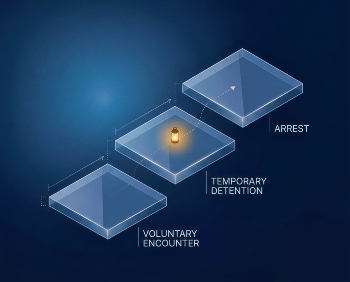
Courts recognize three basic levels of police contact, each with its own legal standard.

  1. Voluntary encounter. The officer approaches and talks to you without showing authority or restricting your movement. You may decline to answer and leave.
  2. Temporary detention. The officer has reasonable suspicion that you are involved in criminal activity and briefly restricts your movement to investigate. This is the classic traffic stop or street stop.
  3. Arrest. The officer has probable cause to believe you committed an offense, and you are taken into custody. An arrest triggers the full weight of constitutional protections, including Miranda.

A common mistake is assuming that any interaction with an officer is automatically a detention. It is not. Many encounters begin as voluntary and only become detentions when the officer’s words or actions would make a reasonable person feel they could not leave.

How to Tell Whether You Are Free to Leave

The legal test is whether a reasonable person in your position would feel free to leave.

In practice, you can simply ask. A polite “Officer, am I being detained, or am I free to go?” forces the issue onto the record. If the answer is that you are free to go, you can end the encounter.

Courts recognize three levels of police contact, each with its own legal standard and your obligations.

Level of contact Legal standard Your position
Voluntary encounter No show of authority, no restriction on movement May decline to answer and leave
Temporary detention Reasonable suspicion of criminal activity Movement briefly restricted to investigate
Arrest Probable cause to believe you committed an offense Taken into custody; Miranda applies

Invoke the Tenth Amendment to Restrict Federal OverreachWhat Reasonable Suspicion and Probable Cause Actually Mean

Reasonable suspicion must rest on specific facts the officer can point to, such as a traffic violation, a matching description, or observed behavior. A gut feeling or a person’s presence in a high-crime area, standing alone, generally does not meet the bar.

The deeper context here is constitutional limits on government power, and understanding those limits is what makes the standards useful in a live encounter.

The Right to Remain Silent During Police Questioning

The right to remain silent during police questioning is protected by the Fifth Amendment and applies to any statement that could be used against you; you invoke it by saying so clearly and then stopping. Silence alone is not enough. Courts generally expect a clear, unambiguous statement that you are invoking the right.

You do not have to answer questions about where you are going, what you have been doing, or whether you have been drinking. You do not have to explain yourself.

How to Assert the Right to Remain Silent Out Loud

Say it in plain words. “I am exercising my right to remain silent.” Then stop talking. For a practical walkthrough of how to actually assert constitutional rights out loud, see How to Assert Constitutional Rights: A Practical Guide. Don’t fill the silence with nervous conversation, and don’t argue the point. A common mistake is announcing the right and then continuing to answer questions anyway, which can undercut the invocation.

Miranda Rights, Custodial Interrogation, and the Right to an Attorney

Custodial interrogation means questioning by law enforcement after a person has been taken into custody or otherwise deprived of freedom in a significant way. Once that line is crossed, the warnings must come before questioning.

You can invoke the right to counsel the same way you invoke silence: clearly and directly. “I want to speak with an attorney.” Then stop. Do not explain why, do not negotiate, and do not keep answering questions while you wait.

What to Do When Pulled Over in Texas

Reaching for your documents before the officer arrives can look like reaching for something else. Wait, keep your hands where they can be seen, and tell the officer where your license and registration are before you move to get them.

Documents, Passengers, and the Questions an Officer Will Ask

Have your driver’s license, registration, and proof of insurance ready when asked. Passengers generally have no obligation to produce identification, though the driver must. The officer will likely ask whether you know why you were stopped, where you are headed, and whether you have been drinking.

Watch out: arguing about the reason for the stop at the roadside rarely helps and can turn a citation into a more serious charge. Contest the stop later, in court, with a lawyer.

Police may search your vehicle, phone, home, or belongings if they have a warrant, if a recognized exception to the warrant requirement applies, or if you consent; you can refuse consent, and saying “I do not consent to this search” preserves your objection. Consent must be voluntary, and refusing it is not an admission of guilt. The scenarios below are where the abstract rules become useful.

Vehicles

A vehicle stop is the most common search scenario and the one with the most exceptions.

When asked, say: “I do not consent to a search of my vehicle.” Then stay in or near the vehicle, keep your hands visible, and do not physically block the officer. If the officer searches anyway, note what was said and by whom; that record matters later.

Phones

A phone is not a car. Courts have generally required a warrant before officers search a cell phone’s digital contents, even incident to arrest. Do not unlock the phone, do not hand it over voluntarily, and do not consent to a “quick look.” If an officer asks for the passcode, you can decline. Say: “I do not consent to a search of my phone, and I will not provide the passcode.” Some legal questions about compelled biometric unlocks remain unsettled, so the safest course is not to volunteer either the code or your fingerprint.

Homes

The home carries the strongest protection. A warrant is the default, and the exceptions are narrow: consent, exigent circumstances, hot pursuit, and a few others. If officers knock, you are not required to open the door, though you should speak through it and ask whether they have a warrant. If they say they have one, ask them to slide it under the door or hold it up so you can read it.

Personal Belongings

A pat-down for weapons during a lawful stop is permitted if the officer has reasonable suspicion that you are armed. A full search of your pockets, bag, or backpack requires more: consent, arrest, or a warrant. If asked to empty your pockets, you can decline and say: “I do not consent to a search of my belongings.” Do not physically resist if the officer proceeds; the remedy is a motion to suppress later.

Make a Difference Today →

Refusing consent does not stop a search that is otherwise lawful. It preserves your objection and forces the government to justify the search under a warrant or a recognized exception. That is why the phrase matters: it shifts the burden onto the officer’s legal theory and creates a record for a suppression motion.

Pro TipSay the words out loud and clearly: “I do not consent to this search.” Then stop talking. Do not argue, do not explain, and do not physically interfere. The goal is a clean record, not a roadside debate.

When asked for consent, answer clearly: “I do not consent to a search.” Then stay calm and do not physically interfere. If the officer searches anyway, the remedy is a legal challenge later, not resistance at the scene.

Texas Identification Rules: When You Must Identify Yourself

Texas identification rules turn on who you are and why the officer is asking: a driver must produce a license on request, a passenger generally need not, a pedestrian not under arrest can usually decline, and a person lawfully arrested or detained on suspicion of a crime can be required to give their name under the state’s failure-to-identify statute. Most guides collapse these into one rule and get people into trouble. The distinctions below are the ones that actually decide encounters.

If You Are Driving

Texas law generally requires a driver to have a driver’s license available and to display it when demanded by a peace officer. Hand over the license, registration, and proof of insurance when asked. Refusing to identify as a driver is itself an offense and gives the officer an independent basis to extend the stop.

If You Are a Passenger

A passenger is not operating the vehicle, so the driver’s license statute does not apply. Texas has no general “stop and identify” law that compels a passenger to produce identification during a routine traffic stop. The passenger can politely decline to answer questions and can ask whether they are free to leave. In practice, officers sometimes ask passengers for ID anyway; a calm “I don’t have identification to provide, and I’m not answering questions” is generally sufficient, though the officer may still order the passenger out of the vehicle under controlling case law for officer safety.

If You Are on Foot and Not Detained

A pedestrian in a voluntary encounter has no obligation to identify themselves. You can ask, “Am I being detained, or am I free to go?” and, if free to go, walk away. Do not physically resist if the officer indicates you are being detained; the remedy for an unlawful detention is a later legal challenge, not a scene at the curb.

If You Are Lawfully Arrested or Detained on Suspicion

Texas has a failure-to-identify rule that can apply when a person has been lawfully arrested or lawfully detained on suspicion of involvement in a crime. In those situations, giving a false name or false information can create a separate legal problem, so check the current statute and consult an attorney before relying on any specific rule.

The key word is lawfully. If the detention itself is unlawful, Section 38.02 does not apply, but that is a question for a court, not for the roadside.

Watch OutDo not give a false name or false date of birth to end an encounter faster. In Texas that converts a possible identification issue into a separate criminal charge that is far harder to defend than the original stop.

The Practical Script

  • Driver: Hand over license, registration, and insurance. Then: “I’m not answering questions beyond my documents.”
  • Passenger: “I don’t have identification to provide, and I’m not answering questions. Am I free to leave?”
  • Pedestrian, voluntary encounter: “Am I being detained, or am I free to go?”
  • Detained or arrested: Give name, address, and date of birth. Then: “I am exercising my right to remain silent, and I want to speak with an attorney.”

Some encounters involve statutes that require identification in specific situations, so check current Texas law for your circumstances.

Know your rights during police encounters.Recording Police and Preserving Evidence

You generally have the right to record police officers performing public duties in public spaces, and recording is one of the most effective ways to preserve evidence of what actually happened during an encounter. Keep your hands visible, narrate what you are doing, and do not let the phone become a reason for escalation.

Preservation matters as much as capture. Back up the footage immediately, note the date, time, and location, and write down the officers’ names and badge numbers if you can see them. If there are witnesses, get their contact information. Memory fades, and files get lost, so secure the record the same day.

Police Encounters Involving Minors, Disability, Language Barriers, and Immigration Concerns

Minors, people with disabilities, people with limited English proficiency, and non-citizens face the same core rules but often need additional accommodations, and the way an encounter unfolds can depend heavily on whether those needs are communicated clearly. A parent should teach a child early that they can ask for a parent and can decline to answer questions.

For people with disabilities, the Americans with Disabilities Act and related guidance support reasonable accommodations during interactions with law enforcement, and stating a need clearly can change the encounter. For people with limited English, requesting an interpreter is reasonable.

What Happens During an Arrest and What to Do

During an arrest, an officer takes you into custody based on probable cause, may handcuff and search you incident to the arrest, and must give Miranda warnings before any custodial interrogation; your job is to stay calm, keep your hands visible, and say nothing beyond invoking your rights. Do not resist, even if you believe the arrest is wrong.

Ask for a lawyer. State that you are invoking your right to remain silent. You will be booked, and you may be given the chance to make a phone call. Use it to reach counsel or a trusted contact, not to discuss the facts of the case.

What to Do After Misconduct or an Unlawful Stop

After alleged misconduct or an unlawful stop, document everything, preserve evidence, file a complaint through the department’s process, and consult a civil rights attorney about whether a federal civil rights claim is available. Write down what happened while it is fresh, including names, badge numbers, time, location, and exact words.

A federal civil rights claim under Section 1983 is the primary route for holding government actors accountable for constitutional violations. Readers who believe their stop was unlawful can find constitutional rights defense strategies against government overreach.

Where Texas Journal Fits in Your Rights Education

Rights you cannot articulate in the moment are rights you will not use. That is the gap Texas Journal exists to close. We publish constitutional education built for citizens who want to understand the limits on government power and hold them, not just read about them after the fact.

Our focus on states’ rights and founding principles is deliberate, and we aim to help citizens understand and assert their constitutional rights. If you want to go deeper, the Patriot Pool membership is where our community organizes, and Personal Sovereignty Is Non-Negotiable is the principle that anchors everything we teach.

Dave
Questions?  Call!
940-353-1398

Keep The Main Thing The Main Thing, The US Constitution

Frequently Asked Questions

What are my rights during a police encounter in Texas?

You have the right to remain silent, the right to refuse consent to a search, and the right to an attorney if you are in custody. You must provide your name and, during a traffic stop, your driver’s license, registration, and proof of insurance. You can ask whether you are free to leave, and if they say yes, you can end the encounter. Stay polite, keep your hands visible, and state your objections out loud so they are recorded.

How can I tell whether a police encounter is voluntary or a detention?

In a voluntary encounter, you can leave, and the officer has no legal authority to detain you. A detention begins when a reasonable person would not feel free to leave, usually because the officer blocks your path, orders you to stop, or takes your documents. Ask directly: Am I free to leave? If the officer says yes, you may walk away. If not, you are being detained, and the reasonable suspicion standard applies.

Do I have to answer a police officer’s questions?

No. Outside of identifying yourself when lawfully detained, you are not required to answer questions. You can say, I am exercising my right to remain silent. In Texas, you must give your name if you are lawfully arrested, and during a traffic stop, you must provide your license, registration, and proof of insurance. Beyond those requirements, declining to answer is not a crime and cannot be treated as one.

Can police search my car or belongings without my consent?

Police can search your vehicle without consent only if they have probable cause, a warrant, or a valid exception such as a search incident to arrest or an inventory search. Otherwise, they need your voluntary consent, and you can refuse. Say clearly, I do not consent to this search. Refusing consent is not an admission of guilt. If officers search anyway, do not physically resist; note the details and raise the issue later with an attorney.

What should I do if I am pulled over in Texas?

Pull over safely, turn off the engine, keep your hands on the steering wheel, and wait. Reach for your license, registration, and proof of insurance only after telling the officer where they are. You must provide those documents. You do not have to answer questions about where you are going or whether you have been drinking. You can decline a search request. Signing a citation is not an admission of guilt; it is a promise to appear.

Can I record police officers in public?

Yes. Under the First Amendment, you can record police officers performing public duties in public spaces. Texas law does not prohibit recording on-duty officers in public. Keep a safe distance, do not interfere with the stop, and do not block the officer’s movement. If an officer orders you to stop recording, state that you are recording and ask whether you are being detained. Preserve the original file and back it up before sharing.


The gap between knowing your rights and using them is usually a few well-practiced sentences. Texas Journal gives you the constitutional grounding to close that gap, with clear guidance on asserting your rights, understanding states’ rights, and joining a community that treats the Constitution as a tool rather than a museum piece. Get started with Texas Journal and turn what you know about your rights into something you can actually use.

9 Steps to Research International Treaty Impacts

Last Updated: October 31, 2026

Quick Summary

To research treaty impacts, start with the official treaty text and citation, then confirm status, parties, and reservations in international treaty databases. Separate legal effect from practical impact, trace domestic implementation, and score outcomes across policy, economic, social, environmental, and human rights dimensions using sourced indicators.

  • A 2022 PNAS review of 224 quantitative impact evaluations found treaties mostly failed to produce intended effects.
  • A usable treaty citation needs the official title, adoption date, treaty series number, and exact article.
  • Score each dimension from -2 to +2 and write the scoring rule before you score.
  • Rank evidence as strong, moderate, or weak, and never treat one favorable study as consensus.
  • Choose a comparison design, such as ratifier vs. non-ratifier, before you choose countries.

Table of Contents

Steps to Research International TreatiesWhy Most Treaty Research Stops Too Early

Most people researching how to research international treaty impacts stop at the signature. They find the text, confirm it was ratified, and call it done. That is a mistake.

A systematic review in the Proceedings of the National Academy of Sciences (2022) examined 224 quantitative impact evaluations drawn from 24,096 records across 11 databases. Its finding was blunt: international treaties have mostly failed to produce their intended effects, with exceptions for trade and financial law.

So the text tells you what was promised. The impact is a separate question. Treaty research is an evidence problem, not a filing exercise. Below, we walk through the steps that take you from an official text to a defensible verdict on real-world impact.

Step 1: Locate the Official Treaty Text and Citation

Start with the official text, not a summary. Secondary sources paraphrase, and paraphrased treaty language quickly loses legal meaning.

Where the Official Text Lives

The United Nations Treaty Collection is the depository for more than 600 multilateral treaties. For U.S. agreements, the Department of State’s Treaties in Force lists treaties and agreements on record as of January 1, 2026.

Building a Treaty Citation You Can Verify

A usable treaty citation needs four parts:

  • Full official title
  • Date of adoption
  • Treaty series or registration number
  • The exact article or paragraph you rely on

Write the citation before you read further. If you cannot build it, you do not have the right document.

Step 2: Use International Treaty Databases to Confirm the Record

International treaty databases confirm what the text alone cannot: whether the record matches the document in your hand. Cross-check the title, adoption date, and registration number against a second database. Discrepancies usually mean you pulled a draft, a protocol, or a superseded version.

Log every database you check and the date you checked it. Treaty records change. A status you confirm today may differ next quarter.

Keep The Main Thing The Main Thing, The US ConstitutionStep 3: Learn How to Find Treaty Status, Parties, and Reservations

Knowing how to find treaty status means answering three questions: Is it in force? Who is bound? What did they exclude?

Treaty status is the formal state of an agreement: signed, ratified, acceded to, or in force. Entry into force is the date the obligations became binding. Signature alone creates no binding duty in most cases.

Reading Reservations, Declarations, and Amendments

A reservation is a formal carve-out. A state party can accept a treaty while rejecting specific provisions. Skip this step, and you will attribute obligations a country never accepted.

Build a short table for every treaty you assess:

  • Party name
  • Signature date
  • Ratification or accession date
  • Reservations and declarations
  • Amendment or protocol status

Legal effect and practical impact are different questions. Legal effect asks whether the treaty binds a party under international law. Practical impact asks whether behavior changed.

A treaty can carry full force and effect and still produce nothing measurable. The PNAS synthesis found exactly that pattern across most policy domains it reviewed.

So split your notes into two columns. Left column: obligations, rights, and enforcement mechanisms. Right column: observable outcomes. Never let the left column stand in for the right one.

Step 5: Conduct Treaty Implementation Research on Domestic Law

Treaty implementation research traces how an international obligation becomes domestic law. In the U.S., treaties are not self-executing by default. Implementing legislation often does the real work.

Check these sources for each party:

  • Federal statutes and regulations citing the treaty
  • Court decisions interpreting it
  • Agency guidance and enforcement actions
  • Congressional or parliamentary records

If you find no implementing legislation, say so plainly. That absence is a finding, not a gap in your research.

Steps to Research International TreatiesStep 6: Build a Treaty Impact Assessment Across Five Dimensions

A treaty impact assessment scores outcomes across five dimensions rather than one. Single-metric assessments miss trade-offs: a treaty can lift trade flows while weakening environmental standards. The unique angle here is that most treaty research stops at legal effect; this step converts obligations into measurable outcomes and names who is affected.

Start With Affected Groups, Not Scores

Before you assign a single number, list who the treaty is supposed to affect. A common pattern is to sort them into four buckets:

  • Direct regulated parties: importers, exporters, licensed professionals, facility operators
  • Beneficiaries: workers, consumers, patients, protected groups
  • Intermediaries: customs brokers, compliance officers, courts, agencies
  • Third parties: competitors, downstream industries, subnational governments

If you cannot name a group the treaty touches, you probably have not read the operative articles closely enough. Write the group next to the article that reaches it.

Convert Each Obligation Into an Indicator

An indicator is the observable thing you would measure if the treaty were working. Build one row per obligation:

Dimension Example obligation Candidate indicator Likely data source
Policy Adopt implementing regulations Count of regulations citing the treaty; agency budget lines Federal Register, agency budget documents
Economic Reduce tariffs or barriers Trade flows in covered sectors; compliance cost estimates Census trade data, industry filings
Social Protect labor or public health Inspection counts, injury rates, coverage rates Bureau of Labor Statistics, CDC, state agencies
Environmental Limit emissions or resource use Emissions inventories, permit counts, enforcement actions EPA data, state environmental agencies
Human rights Establish monitoring or accountability Complaint filings, monitoring reports, court decisions Agency reports, court dockets, NGO documentation

Treat the table as a hypothesis, not a verdict. The indicator tells you where to look; it does not tell you whether the treaty caused the change.

Score With a Defensible Rule

Score each dimension from -2 to +2, but write the rule before you score:

Make a Difference Today →

  • +2: indicator moved in the intended direction, and a credible counterfactual supports attribution
  • +1: indicator moved in the intended direction, attribution plausible but not established
  • 0: no measurable movement, or movement indistinguishable from background trends
  • -1: indicator moved against the treaty’s objective, attribution plausible
  • -2: indicator moved against the objective with strong attribution evidence

Record the indicator, the time window, and the data source next to every score. A score without a source is an opinion.

Watch for Trade-Offs and Distributional Effects

The five-dimension structure exists to surface trade-offs. A treaty that raises trade flows may concentrate gains in one region or sector while imposing costs on another. Note distributional effects explicitly: who gained, who lost, and whether the treaty text anticipated the shift. That is the difference between an impact assessment and a press release.

For a worked example of scoring real economic outcomes, see our review of America First economic policy impacts. It shows how to structure dimensions before you assign scores.

Step 7: Weigh the Evidence and Its Quality

Not all treaty evidence deserves equal weight. Rank each source before you cite it:

  • Strong: peer-reviewed quantitative evaluations, official government data
  • Moderate: OECD-style econometric studies, such as its gravity-model analysis of cross-border data agreements and trade flows
  • Weak: advocacy reports, press releases, anecdotal claims

The 2015 assessment of global health treaties reviewed 90 quantitative evaluations of existing treaties. That scale matters. One study is an anecdote; ninety is a base rate.

Watch out: the most common error here is treating a single favorable study as settled consensus. Weight by count, method, and independence.

Steps to Research International TreatiesStep 8: Compare Outcomes Across Countries

Comparison is where treaty impacts become visible, and where sloppy method produces false conclusions. The goal is a country-by-country comparison that holds everything constant except the treaty variable you are testing. Most guides skip this; the method below is the part competitors leave out.

Choose a Comparison Design Before You Choose Countries

Pick the design first, then the countries that fit it:

  • Ratifier vs. non-ratifier: compare a party against a similarly situated non-party. Strongest when the two countries share income level, legal tradition, and trade profile.
  • Ratifier with reservations vs. ratifier without: isolates the effect of the specific provision carved out.
  • Early ratifier vs. late ratifier: uses the entry-into-force date as a natural break point.
  • Within-country before/after: compares the same country across the treaty’s entry into force, ideally with a control sector the treaty does not cover.

Write down which design you are using. A comparison without a stated design is a list of countries.

Hold These Variables Constant

For every country in the comparison, record the same fields:

  • Income level and sector composition
  • Legal tradition and treaty ratification procedure
  • Reservations and declarations, quoted verbatim
  • Implementing legislation status (adopted, pending, absent)
  • Enforcement capacity: agency staffing, inspection rates, court throughput
  • Data availability and reporting lag

If a country differs on three or more of these, flag it. The comparison may still be useful, but the confounders belong in the write-up.

Compare the Same Indicators in the Same Units

Use the Step 6 indicator table for every country. Same indicator, same unit, same time window. If one country reports emissions in metric tons and another in short tons, convert before scoring; do not compare raw numbers.

A simple comparison grid keeps you honest:

Indicator Country A (party, no reservations) Country B (party, reservation on Art. X) Country C (non-party)
Implementing regulations citing treaty Count Count Count
Covered-sector trade flow USD, same base year USD, same base year USD, same base year
Enforcement actions per year Count Count Count
Outcome indicator (e.g., inspection coverage) Rate Rate Rate

Separate Treaty Effects From Country Effects

A country that improves after ratification may have improved anyway. Ask three questions before attributing change to the treaty:

  1. Did the indicator move at entry into force, or earlier?
  2. Did a non-party with similar conditions move the same way over the same window?
  3. Did the change appear in sectors the treaty covers but not in uncovered sectors?

If the answer to all three is no, your evidence for a treaty effect is weak regardless of how large the raw change looks.

Stop Asking Permission.Disclose Reservations Next to Every Score

A reservation is a scope limit on the obligation. Put the reservation text beside the country’s score so a reader can see whether the outcome reflects the treaty as written or the treaty as the party accepted it. A country that carved out the enforcement provision should not be scored as if it accepted full enforcement.

A comparative guide to policy organizations offers a useful model for weighing competing approaches across jurisdictions. Our comparison of policy advocacy models shows how to hold criteria constant while the subjects change.

Keep the comparison honest:

  • Same time window for every country
  • Same indicators, same units
  • Reservations disclosed next to each score
  • Confounders named, not buried

Step 9: Document Your Workflow So Others Can Reproduce It

Reproducibility separates research from opinion. Write down your search strings, databases, access dates, and scoring rules.

Practical guidance on tools for coordinating grassroots research workflows helps here. Shared documents and version control keep a team aligned.

Your documentation should let a skeptical reader rerun your work and reach the same score. If it cannot, tighten the method before you publish.


Treaty research that stops at the text will keep missing what actually happened. The harder question, whether an agreement changed behavior, is the one that matters.

Dave
Questions?  Call!!
940-353-1398

Stop Asking For Permission

Frequently Asked Questions

How do you find the full text of an international treaty?

Start with the depository. The United Nations is the depository for many multilateral treaties, and its treaty series publishes each treaty’s official text. For bilateral agreements involving the United States, the State Department’s Treaties in Force lists what is on record. Once you have the text, copy the citation exactly and verify it against a second source before you rely on any clause. A treaty impacts analysis built on an unverified text is worthless.

How can you check whether a treaty is in force and who is party to it?

Status pages on the depository database show signature, ratification, accession, and entry into force dates, plus the current list of state parties. Check the date stamp on the page, because status changes. Then read the reservations and declarations attached to each party: a reservation can narrow what a country actually agreed to, which changes what you can claim about treaty impacts. Record the access date in your notes so your findings stay reproducible.

What sources help measure the effects of an international treaty?

Peer-reviewed impact evaluations are the strongest source. Peer-reviewed impact evaluations and government data are the strongest sources for measuring treaty effects. Use the peer-reviewed literature as your baseline, then add official government data and economic studies.

How do you distinguish a treaty’s legal effects from its practical impacts?

Legal effect is about obligations: whether the treaty is in force, whether it is self-executing or needs implementing legislation, and what reservations limit it. Practical impact is about outcomes on the ground, measured against a baseline. A treaty can bind a state party on paper and still change nothing in practice, which is exactly what the 2022 PNAS synthesis found across most policy domains. Keep the two questions in separate columns of your notes so you never present legal formality as evidence of real-world results.

How to File a Section 1983 Lawsuit in Texas: 9 Steps

Last Updated: October 30, 2026

Quick Summary

To file a Section 1983 lawsuit in Texas, confirm someone acting under color of state law violated a federal right, calendar the filing deadline, and file a complaint in the federal district and division where the events occurred. Then pay the fee or request a fee waiver, serve each defendant, and track response deadlines.

  • The claim must rest on a federal constitutional or statutory right, not just unfair conduct.
  • Texas borrows the state’s personal-injury limitations period, usually one to two years.
  • File in the federal district and division where the arrest, search, or confinement occurred.
  • Incarcerated plaintiffs must complete the grievance process before filing under the PLRA.
  • Keep copies of every filing and respond to every court order on time.

Table of Contents

How to File a Section 1983 Lawsuit in TexasWhat a Section 1983 Lawsuit Allows You to Do
Section 1983 is a federal civil-rights statute, codified at 42 U.S.C. § 1983. It lets a person sue someone who, acting under color of state law, violates their federal constitutional or statutory rights. In practice, that often means police, prison staff, public officials, or local governments.

The statute is not a shortcut to money. It is a tool to enforce rights, and it can produce damages, injunctive relief, or both. The U.S. Courts reported that civil-rights case filings rose 27% over two decades, a trend that reflects how often people turn to this remedy (U.S. Courts report on civil-rights case filings rising 27 percent over two decades).

Knowing what the statute covers is the first step. A claim that does not rest on a federal right will not succeed, however unfair the conduct seems.

Who Can Bring a Section 1983 Claim and Against Whom

Any person whose federal rights were violated by a state actor may bring a Section 1983 claim. The defendant must have acted under color of state law. A private individual acting purely on their own is generally not covered.

Here are the main categories to keep in mind:

  • Plaintiffs: Anyone whose federal constitutional or statutory rights were violated.
  • State and local officials: Police officers, jail staff, and elected or appointed officials acting in their official role.
  • Government entities: Counties and cities can be sued, but only under specific rules tied to their own policies.

Section 1983 litigation is a large part of federal civil dockets. A Federal Judicial Center report found it represents 1 in 10 civil cases filed in U.S. district courts (Federal Judicial Center report on Section 1983 litigation over prison and jail conditions).

Individual-Capacity vs. Official-Capacity Claims

Who you name, and how, changes what you can win. An individual-capacity claim seeks money damages from an official personally. An official-capacity claim is really a claim against the government entity the official works for. Damages in official-capacity suits generally come from the entity, while injunctive relief can run against the official in that role. Choose the form that matches the relief you need, and consult a qualified attorney if you are unsure how to structure your claims.

Stop Asking Permission.Section 1983 Elements of a Claim You Must Prove

To win, you must show two core things:

  1. A federal right was violated, such as a First, Fourth, or Eighth Amendment right, or a Fourteenth Amendment due process or equal protection right.
  2. The violation was committed by someone acting under color of state law.

Filing alone does not establish a valid claim. A 2022 systematic review of Texas Section 1983 suits filed by incarcerated people reported that relief was unlikely, largely because plaintiffs did not establish a claim in the first place (JE Palacios, systematic review of Section 1983 lawsuits filed by incarcerated people in Texas, 2022). Build your facts around each element before you file.

Section 1983 Statute of Limitations in Texas

Section 1983 has no deadline of its own. Courts borrow the state’s personal-injury limitations period. The ACLU of Texas describes that period as usually one to two years, but the exact deadline depends on the claim, so confirm it for yours (ACLU of Texas Civil Rights Resource Guide for Incarcerated People).

Missing the deadline usually ends the case, so calendar it early. Count from the date of the injury, not the date you discovered the lawyer’s advice or the case outcome.

Choosing the Right Texas Federal Court

Section 1983 cases are typically filed in federal district court, not state court. Getting the district and division right matters because filing in the wrong place can draw a transfer order, a dismissal, or a delay that eats into your limitations period.

The four districts and their divisions

Texas is divided into four federal judicial districts, Northern, Southern, Eastern, and Western, and each district is subdivided into divisions. The division is the actual courthouse where your case will be assigned, so the division matters as much as the district. A few practical anchors:

  • Northern District: covers the Dallas-Fort Worth metroplex and much of north and northwest Texas, with divisions including Dallas, Fort Worth, Amarillo, Lubbock, San Angelo, Abilene, and Wichita Falls.
  • Southern District: covers Houston, Galveston, Corpus Christi, Brownsville, McAllen, Laredo, and Victoria.
  • Eastern District: covers Beaumont, Tyler, Sherman, Marshall, Texarkana, and Lufkin.
  • Western District: covers Austin, San Antonio, El Paso, Waco, Del Rio, Midland-Odessa, and Pecos.

Confirm the current division boundaries on the district court’s own website before you file. District boundaries and divisional assignments are set by statute and court order and can change.

Venue: where the case is allowed to be filed

Venue for a Section 1983 case is governed by 28 U.S.C. § 1391(b). A civil action may be brought in:

  1. A judicial district where any defendant resides, if all defendants reside in the same state;
  2. A judicial district in which a substantial part of the events or omissions giving rise to the claim occurred; or
  3. If neither applies, any judicial district in which any defendant is subject to the court’s personal jurisdiction.

How to File a Section 1983 Lawsuit in TexasFor most Section 1983 cases, the second prong controls: file where the arrest, search, use of force, confinement, or other conduct happened. If the events straddle two districts, you generally have a choice, and the local rules of each candidate court should be compared before you pick.

Local rules, forms, and filing method

Each district court publishes its own local rules and often its own forms. The local rules govern page limits, formatting, certificate-of-service requirements, and whether certain filings must be made electronically. Most Texas federal district courts require represented parties to file through PACER’s Case Management/Electronic Case Files (CM/ECF) system, and many permit, or require, pro se filers to use CM/ECF as well after registering. Paper filing is still accepted at the clerk’s office in many divisions, but the trend is toward electronic filing, and a paper filer should confirm the current policy with the clerk before mailing anything.

Make a Difference Today →

A practical sequence:

  1. Identify the division where the events occurred.
  2. Open that court’s website and download the local rules and any pro se filing guide.
  3. Check the court’s fee schedule and its policy on in forma pauperis applications.
  4. Confirm whether the court requires electronic filing, paper filing, or permits either.
  5. Note the clerk’s mailing address and physical address for the division; they are not always the same.
Pro TipCall the division’s clerk’s office before you file. Clerk staff cannot give legal advice, but they can confirm filing hours, current forms, fee amounts, and whether your filing must be electronic.

Why the choice can matter beyond convenience

Different divisions within the same district can have different local rules, different motion practices, and different median times to disposition. A case filed in a busy urban division may move on a different schedule than one filed in a smaller division. That does not mean you should forum-shop; venue rules constrain where you may file, but it does mean you should read the local rules of the division you are actually filing in, not the rules of a different division in the same district.

Preparing a 42 U.S.C. § 1983 Complaint Form

A Section 1983 complaint is a federal pleading, and it must satisfy Federal Rule of Civil Procedure 8(a): a short and plain statement of the grounds for jurisdiction, a short and plain statement of the claim showing the pleader is entitled to relief, and a demand for the relief sought. Rule 8(d) allows pleading in the alternative, and Rule 10(b) requires numbered paragraphs, each limited as far as practicable to a single set of circumstances.

What the complaint itself must contain

At a minimum, a workable Section 1983 complaint should:

  • Identify the court and the parties. Name each plaintiff and each defendant, and state each defendant’s role (for example, “Officer J. Doe, in his individual capacity, a patrol officer employed by the City of Example Police Department”).
  • Establish jurisdiction. Cite 28 U.S.C. § 1331 (federal question) and 28 U.S.C. § 1343(a)(3) (civil-rights jurisdiction).
  • State the claim. Identify the specific constitutional or federal statutory right violated and tie each defendant to specific conduct.
  • Allege color of state law. State facts showing each defendant acted under color of state law, for example, that the defendant was on duty, in uniform, using authority conferred by the state or a local government.
  • Address capacity. State whether each defendant is sued in an individual capacity, an official capacity, or both. Capacity affects who pays a judgment and which defenses apply.
  • Request relief. State the specific damages, injunctive relief, declaratory relief, or combination you seek. Rule 54(c) limits a final judgment to the relief demanded in the pleadings, so plead the relief you actually want.
  • Sign the complaint. Rule 11(a) requires a signature, and the signature certifies that the filing is not being presented for an improper purpose and that the factual contentions have evidentiary support or are likely to after discovery.

Required accompanying documents

How to File a Section 1983 Lawsuit in TexasA complaint is rarely the only paper the clerk needs. A typical filing package includes:

  • Civil cover sheet. Form JS-44, used by the clerk for statistical and administrative purposes. It is not a pleading, but most clerks will not accept a new civil action without it.
  • Filing fee or in forma pauperis application. The district-court filing fee is set by federal statute and adjusted by administrative order, so confirm the current amount on the district court’s website before you file. If you cannot pay, file a motion to proceed in forma pauperis under 28 U.S.C. § 1915, supported by the court’s financial affidavit form.
  • Summons. Prepare a summons for each defendant using Form AO 440. The clerk will issue the summons after the complaint is filed, and the plaintiff is responsible for service under Rule 4.
  • Copies. File the original plus enough copies for each defendant and the court’s file. Many clerks require a copy for each defendant to be served.
  • Certificate of service or filing-user registration. If the court requires electronic filing, register for CM/ECF; if paper filing is permitted, include a certificate of service where the local rules require one.

Filing fees, in forma pauperis, and prisoner screening

The filing fee is set by federal statute and adjusted by administrative order, so confirm the current amount on the district court’s website before you file. A plaintiff who cannot pay may request in forma pauperis status under 28 U.S.C. § 1915. Incarcerated plaintiffs face additional requirements under the Prison Litigation Reform Act, 42 U.S.C. § 1997e, including exhaustion of available administrative remedies before suit and a statutory screening process under 28 U.S.C. § 1915A, under which the court must review a prisoner complaint and dismiss it if it is frivolous, malicious, fails to state a claim, or seeks relief from an immune defendant. Courts can also dismiss frivolous or failing claims before service under § 1915(e)(2).

Watch OutIf you are incarcerated, the PLRA exhaustion requirement is not optional. A common pattern is for courts to dismiss a Section 1983 claim because the plaintiff did not complete the jail or prison grievance process before filing. Complete the grievance process first, and keep copies of every grievance and response.

A sequenced Texas filing checklist

Use this order to avoid the most common procedural missteps:

  1. Confirm the deadline. Section 1983 borrows the forum state’s personal-injury limitations period, and accrual is generally a question of federal law and can vary with the facts. Calendar the deadline from the date of the injury, not the date you learned of the legal theory.
  2. Identify each defendant and capacity. Decide whether you are suing individuals, the municipality, or both, and state capacity in the complaint.
  3. Draft the complaint using numbered paragraphs, one set of circumstances per paragraph.
  4. Complete Form JS-44 (civil cover sheet).
  5. Prepare the summons on Form AO 440 for each defendant.
  6. Pay the fee or file the in forma pauperis motion with the court’s financial affidavit.
  7. File with the clerk of the correct division, electronically through CM/ECF if the court requires it, or in paper if permitted.
  8. Serve each defendant under Rule 4 within the time allowed by the rules.
  9. Track the response deadline. After service, each defendant has a set time to answer or move to dismiss under Rule 12.
  10. Keep copies of everything and respond to every court order on time.

What happens after filing

Filing does not guarantee a recovery. After the complaint is filed, the court may screen it (especially in prisoner cases), the clerk issues summons, the plaintiff serves the defendants, and the defendants may answer or move to dismiss. Qualified immunity is a common defense at the motion-to-dismiss and summary-judgment stages. Discovery follows if the case survives, and settlement or trial may follow discovery. Expect the process to take months, not weeks, and expect procedural demands that are easier to meet with an attorney or a legal aid organization.

The checklist below sets out the core items a Section 1983 complaint and its accompanying filing package must include, as described in the article.

Item What it is Note
Complaint Federal pleading under Rule 8(a) Numbered paragraphs, one set of circumstances each
Civil cover sheet Form JS-44 Used by the clerk, not a pleading
Summons Form AO 440 for each defendant Plaintiff handles service under Rule 4
Filing fee Set by federal statute and administrative order Confirm current amount on the court’s website
In forma pauperis motion Filed under 28 U.S.C. § 1915 For plaintiffs who cannot pay the fee
Copies Original plus copies for each defendant Clerks often require one per defendant

Section 1983 Complaint Example: Drafting Your Facts

Write facts in the order they happened. State who did what, when, and where. For example: “On March 3, the officer stopped my vehicle without a stated reason and searched it without consent.” Each sentence should tie a defendant to a specific act that violated a right.

Avoid legal conclusions alone. “The officer violated my rights” says little. Describe the conduct, then explain which right it violated.

Your Texas Filing Checklist and What Happens Next

Before you file, confirm the following:

  • The claim rests on a federal constitutional or statutory right.
  • The defendant acted under color of state law.
  • You identified each defendant and their capacity.
  • The filing deadline has not passed.
  • You chose the correct federal district.
  • The complaint is signed, and you handled the fee or fee waiver.

After filing, the court screens the complaint, then serves the defendants, who may move to dismiss. Defenses such as qualified immunity are common, so expect a fight. Keep copies of everything, respond on time, and consider consulting an attorney or a legal aid organization, since the procedural demands are real.

Understanding your rights and the tools the Constitution gives you to defend them is an important first step. Register with Texas Journal to access more guidance on asserting your rights under the law.

Dave
Questions?  Call!
940-353-1398

Frequently Asked Questions

What is a Section 1983 lawsuit?

A Section 1983 lawsuit is a civil case brought under 42 U.S.C. § 1983 against a person acting under color of state law who violated a federal constitutional or statutory right. The statute lets people sue state and local officials and, in some cases, local government entities for civil-rights violations. Federal courts hear these claims. Because the statute gives you a federal cause of action, you can bring it in federal district court rather than relying only on state remedies.

How long do I have to file a Section 1983 lawsuit in Texas?

Section 1983 claims borrow the state’s personal injury limitations period. The deadline depends on the specific claim and when the injury occurred, so you should confirm the period that applies to your facts. Missing the deadline can bar the claim entirely, so act early and document the dates of the events you describe.

Can I file a Section 1983 lawsuit without a lawyer?

Yes, you can file a Section 1983 claim without an attorney. Research summaries note, however, that the legal and procedural complexity can be overwhelming for people without legal experience. Plaintiffs must meet pleading standards, serve defendants properly, and respond to defenses such as qualified immunity. Many people seek free legal aid, a law school clinic, or a prisoner rights organization before filing.

What must I prove in a Section 1983 claim?

To win a Section 1983 claim, you must show that a person acting under color of state law deprived you of a right secured by the Constitution or federal law. Courts look for a specific violation, such as excessive force under the Fourth Amendment or a due process violation under the Fourteenth Amendment. You also need to tie the defendant’s conduct to the harm you suffered, and in many cases overcome defenses like qualified immunity.

How to Attend a City Council Meeting and Speak Effectively

Last Updated: October 29, 2026

Quick Summary

To attend city council meetings effectively, find the schedule on your city’s official website, read the agenda in advance, and sign up early to speak during public comment. Prepare a short script of about 150 to 250 words, which fits the typical two- to three-minute limit. Follow up with your council member afterward.

  • Check your city’s official website for regular meeting dates, which often fall twice a month.
  • Read the agenda several days ahead and note items affecting your street, neighborhood, or business.
  • Public comment is usually limited to two to three minutes per speaker.
  • Aim for a script of about 150 to 250 words and practice it aloud.
  • After the meeting, email your council member to thank them and ask about next steps.

Table of Contents

Why City Council Meetings Matter to Your Rights

How to Attend a City Council Meeting and Speak Effectively.City council meetings are where local government makes decisions that affect your daily life, from zoning and property taxes to policing and public spending. By law, these meetings are open to the public, which means you have a right to attend. Learning how to attend local city council meetings effectively gives you a real voice in those decisions.
Most residents never set foot in a council chamber. That silence is exactly why a few engaged people can have outsized influence. Showing up is one of the most direct ways to hold local officials accountable.

LocalView, a database of public meetings for the study of local government

Understanding your rights at these meetings helps you use them. Understanding Constitutional Rights in Texas Schools explains the constitutional protections that apply to speech and participation.

How to Find Your Council’s Meeting Schedule

Start with your city’s official website. Most cities post a calendar of council meetings, usually with the date, time, and location.

Look for these details:

  • Regular meeting dates, often twice a month
  • Work sessions or study sessions, which may have different rules
  • Special meetings called for urgent items
  • Whether meetings are held in person, online, or both

Many cities also let you subscribe to email alerts, so new agendas arrive in your inbox.

Reading the City Council Meeting Agenda

The agenda is the meeting’s roadmap. It lists every item the council will consider, usually in the order they will be discussed.

Read the agenda ahead of time and note:

  • Items that affect your street, neighborhood, or business
  • Consent agenda items, which are often voted on together without discussion
  • Public hearings, where you can speak on a specific proposal
  • The time slot for general public comment

Agendas are usually posted several days before the meeting. Supporting documents, such as staff reports and proposed ordinances, are often attached. Reading these gives you the facts you need to speak with confidence.

Invoke the Tenth Amendment to Restrict Federal OverreachUnderstanding City Council Public Comment Rules

Public comment is the part of the meeting where residents can address the council directly. Rules vary by city, but most share a few features.

  • Comments are usually limited to two to three minutes per speaker
  • Speakers often must state their name and address
  • Some cities limit comments to items on the agenda, while others allow general topics
  • Personal attacks and disruptive behavior can get you removed

Check your city’s council rules or code of conduct before you go. Knowing the limits keeps you from losing your time at the microphone. Learn how to assert constitutional rights with step-by-step guidance on your protections during public comment.

Signing Up to Speak Before the Meeting

Many councils require you to sign up before the meeting begins. Some use a paper sign-in sheet at the door, while others use an online form.

A common mistake is arriving late and finding the speaker list full. Arrive early and sign up as soon as the list opens. If you cannot attend in person, some cities accept written comments submitted by email or an online portal before the meeting. Check the agenda for instructions.

The steps below summarize how to get ready and take part in a council meeting, using the points covered in the article.

Make a Difference Today →

Step What to do Timing
Find the schedule Check the city’s official website calendar Regular meetings often twice a month
Read the agenda Note items affecting you and the public comment slot Usually posted several days before
Check comment rules Review limits on time and topics Before you go
Sign up to speak Use the paper sheet or online form As soon as the list opens
Prepare your script Keep it to about 150 to 250 words Practice aloud and time it
Follow up Email your council member and ask next steps After the meeting

Writing a City Council Public Comment Script

A short, clear script keeps your comments focused and on time. Aim for about 150 to 250 words, which fits comfortably in two to three minutes at a calm speaking pace.

Use this simple structure:

“My name is [name], and I live on [street] in [district]. I am speaking about Item [number] on tonight’s agenda. [State your position in one sentence.] Here is why it matters to me: [one or two specific facts or experiences]. I respectfully ask the council to [specific action]. Thank you.”

Practice it out loud and time yourself. Bring a printed copy in case your nerves get the better of you.

How to Attend a City Council Meeting and Speak Effectively.How to Speak at a City Council Meeting

When your name is called, walk to the podium, state your name and address, and begin. Speak slowly and look at the council members when you can.

Stick to your main point. Officials respond best to specific requests and concrete facts, not general complaints. If you run short on time, end with your request.

Watch out: Do not read a long letter word for word. Council members often tune out, and you may run past your time limit.

What to Do If You Can’t Speak or Attend

You can still take part if you can’t attend in person. Many cities allow written comments by email, mail, or an online portal, and these are often entered into the official record.

You can also watch meetings live or on recorded video, then contact your council member directly. Organizing with neighbors or a local group multiplies your voice.

Following Up After the Meeting

Your work does not end when the meeting closes. Check the official minutes and video to confirm how the council voted and what was said.

Follow up with a short, polite email or letter to your council member. Thank them for their time, restate your request, and ask about next steps. If a decision affects your property or rights, you may have options to challenge it. Learn how to challenge zoning decisions that the council makes.

Your Next Council Meeting: Start With the Agenda This Week

The best way to start is with the next scheduled meeting. Find the date on your city’s website, read the agenda, and pick one item that matters to you.

Then prepare a short script, sign up early, and attend. Each meeting you attend makes the next one easier.

Dave
Questions?  Call!
940-353-1398

Stop Asking For Permission

Frequently Asked Questions

How do I find out when my city council meets?

Most city councils post their regular meeting schedule on the city’s official website, usually under a Council, Agendas, or Meetings page. Many cities also publish a yearly calendar and list special or emergency sessions as they are scheduled. If you can’t find the schedule online, check the clerk’s office, since the city clerk typically maintains official records of meeting dates, times, and locations. Set a reminder for regular meeting days so you don’t miss items you care about.

How can I find the agenda for a city council meeting?

Agendas are generally posted several days before the meeting, often at least 72 hours ahead under many open meetings laws, on the city’s website or the clerk’s portal. Look for the agenda under the meeting date. Read the item descriptions carefully, because a topic may be listed under a consent agenda or a vague heading. If you cannot locate it, call or email the city clerk’s office and ask for a copy.

What should I say during public comment?

Keep your remarks focused on one issue, state your name and address if required, and tie your comments to a specific agenda item when possible. Explain how the decision affects you or your neighborhood, and offer a clear request, such as voting against an ordinance or asking for more information. Stay respectful even when you disagree, and avoid personal attacks, since councils can cut off speakers who make them.

How long do public comments usually last?

Many councils limit each speaker to about two to three minutes, and some set an overall time cap for the public comment period. Check the meeting rules or the agenda for the exact limit, since it varies by city. Because time is short, prepare a written statement you can read within the allotted time, and bring extra copies to submit for the record.

Which Decentralized Communication Tools Work for Grassroots Groups?

Last Updated: October 29, 2026

Quick Summary

Decentralized communication tools can work well for grassroots groups, but only when the group matches the tool to its size, budget, and tolerance for setup work. Owning the server and member records gives control, while self-hosting adds ongoing administration and maintenance.

  • Mainstream platforms risk account suspension and message history sitting on servers the group does not control.
  • Open-source tools are not free to run; hosting, backups, patching, and administrator hours are real costs.
  • Ask three questions first: who holds the server, how new volunteers join, and what happens when a moderator leaves.
  • Member lists are often more sensitive than message threads and are usually stored in the least protected place.
  • Keep a printed call tree and agree on a backup channel, since digital tools fail during outages.

Table of Contents

Grassroots groups have long relied on the same handful of mainstream platforms, and many organizers are now asking Decentralized Communications Network for Grassroots Activism.whether those tools still serve them. The short answer is that decentralized communication tools can work well for grassroots organizing, but only when the group picks the right tool for its size, its budget, and its tolerance for setup work.


The research on this topic is thinner than the marketing around it. A 2021 study in Technological Forecasting and Social Change examined how technologies and citizen organizations support decentralized forms of participation, using residential streets in Vienna as its case study (study on technologies and citizen organizations in decentralized participation). Market forecasts point the same direction. One projection puts the global blockchain messaging apps market at USD 84.05 million in 2025, rising to roughly USD 3.36 billion by 2035 (Spherical Insights blockchain messaging market forecast). That growth is interesting, but it says little about what a local volunteer group needs on a Tuesday night.

Why Grassroots Groups Are Looking Beyond Mainstream Platforms

Mainstream platforms are convenient, but they carry risks for organizing work. Accounts can be suspended, group rules can change overnight, and message history sits on servers the group does not control. For a group organizing around contested issues, that exposure matters.

Decentralized and open-source tools address those concerns directly. The group can host its own server, choose who holds the keys, and switch providers if policies change. That control comes with a cost in time and technical effort, which is the trade-off most of this article examines. Groups that want to protect their traditions and their community’s ability to speak for itself often find that owning the channel matters as much as the message.

What Decentralized Communication Means for an Organizing Group

Decentralized communication refers to systems where no single company or server controls the network. Messages may travel across independently run servers, and users can often move between them. Open protocols let different apps talk to each other.

For an organizing group, the practical meaning is simpler. You can keep your conversations, your member lists, and your decision-making records under your own roof. You also avoid being locked into one vendor’s pricing. Decentralization does not automatically make a tool more secure or easier to use, though. Those qualities depend on how the group configures and runs it.

Invoke the Tenth Amendment to Restrict Federal OverreachGrassroots Organizing Tools Compared: Element, Wire, Rocket.Chat and Mattermost

Most roundups of decentralized tools stop at a feature list. For a look at how patriot groups operate in practice, see the other same-topic guide on patriot groups. Organizers need something more useful: a comparison built around the decisions a volunteer-led group actually makes, who hosts the server, who controls membership, how members join, what happens when a moderator leaves, and what the group is on the hook for month to month. The four platforms below are the ones that come up most often in secure-collaboration guides, and each maps to a different organizing profile.

Element runs on the Matrix protocol, which means rooms can be federated across independently operated homeservers. For a group that wants its own server but still wants members to reach people on other Matrix servers, that federation is the main draw. The trade-off is administrative: someone has to run the homeserver, manage bridges to other networks, and keep it patched. Element is a reasonable fit for a coalition that expects to coordinate with allied groups on different infrastructure.

Wire is built around end-to-end encrypted messaging and is positioned for teams with strict confidentiality needs. It is a general collaboration product rather than an organizing tool, so groups evaluating it should confirm how guest access, channel structure, and mobile onboarding work for non-technical volunteers before committing. It tends to suit small core teams handling sensitive coordination more than large volunteer rosters.

Rocket.Chat is the most administration-heavy of the four. It is commonly evaluated where compliance, audit logging, and role-based permissions matter, which makes it a candidate for larger coalitions or groups that answer to a fiscal sponsor or legal counsel. The cost is setup complexity; expect a real onboarding and configuration project, not an afternoon install.

Mattermost is designed to be self-hosted and is often chosen by teams that want to run the software on their own infrastructure with tight control over data location. For an organizing group with a technically capable volunteer, it offers a familiar channel-and-thread model. For a group without that volunteer, the maintenance burden is the deciding factor.

Open-Source Platforms Side by Side

Platform Protocol / Hosting Model Membership Control Best Fit for Organizing Main Trade-off
Element Matrix; federated, self-hostable Server admin controls the homeserver; rooms have their own moderation Coalitions coordinating across allied groups Homeserver administration and bridge upkeep
Wire End-to-end encrypted team messaging Team admin manages membership Small core teams handling sensitive coordination Less proven for large volunteer rosters
Rocket.Chat Self-hosted or hosted; enterprise administration Granular roles and permissions Larger coalitions with compliance or audit needs Setup and configuration effort
Mattermost Self-hosted team chat Workspace admin controls channels and roles Groups with a technically capable volunteer Ongoing maintenance burden
Watch OutOpen-source does not mean free to run. Hosting, backups, security patching, and administrator hours are real costs even when the license is $0. Budget volunteer time before you budget dollars.

Decentralized Communications Network for Grassroots Activism.How to Read This Comparison

Three questions separate these tools faster than any feature grid. First, who holds the server? If the answer is “a vendor,” you have less control but less maintenance. If the answer is “us,” you have more control and a standing operational obligation. Second, how do new volunteers join? A tool that requires an administrator to manually approve every account will not scale past a small core team without dedicated help. Third, what happens when a moderator leaves? Decentralized tools lack a central authority to reassign roles, so the group needs a documented handoff before that person leaves.

A practical pattern many groups land on is a two-tier setup: a self-hosted or federated platform for the core team that handles sensitive planning, and a lighter, widely adopted channel for broad volunteer coordination. That split keeps the sensitive work under the group’s control without forcing every new volunteer through a technical onboarding.

Pricing for all four varies by plan, hosting choice, and vendor, and third-party roundups go stale quickly. Treat any figure you see in a comparison article as a starting point and confirm current terms directly with each vendor before you commit.

Decentralized Messaging Apps and How They Differ

Decentralized messaging apps are a distinct category from team-chat platforms. Many focus on private one-to-one or small-group messaging and emphasize identity and encryption. Their design priorities differ from those of tools built for managing channels, threads, and member roles.

When it comes to organization, the question is which tool matches your workflow. Private messaging suits sensitive coordination among a small core team. Team-chat platforms suit broader communication with defined channels. Many groups end up using both: one tool for the inner circle and another for wider volunteer coordination.

Offline Communication Tools for Organizers When Connectivity Fails

Digital platforms fail during power outages, network shutdowns, and disasters. Organizers who rely only on online tools can lose contact with volunteers at the moments they most need it.

Make a Difference Today →

Plan for this in advance. Keep a printed call tree with current phone numbers. Choose a meeting point that does not depend on a signal. Agree on a backup channel, such as a radio frequency or a phone tree, before an emergency. Digital tools work best as one layer in a plan that does not assume the network will stay up.

Decentralized Communications Network for Grassroots Activism.Secure Communication for Activists: Privacy, Threat Modeling and Moderation

Security advice for organizers often collapses into “use encryption.” That is the beginning of the work, not the end. Encryption protects message content in transit, but it does not protect a compromised phone, a leaked member spreadsheet, or a screenshot forwarded to the wrong person. A useful threat model starts with three plain questions: What are we protecting? From whom? What happens if it fails? A group organizing around a local zoning fight will answer differently than a group facing organized opposition with legal resources.

Where Organizers Actually Leak

Most breaches in volunteer groups do not come from broken cryptography. They come from the ordinary edges of the workflow:

  • Member lists. A spreadsheet of names, phone numbers, and roles is often more sensitive than any message thread, and it is usually stored in the least protected place.
  • Metadata. Who talked to whom, when, and from which account can be revealing even when message content is encrypted. Group membership itself can be sensitive.
  • Account security. Shared logins, reused passwords, and missing two-factor authentication turn a single phished volunteer into a group-wide exposure.
  • Devices. An unlocked phone left on a table, or a laptop without full-disk encryption, defeats every other control.
Pro TipRun a 30-minute threat-model session before your next campaign. Write down the three questions above, list the five places member data lives, and assign one person to each. Most groups find at least one spreadsheet that should not exist.

Account and Device Basics That Matter Most

Before comparing platforms, close the obvious gaps. Require two-factor authentication on every organizer account, and prefer app-based or hardware tokens over SMS where the platform supports it. Give each organizer their own login rather than a shared group account, so access can be revoked cleanly when someone steps back. Turn on full-disk encryption on laptops and phones, and set devices to lock automatically. Keep an offline backup of the member roster in a place the group controls, so a locked-out administrator does not take the list with them.

Governance and Moderation in Decentralized Groups

Decentralized tools remove the central authority that would otherwise step in during a dispute. That is the point, and the problem. Without a platform company making moderation decisions, the group has to make them, in writing, before a crisis forces the issue.

A workable governance document answers a short list of questions. Who can add or remove members, and how is that role handed off when a volunteer leaves? Who can delete message history, and is deletion logged? What rules govern removing a disruptive member, and who decides? How are harassment reports handled, and who handles them? Where does the group’s data live, and who has the keys? Groups that want to defend the American family and its civic life often build these rules into their founding documents from the start, which is far easier than writing them mid-conflict.

Watch OutDecentralized does not mean unmoderated. A group with no written moderation rules is one conflict away from a split, and a group with no documented role handoff is one departure away from losing access to its own server.

Choosing Tools by Risk Level

Match the tool to the sensitivity of the work rather than standardizing on one platform for everything. Routine logistics, meeting times, supply drop-offs, public event promotion can live on widely adopted channels where onboarding is easy. Sensitive planning, legal strategy, member protection, contested decisions, belong on a platform the group hosts or controls, with a small membership and clear access rules. The mistake to avoid is putting everything on the most secure tool available: volunteers who cannot get in will route around it, and the sensitive conversation will end up in a group text anyway.

Finally, plan for the day a tool fails. Keep a printed call tree with current numbers, agree on a backup channel before an emergency, and make sure at least two people, not one, can administer every platform the group depends on. Security is a practice the group maintains, not a setting someone turns on once.

Stop Asking Permission.Accessibility, Language Support and Low-Connectivity Use

A tool is only useful if your volunteers can actually use it. Check whether the app works on older phones and slow connections, since many volunteers will not have high-end devices or reliable broadband. Look for screen-reader support and adjustable text size for members with visual impairments.

Language support is another practical gap. If your community includes speakers of languages other than English, confirm that the interface and the translation options cover them. Low-bandwidth modes, text-only fallbacks, and lightweight clients can make a significant difference for volunteers in rural areas or on limited data plans.

Costs, Adoption and Running a Tool With Volunteers

Total cost of ownership is the number groups most often miss. The software may be free, but hosting, domain names, backups, and administrator time add up. Estimate the hours a volunteer will spend on setup and upkeep each month, not just the licensing line.

Adoption is harder than installation. Many volunteers already use familiar apps, and switching asks them to learn something new. Run a short pilot with a small group, write one-page instructions, and name a volunteer who owns the tool and answers questions. Without that person, the platform often sits unused.

Pricing for these platforms varies by plan and vendor, and the sources reviewed here do not state current figures. Check each vendor’s pricing page directly, and treat any number you see in a third-party roundup as a starting point rather than a quote.

Choosing the Right Setup for Your Group This Season

Pick based on the group’s actual needs, not on which tool sounds most principled. A small local group with one organizer and a tight budget may do best with a hosted open-source option and clear channel rules. A larger coalition with compliance requirements may need a self-hosted platform with stronger administration controls. Groups focused on restoring US sovereignty or controlling Washington from their own state will often find that running their own channels mirrors the self-governance they are working toward, and Restore US Sovereignty and Control Washington From Your State describe that broader goal.

Run a two-week trial before committing. Test mobile use, check how moderation works, and see whether volunteers can join without help. Write down what you learn, adjust, and only then roll the tool out to the full membership.

Texas Journal publishes guidance on how citizens can assert their rights and organize around constitutional principles. For a broader view of the topic, read our guide to joining mainstream constitutional defense groups and our overview of ways to support the republic in 2026. The tool matters less than the discipline your group brings to using it.

Dave
Questions?  Call!
940-353-1398

Keep The Main Thing The Main Thing, The US Constitution

Frequently Asked Questions

What communication tools work best for grassroots organizing?

No single tool fits every group. Groups can evaluate communication platforms based on their needs. Groups should test each option with a small volunteer team before committing, and check pricing directly with each vendor since the sources reviewed did not verify current costs. Pair a messaging app with email and phone calls so members who aren’t online can still participate.

How do grassroots groups communicate without relying on one platform?

Many groups use several channels at once: an encrypted messaging app for core organizers, email for newsletters, text messaging for members without smartphones, and in-person meetings for consensus decisions. Decentralized tools reduce dependence on a single company’s policies. Designate a backup channel in advance so the group can keep coordinating if one service goes down or restricts an account.

How can organizers protect members’ privacy in group communications?

Start with a basic threat model: who might want the messages, and what would happen if they were exposed. Use end-to-end encrypted apps where possible, limit who has administrator rights, and avoid putting member addresses or personal details in shared chats. Review moderation rules regularly. Privacy features vary by platform, so confirm each tool’s current security documentation before relying on it for sensitive organizing.

Understanding Constitutional Rights in Texas Schools

Last Updated: October 27, 2026

Quick Summary

Understanding constitutional rights in Texas schools starts with two documents: the U.S. Constitution sets a federal floor, and the Texas Constitution adds its own guarantees on top. A district can satisfy the First Amendment and still violate Article I of the state constitution, or the reverse.

  • Article VII of the Texas Constitution establishes the state’s duty to support and maintain a system of free public schools.
  • Education is not treated as a fundamental right under either the U.S. Constitution or the Texas Constitution in the strict-scrutiny sense.
  • Students keep the right to speak, distribute flyers, and circulate petitions under ACLU of Texas guidance.
  • School officials need reasonable suspicion tied to specific facts, while police generally need a warrant or recognized exception.
  • Federal civil rights complaints to the Office for Civil Rights generally must be filed within 180 days of the alleged discrimination.

Table of Contents

Understanding Constitutional Rights in Texas SchoolsWhy Constitutional Rights in Texas Schools Rest on Two Documents

Understanding constitutional rights in Texas schools starts with a fact most guides skip: two constitutions govern every classroom, not one. The U.S. Constitution sets a federal floor of protection, and the Texas Constitution adds its own layer of guarantees on top.

The structure is not a technicality. As G. Bigham’s framework for the legal structure of Texas public schools explains, constitutional law governing Texas public schools originates in both documents. Readers who want the broader picture can turn to securing freedom with constitutional law. A federal-only account of student rights is therefore incomplete. A district can satisfy the First Amendment and still violate Article I of the state constitution, or the reverse.

That dual structure shapes everything below: speech, searches, religion, funding, and parental authority. When a parent asks whether a school “can do that,” the honest answer usually begins with which document applies.

Article VII and the State’s Duty to Support Free Public Schools

Article VII of the Texas Constitution contains the state’s obligation to public education. The provision establishes a duty to support and maintain a system of free public schools, and it is the textual anchor for every funding lawsuit the state has faced.

What most guides miss is that Article VII is a duty on the legislature, not a promise of identical resources in every district. The wording supports a public school system; it does not guarantee equal outcomes. That distinction explains decades of litigation and why school finance remains contested.

Is Education a Fundamental Right in Texas?

The practical consequence: families cannot simply assert “education is a fundamental right” and expect a court to strike down a funding formula. The republic vs. democracy debate helps readers think about how governing structures shape which rights are fundamental. They must work through the specific constitutional provisions and the remedies those provisions allow. In practice that means framing a claim around Article VII’s efficiency and adequacy requirements, building a factual record on resources and outcomes, and understanding that the remedy is usually legislative correction rather than a court-ordered right.

Key TakeawayEducation is not treated as a fundamental right under either the U.S. Constitution or the Texas Constitution in the strict-scrutiny sense. Texas challenges succeed, when they do, by enforcing Article VII’s efficiency and adequacy language, not by invoking a fundamental right.

Stop Asking Permission.School Finance and the Constitutional Duty to Maintain a Public School System

For parents and educators, the takeaway is that funding fights are constitutional fights. When a district cuts programs or struggles to staff classrooms, whether the state met its duty becomes a legal question, not just a budget one.

Student Free Speech Rights at School and Where Schools Can Draw the Line

Student free speech rights at school are protected, but they are not unlimited. The starting point is that students retain constitutional speech rights on campus, and schools may regulate expression through reasonable time, place, and manner rules (Political and Free Speech in Schools). According to ACLU of Texas guidance on political and free speech in schools, students keep the right to speak, distribute flyers, and circulate petitions.

Off-Campus Speech and Social Media Posts

Off-campus speech, including social media posts, sits in a contested zone. Schools have less authority over what students say away from campus, but they can act when off-campus expression causes substantial disruption at school or targets students and staff in ways that carry into the school day. The analysis is fact-specific, and courts have split on where the boundary falls.

Dress Codes and Freedom of Expression

Dress codes are generally enforceable when they serve legitimate school interests and remain viewpoint-neutral. A policy banning hats or requiring uniforms is usually fine. A policy enforced selectively against a political shirt or a religious symbol is where freedom of expression claims get strong.

Student Search and Seizure Rights at School

Reasonable Suspicion Versus a Warrant

The distinction is the whole ballgame. Police generally need a warrant or a recognized exception to search. School officials need reasonable suspicion tied to specific facts. When campus police conduct the search, courts increasingly ask whose interests the search served, which can raise the standard.

Make a Difference Today →

Lockers, Backpacks, Phones, and Strip Searches

Lockers are school property, and districts commonly reserve the right to inspect them, though students retain privacy interests in their contents. Backpacks and phones require individualized suspicion. Strip searches are the most restricted category and are rarely justified; courts have treated intrusive searches of students as requiring far stronger justification than a locker check.

Understanding Constitutional Rights in Texas SchoolsReligious Expression in Public Schools: Prayer, Clubs, and Curriculum

Curriculum is different. Schools control classroom instruction, and parents have challenged materials they consider hostile to their beliefs, particularly around race-related training and contested historical framing. The constitutional lines here run through both the Establishment Clause and free exercise protections, and the answers are rarely tidy.

Parental Rights and Direction in a Child’s Public Education

The friction points are predictable: curriculum content, library materials, health instruction, and records access. Districts vary in how much transparency they provide and how responsive they are to objections. Parents who want to instill civic values at home alongside school instruction can use practical ways to foster national values in youth as a starting point.

Educator Rights and Responsibilities Under School Law

The responsibility side is heavier. Educators must follow school policies, report as required, and avoid conduct that violates students’ constitutional protections. A teacher who searches a student without reasonable suspicion or who enforces a dress code selectively creates liability for the district and trouble for themselves.

How Federal and Texas Constitutional Protections Interact

Practically, this is why good school law advice starts with the specific provision at issue rather than a general appeal to “constitutional rights.” For the broader picture of protecting individual liberties from government, that guide goes deeper. The documents differ, and so do the remedies.

Common School Scenarios: Where Rights and Limits Collide

Scenario Student Right at Stake School’s Permitted Limit What to Document
Political shirt or button Freedom of expression Viewpoint-neutral dress code Photos, written policy, date
Phone taken by staff Privacy, search limits Reasonable suspicion Who searched, what was cited
Religious club denied Free exercise, equal access Neutral club rules Application, comparison clubs
Opt-out request refused Parental direction Curriculum authority Written request, response
Flyers confiscated Speech, petition Time, place, manner rules Copies, distribution policy

Understanding Constitutional Rights in Texas SchoolsHow to File a School Rights Complaint

Filing a school rights complaint starts at the district level, and doing it in writing is the single most important step. Readers ready to act can also explore joining mainstream constitutional defense groups. Verbal objections disappear. A dated written complaint creates a record and starts the clock on every later remedy.

District Grievance, State Agency, and Federal Routes

  • State education agency review. Complaints about school district compliance with state law and agency rules go to the state education agency’s complaint process, which generally requires that you first try the district’s local grievance procedure and file within a set window after the district’s final decision.
  • Federal civil rights complaints. Discrimination claims based on race, color, national origin, sex, or disability go to the U.S. Department of Education’s Office for Civil Rights. OCR generally requires filing within 180 days of the alleged discrimination, though it can extend the deadline for good cause. Disability-related claims may also go through the agency’s special education dispute resolution routes.
  • Constitutional claims. Free speech, search, and religion claims are usually pursued through the district grievance process first, then in federal or state court. Civil rights claims in court carry their own exhaustion and notice requirements, and deadlines are short.

Know Your Rights Before the Next School Board Meeting

Texas Journal provides constitutional education and critical analysis, with a focus on the unique abilities the U.S. Constitution provides and the states’ rights framework. Texas Journal supports defending founding principles and offers the Patriot Pool as a force multiplier for the movement.

Dave
Questions?  Call!
940-353-1398

Don't Tread on Me.

Frequently Asked Questions

What constitutional rights do students have in public schools?

Students keep First Amendment speech and religious expression protections, Fourth Amendment protection against unreasonable searches, and Fourteenth Amendment due process guarantees, though schools can apply reasonable time, place, and manner rules. The ACLU of Texas notes students retain the right to speak, distribute flyers, and circulate petitions on campus. Texas public-school law also draws on the Texas Constitution alongside the U.S. Constitution, so protections can run on two tracks at once.

Do students have free speech rights at school?

Yes. Student free speech rights at school protect expression that does not disrupt instruction or violate the rights of others. Schools may impose reasonable time, place, and manner rules, which is why a flyer policy or a sign location rule can be lawful while a blanket ban on a viewpoint usually is not. Off-campus speech, including social media posts, gets more protection, and schools need a clear tie to campus order before disciplining it.

Can school officials search a student’s belongings?

Student search and seizure rights at school are narrower than they are outside campus. Officials generally need reasonable suspicion rather than a warrant to search a backpack, locker, or phone. A locker is school property, so expectations of privacy are lower, while strip searches require far more justification and are legally risky for districts. Ask what suspicion was documented and whether the search stayed within its stated scope.

Does the Texas Constitution guarantee a right to education?

Article VII of the Texas Constitution directs the Legislature to establish and maintain free public schools and sets a state constitutional duty to support and maintain the public school system. Courts treat that as a real obligation on the state, and school finance litigation has tested how far it reaches. Whether education is a fundamental right in the strictest legal sense is a separate question, and the answer differs between federal and Texas constitutional analysis.

What can students or parents do if they believe a school violated their rights?

Start with how to file a school rights complaint at the district level: put the facts, dates, and witnesses in writing and submit a formal grievance under board policy. If the district does not resolve it, routes include the Texas Education Agency complaint process and federal agencies such as the U.S. Department of Education’s Office for Civil Rights for discrimination claims. Keep copies of every filing and every response.

Do students have a right to pray in public schools?

Religious expression in public schools protects a student’s personal prayer and religious speech, which schools cannot ban. What schools cannot do is organize or lead prayer as part of classroom instruction or school-sponsored events. Student-led religious clubs generally get the same access as other clubs, and a school that allows secular clubs to meet cannot shut out a religious one on the same terms.

How to Challenge Local Zoning Ordinances

Last Updated: October 26, 2026

Quick Summary

To challenge local zoning ordinances, read the exact ordinance text and build a dated evidence file from public records before filing anything. Then pursue the formal path: a variance application or administrative appeal to the zoning board of appeals, meeting every local deadline.

  • Pull the zoning district, setbacks, overlays, and the code section granting the board its authority.
  • Request prior variance decisions, permit histories, and meeting minutes through public records requests.
  • Variance fees and timelines are set locally, so confirm current amounts with the clerk in writing.
  • Standing depends on the applicable law, so show a concrete harm rather than a hypothetical one.
  • Courts often apply the rational-basis test, meaning government needs only a conceivable rational reason.

Table of Contents

How To Challenge Local Zoning Ordinances.Step 1: Pin Down the Zoning Ordinance and Its Land Use Limits

Challenging local zoning ordinances starts with reading the exact text that governs your property. Not the summary a clerk hands you. The actual ordinance, including every amendment and map note attached to it.

You cannot fight a rule you have not read line by line.

Here is what to pull first:

  • The zoning district designation for your parcel
  • Setback requirements, height limits, and lot coverage rules
  • Any overlay districts stacked on top of the base zone
  • The comprehensive plan language for your area
  • The municipal code section that grants the zoning board its authority

That last item matters more than most people realize. The board’s power is often narrower than residents assume. Alabama League of Municipalities guidance on zoning boards of adjustment describes these boards as appeal bodies with limited authority over variances, interpretations, and special exceptions.

Limited authority is your opening.

Watch out: Reading only the summary page on the city website is a common mistake. The binding language usually sits in the codified ordinance, not the citizen handout.

Step 2: Build Your Case with Digital Evidence and Public Records

A challenge to zoning ordinances lives or dies on documentation. Build a digital file before you file anything.

Start with public records requests. Ask for zoning files, permit histories, and meeting minutes. Ask for:

  • Prior variance decisions on nearby parcels
  • Inspection reports and any notice of violation tied to your property
  • Emails and staff memos about the ordinance in question
  • The zoning map as adopted, plus every revision

Then gather your own evidence. Time-stamped photos of the property. Surveyor measurements. Screenshots of the ordinance as it appeared on the official site on the day you relied on it.

Keep everything in one dated folder. Label files clearly. A clean evidence trail keeps your materials organized.

A common mistake is relying on memory or verbal assurances from a clerk.

Stop Asking Permission.Step 3: Work the Zoning Variance Application Process

The zoning variance application process is a formal request for relief from a specific rule. It is not a general complaint.

What to File and Where

Check with the relevant local office about where and how to file. Possible application materials include:

  • A site plan drawn to scale
  • A written statement of the hardship
  • Proof of property ownership
  • Neighbor notification information, if required

Timelines and Fees to Expect

Timelines vary widely by jurisdiction. Some boards hear variance requests monthly; others quarterly. Fees are set locally and change often, so confirm the current amount with the clerk before you pay anything. Do not budget from a number you saw on an old forum post.

Confirm the deadline and filing office in writing.

Step 4: Meet the Zoning Ordinance Hardship Requirements

Zoning ordinance hardship requirements are an important part of a variance case. The applicable standard depends on local rules.

The Two Hardship Tests You Will Encounter

The applicable standard depends on the local code. Check it before drafting an application.

Read the definitions section of your municipal code first. The wording of the hardship clause can help you identify the applicable standard.

The Four Questions Boards Actually Ask

Questions to consider include:

  • Is the hardship caused by the ordinance itself, or by your own choices?
  • Is it unique to your property?
  • Would granting relief harm neighboring properties?
  • Does the request stay close to the ordinance’s purpose?

Whether a hardship is self-created may be relevant under the applicable local standard.

The applicable local standard determines what facts matter. Potentially relevant facts may include slope, lot shape, drainage, or a nonconforming use.

How To Challenge Local Zoning Ordinances.Proving Hardship with Evidence, Not Adjectives

The applicable local standard determines what evidence is relevant. Potential categories to consider include:

  1. A site-specific condition. A drawing showing relevant site conditions. Photographs.
  2. A comparison to neighbors. You may wish to review zoning maps and parcel information for nearby properties.
  3. An economic showing (where allowed). Check the local code to determine whether economic evidence is relevant and what forms of evidence it permits.
  4. A proposed condition. If appropriate under local rules, consider whether proposed conditions could address concerns.

Rebutting the Self-Created Hardship Finding

If the board or a neighbor argues you created the problem, relevant records may include:

  • The deed and prior plats showing the lot was created before the current code
  • Building permits and inspection records showing the condition was lawful when built
  • The ordinance’s effective date compared with the date the condition arose
  • Any prior board decision treating a similar condition as non-conforming rather than self-created

A lot’s history and dimensions may be relevant, depending on the applicable local standard.

Pro TipYou may wish to review prior variance decisions to understand how the board has addressed similar cases.

What Not to Argue

Avoid these arguments; they appear in denied applications constantly:

  • “The rule is unfair.” The applicable local standard determines what arguments are relevant.
  • “My neighbor got a variance.” The relevance of prior decisions depends on the applicable local standard and the facts.
  • “I need the extra space.” Check the applicable local standard to determine what constitutes hardship.
  • “Granting this will increase my property value.” Check the applicable local standard to determine whether this argument is relevant.

The strongest cases point to the land, not the owner. Slope, lot shape, drainage, or an inherited non-conforming use carries more weight, and you can document each with a survey, a photograph, or a public record.

Step 5: File an Administrative Appeal to the Zoning Board of Appeals

An administrative appeal may challenge a decision already made, such as a permit denial or an official interpretation of the code. It is different from a variance request.

Check the local rules to identify the body that hears these cases and the information an appeal should include.

Make a Difference Today →

  1. Identify the decision and the date it was issued
  2. State the specific error in law or fact
  3. Attach the written decision and any supporting records
  4. Request the relief you want in plain terms

Check and follow the applicable local deadline.

The Public Hearing and Burden of Proof

At a public hearing, check the applicable rules on the burden of proof and any materials you should bring.

Texas A&M Real Estate Research Center on the zoning commission process notes that commissions must issue a preliminary report and hold at least one public hearing before a final report. Know the procedural steps so you can spot a shortcut.

Standing requirements depend on the applicable law. Check the relevant rules to determine who may challenge a zoning decision.

Ask yourself three questions:

  • Does the decision affect your property value or use?
  • Are you within the affected area the ordinance covers?
  • Can you point to a concrete harm, not a hypothetical one?

Standing can affect whether a court considers a case, so check the applicable law.

One more point worth knowing: courts often review zoning decisions under a deferential standard. The Institute for Justice explains that a challenge to a zoning law can be subject to the rational-basis test. That means the government only needs a conceivable rational reason for the rule.

Build your record with the applicable standard of review in mind.

Step 7: Organize Your Community Before the Vote

Individual challenges are hard. Organized ones are harder to ignore.

Neighbors who share the same burden can pool records, split research, and speak at hearings. A group can help document concerns shared by multiple owners.

Practical steps:

  • Hold a short meeting and assign roles: records, research, speakers
  • Build a shared folder for documents and meeting notes
  • Ask each affected owner to submit written comments to the record
  • Recruit people who can speak to traffic, drainage, or property value effects

Keep the group factual. Boards tune out anger and respond to specifics.

Step 8: Run the Cost-Benefit Analysis Before You Escalate

Before you appeal to court, do the math. Litigation can involve time and expense. Here is a framework you can fill in with local numbers.

The Cost Categories You Need to Price

Build a simple spreadsheet with these line items. Call the clerk, the planning department, and the court clerk to confirm current amounts; fees are set locally and change often.

  • Application and appeal fees. Variance applications, administrative appeals, and judicial filings each carry separate fees. Ask for the fee schedule in writing.
  • Notice and publication costs. Many codes require mailed notice to neighbors and publication in a newspaper. Those costs are usually on the applicant.
  • Professional services. Surveyor, appraiser, land-use planner, and court reporter for the hearing transcript. Check whether a transcript is required and confirm any applicable costs with the relevant provider.
  • Attorney fees. If you hire counsel, ask for a written estimate for the work you need.
  • Expert witness fees. If your case turns on traffic, drainage, or appraisal, expect to pay for a report and for the expert’s time at the hearing.
  • Your own time. Track the hours you spend on records requests, drafting, and hearings. Even self-represented applicants pay in time.

A Simple Decision Rule

Estimate the total cost of the fight, then estimate the value of the relief you are seeking. The value is not just the dollar difference in property value, it is the difference between what you can do with the property if you win and what you can do if you lose.

  • If the cost of the fight is a large fraction of the value of the relief, consider whether negotiation is an option.
  • If the cost is small relative to the relief, consider whether escalation is appropriate.
  • If the cost exceeds the relief, consider whether another path is available.

Cheaper Alternatives to Litigation

Before you file in court, consider these lower-cost paths:

  • Request a written code interpretation. Ask the relevant local office whether a written code interpretation is available and what procedures apply.
  • Ask for an administrative adjustment. Check the local code for available procedures.
  • Mediate with the neighbor or applicant. You may wish to discuss whether an agreement with the neighbor is possible.
  • Negotiate conditions. Check the applicable rules before proposing conditions or negotiating about an application.

When Self-Representation Makes Sense, and When It Does Not

Self-representation is possible but risky. Schuster Law on challenging zoning decisions without a lawyer describes self-representation in land-use matters as possible but full of significant risks and complexities. A reasonable rule of thumb: self-representation is most viable at the administrative hearing stage, where the board is used to hearing from owners, and least viable at judicial review, where procedural rules and deadlines are unforgiving.

Watch OutDo not budget from a number you saw on an old forum post or a neighboring city’s website. Fee schedules and filing deadlines are set locally and change. Confirm every amount in writing with the clerk before you pay.

A simple test: if the cost of the fight exceeds the value of the relief, consider whether negotiation is an option.

How To Challenge Local Zoning Ordinances.Step 9: Take the Fight to Court for Judicial Review

The scope of judicial review depends on the applicable law and procedure.

You will need:

  • The complete administrative record
  • The board’s written decision
  • A transcript of the hearing, if one exists
  • A clear statement of the legal error

Check the applicable standard of review and procedure before preparing a petition.

Confirm the applicable filing deadline with an official source before you file.

Common Mistakes That Sink a Zoning Challenge

Potential issues to consider include:

Mistake Why It Fails Better Move
Missing the appeal deadline The board loses jurisdiction to hear you Calendar the deadline the day you receive the decision
Arguing general unfairness Boards need a specific code error Cite the exact ordinance section and the harm it causes
Skipping public records Weak evidence loses hearings Request records early and build a dated file
Claiming self-created hardship Boards rarely grant relief for owner-made problems Point to land conditions, not your own choices
Going it alone One voice is easy to ignore Organize affected neighbors and split the work
Filing in court too soon Courts require exhaustion of local remedies Finish the administrative appeal first

Consider whether the comprehensive plan is relevant under the applicable local rules.


At Texas Journal, we believe the Constitution gives you tools to assert your rights. Our platform provides guidance on constitutional education and states’ rights. To take that further, explore Defend the American Family and The Law’s On Your Side, which started with Texas Journal.

Dave
Questions?  Call!!
940-353-1398

Frequently Asked Questions

What is a local zoning ordinance?

A zoning ordinance sets rules for land use. The applicable local rules determine how a property owner may seek permission for a use the ordinance does not allow. Reading the ordinance itself, not just the staff summary, can help you understand the rules that apply.

What constitutes a hardship for a zoning variance?

Hardship standards vary by jurisdiction. Check your local code and the board’s past decisions to understand the rules that may apply before filing.

How do I file an appeal against a zoning decision?

Start by confirming the applicable deadline and filing procedure with an official local source. Follow the relevant rules for identifying the decision and stating the grounds for an appeal. Missing a deadline may affect your ability to challenge a decision, so confirm the requirements promptly.

What is the difference between a zoning variance and a rezoning request?

A variance and a rezoning request are different types of land-use applications. The applicable local rules determine what each process involves, which body considers it, and what standards and procedures apply.