Table of Contents
- Know Your Rights Before You Need Them
- Asserting Rights During Police Encounters
- How to Document a Potential Constitutional Violation
- How to File a Civil Rights Complaint
- Section 1983 Lawsuits Explained
- Administrative Remedies vs. Judicial Remedies: Which Path Fits Your Case
- Digital Privacy and Modern Constitutional Protections
- Conclusion
- Frequently Asked Questions
Last Updated: September 24, 2026
Know Your Rights Before You Need Them
Knowing how to defend constitutional rights starts long before any encounter happens. The Constitution is the rulebook that limits  government power, and it belongs to you. This guide from Texas Journal walks through the exact steps to assert those rights, document violations, and pursue real remedies.
Most people learn their rights after something goes wrong. That is backward. The Fourth, Fifth, and Sixth Amendments give you tools, but only if you know how to use them in the moment. Below, we show you how to build that knowledge now, so it is ready when it counts.
The stakes are high. Constitutional protection means little if you cannot name it, say it out loud, and back it up later. Here is what matters most.
Asserting Rights During Police Encounters
You have the right to remain silent, and you should use it. The Fifth Amendment protects you from self-incrimination, and the Supreme Court has long held that police must respect a clear request for counsel. Say the words plainly: “I am invoking my right to remain silent and my right to an attorney.”
What to say and what to avoid:
- Say: “I do not consent to a search.”
- Say: “I am invoking my right to remain silent.”
- Say: “I want to speak with a lawyer.”
- Avoid arguing, running, or touching an officer.
- Avoid consenting to anything “just to be helpful.”
If officers ask to search your car or home, you can decline. A refusal is not an admission of guilt. It is you asserting rights, which is exactly what the law allows.
According to the Legal Information Institute at Cornell Law School, the Fifth Amendment privilege against self-incrimination applies in any proceeding, formal or informal. That protection is yours the moment you invoke it.
How to Document a Potential Constitutional Violation
A constitutional violation is any government action that breaks the limits the Constitution sets. Documenting one well is the difference between a complaint that gets ignored and one that gets acted on.
Building a case file that holds up:
- Write down the date, time, and location right away.

- Record officer names, badge numbers, and agency.
- Save any video or audio, and back it up.
- Note witnesses and their contact details.
- Keep your own written account, dated and signed.
Case documentation should be factual. Stick to what you saw and heard. Speculation weakens a file.
How to File a Civil Rights Complaint
Filing a civil rights complaint starts with the right agency. Send complaints against federal officials to the agency’s inspector general. Complaints against state or local officials can go to the agency, a civilian review board, or the U.S. Department of Justice.
The steps are simple:
- Identify the agency and the official involved.
- Write a clear statement of what happened.
- Attach your evidence and case file.
- File within the deadline, which can be short.
- Keep a copy and a filing receipt.
For federal guidance, see the U.S. Department of Justice Civil Rights Division. Deadlines matter, so file early.
Section 1983 Lawsuits Explained
A Section 1983 lawsuit is the primary federal civil claim for suing state or local officials who violate your federal constitutional rights. It comes from a statute, 42 U.S.C. § 1983, originally the Ku Klux Klan Act of 1871, not from the Constitution itself. The statute does not create new rights; it creates a cause of action to enforce rights you already have under the Fourth, Fifth, Eighth, and Fourteenth Amendments.
To state a claim, you generally must show two elements:
- The defendant acted under color of state law, meaning they were exercising government authority, not acting as a private citizen.
- That conduct deprived you of a right secured by the Constitution or federal law.
 Who you can sue, and who you usually cannot:
- State and local officials, police officers, corrections officers, county prosecutors acting in an investigative capacity, and municipal employees.
- Municipalities and counties, but only under the standard set in Monell v. Department of Social Services (1978). You must show the violation flowed from an official policy, a widespread custom, or a final policymaker’s decision. A single rogue officer is not enough to hold the city liable.
- Federal officials: Section 1983 does not reach them. Federal officers are typically sued directly under the Constitution in what courts call a Bivens action, a narrower and increasingly restricted path.
- States themselves are barred by Eleventh Amendment sovereign immunity in most cases.
Qualified immunity is the defense you will hear about most. Under Harlow v. Fitzgerald (1982) and its progeny, a government official is shielded from damages unless the violated right was “clearly established” at the time of the conduct. In practice, courts often require a prior case with nearly identical facts. This is why many Section 1983 claims die at the motion-to-dismiss or summary-judgment stage even when the underlying conduct was serious. Qualified immunity does not bar claims for injunctive relief, an order telling the agency to stop, only money damages against the individual.
Deadlines. Section 1983 has no federal statute of limitations. Courts borrow the personal-injury limitations period from the state where the claim arose. In most states, that is two or three years, but some are shorter. The clock generally starts when you knew or should have known of the injury. Missing it is fatal.
Exhaustion. If you are incarcerated and challenging prison conditions, the Prison Litigation Reform Act (PLRA) requires you to exhaust the prison’s administrative grievance process before filing. That requirement is strict; a procedurally flawed grievance can end the case.
Notice of claim. Many states and municipalities require a separate written notice of claim against a public entity within a short window, often 60 to 180 days, before you can sue. This is separate from the statute of limitations and is easy to miss.
When you need an attorney and when you may not:
- Need one: any case headed to federal court, any claim involving injury or arrest, any claim against a department or municipality.
- May not: a simple complaint to an agency, a records request, or a civilian review board filing.
A legal remedy under Section 1983 can include compensatory damages, punitive damages against individual officers in some cases, attorney’s fees under 42 U.S.C. § 1988 if you prevail, and injunctive or declaratory relief. Most people hire counsel through a civil rights organization or bar referral service before filing, because the procedural traps- immunity, notice, limitations- are where pro se claims fail.
Administrative Remedies vs. Judicial Remedies: Which Path Fits Your Case
Administrative remedies are faster, cheaper, and handled inside the agency. Judicial remedies go through the courts and carry more weight. The right path depends on your goal and your timeline.
| Path | Speed | Cost | Best For |
|---|---|---|---|
| Administrative | Weeks to months | Low or free | Policy fixes, records, minor issues |
| Judicial | Months to years | Higher | Damages, serious violations |
| Both | Varies | Mixed | Strong cases with clear evidence |
Many people file an administrative complaint first. It builds a record. If the agency fails to act, that record strengthens a later lawsuit.
This is where most strategies fall apart. People pick one path and quit when it stalls. The stronger move is often to run both tracks at once.
 Digital Privacy and Modern Constitutional Protections
Digital privacy is now a core part of defending constitutional rights, and it is the area where the doctrine is moving fastest. The Fourth Amendment protects you from unreasonable searches and seizures, and the Supreme Court has extended that protection to phones, laptops, and, in a landmark shift, to long-term location data.
What the courts have actually decided:
- Riley v. California (2014). Police generally need a warrant to search the digital contents of a cell phone seized incident to arrest. The Court called a phone “a digital record of nearly every aspect of [a person’s] life.”
- Carpenter v. United States (2018). The government generally needs a warrant to obtain historical cell-site location information covering more than seven days. This narrowed the Third-Party Doctrine, the old rule that information you voluntarily share with a company (bank, phone carrier, cloud provider) loses Fourth Amendment protection.
- United States v. Jones (2012). Attaching a GPS tracker to a vehicle and monitoring it for 28 days was a search. The concurrences laid the groundwork for Carpenter.
- Border searches. Courts treat phone searches at the border differently. A manual search of a device is generally allowed without a warrant; forensic searches require more, and the rules vary by circuit.
Compelled decryption is a split. If officers seize your phone, can they force you to enter the passcode? The answer depends on where you are. Some courts treat passcode entry as testimonial and protected by the Fifth Amendment; others treat it as a physical act outside the privilege. A fingerprint or face unlock is generally treated as less protected than a memorized passcode. This is unsettled law, which is why the practical advice below matters more than the doctrine.
What this means in practice:
- Police generally need a warrant to search your phone’s contents.
- You can refuse to provide a passcode in many jurisdictions, but not all. Say the words and let counsel sort out the jurisdiction.
- Metadata can reveal as much as content. Who you called, when, and from where is often enough to reconstruct your life.
- Cloud data may need a separate legal fight. A warrant to Apple or Google is a different fight than a warrant to you.
- Encryption is the only protection that works before the seizure. Once a device is in evidence, your options shrink fast.
Self-help steps that actually change outcomes:
- Turn on full-device encryption and a strong alphanumeric passcode, not a four-digit PIN.
- Disable biometric unlock before any encounter where seizure is possible. A finger is easier to compel than a memory.
- Enable remote wipe and know how to trigger it.
- Back up to an encrypted service, not a default cloud account tied to your carrier.
- Keep a written log of any device seizure, date, time, officer, agency, and what was taken.
Administrative vs. judicial remedies in the digital context. A public records request or a complaint to an agency inspector general can expose a surveillance program, a Stingray deployment, or a data-sharing agreement. A lawsuit can stop it or force disclosure. The two tracks are complementary: the records request builds the factual record the lawsuit needs.
Conclusion
Defending your rights is not a one-time event. It is a habit built on knowledge, documentation, and the courage to speak up. The Constitution gives you the tools, but you have to pick them up.
Texas Journal exists to help citizens do exactly that. Our platform teaches you how to assert your rights, focus on states’ rights, and stop Washington and globalists from usurping your freedoms. The Patriot Pool acts as a force multiplier so your voice carries further.
Get started with Texas Journal and take control of your rights today. Click Here to join the movement.

Frequently Asked Questions
What can I do if my constitutional rights are violated?
Start by documenting everything: names, badge numbers, dates, times, and witnesses. File an administrative complaint with the agency involved, then consider a civil rights complaint with the appropriate federal or state office. If the violation caused harm, a Section 1983 lawsuit may allow you to seek damages in federal court. Consulting an attorney early helps you choose the right path and preserve evidence before deadlines pass.
How do you document a potential constitutional rights violation?
Write down what happened the same day, including exact words spoken and who was present. Save any photos, video, audio, or social media posts. Request copies of police reports, body camera footage, and medical records. Keep original files and make backups. A clear timeline with dates and times strengthens every complaint or lawsuit you file later.
What is the process for filing a civil rights complaint?
Identify the correct agency: federal complaints go to the U.S. Department of Justice Civil Rights Division, while many state and local agencies accept their own forms. Submit a written statement describing the violation, the officials involved, and the harm caused. Include supporting documents. Keep copies of everything you send. Agencies typically acknowledge receipt in writing and may investigate or refer the matter further.
How does the Sixth Amendment protect individuals in the legal system?
The Sixth Amendment guarantees the right to a speedy and public trial, an impartial jury, notice of charges, the ability to confront witnesses, and the right to counsel. If you cannot afford an attorney, the court must appoint one in criminal cases. These protections apply from the moment formal proceedings begin, and violations can be raised on appeal or in post-conviction motions.
 The growth is easy to explain. When federal agencies expand their reach, citizens look for organized ways to push back. Constitutional defense groups give them that structure. They file lawsuits, publish legal analysis, and train people to understand the document that limits government power in the first place.
 Direct Action vs. Litigation-Focused Organizations

 Governance and oversight questions reveal whether a group answers to anyone besides its founder. Ask these before you donate a dollar:
 If the filings and the seals tell different stories, trust the filings. They are the primary source.
 the Treasury Department. The reporting rule took effect January 1, 2024, with a 30-day window for most new entities and a longer initial window for entities formed before that date.
 funders entirely hidden from you.
 Learning how to verify constitutional legal analysis starts with one question: which part of the Constitution actually applies here? Every sound argument points to a specific provision, not a general feeling about fairness.
 Fundamental Rights and Suspect Classes
 not structure, and they collapse the moment the pressure hits. The groups that last share three traits: a clear legal footing, a real educational mission, and a vetting process that keeps bad actors out.
 multiplier, connecting members who want to organize and participate in a movement for the Republic. The platform is built for people who want to secure a free and prosperous future, not just talk about it.
 assert them without creating liability for yourself or your group. The groups that survive scrutiny are the ones whose members can explain, in plain language, which law protects a given activity and which law punishes it.
 Emergency Management Agency through local emergency management agencies, trains volunteers in basic disaster response: fire safety, light search and rescue, team organization, and disaster medical operations. Completing CERT training gives a group a recognized credential, a local point of contact, and a legitimate seat at the table when a jurisdiction activates its emergency operations plan.
 Here’s the tension worth naming up front. The same founding documents that protect your property also protect your neighbor’s right to speak, assemble, and petition. Understanding both sides is what makes you credible. It’s also what keeps a conversation from becoming a shouting match.
 the federal government. It did not, by its own terms, bind the states. That changed over time through a legal doctrine called incorporation, in which the Supreme Court applied most, but not all, Bill of Rights protections to state and local governments through the Fourteenth Amendment’s Due Process Clause (
 private property for public use without just compensation. The Fourteenth extends due process, and, through it, most Bill of Rights protections, to the states. Those two clauses do a lot of quiet work in boundary fights.
 worded HOA-government partnership can suddenly drag the Constitution into a fight.
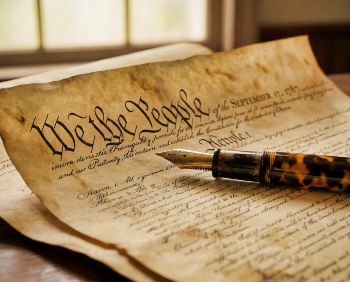 ordinary citizens, not just lawyers.
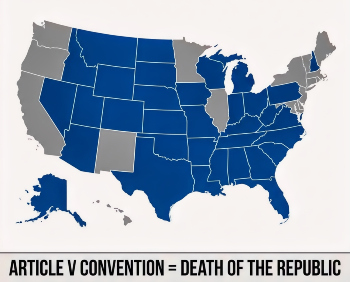 must then be ratified by three-fourths of the states, or 38.
 legislative or judicial authority that the Constitution assigns elsewhere.
 drafting at both levels.
 This guide walks you through the full process, from picking a mission to running the room.
 including the cancellation terms.
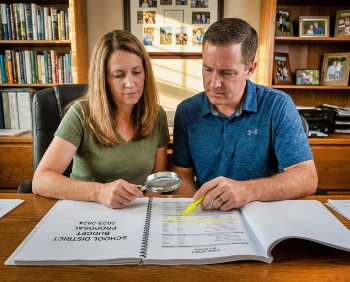 Facilitation is where most groups either shine or fall apart. A good facilitator keeps the room on topic, on time, and on principle.
 Joining a constitutional rights movement means committing to organized collective action that uses the First Amendment’s protections, assembly, speech, petition, and association, to influence law and policy. At Texas Journal, we provide critical insight and discernment designed to help citizens assert their rights and restore the country to its founding principles. The work breaks into three tracks: education, advocacy, and litigation support.
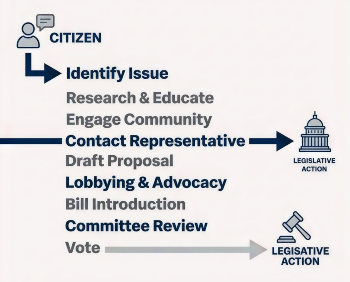 Regulations.gov. Any member of the public can file a comment during the open period, and agencies are required to respond to significant comments in the final rule. This is the single most underused petitioning tool available. A comment that cites the specific proposed section, supplies a factual record the agency did not have, and explains the legal or practical problem is far more likely to shape the final text than a generic objection. Track dockets by agency and by topic so you comment while the window is open, not after it closes.
 and local level, because the body voting on the measure is in the room.
 boards provide additional channels, though their authority varies.
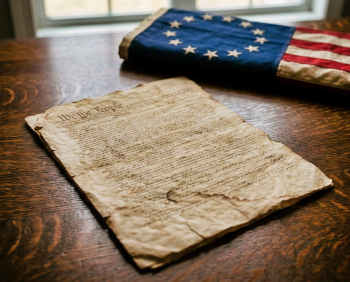 The structure itself is simple. A written constitution sets the boundaries. Courts interpret those boundaries. Citizens enforce them by showing up, speaking up, and, when necessary, filing suit.